My Books Arrive

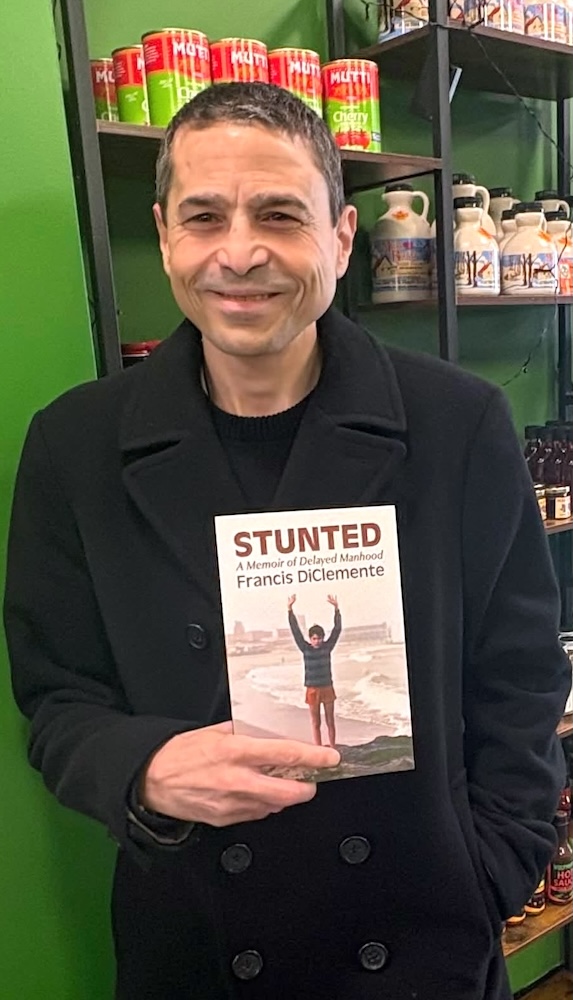
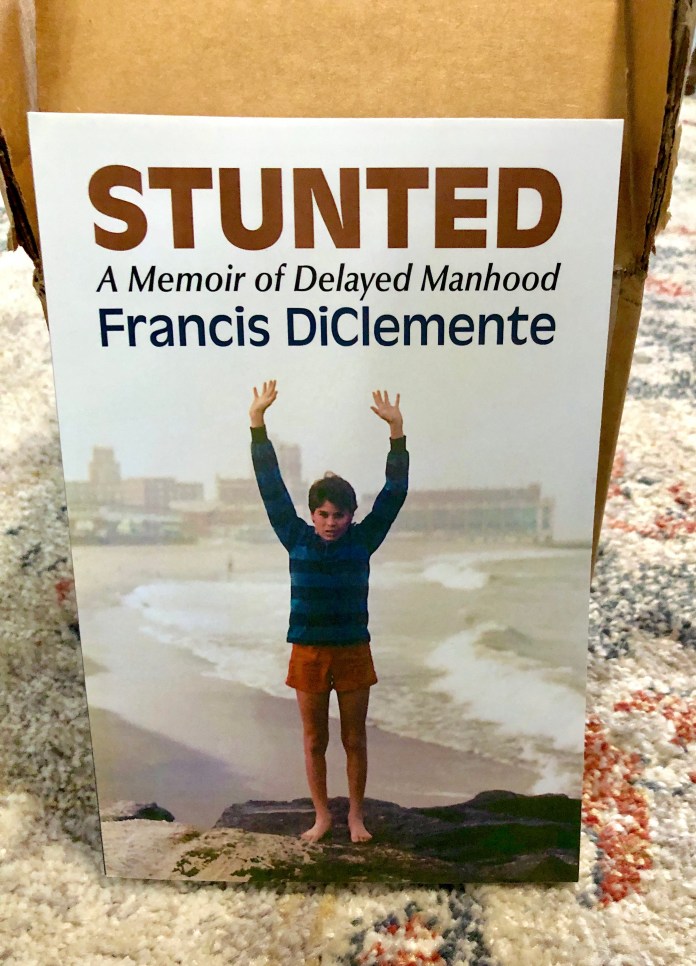
My first shipment of books from McFarland & Company arrived yesterday. I’m so glad to see this book become a real thing—not just an idea in my head—because the project took more than 10 years to complete.

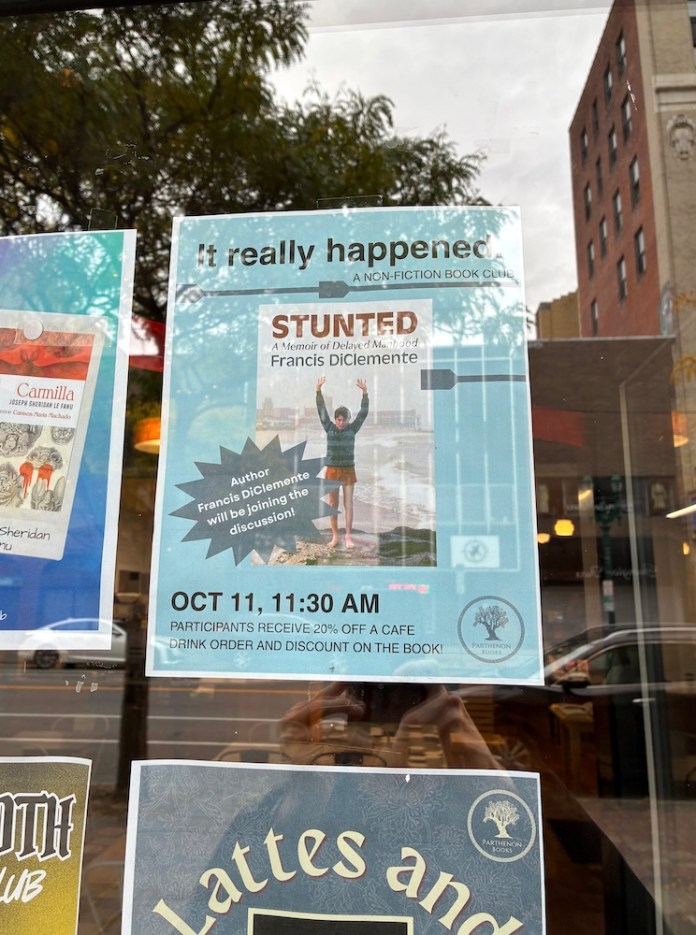
“Stunted: A Memoir of Delayed Manhood” is a coming-of-age story about identity and self-acceptance, told through the lens of my journey to adulthood after being diagnosed with a brain tumor when I was 15 years old.

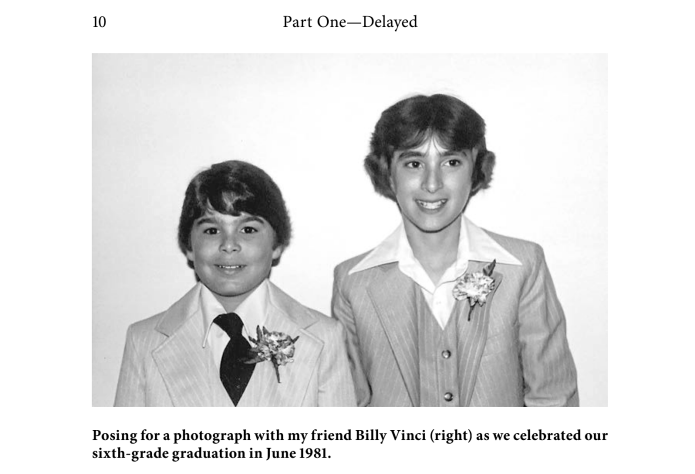
The contains about 40 black-and-white photographs, medical records dating back to 1984, and diary entries from the early 1990s and beyond. It’s also loaded with sports and pop culture references from the ’80s and ’90s (e.g., Doug Flutie and The Cure).

I’m scheduled to give a reading at 6 p.m. on Tuesday, June 23, at Jervis Public Library in Rome, where, as a youth, I discovered my love of books and was introduced to authors such as John Steinbeck, Ernest Hemingway, Ray Bradbury, Albert Camus, Hermann Hesse, Joyce Carol Oates, and many others. I hope I won’t be so nervous that I ramble and babble.

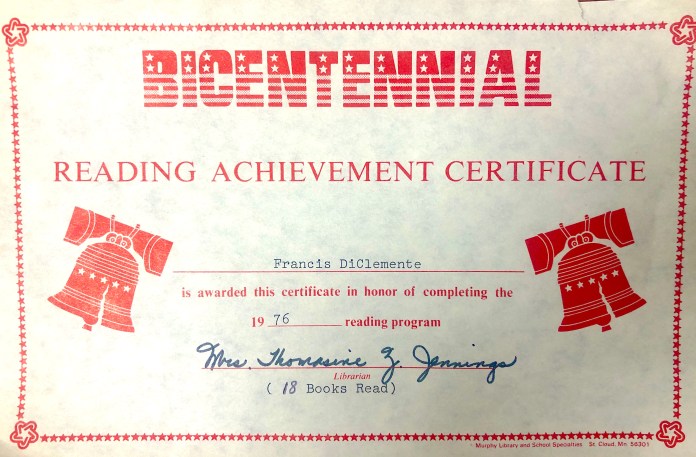
A certificate for my participation in a summer reading program at Jervis Public Library in Rome in 1976.

Standard

My Coffee Ritual

I just want to share that I have a short essay published in the literary magazine The Bookends Review. You can read the piece here.

Standard

The Old Man’s Morning Ritual

I have a short nonfiction story that appears online in this month’s issue of Foliate Oak Literary Magazine. The text of the piece follows:

The old man leaves his nursing home in the grayness of early morning, walking up the steep incline of South Crouse Avenue in Syracuse, as a stiff wind smacks him in the face. He swings his right arm out to the side—pumping it in rhythm—almost as if he is matching the beat of a marching band playing in his head. He has gray-black hair, balding in the front, and he wears a light blue jacket, tan pants, and gray sneakers.

Looking southbound along South Crouse Avenue.

Looking southbound along South Crouse Avenue.

I often see him sitting on the steps outside Bruegger’s Bagels near Marshall Street, sipping a cup of coffee and smoking a cigarette, a blank expression pressed to his face. What does he think about as he sits there and watches the world rush by? What goes through his mind as he observes college students chattering in groups, nurses starting or ending their shifts, and cab drivers pulling over to the curb to pick up or drop off a fare or grab a quick cup coffee?

Despite his age the man asserts his independence as he escapes the white walls and the fetid smells of the nursing home. Each day he goes to Bruegger’s his creaky legs carry him up the hill and his lungs circulate oxygen. He remains alive, connected to the outside world as he savors the simple pleasure of a drinking cup of coffee and a smoking a cigarette in public.

No one seems to notice the man sitting there; he’s a faceless figure taking up space on a crowded street. I see him, recognizing his existence, and I am tempted to stop and talk to him, to find out about his life. But his blank expression dissuades me, as I don’t want to disturb him or cause him to become frightened, thinking that I may want something from him.

No, I do not say a word to the man. But I preserve his image in my mind, recording his likeness in detail. I do this because I think he foreshadows my existence 20 to 25 years from now, if I am not already dead.

A fence located on South Crouse Avenue near an apartment building serving senior citizens.

A fence located on South Crouse Avenue near an apartment building serving senior citizens.

If I am still able to walk then, I hope to mimic the old man’s movements, making an attempt to cling to a normal life despite being confined to a nursing home. I too will leave my bed in the morning, walk to a coffee shop nearby, grab a cup coffee or a bagel, and then sit down somewhere and say to the world, or only to myself, “It’s another day and I’m still here.”

Standard