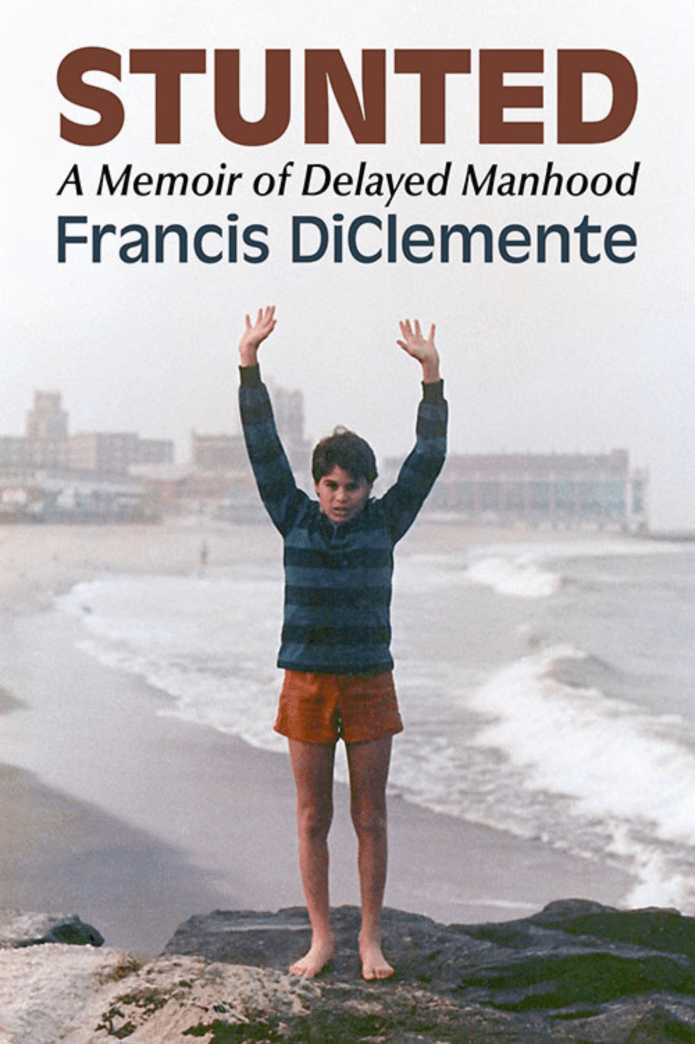
With graduation party season in full swing, I thought I would share an excerpt from my recently released memoir, Stunted: A Memoir of Delayed Manhood. The excerpt covers the time period after I graduated high school from Rome Free Academy in my hometown of Rome, New York, and prepared to enter my freshman year of college. Warning: Adult content follows.
From Chapter Ten:
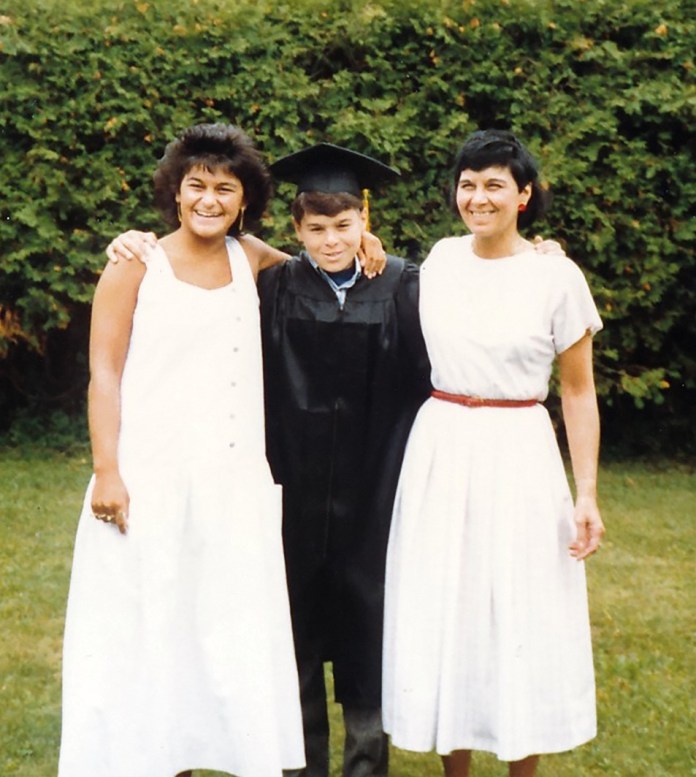
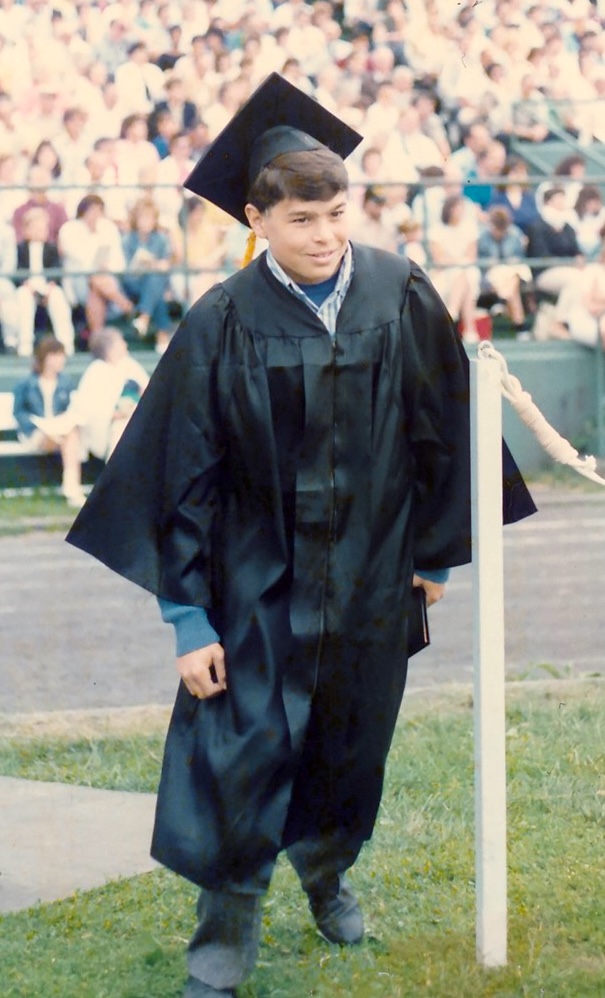
I graduated high school in June 1987 as a shy, sexless adolescent unprepared for the social landscape of college life. Decked out in my cap and gown, I stood a half head shorter than my mother and sister as we posed for a picture in our backyard on graduation day.
And here’s a catalog, a list of experiences I failed to check off before finishing high school, departing Rome, and heading to the campus of St. John Fisher College, a small, liberal arts college (now renamed St. John Fisher University) in Pittsford, New York, a suburb of Rochester:
I never went on any one-on-one dates.
I never bought flowers for a girl (except for one Valentine’s Day in elementary school).
I never drove a car to a girl’s house to pick her up and meet her parents—getting their permission to take her out for the night.
I never had a serious girlfriend.
I never put my arm around a girl at an RFA football game or held hands in a darkened movie
theater.
I never kissed a girl on the lips.
No fumbling with bra straps in the backseat of a car or feeling a warm breast while sitting on a couch at a house party.
I never made love in a girl’s bedroom while her parents were out of the house.
And at age eighteen, even if a girl had offered me the opportunity to have sex, I would not have known for sure where to put my penis during intercourse.
My inexperience with the opposite sex weighed on me as I spent my final summer at home. During one weekend in late August, my friend Billy and I went to McDonald’s to hang out in the Uptown area (a section of Rome where teens congregated).
On a warm, humid night, we stood in the deserted parking lot under the glow of the illuminated golden arches, talking with our friend Chad, who had ridden his bike to the area from east Rome. He was leaning on his handlebars, dressed in a white concert T-shirt, and we were talking about me going away to school. I said, “I’m a little nervous. I don’t know how it’s gonna be. I don’t know if I’ll fit in.”
“Ah, don’t worry about it, Franny,” Chad said. “You’ll get your helmet polished by the girls there.”
I had a sense he was referring to blow jobs, but I wasn’t one hundred percent sure. I gave a good laugh to cover my lack of knowledge, and said, “Thanks, Chad, I hope you’re right.”
From Chapter Eleven:
Although my parents must have sensed my unease about attending college while looking like a fourteen-year-old boy, my father offered me no advice on how to deal with it, and my mother lacked empathy for my situation. She told me to stop being sensitive when other people questioned my age. In conversations with family members, co-workers, and restaurant servers, she would say, “He gets so upset if someone asks him about his age. He has to learn to accept it.” But Mom exhibited compassion through her actions by taking me shopping in New Hartford and buying me sheets, towels, toiletries, and other essentials for college life. She taught me how to do laundry, informing me about the basics of temperature cycles and the importance of separating colors from whites, and she also made sure my financial aid paperwork was submitted on time.
As I made my final preparations before departing Rome for the fall semester in 1987, my sister Lisa allayed my fears with sage advice based on her experience as a student at Hartwick College in Oneonta. When I told her how I knew the other kids would question me because I looked so young for my age, she said, “What you have to realize about college is that everyone has something that they don’t like about themselves, something they want to hide. Some girls are fat. Some guys have acne all over their faces, or they sound effeminate. Everyone has something. You look young for your age, but so what? Don’t think you’re the only one who is different.”
It was exactly what I needed to hear. She also told me, “You’ll be fine once you make a few friends.”
##
If you have read the book, please consider leaving a review on Amazon or Goodreads. Reviews make a big difference for indie authors, helping readers to discover our books. And if you are a blogger or book reviewer and would like a digital ARC to review, please use the contact form to reach out. Thank you!


This is such a raw and courageous excerpt. What stayed with me most was not only the honesty about your lack of experience, but the deeper fear underneath it—the feeling of entering a new chapter while already believing everyone else somehow knew how to live it better than you did.
Your sister’s words are incredibly powerful because they speak to something so universal: we often enter a room focused entirely on what makes us different, never realizing that almost everyone else is carrying something they are trying to hide too. “Everyone has something” may sound simple, but at that moment in your life, I can understand why it was exactly what you needed to hear.
I also appreciate that you didn’t soften or romanticize the awkwardness of that period. The vulnerability, the uncertainty, even laughing at something you weren’t completely sure you understood—it all makes the memory feel deeply human. Thank you for sharing such an honest piece of your story. I imagine many readers will recognize parts of themselves in it, even if their own circumstances were very different.
Hi Georgi. Thank you for taking the time to read the excerpt and for your kind words. I truly appreciate it.