Earlier this summer, I was the guest on the podcast What’s Kraken with Jo Szewczyk. I had fun talking to Jo about writing, books, music, and life. Jo is the author of the memoir Surviving Gen Xand the forthcoming novel Scarlet Shadows. You can follow him on Instagram @szewczyk.jo or find out more about him here.
During a summer baseball camp in the early 1980s, I huddle with a group of infielders on the main baseball diamond on the campus of Le Moyne College in Syracuse, New York. I’m the smallest figure in the bunch, the top of my head reaching the shoulders of the other players.
Early morning sunlight slants across the field, and a pinging sound ricochets off the brick dormitory buildings set on a hill overlooking the diamond as a garrulous coach with a Long Island accent and a potbelly stands near home plate, swinging a fungo bat and smacking ground balls to us.
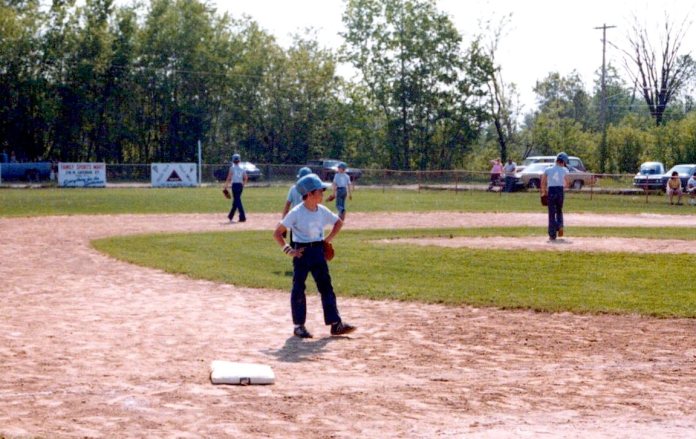
Playing third base in youth league baseball in Rome, New York, in the late 1970s.
Another coach, dressed in a gray T-shirt and baseball pants, stands near our group in the infield, observing our defensive mechanics. I charge the ball and crouch low to the ground, keeping my head down and my glove open. I field several balls without a bobble and fire them to first base. The Long Island coach then lines a laser in the air toward second base, and I leap to my right—my body parallel to the ground as the ball smacks the pocket of my Mizuno mitt. The diving backhand catch produces cheers from several camp-goers nearby.
The coach hitting the fungoes yells, “Wow. Nice play out there. Way to look alive.” The coach standing near second base says in a Southern accent, “Hey, what’s your name?”
After I tell him, he says, “You’re a good ballplayer and a good-looking kid. The girls must love you. Do you have a girlfriend?”
“No,” I say.
“No. Why not?”
Before I can ponder the question, I say, “I’m too small.”
“Too small—what’s that got to do with anything?” the coach says.
“I don’t know,” I say. I dig my cleats into the dirt and smack my mitt, trying to come up with an explanation. “Girls don’t like short guys.”
The coach and some older players standing near me break into laughter. I laugh too, and then I resume my place in line, kicking dirt and bouncing on the balls of my feet, waiting for the next ground ball to be hit toward me.
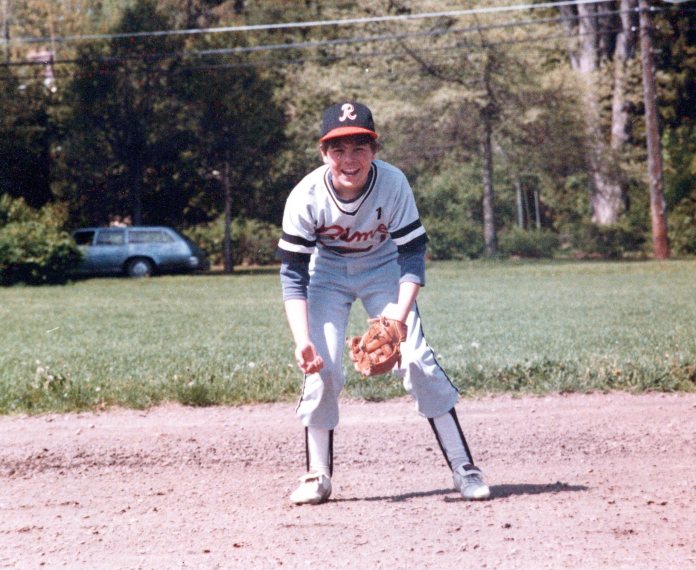
Playing freshman baseball in Rome, New York, in 1984.
This past Thursday, July 30, I held a local author talk and Q-and-A at Utica Public Library on Genesee Street in Utica, New York. Two senior citizens attended, and their presence pleased me because as the time for the 6 p.m. event drew near, I thought no one would show up.
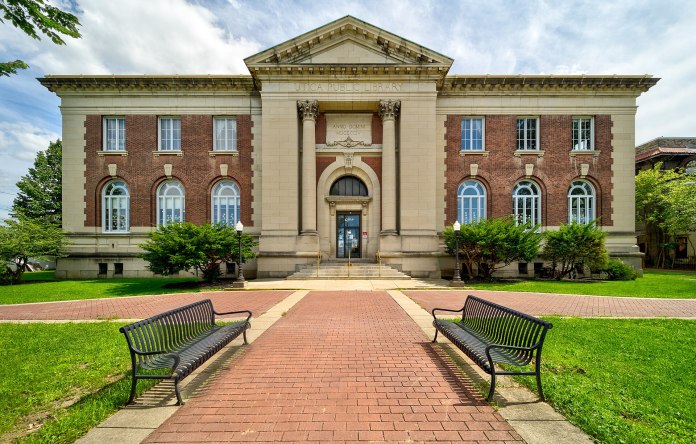
Utica Public Library exterior. Photo by Kenneth C. Zirkel.
The talk was held in the Music Room on the second floor of the brick Neoclassical building erected in the early 1900s. I took an Uber because I was nervous about getting lost in Utica (as I had so often done in my youth when traveling to the city from my nearby hometown of Rome). As we traversed eastbound along the New York State Thruway, the Uber driver and I had a nice conversation. He’s a retired journalist and corporate communications professional who still does freelance work. We discussed the decline of journalism, the state of higher education, and writers we admire, including Stephen King and Richard Russo.
I arrived shortly after 3:30 p.m., and an easel displaying a large poster board with my book cover image greeted me as I entered the library. Flyers were also posted. The library was busy with mothers and their children perusing and checking out books and some adults using the computer room.
I introduced myself to the staff member who reserved the space and booked the event for me. She directed me to the second floor. I walked around for a bit, then headed upstairs, passing through an art gallery on the second floor and gazing at works by local artists hanging on the walls.
As the afternoon wore on, I debated going outside to walk along Genesee Street, maybe stopping at a Starbucks or another coffee shop. But I didn’t want to leave my books behind, and I didn’t want to carry my heavy book bag. I also had some trepidation about the safety of the neighborhood, so I stayed inside.
I set up my books on a long table at the front of the Music Room, answered work emails and Teams messages, and read the books I had brought—the novel Tepper Isn’t Going Out by Calvin Trillin (paperback), the memoir Educated by Tara Westover (paperback), and A Deadly Shade of Gold by John D. MacDonald (Kindle). The AC was blasting, the movement of cold air murmuring, and I had to keep my raincoat on the whole time because I was freezing.
Utica Public Library interior. Photo by Francis DIClemente.
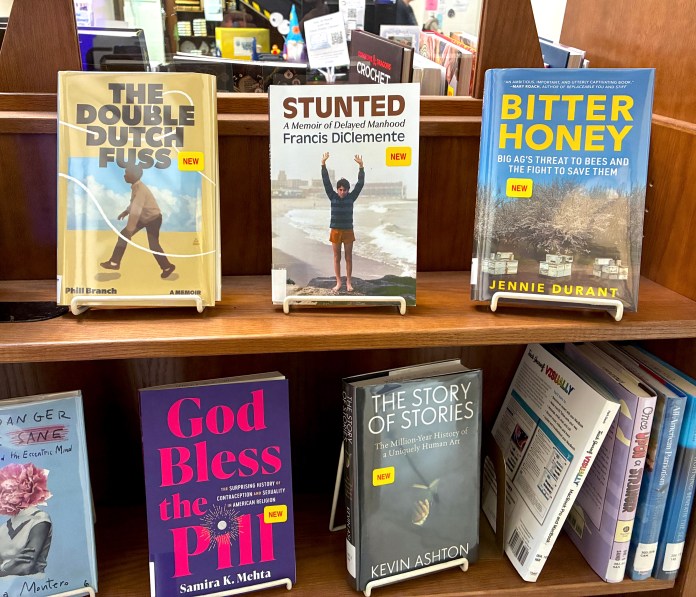
After using the restroom on the first floor, I was excited to find my book in the library’s general circulation, sitting on a shelf next to some other memoirs. It had a Utica Public Library stamp inside.
My memoir, Stunted, on a shelf at Utica Public Library.
Then I went upstairs and sat in the Music Room, waiting as 5:30 and then 5:45 p.m. came and went. I stood up and took some photos of the empty space and a selfie to document the “no-show” turnout.
And as I stared out the window of the library, looking at the Munson art museum across the street, I acknowledged within myself the discouragement I feel about my memoir’s reception in the world more than two months after its release.
I poured everything I had into this book, writing it over the course of ten years while working a full-time day job and managing family responsibilities. And while I never expected a TED Talk or a Today show appearance to follow the release of my memoir, it’s disheartening that events have been sparsely attended and I remain stuck on four reviews on Amazon (although they have been positive). Even more so, I thought the book’s universal message of self-acceptance would resonate with a wide variety of readers.
But as I walked around the Music Room, the floorboards creaking beneath my feet, I tried to console myself by thinking a writer or artist’s career has ups and downs, highs and lows, and it’s all part of the journey.
I am also grateful to the people who have read the book and commented on it, the libraries and booksellers who have hosted me, and the local media outlets that have interviewed me or written stories about the book.
I also knew that my wife and son would greet me when I arrived home that night, and I would get up the next day and write before heading off to work at a job that paid my bills and provided health coverage for my family and me.
I was about to pack up my stuff and head downstairs to open the Uber app and book a ride home when a small, older man wearing a blue shirt and jeans held up by suspenders entered the Music Room and sat down. I thought, “OK, one is better than none.”
I asked, “Are you here for the reading?”
“Yes,” he said.
I introduced myself. His name was Bob. We shook hands, and we talked about the Utica area and its history. I asked Bob where the Saranac Brewery was located, and he rose and walked toward a window in the corner. I followed him, and he pointed toward the brewery in an area behind St. Joseph and St. Patrick Church, which could be seen in the distance.
At 6 p.m., I sat down and told Bob I’d read a little bit and then answer any questions he might have. I put on my reading glasses and was reading the prologue when I looked up and saw an older woman seated in the audience. I nodded and said “hello,” and she smiled. She said her name was Lorraine and she lived nearby. She had blond hair and glasses, was dressed in a black shirt and leopard-print pants, and wore a red baseball cap with a Flash Gordon lightning bolt on the front.
I was elated, and I made a point of listening to their questions and being fully present in the moment, giving my best effort for the two people who took time out of their day to attend a local author event.
And we had a pleasant conversation. They asked me about where I grew up, my educational background, medical and family history, and how long it took me to write the book. I enjoyed hearing about their lives. Lorraine claimed she owned more than four-thousand books. She also said she was born premature and the doctor who delivered her tossed her tiny body on a bed and said to Lorraine’s mother, “Don’t bother with her. She’s not gonna make it.”
Lorraine said she wanted to tell the doctor now, “I’m 77 years old, and I’m still here.”
Bob said he likes reading nonfiction, primarily autobiographies, nature books, and books about dogs. He asked me if I was Italian, and when I said, “Yes,” he told me he’s full-blooded Italian. He said he lives alone and shared details about two solo trips he took to Italy and Sicily, including how he met some distant cousins on one of the journeys.
Toward the end of our discussion, Bob asked if he could look at a book. I said, “Sure,” and he grabbed a book, flipped through it, stopping at certain pages, pointing to pictures, and asking me questions.
I felt so happy that Bob and Lorraine had rescued my night that I signed two copies of my book and gave them away to my new friends.
The experience made me think about one of my favorite scenes in the movie Vision Quest. It’s when high school wrestler Louden Swain (Matthew Modine) visits his friend, hotel worker Elmo (J.C. Quinn), who has taken the night off to watch Louden wrestle against Brian Shute, the best wrestler in the state of Washington. The writing and acting in the scene deliver such emotional power.
Louden tells Elmo that he shouldn’t have taken a night off from work because his pay would be docked, and that his six-minute wrestling match is “not that big of a deal.” Elmo gives a monologue about watching Pelé on TV during a soccer game, and he ends his speech with the line, “It ain’t the six minutes. It’s what happens in that six minutes.”
And the lesson for me is: It isn’t about how many people show up at a reading or event or the number of ratings and reviews on Amazon and Goodreads. It’s about the connection you form with the people who do read your book and attend your events.
I also thought, OK, so I’ll never win a Guggenheim fellowship, sell the movie rights to my book, be a bestselling author, or earn a living from my writing alone. Still, I can continue to write in my spare time and contribute something positive in my own small way.
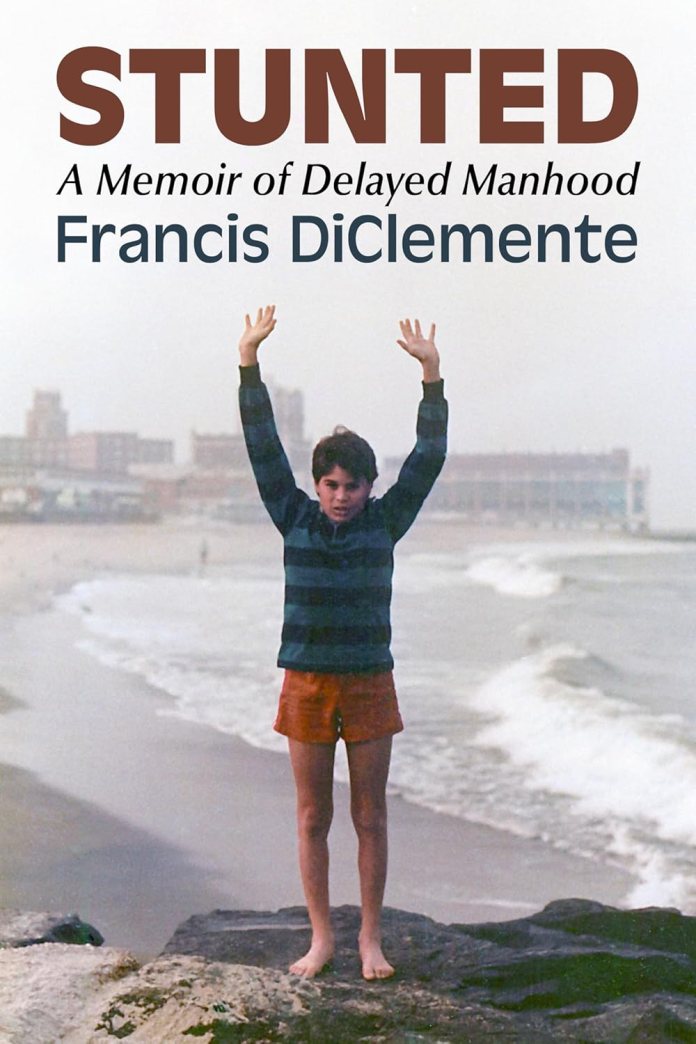
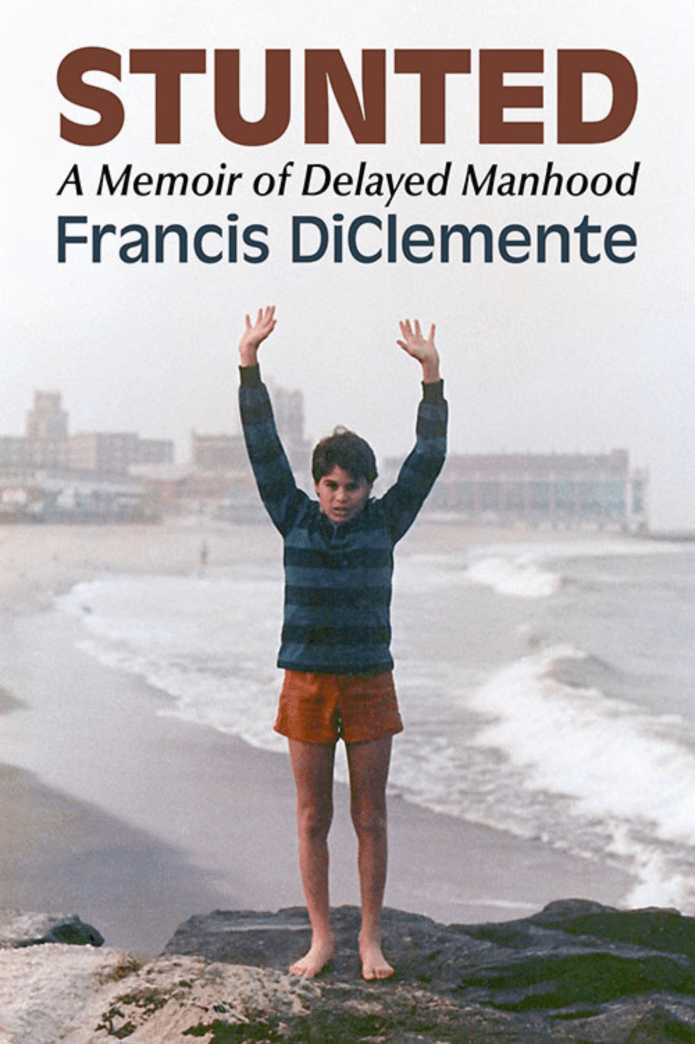
For friends and readers in the Central New York area, I have some events scheduled to promote my memoir, Stunted: A Memoir of Delayed Manhood (Toplight Books, an imprint of McFarland and Company, 2026).
I’ll be giving a reading and signing books at Parthenon Books on Salina Street in downtown Syracuse this Saturday, July 25 at 1 p.m. I’m also excited to use up $15 in store credit.
A “Local Author Talk” is scheduled for 6 p.m. on Thursday, July 30 at Utica Public Library on Genesee Street in Utica.
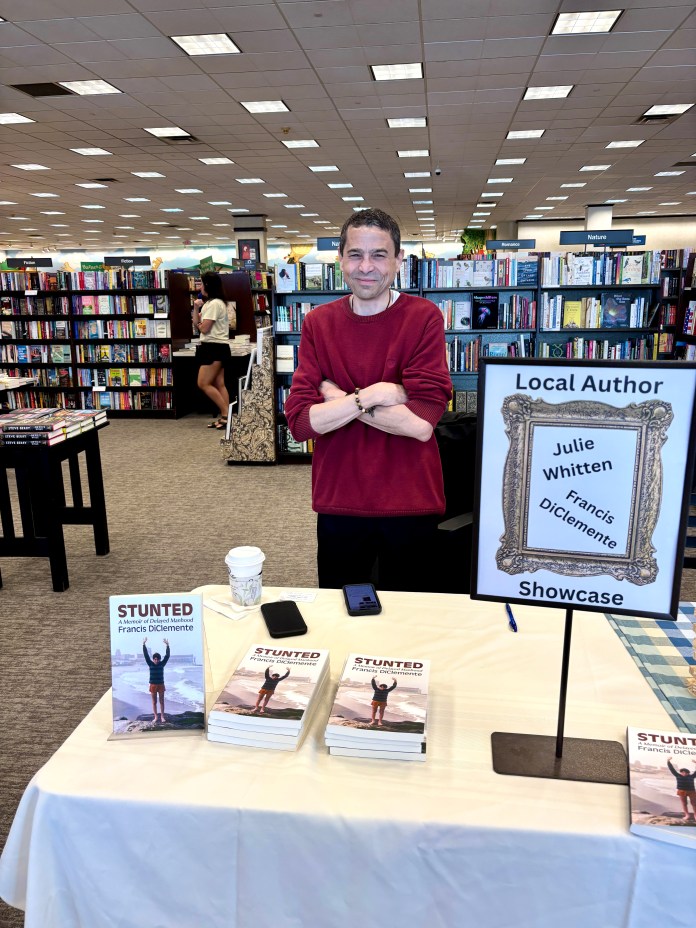
And on Saturday, August 8, I’ll be joining other writers at a Local Author Showcase at the Barnes & Noble store in Dewitt. The time is 2 to 4 p.m.
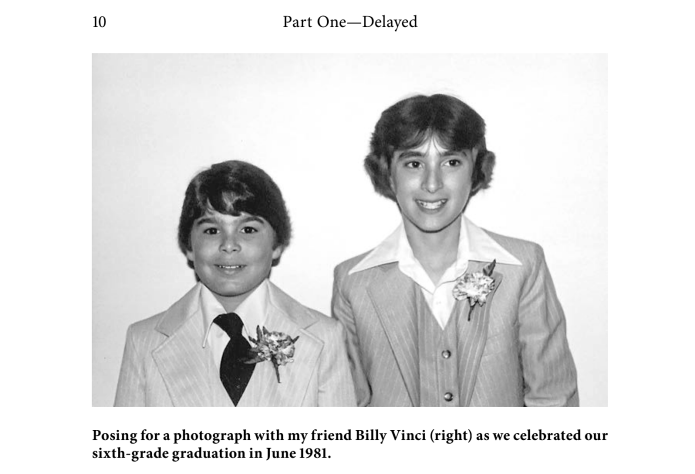
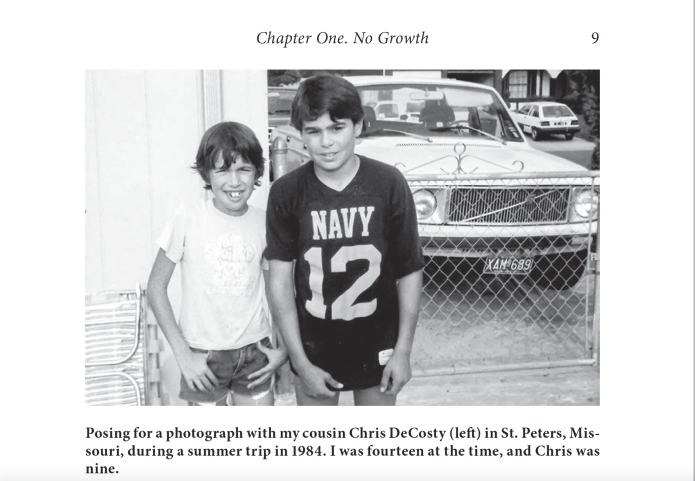
For those unfamiliar with the book, here is a description, along with some archival photos (which appear in black and white in the book).
Overview of Stunted:
For most children, puberty marks their rite of passage into the cusp of adulthood—a time of profound physical and emotional transformation. It’s a period where they grapple with questions about identity, their place in the world, and what they desire from life’s experiences.
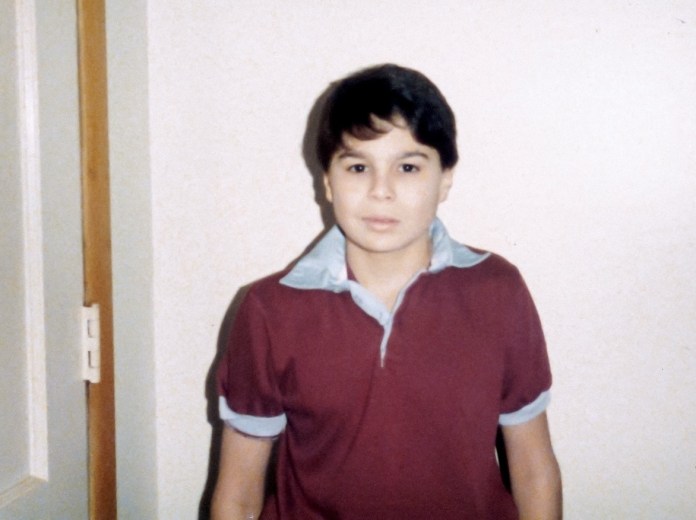
Here’s me, likely in the mid-1980s.
For Francis DiClemente, during his turbulent adolescent and early adult years spanning 1984 to 1995, frustration and shame consume him. When he turns fifteen, his growth stops, and he watches helplessly as his friends cross through puberty and into adulthood. Doctors diagnose him with hypopituitarism, uncovering a tumor engulfing his pituitary gland. Yet the removal of the tumor fails to fix the problem. DiClemente enters college as a youthful, androgynous figure—a prodigy sans the hyper-smarts.
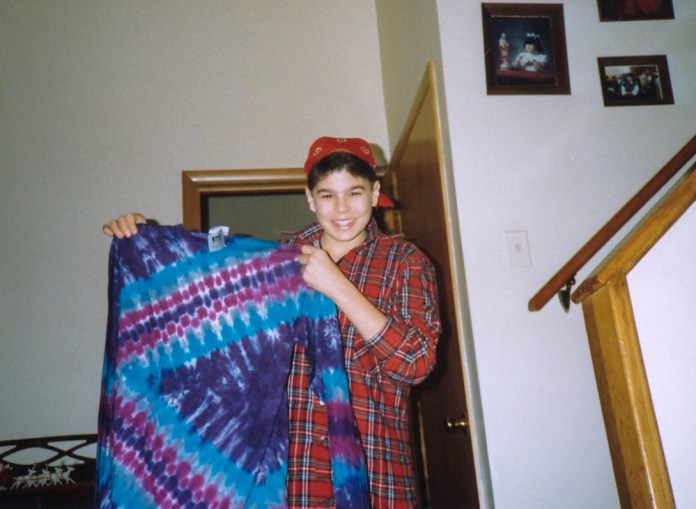
During my college years, in the late 1980s.
He lags behind his male peers in every aspect—lacking the stature, hair growth, and muscle definition that come naturally to others his age. This disparity further erodes his self-confidence, particularly in his interactions with women.
When DiClemente leaves his childhood home after college and embarks on a career in journalism, he discovers a new perspective on masculinity. Living independently and embracing this responsibility, he learns that manhood is determined by behavior, not physical characteristics.
Through the lens of personal experience, Stunted: A Memoir of Delayed Manhood delves into the universal themes of belonging and resilience, providing a message of hope and inspiration for those navigating their paths of self-acceptance.
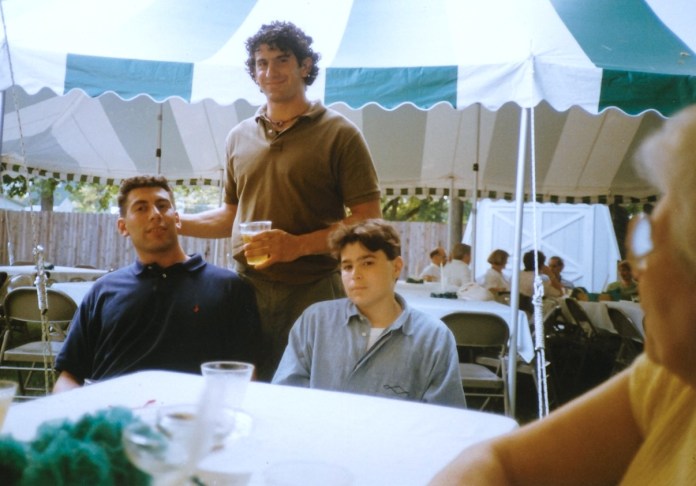
With my cousins Fiore DeCosty (left) and Derek DeCosty (standing) with our grandmother, Josephine, in the bottom right of the frame (1990).
With graduation party season in full swing, I thought I would share an excerpt from my recently released memoir, Stunted: A Memoir of Delayed Manhood. The excerpt covers the time period after I graduated high school from Rome Free Academy in my hometown of Rome, New York, and prepared to enter my freshman year of college. Warning: Adult content follows.
From Chapter Ten:
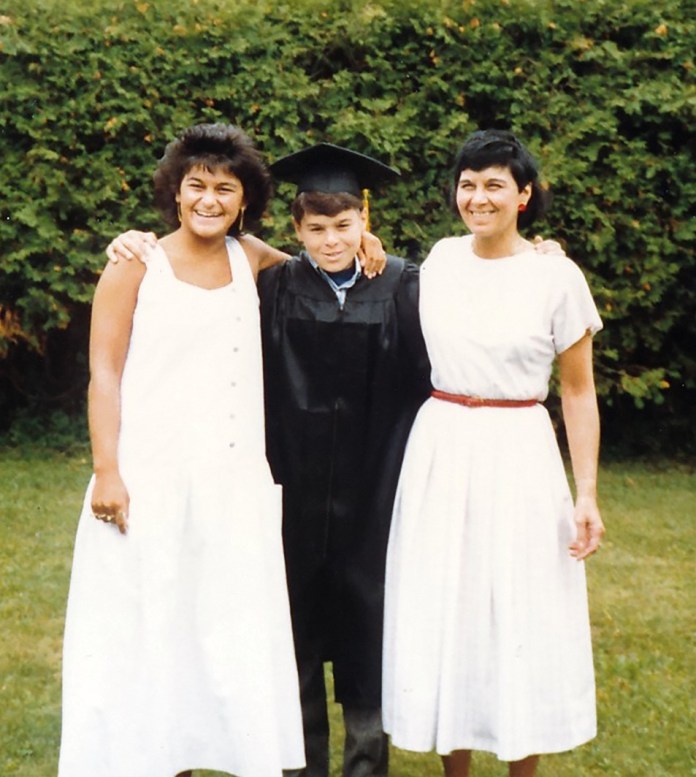
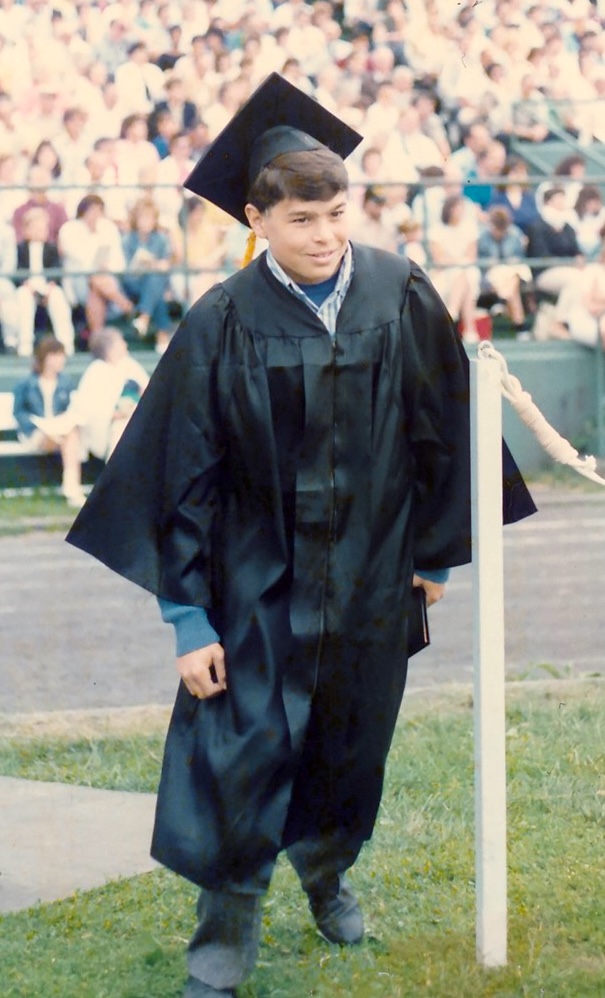
I graduated high school in June 1987 as a shy, sexless adolescent unprepared for the social landscape of college life. Decked out in my cap and gown, I stood a half head shorter than my mother and sister as we posed for a picture in our backyard on graduation day.
And here’s a catalog, a list of experiences I failed to check off before finishing high school, departing Rome, and heading to the campus of St. John Fisher College, a small, liberal arts college (now renamed St. John Fisher University) in Pittsford, New York, a suburb of Rochester:
I never went on any one-on-one dates.
I never bought flowers for a girl (except for one Valentine’s Day in elementary school).
I never drove a car to a girl’s house to pick her up and meet her parents—getting their permission to take her out for the night.
I never had a serious girlfriend.
I never put my arm around a girl at an RFA football game or held hands in a darkened movie
theater.
I never kissed a girl on the lips.
No fumbling with bra straps in the backseat of a car or feeling a warm breast while sitting on a couch at a house party.
I never made love in a girl’s bedroom while her parents were out of the house.
And at age eighteen, even if a girl had offered me the opportunity to have sex, I would not have known for sure where to put my penis during intercourse.
My inexperience with the opposite sex weighed on me as I spent my final summer at home. During one weekend in late August, my friend Billy and I went to McDonald’s to hang out in the Uptown area (a section of Rome where teens congregated).
On a warm, humid night, we stood in the deserted parking lot under the glow of the illuminated golden arches, talking with our friend Chad, who had ridden his bike to the area from east Rome. He was leaning on his handlebars, dressed in a white concert T-shirt, and we were talking about me going away to school. I said, “I’m a little nervous. I don’t know how it’s gonna be. I don’t know if I’ll fit in.”
“Ah, don’t worry about it, Franny,” Chad said. “You’ll get your helmet polished by the girls there.”
I had a sense he was referring to blow jobs, but I wasn’t one hundred percent sure. I gave a good laugh to cover my lack of knowledge, and said, “Thanks, Chad, I hope you’re right.”
From Chapter Eleven:
Although my parents must have sensed my unease about attending college while looking like a fourteen-year-old boy, my father offered me no advice on how to deal with it, and my mother lacked empathy for my situation. She told me to stop being sensitive when other people questioned my age. In conversations with family members, co-workers, and restaurant servers, she would say, “He gets so upset if someone asks him about his age. He has to learn to accept it.” But Mom exhibited compassion through her actions by taking me shopping in New Hartford and buying me sheets, towels, toiletries, and other essentials for college life. She taught me how to do laundry, informing me about the basics of temperature cycles and the importance of separating colors from whites, and she also made sure my financial aid paperwork was submitted on time.
As I made my final preparations before departing Rome for the fall semester in 1987, my sister Lisa allayed my fears with sage advice based on her experience as a student at Hartwick College in Oneonta. When I told her how I knew the other kids would question me because I looked so young for my age, she said, “What you have to realize about college is that everyone has something that they don’t like about themselves, something they want to hide. Some girls are fat. Some guys have acne all over their faces, or they sound effeminate. Everyone has something. You look young for your age, but so what? Don’t think you’re the only one who is different.”
It was exactly what I needed to hear. She also told me, “You’ll be fine once you make a few friends.”
##
If you have read the book, please consider leaving a review on Amazon or Goodreads. Reviews make a big difference for indie authors, helping readers to discover our books. And if you are a blogger or book reviewer and would like a digital ARC to review, please use the contact form to reach out. Thank you!
Today marks the completion of a dream with the publication of my memoir, Stunted: A Memoir of Delayed Manhood. To celebrate my publication date, I am running a Goodreads giveaway. It ends on June 1, and I’ll be giving away two signed copies of the book.
I don’t have much experience with signing books, but I have never understood the practice of authors crossing out their printed name when they sign their books. To me it feels like defacing a work of art.
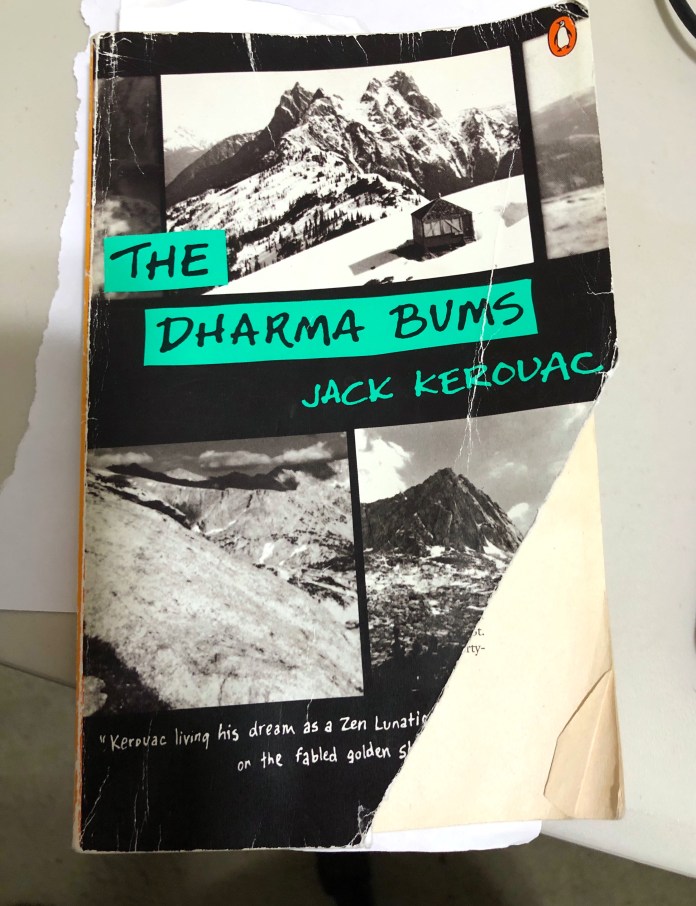
I finished reading Jack Kerouac’s The Dharma Bums and I wanted to share one more passage that stood out to me. In this scene, during a massive going-away party for the character Japhy, held in Berkeley, California, the narrator, Ray Smith (Kerouac), reflects on people and existence:
“Then I suddenly had the most tremendous feeling of the pitifulness of human beings, whatever they were, their faces, pained mouths, personalities, attempts to be gay, little petulances, feelings of loss, their dull and empty witticisms so soon forgotten: Ah, for what? I knew that the sound of silence was everywhere and therefore everything everywhere was silence. Suppose we suddenly wake up and see that what we thought was this and that, ain’t this and that at all? I staggered up the hill, greeted by birds, and looked at all the huddled sleeping figures on the floor. Who were all these strange ghosts rooted to the silly little adventure of earth with me? And who was I?”
My battered copy of The Dharma Bums by Jack Kerouac.
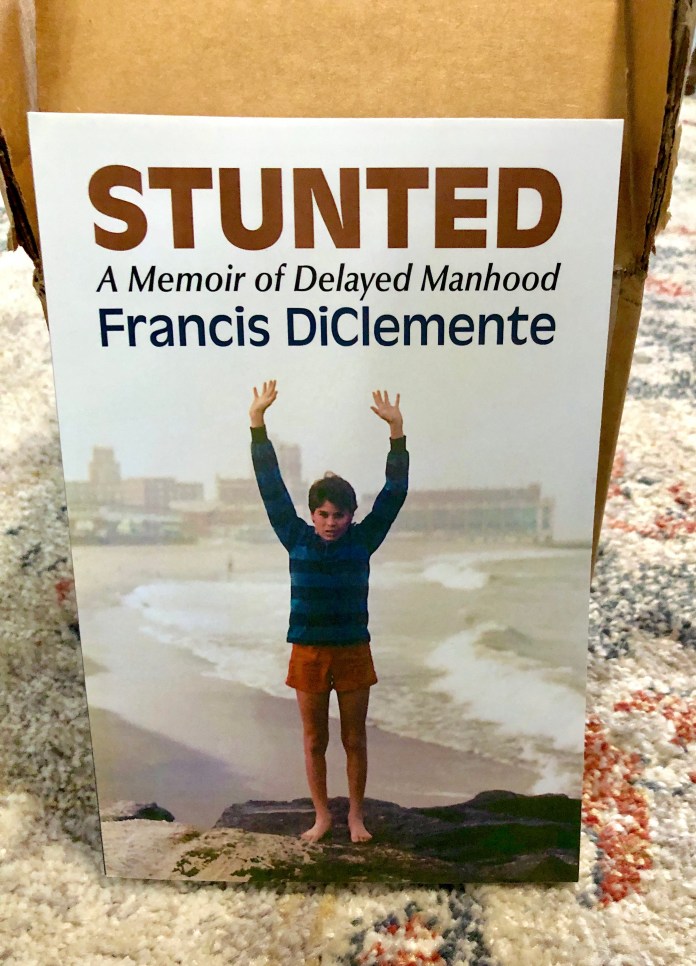
My first shipment of books from McFarland & Company arrived yesterday. I’m so glad to see this book become a real thing—not just an idea in my head—because the project took more than 10 years to complete.
“Stunted: A Memoir of Delayed Manhood” is a coming-of-age story about identity and self-acceptance, told through the lens of my journey to adulthood after being diagnosed with a brain tumor when I was 15 years old.
The contains about 40 black-and-white photographs, medical records dating back to 1984, and diary entries from the early 1990s and beyond. It’s also loaded with sports and pop culture references from the ’80s and ’90s (e.g., Doug Flutie and The Cure).
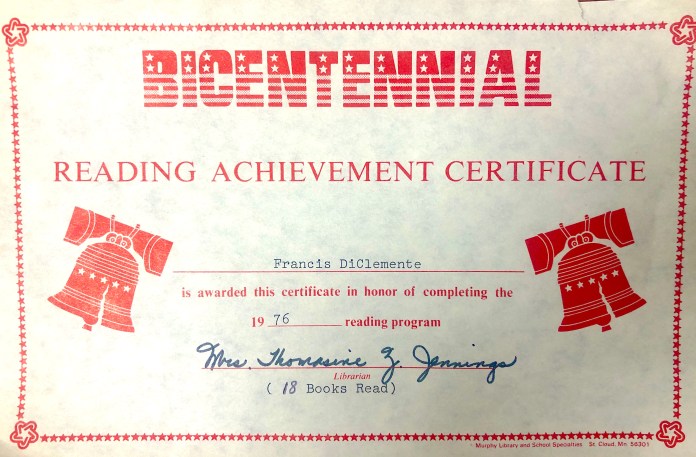
I’m scheduled to give a reading at 6 p.m. on Tuesday, June 23, at Jervis Public Library in Rome, where, as a youth, I discovered my love of books and was introduced to authors such as John Steinbeck, Ernest Hemingway, Ray Bradbury, Albert Camus, Hermann Hesse, Joyce Carol Oates, and many others. I hope I won’t be so nervous that I ramble and babble.
A certificate for my participation in a summer reading program at Jervis Public Library in Rome in 1976.
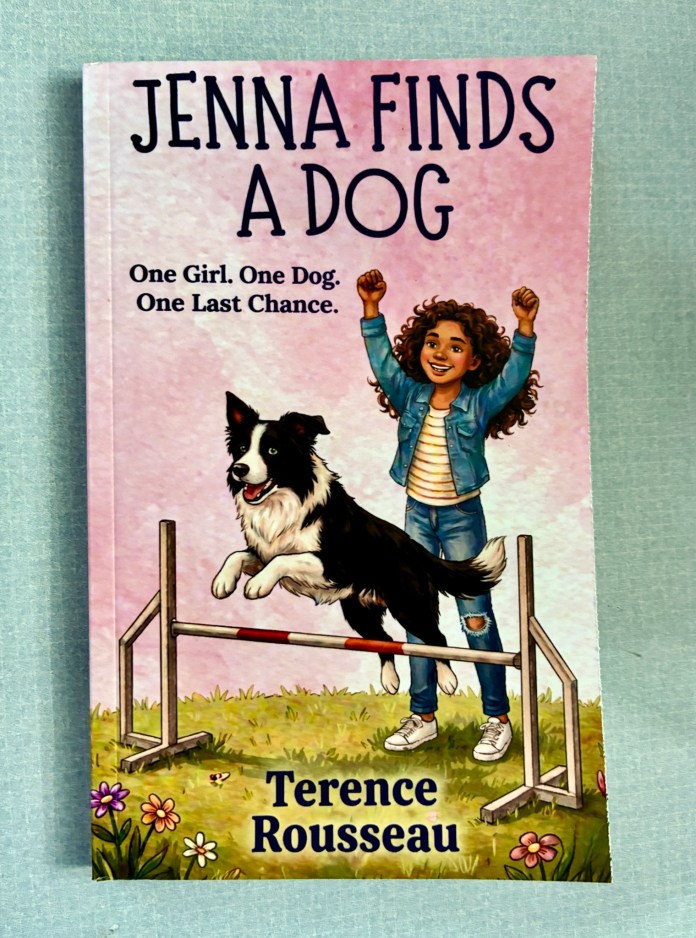
My former Metro Networks’ colleague Terry Rousseau has written a middle-grade novel entitled Jenna Finds A Dog.
Jenna Finds a Dog cover.
I’m looking forward to reading it. In the biography, Terry mentions residing in an isolated village in the New Mexico mountains. And he cracked me up with this line: “His most recent hobby, not by choice, is cutting down the hundreds dead trees on his property with his electric chainsaw thanks to prolonged drought and bark beetles.”






 Francis DiClemente