This past Thursday, July 30, I held a local author talk and Q-and-A at Utica Public Library on Genesee Street in Utica, New York. Two senior citizens attended, and their presence pleased me because as the time for the 6 p.m. event drew near, I thought no one would show up.
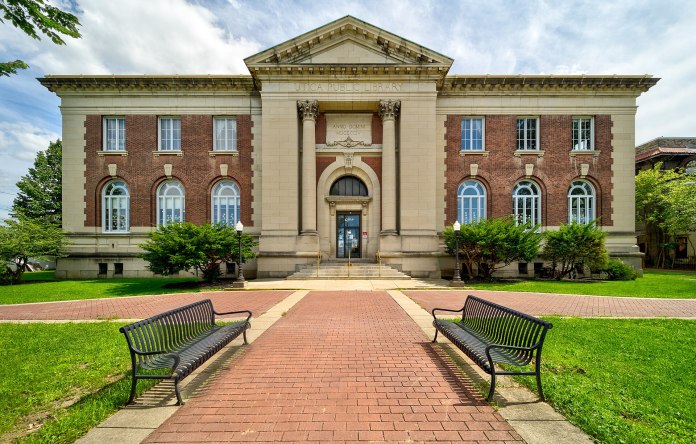
Utica Public Library exterior. Photo by Kenneth C. Zirkel.
The talk was held in the Music Room on the second floor of the brick Neoclassical building erected in the early 1900s. I took an Uber because I was nervous about getting lost in Utica (as I had so often done in my youth when traveling to the city from my nearby hometown of Rome). As we traversed eastbound along the New York State Thruway, the Uber driver and I had a nice conversation. He’s a retired journalist and corporate communications professional who still does freelance work. We discussed the decline of journalism, the state of higher education, and writers we admire, including Stephen King and Richard Russo.

I arrived shortly after 3:30 p.m., and an easel displaying a large poster board with my book cover image greeted me as I entered the library. Flyers were also posted. The library was busy with mothers and their children perusing and checking out books and some adults using the computer room.
I introduced myself to the staff member who reserved the space and booked the event for me. She directed me to the second floor. I walked around for a bit, then headed upstairs, passing through an art gallery on the second floor and gazing at works by local artists hanging on the walls.
As the afternoon wore on, I debated going outside to walk along Genesee Street, maybe stopping at a Starbucks or another coffee shop. But I didn’t want to leave my books behind, and I didn’t want to carry my heavy book bag. I also had some trepidation about the safety of the neighborhood, so I stayed inside.
I set up my books on a long table at the front of the Music Room, answered work emails and Teams messages, and read the books I had brought—the novel Tepper Isn’t Going Out by Calvin Trillin (paperback), the memoir Educated by Tara Westover (paperback), and A Deadly Shade of Gold by John D. MacDonald (Kindle). The AC was blasting, the movement of cold air murmuring, and I had to keep my raincoat on the whole time because I was freezing.

Utica Public Library interior. Photo by Francis DIClemente.
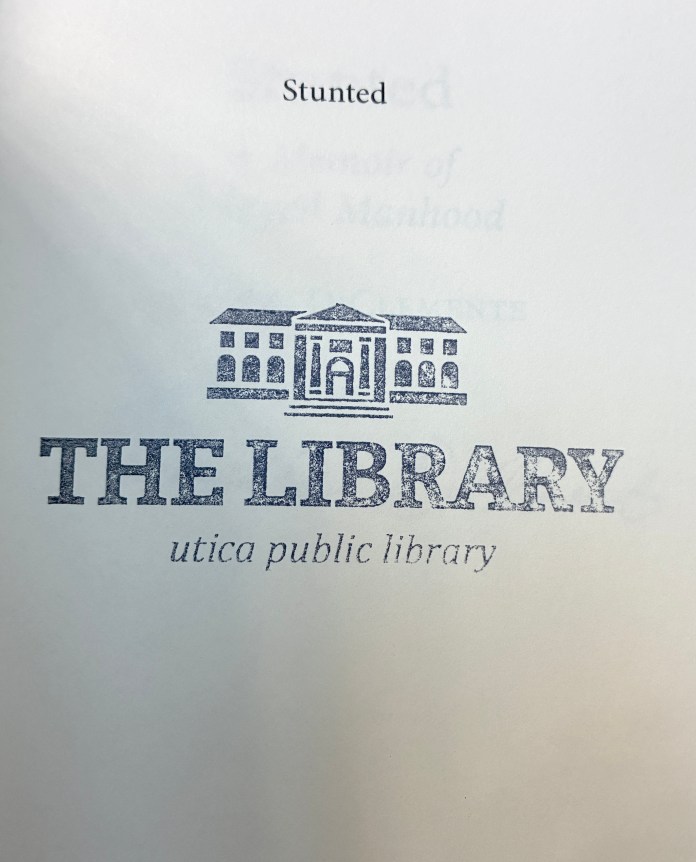
After using the restroom on the first floor, I was excited to find my book in the library’s general circulation, sitting on a shelf next to some other memoirs. It had a Utica Public Library stamp inside.
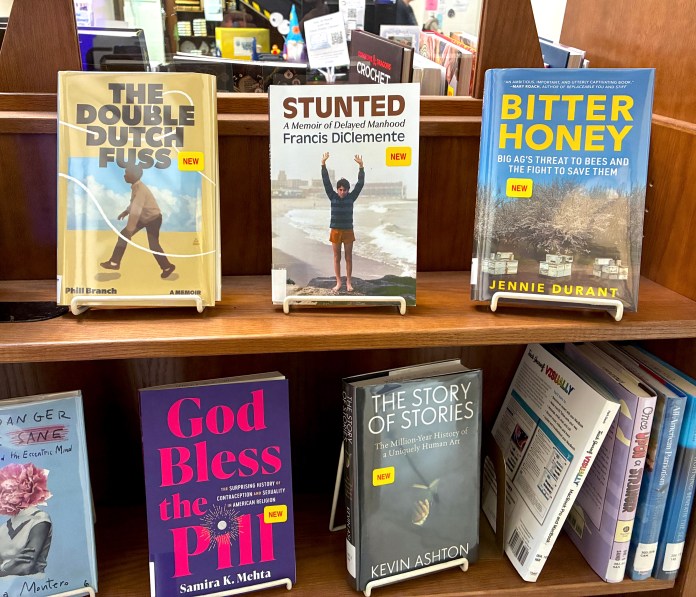
My memoir, Stunted, on a shelf at Utica Public Library.

Then I went upstairs and sat in the Music Room, waiting as 5:30 and then 5:45 p.m. came and went. I stood up and took some photos of the empty space and a selfie to document the “no-show” turnout.
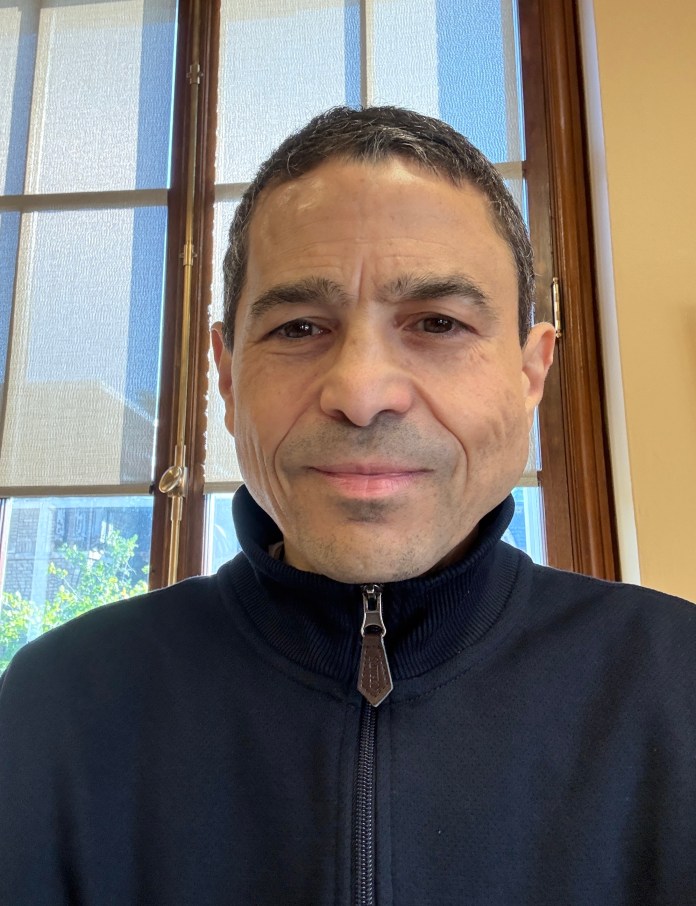
And as I stared out the window of the library, looking at the Munson art museum across the street, I acknowledged within myself the discouragement I feel about my memoir’s reception in the world more than two months after its release.

I poured everything I had into this book, writing it over the course of ten years while working a full-time day job and managing family responsibilities. And while I never expected a TED Talk or a Today show appearance to follow the release of my memoir, it’s disheartening that events have been sparsely attended and I remain stuck on four reviews on Amazon (although they have been positive). Even more so, I thought the book’s universal message of self-acceptance would resonate with a wide variety of readers.
But as I walked around the Music Room, the floorboards creaking beneath my feet, I tried to console myself by thinking a writer or artist’s career has ups and downs, highs and lows, and it’s all part of the journey.

I am also grateful to the people who have read the book and commented on it, the libraries and booksellers who have hosted me, and the local media outlets that have interviewed me or written stories about the book.
I also knew that my wife and son would greet me when I arrived home that night, and I would get up the next day and write before heading off to work at a job that paid my bills and provided health coverage for my family and me.
I was about to pack up my stuff and head downstairs to open the Uber app and book a ride home when a small, older man wearing a blue shirt and jeans held up by suspenders entered the Music Room and sat down. I thought, “OK, one is better than none.”
I asked, “Are you here for the reading?”
“Yes,” he said.
I introduced myself. His name was Bob. We shook hands, and we talked about the Utica area and its history. I asked Bob where the Saranac Brewery was located, and he rose and walked toward a window in the corner. I followed him, and he pointed toward the brewery in an area behind St. Joseph and St. Patrick Church, which could be seen in the distance.
At 6 p.m., I sat down and told Bob I’d read a little bit and then answer any questions he might have. I put on my reading glasses and was reading the prologue when I looked up and saw an older woman seated in the audience. I nodded and said “hello,” and she smiled. She said her name was Lorraine and she lived nearby. She had blond hair and glasses, was dressed in a black shirt and leopard-print pants, and wore a red baseball cap with a Flash Gordon lightning bolt on the front.
I was elated, and I made a point of listening to their questions and being fully present in the moment, giving my best effort for the two people who took time out of their day to attend a local author event.
And we had a pleasant conversation. They asked me about where I grew up, my educational background, medical and family history, and how long it took me to write the book. I enjoyed hearing about their lives. Lorraine claimed she owned more than four-thousand books. She also said she was born premature and the doctor who delivered her tossed her tiny body on a bed and said to Lorraine’s mother, “Don’t bother with her. She’s not gonna make it.”
Lorraine said she wanted to tell the doctor now, “I’m 77 years old, and I’m still here.”
Bob said he likes reading nonfiction, primarily autobiographies, nature books, and books about dogs. He asked me if I was Italian, and when I said, “Yes,” he told me he’s full-blooded Italian. He said he lives alone and shared details about two solo trips he took to Italy and Sicily, including how he met some distant cousins on one of the journeys.
Toward the end of our discussion, Bob asked if he could look at a book. I said, “Sure,” and he grabbed a book, flipped through it, stopping at certain pages, pointing to pictures, and asking me questions.
I felt so happy that Bob and Lorraine had rescued my night that I signed two copies of my book and gave them away to my new friends.
The experience made me think about one of my favorite scenes in the movie Vision Quest. It’s when high school wrestler Louden Swain (Matthew Modine) visits his friend, hotel worker Elmo (J.C. Quinn), who has taken the night off to watch Louden wrestle against Brian Shute, the best wrestler in the state of Washington. The writing and acting in the scene deliver such emotional power.
Louden tells Elmo that he shouldn’t have taken a night off from work because his pay would be docked, and that his six-minute wrestling match is “not that big of a deal.” Elmo gives a monologue about watching Pelé on TV during a soccer game, and he ends his speech with the line, “It ain’t the six minutes. It’s what happens in that six minutes.”
And the lesson for me is: It isn’t about how many people show up at a reading or event or the number of ratings and reviews on Amazon and Goodreads. It’s about the connection you form with the people who do read your book and attend your events.
I also thought, OK, so I’ll never win a Guggenheim fellowship, sell the movie rights to my book, be a bestselling author, or earn a living from my writing alone. Still, I can continue to write in my spare time and contribute something positive in my own small way.


Fran,
What a blessing that those two people came to your reading. You were able to connect with them as individuals, rather than maybe just a smattering of comments from many attendees. These two folks may tell their own friends and family members about your book, and you’ll be surprised when the books start flying off the shelves.
That library is beautiful. You should be so proud that your book is on one of their shelves!
Keep writing and keep believing in yourself. You have more people than you know rooting for you Fran.
Best regards,
Margo
Ah, thanks so much, Margo. It was a wonderful experience getting to know them. And I appreciate your kind words. I hope you and your family are doing well.