Taking Ralph on the Road

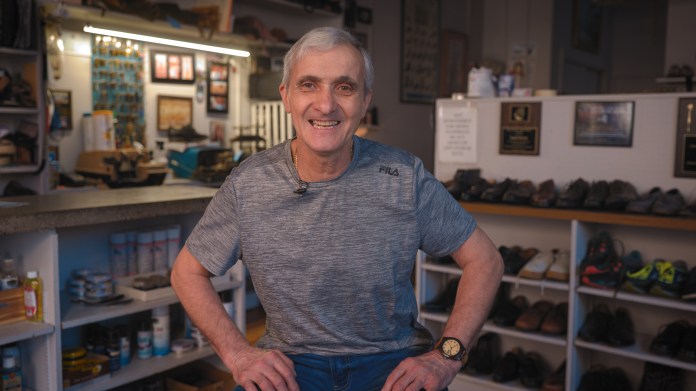
I’m happy to announce that my indie documentary short Ralph Rotella: The Sole of Syracuse, co-directed by my Syracuse University colleague Shane Johnson, is an official selection of the 2023 Culver City Film Festival.

The film will be screened in the 2 p.m. block on Monday, Dec. 4 at Cinemark 18 and XD, 6081 Center Drive in  Los Angeles.

Standard

A Textual Thanksgiving

I want to wish everyone a Happy Thanksgiving. I have much to be grateful for this year, as Black Friday marks four months since my transsphenoidal (through the nose) brain surgery on July 24.

I have rebounded. I’m back to running and lifting light weights, and I can sneeze and blow my nose without any concern about bleeding or cerebral spinal fluid leaks. I am so thankful my recovery has been steady and unremarkable, with no complications (fingers still crossed).

Interpreting the medical jargon in my latest MRI report—it seems residual tumor matter is still pressing against the optic chiasm and affecting the optic nerve. And my vision has not been fully restored since the tumor grew back a few years ago (and likely never will be). I still have double vision when looking to the far right in my peripheral field, and I need a prism on my reading glasses, which I use when working on the computer. But I can drive because I have no double vision straight on.

I want to share a few  Thanksgiving-themed poems. I am currently reading Poems 1962-2012 by the late poet Louise Glück.

Here are two poems that struck me and are relevant for the season. I must admit I don’t understand the meaning of many of Louise’s poems, but I thoroughly respect and admire her artistry with language. And the works remain open to interpretation by the reader.

Autumnal by Louise Glück

Public sorrow, the acquired
gold of the leaf, the falling off,
the prefigured burning of the yield:
which is accomplished. At the lake’s edge,
the metal pails are full vats of fire.
So waste is elevated
into beauty. And the scattered dead
unite in one consuming vision of order.
In the end, everything is bare.
Above the cold, receptive earth
the trees bend. Beyond,
the lake shines, placid, giving back
the established blue of heaven.

The word
is bear: you give and give, you empty yourself
into a child. And you survive
the automatic loss. Against inhuman landscape,
the tree remains a figure for grief; its form
is forced accommodation. At the grave,
it is the woman, isn’t it, who bends,
the spear useless beside her.

Thanksgiving by Louise Glück

They have come again to graze the orchard,
knowing they will be denied.
The leaves have fallen; on the dry ground
the wind makes piles of them, sorting
all it destroys.

What doesn’t move, the snow will cover.
It will give them away; their hooves
make patterns which the snow remembers.
In the cleared field, they linger
as the summoned prey whose part
is not to forgive. They can afford to die.
They have their place in the dying order.

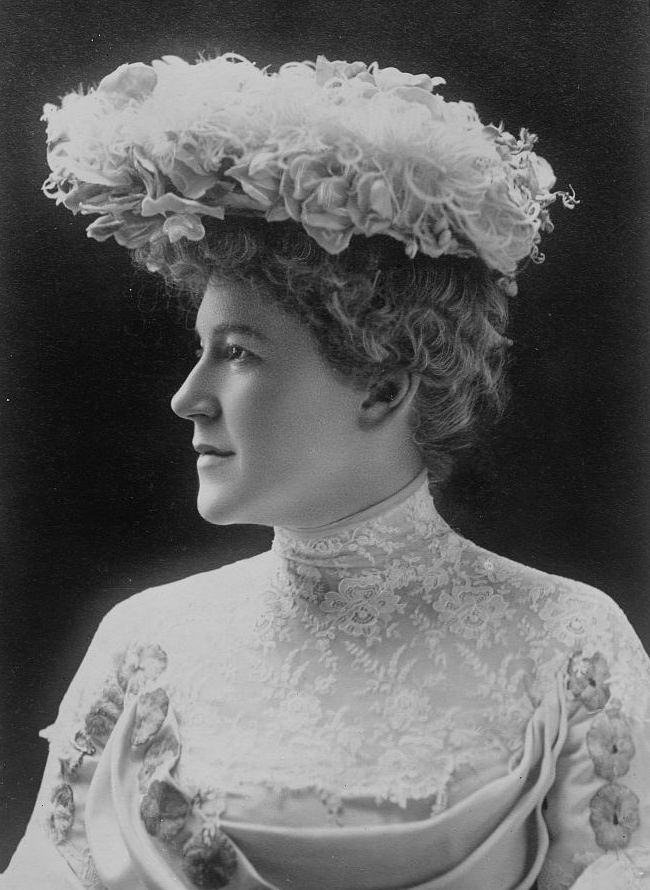
And in doing some research, I found another “Thanksgiving” poem, this one by Ella Wheeler Wilcox (1850-1919)

Thanksgiving by Ella Wheeler Wilcox

We walk on starry fields of white
And do not see the daisies;
For blessings common in our sight
We rarely offer praises.
We sigh for some supreme delight
To crown our lives with splendor,
And quite ignore our daily store
Of pleasures sweet and tender.

Our cares are bold and push their way
Upon our thought and feeling.
They hand about us all the day,
Our time from pleasure stealing.
So unobtrusive many a joy
We pass by and forget it,
But worry strives to own our lives,
And conquers if we let it.

There’s not a day in all the year
But holds some hidden pleasure,
And looking back, joys oft appear
To brim the past’s wide measure.
But blessings are like friends, I hold,
Who love and labor near us.
We ought to raise our notes of praise
While living hearts can hear us.

Full many a blessing wears the guise
Of worry or of trouble;
Far-seeing is the soul, and wise,
Who knows the mask is double.
But he who has the faith and strength
To thank his God for sorrow
Has found a joy without alloy
To gladden every morrow.

We ought to make the moments notes
Of happy, glad Thanksgiving;
The hours and days a silent phrase
Of music we are living.
And so the theme should swell and grow
As weeks and months pass o’er us,
And rise sublime at this good time,
A grand Thanksgiving chorus.

Lastly, at a recent appointment at my primary care doctor’s office, I noticed a framed picture of a prose poem entitled “Desiderata” hanging on the wall in an exam room.

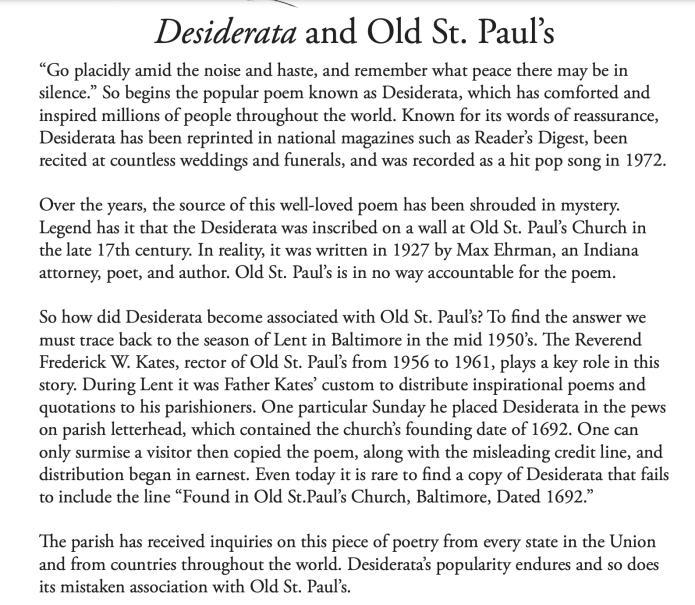
The line at the bottom of the page reads, “Found in Old St. Paul’s Church, Baltimore, Dated 1692.” But the piece was actually written in 1927 by Max Ehrman, an Indiana attorney and poet. Some information on the website of Old St. Paul’s Church recounts the story.

And here is the full text. I highlighted some parts that stood out to me.

Desiderata by Max Ehrmann

Go placidly amid the noise and the haste, and remember what peace there may be in silence. As far as possible, without surrender, be on good terms with all persons.

Speak your truth quietly and clearly; and listen to others, even to the dull and the ignorant; they too have their story.

Avoid loud and aggressive persons; they are vexatious to the spirit. If you compare yourself with others, you may become vain or bitter, for always there will be greater and lesser persons than yourself.

Enjoy your achievements as well as your plans. Keep interested in your own career, however humble; it is a real possession in the changing fortunes of time.

Exercise caution in your business affairs, for the world is full of trickery. But let this not blind you to what virtue there is; many persons strive for high ideals, and everywhere life is full of heroism.

Be yourself. Especially do not feign affection. Neither be cynical about love; for in the face of all aridity and disenchantment, it is as perennial as the grass.

Take kindly the counsel of the years, gracefully surrendering the things of youth.

Nurture strength of spirit to shield you in sudden misfortune. But do not distress yourself with dark imaginings. Many fears are born of fatigue and loneliness.

Beyond a wholesome discipline, be gentle with yourself. You are a child of the universe no less than the trees and the stars; you have a right to be here.

And whether or not it is clear to you, no doubt the universe is unfolding as it should. Therefore be at peace with God, whatever you conceive Him to be. And whatever your labors and aspirations, in the noisy confusion of life, keep peace in your soul. With all its sham, drudgery and broken dreams, it is still a beautiful world. Be cheerful. Strive to be happy.


Standard

Library Discovery

I discovered this anomaly while exploring a Central New York library.

Blonde by Joyce Carol Oates.

In this case, one little e makes a big difference, as this should be Oates, like Joyce Carol Oates or Hockey Hall of Famer Adam Oates. Not like Quaker Oats. But the little misspelling doesn’t diminish the quality of the book. Once the reader opens it, the person will get lost in the masterful storytelling and prose of JCO.

Standard

Little Victories

Happy Halloween everyone. I want to share some good news. I wasn’t going to post anything about this, but then I thougth: you have to celebrate the little victories because they don’t come along that often.

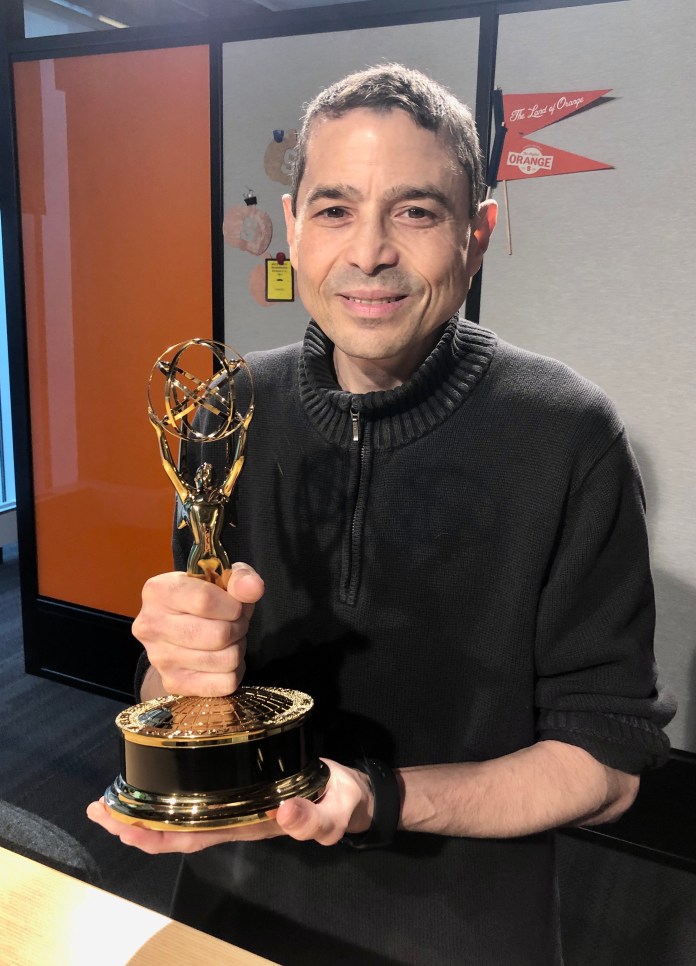
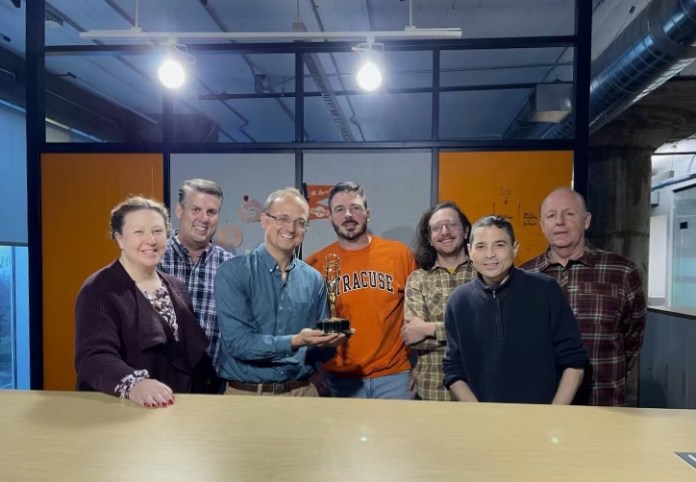
Our Syracuse University Marketing video team won an Emmy over the weekend at the 66th annual New York Emmy Awards ceremony in Manhattan.

The Emmy-winning Syracuse University Marketing video team. From left to right: Amy Manley, Joseph Heslin, Shane Johnson, Tom Colling, Joshua Waldby, Francis DiClemente, and Bob Gerbin. Not pictured: Alex DeRosa, Mary Kasprzyk, John Caiella, and Dara Royer.

Our video, Rise Beyond: Syracuse University, earned the honor in the category of Branded Content (Short or Long Form Content). The piece highlights the amazing faculty, students and alumni who pursue excellence on the Hill and beyond; in the aggregate, their individual achievements— along with the strong bond of the Orange community—define the Syracuse University brand.

Photo by Shane Johnson.

This marks my second Emmy. The first was for co-writing, producing and directing the indie documentary short The Real Bedford Falls, It’s a Wonderful Life (Honest Engine Films, 2020).

Standard

Ralph Rotella: The Sole of Syracuse

I’m happy to announce that my indie documentary short Ralph Rotella: The Sole of Syracuse, co-directed by my talented Syracuse University colleague Shane Johnson, will premiere at the Redhouse on Friday afternoon as an official entry of the Syracuse International Film Festival.

As many people in Central New York already know, Ralph is an amazing character with a generous heart, and it was a blast learning more about him.

After walking past his shop almost every day for the past few years, I felt compelled to go inside and talk to him. Inspired by Studs Terkel’s book Working, I wanted to do a mini doc to answer two questions: 1) Do people still get their shoes repaired in the 21st century 2) Can this man actually earn a living through shoe repair alone (taking into account the high cost of a downtown office building lease)? Or does he need an alternate income to survive?

Ralph Rotella hammering a heel. Photo Credit: Shane Johnson.

Ralph was a tough interview, and it was a challenge stringing together a narrative based on his terse sound bites, quips, and comedic digressions. And the film I thought I was making turned into something slightly different. But that’s the beauty of documentary filmmaking; if you take the time to pay attention to your subject, the story will reveal itself to you.

Photo Credit: Shane Johnson.

And through Shane’s fine cinematography—as we observed a “day in the life” of the shop, cinema verité style—we captured authentic personal moments that illustrate the bond Ralph shares with his customers on a daily basis.

This is Ralph’s work bench. It’s my favorite frame from the film. Photo Credit: Shane Johnson.

And here’s a little teaser we prepared in anticipation of the premiere.

Standard

Eight Weeks Later

Today marks two months since my transsphenoidal brain surgery to remove tumor regrowth. I’m happy to report I’m getting stronger every day. I’d say I’m about 80 percent back to normal. I have returned to work and jumped back into the maelstrom of marketing projects, deadlines, and responsibilities.

Eight weeks post-surgery.

My nose still throbs, and I needed a round of antibiotics for a recent infection of the cartilage. I had a follow-up appointment with the ENT surgeon; he mentioned it will take about three to six months for me to be fully healed—not surprising considering they rolled part of my septum and used it as a nasoseptal flap to patch where the cerebral spinal fluid leaked during surgery. But the good news—the seal at the back near the opening of the sphenoid sinus is holding.

My nemesis: the twice-daily nasal rinse bottle.

I still need to do twice-daily saline rinses and take Tylenol for the pain. I lifted “weights” yesterday for the first time in eight weeks—don’t laugh at my little five-pound dumbbells. I hope to resume heaving fifteen-pounders in a couple of weeks.

Hitting the “weights.”

Two songs have been repeating in my head during my recovery.

Elton John’s “I’m Still Standing.”

And Steve Winwood’s “Back in the High Life Again.”

And here’s a photo from a Walgreens: the gift of a beautiful sight revealed to me on a mundane Friday night.

Sublime sunset from a parking lot. Photo by Francis DiClemente.

Standard

Urban Exploration

I had a morning eye doctor’s appointment earlier this week. And I had some time to kill before the dilation drops rendered my eyes useless for the rest of the day. After getting off the bus at Washington Street near City Hall, I cut across Montgomery Street while making my way to Presidential Plaza.

St. Paul’s Church. Photo by Francis DiClemente.

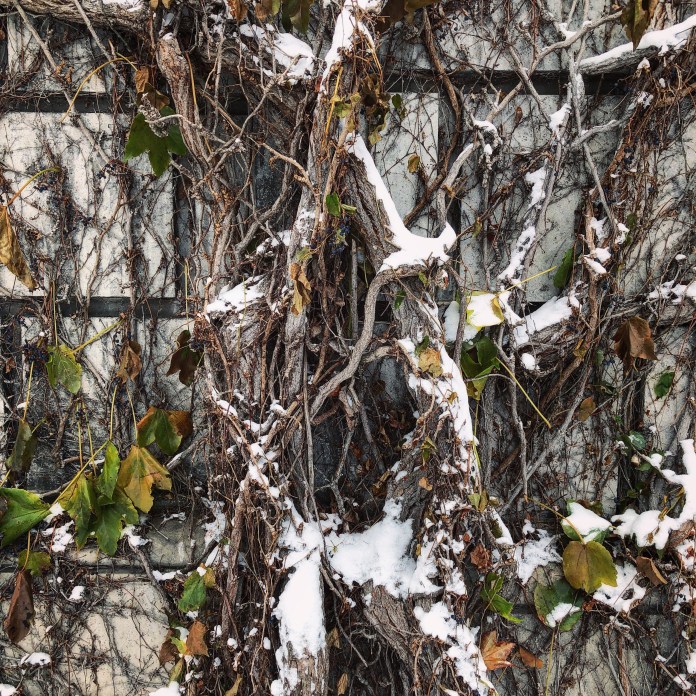
Brick wall with ivy. Photo by Francis DiClemente.

Along the way, I snapped a few photos with my antiquated, battery-challenged iPhone 8, jotted down a quick poem about some feathered denizens of the Salt City, and captured a moment of tranquility on a sunny morning downtown.

I felt grateful for the opportunity to capture a myriad of sights and sounds the universe sent my way. It was another reminder to always pay attention to my surroundings and be on the lookout for creative inspiration. Here’s the poem I wrote. It required significant revision as it made the transition from my pocket notebook to my computer.

Bird Chatter

Three pigeons
perched on a wire.

What are they
talking about
on this bright,
sunny morning?

But their conversation
is restricted—not for
human interpretation.

And the chatter ends
when the birds
lift from the wire,
taking off in formation,

flapping their wings,
and sending feathers
twirling to the ground.


Standard

Jumpcuts of Thought

I was flipping through one of my older poetry books—Dreaming of Lemon Trees: Selected Poems (Finishing Line Press, 2019)—and I came upon “Jumpcuts of Thought.” I like the stupid absurdity of it, and I thought I would share the poem, since many people have not read it in book form. It’s also one of the only poems I’ve written that employs the use of rhyme.

Jumpcuts of Thought

Clorox shine
and Rust Belt mine.

Ruddy hue
and Spade gumshoe.

Tootsie Pop
and soiled mop.

J.S. Bach
and Shakur, Tupac.

Codeine high
and ham on rye.

Minnie Mouse
and adobe house.

Petrie dish
and sardine fish.

Rockwell print
and strand of lint.

Ruby Dee
and Wounded Knee.

Swollen lip
and radar blip.

Clark Gable
and Aesop fable.

Toilet seat
and sirloin meat.

Shower stall
and Camus’s The Fall.

Mustard green
and college dean.

Lowell, Mass.
and Namath pass.

The odd pairings
go on and on,
in this celebration of incongruity—
a verbal exercise
to stimulate the mind.


Standard

My Coffee Ritual

I just want to share that I have a short essay published in the literary magazine The Bookends Review. You can read the piece here.

Standard

Late August

Today marks one month since my brain surgery. My recovery is going well, but I’m still not back to full strength.

I’ve been walking in my neighborhood to build up my stamina. I’m still using the cane I received when I was discharged from the hospital, but I hope to ditch it soon.

When I walk, I don’t listen to music or podcasts. For safety reasons, I need to hear cars approaching, and I also keep my ears open for stimulating sounds—birds, wind chimes, children playing, etc.

A lot of times, I get ideas for poems while out on my walks. Often, one line will pop into my head and start me down the path of writing a poem. Recently, I was walking and thinking about the end of August, and this line came to me: It’s always sad when summer ends. I jotted the line down in the small notebook I carry with me. After some work, this is the poem I produced:

Late August

It’s always sad when summer ends.
But avoidance of the inevitable is impossible.
And in this season of life, a little winter must come.
So I tell myself to stop being disgruntled
by summer’s death and autumn’s arrival,
and instead get to work—starting with
descending the cellar steps and bringing up
the long johns, flannel shirts, and heavy wool socks.

It’s not the greatest poem in the world. But I like that I followed the trajectory the poem wanted to take—starting with one line, then others scribbled in my notebook, followed by revisions on the computer.

So I recognize the importance of awareness and paying attention to both external and internal stimuli to use as raw material for poetry (and stories, etc.).

And this reminds me of a line from the Grateful Dead song “Scarlet Begonias” (thank you, Robert Hunter):

Once in a while, you get shown the light
In the strangest of places if you look at it right …

Standard