Animal Poems

Because fall is a season of migration, I thought I would share a string of animal-themed poems. I also recently watched the American Masters documentary Mary Oliver: Saved by the Beauty of the World, and I was inspired by Oliver’s poems about the natural world. I hope to pay more attention to nature in my own life as autumn transitions to winter.

Bird Observation

A seagull fluttering
In the wind,
Intent on adhering
To some preordained
Flight pattern.

Wings outstretched
Above a traffic light—
How pretty the bird looks
Center framed in my windshield.

Witness

I look up as a group of birds
circles buildings in downtown Syracuse.
I resist the urge to pull out my cellphone
and snap a picture for Instagram.

Instead, I hold my gaze skyward,
letting the wind swirl around my face
and the rain patter my forehead,
as the birds duck in unison
behind a limestone structure—
the moment preserved nowhere except in my mind.

No pictures retained or sound recorded.
No trace of the birds in digital form.
And I think that’s the point, that’s life—
a collection of these impromptu glimpses of existence,
built into a collage, a kaleidoscope of images
demanding attention when presented.

From The Truth I Must Invent (Poets Choice, 2016)

Morning Flight Path

Three gray-white pigeons
flap their wings
as they dart into
a canopy of trees
outside a nursing home.

Their action reminds
the residents inside
that flight is attainable,
despite fragile bones
and defective hearts.

Yes, the senior citizens
can fly,
at least vicariously,
as long as they can
peer out their grimy windows
and suspend time,
while watching the pigeons
scudding across
the cerulean sky.

Aloft

A line of black birds perched
on a faded red billboard
overlooking Interstate-81
in downtown Syracuse—
feathered sentries
making aerial observations
of life thrumming below.

Squirrel No More

While walking along Walnut Avenue
near my apartment complex,
I see a dead squirrel splayed
in a shaded area close to the curb—
front paws erect, a rivulet of
brownish-red fluid
leaking from its head.

A fresh kill. A pelt of brown-black fur
pressed against the asphalt
like some animated character
in a Bugs Bunny cartoon.

I wonder whether I should call
the New York State Department
of Environmental Conservation.
Does the decaying organic matter
pose a health risk?

Should I pull the squirrel off to the side,
toss it in the high grass
adjacent to the curb?
Or let nature take its course—
with wind, rain and runoff
eroding the animal or
crows eating the meat?

And then more existential
queries fill my head.
Does the squirrel’s family miss it?
Are they conducting a neighborhood search?
Will they mourn the loss of their relative?
Do squirrels have souls?
Is there a heaven for rodents?

I don’t why this little animal’s death
seizes my attention,
but the small figure left out in the open
triggers a sense of pity.

And on this warm, sunny day
with blue skies above me
and trees swaying in the breeze,
with insects buzzing and
flowers bursting with color,
with so much life abounding—
the squirrel gets no more.

No more summers.
No more scurrying across power lines
or cutting through green fields.
No more autumn days
spent climbing trees and storing nuts.

The squirrel’s fate
reminds me once again
that death shall come to all of us
in one form or another.
In the end, all mammals will be
spattered in the road.
And I accept this fact
as I continue walking home.

From Outward Arrangements: Poems (independently published, 2021)

Contrast

Feathers replace leaves
In the naked trees
Looming above Genesee Street,
As flocks of crows arrive to
Take their repose and roost for the night,
The clumps of birds stretching for blocks,
A curtain of black set against
The landscape bleached white by
Fresh-fallen snow and layers of rock salt.

The Mystery of the Wolf

A summer evening in upstate New York—
a backyard sprinkler hisses
while the smell of fresh-cut grass
is pungent and delicious.
Crickets chirp and a coffee-colored mare
snorts from across the barbed-wire fence.

I am alone, kicking a soccer ball,
when a gray wolf emerges from
the high weeds lining the fence.
I try to run, but my legs lock up,
and I tumble to the ground.

The wolf circles me,
then sweeps in on my limp frame.
I can hear its stomach growling
as it hovers over me.
The tongue is extended
and drool splashes my face.
The wolf takes my neck in its mouth,
but does not bite down.

And I wake up in my bed,
thankful that the encounter is just a dream.
I am safe, and no wolf invades my room.
Yet I remain troubled,
afraid of closing my eyes,
drifting back to sleep
and ending up at the mercy
of another predator.

From Dreaming of Lemon Trees: Selected Poems (Finishing Line Press, 2019)

On the Other Side

The brown rabbit bounded across the road,
hind legs lifted in the air.
It beat the oncoming traffic
and darted into the underbrush,
a blur of fur dancing from sunlight to shadow.
The animal’s small heart throbbed in its chest
as it listened to the roar of cars rushing by.
It nibbled on some grass and rested for the night—
deciding to stay in place, ensconced in the bushes,
safe, alert, alive—
and feeling the air moving through its lungs,
breathing slower and slower and slower still.

Hard Shell

What goes through the mind of a turtle
When it’s sprawled on its back and can’t roll over?
Does it panic as its legs squirm in the air?
Does it stick out its tongue and try to scream for help?
Does it curse its maker as it writhes on the asphalt,
With the sun scorching its belly?
How long does it wait before giving up and accepting fate?

No. This turtle does not think.
It lacks the capacity to reason.
Instincts fire as it battles to survive:
“Get off your shell. Roll over. On your feet.”
It rocks from side to side as it labors to turn over.
It strains, twists, and kicks . . . but fails.

And no one will intervene—
There’s no Tom Sawyer kid with a hickory stick,
Skipping along and flipping the turtle over.
No semi-truck rumbles down the road,
Stirring up a blast of air and setting the turtle upright.

It struggles alone, refusing to quit
As it attempts to conquer physics.
The turtle keeps working
Until the sun desiccates its flesh,
And it releases a final breath—
A low croak that goes unheard along the deserted road.
The turtle is gone and no one witnessed the fight.

The Hawk

With wings outstretched,
A hawk hovers overhead.
I look up, admiring its flight.
The bird remains aloft,
As a gust of air carries it along
In the stillness of the afternoon.
The hawk soars between the campus buildings,
Then disappears from my sight,
As it pursues a quarry or
Scans the horizon for a perch.

But “no,” I think:
That’s not the way to end the poem.
The lines fail to capture the
Majesty of this creature.
And I realize any words I write
Are doomed to fall short,
As poetry can never improve
What nature has made perfect.

From Sidewalk Stories (Kelsay Books, 2017)


Standard

Hoarding Fortunes

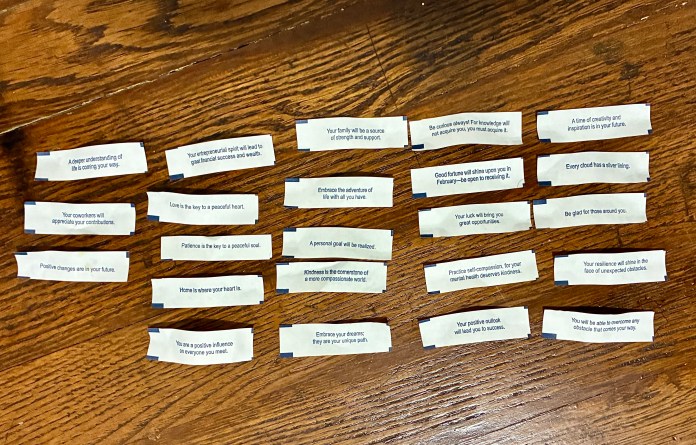
I previously wrote about the inspiration I received from a bag of fortune cookies my wife bought at the Asian Food Market in Syracuse.

Well since then, she has purchased more bags of cookies, and I’ve been hoarding the fortunes I’ve extracted from the treats, piling the little white slips of paper on my writing desk.

I decided to gather them together and draft a poem in list form—compiled by me but written by an anonymous author. I have divided the text into two categories: General Wisdom and Personal Wisdom. I’ve also added my comments in italics.

Hoarding Fortunes

General Wisdom:

Home is where your heart is. (Agree in principle. But what constitutes home?)

Love is the key to a peaceful heart. (Agree.)

Kindness is the cornerstone of
a more compassionate heart. (Agree.)

Be glad for those around you. (Yes. I will try this when not stricken with envy.)

Patience is the key to a peaceful soul. (Agree, but difficult in practice.)

Practice self-compassion, for your
mental health deserves kindness. (Agree, 100 percent. But can your mental health actually deserve kindness?)

Ever cloud has a silver lining. (Every silver lining has a Touch of Grey).

Embrace the adventure of
life with all you have. (The “all you have” trips me up. Does this mean I need to go hiking in the Himalayas?)

Don’t hesitate to take control and
push things in the right direction. (What control do we really have?)

Be curious always! For knowledge will
not acquire you, you must acquire it. (Agree about the curious part, but the knowledge line trips me up.)

Personal Wisdom:

Positive changes are in your future. (Wait and see.)

Good things will shine upon you in
February—be open to receiving it. (Why February? It’s the worst month of the year in my area. What good things? Subzero temperatures and three feet of lake-effect snow?)

A time of creativity and
inspiration is in your future. (I sure hope so.)

Your luck will bring you
great opportunities. (Unlikely.)

Your positive outlook
will lead you to success. (Possibly.)

A deeper understanding of
life is coming your way. (I’m getting older, so I hope wisdom comes with age.)

A personal goal will be realized. (Maybe.)

Your entrepreneurial spirt will lead to
great financial success and wealth. (Reality check. I am entrepreneurial, but I don’t foresee huge wealth in my future.)

Your resilience will shine in the
face of unexpected obstacles. (I’ll try.)

You will be able to overcome any
obstacle that comes your way. (Highly unlikely.)

You are a positive influence
on everyone you meet. (I try to be, but maybe it’s because I don’t reveal what I’m actually thinking.)

Your coworkers will
appreciate your contributions. (I hope so, but they may also get annoyed with me.)

Your family will be a source
of strength and support. (Agree.)

Embrace your dreams;
they are your unique path. (Yes. But the pessimist in me acknowledges that most of my dreams will never come true. And that’s OK.)

Standard

Mid-Week Bukowski

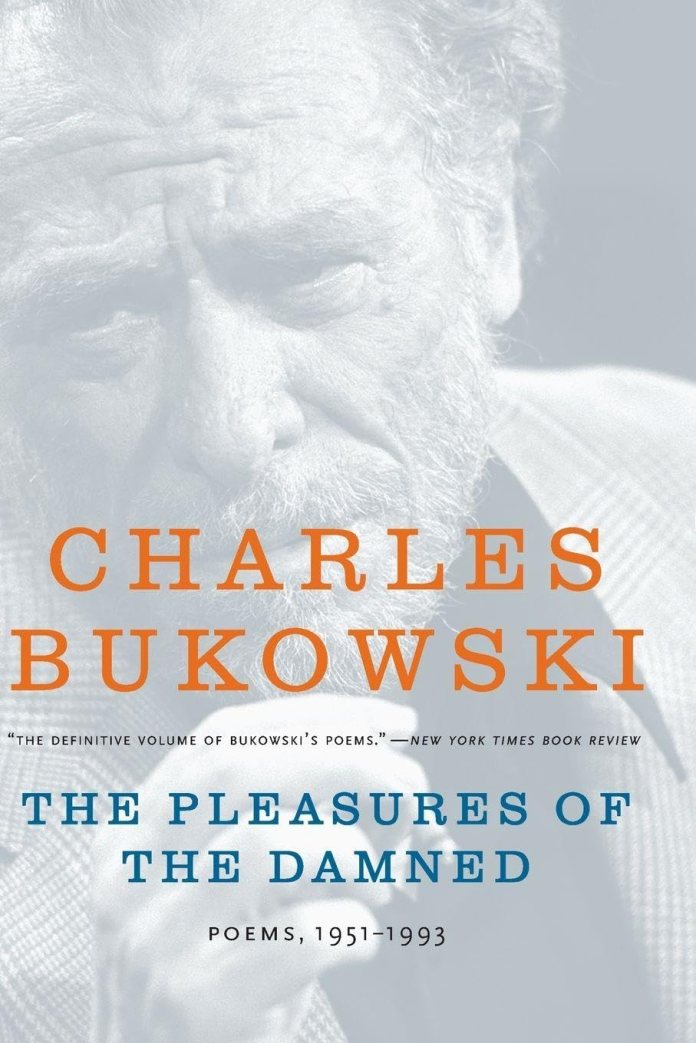
I am reading Charles Bukowski’s The Pleasures of the Damned: Poems, 1951–1993 and wanted to share some poems that struck me. Bukowski’s reputation as a sexist, hard-drinking, gambling poet of the underground is accurate. However, he also has a tender side, which he demonstrates in this collection. Some of the poems deal with his cancer diagnosis and impending death. He died of leukemia in 1994 at the age of 73.

Mind and Heart

unaccountably we are alone
forever alone
and it was meant to be
that way,
it was never meant
to be any other way–
and when the death struggle
begins
the last thing I wish to see
is
a ring of human faces
hovering over me–
better just my old friends,
the walls of my self,
let only them be there.

I have been alone but seldom
lonely.
I have satisfied my thirst
at the well
of my self
and that wine was good,
the best I ever had,
and tonight
sitting
staring into the dark
I now finally understand
the dark and the
light and everything
in between.

peace of mind and heart
arrives
when we accept what
is:
having been
born into this
strange life
we must accept
the wasted gamble of our
days
and take some satisfaction in
the pleasure of
leaving it all
behind.

cry not for me.

grieve not for me.

read
what I’ve written
then
forget it
all.

drink from the well
of your self
and begin
again.

Cancer

half past nowhere
alone
in the crumbling
tower of myself

stumbling in this the
darkest
hour

the last gamble has been
lost

as I
reach
for

bone
silence.

So Now?

The words have come and gone,
I sit ill.
The phone rings, the cats sleep.
Linda vacuums.
I am waiting to live,
waiting to die.

I wish I could ring in some bravery.
It’s a lousy fix
but the tree outside doesn’t know:
I watch it moving with the wind
in the late afternoon sun.

There’s nothing to declare here,
just a waiting.
Each faces it alone.

Oh, I was once young,
Oh, I was once unbelievably
young!

Bukowski, Charles. The Pleasures of the Damned: Poems, 1951–1993. Edited by John Martin, Ecco, 2007.

Standard

Landscape

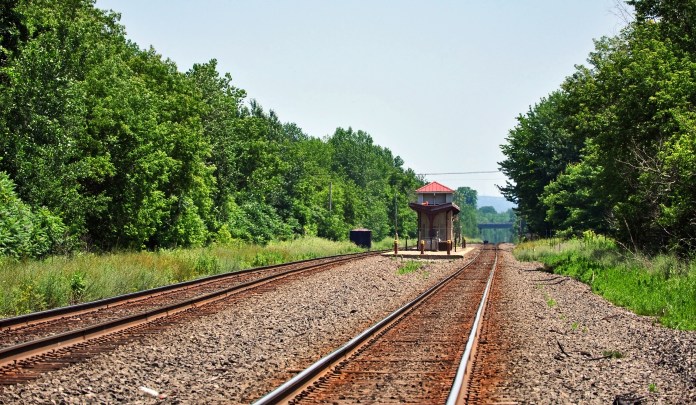
Train tracks in Rome, New York. Photo by Francis DiClemente.

Landscape

Beauty abounds.
Just look around
and you will see—
a quivering leaf,
a patch of grass,
billowing clouds,
and a slash of light
beneath the bridge.

It’s not a bad world, really.
We just need
to train our eyes
to gaze with wonder,
and marvel at the
transcendental pageantry of life.

It’s there before you.
But first you must
ZOOM OUT—
ZOOM OUT
and refocus the image.
There. Hold it.
Do you see it now?

Originally published in Sidewalk Stories (Kelsay Books, 2017).

Standard

Verbal Detour

“Scenes from a Dream Landscape” is an experimental poem that was published in my collection Vestiges (Alabaster Leaves Publishing/Kelsay Books, 2012). The original version was much shorter, and while editing the Vestiges manuscript, I challenged myself to go deeper, exploring the idea of a “dream landscape” by continually asking, “What if?”

For some reason, I’ve linked the poem to the U2 song “A Sort of Homecoming” from the album The Unforgettable Fire (one of my all-time favorites). I don’t understand the meaning of the song, but I love the poetic lyrics, especially these lines:

“And you hunger for the time
Time to heal, desire time
And your earth moves beneath
Your own dream landscape . . . ”

Scenes from a Dream Landscape (Alternate title: The Keith Jackson Poem)

A shaft of morning sunlight,
the sounds of the city awakened,
a hallway carpeted with beige sequins,
a keyhole in an apartment door
revealing a woman lying on a bed,
her thigh exposed and covered in blood,
a ticking clock pasted to a nose missing the rest of its face,
a passageway to a cellar overcrowded with dancing wax figures,
an old woman on a sofa
knitting the blond hair of a girl chained to the floor,
a kitchen table made of stone and cluttered with
smashed whiskey bottles and ashtrays engulfed in flames,
a bookcase filled with only one volume—Kafka’s The Trial,
an oil painting of an electric fan
spitting green pigment in all directions.

You go deeper into the unknown,
propelled by an urge to make sense of the images.
You knock twice at the door, then turn the doorknob and enter.
And then you see yourself standing
in front of a funhouse mirror under bright pink lights.
A warbled, digital voice says:
“Welcome to our experiment on human unconsciousness.
We thank you for being a test subject.”
The lights go out, blackness cloaks you, a door swings open,
and now you are being moved
along a conveyer belt inside a stadium tunnel.

The Rose Bowl. Photo Credit: Visit Pasadena.

You come to the place where the cement overhang meets the sky.
You lean over the orange metal railing and now you see
thousands of people dressed in white hospital gowns,
sleeping on cots spread out on the turf of the Rose Bowl.
The sun begins rising and bathes the San Gabriel Mountains.
Keith Jackson’s voice comes over the public address system
and announces, “Please welcome our new guest.
Our breakfast special this morning
is poached ankles and toasted eyelids.
And don’t forget to swallow your medication
immediately after eating.
We hope you’ll join us later this afternoon
when the Ohio State marching band
takes the field and dots the I.”

Next you feel two small knees pressing against your chest
and a set of hands tugging at your ears.
Your eyes open and you find blessed comfort
in the face of your daughter Mary,
who screams, “Get up Daddy. You can’t sleep all day.”
Keith Jackson’s morning announcements then fade out,
replaced by a request for pancakes,
orange juice and a trip to the zoo.

Standard

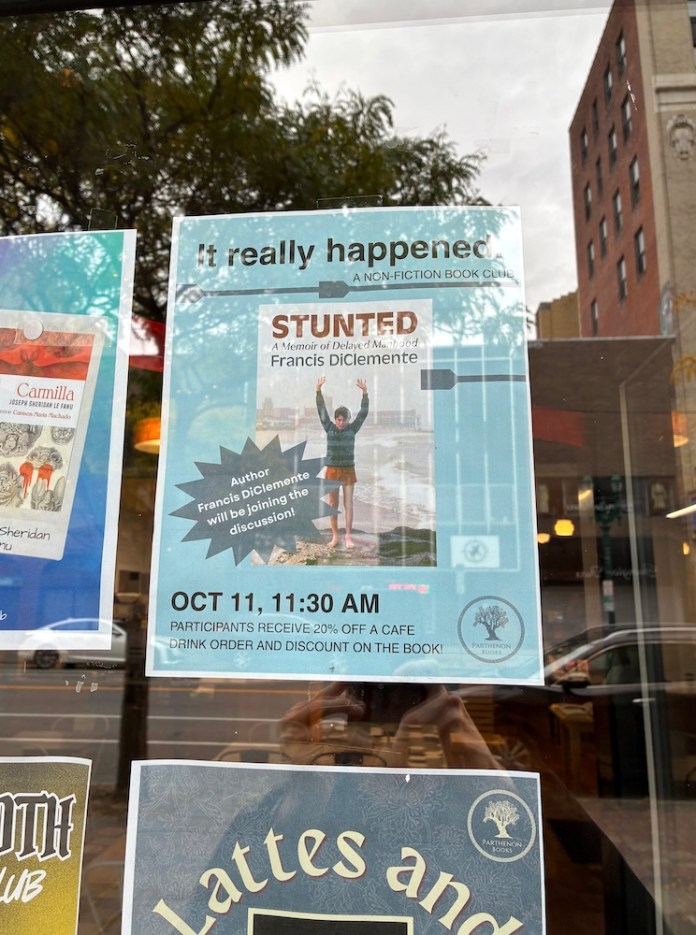
Busy Vacation

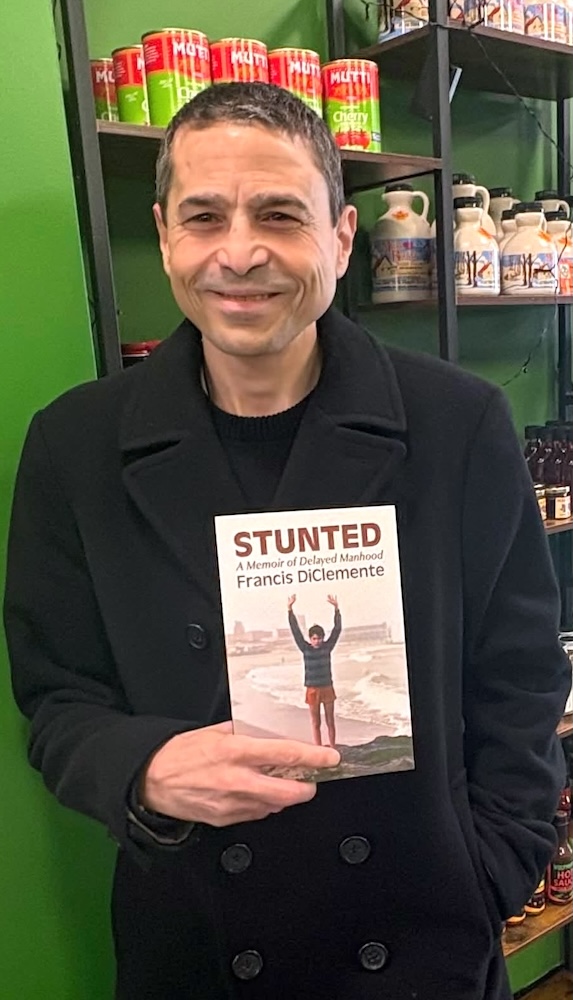
I had a busy and not-so-restful “staycation” in Syracuse this past week with events tied to the launch of my book, Stunted: A Memoir of Delayed Manhood. On Tuesday, June 23, I traveled to my hometown of Rome, New York, for a book reading at Jervis Public Library.

I hadn’t visited the city since Thanksgiving, and the maple trees were in full bloom with branches overhanging the streets in north Rome, presenting a dense, chartreuse canopy. Here’s a picture of some trees I saw near Jervis’s parking lot.
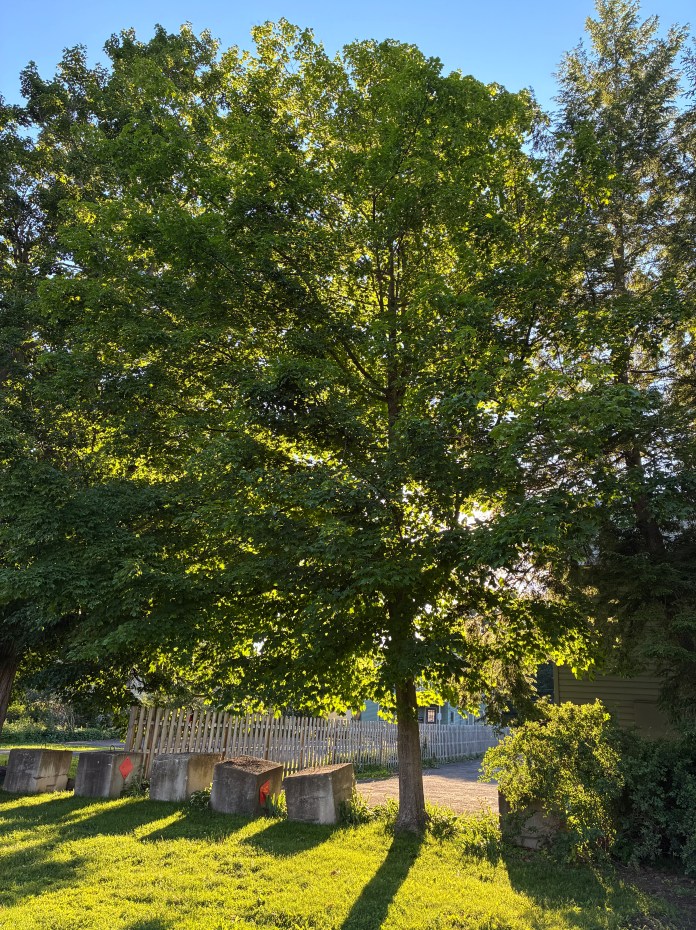
Since my dad, mother, and stepfather have all passed away, I don’t get back to the Copper City very often, and when driving northbound on Black River Boulevard or James Street, I feel more like a visitor than a native Roman. But even so, Rome will always be home to me.

I met my friend Bill Vinci (host of The Empire Plate web show) in the parking lot of Jervis, and we talked for about twenty minutes before he had to leave for a fantasy baseball meeting. It was a beautiful summer night, and attendance was sparse for the reading. But a former neighbor, some friends from high school, my brother, Dirk, and his partner, Donna, and my friend, Bill Soldato (author “Billy the Liquor Guy”) showed up, and I was able to reminisce and catch up with them.

Most of all, I was elated to be holding an event inside the confines of Jervis Public Library—reading from a book I had actually written. That’s because when I was a child, I discovered a love of books and reading at Jervis. And while I attended Mass at St. John the Baptist Church, Jervis served as my true cathedral of learning. It provided a foundation for what would become a literary life and was also a refuge, a safe space where I could escape the domestic unrest punctuated by my parents’ quarrels during my formative years.

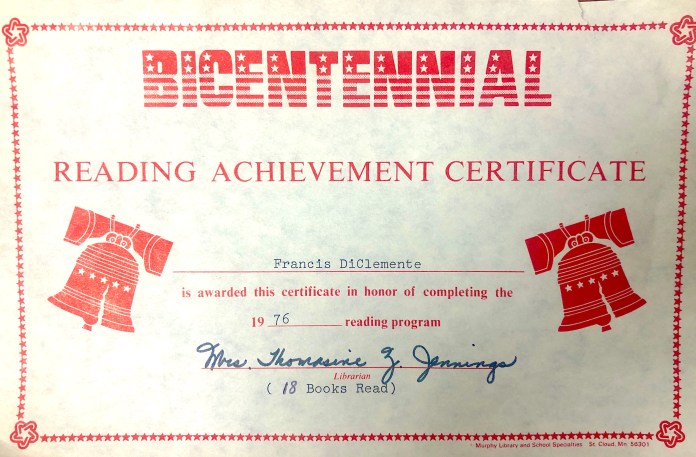
During America’s Bicentennial year of 1976, my mother had enrolled me in a summer reading program at Jervis. I was six years old and turning seven that August. The librarian had divided the group into two teams, and we competed against each other for the book tally. I read eighteen books that summer, and I have the certificate to prove it.
While walking through the stacks before my reading, I remembered how the library had introduced me to writers like Ray Bradbury, Ernest Hemingway, John Steinbeck, Thomas Wolfe, Albert Camus, Hermann Hesse, Mark Twain, Sir Arthur Conan Doyle, Virginia Woolf, Charlotte Brontë, and so many others.

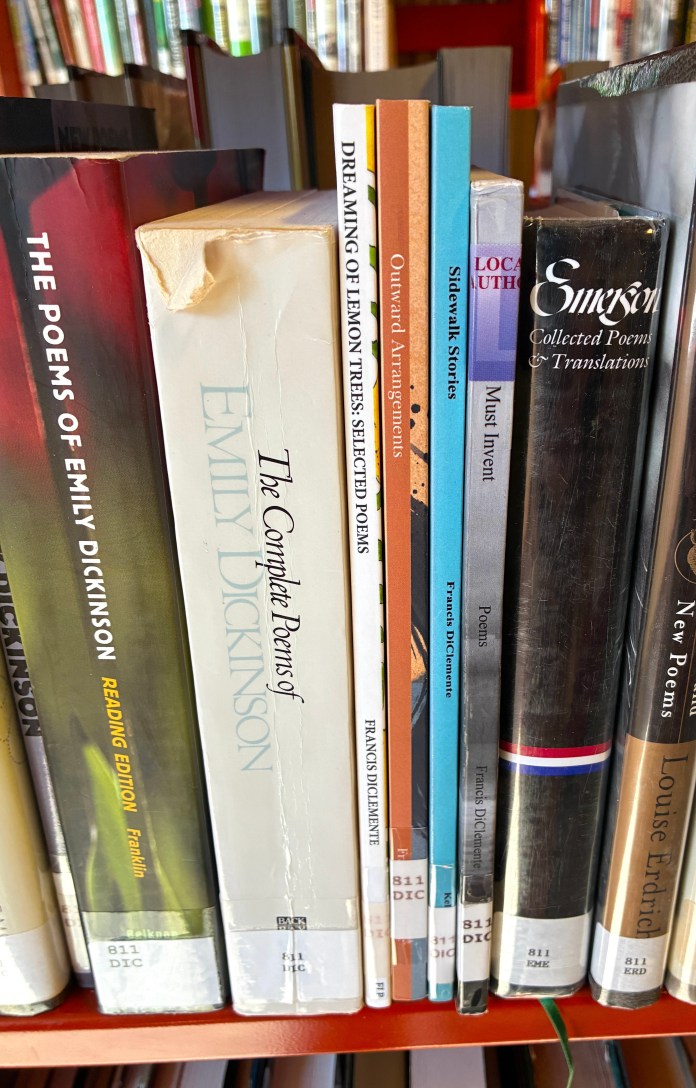
Later, I found some of my poetry books in Jervis’s circulating collection, resting on a shelf in the Literature section, sandwiched between poetry books written by Emily Dickinson and Ralph Waldo Emerson. I thought: “I’ll take it. Not too shabby company.”
##

The following day, Wednesday, June 24, I appeared as a guest on the lifestyle show Bridge Street on WSYR-TV (NewsChannel 9).

I was nervous about the segment because it’s live television. And as a longtime video producer, I’m used to being behind the scenes during production (where I am most comfortable), not acting as a guest or interview subject. Fortunately, once a female member of the crew mic’d me up, and I sat in the guest chair, the interview with hosts Iris St. Meran and Erik Columbia lasted only about five minutes.

Here’s the link if you want to watch it.

I’m abstaining because I don’t want to torture myself. On the way home, I thought about five things I should have said that slipped my mind in the haze of the bright lights and nervous energy of live TV. And to protect my fragile self-esteem, I don’t want to see how I looked and sounded on screen, which I know goes against a book promoting self-acceptance. But as I said in the interview, self-acceptance is a daily effort (and a struggle for me).

##

On Friday, June 26, I was fortunate to read some poems, along with three other poets, as a participant in Verse & Waltz: An Evening of Poetry and Brahms, presented by the Oneida Lake Arts and Heritage Center at St. David’s Parish Hall, in Fayetteville. One of the poems I read came from Stunted.

The theme of the night was “love,” and each poet was allotted about seven minutes. Because I do them so infrequently, I tend to overprepare for readings. I am apprehensive about reading my poems, and I feel the page is the primary home for my verses. I write to be read in text form, as opposed to being heard. So in getting ready for the event, I printed the poems I considered reading for the evening.

I ended up with too many options, but it was a great exercise because I edited a number of the poems—noticing in many places, the works would be much stronger if I cut lines. I also replaced words that would be difficult to pronounce; hence: clasps became clutches, aquiline became beak-like, and vestibule replaced lobby.

I read through my poems, then sat back and enjoyed the music in the second half of the program. And all the German waltzes and fine singing made me want to watch The Sound of Music again.

In preparing for the reading, I realized I have written many poems that have only been published in collections that are print on demand or had small print runs, meaning several verses have had limited release. I do submit poems to magazines and literary journals, but the fees restrict the number of submissions, and the competition for publication is also fierce.

So I’ll be going through my previous collections and publishing them as standalone posts on my blog.

Here are some poems culled from my potential reading list from Friday night. I’ll start with one that is unpublished.

The Safe

In my head
I know
the meaning
of living
is to unlock
the safe
enclosing
the heart
and give
what love
you own
to others.

I fall short—
collecting
but failing to
distribute
the love
I possess.
And so
I ask myself:
Just why am I
holding on to
all that surplus?

In Another Life

In another life,
we would have slow-danced
to Willie Nelson music
in a townie bar in the Catskills,
and made love in your father’s tool shed
on a Sunday afternoon.
In another life,
we would have been married
at sunset in Sylvan Beach, New York,
on a warm June night.

In another life,
we would have had a son named Isaac
and a daughter named Rose.

In another life,
I would have been a master pastry chef
and you a renowned neurosurgeon.

In another life,
troubles would have come,
as they always do,
but our love would have been unshaken.

In another life,
you would have been
more than just a glimpse,
a face in a car rushing by me
in the opposite direction.

(From Sidewalk Stories, Kelsay Books, 2017)

Mother at a School Bus Stop

A middle-aged woman with a white canvas coat
stands with her two young children
at a school bus stop on a misty gray morning.
The boy and girl are bundled up
and jabbering as they bounce around—
unaware that Mondays should be devoid of glee.

When the bus pulls up, the mother hugs the children.
The kids separate from her breast,
scurry up the steps and claim an empty seat up front.
The mother waves goodbye to the little faces
pressed against the window and watches
as the bus pushes away from the curb,
ejecting a thin cloud of exhaust.

The woman turns around,
waits for the traffic light to change
and then crosses the street,
marching up the block to return home.
Once there, dirty dishes, unmade beds and
cigarette butts heaped in black plastic ashtrays
demand her attention until mid-morning,
when the woman leaves the house and rushes to work.

She then counts down the hours
until the school bus returns to the curb
and her two kids hop off and leap into her arms,
almost in unison.

(From Dreaming of Lemon Trees: Selected Poems, Finishing Line Press, 2019)

Landscape

Beauty abounds.
Just look around
and you will see—
a quivering leaf,
a patch of grass,
billowing clouds,
and a slash of light
beneath the bridge.
It’s not a bad world, really—
we just need
to train our eyes
to gaze with wonder,
and marvel at the
transcendental pageantry.
It’s there before you.
But you must zoom out,
zoom out
and refocus the image.
There. Hold it.
Do you see it now?

(From Sidewalk Stories, Kelsay Books, 2017)

Vestiges

My parents are gone.
They walk the earth no more,
both succumbing to lung cancer,
both cremated and turned to ash.

With each passing year,
their images become more turbid in my mind,
as if their faces are shielded
by expanding gray-black clouds.
I try to retain what I remember—
my father’s deep-set, dark eyes and aquiline nose,
my mother’s small head bowed in thought or prayer
while smoking a cigarette in the kitchen.

I search for their eyes
in the constellations of the night sky.
I listen for their voices in the wind.
Is that Rite Aid plastic bag snapping in the breeze
the voice of my father whispering,
letting me know he’s still around …
somewhere … over there?
Does the squawking crow
perched in the leafless maple tree
carry the voice of my mother,
admonishing me for wearing a stained sweater?

Resorting to a dangerous habit,
I use people and objects as “stand-ins”
for my mother and father,
seeking in these replacements
some aspect of my parents’ identities.

A sloping, two-story duplex with cracked green paint
embodies the spirit of my father saddled with debt,
playing the lottery, hoping for one big payoff.
I want to climb up the porch steps and ring the doorbell,
if only to discover who resides there.

In a grocery store aisle on a Saturday night
I spot an older woman
standing in front of a row of Duncan Hines cake mixes.
With her short frame, dark hair, and glasses,
she casts a similar appearance to my mother.
She is scanning the labels,
perhaps looking for a new flavor,
maybe Apple Caramel, Red Velvet, or Lemon Supreme,
just something different to bake
as a surprise for her husband.
A feeling strikes me and
I wish to claim her as my “fill-in” mother.
I long to reach out to this stranger in the store,
fighting the compulsion
to place a hand on her shoulder
and tell her how much I miss her.

I fear that if my parents disappear
from my consciousness,
then I too will become invisible.
And the reality of a finite lifespan sets in,
as I calculate how many years I have left.
But I realize I am torturing myself
with this twisted personification game.
I must remember my parents are dead
and possess no spark of the living.
And I can no longer enslave them in my mind,
or try to resurrect them in other earthly forms.
I have to let them go.
I have to dismiss the need for physical ties,
while holding on to the memories they left behind.

And so on the night I see the woman
in the grocery store aisle,
I do not speak to her,
and she does not notice me lurking nearby.
But as I walk away from her,
I cannot resist the impulse to turn around
and look at her one last time—
just to make sure
my mother’s “double” is still standing there.
I want her to lift her head and smile at me,
but she never diverts her eyes
from the boxes of cake mixes lining the shelf.

(From Sidewalk Stories, Kelsay Books, 2017)
 

Standard

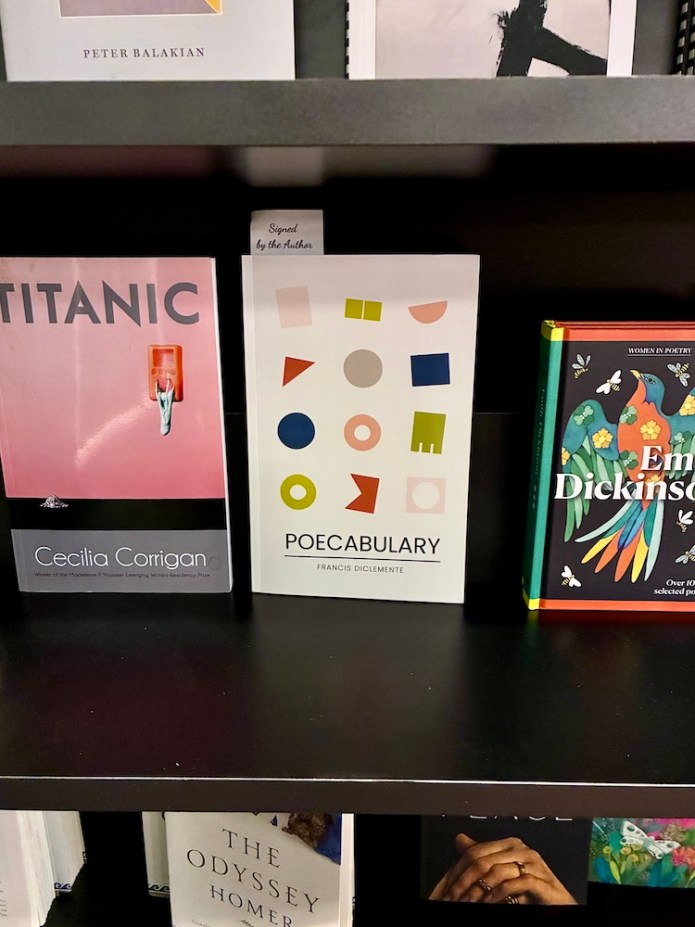
Poecabulary: One Year Later

One year ago this week, I published my wacky passion project, Poecabulary, which is a minimalist poetry collection and conceptual art piece. To celebrate, I am running a free Kindle book promotion through Friday, June 5. If anyone would prefer a PDF version, please email me at ffd1284@gmail.com.

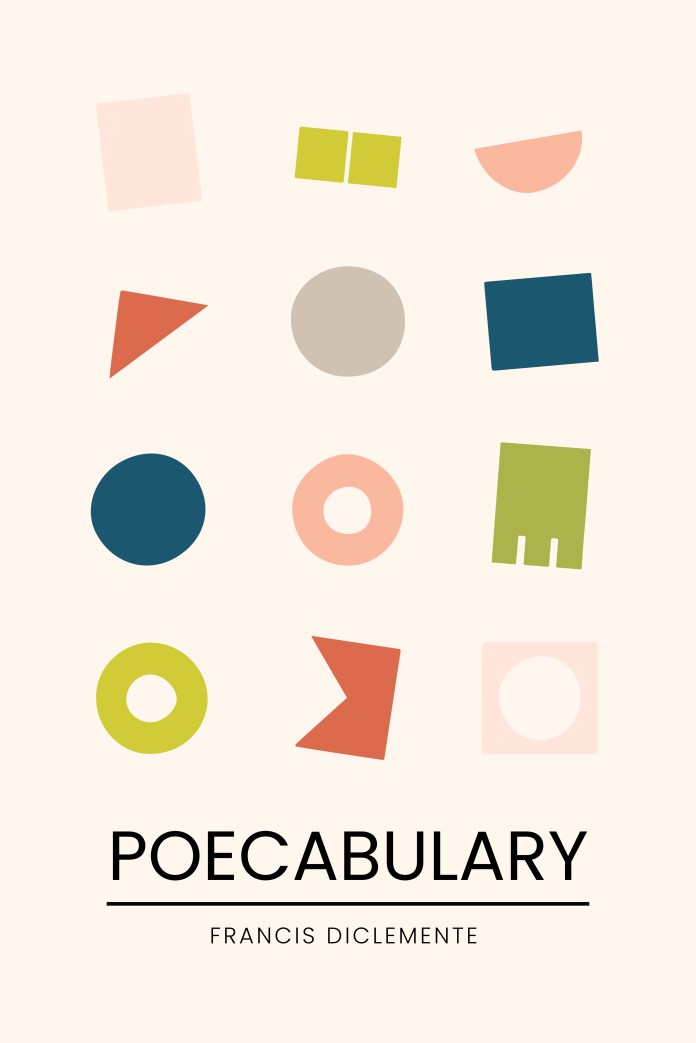
Poecabulary front cover.

This project originated with some wordplay and Photoshop edits back in 2013. And while the collection contains fewer than 700 words (across 190 pages), it took me more than ten years to curate, select, refine, and edit the 156 word pairings that comprise the book.

Here’s the back-of-the book description:

Poecabulary is a minimalist poetry collection that blurs the line between vocabulary and verse. Words appear in unexpected pairings, creating connections that surprise, challenge, and invite reflection. Each combination is a deliberate act of linguistic play, where alliteration, sound, appearance, randomness, rhyme, and meaning collide.

The author explores how similar or opposing words interact, encouraging readers to discover their interpretations and associations. Both a playful exercise and a meditation on language, Poecabulary celebrates the power and flexibility of words.

This collection will resonate with language lovers, poetry enthusiasts, and anyone curious about how words shape meaning. Sample pairings include Autistic/Artistic, Diffident/Different, Lonely/Lovely, Perfection/Perception, and Reject/Respect.

Standard

Writing in the Morning

An early spring morning.
The refrigerator hums
in the kitchen
and sunlight streams
into the living room
while I write in a spiral notebook,
the sound of the ballpoint pen tip
scratching against the white paper.

In this moment
I realize the act of writing—
the mechanical activity
of jotting down
one word after the other,
leading to verbal connections
and accumulated sentences—
delights me and uplifts my spirit,
even if the words I write
add up to nothing.

And I will keep writing
without knowing the result,
having no expectation of success,
because I must—
because stopping is impossible,
since writing was never a choice for me—
instead, it’s an involuntary exercise
with the pen moving across paper
providing evidence of my existence.

Standard

Poems by Hermann Hesse

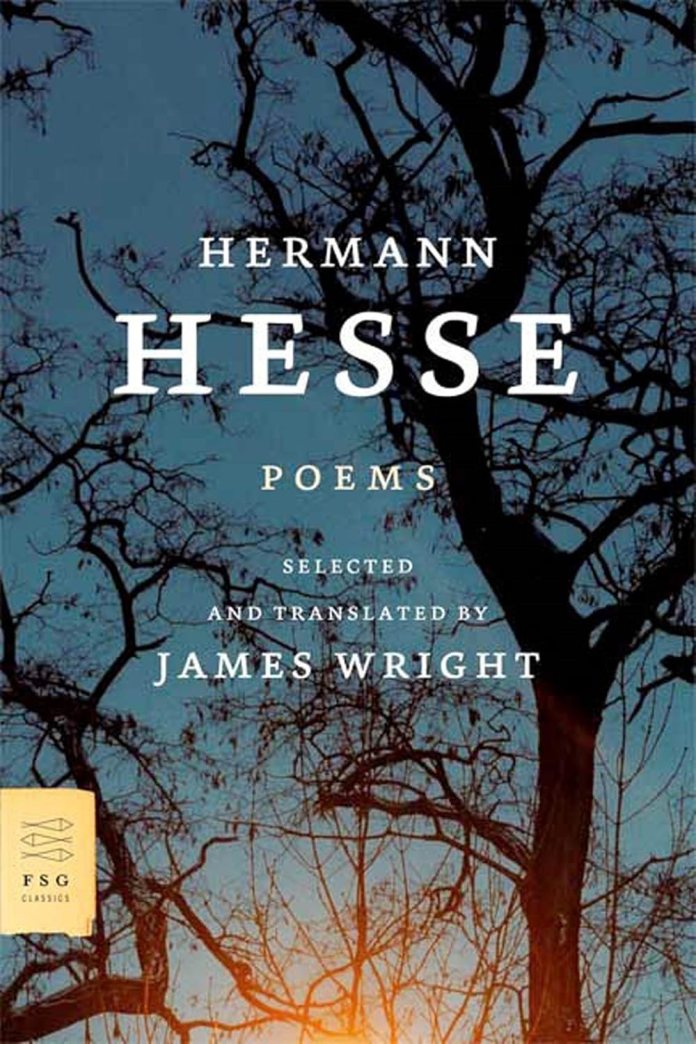
I am re-reading Siddhartha by Hermann Hesse. And in doing a little Wiki research on the German novelist, I discovered he also wrote poetry. I bought a collection of his verses entitled Poems by Hermann Hesse: Selected and Translated By James Wright (Farrar, Straus and Giroux, 1970). Most of the poems are short (which I love), and he explores such themes as youth, nature, identity, longing, and loneliness.

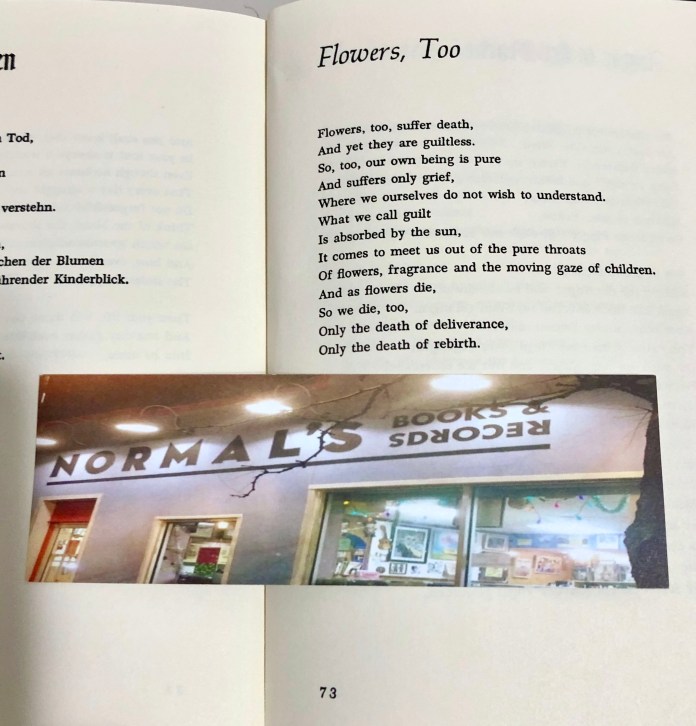
An added bonus—the used book arrived with a nice bookmark from Normals Books & Records in Baltimore, which looks like a really cool store.

Here are a few selections from the book that I wanted to share:

Mountains at Night

The lake has died down,
The reed, black in its sleep,
Whispers in a dream.
Expanding immensely into the countryside,
The mountains loom, outspread.
They are not resting.
They breathe deeply, and hold themselves,
Pressed tightly, to one another.
Deeply breathing,
Laden with mute forces,
Caught in a wasting passion.

On a Journey

Don’t be downcast, soon the night will come,
When we can see the cool moon laughing in secret
Over the faint countryside,
And we rest, hand in hand.

Don’t be downcast, the time will soon come
When we can have rest. Our small crosses will stand
On the bright edge of the road together,
And rain fall, and snow fall,
And the winds come and go.

Night

I like the dark night well enough;
But sometimes, when it turns bleak
And peaked, as my suffering laughs at me,
Its dreadful kingdom horrifies me,

And I wish to God I could take one look at the sunlight
And the blue of heaven brought back to light by its clouds,
And I want to lie down warm in the wide spaces of the day.
Then I can dream of the night.

Destiny

In our fury and muddle,
We act like children, cut off,
Fled from ourselves,
Bound by silly shame.

The years clump past
In their agony, waiting.
Not a single path leads back
To the garden of our youth.

How Heavy The Days . . . 

How heavy the days are.
There’s not a fire that can warm me,
Not a sun to laugh with me,
Everything bare,
Everything cold and merciless,
And even the beloved, clear
Stars look desolately down,
Since I learned in my heart that
Love can die.

And here are a few spring-themed poems:

The First Flowers

Beside the brook
Toward the willows,
During these days
So many yellow flowers have opened
Their eyes into gold.
I have long since lost my innocence, yet a memory
Touches my depth, the golden hours of morning, and gazes
Brilliantly upon me out of the eyes of flowers.
I was going to pick flowers;
Now I leave them all standing
And walk home, an old man.

Spring Day

Wind in bushes and bird piping
And high in the highest fresh blue
A haughty cloud ship, becalmed . . .
I dream of a blond woman,
I dream of my youth,
The high heaven blue and outspread
Is the cradle of my longing
Where I choose to lie calm
And blessedly warm
With the soft humming,
Just like a child held
On his mother’s arm.

Flowers, Too

Flowers, too, suffer death,
And yet they are guiltless.
So, too, our own being is pure
And suffers only grief,
Where we ourselves do not wish to understand.
What we call guilt
Is absorbed by the sun,
It comes to meet us out of the pure throats
Of flowers, fragrance and the moving gaze of children.
And as flowers die,
So we die, too,
Only the death of deliverance,
Only the death of rebirth.

Standard

Happy Birthday Colin

My son, Colin, turns ten years old today. I wasn’t planning to write about his birthday, but the significance of the occasion struck me as I warmed my coffee in the microwave this morning.

And right or wrong, every thought and emotion about Colin is filtered through the lens of his autism. He was diagnosed with Autism Spectrum Disorder in 2018. I wrote about that experience in this essay.

I realize how lucky I am to be Colin’s dad, especially since I was so late to the game of marriage and family. His presence reframes my existence. My job, my creative ambitions, and everything else in my life are secondary to being a good husband to my wife, Pam, and a good father to Colin.

Before rushing off to work, I wanted to share some previously published poems about parenthood and Colin, along with some photos of him.

Colin Joseph DiClemente at the pediatrician’s office.

Entrance

As blood, urine and feces stain the hospital sheets,
a nurse tells a mother-to-be,
“Honey, don’t be embarrassed.
What happens in the delivery room,
stays in the delivery room.”

The mother-to-be moans and sheds tears
as the epidural wears off and the labor reaches its climax
with a medieval torture method known as “Tug of War”—
sheets wrapped around ankles, legs hoisted in the air
and pulled apart as the mother-to-be screams
and squeezes her muscles and makes the final push until …
a tiny male human, slimy and alien-looking,
pops out of the womb with a full head of downy, brown hair
and soft, pliable ears like a Teddy bear.

The mother blurts out three words:
“Baby, baby, baby.”
The doctor transfers the squirming newborn to her breast,
and the two bond with skin-to-skin contact.
Love and happiness flow.
The task is completed, the effort done.
The child has safely entered the world.
But the real hard work has just begun.

Colin Joseph DiClemente. Age 2 years, 8 months.

The Great Equalizer

The democratic nature of parenthood.
It doesn’t matter who you are—
man, woman or trans, gay or straight,
Black, white or any other shade,
tall or short, skinny or fat, rich or poor—
when your toddler is wailing
in a grocery store or shopping mall,
when the feet are stomping, the arms swinging,
the cheeks reddened and the tears rolling—
all you want to do is pick up the child
and make the crying stop.

Wealth, social standing and comely looks
mean nothing to kids; they’re not impressed
by your credentials and you can’t negotiate
with these little angels and tyrants who rule the world.
Two clichés apply here:
parenting wipes the slate clean
and levels the playing field.

All mothers and fathers desire the same thing—
the health, safety and
development of their offspring.
The goals are simple amid the frenzy
of a life marked by stress and lack of sleep.
They are: eat the chicken nuggets, drink the apple juice,
recite the alphabet, put away the toys, finish the milk,
wave bye-bye and go down easy at nap time.

Pam and Colin outside NBT Bank Stadium.

Human Anatomy

Beneath the ribs
beats the heart
of a child,
waiting for its mother,
longing to be fed—
not just with milk and food,
but also with love.

Colin playing in the feeding therapy room.

Nap Time

Late afternoon, Sunday, gray light
seeping in through parted curtains.

Mother and baby sleeping on the couch,
hair tousled, right cheek against left breast,
elbows curved at equal angles.

I am awake, drinking coffee,
watching their chests rise and fall,
and trying not to make any noise.

My whole life revealed in the space
of three sofa cushions occupied by
two human beings who need me.

Soon the boy will stir;
soon he will squirm and cry, scatter his toys
and race around the cluttered living room.
Soon we will fix dinner
and wash dishes and take out the garbage.

But now time is suspended like a Rod Serling
freeze frame in a Twilight Zone episode—
a halting of activity, a pause in my Sunday
leading to reflection and gratitude for my blessings.

Warmth, safety and responsibility
are the words that pop into my head
while I observe mother and child stretched out together.
I don’t think about what I lack
or what I hope to attain and achieve.
In this moment, I have everything I need.

Pam and Colin.

Exam Room Revelation

“Autism Spectrum Disorder.”
The moment those words
escape the doctor’s lips,
our son’s future
appears bleaker.
The phrases
“special needs,
delayed communication
and lack of
social interaction” follow.

Sorrow for my son Colin
gushes inside me.
I feel sadness
for the challenges
he will endure,
and for his inability
to have a normal life.

In this case,
love proves impotent.
You can’t intercede
with your heart.
And compassion won’t fix
the little boy
sleeping in his bed
as I type out
this bad poem
while lamenting
the diagnosis.

But love for him
does not decrease.
Instead, it grows stronger.
I am grateful
for the blessing
of the boy he is …
and the man
I hope
he will become—
regardless of autism.

Bedtime

Eventually, I’ll fall asleep,
but until then my kid
keeps annoying me,

flicking on the bedroom light
and screaming incoherent phrases—
bits of songs that make
some sense inside his mind.

Telling him “shh” does no good,
and I can’t decipher the words he speaks,
but I do enjoy hearing the sounds they make
when they escape his mouth,
as I close my eyes and try to get some sleep.

Crying at Bedtime

Nothing prepares a parent
for the tantrums of an autistic child.
There’s no well of patience to draw from.
You adapt. You divert. You distract.
You do whatever it takes to calm the child down—
until you earn that blessed moment of peace,
when his eyelids drop and he drifts off to sleep,
his small body folded in the cradle of your arms.

Colin drew with a Sharpie on the living room floor.

Autism Sleeps

My son sleeps,
curled under a blanket
on the couch.

His outbursts have ceased.
His cries and screams quieted.
His stimming stopped.

It’s like his autism
is in remission.
In sleep, he becomes
like any other child.

Observation After Eating Out

Pity for my son swells.
Yet I feel helpless,
Unable to intervene
To make his autism
Go away.

Our patience dwindles
As his outbursts intensify.
But love does not wane.
Instead, it grows stronger.

I have only one son.
Yes, he is different.
He is noisy and
Requires constant attention.
But I am thankful for
His presence in my life.
And who needs the quiet anyway?

Standard