Praise for Poecabulary

I’m not a fan of the promotional aspect of writing, but I want to share this positive review of Poecabulary because the Reedsy Discovery reviewer, Stephen Dudas, summarized exactly what I was trying to achieve with my wacky experimental book project. Nearly all of the time, I’m tossing words in the dark, hoping they find their way to readers. So it’s nice, and rare, when my stray verbal arrows hit the mark.

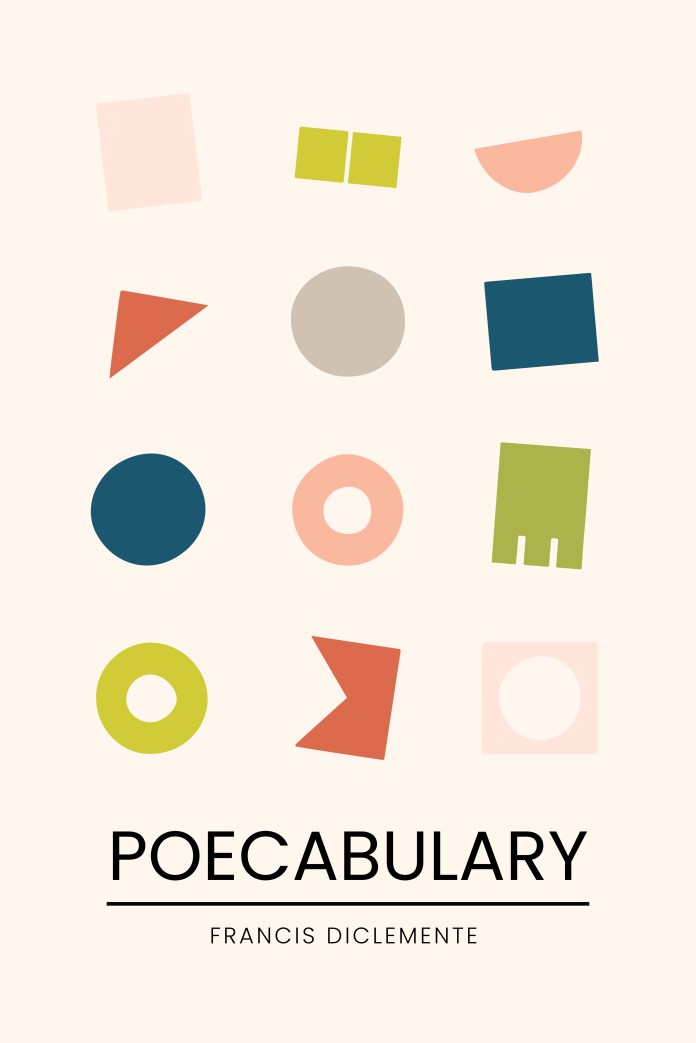
Poecabulary front cover.

Some of my favorite pull quotes:.

“Francis DiClemente’s Poecabulary is a stunning example of that now all-too-rare book in our contemporary poetry landscape: a genuine, focused experiment with specific elements of the English language.

“… Poecabulary is fully intended as a collaborative experience (all reading is, of course, but collaboration is at the forefront of this particular collection). To read the collection is to be brought into a creative and intellectual game. What is similar? What is different? What does one word mean to the other? What arguments, stories, commentaries, dreams, songs, etc. might spin out from where these words meet?

Poecabulary does what any good poetry collection should—it offers itself up as the site of interactive play between a poet’s invitation and a reader’s interpretation.”

—Reviewed by Stephen Dudas, Reedsy Discovery


Standard

The Point of Regret

I have a terse poem published in the Summer 2025 issue of The Soliloquist Journal. A paperback version is also for sale with a 15-percent discount code: RE5RQ6G15.

“The Point of Regret” appears in my unpublished philosophical poetry collection entitled Embrace the Futility. It’s similar in theme to another short poem, “Resolution of Existence,” which appears in my 2021 book Outward Arrangements: Poems.

Resolution of Existence

You must
Live the life
You have
And not
The one
You want.


Standard

Some Poems Celebrating Summer

Stanwix Street

A vanilla ice cream cone
covered with sprinkles of dirt,
a handful tossed by small, grimy hands
across a chain-link fence.
A blond child’s whine—
flat, constant and eerily melodic.
The girl then turning away,
screaming upstairs to her mother,
sound asleep in the mid-August heat,
the lime-green curtains fluttering in the
second-story window of the adjacent brick building.
The child just standing there, scraping off the grit
and licking the melting residue
trickling down her forearm.

Streetlight Paradise

Chalk marks on sidewalks,
fireflies stalking the night,
creaky porch steps,
chain-link nets and
the crack of the bat.

Sour-puss lips break a smile,
then sneak a kiss.
It’s cool to hold hands with
the girl of your dreams,
the one who says she’ll
love you forever.

But forever is too far away.
Our time is now—a passing moment
when our parents look the other way.

Summer fun in the springtime
of our lives, sucking it all in
under this streetlight paradise.

The Mystery of the Wolf

A summer evening in upstate New York—
a backyard sprinkler hisses
while the smell of fresh-cut grass
is pungent and delicious.
Crickets chirp and a coffee-colored mare
snorts from across the barbed-wire fence.

I am alone, kicking a soccer ball,
when a gray wolf emerges from
the high weeds lining the fence.
I try to run, but my legs lock up,
and I tumble to the ground.

The wolf circles me,
then sweeps in on my limp frame.
I can hear its stomach growling
as it hovers over me.
The tongue is extended
and drool splashes my face.
The wolf takes my neck in its mouth,
but does not bite down.

And I wake up in my bed,
thankful that the encounter is just a dream.
I am safe, and no wolf invades my room.
Yet I remain troubled,
afraid of closing my eyes,
drifting back to sleep
and ending up at the mercy
of another predator.

Minors

Toledo in July—a Mud Hens game:
Big league dreamers with names like Bubba, Fausto and Tyler
toil away in the minors,
hustling for the scouts perched behind home plate,
diving for line drives and sliding head first,
with egos in check and mouths full of dirt.

Pillars of artificial light frame the setting sun,
and from beyond the azure sky,
the ghosts of washed-up utility infielders
and middle relief pitchers
pull for these hard luck Triple-A players.
They want to scream, “Take heed, savor it now,
for this is the best you will ever be.”
But they’re under orders to keep their mouths shut,
and can only blow a home run foul every once in a while.

The steel girder stands are filled with a crowd
that still believes in this clockless game.
They listen intently for the crack of the bat,
and sing with all their might during the seventh-inning stretch.

Little kids with hot pink shorts and noisy flip-flops
smear their faces with mustard and hug Muddy the mascot.
They scatter peanut shells and scamper after foul balls,
and for them the score is merely an afterthought.

The summer night comes to a close
with a game-ending double play and a fireworks barrage.
The fans file out and load into their cars,
going back to real life with memories of Mud Hens
now stitched in the seams of their minds.

(All four poems were previously published in Dreaming of Lemon Trees: Selected Poems, Finishing Line Press, 2019).

Standard

Book Giveaway

I am running a Goodreads giveaway for my new minimalistic poetry collection entitled Poecabulary. You can enter the Kindle giveaway here.

Standard

Poecabulary Book Released

I am excited to announce the publication of my new book, a minimalistic, experimental poetry collection entitled Poecabulary.

Here is the description:

Poecabulary is a minimalist poetry collection that blurs the line between vocabulary and verse. Words appear in unexpected pairings, creating connections that surprise, challenge, and invite reflection. Each combination is a deliberate act of linguistic play, where alliteration, sound, appearance, randomness, rhyme, and meaning collide.

The author explores how similar or opposing words interact, encouraging readers to discover their interpretations and associations. Both a playful exercise and a meditation on language, Poecabulary celebrates the power and flexibility of words.

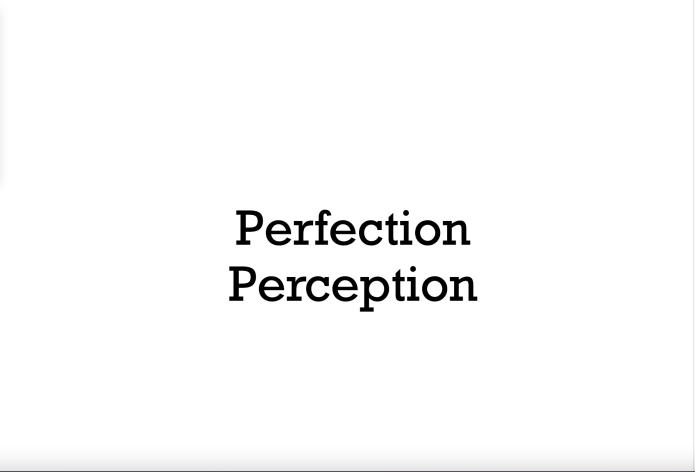
This collection will resonate with language lovers, poetry enthusiasts, and anyone curious about how words shape meaning. Sample pairings include Autistic/Artistic, Diffident/Different, Lonely/Lovely, Perfection/Perception, and Reject/Respect.

Poecabulary front cover.

The book began with my obsession with vocabulary and discovering connections between word pairings.

As part of my compulsive, lexical behavior, I check four different online dictionaries daily for their “Word of the Day” features:

TheFreeDictionary.com
Dictionary.com
Merriam-Webster.com
WordGenius.com

This project is an example of how the crazy ideas that percolate and fester in my brain are the ones I need to chase, since they are the ones that elevate my creativity and spur risk taking.

Here is the author’s note from the front of the book:

Obsessed with vocabulary, I created this work as wordplay—an exercise to incite imagination and elicit connections in the reader’s mind. I consider the word pairings a hybrid of vocabulary and poetry—which could be labeled as “Poecabulary” or “Voetry.”

Quite honestly, I don’t even know if you can call Poecabulary a book, but I do believe some “word nerd” readers may enjoy it. And it’s a quick read. Although it’s 190 pages long, the word count is less than 650.

I would also love to collaborate with a visual artist who could make large-scale paintings featuring select word pairings from the collection. I could see the text-based works hanging in a gallery space.

Here are a few of my favorite word combinations:

Autistic/Artistic

Diffident/Different

Lonely/Lovely

Perfection/Perception

Reject/Respect

Standard

Nerve Conduction Study Conversation

I received a nerve conduction study last week related to symptoms of my rheumatoid arthritis. The bearded electromyography (EMG) technician, Mark, had dark hair and an athletic build, and he wore glasses. We made small talk while he placed electrodes on me, stimulated the nerves with mild electrical shocks, and measured the results on a computer.

When I asked him where he was from, he said he grew up in Syracuse and went to a local high school. “It was a really good school,” he said, noting its academic and athletic excellence. “But I didn’t appreciate it at the time. I was kind of a screw up.”

He also explained that his mother was a custodian at Syracuse University and how he could have gone to college there for free, but didn’t take advantage of the opportunity. “I blew it,” he said. “But I had to find my own way.”

And then he said a jewel of a statement regarding regret. “If you focus too much on regrets, you don’t appreciate the life you currently have.” Or he may have said, “If you focus too much on regrets, you don’t live the life you currently have.”

Regret is a recurring theme in my poetry. I think it’s something all adults at a certain age wrestle with—this idea of ambitions versus reality.

Camera Angle

What would I choose
if I were given a chance
to lead a different life?

What mistakes
would I correct?
What new road
would I take?

But you can’t splice
the scenes of your life
to edit the past.
You can only point
the camera forward
and zoom into the future.

(The Truth I Must Invent, Poets Choice, 2023)

Formula for Success

Life can
be tolerable
when you
relinquish
aspiration
and settle for
acceptable.

(Outward Arrangements: Poems, independently published, 2021)

Shift in Thought

At some point
you have to
deal with the
Who You Are
instead of the
Who You Want To Become.

By now the
form is fixed.
You are
complete as is.
Don’t expect
anything else.
Don’t hope
for anything more.

(Outward Arrangements: Poems, independently published, 2021)


Standard

Book Giveaway

This week marks two years since my last poetry collection, The Truth I Must Invent, was released. The book is available from the publisher, Poets Choice. You can also find it on Bookshop and a Kindle version on Amazon.

The Truth I Must Invent is a collection of narrative and philosophical poems written in free-verse style. The book explores the themes of self, identity, loneliness, memory, existence, family, parenthood, disability, gratitude, and compassion.

I am giving away three print copies of the book, which I will mail to anyone in the U.S. You can use the contact form or email me directly at the gmail address listed in the form.

The Truth I Must Invent book cover.

Selections from the collection:

Man Inside Nighthawks

I assume I was nothing
before I found myself sitting here,
staring straight ahead.

I can’t move my head.
I can’t smoke the cigarette
pressed between the fingers
of my right hand or drink the cup
of coffee resting on top of the counter.
I can’t touch the woman seated next to me
or talk to the other men in the diner.

This is my life: suspended in warm, yellow light,
trapped in a soundless environment—
no water running, no fan whirring, or grill sizzling.
No sirens or street sounds beyond the glass.

Time drags on with no discernible shift—
no transition to morning.
Here, night never ends.

Yet my mind still works.
In fact, it never stops.
I’m cursed with thoughts that run continuously.

Why am I here?
And where exactly is here?
What purpose do I serve?

Do I have a past? Did I live elsewhere,
before I became frozen in this moment—
captured and imprisoned for eternity?

If only I could talk.
If only I could open my lips and make a sound.
Then I could scream for help.
But who would hear my voice?

If only I could stand up
and walk around,
stretch my legs and
stare outside the window.

But since I can’t move,
the composition will remain unaltered,
as I will stay locked in place
inside this painting,
hanging on a gallery wall.

Looking Through Spindles

I climb out of bed and clutch
the white balusters at the top of the stairs
as harsh words fly behind walls
too thin to hold my parents’ rage.

My sister creeps out of her room,
shrugs her shoulders,
and moves toward me in the hallway,
passing the door to the master bedroom.
She sits down next to me
and whispers, “What happened now?”
“I don’t know,” I say.
And we listen for clues, trying to determine
the cause of the latest fight.

Did Dad come to bed drunk
and make advances on our mother?
Did she recoil or lash out, scratching his eyes?
But we hear no violent action
on the other side of the white door—
only voices laced with acrimony.
And we remain seated on the stairs,
exhausted but unable to fall back asleep.

Zooming out, I see those siblings
in a Polaroid image, sealed under a plastic sheet
in a leather-bound photo album.
And as the adult looking back,
breaking the fourth wall,
I wonder why this memory pricks my brain
when so many others would illuminate my parents’
kindness, decency, and exemplary work ethic.
Why, when I could have chosen from
a myriad of positive scenarios,
does this one seize my attention,
demanding to be chronicled?

My mother and father are both dead
and can’t defend their actions.
And I feel riddled with guilt
for tarnishing their memories.
I also understand that the truth
doesn’t always tell the full story.
My conscience obligates me to explain that
while Mom and Dad weren’t perfect,
they loved us and endured sacrifices
to make our lives a little better.
And while that’s a weak way to end a poem,
the wider perspective allows me to
forgive my mother and father for being human—
for being real people and not just my parents.

Craniopharyngioma (Youthful Diary Entry)

Craniopharyngioma gave me
an excuse for being unattractive.
I had a problem inside my head.
It wasn’t my fault
I stood four foot eight inches tall
and looked like I was
twelve years old instead of eighteen—
and then nineteen
instead of twenty-four.
I couldn’t be blamed for
my sans-testosterone body
straddling the line
between male and female.

The brain tumor
spurred questions
about my appearance,
aroused ridicule,
and provoked sympathy.
I heard voices whispering:
“Guess how old that guy is?”
And, “Is that a dude or a chick?”

And while I waited for my
body to mature, to fall in line,
and to achieve normal progression,
I remember wishing the surgeons
had left the scalpel
inside my skull
before they closed me up,
knitting the stitches
from ear to ear.

I prayed the scalpel
would twist and twirl
while I slept at night—
carving my brain
like a jack-o’-lantern—
splitting the left and right
hemispheres,
and effacing the memory
of my existence.

Mattress Moment

You don’t get to cry
“No Fair”
Mr. Hyman Roth.

This is the life
you have chosen.

You don’t get to pine
for your salad days,
whatever the fuck that means.

You don’t get to
flip over the mattress
on the bed you’ve made.

The Wanting is the Hardest Part

Tom Petty was wrong.
The waiting isn’t the hardest part.
The wanting is the hardest part.

Wanting fucks everything up—
wanting a better job, a better marriage,
a better house, a better life.
That seed of desire fucks with your head,
makes you think you can be something you’re not.

What if I discarded desire? What if stopped wanting?
What if I no longer sought a better life?
Can I let go of that fantasy
and accept who I am right now,
without seeking a better version of myself—
the idealized me I hold inside my head?

Resolution

You must
Live the life
You have

And not
The one
You want.

Witness

I look up as a group of birds
circles buildings in downtown Syracuse.
I resist the urge to pull out my cellphone
and snap a picture for Instagram.

Instead, I hold my gaze skyward,
letting the wind swirl around my face
and the rain patter my forehead,
as the birds duck in unison
behind a limestone structure—
the moment preserved nowhere except in my mind.

No pictures retained or sound recorded.
No trace of the birds in digital form.
And I think that’s the point, that’s life—
a collection of these impromptu glimpses of existence,
built into a collage, a kaleidoscope of images
demanding attention when presented.

Crying at Bedtime

Nothing prepares a parent
for the tantrums of an autistic child.
There’s no well of patience to draw from.
You adapt. You divert. You distract.
You do whatever it takes to calm the child down—
until you earn that blessed moment of peace,
when his eyelids drop and he drifts off to sleep,
his small body folded in the cradle of your arms.

Fingers in Hair

I run my fingers through
my son’s tangled mop of brown hair
as he lies next to me in bed.
It’s 4:30 a.m. and we can’t fall asleep.

He waves his hands in front of his eyes,
making stimming motions,
and I imagine his head slamming
against the windshield,
a spiderweb crack forming
in the sheet of glass and
blood pouring from
an opening in his skull.

I press my hand to his head
to try to stop the bleeding,
but the crimson liquid
slips through my fingers
and stains the carpet
and fabric seat covers.

I am reminded of a
Gospel passage (Luke 12:7 NIV):
“Indeed, the very hairs
of your head are all numbered.”

I hold some of my son’s hairs
in my hand and realize
I cannot prevent a
car accident, fall, gunshot wound,
or disease from killing my son.
I can’t prolong or preserve his life.
I can only love him while he still lives.

His hands whip in front of his face,
and he prattles phrases
only he understands.
I bury my fingers deeper
into the mound of his hair and whisper,
“Come on now, sleepy time, Colin.”


Standard

Play Ball

In celebration of opening day in Major League Baseball (Go Yankees!), I am posting two baseball-themed poems. Both appear in my collection Dreaming of Lemon Trees: Selected Poems (Finishing Line Press, 2019).

Playing third base in youth league baseball in Rome, New York, in the late 1970s.

The Shed

Independence Day, Late 1970s (Rome, New York)

Whipped-cream clouds smear a powder blue sky,
while Grandpa nurses a carafe of Chianti
and dreams of waltzing down Bourbon Street.
The DeCosty family gathers on the patio,
with Uncle Fee roasting sausage and peppers
and Nana dribbling olive oil over fresh tomatoes,
then adding alternating pinches of basil and parsley.

Inside the backyard bordered by overgrown hedges,
the rambunctious cousins wham Wiffle balls
with a thin, banana-colored plastic bat,
evoking the hollers of Grandpa …
who watches out for his mint-green aluminum shed,
situated perfectly in left-center field—
serving as our own Green Monster.

And when we get ahold of that little white ball,
it smacks up against the aluminum obstacle,
clashing like two marching band cymbals in a halftime show.
And with sweat coursing down his neck,
Grandpa barks out his familiar line under the patio awning:
“Son of a bitch … keep that goddamn ball away from my shed.”
But Nana is always on our side,
and cancels out his power and keeps him in check.
“Fiore, you let those kids play and mind your mouth,” she says.

Grandpa abandons his no-win cause,
turns up the volume on the Yankee game
and pours himself another glass of red wine.
He watches quietly as the shed stands erect
in the late afternoon sun,
sacrificing its facade for our slew of ground-rule doubles.

Playing freshman baseball in Rome, New York, in 1984.

Minors

Toledo in July—a Mud Hens game:
Big league dreamers with names like Bubba, Fausto and Tyler
toil away in the minors,
hustling for the scouts perched behind home plate,
diving for line drives and sliding head first,
with egos in check and mouths full of dirt.

Pillars of artificial light frame the setting sun,
and from beyond the azure sky,
the ghosts of washed-up utility infielders
and middle relief pitchers
pull for these hard luck Triple-A players.
They want to scream, “Take heed, savor it now,
for this is the best you will ever be.”
But they’re under orders to keep their mouths shut,
and can only blow a home run foul every once in a while.

The steel girder stands are filled with a crowd
that still believes in this clockless game.
They listen intently for the crack of the bat,
and sing with all their might during the seventh-inning stretch.

Little kids with hot pink shorts and noisy flip-flops
smear their faces with mustard and hug Muddy the mascot.
They scatter peanut shells and scamper after foul balls,
and for them the score is merely an afterthought.

The summer night comes to a close
with a game-ending double play and a fireworks barrage.
The fans file out and load into their cars,
going back to real life with memories of Mud Hens
now stitched in the seams of their minds.

Standard

Class Photo

School photo from the late 1970s.

Class Photo

Seeing every person
As a 12-year-old child
Taking a school photo
Eliminates any animosity
You may have for that person.
When you imagine
The awkward kid squinting
At the camera lens—
You discover yourself
Staring back at you.

(Outward Arrangements: Poems, independently published, 2021)

Standard

Winter Blast Poems

With Central New York under a Lake Effect Snow Warning and temperatures set to plummet in the next few days, I am sharing some of my winter-themed poems, along with some recent photos.

Winter Evening

Night—streetlights flicker.
Snow falls softly on sidewalks.
Crews plow the streets clean.

Contrast

Feathers replace leaves
In the naked trees
Looming above Genesee Street,
As flocks of crows arrive to
Take their repose and roost for the night,
The clumps of birds stretching for blocks,
A curtain of black set against
The landscape bleached white by
Fresh-fallen snow and layers of rock salt.

Dreaming of Lemon Trees (Finishing Line Press, 2019)

Golden State

In California, the sun is shining.
In Syracuse, snow is falling.
I want to defrost my toes
by burying them in the sand
at Santa Monica Beach—
watch the waves crashing ashore,
hear the seagulls squawking
and smell the salty air.

But I’m pulled out
of this reverie
by the sound of a
shovel blade
striking pavement
and exhaust fumes
entering my nostrils,
bringing me back to the reality
of a Central New York
scene I can’t escape.

I get in the car and
the warm air from the
heater smacks me in the face
as I scan the FM radio stations,
hoping to come across
the Mamas and the Papas
singing “California Dreamin’.”
That’s as close as I’ll get
to the Golden State
on such a winter’s day.

Outward Arrangements: Poems (independently published, 2021)

Winter Walk

It takes one fall
on the icy sidewalk
for your life to be ruined.
That’s right, just one tumble—
arms flailing,
legs scissoring in the air,
back parallel to the ground,
eyes looking up at a gray sky
unable to intervene—
in a brief suspended
moment before wham—
skull meets ground and blackness ensues.

Traumatic brain injury follows,
and you slip into a coma.
Your family huddles bedside,
waiting for you to rouse,
to wake up and rejoin the living,
like a grizzly bear stepping out
of its den after hibernation.

If you do come out of it
with some brain activity intact,
you may be a shell—withering
in a long-term nursing home.
And while you exist inside,
the costs mount for your family,
and the world outside your window
drags on, unaware of your predicament.
All this because some ice tripped you up.

So don’t be surprised if you see me
walking gingerly on the
glassy surface of the sidewalk,
digging my heels into a
pile of rock salt near the curb,
spreading it around on my soles,
strapping on a pair of
Yaktrax over my boots,
or cutting across the snow-covered lawns.

I guess I don’t mind dying,
or being knocked unconscious,
but I would feel awfully foolish
if a patch of frozen moisture does me in.

Sidewalk Stories (Kelsay Books, 2017)

How to Survive Winter in Syracuse

The only way to survive
a Syracuse winter
is to think of the snow
as a friend and not a foe.

When you scrape the ice
crusted on your windshield
and the snow clogs the streets,
when your tires spin,
or your car veers off the road—
regarding the snow
as a friend and not a foe
will help you to tolerate the season.

Even when the snow lashes
your face as it blows sideways,
or frozen clumps melt inside your boots,
making your feet cold and damp,
you must remember to
view the snow as a friend instead of a foe.

And what a friend … a friend that keeps on
giving and giving and giving
six months out of the year.
To which I say:
Thank you, my dear friend,
but I don’t need your generosity.

Outward Arrangements: Poems (independently published, 2021)

Stranded in Syracuse

In a blizzard like this, you can’t determine gender.
People are just stooped figures,
black forms trudging through the heavy, wet snow,
swallowed by the maw of the storm.

Standard