Late August marks the return of students to college campuses across the country. And this time of year always reminds me of when I got caught hosting a keg party while my mother and my future stepfather Bill took my sister Lisa back to Hartwick College in Oneonta, New York, for the start of her sophomore year in 1986.
I had never done anything that rash, but I deluded myself into thinking I had earned the right to have some fun. And I wanted to kick off my senior year of high school with something that would make me stand out and boost my social clout. My risky behavior was also inspired by a scene in the teenage movie Weird Science (written and directed by the great John Hughes), in which Lisa (Kelly LeBrock) tells Gary’s parents, “This guy deserves a party.” I was that guy, the nerd trying to fit in by hosting an end-of-summer kegger.
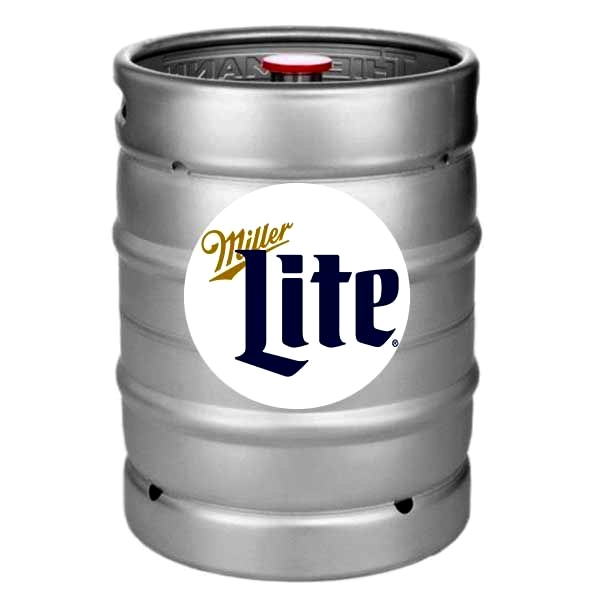
I asked my friend Todd to buy the beer. He bought a huge keg, and he and some friends dropped it off on the cement patio of my Grandma Josephine DeCosty’s old home—where Mom and I now lived—the same patio where my relatives gathered for cookouts in the summer.
It was a humid Saturday night with mosquitoes buzzing and crickets chirping. But with music blaring, kids chattering, and cars driving up and down our street (with drivers struggling to find parking), the noise of the party overtook the sounds of nature.
My friends and students I had never met congregated on the patio, pumping the keg and drinking beer from red plastic cups. Inside the house, people were spread out in every room—some guys stationed in the living room, watching a college football game pitting the University of Miami against South Carolina, while another group occupied a table in the basement, playing cards and smoking cigars. (The Hurricanes defeated the Gamecocks 34-14).
Nothing about my personality suggested I would host a party of this magnitude. But people weren’t coming to the party because I was the host. They came because the word spread about free beer.
I didn’t drink because I was too busy making sure everyone behaved. Even so, the party got out of control.
It ended because of my ineptitude. My friend Rob asked me to follow him home so he could drop off his car and then crash somewhere in my house. He didn’t want to drink and drive, and he didn’t want to leave his car on the street. Trying to be a responsible host, I followed him home, and we drove back together.
But in the meantime, my mother called. Julie, the younger sister of one of my friends, answered the phone, and my mother heard the background noise and asked the girl what was going on. I think Julie hung up without answering my mother’s question. When I arrived home, she said, “Fran, your mom called while you were gone. And I answered the phone.”
“No,” I said, tugging at my hair. “You didn’t.”
“I’m sorry. I didn’t know what to do. I didn’t know whether I should answer it or not.”
“It’s OK. Don’t worry about it.”
“She sounded upset.”
“Yeah, I bet.”
A short time later, the phone rang, and Lisa was on the other end. “Hey, what’s going on there?” Lisa asked.
“I’m having a party.”
“Well, you better get those people out of there quick. Mom and Bill are coming home now.”
“What? No.”
“Yes. Mom’s pissed. You better hurry. You have about two hours. Make sure everyone is gone and the house is clean.”
I hung up the phone, still holding the tan receiver. I remained standing in place, and the blood must have drained from my face because my friends asked me what was wrong. I could barely open my mouth, but then I whispered that my mom was on her way home.
I couldn’t raise my voice to tell everyone they had to leave, but my friend Donna stepped in and helped me. She must have recognized my desperation and announced the end of the party. Donna rushed from room to room, went outside to the patio and the driveway, and told everyone they had to leave and to help clean up on the way out.
Todd or some other friends took the keg, and I grabbed garbage bags and started picking up the cups. My friend Billy and another friend, Matt, planned to spend the night at my house. We removed all evidence of the party and wiped down every surface, and soon the house was immaculate.
My mom, Carmella DeCosty Ruane.
We were seated on the couch in the living room, watching television, when Carm came inside. Carrying her suitcase, she walked up to the second level of the house and addressed me. “I hope you’re happy. We trusted you, and you spoiled the weekend for us. You’re grounded. No car, nothing.” She then stormed up the stairs to her bedroom and slammed the door. Billy and Matt burst out laughing. “Shh. You guys are gonna get me in even more trouble,” I said.
In the morning, Matt woke me up and said he needed a ride to his job at a grocery store, located miles away on Turin Road. I told him I couldn’t drive but offered him my old bike. And Billy and I laughed after he left the house, as we imagined John pedaling uphill along Turin Road, riding my rusty, battered bike with a rattling chain.
A day later, I remained grounded, but I begged my mother for forgiveness and wormed my way back into her good graces. I told her I had wanted to do something fun, something to start our senior year on a good note. She said our next-door neighbor had complained about the noise, and she made me aware of the dangers of hosting a party at her house. “You have to understand,” she explained, “God forbid someone would have gotten into an accident after drinking, I would have been responsible.”
“Yeah, you’re right,” “I’m sorry.”
“Don’t ever do it again.”
“I won’t,” I said, and we hugged.
And the story would later become a humorous anecdote I would share at family gatherings, recalling the time Mom and Bill raced home from Oneonta, only to find the place quiet and spotless.
I walk and run near this little wooded area adjacent to Le Moyne College in Syracuse. On Saturday night, I walked into the copse, listened to the wind moving through the trees and the singing of the birds, and took a few photos with my iPhone.
Thicket of trees near Le Moyne College. Photo by Francis DiClemente.
That’s it for this post. No keen insight about the world or more book promotion. Just a couple nature photos. Have a good week everyone.
Downed trees and vegetation near Le Moyne College. Photo by Francis DiClemente.
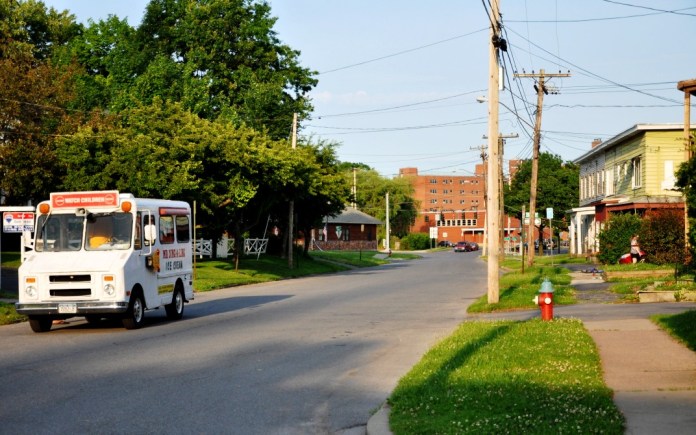
I saw a melting ice cream cone on the sidewalk while out for my Sunday run today. Luckily, I brought along a pen and a scrap of paper. I jotted down some notes, which became the sweaty, messy first draft of this poem.
Melting Cone
A Drumstick ice cream cone
lying in the middle of the sidewalk
on a blistering July Sunday—
the vanilla ice cream liquified,
while ants scale the surface of
the dented waffle cone.
Did the child cry
when the cone hit the ground?
And did Mom let the girl
run back inside to
grab another from the freezer?
But maybe a kid didn’t drop it—
because in reality,
ice cream misfortune
could befall anyone.
The forecast calls for storms.
Soon heavy rain will scatter the ants
and cleanse the sidewalk,
erasing the evidence of this calamity,
as one more taste of summer fades away.
A vanilla ice cream cone
covered with sprinkles of dirt,
a handful tossed by small, grimy hands
across a chain-link fence.
A blond child’s whine—
flat, constant and eerily melodic.
The girl then turning away,
screaming upstairs to her mother,
sound asleep in the mid-August heat,
the lime-green curtains fluttering in the
second-story window of the adjacent brick building.
The child just standing there, scraping off the grit
and licking the melting residue
trickling down her forearm.
Streetlight Paradise
Chalk marks on sidewalks,
fireflies stalking the night,
creaky porch steps,
chain-link nets and
the crack of the bat.
Sour-puss lips break a smile,
then sneak a kiss.
It’s cool to hold hands with
the girl of your dreams,
the one who says she’ll
love you forever.
But forever is too far away.
Our time is now—a passing moment
when our parents look the other way.
Summer fun in the springtime
of our lives, sucking it all in
under this streetlight paradise.
The Mystery of the Wolf
A summer evening in upstate New York—
a backyard sprinkler hisses
while the smell of fresh-cut grass
is pungent and delicious.
Crickets chirp and a coffee-colored mare
snorts from across the barbed-wire fence.
I am alone, kicking a soccer ball,
when a gray wolf emerges from
the high weeds lining the fence.
I try to run, but my legs lock up,
and I tumble to the ground.
The wolf circles me,
then sweeps in on my limp frame.
I can hear its stomach growling
as it hovers over me.
The tongue is extended
and drool splashes my face.
The wolf takes my neck in its mouth,
but does not bite down.
And I wake up in my bed,
thankful that the encounter is just a dream.
I am safe, and no wolf invades my room.
Yet I remain troubled,
afraid of closing my eyes,
drifting back to sleep
and ending up at the mercy
of another predator.
Minors
Toledo in July—a Mud Hens game:
Big league dreamers with names like Bubba, Fausto and Tyler
toil away in the minors,
hustling for the scouts perched behind home plate,
diving for line drives and sliding head first,
with egos in check and mouths full of dirt.
Pillars of artificial light frame the setting sun,
and from beyond the azure sky,
the ghosts of washed-up utility infielders
and middle relief pitchers
pull for these hard luck Triple-A players.
They want to scream, “Take heed, savor it now,
for this is the best you will ever be.”
But they’re under orders to keep their mouths shut,
and can only blow a home run foul every once in a while.
The steel girder stands are filled with a crowd
that still believes in this clockless game.
They listen intently for the crack of the bat,
and sing with all their might during the seventh-inning stretch.
Little kids with hot pink shorts and noisy flip-flops
smear their faces with mustard and hug Muddy the mascot.
They scatter peanut shells and scamper after foul balls,
and for them the score is merely an afterthought.
The summer night comes to a close
with a game-ending double play and a fireworks barrage.
The fans file out and load into their cars,
going back to real life with memories of Mud Hens
now stitched in the seams of their minds.
I’ve been digging through some old poems and found an unpublished poem inspired by Swedish director Ingmar Bergman’s 1955 comedy Smiles of a Summer Night.
Bergman is a huge inspiration for me, and I’m obsessed with his work. But Smiles is too light for my taste. I prefer the more somber, melancholy Bergman works—The Seventh Seal, Wild Strawberries, Persona, Through a Glass Darkly and Winter Light.
Nonetheless, I’m glad his summer comedy led to a poem. The verse never found its way into one of my collections because I don’t think it’s worthy of publication. I’m posting it here only because summer is slipping away, and I think it captures the feeling of the season.
Smiles of a Summer Night (With Apologies to Ingmar Bergman)
Smiles of a summer night
emerge on a human canvas
smeared with cotton candy
and dripping watermelon juice.
Smiles of a summer night
collide in a lovers’ embrace
shielded by corn stalks.
Smiles of a summer night
burst open in collective
“oohs” and “ahs”
elicited by fireworks.
Smiles of a summer night
come caked with dirt after a
head-first slide into home plate.
Smiles of a summer night
are everything that is possible
under the setting sun.
Smiles of a summer night
are fleeting, fleeting, fleeting.
And smiles of summer night
with the onset of September are done.
Today marks one month since my brain surgery. My recovery is going well, but I’m still not back to full strength.
I’ve been walking in my neighborhood to build up my stamina. I’m still using the cane I received when I was discharged from the hospital, but I hope to ditch it soon.
When I walk, I don’t listen to music or podcasts. For safety reasons, I need to hear cars approaching, and I also keep my ears open for stimulating sounds—birds, wind chimes, children playing, etc.
A lot of times, I get ideas for poems while out on my walks. Often, one line will pop into my head and start me down the path of writing a poem. Recently, I was walking and thinking about the end of August, and this line came to me: It’s always sad when summer ends. I jotted the line down in the small notebook I carry with me. After some work, this is the poem I produced:
Late August
It’s always sad when summer ends.
But avoidance of the inevitable is impossible.
And in this season of life, a little winter must come.
So I tell myself to stop being disgruntled
by summer’s death and autumn’s arrival,
and instead get to work—starting with
descending the cellar steps and bringing up
the long johns, flannel shirts, and heavy wool socks.
It’s not the greatest poem in the world. But I like that I followed the trajectory the poem wanted to take—starting with one line, then others scribbled in my notebook, followed by revisions on the computer.
So I recognize the importance of awareness and paying attention to both external and internal stimuli to use as raw material for poetry (and stories, etc.).
And this reminds me of a line from the Grateful Dead song “Scarlet Begonias” (thank you, Robert Hunter):
Once in a while, you get shown the light
In the strangest of places if you look at it right …
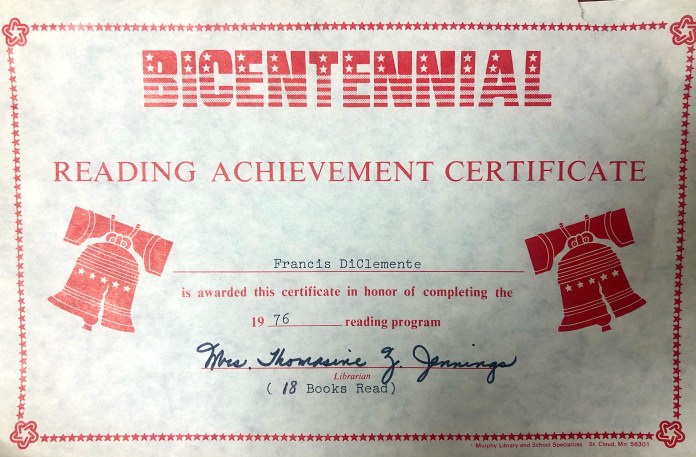
Digging through some totes in my living room, I found this archival evidence of my early obsession with books.
Library reading certificate, 1976.
During America’s Bicentennial year of 1976, my mother had enrolled me in a summer reading program at Jervis Public Library in my hometown of Rome, New York. The librarian had divided the group into two teams—the Cincinnati Reds and the New York Yankees—and we competed against each other for the most books read over the course of the summer. I can’t remember which side I was on, but the librarian was prescient, because Cincinnati would meet New York in the World Series later that year, with the Reds sweeping the Yankees to win the title.
I wish I had a list of the eighteen books I had read during the summer of ’76, as I would like to revisit some of them now.
As for this summer’s reading list, I am starting off with these selections.
The Beauty of Dusk: On Vision Lost and Found, a memoir by Frank Bruni.
Frank Bruni book cover.
Jack Kerouac: Collected Poems, published by Library of America, and The Closers by Michael Connelly.
Jack Kerouac: Collected Poems, published by Library of America.