41st Tumorversary

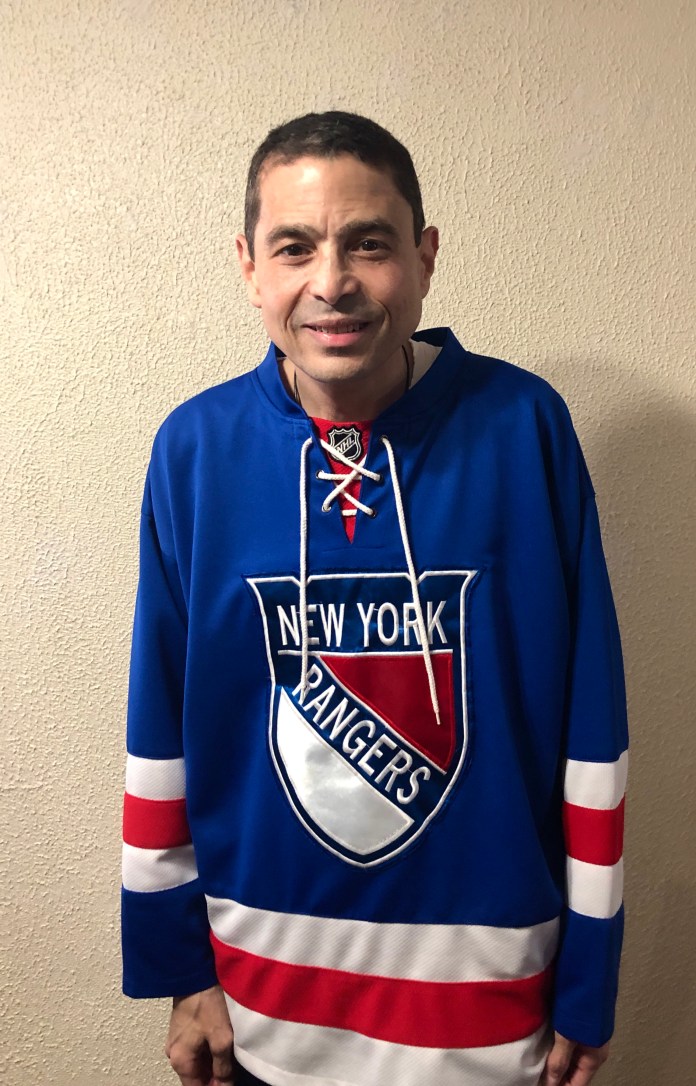
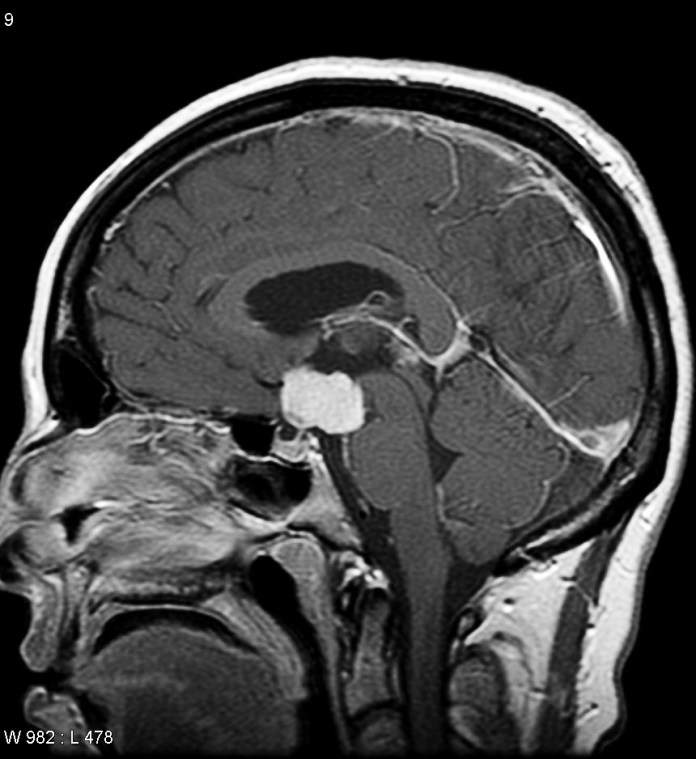
Today marks the forty-first anniversary of my first brain surgery. As I’ve written about before, on Dec. 12, 1984, when I was fifteen years old and a sophomore in high school, surgeons at SUNY Upstate Medical Center (now named Upstate University Hospital) in Syracuse, New York, removed a large craniopharyngioma that had engulfed my pituitary gland, leading to stunted growth and delayed puberty. Since then, I’ve had four additional surgeries and two Gamma Knife radiosurgery treatments at Upstate.

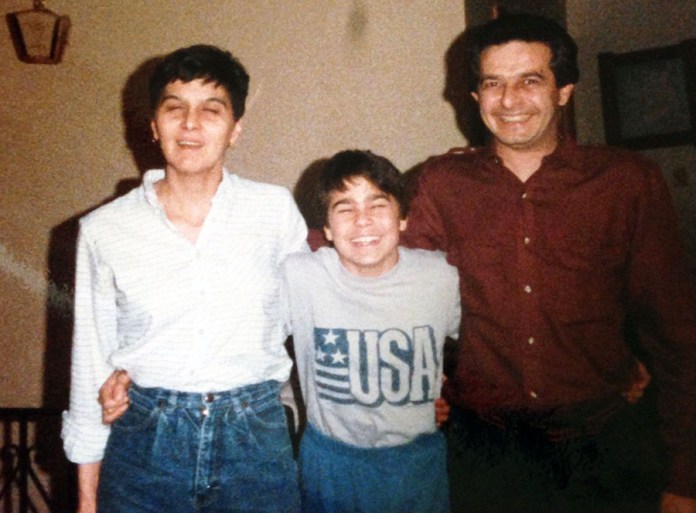
Posing with my parents prior to my surgery in 1984.

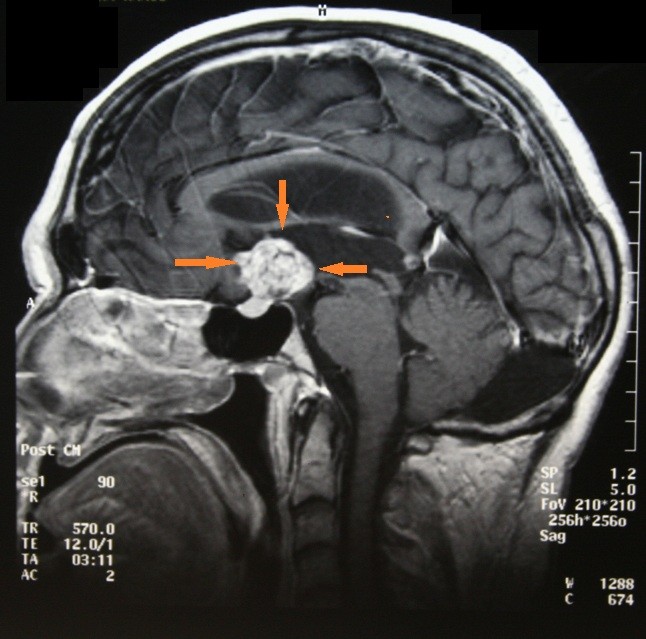
Prior to the initial surgery, in the fall of 1984, a scan of my head had revealed a cloudy mass in the sella region at the base of the skull, and the results of a follow-up CT scan with radiation contrast came a few weeks later.

I received the news about the brain tumor diagnosis from my father when he picked me up from wrestling practice on a cold November night. This essay describes that encounter.

Craniopharyngioma

##

After I put on my black wool pea coat, pulled a knit hat down around my ears, and slung my book bag over my shoulders, I pushed open the back door of the gym and walked outside to meet my father, who had parked behind the high school.

The cold air hit my face and stung my gloveless hands as I strode toward the car; a floodlight cast a large net of bright, white light on the pavement. Dad drove up, and I got in.

He left the car idling, and as I slid into the passenger seat and adjusted myself, he leaned over and kissed me on the cheek, his tan winter coat brushing against the steering wheel. I felt a trace of his beard stubble against my skin, and I could smell a faint odor of Aqua Velva or Brut combined with cigarette smoke. The heater hummed, and he lowered the blast of air and turned and looked at me. I wondered why we weren’t moving yet. He wasn’t crying, but he appeared on the verge of spilling emotions.

“What’s the matter, Dad?” I asked.

“Upstate called your mother today,” he said. He switched on the overhead light, reached into his jacket pocket, and pulled out a torn piece of paper. “Here,” he said, handing me the slip of paper, “this is what they think you have. I wrote it down, but I don’t think I spelled it right.”

In a slashing style in faint, blue ink, my father had scribbled a misspelling of the word craniopharyngioma. His voice cracked as he said, “It’s cranio-phah-reng . . . something like that . . . oh, I don’t know. It’s some kind of brain tumor.”

I looked at the paper as my father let out a sigh. He shook his head and said, “I prayed to God when you were born that this wouldn’t happen to you, that you wouldn’t have to go through the same thing I did.” His words referred to his health crisis as a teenager, one that caused small stature and delayed puberty and led to ridicule by his classmates.

Francis DiClemente Sr. was born with a hole in his heart, a ventricular septal defect. On June 12, 1959, when he was sixteen years old, pioneering cardiac surgeon C. Walton Lillehei performed open-heart surgery on him at the University of Minnesota Hospital, successfully repairing the defect.

The heart problem disrupted Dad’s high school years, and he faced a long recovery; but he rebounded after the surgery, lifting weights to become stronger and adding muscle to his thin frame. He grew to his final adult height, graduated high school from St. Aloysius Academy in Rome, and went to work at the city’s Sears Roebuck store.

After sharing the information with me, he pressed his lips together and shook his head again, and he seemed locked in position in the driver’s seat, unable to contend with the news, incapable of going through the motions of driving away. We clenched hands, and I said, “It’s OK, Dad. Don’t worry. But what do we do now? What’s next?”

“You have to go back there for more tests. You may need surgery.”

“All right,” I said. “It’s OK.”

“I hope so,” he said. “All we can do is pray.”

He switched off the overhead light, put the car in drive, and drove out of the parking lot. We grew silent as we passed the naked trees lining Pine Street in our city of Rome, New York.. We crossed the intersection at James Street and made our way toward Black River Boulevard.

While my father was anxious and crestfallen, I felt elated as I gripped my book bag in the passenger seat. The CT scan with contrast had confirmed my suspicions, indicating a grave medical condition was responsible for my growth failure at age fifteen, offering a reason why my body had not changed, why I had not progressed through puberty, and why I remained so different from the other boys my age. I still considered myself a physical anomaly, but the tumor proved it wasn’t my fault.

I looked down at the piece of paper again and studied the word. Craniopharyngioma. I tried to sound it out in my head while my dad steered the vehicle, and I thought the word would twirl off my tongue like poetry if I rolled down the window and yelled it. Craniopharyngioma. Cranio-Phar-Ryng-Ee-Oh-Mah. It reminded me of onomatopoeia, which I had learned about in my tenth-grade English class.

##

And here are two related poems:

Case History

Stricken with pituitary insufficiency,
I felt my way through
a stage of delayed puberty.
When adolescence took hold for other kids,
I remained like a boy wrapped in toddler’s clothes.

My face looks older now,
and my body has grown.
But I could not escape
the endocrine impact of that cranial intrusion.
For even though benign,
the tissue overtook me,
and in effect, the tumor
scarred my life and altered my future.

Craniopharyngioma (Youthful Diary Entry)

Craniopharyngioma gave me
an excuse for being unattractive.
I had a problem inside my head.
It wasn’t my fault
I stood four foot eight inches tall
and looked like I was
twelve years old instead of eighteen—
and then nineteen
instead of twenty-four.
I couldn’t be blamed for
my sans-testosterone body
straddling the line
between male and female.

The brain tumor
spurred questions
about my appearance,
aroused ridicule,
and provoked sympathy.
I heard voices whispering:
“Guess how old that guy is?”
And, “Is that a dude or a chick?”

And while I waited for my
body to mature, to fall in line,
and to achieve normal progression,
I remember wishing the surgeons
had left the scalpel
inside my skull
before they closed me up,
knitting the stitches
from ear to ear.

I prayed the scalpel
would twist and twirl
while I slept at night—
carving my brain
like a jack-o’-lantern—
splitting the left and right
hemispheres,
and effacing the memory
of my existence.


Standard

Book Giveaway

This week marks two years since my last poetry collection, The Truth I Must Invent, was released. The book is available from the publisher, Poets Choice. You can also find it on Bookshop and a Kindle version on Amazon.

The Truth I Must Invent is a collection of narrative and philosophical poems written in free-verse style. The book explores the themes of self, identity, loneliness, memory, existence, family, parenthood, disability, gratitude, and compassion.

I am giving away three print copies of the book, which I will mail to anyone in the U.S. You can use the contact form or email me directly at the gmail address listed in the form.

The Truth I Must Invent book cover.

Selections from the collection:

Man Inside Nighthawks

I assume I was nothing
before I found myself sitting here,
staring straight ahead.

I can’t move my head.
I can’t smoke the cigarette
pressed between the fingers
of my right hand or drink the cup
of coffee resting on top of the counter.
I can’t touch the woman seated next to me
or talk to the other men in the diner.

This is my life: suspended in warm, yellow light,
trapped in a soundless environment—
no water running, no fan whirring, or grill sizzling.
No sirens or street sounds beyond the glass.

Time drags on with no discernible shift—
no transition to morning.
Here, night never ends.

Yet my mind still works.
In fact, it never stops.
I’m cursed with thoughts that run continuously.

Why am I here?
And where exactly is here?
What purpose do I serve?

Do I have a past? Did I live elsewhere,
before I became frozen in this moment—
captured and imprisoned for eternity?

If only I could talk.
If only I could open my lips and make a sound.
Then I could scream for help.
But who would hear my voice?

If only I could stand up
and walk around,
stretch my legs and
stare outside the window.

But since I can’t move,
the composition will remain unaltered,
as I will stay locked in place
inside this painting,
hanging on a gallery wall.

Looking Through Spindles

I climb out of bed and clutch
the white balusters at the top of the stairs
as harsh words fly behind walls
too thin to hold my parents’ rage.

My sister creeps out of her room,
shrugs her shoulders,
and moves toward me in the hallway,
passing the door to the master bedroom.
She sits down next to me
and whispers, “What happened now?”
“I don’t know,” I say.
And we listen for clues, trying to determine
the cause of the latest fight.

Did Dad come to bed drunk
and make advances on our mother?
Did she recoil or lash out, scratching his eyes?
But we hear no violent action
on the other side of the white door—
only voices laced with acrimony.
And we remain seated on the stairs,
exhausted but unable to fall back asleep.

Zooming out, I see those siblings
in a Polaroid image, sealed under a plastic sheet
in a leather-bound photo album.
And as the adult looking back,
breaking the fourth wall,
I wonder why this memory pricks my brain
when so many others would illuminate my parents’
kindness, decency, and exemplary work ethic.
Why, when I could have chosen from
a myriad of positive scenarios,
does this one seize my attention,
demanding to be chronicled?

My mother and father are both dead
and can’t defend their actions.
And I feel riddled with guilt
for tarnishing their memories.
I also understand that the truth
doesn’t always tell the full story.
My conscience obligates me to explain that
while Mom and Dad weren’t perfect,
they loved us and endured sacrifices
to make our lives a little better.
And while that’s a weak way to end a poem,
the wider perspective allows me to
forgive my mother and father for being human—
for being real people and not just my parents.

Craniopharyngioma (Youthful Diary Entry)

Craniopharyngioma gave me
an excuse for being unattractive.
I had a problem inside my head.
It wasn’t my fault
I stood four foot eight inches tall
and looked like I was
twelve years old instead of eighteen—
and then nineteen
instead of twenty-four.
I couldn’t be blamed for
my sans-testosterone body
straddling the line
between male and female.

The brain tumor
spurred questions
about my appearance,
aroused ridicule,
and provoked sympathy.
I heard voices whispering:
“Guess how old that guy is?”
And, “Is that a dude or a chick?”

And while I waited for my
body to mature, to fall in line,
and to achieve normal progression,
I remember wishing the surgeons
had left the scalpel
inside my skull
before they closed me up,
knitting the stitches
from ear to ear.

I prayed the scalpel
would twist and twirl
while I slept at night—
carving my brain
like a jack-o’-lantern—
splitting the left and right
hemispheres,
and effacing the memory
of my existence.

Mattress Moment

You don’t get to cry
“No Fair”
Mr. Hyman Roth.

This is the life
you have chosen.

You don’t get to pine
for your salad days,
whatever the fuck that means.

You don’t get to
flip over the mattress
on the bed you’ve made.

The Wanting is the Hardest Part

Tom Petty was wrong.
The waiting isn’t the hardest part.
The wanting is the hardest part.

Wanting fucks everything up—
wanting a better job, a better marriage,
a better house, a better life.
That seed of desire fucks with your head,
makes you think you can be something you’re not.

What if I discarded desire? What if stopped wanting?
What if I no longer sought a better life?
Can I let go of that fantasy
and accept who I am right now,
without seeking a better version of myself—
the idealized me I hold inside my head?

Resolution

You must
Live the life
You have

And not
The one
You want.

Witness

I look up as a group of birds
circles buildings in downtown Syracuse.
I resist the urge to pull out my cellphone
and snap a picture for Instagram.

Instead, I hold my gaze skyward,
letting the wind swirl around my face
and the rain patter my forehead,
as the birds duck in unison
behind a limestone structure—
the moment preserved nowhere except in my mind.

No pictures retained or sound recorded.
No trace of the birds in digital form.
And I think that’s the point, that’s life—
a collection of these impromptu glimpses of existence,
built into a collage, a kaleidoscope of images
demanding attention when presented.

Crying at Bedtime

Nothing prepares a parent
for the tantrums of an autistic child.
There’s no well of patience to draw from.
You adapt. You divert. You distract.
You do whatever it takes to calm the child down—
until you earn that blessed moment of peace,
when his eyelids drop and he drifts off to sleep,
his small body folded in the cradle of your arms.

Fingers in Hair

I run my fingers through
my son’s tangled mop of brown hair
as he lies next to me in bed.
It’s 4:30 a.m. and we can’t fall asleep.

He waves his hands in front of his eyes,
making stimming motions,
and I imagine his head slamming
against the windshield,
a spiderweb crack forming
in the sheet of glass and
blood pouring from
an opening in his skull.

I press my hand to his head
to try to stop the bleeding,
but the crimson liquid
slips through my fingers
and stains the carpet
and fabric seat covers.

I am reminded of a
Gospel passage (Luke 12:7 NIV):
“Indeed, the very hairs
of your head are all numbered.”

I hold some of my son’s hairs
in my hand and realize
I cannot prevent a
car accident, fall, gunshot wound,
or disease from killing my son.
I can’t prolong or preserve his life.
I can only love him while he still lives.

His hands whip in front of his face,
and he prattles phrases
only he understands.
I bury my fingers deeper
into the mound of his hair and whisper,
“Come on now, sleepy time, Colin.”


Standard

Forty Years Later

I am celebrating an important milestone today—the 40th anniversary of my first brain surgery to remove a benign tumor engulfing my pituitary gland. I have written about this ordeal many times in the past, including in this long 2014 post.

On this day, four decades ago, surgeons cracked open my skull and extracted the craniopharyngioma that had stunted my growth and delayed my transition from boy to man.

In this essay, I reflect on my experience as a teenager in 1984 while a patient at SUNY Upstate Medical Center (renamed Upstate University Hospital) in Syracuse, New York. I am limiting the narrative period to the day of surgery and my immediate recovery.

Upstate University Hospital

Surgery Day: An Essay

1.

Early morning. Blackness. I can smell the breakfast trays delivered on the hospital floor—watery eggs, ham and bacon, soggy oatmeal, and weak tea and coffee. The noise outside my room grows as patients awaken and nurses draw blood and administer medicine.

My appointment with the medical intervention team has arrived. I am fifteen years old and ready for surgery day, prepared for the trauma that awaits me on the table. My head will be shaved, and my skull sawed open. The tumor growing in my head—wrapped around my pituitary gland and stifling my maturation—will be plucked free, yanked out like an infected molar and then examined under a microscope to determine its classification. We must name our enemies to defeat them.

Once removed, the lesion will relinquish dominion over my body. I will be cut loose from its tentacles. The surgery will disrupt my endocrine system, leading to a permanent condition known as hypopituitarism and propelling me on a long road toward “catch-up” growth and development.

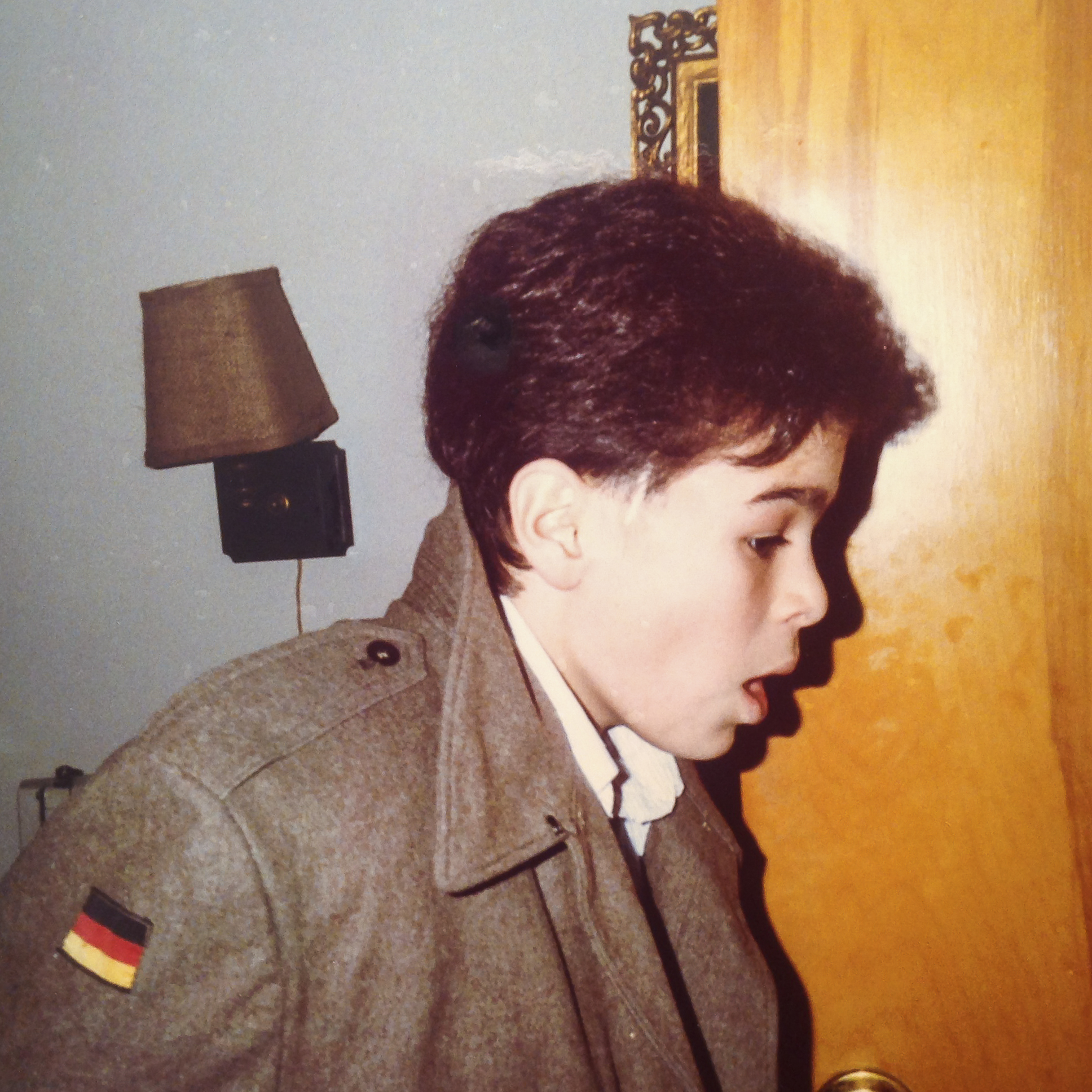
A photo of my father and me two months before the operation in 1984.

2.

A nurse enters my room and hands me a small plastic cup filled with a few pills. “This will just relax you,” she says as I swallow the pre-surgery drugs. About a half-hour later, she returns and says, “It’s time for you to go down now.” A softness squishes against the edges of my mind; I am drifting from consciousness.

An orderly comes to take me away—filling nearly the entire space inside the door frame. A hulking figure with thick, black hair, a black beard, and muscular forearms, he reminds me of Bluto from the Popeye the Sailor cartoons. But for some reason, I call him Hugo.

“OK, Hugo,” I say, “I’m ready now.” Hugo helps me slide over from my bed to a stretcher as the nurse covers me with a sheet and a blanket.

My family gathers around me, bending down to kiss me and wish me “good luck.” What does “good luck” mean on the operating table? I wonder.

Tears stream down my mother’s cheeks, which are red and wind-burned and feel cold against my skin as she kisses my face and forehead; she squeezes my hand and then releases her grip and steps away.

Hugo unlocks the wheels of the gurney and steers it out of the room and into the hallway. Even though I am sleepy, I stay awake for the ride, keeping my eyes open and watching the panels of fluorescent lights pass overhead as we make our way through the hospital corridors and into an elevator. We take a silent ride down to the surgical wing.

The temperature drops when we enter the frigid, sterile operating room. A chill runs over my body; my lips tremble as gooseflesh buds on my arms.

The surgical team members buzz around the operating room, each doctor or nurse carrying out a specific task. They transfer me from the stretcher to the operating table. An overhead light shines into my eyes while I lay splayed on the table.

A nurse covers me with an extra blanket and stretches tight, white stockings over my calves. She says the stockings will help to prevent blood clots after surgery.

One of the doctors sits down near the table and says he will shave my head. When he asks me if I want my whole head sheared or just the front, I make the mistake of telling him to clip only the front. As a result, weeks after the surgery, my hair remains uneven—bald in front and growing long in the back—similar to the long hair sticking out the back of helmets worn by hockey players with mullets.

After they jab an IV in my arm, I grow drowsy, my eyelids shutting; but before I drift off, I tell one of the nurses that I need to pee. The woman chuckles and says, “Oh, you don’t have to worry about that now. We’ve already put in a catheter.”

And then I leave the world—falling under the power of general anesthesia for about eight-and-a-half hours while the surgeons perform their work.

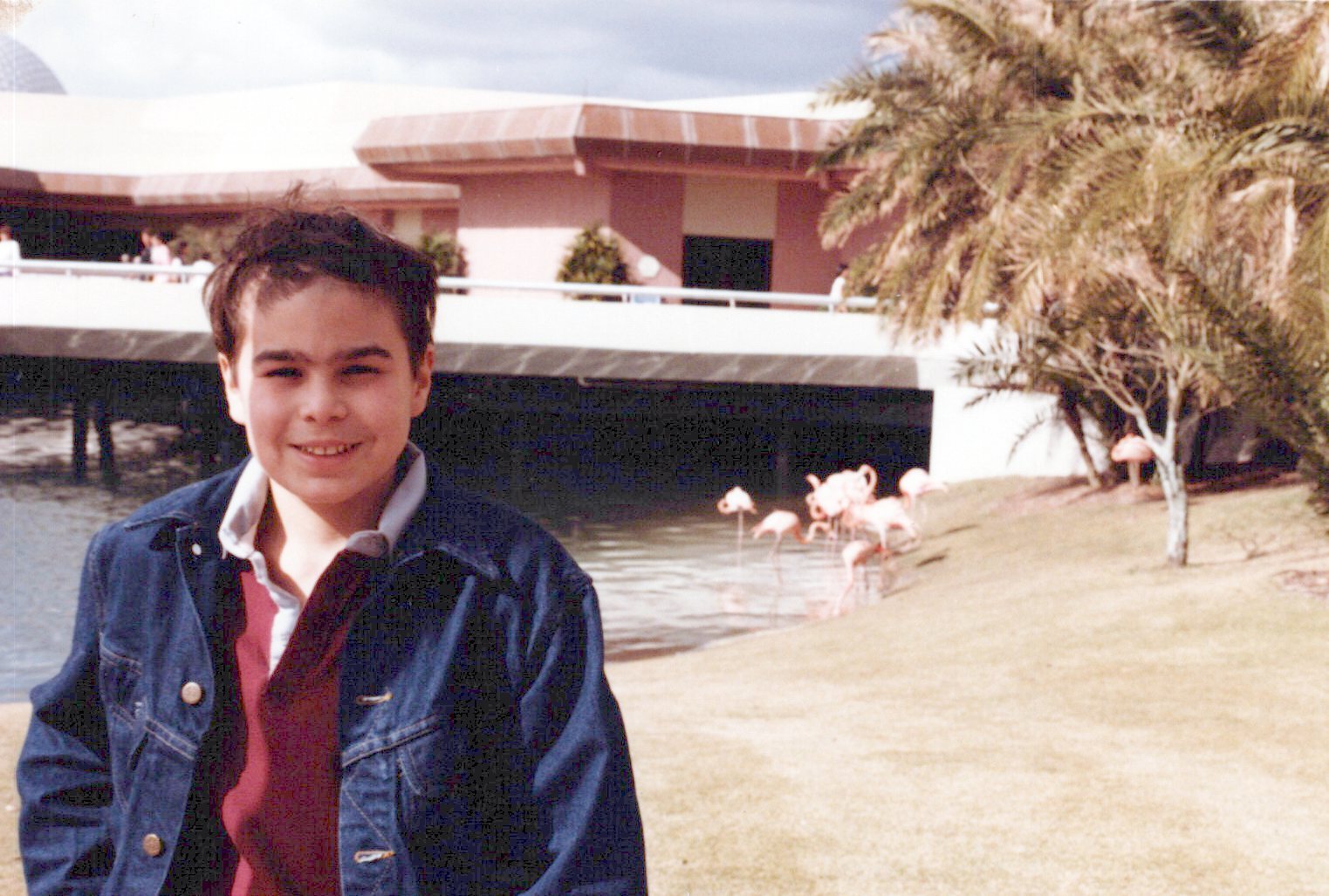
At Walt Disney World in February 1985.

3.

I have often wondered where I traveled to during that gap of time. What realms or landscapes did I explore in my mind while my skull lay open and I remained unconscious on the operating table?

Here is me stepping out of the story momentarily to travel back in time and investigate the scene. It’s a fantasy of the man I hoped I would become once the surgeons extracted the tumor. It’s the future I had envisioned for myself—marked by maturation and normalcy, playing the role of a fully formed male accompanied by a female partner.

A green canopy of trees. A trilling stream. Sunlight filtering through leaves overhanging a hiking path. Birds chirp, and tree limbs sway in the wind.

Boots touch the soft, muddy earth. A man emerges from a wooded path. He is dressed in a red checkered flannel shirt, tan khakis, and hiking boots, and he carries a knapsack on his shoulders. He is about five feet six inches tall, lean and muscular, and has a slight beard.

A twig snaps, and we see a woman walking out of a clearing. She’s wearing a fleece sweatshirt, jeans, hiking boots, and a backpack. The two figures stride toward one another, share a kiss, and then grasp hands. Sunlight bathes them as they leave the clearing and start walking on a path leading over a ridge. They climb the slight incline and disappear as they walk down the other side, their bodies concealed by the curve of the Earth.

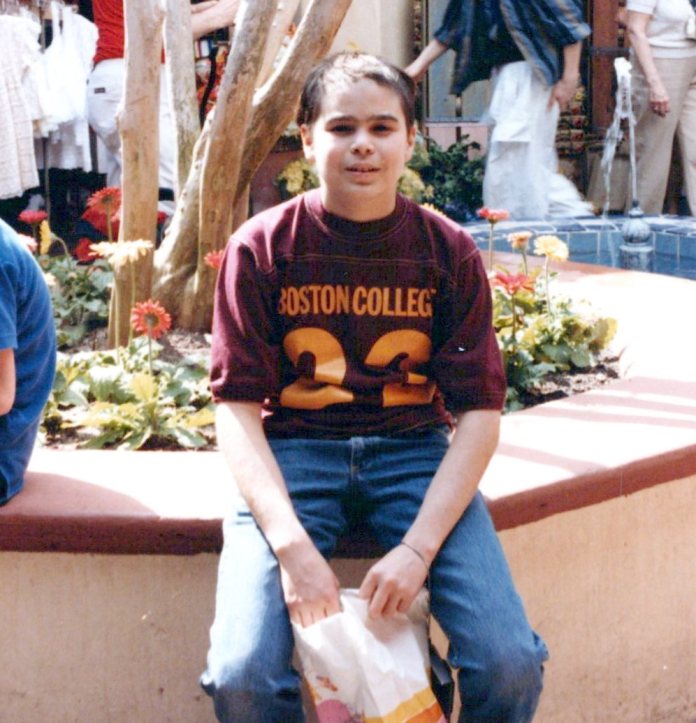
Late high school or early college years.

4.

I wake up in a bed tucked in a corner of the surgical intensive care unit. I feel dizzy, and a dull, continuous ache presses against my head as if my skull is being squeezed in a vice. Nurses inject the opioid Demerol into my thighs over several hours to alleviate the pain, and I keep drifting in and out of sleep. I hear machines beeping and the sound of a respirator somewhere on the floor. The gentle sound of the ventilator puts me at ease as I listen to it—in and out, in and out, in and out.

EKG stickers are pressed to my chest, and machines monitor my heart rate and blood pressure. Vaseline has been smeared on my eyelids and eyelashes, clouding my vision, and I feel like I am straining to see from under the cover of a heavy, wet blanket. The white stockings the surgical team had given me are pulled up to my knees and constrict the circulation in my lower limbs.

I feel small—shriveled up in the bed like a green-gray alien being prodded by U.S. government doctors and scientists on an operating table in Roswell or Los Alamos, New Mexico. A scar runs the entire length of my head, from the tip of my right ear to the tip of my left ear. I tap a slight dent in my skull (produced by a right frontal craniotomy during surgery), about the width of two fingers, just above my forehead on the right side.

The stitches itch, and I reach up to feel the thick, black threads. I wonder if I resemble a twisted version of the Mr. Met mascot.

5.

But I feel relieved because I have awakened from the operation, and my brain function remains intact. Some doctors lean over my bed and ask me a series of questions: Do I know my name, the current year, the president of the U.S., and the name of the city I am in? I answer the questions correctly, and when instructed, I squeeze their fingers, wiggle my toes, puff my cheeks, stick out my tongue, and follow a penlight with my eyes.

My senses function properly, as I can see, hear, speak, and smell. I can form thoughts, and the trauma of the surgery has not altered my mental ability or effaced my memory.

My mother, father, sister, and Aunt Teresa huddle around my bed, their faces beaming like those of Dorothy’s relatives in the scene when she wakes up from the dream at the end of The Wizard of Oz.

“Hey, buddy,” my dad says.

My mom leans over the bed rail, kisses my face and eyelids, and says, “You did great, honey, just great.”

“Yeah, Dr. B. said he got most of it,” Dad says.

“Was it big?” I ask.

My mom holds up her right thumb, indicating the size of the tumor. “It was about the size of a thumb,” she says. She caresses my face and adds, “Dr. B. said there’s a little bit left over, but we don’t need to worry about that now.”

“OK,” I say, closing my eyes and returning to sleep.

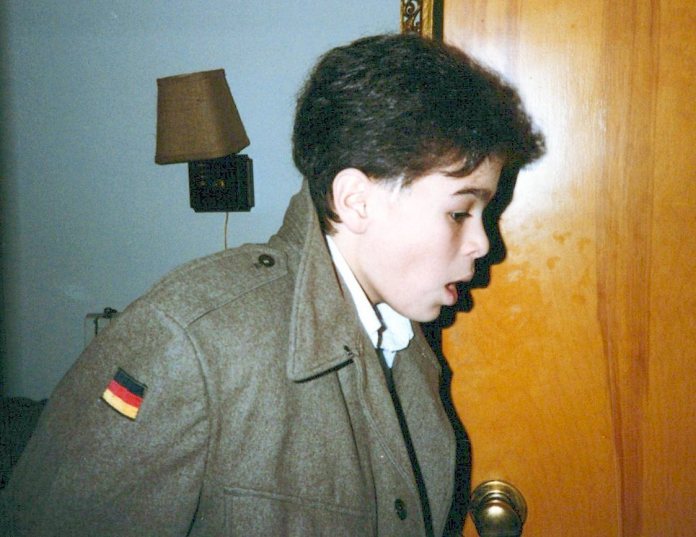
High school graduation in 1987.

6.

I wake up on the first night with a raging thirst in my parched throat. I feel like I have been deprived of water for days. But because the doctors are concerned about swelling in the brain, they load me with corticosteroids and restrict my fluid intake. My face is swollen, and I feel bloated from the steroids; I am not allowed to drink water, but I am permitted to suck on ice chips.

However, late in the evening, with the lights dimmed on the floor after visiting hours have ended, I turn my head, look around, and notice a sink in the corner, only a few feet away from my bed.

Somehow, despite being woozy, I lower the bed rail, swing my legs out to the side, and climb out of bed. I try to be quiet as I wheel my IV stand toward the small, stainless-steel sink. I turn on the foot pedal faucet, cup my hands, and gulp the water like it’s rushing in an icy mountain river.

The cold liquid pours down my throat and gives me immediate relief. I want to stay here and drink more water, but a man—a male nurse or an orderly—races toward me and pulls me away from the sink.

“What are you doing?” he yells. “You just had brain surgery.”

He then escorts me back to bed, swings my legs over, covers me with the blankets, and lifts the bed rail.

“Now, don’t get up again,” he says. “What do you wanna do, crack your head open and screw up the work those surgeons did?”

And now tucked back into bed, I resume sleeping, drifting off until the next wave of pain hits, and I press the call button to request another dose of Demerol.

##

Recalling these past forty years, I run a tally of my surgeries at Upstate. The number stands at six—counting the initial surgery in 1984 and the subsequent operations to remove tumor regrowth in 1988, 2011, 2012 (Gamma Knife), 2020 (Gamma Knife), and 2023.

I have some double vision when looking at things up close and to my extreme right (right sixth nerve palsy), and I must be hyper-vigilant in the management of my care to treat my hypopituitarism. But except for my corticosteroid-induced osteoporosis and rheumatoid arthritis (unrelated to the tumor), I am a healthy, middle-aged man.

My next MRI is scheduled for Dec. 18. And with the stubborn resilience of craniopharyngiomas, I know more surgeries (or radiation treatments) loom in the future. But I face each day with gratitude, recognizing how lucky I am to have survived the scalpel on multiple occasions. I also don’t look beyond each six-month window of time between MRIs. Once my current neurosurgeon orders the next MRI, I go about my life without thinking about the tumor still lurking in my head.

Late high school or early college years.

##

And because of the significance of the number 40 on this anniversary date, I’ll leave you with U2 playing “40” live at Red Rocks Amphitheatre in Colorado in 1983.


Standard

Embrace the Futility

This essay was published in the Spring 2024 issue of The Awakenings Review. I’m grateful to editor Robert Lundin for giving me permission to publish the essay on my blog.

##

In the pediatric surgery waiting room, my wife, Pam, and I sit on a couch, watching a television screen as Facebook CEO Mark Zuckerberg testifies before a House subcommittee about the data-sharing scandal involving Cambridge Analytica. It’s April 2018, and we’ve been here all morning since bringing our two-year-old son, Colin, to the hospital for an anesthesia-induced auditory brainstem response (ABR) test.

The audiologist steps into the room and shuffles toward us with his eyes cast downward. He’s short and balding with grayish-brown hair on the sides of his head. After he directs us to a more private area, he says in a low voice, “He’s doing fine. The test went well. It’s good news from my perspective, but maybe bad news for you. His hearing is fine, perfectly normal.”

“So what does that mean?” I say.

“It means his hearing isn’t the cause of his delayed speech.”

“I knew it. I knew it,” Pam says.

We would receive the official diagnosis of autism spectrum disorder (ASD) a few months later. And as Colin has grown, during moments when he refuses to eat, take a bath, or leave the house, or when he throws tantrums—his face bright red, his arms flapping, and his voice emitting high-pitched screams that reverberate off the walls and ceiling—I have repeated two mantras in my head: “Embrace the Futility” and its softer sibling, “Accept the Inevitable.”

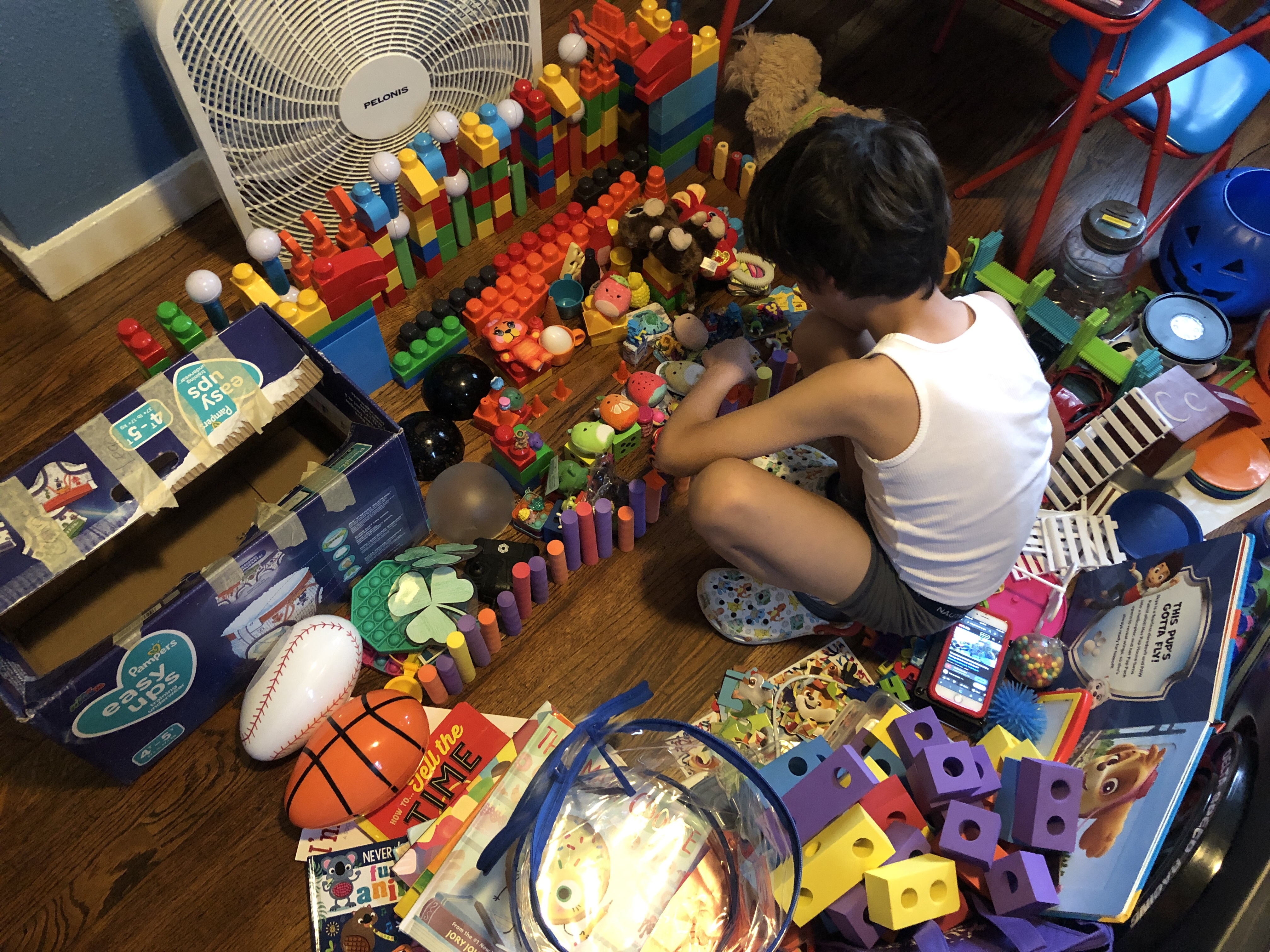
Colin’s room. He loves to line up his toys in patterns,

I use these twin sayings as coping mechanisms to brook the vagaries and hardships of life.

I take no credit for inventing the verbiage of Embrace the Futility. One of my co-workers at a broadcast news wire service in Arizona shouted the phrase several years ago when we were understaffed on the overnight shift and getting inundated with news summaries and audio files sent to us from multiple markets across the country.

Embrace the Futility sounds like a negative concept, but it is a positive and freeing principle (at least for me).

It guides my behavior with one central dictum: I am not in control. The world is a dealer at a Las Vegas blackjack table, and the house always wins. My mental approach is, “Expect the worst and be pleased when it doesn’t turn out that way.”

At an early age, our parents teach us that we will live for a short time and then die. The rules of the game are rigged. We know the score at the outset, and the contest ends in our defeat.

Embrace the Futility and Accept the Inevitable give me the freedom to let go of things I am powerless to control. As a result, I reconcile myself to an existence dictated by failure, sickness, and eventual death.

This is a personal philosophy based on my lived experience; it may not work for everyone. But Embrace the Futility and Accept the Inevitable have helped me to endure the inexorable rough patches in life.

##

I am consumed with pity for my son, knowing his autism—his diminished ability to communicate verbally—puts him out of alignment with the rest of the world. In this case, love proves impotent to effect change or prevent the hurt he will absorb as he grows.

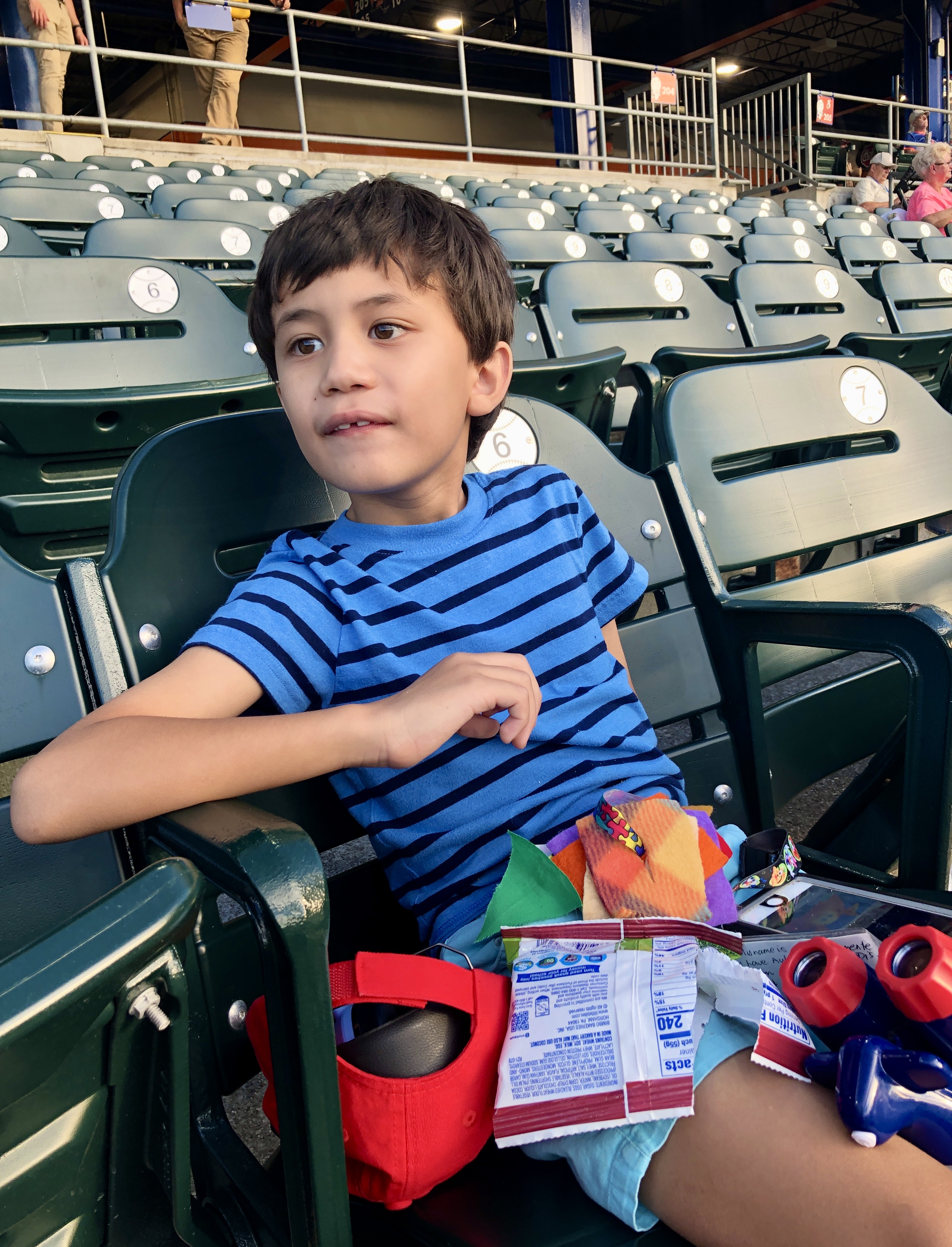
Colin sitting in the stands on the first-base line.

I understand I am professing ableism. I recognize Colin’s disability should not be viewed as a problem that needs to be fixed. But as a parent, I know his autism dictates his future, making his life more difficult. Colin may never lead an independent life. He may never enjoy what neurotypical kids experience—playing organized sports, going to college, falling in love, and working full-time.

I can’t wish away his autism or intervene to make him “normal.”

I could lament the diagnosis. I could resist—to metaphorically bang my head against a cinder block wall and expect to make an opening. Instead, I acknowledge that I cannot “cure” Colin, and I accept him unconditionally. And amid the many challenges of raising an autistic child, Pam and I savor ordinary moments with Colin, relishing his squeals of laughter and his blithesome presence as he jumps around our living room.

Pam and Colin.

But Embrace the Futility and Accept the Inevitable have universal applications. Your car breaks down. You file for divorce. Bankruptcy, fraud, cancer, a broken femur, or a flooded basement—sure, bring it on. 

Embrace the Futility and Accept the Inevitable can help anyone reframe the unavoidable “suckiness” of life. You don’t ignore the mess, but you admit you can’t control it. And it’s OK to let go—to reconcile yourself to what the universe throws at you.

Since age fifteen, I’ve had multiple surgeries and radiation treatments for a slow-growth, benign tumor at the base of the brain, near the pituitary gland. The latest surgical intervention came in July 2023, when a neurosurgeon and an ears, nose, and throat specialist teamed up, taking a transsphenoidal approach (through the nose) to extract tumor remnants that had affected my vision. Even as I write these words, I know the craniopharyngioma will eventually expand in my head and another date on the operating table looms in my future.

I was also diagnosed with rheumatoid arthritis in 2017. The disease has altered my digestion and lung function while leaving me with bent, aching fingers.

And while I do my share of complaining about these medical conditions, I also Embrace the Futility of my body breaking down, since the decline is inescapable.

My late father, Francis Sr., offered the best example of Accepting the Inevitable.

When he was diagnosed with lung cancer in 2007, an oncologist gave him the option of starting chemotherapy, but the doctor stressed the dismal odds of the treatment elongating my father’s life. My dad curled his bottom lip and said, “Why bother? What’s the point?”

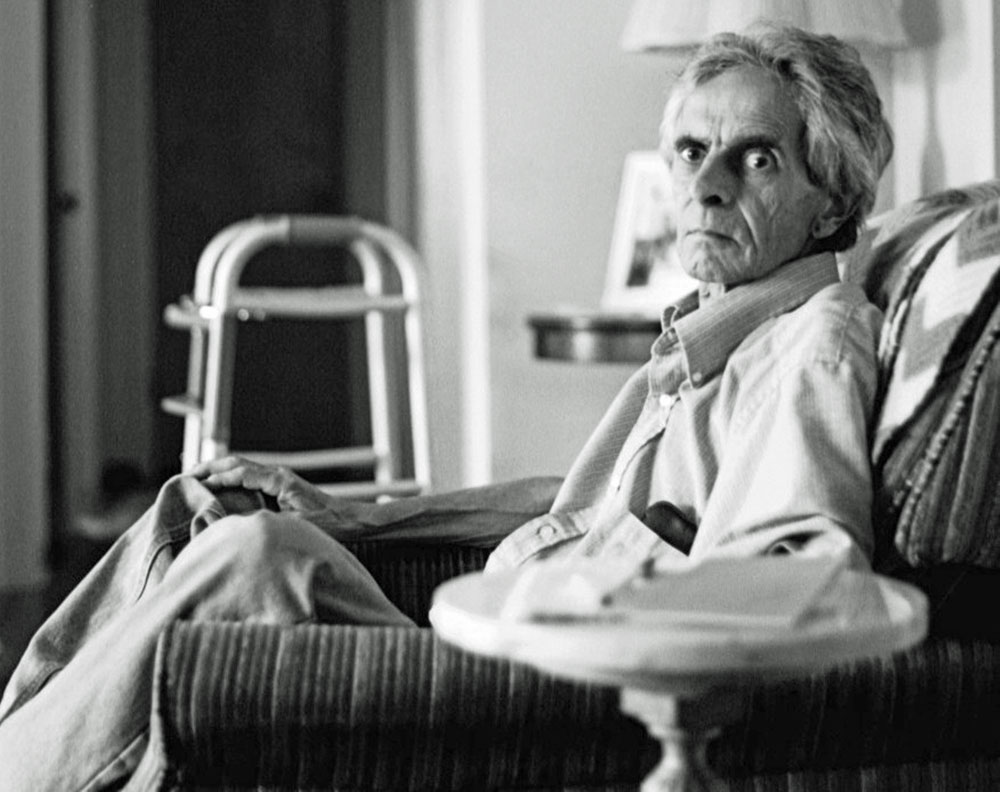
Dad, side angle. Photo by Francis DiClemente.

He rejected tubes, injections, and trips to the hospital. He endured his fate with stoicism, making the best of his last six months on earth, placing bets at OTB (Off-Track Betting), racking up credit card debt (which would be wiped out with his death), and eating sweets he had eschewed previously—Klondike bars and Little Debbie snacks—before dying at home under hospice care.

So now, when circumstances beyond my control arise, I follow my father’s model. I submit, acquiesce, and capitulate—assenting myself to a fate I cannot sway. And this allows me to move forward without resistance to the vicissitudes of life.

Standard

Eight Weeks Later

Today marks two months since my transsphenoidal brain surgery to remove tumor regrowth. I’m happy to report I’m getting stronger every day. I’d say I’m about 80 percent back to normal. I have returned to work and jumped back into the maelstrom of marketing projects, deadlines, and responsibilities.

Eight weeks post-surgery.

My nose still throbs, and I needed a round of antibiotics for a recent infection of the cartilage. I had a follow-up appointment with the ENT surgeon; he mentioned it will take about three to six months for me to be fully healed—not surprising considering they rolled part of my septum and used it as a nasoseptal flap to patch where the cerebral spinal fluid leaked during surgery. But the good news—the seal at the back near the opening of the sphenoid sinus is holding.

My nemesis: the twice-daily nasal rinse bottle.

I still need to do twice-daily saline rinses and take Tylenol for the pain. I lifted “weights” yesterday for the first time in eight weeks—don’t laugh at my little five-pound dumbbells. I hope to resume heaving fifteen-pounders in a couple of weeks.

Hitting the “weights.”

Two songs have been repeating in my head during my recovery.

Elton John’s “I’m Still Standing.”

And Steve Winwood’s “Back in the High Life Again.”

And here’s a photo from a Walgreens: the gift of a beautiful sight revealed to me on a mundane Friday night.

Sublime sunset from a parking lot. Photo by Francis DiClemente.

Standard

Featured Poets Blog

I just wanted to share that I have a couple of new poems published on Osamase Ekhator’s Featured Poets blog. You can find out more about Osamase Ekhator on his personal website. And here’s a direct link to the Featured Poets page.

Standard

Brain Tumor Surgery Anniversary

Today marks the thirty-sixth anniversary of my first brain surgery. As I’ve written about before, on Dec. 12, 1984, surgeons at SUNY Upstate Medical Center (now named Upstate University Hospital) in Syracuse, New York, removed a large craniopharyngioma that had engulfed my pituitary gland, leading to stunted growth and delayed puberty in my early teenage years.

Posing with my parents prior to my surgery in 1984.

Prior to the surgery, in the fall of 1984, a scan of my head had revealed a cloudy mass in the sella region at the base of the skull, and the results of a follow-up CT scan with radiation contrast came a few weeks later.

Craniopharyngioma

I received the news about the brain tumor diagnosis from my father, after he picked me up from wrestling practice on a cold November night. This poem describes that encounter.

Brain Tumor Diagnosis

Dad put the car in park and let it idle,
and as I slid into the seat and adjusted myself,
he leaned over and kissed me on the cheek,
his tan winter coat brushing against the steering wheel.
I felt a trace of his razor stubble against my skin,
and I could smell a faint odor of Aqua Velva or Brut,
combined with cigarette smoke.
The heater hummed, and he lowered the blast of air
and turned and looked at me.
I wondered why we weren’t moving yet.
He wasn’t crying,
but he appeared on the verge of spilling emotions.

“What’s the matter Dad?” I asked.
“The hospital called your mother today,” he said.
He switched on the overhead light,
reached into his jacket pocket,
and pulled out a torn piece of paper.
“Here,” he said, handing me the slip of paper,
“this is what they think you have.
I wrote it down, but I don’t know if I spelled it right.”
Scribbled in faint blue ink was the word “craniopharyngioma,”
although my father had misspelled it.
His voice cracked a bit as he said, “It’s cranio-phah-reng . . .
something like that . . . I don’t know, it’s some kind of brain tumor.”

I looked at the paper and felt a wave of satisfaction
as my father let out a sigh.
He seemed locked into position in the driver’s seat,
unable to shake off the news and go through the motions
of putting the car in gear and driving away.
I think we may have clutched hands,
and I said, “It’s OK Dad. Don’t worry.
But what do we do now? What’s next?”
“You have to back there for more tests. You may need surgery.”
“All right,” I said.
He switched off the overhead light,
and he drove out of the parking lot.
We grew silent inside the car
as we passed the naked trees lining Pine Street
in our city of Rome, New York.

While my father was crestfallen,
I remember being elated as I sat in the passenger seat.
The CT scan with contrast had given me a medical diagnosis—
a reason for my growth failure at age fifteen.
It explained why my body had not changed,
why I never progressed through puberty,
and why I was so different from the other boys my age.
I still considered myself a physical anomaly,
but the tumor proved it wasn’t my fault.

That knowledge gave me some satisfaction,
and I couldn’t help feeling a stirring of excitement.
I looked down at the piece of paper again
and studied the word—“craniopharyngioma.”
I tried to sound it out in my head while my dad drove on,
and I thought the word
would roll off my tongue like poetry if I said it out loud.
Craniopharyngioma. Cranio-Phar-Ryng-Ee-Oh-Mah . . .
sort of like onomatopoeia.

Standard

12/12/84

Today marks a momentous anniversary in my personal history. As I’ve written about before, on this date, thirty-four years ago, surgeons at SUNY Upstate Medical Center (now Upstate University Hospital) in Syracuse, New York, removed a large craniopharyngioma that had enveloped my pituitary gland, leading to stunted growth and delayed puberty in my early teenage years.

Craniopharyngioma example.

The surgery left me with panhypopituitarism, a deficiency of all of the hormones the pituitary gland produces. The tumor returned twice during the intervening years and I would need follow-up surgeries to wipe away the remnants, along with Gamma Knife radiosurgery in 2012 to keep the neoplasm from coming back. So far, so good; my last MRI showed no traces of my benign nemesis.

My objective with this post is not to elicit sympathy by rehashing my medical past. Instead, I want to pause, reflect on the adversity I’ve faced and express gratitude that I’m still here. If you spend any time in a hospital you discover how quickly life can be snatched away. As I type these words, someone is dying and loved ones are mourning that person’s death. My story could have had a darker, alternate ending.

In looking back on my health crisis, I am thankful for the following.

My vision works—despite my need for progressive lenses and reading glasses. In waking up after the surgery, I could see, and this was not a given since craniopharyngiomas can cause visual disturbances because of their location near the optic nerve.

At Disney World in the winter of 1985; the scar from my surgery is visible and my hair has not grown completely back.

My brain function remains intact; the wedge of cauliflower in my head is capable of reasoning, performing calculations and doing what it’s intended to do (the majority of the time). And while my adult intelligence and decision-making ability could be open to interpretation, the surgery did not—as I had feared it would—disrupt my mental capacity or alter my cognitive function. When I woke up in my hospital bed, I knew my name, the date and the president of the United States (Ronald Reagan). And I remain thankful to this day because the me I knew as me had not disappeared after the surgeons cut open my skull.

Boy to Man

Although my youthful appearance lingered into my late twenties (a direct result of the delayed puberty caused by the tumor), I am grateful I finally matured with the assistance of injections of synthetic growth hormone and testosterone, which spurred growth and the development of secondary sex characteristics. I have shed the outer skin of a boy, revealing the man I knew resided underneath.

My wife Pam and son Colin.

My health has diminished with the subsequent diagnoses of osteoporosis and rheumatoid arthritis, and panhypopituitarism requires constant and vigilant management, e.g. making sure I take the numerous drugs that sustain my life. Even so, today I live a pretty normal existence. The surgery did not provoke a desire to engage in thrill seeking activities. I don’t think you can go full throttle all the time—“living each day as if it’s your last.”

I am content to wake up, blink my eyes and focus on my surroundings, climb out of bed and face each new day with the knowledge of how truly lucky I am.


Standard

Memories of Summer Stock Theater

Act I:

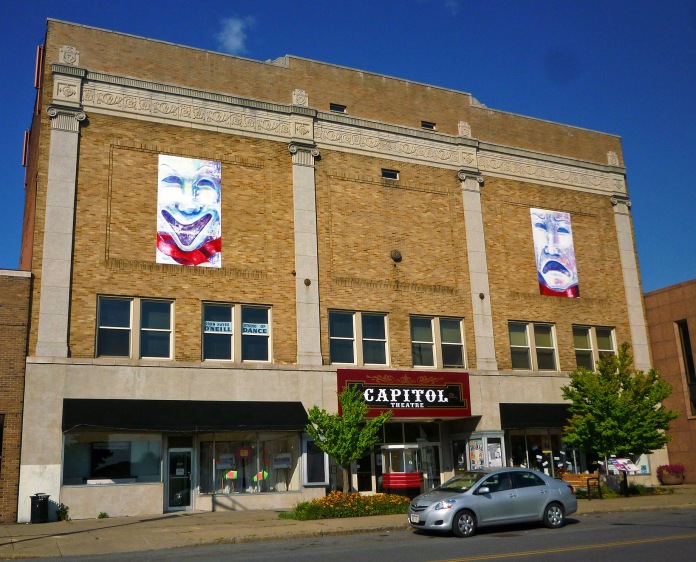
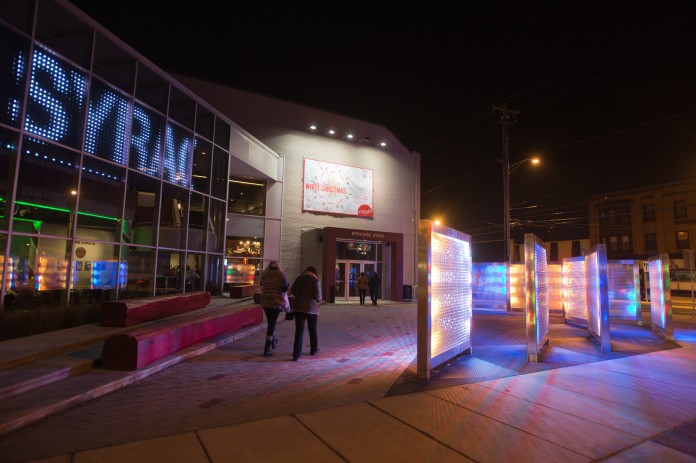
I loathed musical theater when I was growing up. My first exposure to the genre came during my college years in the late 1980s and early ’90s when I attended SummerStage performances at the Capitol Theatre in my hometown of Rome, New York. The productions featured college students from across the region who were majoring in drama or theater studies, and I remember seeing many shows, including Guys and Dolls and South Pacific.

Capitol Theatre, Rome, New York.

My mother, Carmella, and my stepfather, Bill, would buy me tickets, and in a failed attempt to impress the many young women who attended the performances, I would “dress up” in a black blazer that I had purchased at the Salvation Army store in Rome; yet my appearance and fashion sense drew no positive feedback from the females in the audience.

And while I wanted to go to the Capitol shows because they were summer social events, I was afraid that if I actually liked them, and expressed this appreciation, I would get laughed at or be regarded as effeminate by my friends in our sports-obsessed city.

Once the lights went down and the curtain opened for a show, I would snicker when the actors would break into song in the middle of a conversation. I wanted to stand up and scream, “This is absurd. Why am I the only one laughing here?”

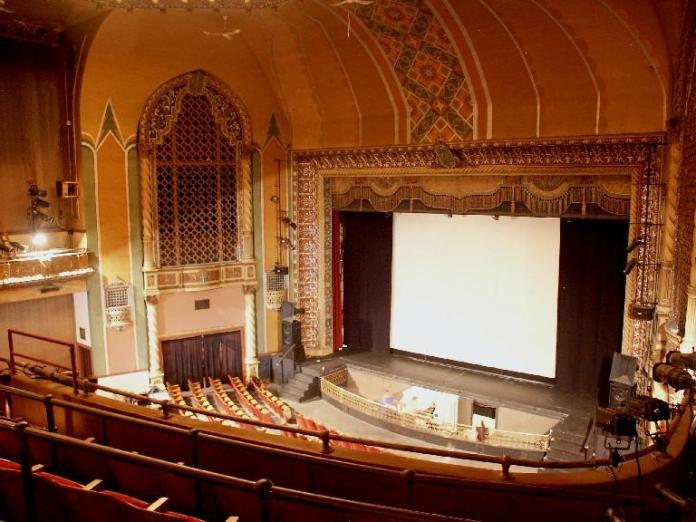
Capitol Theatre Interior.

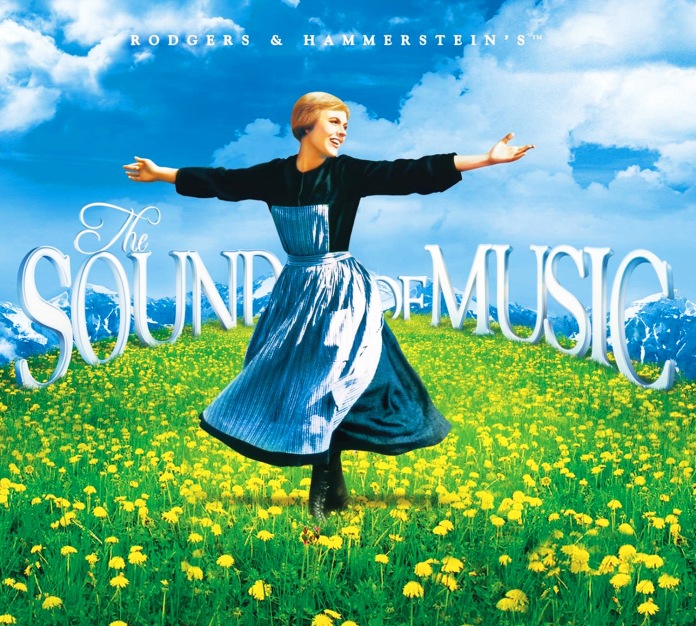
Live musical theater seemed even more preposterous than its cinematic equivalent, which I had been introduced to as a kid while watching my mother’s obsession—the 1965 film The Sound of Music, starring Julie Andrews and Christopher Plummer. And just like with TSOM, I could not suspend my disbelief and accept the characters speaking dialogue one moment and singing the next. Yet I seemed to be the only one dismayed by the experience because the packed houses at the Capitol responded to the final scenes with thunderous applause and standing ovations for the performers.

The Sound of Music.

As we would leave the theater, Mom or Bill would often ask me what I thought about the production. I would say something like, “I thought it was stupid. I just hate how they just start singing.” And my mother would shake her head and say, “Oh you never like anything. I don’t know why we even bother to bring you.”

What I didn’t share with my mom is that at the time, seeing the musicals on the Capitol stage tapped into the dark experience of my maturation from a boy to a man.

I had been diagnosed with a pituitary tumor when I was fifteen. In 1984 neurosurgeons performed a craniotomy to remove the tumor and then swept up the remnants in a follow-up surgery in 1988, after my freshman year at St. John Fisher College in Rochester, New York. Endocrinologists also treated me for panhypopituitarism, as I lacked all of the hormones the pituitary gland normally produces. I was prescribed synthetic human growth hormone and testosterone shots during this period.

So even though I was in college when I attended the SummerStage performances, I still looked like a fourteen-year-old boy who had not passed through puberty. Lacking secondary male characteristics like facial hair, an enlarged Adam’s apple, and a deeper voice, I was sometimes mistaken for a girl, both in person and when talking with strangers or customer service professionals over the phone.

The women at my college were not interested in me romantically, and my low self-esteem grew into rabid self-hatred. I despised my youthful appearance and feminine features, and I became angry over my body’s inability to “catch up” to my chronological age.

So when I went to the theater with Mom and Bill, I resented the easy solutions to problems as presented by the actors. For example, a couple would be on stage bathed in bright amber or violet lights, and they would converse about some family dilemma or obstacle to their romance. Circumstances would appear bleak; and then they would start singing and dancing, and their fate would change and their drama would be resolved.

I couldn’t accept this. Life wasn’t like that. I could not alter my situation or “become normal” through song and dance. My problems stayed with me after I walked out of the theater. And so I hated musicals because they represented an unrealistic portrait of the world.

Of course I was only seeing things through the narrow prism of my personal experience. I wasn’t able to look out, beyond myself, in order to enjoy the artistry of the action on stage.

Act II:

Years later I underwent a reversal and evolved to love musicals, especially the films featuring Judy Garland, Doris Day, Frank Sinatra, and Gene Kelly. My all-time favorites are The Wizard of Oz (a given), Young at Heart, and Singin’ in the Rain.

I also attended many live musical theater performances. So what changed? How did I come to appreciate the genre I had hated so much in my youth? For one thing I grew up and matured.

But I also had a more practical reason for liking musicals. I began working at Syracuse University in 2007 and from time to time would receive staff discounts for tickets to performances at Syracuse Stage, Central New York’s professional theater. I took advantage of the deals and soon attended many of the plays produced by Syracuse Stage, including the musicals Fiddler on the Roof, Little Women, Godspell, Oklahoma!, and Rent.

Syracuse Stage Exterior. Photo by Steve Sartori.

I would buy a single ticket, usually close to the stage, orchestra left or right (one of the cheapest seats in the house). And because I paid for the tickets, I convinced myself I would enjoy the shows no matter what, so I wouldn’t feel like I had wasted my money.

Also, even though I was single at the time I started going to the shows, I tried not to focus my thoughts on my bachelor status or become discouraged because I never brought a date with me to the theater (although sometimes I couldn’t help being envious of couples holding hands as the house lights dimmed).

Instead, I turned my attention to the action in front of me. Unlike when I watched the SummerStage shows in Rome, I was able to get out of my head, to look outward instead of inward.

I also surrendered my desire for logic in the plot lines of the plays. In 2008 I began dating my future wife, Pam, a theater actress from the Philippines, and she helped me to suspend my disbelief. She told me, “Just enjoy it. Let yourself go and don’t worry if it doesn’t make sense.”

And in watching a number of musicals unfold before me, I no longer expected a realistic interpretation of the world; it didn’t bother me anymore that the actors behaved irrationally.

I simply allowed the experience to wash over me and marveled at the production values and collaboration involved in bringing the action to life on stage.

I also viewed the plays with a more critical eye and appreciated how musicals combine elements of multiple disciplines. They encompass the verbal, as represented by the words in the script; the visual through the costumes, lighting, and set design; dance and movement through the choreography; and the aural through the music and sound effects. Musical theater appeals to all senses, even including smell when smoke is used in scenes.

And I discovered what my mother had understood years earlier when watching The Sound of Music—that musicals offer escapist entertainment as the viewer lives vicariously through the characters, relating to their struggles.

I remember rooting for the character of Jo March in Syracuse Stage’s 2009 production of Little Women, hoping she would hold on to her independence as she strove to find her way in the world.

I remember being captivated by the song “Astonishing” and its soaring lyrics: “I may be small, but I’ve got giant plans to shine as brightly as the sun … I will be fearless, surrendering modesty and grace.”

And sitting up close for the performances I saw how hard the actors worked—the sweat pouring off their faces and brows and soaking their costumes as they belted out the songs and danced breathlessly on stage. In the dusty glow of the stage lights I also noticed the smiles on their faces and a flicker of light in their eyes. It was clear they loved what they were doing; and that joy translated to the audience.

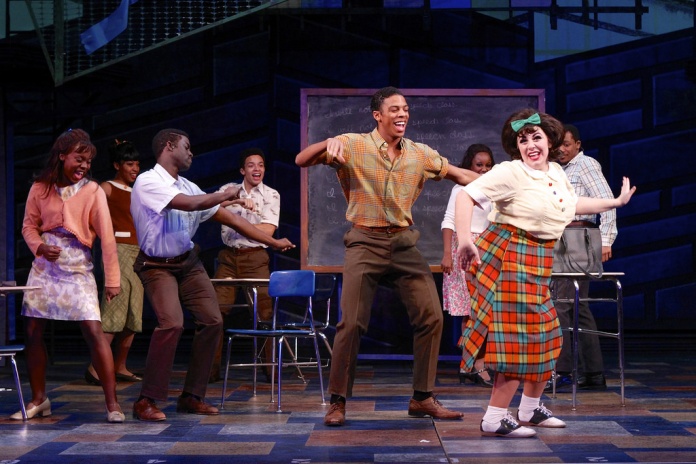
I remember seeing Hairspray with Pam at Syracuse Stage in December 2014, sitting in row B, left orchestra. And during one of the songs—either “Good Morning Baltimore” or “You Can’t Stop the Beat”—I turned my head around in the same way Audrey Tautou’s character did when she visited the movie theater in the French film Amelie. In the darkness I scanned the crowd seated behind me, gazing at the mixed audience comprised of older couples, young professionals, and college students. And their smiling faces matched the expressions of the actors on stage; the emotional connection was palpable.

Hairspray Scene. Photo by Michael Davis.

And I joined in on the fun. I turned my head around and nodded my head and tapped my foot as I listened to the music and let the show carry me away. I also thought that if my mother were still alive, she would have loved the performance too.

Standard

Date With a School Nurse

I just wanted to mention that one of my personal essays, Date with School Nurse, has been published by You&Me-America’s Medical Magazine, an online medical magazine. You can read the piece here. Thanks for taking a look!

And here’s the full text of the story:

I thought I was done visiting the school nurse after junior high school.

I thought I no longer needed to be excused from class and sent to the nurse’s office with a sore throat or tummy ache. And in fact no student enjoys seeing the school nurse. In addition to feeling sick, he or she is embarrassed about being separated from the rest of the class.

That’s how I felt when I had to visit the school nurse three times a week when I was a student at St. John Fisher College in Rochester, New York, in the late 1980s and early ’90s.

The campus of St. John Fisher College. Photo by St. John Fisher College

The campus of St. John Fisher College. Photo by St. John Fisher College.

I did not have an acute illness. Instead, I suffered from panhypopituitarism—a deficiency of all of the hormones the pituitary gland produces—resulting from a craniopharyngioma (a pituitary tumor) that was surgically removed during my sophomore year in high school.

As a college freshman I looked like a 14-year-old boy and, initially, some of the other students mistook me for an academic prodigy. I had to explain to them I was of normal intelligence but appeared young for my age due to my pituitary condition.

My endocrinologist in Syracuse had prescribed me synthetic human growth hormone to help me grow, and my mother had learned how to give me the HGH shots when I lived at home.

But when I went away to college, my doctor had arranged it so the school nurse could deliver the injections. He said it was important for me to continue the treatment.

The nurse, Nancy (name changed), was in her forties and had shoulder-length dark hair. She wore red lipstick and a white uniform that hugged her voluptuous figure, and she reminded me of a less glamorous version of Jane Russell.

But her kindness and professionalism stood out more than anything else.

Her small health office was located in the basement of a campus building, just around the corner from a student lounge and down the hall from the college radio station.

I would try to go there early in the morning, when few students would be hanging out in the lounge. I didn’t want anyone to see me visiting the nurse on a regular basis because I considered my condition abnormal compared to students who had the flu or some other common health issue.

Nancy would greet me warmly when I would enter her office. “Come on in,” she would say.

We would make some small talk, discussing the weather, news, sports or plans for the weekend.

If she didn’t have a patient with her I would head right to the exam room in the back of the office, toss my book bag on the floor and get ready for the shot. She would follow me into the room, pull the growth hormone out of her small brown refrigerator, mix the solution and prepare the syringe, tapping it and releasing any air bubbles.

She knew my dosage based on the endocrinologist’s instructions. She also kept a chart in my file listing the dates and dosages of my injections, marking my progress as the months went on.

I would drop my pants and underwear and lean against the exam table, my cold fingers crinkling the white paper that covered the table. She would rip open an alcohol pack, and the pungent smell would hang in the air as she spread the alcohol on my buttock.

“OK, just a little poke,” she would say as she prepared to inject the medicine. I would feel the sting of the needle breaking the skin and then being inserted into the muscle, and the pain would intensify as she pushed down on the plunger.

Then Nancy would remove the needle, rub some more alcohol on me and say, “You’re all set. I’ll see you on Wednesday (or Monday or Friday, depending on the day).” I would pull up my pants, thank her for the shot and exit the office.

Her efficiency meant the visits to the nurse’s office never took more than five minutes out of my day.

Still, I felt humiliated that I had to go there three times a week. My physical appearance distinguished me from the other kids on campus, and I saw myself as an aberration because I needed drugs to initiate puberty.

St. John Fisher College in Rochester, New York. Photo by St. John Fisher College.

St. John Fisher College in Rochester, New York. Photo by St. John Fisher College.

And I am ashamed to admit it now, but while the other students at Fisher were pairing off at parties and having sex in their dorm rooms, Nancy was the only female to see me undress during my four years at the college.

Yet what made Nancy special was that she never called attention to my condition. She treated me according to the doctor’s instructions and expressed concern for me, but she never made me feel like I was special or peculiar.

To her I was just another patient, no different than one who had the mumps, the chickenpox or a sprained knee. She completed the task of giving me the shots without making a big deal about it. And her businesslike approach made me feel more comfortable about going there. Her office became a safe space where I could get the treatment I needed for a medical condition I had no control over.

And in time my body responded to the hormones I received. I grew in height, my features matured and I developed into a man. It was a long, circuitous trek, but my biological age finally caught up to its chronological equivalent, giving me a sense of normalcy in adulthood. And I have Nancy to thank, in part, for helping me to arrive here.

Standard