My memoir Stunted: A Memoir of Delayed Manhood, is featured in the June batch of Memoir ARCs on BookSirens. If you’re a book reviewer, you can grab a free copy here.
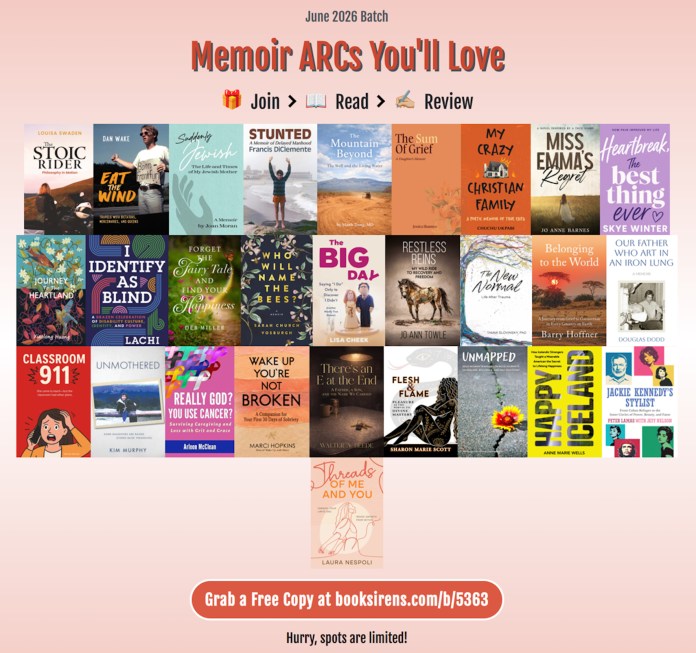
My memoir Stunted: A Memoir of Delayed Manhood, is featured in the June batch of Memoir ARCs on BookSirens. If you’re a book reviewer, you can grab a free copy here.
One year ago this week, I published my wacky passion project, Poecabulary, which is a minimalist poetry collection and conceptual art piece. To celebrate, I am running a free Kindle book promotion through Friday, June 5. If anyone would prefer a PDF version, please email me at ffd1284@gmail.com.
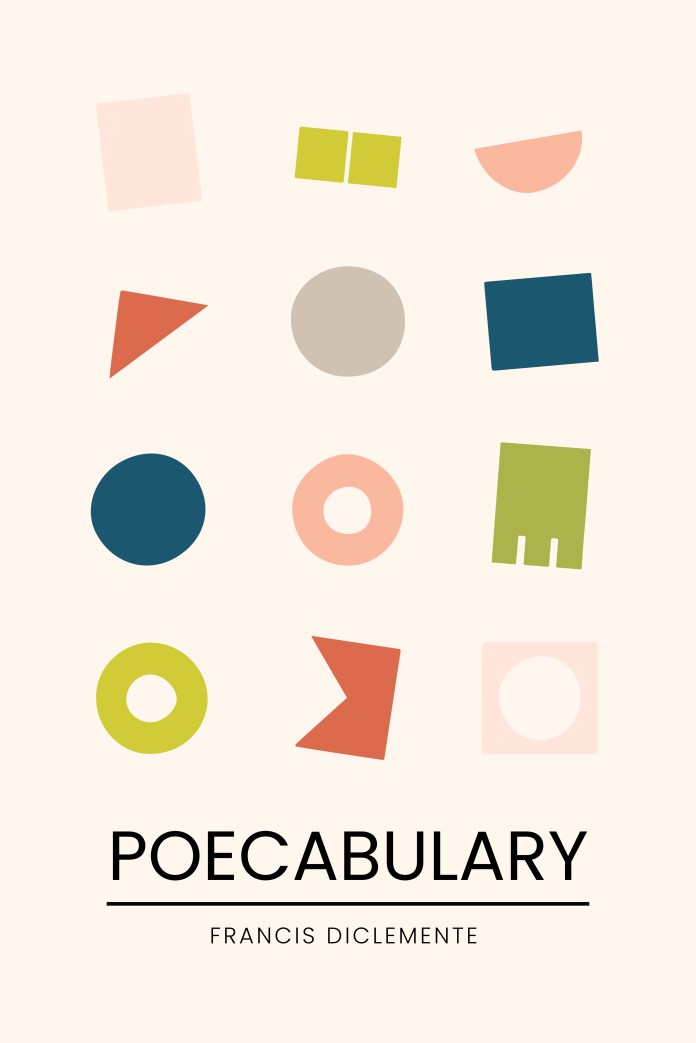
Poecabulary front cover.
This project originated with some wordplay and Photoshop edits back in 2013. And while the collection contains fewer than 700 words (across 190 pages), it took me more than ten years to curate, select, refine, and edit the 156 word pairings that comprise the book.
Here’s the back-of-the book description:
Poecabulary is a minimalist poetry collection that blurs the line between vocabulary and verse. Words appear in unexpected pairings, creating connections that surprise, challenge, and invite reflection. Each combination is a deliberate act of linguistic play, where alliteration, sound, appearance, randomness, rhyme, and meaning collide.
The author explores how similar or opposing words interact, encouraging readers to discover their interpretations and associations. Both a playful exercise and a meditation on language, Poecabulary celebrates the power and flexibility of words.
This collection will resonate with language lovers, poetry enthusiasts, and anyone curious about how words shape meaning. Sample pairings include Autistic/Artistic, Diffident/Different, Lonely/Lovely, Perfection/Perception, and Reject/Respect.
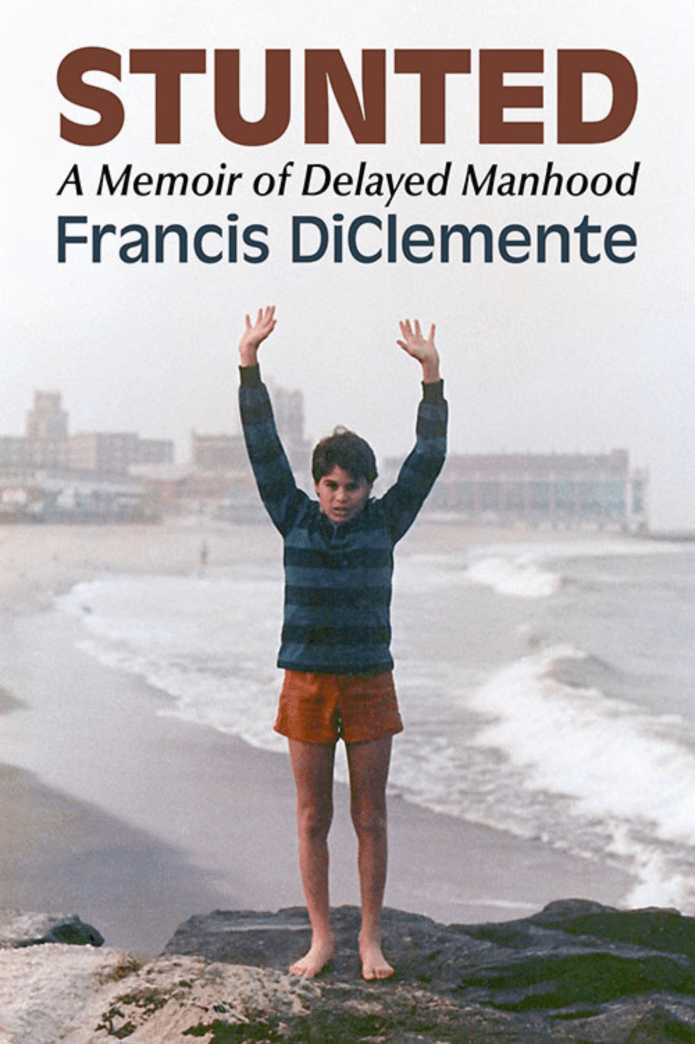
Today marks the completion of a dream with the publication of my memoir, Stunted: A Memoir of Delayed Manhood. To celebrate my publication date, I am running a Goodreads giveaway. It ends on June 1, and I’ll be giving away two signed copies of the book.
I don’t have much experience with signing books, but I have never understood the practice of authors crossing out their printed name when they sign their books. To me it feels like defacing a work of art.
I finished reading Jack Kerouac’s The Dharma Bums and I wanted to share one more passage that stood out to me. In this scene, during a massive going-away party for the character Japhy, held in Berkeley, California, the narrator, Ray Smith (Kerouac), reflects on people and existence:
“Then I suddenly had the most tremendous feeling of the pitifulness of human beings, whatever they were, their faces, pained mouths, personalities, attempts to be gay, little petulances, feelings of loss, their dull and empty witticisms so soon forgotten: Ah, for what? I knew that the sound of silence was everywhere and therefore everything everywhere was silence. Suppose we suddenly wake up and see that what we thought was this and that, ain’t this and that at all? I staggered up the hill, greeted by birds, and looked at all the huddled sleeping figures on the floor. Who were all these strange ghosts rooted to the silly little adventure of earth with me? And who was I?”
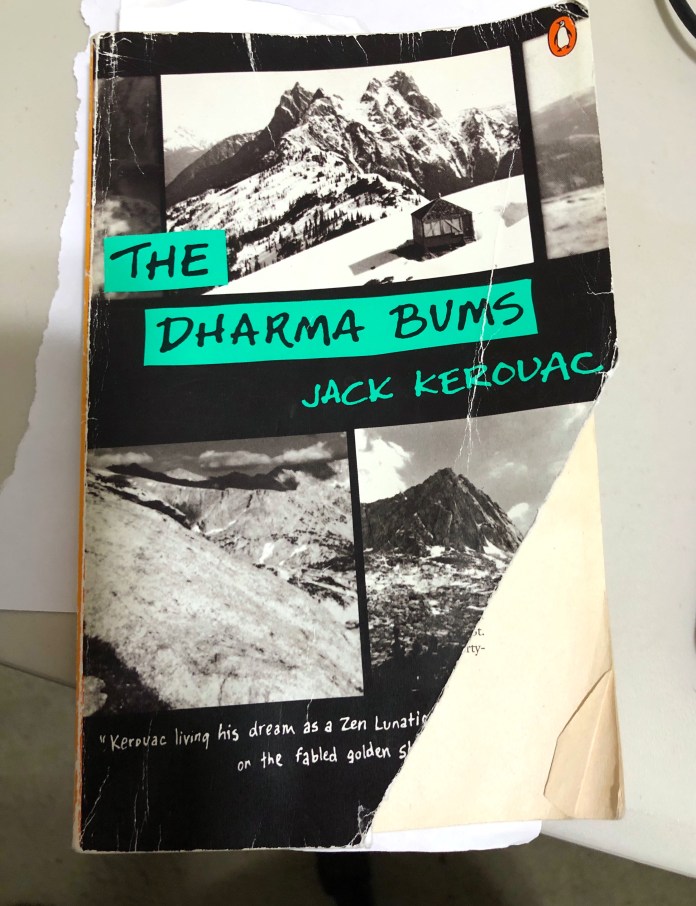
My battered copy of The Dharma Bums by Jack Kerouac.
My first shipment of books from McFarland & Company arrived yesterday. I’m so glad to see this book become a real thing—not just an idea in my head—because the project took more than 10 years to complete.
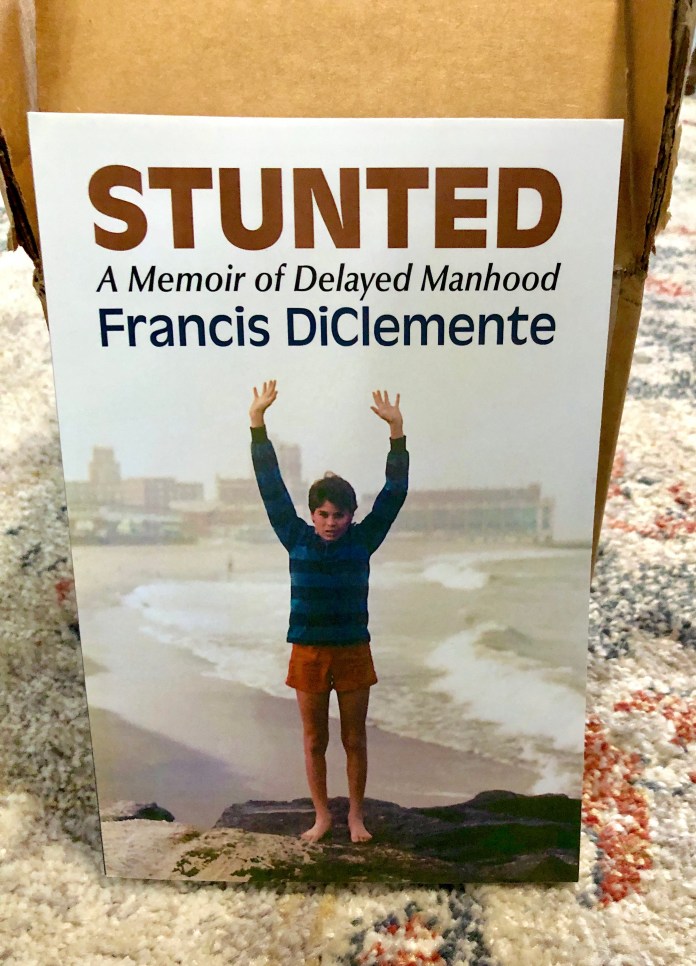
“Stunted: A Memoir of Delayed Manhood” is a coming-of-age story about identity and self-acceptance, told through the lens of my journey to adulthood after being diagnosed with a brain tumor when I was 15 years old.
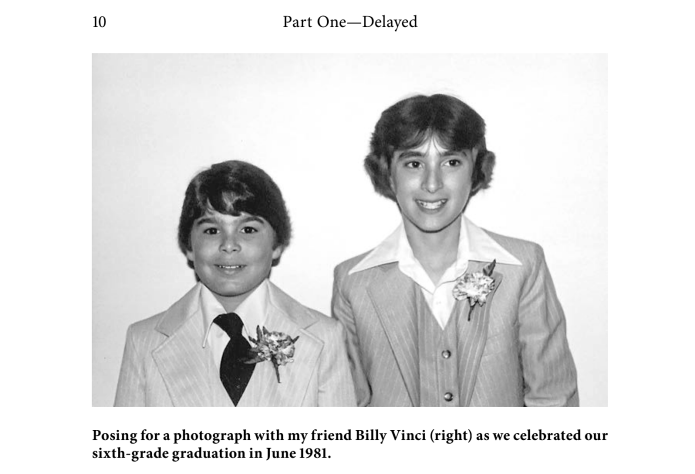
The contains about 40 black-and-white photographs, medical records dating back to 1984, and diary entries from the early 1990s and beyond. It’s also loaded with sports and pop culture references from the ’80s and ’90s (e.g., Doug Flutie and The Cure).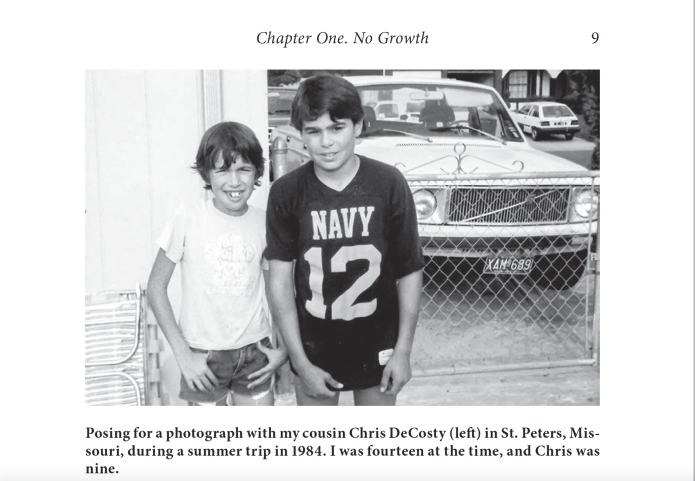
I’m scheduled to give a reading at 6 p.m. on Tuesday, June 23, at Jervis Public Library in Rome, where, as a youth, I discovered my love of books and was introduced to authors such as John Steinbeck, Ernest Hemingway, Ray Bradbury, Albert Camus, Hermann Hesse, Joyce Carol Oates, and many others. I hope I won’t be so nervous that I ramble and babble.
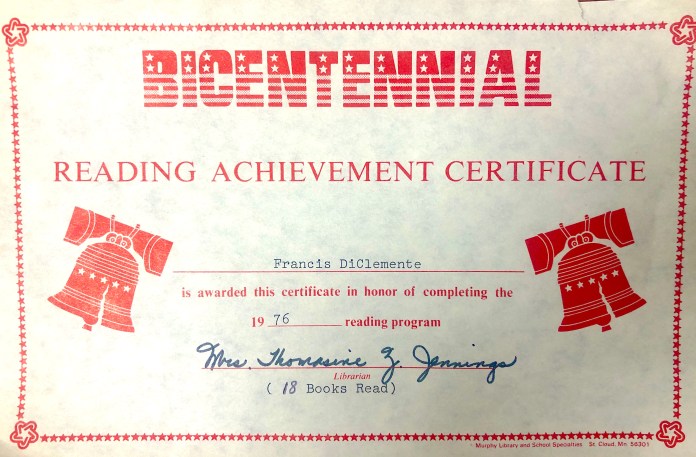
A certificate for my participation in a summer reading program at Jervis Public Library in Rome in 1976.
My former Metro Networks’ colleague Terry Rousseau has written a middle-grade novel entitled Jenna Finds A Dog.
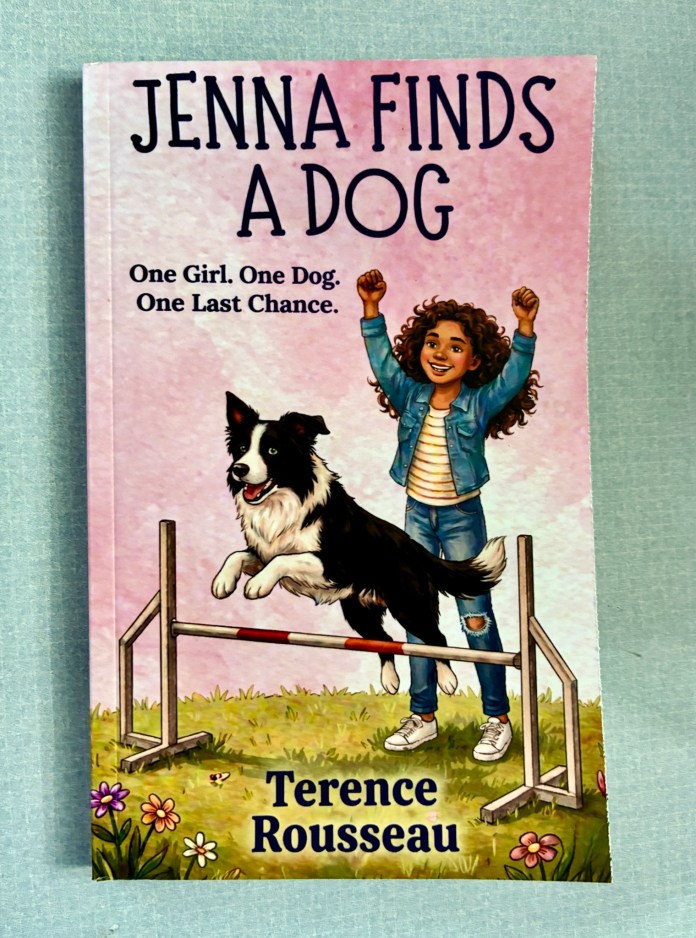
Jenna Finds a Dog cover.
I’m looking forward to reading it. In the biography, Terry mentions residing in an isolated village in the New Mexico mountains. And he cracked me up with this line: “His most recent hobby, not by choice, is cutting down the hundreds dead trees on his property with his electric chainsaw thanks to prolonged drought and bark beetles.”
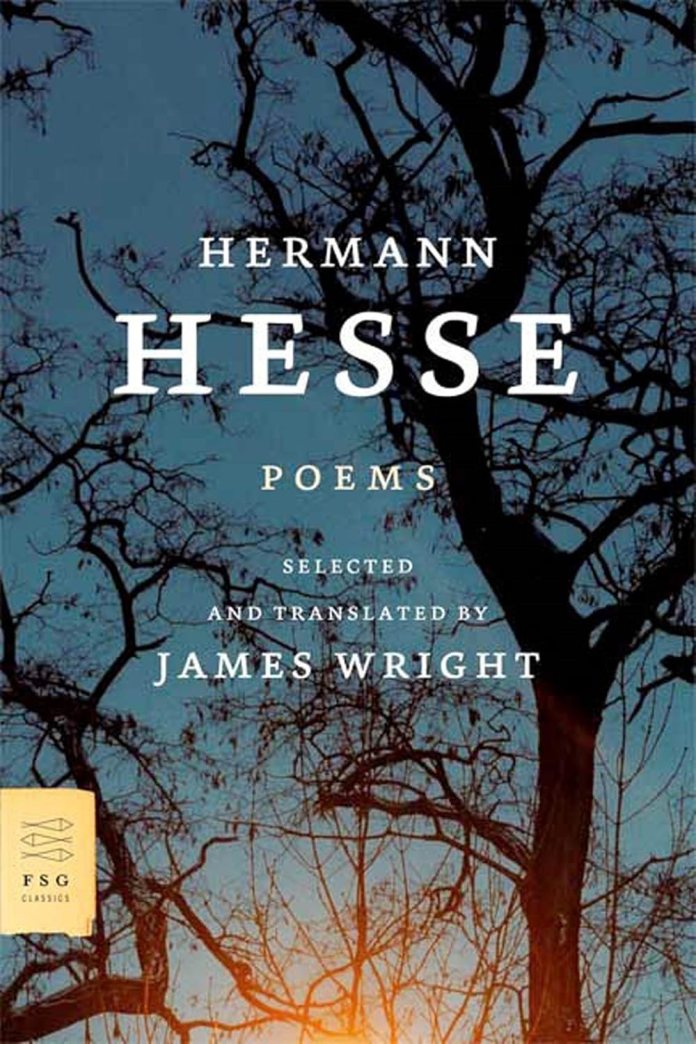
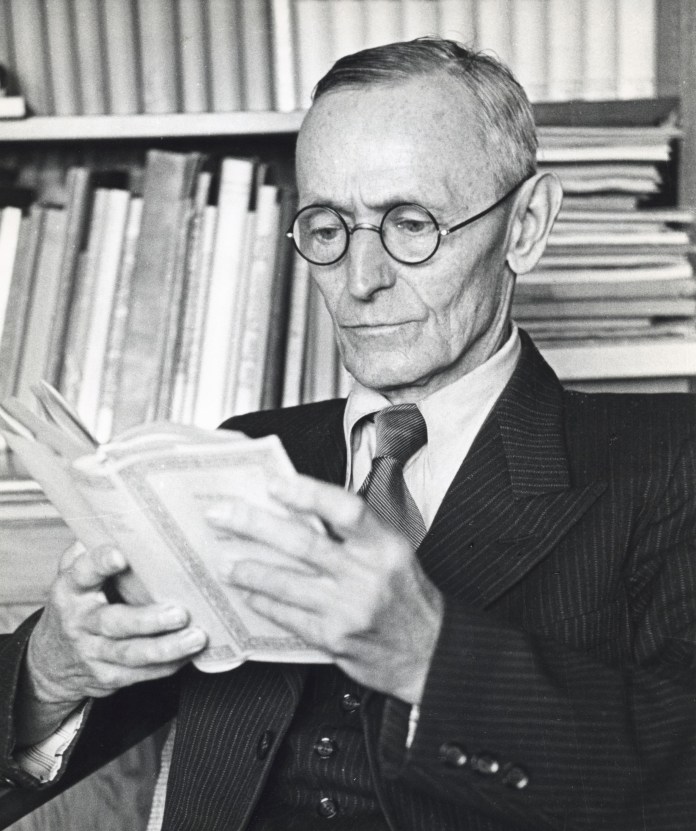
I am re-reading Siddhartha by Hermann Hesse. And in doing a little Wiki research on the German novelist, I discovered he also wrote poetry. I bought a collection of his verses entitled Poems by Hermann Hesse: Selected and Translated By James Wright (Farrar, Straus and Giroux, 1970). Most of the poems are short (which I love), and he explores such themes as youth, nature, identity, longing, and loneliness.
An added bonus—the used book arrived with a nice bookmark from Normals Books & Records in Baltimore, which looks like a really cool store.
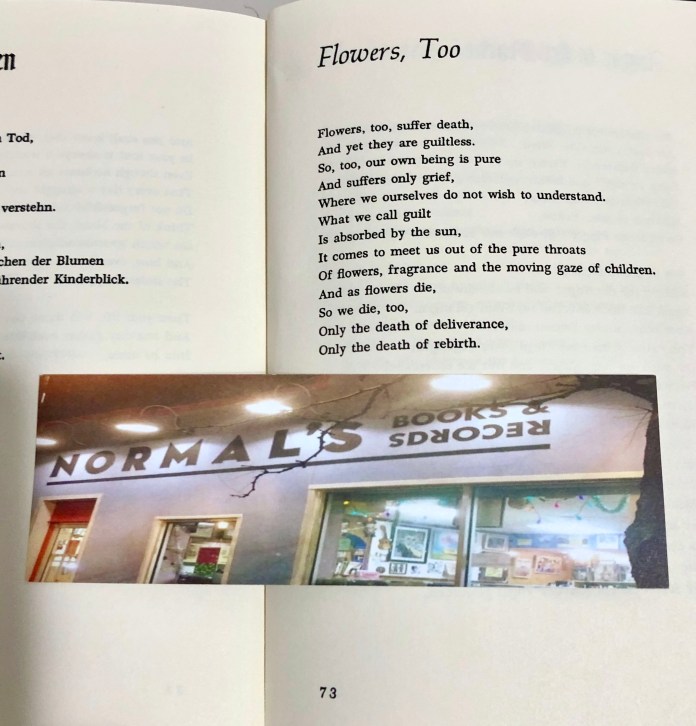
Here are a few selections from the book that I wanted to share:
Mountains at Night
The lake has died down,
The reed, black in its sleep,
Whispers in a dream.
Expanding immensely into the countryside,
The mountains loom, outspread.
They are not resting.
They breathe deeply, and hold themselves,
Pressed tightly, to one another.
Deeply breathing,
Laden with mute forces,
Caught in a wasting passion.
On a Journey
Don’t be downcast, soon the night will come,
When we can see the cool moon laughing in secret
Over the faint countryside,
And we rest, hand in hand.
Don’t be downcast, the time will soon come
When we can have rest. Our small crosses will stand
On the bright edge of the road together,
And rain fall, and snow fall,
And the winds come and go.
Night
I like the dark night well enough;
But sometimes, when it turns bleak
And peaked, as my suffering laughs at me,
Its dreadful kingdom horrifies me,
And I wish to God I could take one look at the sunlight
And the blue of heaven brought back to light by its clouds,
And I want to lie down warm in the wide spaces of the day.
Then I can dream of the night.
Destiny
In our fury and muddle,
We act like children, cut off,
Fled from ourselves,
Bound by silly shame.
The years clump past
In their agony, waiting.
Not a single path leads back
To the garden of our youth.
How Heavy The Days . . .
How heavy the days are.
There’s not a fire that can warm me,
Not a sun to laugh with me,
Everything bare,
Everything cold and merciless,
And even the beloved, clear
Stars look desolately down,
Since I learned in my heart that
Love can die.
And here are a few spring-themed poems:
The First Flowers
Beside the brook
Toward the willows,
During these days
So many yellow flowers have opened
Their eyes into gold.
I have long since lost my innocence, yet a memory
Touches my depth, the golden hours of morning, and gazes
Brilliantly upon me out of the eyes of flowers.
I was going to pick flowers;
Now I leave them all standing
And walk home, an old man.
Spring Day
Wind in bushes and bird piping
And high in the highest fresh blue
A haughty cloud ship, becalmed . . .
I dream of a blond woman,
I dream of my youth,
The high heaven blue and outspread
Is the cradle of my longing
Where I choose to lie calm
And blessedly warm
With the soft humming,
Just like a child held
On his mother’s arm.
Flowers, Too
Flowers, too, suffer death,
And yet they are guiltless.
So, too, our own being is pure
And suffers only grief,
Where we ourselves do not wish to understand.
What we call guilt
Is absorbed by the sun,
It comes to meet us out of the pure throats
Of flowers, fragrance and the moving gaze of children.
And as flowers die,
So we die, too,
Only the death of deliverance,
Only the death of rebirth.
It’s always a thrill when I see one of my books hanging out in a library. Last week, while working a B-roll shoot at Bird Library at Syracuse University, I found my latest book, Poecabulary, residing in this section. I’m SU staff, not faculty or alumni, but it was exciting to find one of my books in physical form resting on a shelf, waiting to be discovered by a reader (or so one hopes).

Bird Library at Syracuse University.

Poecabulary at Bird Library.
For people in the Syracuse area, I’ll be doing a poetry reading and film screening this Saturday, Oct. 4., at 5 p.m. at Parthenon Books on Salina Street.
Poecabulary front cover.
I’ll talk about the genesis and evolution of my minimalistic book project Poecabulary and then screen the documentary short Ralph Rotella: The Sole of Syracuse, co-directed by my former Syracuse University colleague Shane Johnson.
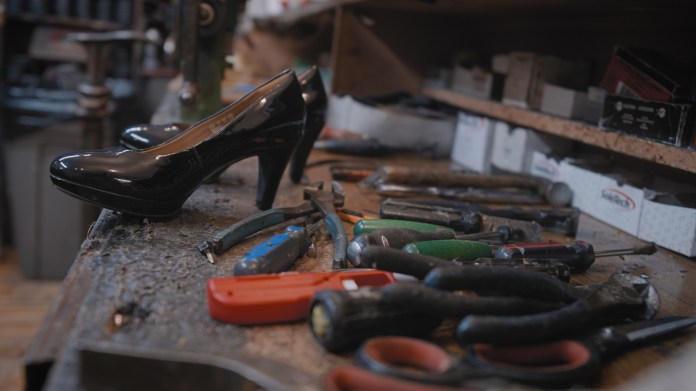
Ralph’s work bench. Photo Credit: Shane Johnson.
And speaking about Poecabulary, the book was released about three months ago. In preparing for the upcoming talk, I thought about a couple of questions I would like audience members (and you as well) to ponder: Do two words on a page constitute poetry? And can Poecabulary be considered an actual book, a real poetry collection?
And even though I succeeded in spitting these vocabulary words out of my system, I can’t stop writing down other word pairings. It’s a ceaseless literary project and an incurable disease.
So here are some other combinations that have emerged since the book’s publication in June.
I am excited to announce the publication of my new book, a minimalistic, experimental poetry collection entitled Poecabulary.
Here is the description:
Poecabulary is a minimalist poetry collection that blurs the line between vocabulary and verse. Words appear in unexpected pairings, creating connections that surprise, challenge, and invite reflection. Each combination is a deliberate act of linguistic play, where alliteration, sound, appearance, randomness, rhyme, and meaning collide.
The author explores how similar or opposing words interact, encouraging readers to discover their interpretations and associations. Both a playful exercise and a meditation on language, Poecabulary celebrates the power and flexibility of words.
This collection will resonate with language lovers, poetry enthusiasts, and anyone curious about how words shape meaning. Sample pairings include Autistic/Artistic, Diffident/Different, Lonely/Lovely, Perfection/Perception, and Reject/Respect.
Poecabulary front cover.
The book began with my obsession with vocabulary and discovering connections between word pairings.
As part of my compulsive, lexical behavior, I check four different online dictionaries daily for their “Word of the Day” features:
TheFreeDictionary.com
Dictionary.com
Merriam-Webster.com
WordGenius.com
This project is an example of how the crazy ideas that percolate and fester in my brain are the ones I need to chase, since they are the ones that elevate my creativity and spur risk taking.
Here is the author’s note from the front of the book:
Obsessed with vocabulary, I created this work as wordplay—an exercise to incite imagination and elicit connections in the reader’s mind. I consider the word pairings a hybrid of vocabulary and poetry—which could be labeled as “Poecabulary” or “Voetry.”
Quite honestly, I don’t even know if you can call Poecabulary a book, but I do believe some “word nerd” readers may enjoy it. And it’s a quick read. Although it’s 190 pages long, the word count is less than 650.
I would also love to collaborate with a visual artist who could make large-scale paintings featuring select word pairings from the collection. I could see the text-based works hanging in a gallery space.
Here are a few of my favorite word combinations:

Autistic/Artistic

Diffident/Different

Lonely/Lovely
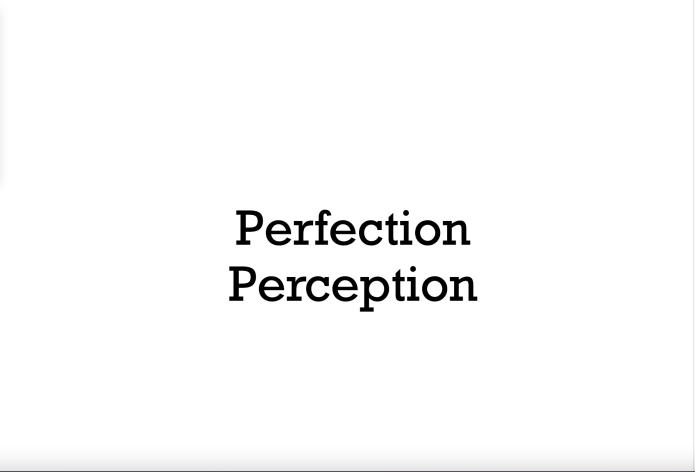
Perfection/Perception

Reject/Respect

