Final push for Infinity

Advance sales for my poetry chapbook In Pursuit of Infinity end on Dec. 28. And since pre-publication sales will determine the size of the press run, I am sending out a gentle reminder for those who might be interested in purchasing the book. You can order it here or by using the following order form:

Please send me ______ copy (ies) of In Pursuit of Infinity, by Francis DiClemente, at $14.00 per copy plus $1.99 shipping . . .

Enclosed is my check (payable to Finishing Line Press) for $__________

Name

Address

City/State/Zip

Please send check or money order to:

Finishing Line Press
Post Office Box 1626
Georgetown, KY 40324

With that said, thank you for enduring this sales intrusion and I wish everyone a Merry Christmas, happy holidays and a blessed new year. I hope all of your blogging, professional and personal goals will be achieved in 2013.

Standard

Book Review: The Wonderful Wizard of Oz

I get by with a little help from my friends . . .

Some books offer pure joy between the pages. There is no other reason to read them except for their entertainment value. These are not masterworks of literature like Tolstoy’s Anna Karenina, Dickens’ Great Expectations, Marquez’s Love in the Time of Cholera and Steinbeck’s The Grapes of Wrath. Consider the Danielle Steel or Nicholas Sparks’ romance or James Patterson thriller. The value of these books lies in capturing the attention of readers and keeping them turning the pages until the conflict is resolved.

I think L. Frank Baum’s The Wonderful Wizard of Oz falls into this category. I decided to read Oz because I recently purchased a Kindle and found the free eBooks on Amazon. But it wasn’t the digital device that produced my happiness, but rather Baum’s prose and storytelling ability.

And what hooked me about Oz, aside from the colorful imagery of the Munchkins, the Flying Monkeys and the Wicked Witch, were the main characters—Dorothy, the Scarecrow, the Tin Woodman and the Cowardly Lion—and how this band of misfits stuck together as they overcame obstacles while embarking on their journey to the Emerald City to see the Wizard.

I also liked how the group expanded along the way to include new members, all yearning for some need to be filled. At each stage, it was as if the existing members said to the strangers, “sure, come and join us . . . the more the merrier.”

This passage, courtesy of Mr. Baum, illustrates the point:

“Do you think Oz could give me courage?” asked the Cowardly Lion.

“Just as easily as he could give me brains,” said the Scarecrow.

“Or give me a heart,” said the Tin Woodman.

“Or send me back to Kansas,” said Dorothy.

“Then if you don’t mind, I’ll go with you,” said the Lion, “for my life is simply unbearable without a bit of courage.”

“You will be very welcome,” answered Dorothy, “for you will help to keep away the other wild beasts.”

In an introduction, datelined Chicago, April, 1900, Baum writes that the story of The Wonderful Wizard of Oz was “written solely to please children of today.” He adds, “It aspires to being a modernized fairy tale, in which the wonderment and joy are retained and the heartaches and nightmares are left out.”

Even though the book was written more than a century ago, Marie Deegan, children’s librarian at the Sullivan Free Library in Chittenango, New York—the birthplace of Baum—says it still appeals to kids today because of its adventure story and “the concept of going someplace and losing yourself and finding your way home again.” But she says more adults than children come to the library in search of the book, in part due to the nostalgic appeal of Oz.

Having seen the 1939 MGM movie several times, I encountered one problem while reading the novel. I could not envision the character of Dorothy except as Judy Garland, who played the girl in the film. No matter how Baum described Dorothy or her actions, in my mind I could only see Garland in her full Technicolor glory.

In comparison with the film, the book reveals much greater character detail about the Scarecrow, Tin Woodman and Cowardly Lion. For example, I discovered that the Scarecrow and Tin Woodman did not need to eat, drink or sleep in order to survive. I don’t remember this being mentioned in the movie. And I found it comical in one scene when Dorothy went to sleep and the Scarecrow stood in a corner and “waited patiently until morning came.”

For me I suppose the greatest testament to the literary power of The Wonderful Wizard of Oz was I did not want to abandon the characters after finishing the book; so I decided to read it a second time. I also downloaded other free Oz-related eBooks by Baum.

Standard

In Pursuit of Infinity Chapbook Forthcoming

Two of my poetry collections are now available. The first, entitled Vestiges, was released in November by Alabaster Leaves Publishing. And advance sales for the second book, In Pursuit of Infinity, by Finishing Line Press, are underway and will continue until Dec. 28. The release date for the book is scheduled for Feb. 22, 2013. Pre-publication sales will determine the press run, and so if anyone is interested, you can order the chapbook online. Thanks for taking the time to read this. I appreciate it. Below you’ll find some excerpts from Infinity.

Dreaming of Lemon Trees

I dream of words
I strive to recapture
When I awaken in the morning.
I dream of stories with endings unknown,
Vibrant scenes imagined in my sleep—
A Degas ballerina alone in her dressing room,
A wagon train backlit on the horizon,
A hummingbird dancing on the windowsill,
And a lemon tree in the church courtyard in mid-afternoon.
Wherever I go in my dreams,
The air is balmy and sunlight abundant.
Trees sway and the scent of evergreen finds its way to my nose.
I dream because when this tired body hits the mattress,
It relaxes, then releases and gives up its earthly weight.
My eyes close and I sink to the deep recesses of my mind,
Setting the subconscious free.

Morning Coffee

My mother sits
in the kitchen chair
after she recites
her morning prayers.
Sunlight streams through
the lace curtains
and cigarette smoke
is suspended in the air.
She bows her small head
and presses her fingers
to the bridge of her nose,
as she contemplates
the chores for the day,
while her milky coffee cools
in a blue ceramic mug,
resting within reach
on the laminate counter.

The Shed

Independence Day, 1979 (Rome, New York)

Whipped-cream clouds smear a powder blue sky,
while Grandpa nurses a carafe of Chianti
and dreams of waltzing down Bourbon Street.
The DeCosty family gathers on the patio,
with Uncle Fee roasting sausage and peppers
and Nana dribbling olive oil over fresh tomatoes,
then adding alternating pinches of basil and parsley.

Inside the backyard bordered by overgrown hedges,
the rambunctious cousins wham Wiffle balls
with a thin banana-colored plastic bat,
evoking the hollers of Grandpa . . .
who watches out for his mint-green aluminum shed,
situated perfectly in left-center field—serving as our own Green Monster.

And when we get ahold of that little white ball,
it smacks up against the aluminum obstacle,
clashing like two marching band cymbals in a halftime show.
And with sweat coursing down his neck,
Grandpa barks out his familiar line under the patio awning:
“Son of a bitch . . . keep that goddamn ball away from my shed.”
But Nana is always on our side,
and cancels out his power and keeps him in check.
“Fiore, you let those kids play and mind your mouth,” she says.

Grandpa abandons his no-win cause,
turns up the volume on the Yankee game
and pours himself another glass of red wine.
He watches quietly as the shed stands erect in the late afternoon sun,
sacrificing its facade for our slew of ground-rule doubles.

The Bridesmaid

The most adorable pregnant bridesmaid ever
Waddles down the church’s center aisle,
Unable to hide her protruding belly.
And with her feet swollen,
Her lower back sore and forehead warm,
She endures the ceremony standing
On the altar beside the joyous couple.
But she nearly passes out while
Posing for pictures in the lakefront park.

Inside the reception hall,
She almost vomits at the sight
Of shrimp cocktail and chicken Florentine.
She orders hot tea and lemon from the top-shelf bar,
And dines on rolls and garden salad.
This single-mom-to-be, though not merry,
Offers a smile when others turn to stare,
And bobs her head to the music
As the guests hit the dance floor.

She nibbles on a sliver of white-frosted wedding cake,
And asks for guidance from her parish priest, wise old Father Meyer.
Then the bride overthrows the eager females huddled
Near the dance floor and the bouquet lands
Softly in the expectant mother’s lap.
Her face turns red as everyone looks at her.
So she just grabs the bouquet and throws it back.

Standard

New poetry collection published

It’s been a while since I’ve had time to write, as I was busy working on some video projects for the past couple of months.  But I am now happy to announce that my latest poetry collection, Vestiges, has been published by Alabaster Leaves Publishing.

This 58-page chapbook features both narrative and observational poems. And the book is available for sale on Amazon.com. Please do not feel pressured or obligated to purchase it, but I just wanted to provide the link in case anyone is interested.

And here are a few excerpts from the collection:

Father’s Day Forgotten

Daddy and Christi parted ways at a bus depot
In the early morning hours.
No big scene, just a kiss on the cheek,
Then she turned around and was gone for good—
Hopping aboard the Trailways bus headed westbound for Chicago.
And she never looked back.

Daddy went home to his beer bottle and sofa seat,
And he drew the living room curtains on the rest of the world,
Letting those four eggshell walls close in and swallow him up,
Wasting away in three empty rooms and a bath.

And the memories can’t replace his lost daughter and wife.
So he tries not to remember his mistakes
Or how he drove them away.
Instead he recalls Halloween pumpkins glowing on the front porch,
Training wheels moving along the uneven sidewalk,
Little hands reaching for bigger ones in the park,
And serving Saltine crackers and milk
To chase away the goblins that haunted
Dreams in the middle of the night.

Now Christi has a life of her own,
And she lets the answering machine catch
Daddy’s Sunday afternoon phone call.
She never picks up and rarely calls back.
So Daddy returns to the green couch
Pockmarked with cigarette burns.
He closes his eyes, opens the door to his memory vault
And watches the pictures play in slow-motion.
He rewinds again and again without noticing the film has faded
And the little girl has stepped out of the frame.

Man Versus Ant

an ant races
across the sidewalk,
intent on getting
to the grass
on the other side.
I face a quick decision:
do I step on it
or avoid its path?
better leave the ant alone,
I think to myself.
what if that’s me
in the next life?

Side Dish

A mundane scene of modern living
played out one evening
while I walked along Ninth Street
near East Grovers Avenue in north Phoenix.

I heard the sound of a sliding glass door
opening from behind a retaining wall
running parallel to the sidewalk.

And although I had
no intention of eavesdropping,
I then overheard a woman call out:
“And now the great vegetable debate, green beans or corn?”

The question evoked a few seconds of silence,
followed by a man’s reply:
“Uh . . . both,” he said.

And as I turned the corner,
heading up the next block,
I was tempted to stop and ask the couple,
“Hey, what else is for dinner?”

Perseverance

You can’t expect the world to fall in line for you.
You can’t will happiness or alter your existence by whim.
You have to accept you are not in control.

Work and sleep.
Sleep and work.
Monotony and solitude.
You march on with stubborn persistence.

I believe there are other forms of bravery
Besides firefighters scaling burning buildings
And plucking toddlers from the top floor.
There is courage in accepting your condition,
Realizing you have fallen short,
But not quitting, not becoming bitter,
Not drinking yourself to death,
Or giving up and erasing your place in the world.

There is dignity in continuing to endure an unhappy life.
By making due and moving on,
You shine forth and elevate your humanity—
Even if no one notices or your situation doesn’t change.

Standard

Maya Deren’s Ritual in Transfigured Time

This story was published on the website of Film International magazine. Go to the link and scroll down to the bottom of the page to see the film by Maya Deren.

http://filmint.nu/?p=6028

Last summer, in the midst of the blockbuster movie season dominated by sequels, 3-D animation and superhero offerings, I stumbled upon a cinematic treat from a forgotten era. While eating my lunch at my desk one afternoon, I went to YouTube to look up some alternative music bands. After a while, an impulse made me type “Maya Deren” in the search box, and I soon entered the hypnotic world of the late choreographer, dancer and experimental filmmaker.

Several years ago I had watched Deren’s Meshes of the Afternoon and read her essay “Cinematography: The Creative Use of Reality” in Film Theory and Criticism, edited by Gerald Mast and Marshall Cohen (1974). I was exposed to filmmakers like Deren, Luis Buñuel, Fritz Lang and Sergei Eisenstein while studying for my master’s in film and video in the early 1990s. Yet one does not need to understand film theory, semiotics, psychology or feminist theory to appreciate Deren’s work. When some selections of Deren’s movies popped up on YouTube, I opted for Ritual in Transfigured Time, a short silent film from 1946.

The black and white, slow-motion images washed over me and I sat there transfixed by the surrealistic scenes. I think this may be the best way to explore Deren’s films – to know nothing about them except the title. Then the viewer enters Deren’s dream landscape and soon abandons all preconceived notions of the film medium and the carefully-constructed plots demanded by Hollywood. You surrender to the hallucination and, in doing so, you accept the idea that all art, including Deren’s work, is open for interpretation.

And while we do not get a linear storyline, character arcs, a three-act structure or a clear resolution, Ritual in Transfigured Time spurs questions in the minds of viewers. Who is this woman (Maya Deren) leaning against a doorway and playing with yarn at the outset? Is she waiting for someone? A lover? Or another version of herself? Why do the dancers at the party switch partners so frequently? Are the lead dancers in the park lovers? What do they represent? And why does it seem the female dancer is afraid of the male dancer? What has provoked this fear?

These questions then marinate in the brain and the result is a narrative that can only be completed by the audience. Everything is left up to our imaginations. We fill in the details and attempt to put the pieces of the puzzle together. Of course this means each viewer develops his or her ideas about the story. I can’t tell you the meaning of Ritual or even give you a clear plot description. There is too much ambiguity at work within the frame. I can only tell you it draws you in and you don’t want to look away.

I would like to point out a few memorable moments from Ritual, as these scenes have brought me back to YouTube for repeated viewings.

At about the 7-minute mark, we are placed in the middle of what looks like a house party attended by well-dressed guests. The men and women begin to dance, the figures moving from one person to the next. They do not dance so much as merely shuffle between partners. They exchange a few words, shake hands, latch on to shoulders and dance from side to side before turning to the next person and repeating the process. I wonder if this is a dream sequence, a party game or a meditation about the fragility of romance – the second you grasp on to it, it is gone. Affection blooms and withers and other people step in to replace our former lovers. But if this is the case, then why are so many of the “dancers” at the party smiling, their happy faces revealing no hint of despair?

Later at the party, at about the 8:20 mark, the lead actress and dancer, Rita Christiani, and the lead actor/dancer, Frank Westbrook, draw close to each other and nearly touch cheeks. The scene then cuts from the house party to a park, with the same two people holding hands. In this location, we also see women standing together and dancing. The shirtless male dancer tosses Christiani skyward, and her arms are extended in the air as she takes flight in slow motion. She remains suspended for a moment.

A short time later, we see Westrbrook in a low-angle shot against what appears to be the background of a stadium. He makes motions from side to side with his arms. His frame is taut and every muscle in his body stands out. Later he hops, spins in place and twirls in the air, his image frozen briefly. He expresses the joy of movement and he reminds me of a puppy wanting to play with its owner.

At the 11:38 mark, a wrought iron gate opens and Christiani enters a garden. We see Westbrook standing like a statue on a pedestal. She walks toward him. But now he breaks the plaster pose by looking at her. She displays fear and runs away. He remains standing momentarily and then gives chase, jumping after her. At 12:35 she disappears down a hill with Westbrook in pursuit, leaping along the way.

At the 13-minute mark we come to a courtyard and Christiani continues to run away, now passing stone archways. Westbrook follows. At 13:27 he tries to grab her; she escapes his grasp. But now it is Maya Deren fleeing, running under a wooden pier and rushing out into the sea until her legs disappear and the water swallows her.

At 13:50 we cut back to Christiani making motions with her arms, and then in a negative image, a white dancer falls against a black background. This is repeated a few times. The last image is a close-up of a female dancer’s head. The woman lifts a veil covering her face and then opens her eyes, and it’s hard to tell whether this face belongs to Christiani or Deren.

There is no doubt Ritual in Transfigured Time offers rich potential for psychological interpretation. But the more I watch it, the less I care about trying to decode its meaning. I think the combination of bodies in motion, dream-like images and underlying tension is enough to satisfy me. Answers are not necessary for me to enjoy the ride. I also realize that with the power of YouTube there are countless other experimental films waiting to be discovered on my lunch hour.

Standard

Collage Postscript

Since I made the first collage piece in 2009, I have tried my hand a few more times, with varying results. I made two library-themed collage works called Archive and Checkout, seen here.

Digital image of mixed media work, 2011.

Digital image of collage, 2011.

The idea for the pieces came to me because over the years my mother had purchased several used books from Jervis Public Library in Rome; most sold for one dollar or less. Flipping through some of the books, I noticed they were all stamped with the phrase “Discarded From Jervis Public Library” in red ink on one of the inside covers or pages.

Many of the books were in good condition, and some of the titles came from popular authors like James Patterson, Scott Turow, Anne Rice and Dick Francis. Even so, whether a title was a Harlequin romance or a prize-winning literary novel, I felt sadness because books that seemed to be still readable were being pulled from the stacks and deposited on cluttered shelves in a dark hallway of the library near the men’s and women’s bathrooms. I’m sure there’s a good reason why the books needed to be moved out of circulation, but on a visceral level I felt empathy for the discarded inanimate works.  

As a result, I went to the library, bought several of the used books and cut out the stamped pages. I then gathered the pages and some old library cards that I found for sale online and pasted them together on two painted canvases.

This fun project in the summer of 2011 led to another unrelated work. My father had passed away in 2007 and I still had some of his old clothes and other personal items. So I thought I would try to make a collage tribute to him using materials left over from his life. Here is the finished product.

Digital image of mixed media work, 2011.

In hindsight, I should have painted the surface before I added the collage materials to give it some color. I also think I should have limited the number of buttons from my dad’s shirts.

Still, what I like most about these three collage works is I had no expectations when I started working on them. As stated in my last post, I am a collage novice, but an idea came to me and I said to myself, “OK, give it a try.”

And I think it’s a good lesson for me to learn, as artistic experimentation is vital to keeping work fresh. It helps to shake up the juices and allow new paths of creation to flow. This philosophy of taking risks and following your instincts applies to practitioners of all art forms and is also relevant in other areas of life, such as learning, career, dating, cooking and social experiences.

On a personal note, the three collages hold special meaning for me because they pay tribute to my late parents. I mentioned my father’s collage, but the two library-themed pictures also honor my mother, even if that was not the intention when I made them. My mom, who died last November after a long battle with cancer, was a bibliophile who researched and compiled detailed biographies and booklists for her favorite authors, including Danielle Steel and Nora Roberts. When I would mock her for taking a hobby to such a fanatical level, she would just say, “I’m very organized.”

She also gave me permission to rip out all of the “Discarded From Jervis Public Library” stamps from the used books she had finished reading. She piled the books in a wicker basket placed near the fireplace in the living room, with yellow Post-it notes on the covers indicating they had been “read.”

And I’m glad she had a chance to see the finished library collages since she contributed to the making of them. Right now all three collages are wrapped in brown paper and tucked under the bed in one of the spare bedrooms in my stepfather’s house in Rome. But if a day comes when I have some wall space in a future apartment—not the furnished studio I currently rent—I’ll hang up the collages and look upon the images with satisfaction, knowing a little bit of my parents’ spirit lives on underneath the glass frames.

Digital photograph of collage, 2011.

Digital photograph of mixed media piece, 2011.


Standard

Collage in the Closet

The manuscripts had collected in my bottom drawer. This verbal clutter consisted of poems, stories and film scripts, all fused into the genre of unwanted black ink on white paper; in short, words rejected by the eyes of editors.

And then in early December 2009, an idea struck me. I decided to try to create a work of art in another form, gluing the scraps of paper to a foam board to make a collage composed of cut-up manuscripts. I even had a title for the piece: “Unpublished Manuscripts.”

As a recreational artist I have taken photographs over the years with my Pentax K1000 camera. Some of the images have been exhibited in small galleries in central New York and also published in literary magazines.

However, I had never created a collage before, so I wasn’t familiar with the process.

But that December I had an exhibit scheduled at the Rome Art and Community Center in my hometown of Rome, New York, and I thought I would make the collage as an additional work to go along with the group of photographs. I purchased a 20-by-30-inch piece of foam board, several 3M glue sticks and a can of acrylic spray. 

I now felt ready to tackle the medium. Then time became a factor because I had one week to go before I had to travel to Rome to drop off the artwork for the exhibition. I worked feverishly several hours a night after work, selecting the manuscripts, ripping the pages into non-uniform pieces and pasting them to the board. 

And it was fitting because I received a rejection form letter from The Atlantic that week in response to some poems I had submitted. I added it to my collage.  

When I was finished gluing all of the pieces of paper, I sprayed a few heavy coats of acrylic spray on the surface. I remember being petrified that the release of the chemical spray would lead to spontaneous combustion in my apartment or cause the gas stove to explode. So just to be safe I opened my door to allow the frigid night air to dissipate the cloud hovering over my bed, as I had placed the collage on top of the green comforter covering my mattress.

A few days later I dropped off the collage, along with about a dozen of my framed photographs, at the RACC. I also made sure the unframed mixed media piece had wire attached to the back for gallery hanging.

Christmas came and went, and before New Year’s Eve I headed back to the RACC with my stepfather Bill to pick up the artwork.

As we went inside, trying to dodge the melting snow dripping from the overhang of the roof, a female museum employee was talking to the mailman outside. The lady told me the executive director, who approves and schedules all exhibitions, was off that day. Bill and I climbed the stairs to the second floor, turned down a hallway and entered the small community room gallery where my pieces had been displayed.

Bill helped me to pack the framed photographs into some blue plastic totes we had brought with us, but we could not find the collage anywhere. Fear consumed me, and I said to Bill, “I hope they haven’t thrown it out.”

We asked the woman who had been talking to the mailman if she knew where the collage was hiding. She did not have a clue, but she said the executive director would not have thrown it out because the director had too much respect for artists. I doubted this claim.

Bill walked downstairs with a couple of totes stacked in his arms, while I searched every inch of the white room, along with some of the other gallery spaces. I then came back to the community room and noticed the outline of a narrow closet door near one of the corners.

The door creaked as I opened it slowly, and I found my collage leaning against some shelving, still sheathed in the plastic bag I had put it in.     

I was crestfallen, as it seemed all my effort to create the piece was wasted. If I wasn’t so disappointed, I would have found the humor in it. The piece to celebrate a writer’s rejection was stuffed in a closet, hidden by the art museum and deemed unworthy for the eyes of visitors. 

Bill and my mother tried to cheer me up later in the day. In the evening, after going to Mass, they went to Wal-Mart and bought a large black frame. After they brought it home, Bill, who works as a contractor and possesses a craftsman’s magic when it comes to matting, framing and hanging pictures, set my collage on the kitchen table and put it inside the new frame.

And the frame looked attractive hanging on a wall in my parents’ living room. Since then, friends and family who have seen the work have complimented it; some have called it a “conversation piece” and also inquired about the time and effort it took to rip up the small pieces of paper and attach them to the surface.     

Truth be told, I am not a collage artist at heart. I have been raised with digital media, and photography and video are the tools I use to express myself visually.  

At the same time, I have discovered collage to be the most freeing medium. It seems there are no mistakes, as the wrong turns and “goofs” only make the work more interesting. Even the bubbling of the paper behind the glass of the frame gives the work a three-dimensional quality. In collage, all fear is banished and the artist is allowed to set his or her imagination free without regard to the consequences.

And what I love is the physical nature of the materials, which have no electronic components. There are no computers, no circuits, no wires and no Internet connections. No batteries are needed.

You take vestiges from the world, things that are discarded or items that no longer have use in their original form, and you add them to other small pieces to create something new and beautiful.    

I had salvaged something of merit from my piles of rejected manuscripts. Through collage, I allowed the writing to live in another form, as the manuscripts now had value in the appearance of the words, instead of in the quality of the content. 

And whether rejected by editors or the museum director of the Rome Art and Community Center, I had added something new to the world that did not exist before. I learned that art is in the creation itself, the expression of the artist, the sending forth of his or her vision; it is not dictated by the acceptance of others.

Perhaps this collage project also brought me some good luck. Because a few months later, many of the rejected poems included in the artwork were accepted by Flutter Press and published in chapbook form. 

And the joy I experienced when I first opened the cover of the publication matched my delight in seeing those same words hanging on a wall.


Standard

Julie Blackmon: Other Tales from Home

In visiting the Everson Museum in Syracuse, you could easily miss the exhibition Julie Blackmon: Other Tales from Home tucked in the small Robineau Gallery on the main floor. The exhibit, which closes Sept. 2, contains eight large-scale color photographs depicting family scenes. The images are a cross between common family snapshots and an artfully arranged tableau depicting the chaos of modern family life; and Blackmon seems comfortable straddling the line between reality and manipulation and taking the viewer along for the ride.

Blackmon fills the frame with so much information—in the form of kids, pets, food, plastic toys and other props—the viewer can linger in front of the works, as countless narrative connections spark the imagination. You also find yourself counting the number of kids and the different props in each scene.

Blackmon lives and works in Missouri. In her artist statement, found on her website, julieblackmon.com, she cites the lively narrative paintings of 17th century Dutch artist Jan Steen as an influence on her work. However, it may be Blackmon’s own family life that provides the most inspiration. She is the oldest of nine children and the mother of three, and she says, “These images are both fictional and auto-biographical, and reflect not only our lives today and as children growing up in a large family, but also move beyond the documentary to explore the fantastic elements of our everyday lives, both imagined and real.”

One of the most compelling aspects of her work is the care she takes in capturing children. The young subjects, whether they are her own children, her nieces and nephews or children from the neighborhood, reflect a sweet innocence in front of the camera. They play, pout, and cry, but cuteness is not the aim of the artist; these are not Facebook photos uploaded by proud parents. Instead, even though the scenes are staged, we get the sense these are kids acting like kids in a safe environment surrounded by family. In many cases, the subjects seem unaware of the camera’s presence. The result is Blackmon’s photos possess a timeless quality resembling the iconic American paintings of Norman Rockwell, but with an odd twist thrown in.

In Patio, for example, one of the works in the exhibit, we see what looks like a modern house in a sun-bleached California-type setting. There is a blue inflatable ball on the roof in the top right of the frame and a pink ball in the bottom left. A little girl in a white dress is looking at her reflection in the window, a toddler is scooting around on a blue stroller and a third child is crawling on the floor in the house, just inside the doorway.

A red charcoal grill stands in the middle of the frame with orange flames shooting out, and a large box of McDonald’s French fries rests on a circular table covered with a green tablecloth. A barefoot woman sits in a chair, her face buried in a large-scale glossy magazine called New You. A bag of Lay’s Classic potato chips has been placed near her feet. The viewer is left to wonder: does she know there are children playing close to the open fire? Does she care?  

And that’s the beauty of this exhibition. The images remain fertile in your mind, as you think about the families depicted in the scenes. You get the sense it would be fun to spend an evening with them, to take part in the chaos of their meals, games and merriment, while at the same time having the freedom—like an aunt or an uncle—of being able to leave the house at the end of the night.

It also seems Blackmon could revisit this work over and over again, dreaming up more scenarios for her family to act out without the images becoming repetitive. You can just imagine scenes of kids getting ready for school, a baby screaming after dropping its pacifier, toddlers sitting on the kitchen floor and struggling to tie their shoes, little boys chasing frogs or fireflies on the front lawn on a summer evening and little girls standing in front of a full-length mirror, modeling their mothers’ clothes and jewelry.

The one question I keep asking myself again and again in rethinking this exhibition is, for each photograph, how long did it take Blackmon to get the kids to pose exactly as she wanted? And did she have to bribe them with promises of ice cream sundaes or trips to a local water park?

Standard

Blissful Upstate Summer

I spent last week in Rome, New York, as I recovered from Gamma Knife radiation treatment intended to eradicate leftover pituitary tumor cells. And I was once again overcome by the spectacular beauty of summer in my hometown.

Now that we have skipped past the Fourth of July, summer is ripe, bursting open in color, sounds and scents, but soon it will wane. Soon autumn will overtake it.

But now near perfection reigns in central New York with warm days, flowers in full bloom, vegetable gardens producing their bounty and children riding bikes and playing outside. We need rain here so it’s not quite perfect.

As I went for an evening walk heading toward Vogel Park in Rome, sunlight filtered through the lush maple trees lining North George Street, casting a greenish-yellow glow. Along the way I dodged hissing sprinkler streams dancing over burnt lawns and spilling over on the sidewalk. I saw teenage boys playing Frisbee in a front yard. A basketball bounced on a driveway and screen doors smacked against doorjambs. The smells of freshly-cut lawns and grilling meat entered my nose.

I also heard the voices of summer as I walked past the houses.

“Let’s go Randall.”

“All right, I’m coming.”

“Come on Meg, time to eat.”

Summer is such an intense sensual experience words and images alone cannot do it justice. Ray Bradbury came as close as possible with his fictional Green Town.

I think these days of splendor in central New York are God’s way of making amends for all the lake-effect snow days of December, January, February and March when darkness comes at 4 p.m. and the cold air bites your face. But you can’t contain summer. You can’t bottle it up and preserve it like dandelion wine, store it in Mason jars and open it up on a February night when your bones ache and the snow melts inside your boots while you shovel the driveway.

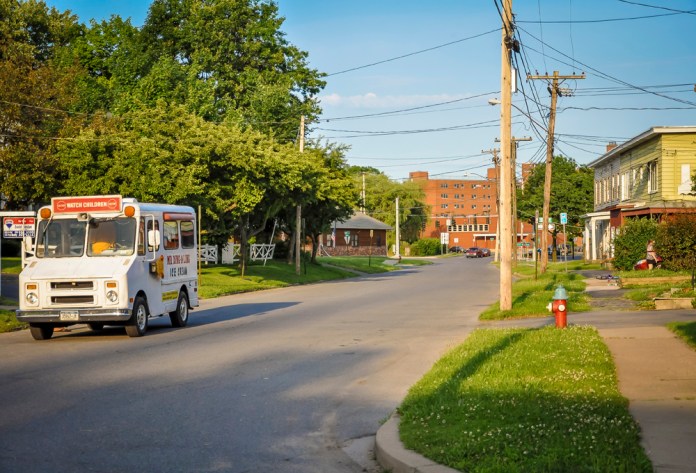
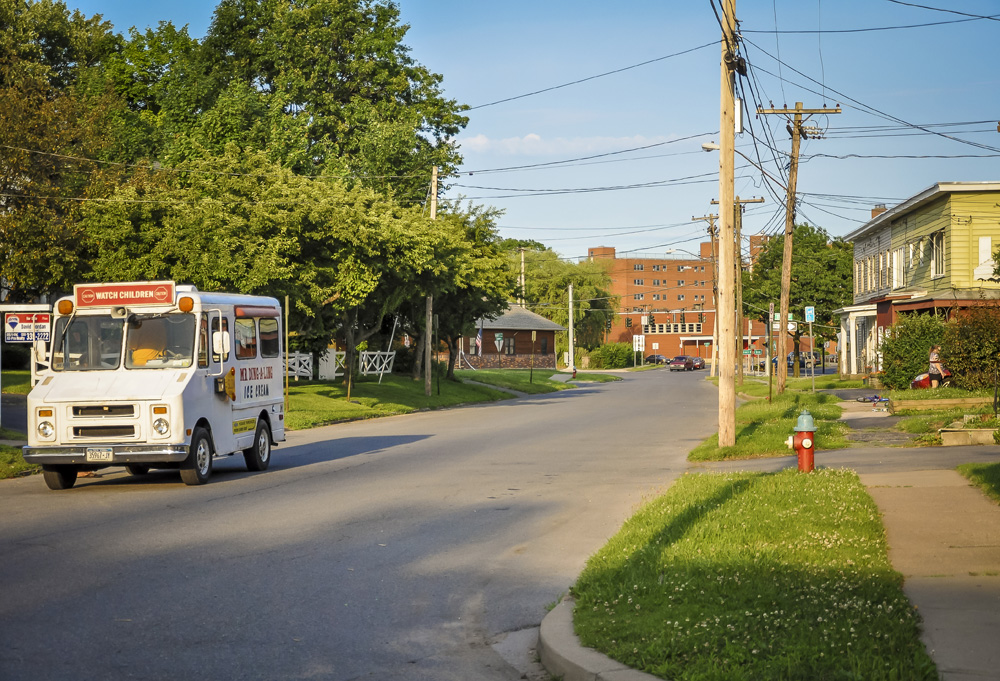
Summer is also a nostalgic time, as we remember our youth spent at the playgrounds and baseball diamonds, doing cartwheels to show off for grandparents, running around the neighborhood with sparklers and chasing the ice cream truck down the street.

I also consider the math when looking at my life. How many more summers do I have left? And then I think only one, right now. That’s it.

While driving with my brother one afternoon last week I spotted a white banner stretching across Black River Boulevard. It announced the Drums Along the Mohawk drum and bugle corps competition would be coming on Aug. 2. “Oh no,” I said to my brother, “that means summer’s ending soon.”

The competition has always been one of the last big events of the summer in Rome, signaling cooler weather, moms checking off their school supply purchase lists and the Rome Free Academy football team practicing in two-a-day sessions. My stepfather also says Drums Along the Mohawk sometimes coincides with bats sneaking into the house and circling the kitchen or family room.

An ice cream truck is parked along Stanwix Street in Rome.

So before summer is gone again, make a point to leave the house, walk around the block and look at the stars, eat your share of ice cream cones, race to finish nine holes of golf in the gloaming, attend a minor league baseball game and go for a night drive in the country to hear the whoosh of the tires against the asphalt.

Summer is indeed fleeting, but we still have half a cup left to enjoy.

Standard

Beyond

This piece is a short story that was published in Issue 3 of Kerouac’s Dog Magazine.

My name’s John O’Brien, or at least that’s who I used to be before I froze to death in the alley behind Mother’s diner in East Rome, New York. An arctic air mass swept into the Mohawk Valley from Canada one February night last year. I had propped myself against the brick wall, trying my best to shield my face from the wind; but it was futile, and I never woke up in the morning.

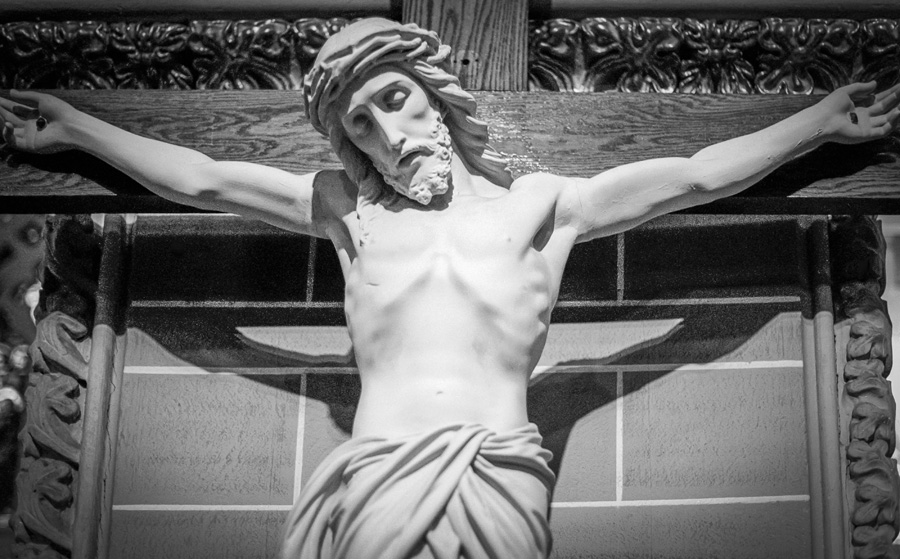
Mildred found me while out having a smoke after the breakfast rush. She called the cops, but not before rifling through my knapsack and pocketing the gold crucifix my mother gave me in 1969. Mom had it blessed by the Pope, and it was the only possession that meant anything to me. I’m kinda glad someone ended up with it, even if Mildred swiped it from me post-mortem.

The Oneida County coroner ruled hypothermia as the cause of death and the police labeled me a John Doe, since I had no ID on me or next of kin. They buried me in an unmarked grave in a back corner of Rome Cemetery, and that’s where I currently reside.

I don’t mind so much, though. The leaves on the maple trees overlooking my plot are bursting into flaming orange, brown and burgundy colors now, and I get to watch the squirrels scurrying about in the fading afternoon light. The cross-country team runs up here sometimes, and I can even hear the public address speaker at the Rome Free Academy football stadium on Friday nights, when the Black Knights play at home. Last Saturday, I even saw a group of teenagers hurling acorns at one another and ducking behind the headstones for protection. Their shouts and yelps echoed throughout the cemetery, and my only regret was that I couldn’t join in the fun. I can’t wait for winter when they have snowball fights and go sledding on a steep hill behind the cemetery.

The funny part is I don’t feel much different from when I was alive. Had I known this earlier, I might have given up a long time ago. You see I heard the temperature on the eve of my death was dropping; old Petey “Bones” Ragonese warned me to find someplace to flop when I ran into him during the lunch rush at the Rome Rescue Mission. So, yeah, I realized what would happen to me if I stayed outside, and I could have easily made it to the county shelter, where I would have gotten a hot meal and a cot with a blanket. But damn, my legs were heavy and numb, and I didn’t feel like moving an inch, let alone walking six blocks to the shelter. And I figured with my luck, it would only be colder the next day. So I just cradled the bottle of whiskey, closed my eyes and awaited the inevitable.

Now I spend my days trying to occupy my mind and fill the empty hours. I haven’t been given any sort of notice on what my final destination might be, so I’m just trying to live in the moment; or should I say go on being dead in the moment? I can’t complain, though. It’s really not that bad on this side, and at least I’m no longer cold.

Still, I really do wish someone, anyone—maybe even God Almighty or one of his messengers—would tell me what to do or where I’m supposed to go. I no longer have a body, but my brain still works. I am able to formulate thoughts and I spend most of my days contemplating my situation.

And all this thinking makes me wonder: Is this all there is? Isn’t there anything else? Is this heaven or hell, something in between, or just a continuation of what was considered the present?

“Enough already,” a voice yells from some distance away. “You’re not the only one here dipshit. You’re disturbing our sleep.”

“Excuse me,” I say, or rather I think and the words are somehow communicated to the stranger. “Who are you? Where are you?”

“It matters little. We are all dirt now. Don’t expect answers. Don’t expect anything. Just rest.”

“I don’t get it. If nothing matters, then why can I still think? My mind is active. I may not be alive, but I am not fully gone.”

“That’s it. I’m done trying to talk sense to this fucking wino. Annette, get this guy to shut up already.”

“Just because I’m your wife Fred doesn’t mean you can tell me what to do. You’re not the boss anymore. And what am I supposed to say anyway? He doesn’t understand yet.”

“Look I’m sorry,” I say. “I didn’t mean to upset anyone. I just want some answers. Aren’t I entitled to some answers?”

“What’s you’re name friend?” another voice asks.

“John.”

“Well I am James and I will do my best to give you some explanation. But it may not help you. I have been here since 1856, and I am still waiting for my fate to be decided. No one has told me anything. But I pray each day the Lord will come again so I may rise with him. Do you believe in Jesus John?”

“I guess so, sort of.”

“He is the only way.”

“Jesus Christ,” the voice known as Fred says. “It’s too fucking late for conversion.”

“It is never too late,” James says. “I repeat John, it is never too late.”

“I am sorry for bothering all of you. I don’t know if it’s physically possible, but I am getting a headache now. I want to try to go back to sleep.”

“Now you’re talking some sense dipshit. Go to sleep John. It’s too late for anything else.”

“I suppose it is. I guess we just die and enter the void. I never wanted to believe that but it seems it is true.”

“You got it brother,” Fred says.

“Now I wish I would have done something more with my life, while I still had the chance.”

“That is something we all wish for John,” James says.

Blackness takes over the cemetery once again and I drift off. I am not fighting sleep now; I am not fighting anything. I submit to the slumber of death with the recognition that nothing else exists.

Standard