Thursday morning, 9:47 a.m.
White airy clouds
painted against a pale blue sky.
Whipping sounds like
baseball cards spinning in bicycle spokes
call out to pedestrians
moving on the salt-crusted sidewalk.
A medical helicopter zips overhead.
You look up as it flies out of sight.
And with your head still raised,
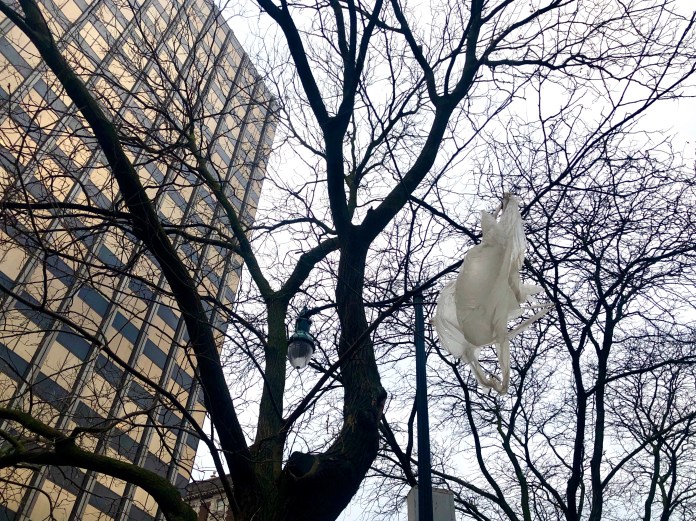
you spot a plastic shopping bag
tangled on a leafless branch,
stuck at the top of a tree,
flapping in the breeze.
The bag waves its white flag
in an overture of surrender,
hinting at submission to the grip of winter,
while struggling to break loose,
straining to be released,
and waiting for a new wind to set it free.
The grass may not
be greener elsewhere,
but at least
it won’t be
covered with snow.
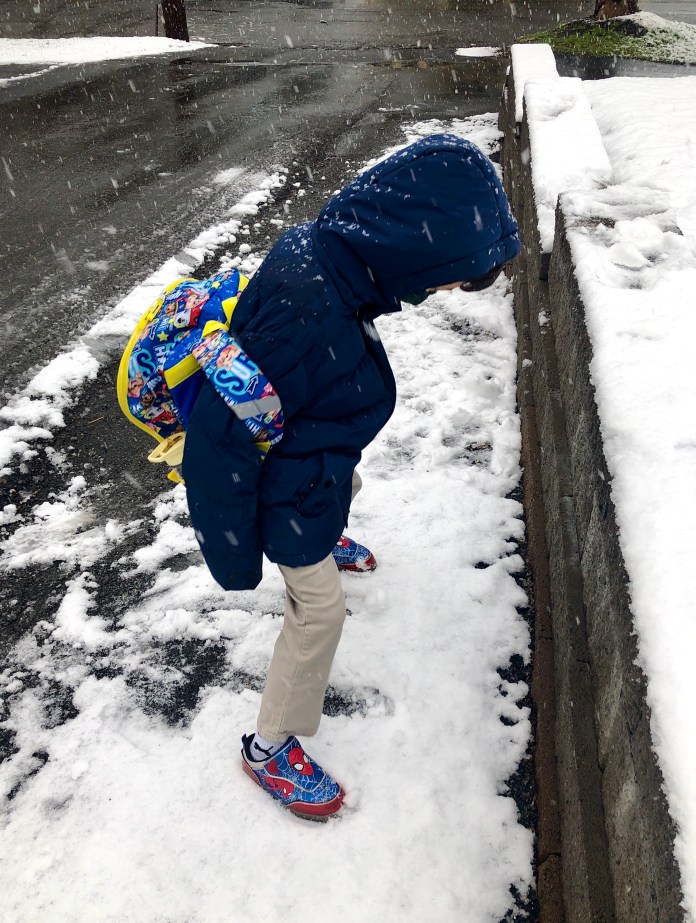
My son, Colin, stomping in the snow while waiting for the bus. Photo by Francis DiClemente.
This poem is pure fiction, but it arose out of a parent’s fear of losing a child.
Sitting by the Fire in Winter
I sit with my grief.
I wrap it around myself
like an overcoat,
while staring at the
embers of the fire,
holding my dead son’s
ski jacket close to my nose,
and remembering his
cold, little hands,
wet socks,
and the smell of his
sweaty head in winter.
A small tree on a hill
overlooking East Syracuse
leans and tilts but does not topple—
remaining unperturbed
as it wrestles daily
with the forces of gravity.
How many more days
will it stay upright?
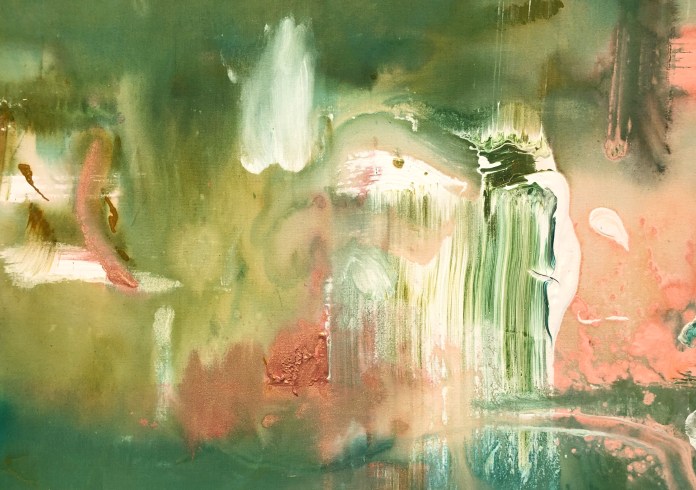
I had a chance to see two art exhibitions in Syracuse recently. The first is “What If I Try This?”: Helen Frankenthaler in the 20th-Century Print Ecosystem, which is on view until Dec. 9 at the Syracuse University Art Museum.
According to the museum’s website, the exhibition “explores how Helen Frankenthaler, the noted 20th-century abstract artist, collaborated with printmakers in print studios and workshops throughout her long career.”
Personally, I was more interested in Frankenthaler as an artist than in her connection to printmakers and the printmaking process. My SU marketing colleague Jay Cox wrote an excellent long-form piece about her that’s worth checking out.
I have a routine when I view art exhibitions. I like to see the work in stages. First, I go through the whole exhibition from start to finish, looking at every piece and reading all of the wall text. I’ll usually take a few photos with my phone and then step back to get a wide-angle view of the works on display in one of the big rooms. Then I pick out my favorite works and view them again, this time lingering on the pieces that move me the most.
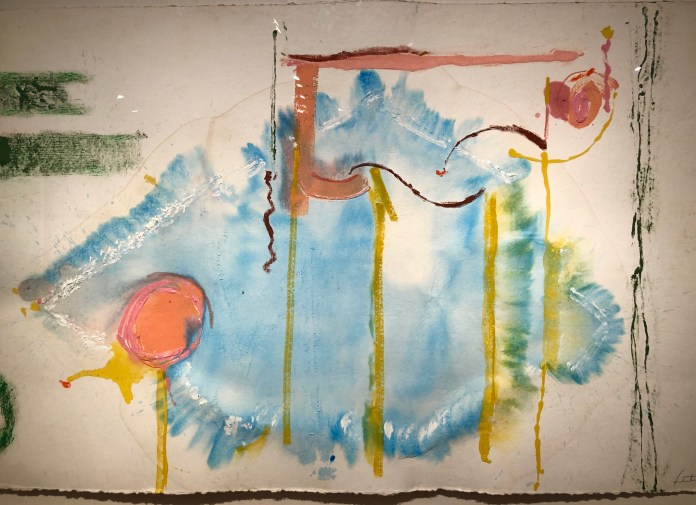
Here are some images from the Frankenthaler exhibit that caught my eye.
Monotype XI, 1991 by Helen Frankenthaler
Monoprint VII, 1987 by Helen Frankenthaler
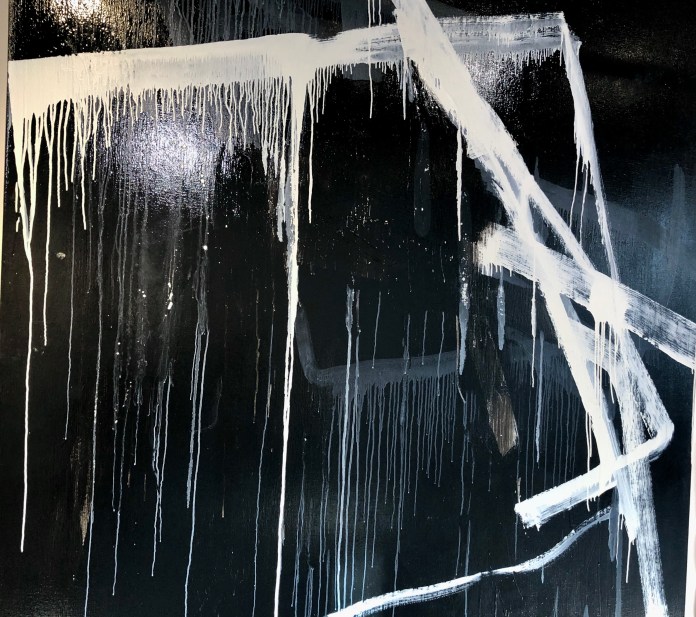
Untitled, 1979 by Helen Frankenthaler
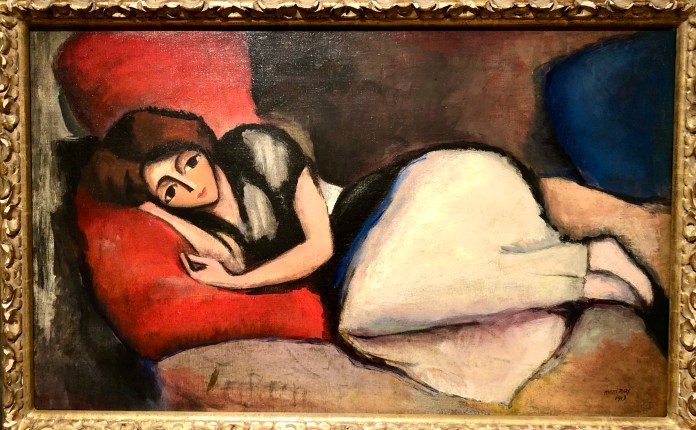
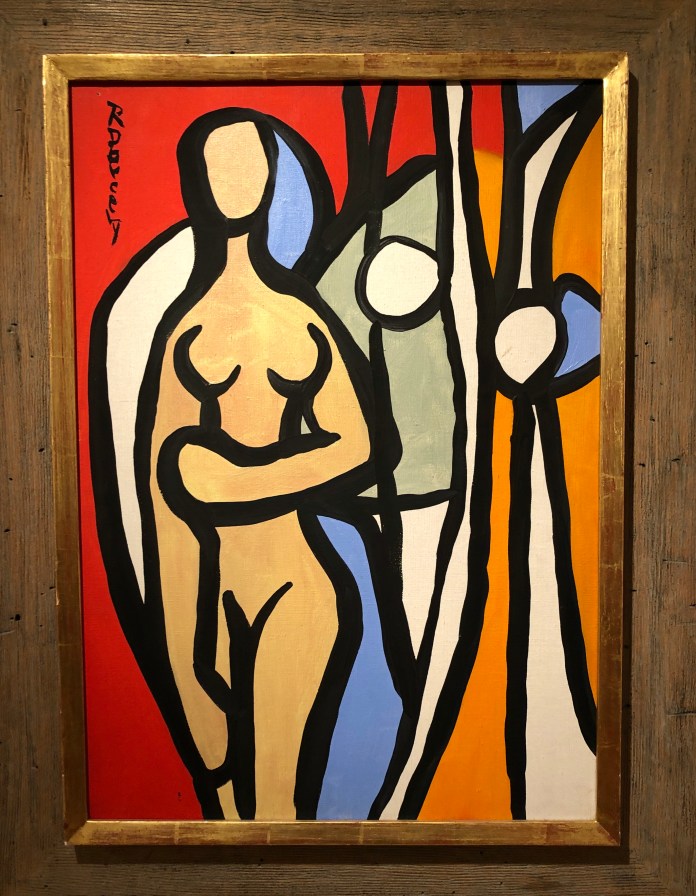
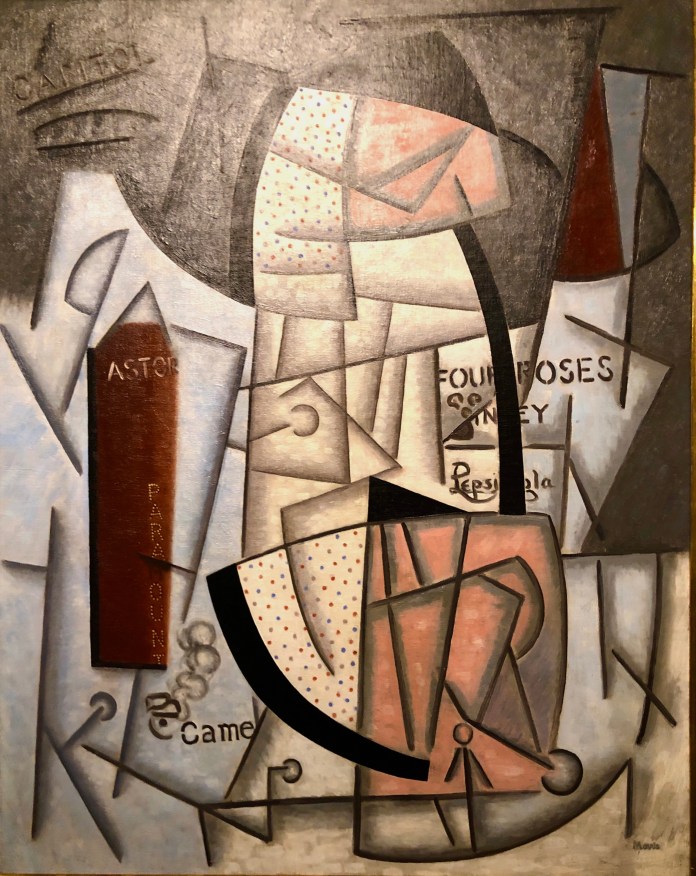
The museum also displayed many works from its permanent collection. And these works captured my attention.
[Reclining woman] by Man Ray (1913)
Figure Composition, 1959 by Roland Dorcely
Untitled by Louisa Chase (1988)
New Year’s Eve on Broadway by George L. K. Morris (1945)
Circuit of Space, 1957 by Irene Rice Pereira
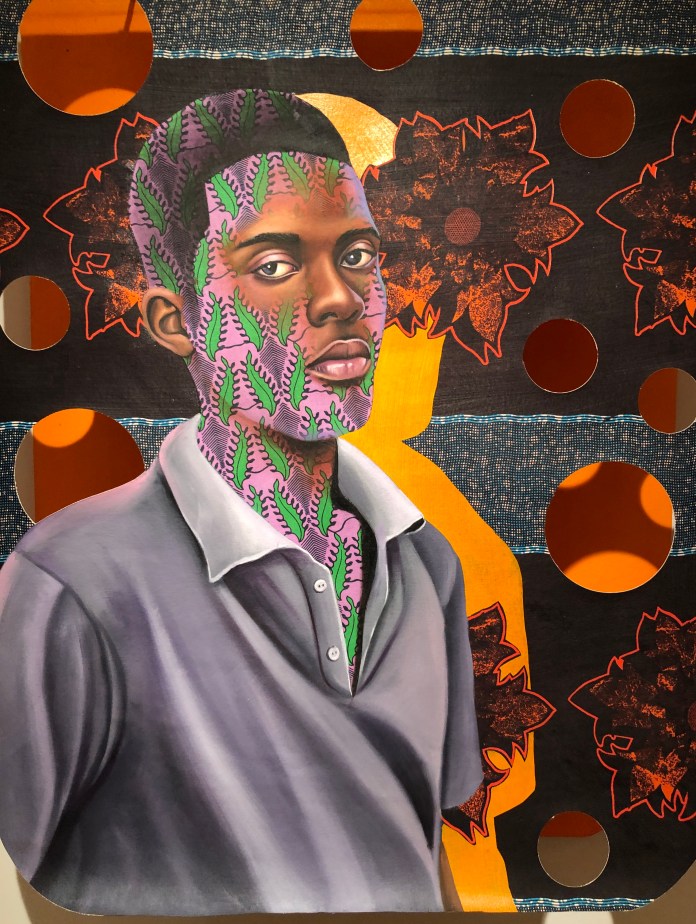
Boy with Orange Aura, 2021 by Patrick Quarm
##
The second art exhibition I attended wasLove Story: Legacy Works by Path Soong + Jeff Gordon, which is on view until early January at art haus SYR, located at 120 Walton Street. The exhibition was curated by Marianna Ranieri-Schwarzer (who is a warm and vivacious presence in the Syracuse art community).
Here is some information about the artists, from the art haus website:
“Jeff Gordon, an artist and audio producer, was a New York City-based creative who worked on projects like the Andy Warhol-themed exhibition Fifteen Minutes with his wife, conceptual artist Path Soong. The late artist was also known for creating art and music that explored audio and visual elements.”
“Path Soong was a Korean-born artist known for her large-scale, meditative abstract paintings, as well as her conceptual artworks, prints, and collaborations. Her work, which often features spare, linear gestures, evokes celestial and natural themes and is noted for its spiritual and minimalist quality.”
I attended a reception yesterday and took a few photos with my old iPhone 8:
Paths that Cross by Patti Smith with paintings by Path Soong
Untitled 11 by Path Soong
Untitled 4 (polyptych) by Path Soong
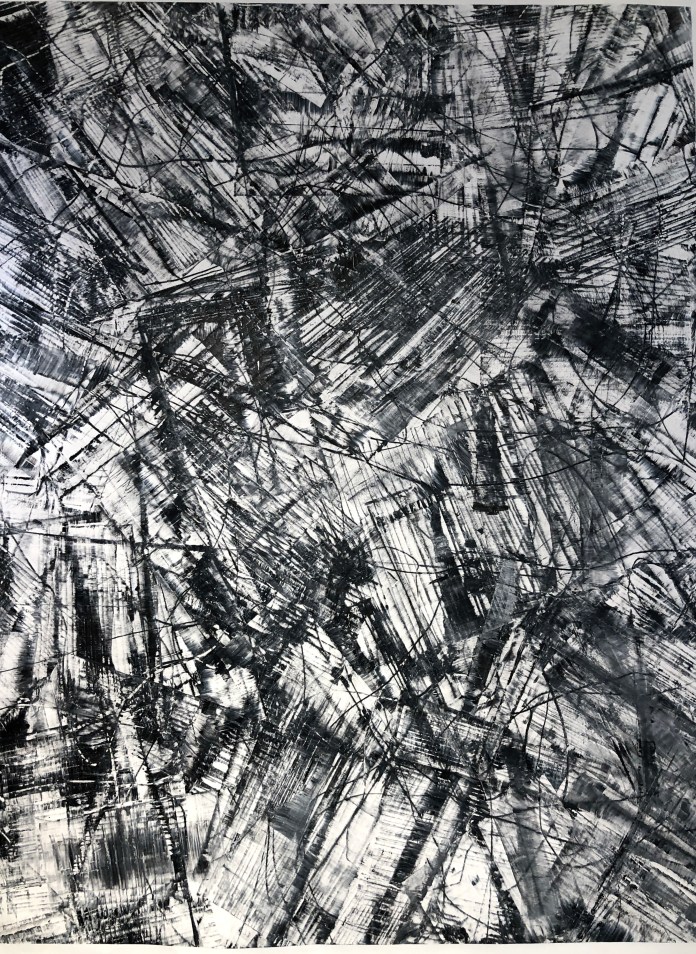
Chaos 1 by Path Soong
I encourage anyone in the CNY area to check out art haus. It’s a really cool space, and Marianna and her partner, Michael Schwarzer, who is a co-founder of art haus, are very friendly and enjoy talking about art.
I found out about them when I saw some of Michael’s artwork in a downtown window display in 2023. I really dig his style—abstract images with bold colors and big text. You can see some of his work here.
I think he created this bench piece using a pseudonym.
For people in the Syracuse area, I’ll be doing a poetry reading and film screening this Saturday, Oct. 4., at 5 p.m. at Parthenon Books on Salina Street.
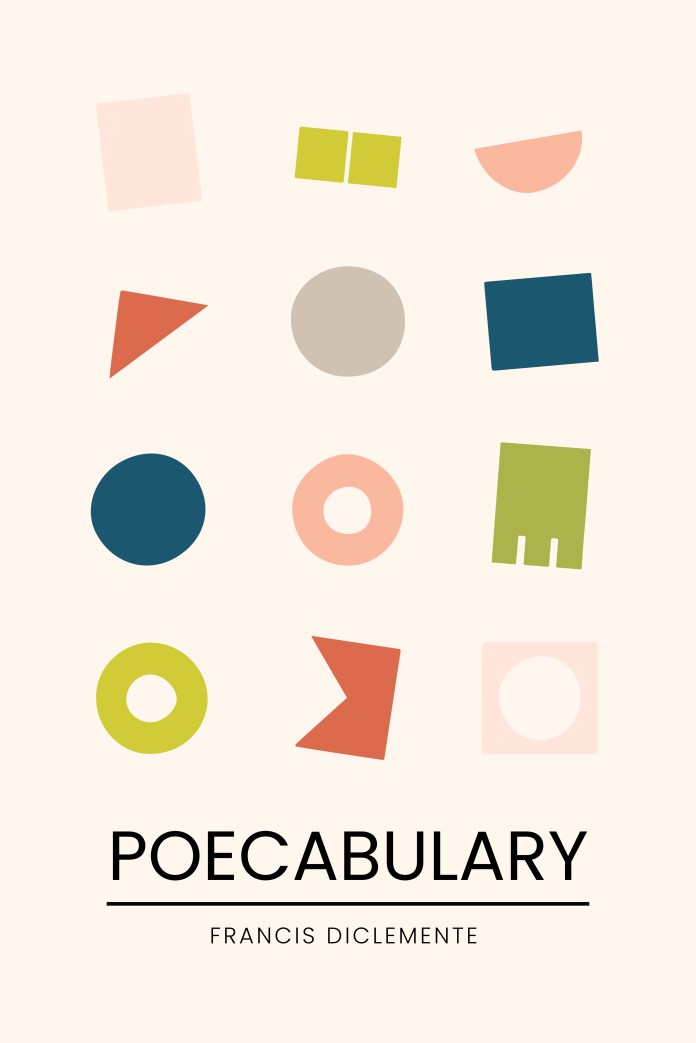
Poecabulary front cover.
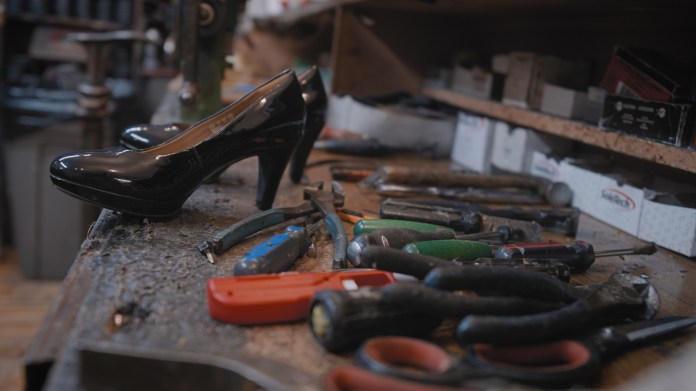
I’ll talk about the genesis and evolution of my minimalistic book project Poecabularyand then screen the documentary short Ralph Rotella: The Sole of Syracuse, co-directed by my former Syracuse University colleague Shane Johnson.
Ralph’s work bench. Photo Credit: Shane Johnson.
And speaking about Poecabulary, the book was released about three months ago. In preparing for the upcoming talk, I thought about a couple of questions I would like audience members (and you as well) to ponder: Do two words on a page constitute poetry? And can Poecabulary be considered an actual book, a real poetry collection?
And even though I succeeded in spitting these vocabulary words out of my system, I can’t stop writing down other word pairings. It’s a ceaseless literary project and an incurable disease.
So here are some other combinations that have emerged since the book’s publication in June.
This essay was originally published in the 2014 edition of Words & Images literary magazine, a student-run publication at the University of Southern Maine.
##
I heard the woman first before I saw her or her partner inside the museum of the Onondaga Historical Association in Syracuse, New York. She said in loud voice, “Rick, where are you, hon?” The OHA had a few exhibitions running simultaneously on this Saturday in early January 2013, and so it was possible to lose sight of your friend or partner as you made your way through the different gallery spaces and inspected the various works. “Hon, come here, look at this,” she added.
Onondaga Historical Association
At the time I was examining the exhibit Manifest Destiny and The American West by artist Robert Hirsch. Hirsch presented nearly one-thousand images in a three-dimensional display—with the pictures placed inside jars and serving as a commentary on how the geographic progression across North America shaped U.S. culture.
After I finished looking at the Manifest Destiny jars, I started walking toward where the couple was standing. They were planted in front of some panels of an exhibit highlighting historic stereoscopic photographs.
Rick was probably in his sixties. He was tall, broad-shouldered and bald except for a tuft of grayish-white hair at the back of his head. He had a bushy mustache that curled downward and matched his hair color and he was wearing a tan jacket.
The woman, whom I will call Ruth, was small and also appeared to be in her sixties. She was wearing a black fur coat, tall black boots, and bronze earrings that looked like costume jewelry. She had short black hair, a birthmark on the right side of her face, and she had applied a little too much burgundy lipstick to her mouth.
But it was her dialogue that made her memorable. I am not a casting director, but I believe you could pick Ruth up and place her in a Woody Allen film and without even reviewing the script, she would fit in with no problem. In fact, I bet she would steal scenes away from Scarlett Johansson or Penélope Cruz.
I heard her tell her husband, as I assumed they were married, “See, I should have lived in the 1920s. I’d be dead now but look at all the stuff I would have remembered.”
Something else about Ruth struck me on a personal level; she reminded me a lot of my late mother. To my knowledge, my mother had never attended an art exhibit in her life and was not loquacious like this museum visitor, but the two women shared some physical features. Both were short and had short black hair.
Carmella DeCosty Ruane, 1945-2011
And just like Ruth, my mother would often smear too much of the same shade of burgundy lipstick on her mouth. My mom also had the habit of applying a little too much rouge to her cheeks. If she was getting ready to leave the house to attend the Saturday vigil mass at St. Peter’s Church in Rome, New York, where she lived, I would tell her, “Mom, you need to blot your cheeks. The rouge is caked on.” Her standard reply would be, “Oh shut up. Can’t you ever say anything nice?”
Ruth, Rick, and I were gathered inside a small gallery space where Carl Lee’s multi-channel video Last House, which documents the destruction of a house in Buffalo, was being screened.
In the piece, on what looks like a bright spring or summer day, a backhoe starts demolishing the house and three separate camera angles capture the action simultaneously. Viewers watch as the scoop of the backhoe starts eating away the roof and walls of the structure, while a man stands near the rubble and uses a power hose to spray water on the scoop and house so no sparks jump to life.
As arresting as Lee’s video was, his exhibit became trumped by a living breathing work of art—the older couple that had seized my attention. And as I stood near the back wall of the room, my focus shifted from the images on the screen in front of me to Rick and Ruth seated on a black bench nearby.
“You see that, it’s three angles of the same thing,” Rick said.
“Yes, I know,” Ruth replied. She paused and then added, “You must think I’m a real idiot.”
I almost burst out laughing because her delivery was a spot-on impersonation of my mother, using the same words my mother had said to me on numerous occasions. But I managed to suppress the laughter swelling inside of me, keeping it contained in my throat.
A short time later, Rick said to Ruth, “Hon, are tired?” Ruth rubbed her thighs and said, “A little, but I’m OK.”
“Well, it’s 2:30,” Rick said.
“No, it’s later.” She checked her watch and said, “It’s 2:40.”
“Your watch is fast,” he said.
“No, it’s not. I set it by the stove, and it’s always slow.”
They stopped chatting and watched in silence as the house was being ripped apart in the video. Then, a little while later, amid the grating sounds of the backhoe and the walls tumbling down, Rick turned his head toward Ruth and said, “Are you sure you’re not too tired?”
“No, I’m fine,” she said.
And that’s how I left them. The couple was still sitting there, watching the video when I stepped out of the exhibition space and exited the OHA.
I think what intrigued me most about the couple was their ease of interaction and level of comfort with one another. And I was thankful for having witnessed this slice of life from their apparent happy marriage, a snapshot of two older people behaving in an unguarded fashion in a public museum on an ordinary Saturday afternoon.
I did not assume they lived a perfect life without worry or conflict. But it appeared Rick and Ruth understood and accepted one other unconditionally. In spending a few moments in their presence, it seemed like neither partner had any illusions about the other person. There appeared to be no mysteries in their relationship still waiting to be uncovered. They had likely revealed all their flaws and weaknesses a long time ago, and yet, they still enjoyed spending time together and remained happily married and devoted to one another. Or at least that’s the impression they gave to outsiders.
I often get a rush of creative energy after visiting an art museum, attending a play or concert, or seeing a great film. And while I was walking home, my rumination about the couple sparked an idea. I decided they would make a compelling subject for a modern art exhibit.
So here’s my proposal:
A museum would build a large installation showcasing Rick and Ruth as one of the last surviving happy couples in America. It would be a spectacle like something 19th Century showman P.T. Barnum could have curated and promoted.
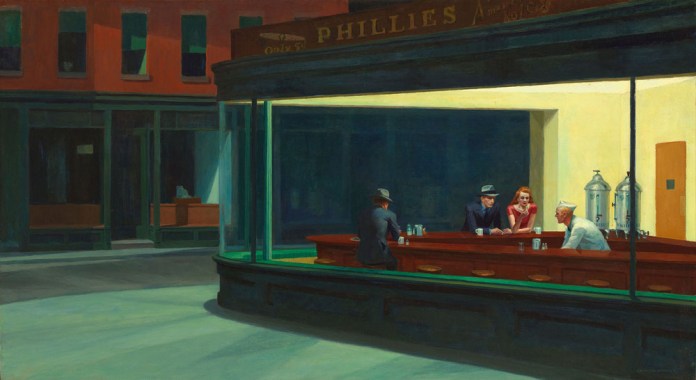
Rick and Ruth would be placed inside a large kitchen space encased in glass like the diner scene in Edward Hopper’s iconic painting Nighthawks.
Nighthawks by Edward Hopper, 1942
We would observe them sitting in their kitchen—drinking coffee, talking, cooking, and eating breakfast, lunch, or dinner, reading the newspaper, playing Scrabble, baking cookies, celebrating their birthdays, and washing and drying dishes.
The display would offer viewers an unfiltered window into the life of the couple, and the images, sounds, and conversations would document Rick and Ruth’s ease of interaction. The goal would be to reveal the secrets of this happy marriage.
As a result, the exhibit would aim to answer these central questions: What makes this couple different from others? What is the key to their bliss? And what advice or insights do they have for other couples in terms of making a relationship last?
From a technical standpoint, Rick and Ruth would need to be well-lit and microphones would need to be placed on or near them to pick up clean sound; the museum would also have to mount speakers or headphones near the display so the viewer could listen as the couple communicates.
As this idea spun wildly inside my brain, I felt a sense of joy bubbling within, and I smiled when I imagined Rick and Ruth hanging out in their hermetically sealed museum kitchen.
I could almost hear him saying something like, “You know, we’re gonna have to eat a little later because the chicken still needs to defrost before we put it in the oven.”
Ruth would then shoot Rick a dirty look, smack her lips or maybe place a hand on her hip. “Do you think so?” she would say. “God, you must think I’m a real idiot.”
Moments later, Ruth would be standing at the counter making a salad and Rick setting the table, and Ruth might turn to him and ask, “Hon, what do you feel like for dessert?”
“Oh, I don’t care,” he would say, his eyes lifting from the cutlery on the table. “Anything.”
“Well, we have that Entenmann’s crumb cake in the freezer. You want me to take it out?”
“Sure.”
“Yeah, that sounds good, doesn’t it hon?”
“You bet, Ruth. It does.”
Then, as the museum would get ready to close for the day, the lights to the kitchen display would be dimmed and Rick and Ruth would depart the exhibition space. And we wouldn’t be allowed to tag along with them when they walk outside the walls of the museum, get into their car, and head home for the night.
But I suspect not much would change between them, and I find this reassuring because I wouldn’t want to miss anything.
Logline: Ralph Rotella plies the craft of shoe repair while offering kindness and a sense of community to his customers and the residents of Syracuse, New York.
Since emigrating to the U.S. from Italy in the 1970s, Rotella has owned Discount Shoe Repair in downtown Syracuse. Each day he opens the store, fixes shoes, works with his hands using antiquated equipment, and converses with customers. In his daily interactions with people, Rotella reveals himself to be a witty, beatific figure who draws people to himself, building a sense of community with his shoe repair shop as a hive of activity. The film examines the value of work and what constitutes happiness, while also honoring an unsung hero in the Central New York community.
Photo Credit: Shane Johnson
Credits, Awards and Festivals:
Directed by Francis DiClemente and Shane Johnson
Produced by Francis DiClemente
Cinematography and Editing by Shane Johnson
Ralph’s work bench. Photo Credit: Shane Johnson.
Awards:
Winner: Best Director, Short Films
New York Documentary Film Awards (2024)
Gold Remi Award in Film & Video Productions, sub-category Community
57th WorldFest-Houston International Film Festival (2024)
Film Festivals:
New York Documentary Film Awards
NewFilmmakers NY, Spring 2024 Screening Series
57th WorldFest-Houston International Film Festival
Culver City Film Festival
Syracuse International Film Festival
I am celebrating an important milestone today—the 40th anniversary of my first brain surgery to remove a benign tumor engulfing my pituitary gland. I have written about this ordeal many times in the past, including in this long 2014 post.
On this day, four decades ago, surgeons cracked open my skull and extracted the craniopharyngioma that had stunted my growth and delayed my transition from boy to man.
In this essay, I reflect on my experience as a teenager in 1984 while a patient at SUNY Upstate Medical Center (renamed Upstate University Hospital) in Syracuse, New York. I am limiting the narrative period to the day of surgery and my immediate recovery.
Upstate University Hospital
Surgery Day: An Essay
1.
Early morning. Blackness. I can smell the breakfast trays delivered on the hospital floor—watery eggs, ham and bacon, soggy oatmeal, and weak tea and coffee. The noise outside my room grows as patients awaken and nurses draw blood and administer medicine.
My appointment with the medical intervention team has arrived. I am fifteen years old and ready for surgery day, prepared for the trauma that awaits me on the table. My head will be shaved, and my skull sawed open. The tumor growing in my head—wrapped around my pituitary gland and stifling my maturation—will be plucked free, yanked out like an infected molar and then examined under a microscope to determine its classification. We must name our enemies to defeat them.
Once removed, the lesion will relinquish dominion over my body. I will be cut loose from its tentacles. The surgery will disrupt my endocrine system, leading to a permanent condition known as hypopituitarism and propelling me on a long road toward “catch-up” growth and development.
A photo of my father and me two months before the operation in 1984.
2.
A nurse enters my room and hands me a small plastic cup filled with a few pills. “This will just relax you,” she says as I swallow the pre-surgery drugs. About a half-hour later, she returns and says, “It’s time for you to go down now.” A softness squishes against the edges of my mind; I am drifting from consciousness.
An orderly comes to take me away—filling nearly the entire space inside the door frame. A hulking figure with thick, black hair, a black beard, and muscular forearms, he reminds me of Bluto from the Popeye the Sailor cartoons. But for some reason, I call him Hugo.
“OK, Hugo,” I say, “I’m ready now.” Hugo helps me slide over from my bed to a stretcher as the nurse covers me with a sheet and a blanket.
My family gathers around me, bending down to kiss me and wish me “good luck.” What does “good luck” mean on the operating table? I wonder.
Tears stream down my mother’s cheeks, which are red and wind-burned and feel cold against my skin as she kisses my face and forehead; she squeezes my hand and then releases her grip and steps away.
Hugo unlocks the wheels of the gurney and steers it out of the room and into the hallway. Even though I am sleepy, I stay awake for the ride, keeping my eyes open and watching the panels of fluorescent lights pass overhead as we make our way through the hospital corridors and into an elevator. We take a silent ride down to the surgical wing.
The temperature drops when we enter the frigid, sterile operating room. A chill runs over my body; my lips tremble as gooseflesh buds on my arms.
The surgical team members buzz around the operating room, each doctor or nurse carrying out a specific task. They transfer me from the stretcher to the operating table. An overhead light shines into my eyes while I lay splayed on the table.
A nurse covers me with an extra blanket and stretches tight, white stockings over my calves. She says the stockings will help to prevent blood clots after surgery.
One of the doctors sits down near the table and says he will shave my head. When he asks me if I want my whole head sheared or just the front, I make the mistake of telling him to clip only the front. As a result, weeks after the surgery, my hair remains uneven—bald in front and growing long in the back—similar to the long hair sticking out the back of helmets worn by hockey players with mullets.
After they jab an IV in my arm, I grow drowsy, my eyelids shutting; but before I drift off, I tell one of the nurses that I need to pee. The woman chuckles and says, “Oh, you don’t have to worry about that now. We’ve already put in a catheter.”
And then I leave the world—falling under the power of general anesthesia for about eight-and-a-half hours while the surgeons perform their work.
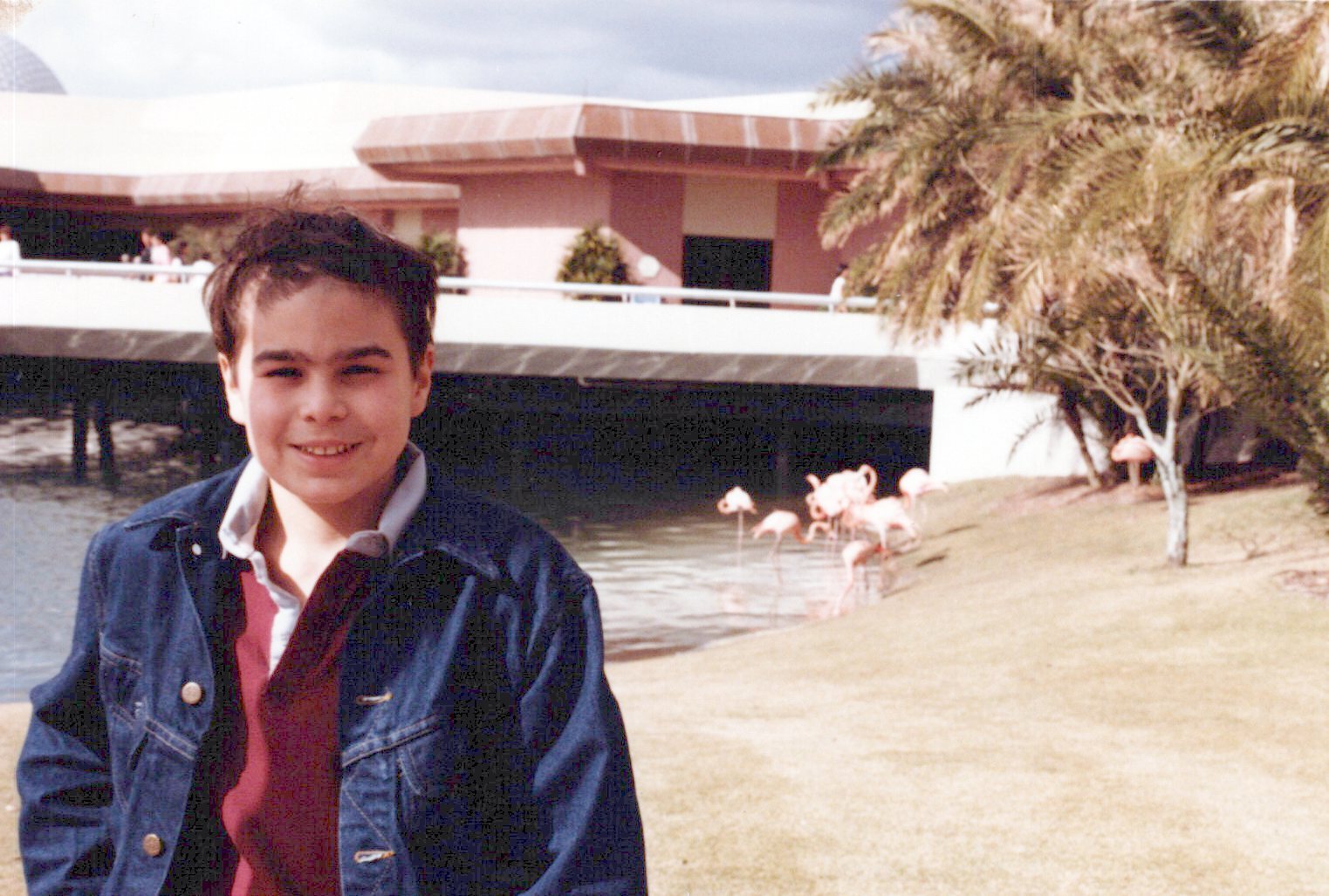
At Walt Disney World in February 1985.
3.
I have often wondered where I traveled to during that gap of time. What realms or landscapes did I explore in my mind while my skull lay open and I remained unconscious on the operating table?
Here is me stepping out of the story momentarily to travel back in time and investigate the scene. It’s a fantasy of the man I hoped I would become once the surgeons extracted the tumor. It’s the future I had envisioned for myself—marked by maturation and normalcy, playing the role of a fully formed male accompanied by a female partner.
A green canopy of trees. A trilling stream. Sunlight filtering through leaves overhanging a hiking path. Birds chirp, and tree limbs sway in the wind.
Boots touch the soft, muddy earth. A man emerges from a wooded path. He is dressed in a red checkered flannel shirt, tan khakis, and hiking boots, and he carries a knapsack on his shoulders. He is about five feet six inches tall, lean and muscular, and has a slight beard.
A twig snaps, and we see a woman walking out of a clearing. She’s wearing a fleece sweatshirt, jeans, hiking boots, and a backpack. The two figures stride toward one another, share a kiss, and then grasp hands. Sunlight bathes them as they leave the clearing and start walking on a path leading over a ridge. They climb the slight incline and disappear as they walk down the other side, their bodies concealed by the curve of the Earth.
Late high school or early college years.
4.
I wake up in a bed tucked in a corner of the surgical intensive care unit. I feel dizzy, and a dull, continuous ache presses against my head as if my skull is being squeezed in a vice. Nurses inject the opioid Demerol into my thighs over several hours to alleviate the pain, and I keep drifting in and out of sleep. I hear machines beeping and the sound of a respirator somewhere on the floor. The gentle sound of the ventilator puts me at ease as I listen to it—in and out, in and out, in and out.
EKG stickers are pressed to my chest, and machines monitor my heart rate and blood pressure. Vaseline has been smeared on my eyelids and eyelashes, clouding my vision, and I feel like I am straining to see from under the cover of a heavy, wet blanket. The white stockings the surgical team had given me are pulled up to my knees and constrict the circulation in my lower limbs.
I feel small—shriveled up in the bed like a green-gray alien being prodded by U.S. government doctors and scientists on an operating table in Roswell or Los Alamos, New Mexico. A scar runs the entire length of my head, from the tip of my right ear to the tip of my left ear. I tap a slight dent in my skull (produced by a right frontal craniotomy during surgery), about the width of two fingers, just above my forehead on the right side.
The stitches itch, and I reach up to feel the thick, black threads. I wonder if I resemble a twisted version of the Mr. Met mascot.
5.
But I feel relieved because I have awakened from the operation, and my brain function remains intact. Some doctors lean over my bed and ask me a series of questions: Do I know my name, the current year, the president of the U.S., and the name of the city I am in? I answer the questions correctly, and when instructed, I squeeze their fingers, wiggle my toes, puff my cheeks, stick out my tongue, and follow a penlight with my eyes.
My senses function properly, as I can see, hear, speak, and smell. I can form thoughts, and the trauma of the surgery has not altered my mental ability or effaced my memory.
My mother, father, sister, and Aunt Teresa huddle around my bed, their faces beaming like those of Dorothy’s relatives in the scene when she wakes up from the dream at the end of The Wizard of Oz.
“Hey, buddy,” my dad says.
My mom leans over the bed rail, kisses my face and eyelids, and says, “You did great, honey, just great.”
“Yeah, Dr. B. said he got most of it,” Dad says.
“Was it big?” I ask.
My mom holds up her right thumb, indicating the size of the tumor. “It was about the size of a thumb,” she says. She caresses my face and adds, “Dr. B. said there’s a little bit left over, but we don’t need to worry about that now.”
“OK,” I say, closing my eyes and returning to sleep.
High school graduation in 1987.
6.
I wake up on the first night with a raging thirst in my parched throat. I feel like I have been deprived of water for days. But because the doctors are concerned about swelling in the brain, they load me with corticosteroids and restrict my fluid intake. My face is swollen, and I feel bloated from the steroids; I am not allowed to drink water, but I am permitted to suck on ice chips.
However, late in the evening, with the lights dimmed on the floor after visiting hours have ended, I turn my head, look around, and notice a sink in the corner, only a few feet away from my bed.
Somehow, despite being woozy, I lower the bed rail, swing my legs out to the side, and climb out of bed. I try to be quiet as I wheel my IV stand toward the small, stainless-steel sink. I turn on the foot pedal faucet, cup my hands, and gulp the water like it’s rushing in an icy mountain river.
The cold liquid pours down my throat and gives me immediate relief. I want to stay here and drink more water, but a man—a male nurse or an orderly—races toward me and pulls me away from the sink.
“What are you doing?” he yells. “You just had brain surgery.”
He then escorts me back to bed, swings my legs over, covers me with the blankets, and lifts the bed rail.
“Now, don’t get up again,” he says. “What do you wanna do, crack your head open and screw up the work those surgeons did?”
And now tucked back into bed, I resume sleeping, drifting off until the next wave of pain hits, and I press the call button to request another dose of Demerol.
##
Recalling these past forty years, I run a tally of my surgeries at Upstate. The number stands at six—counting the initial surgery in 1984 and the subsequent operations to remove tumor regrowth in 1988, 2011, 2012 (Gamma Knife), 2020 (Gamma Knife), and 2023.
I have some double vision when looking at things up close and to my extreme right (right sixth nerve palsy), and I must be hyper-vigilant in the management of my care to treat my hypopituitarism. But except for my corticosteroid-induced osteoporosis and rheumatoid arthritis (unrelated to the tumor), I am a healthy, middle-aged man.
My next MRI is scheduled for Dec. 18. And with the stubborn resilience of craniopharyngiomas, I know more surgeries (or radiation treatments) loom in the future. But I face each day with gratitude, recognizing how lucky I am to have survived the scalpel on multiple occasions. I also don’t look beyond each six-month window of time between MRIs. Once my current neurosurgeon orders the next MRI, I go about my life without thinking about the tumor still lurking in my head.
Late high school or early college years.
##
And because of the significance of the number 40 on this anniversary date, I’ll leave you with U2 playing “40” live at Red Rocks Amphitheatre in Colorado in 1983.
It’s the season of beautiful colors, exquisite light and streaming A Charlie Brown Christmas by the Vince Guaraldi Trio. While returning home from a recent jog, the piles of leaves in my neighborhood incited an idea for a poem. Fortunately, I had a pen and some paper to capture the idea before it slipped away.
The Casualties of Autumn
Every leaf strewn in a pile
collected at the curb
had a life before it
separated from the tree
and twirled to the earth.
Is there a home reserved
for the departed souls of leaves—
a place of repose
for the casualties of autumn?
To mark the end of Daylight Saving Time, I present a poem inspired by autumn scenery. I drafted this poem more than 25 years ago while living with my sister in Toledo, Ohio. I have revised it multiple times over the years, never satisfied with the final result. While this version may not be perfect, I think it’s about the best I can do, and so I release it here.
Falling Back (2024)
Alone on an empty school playground in Toledo, Ohio,
my worn-out sneakers shuffle on asphalt
as I practice left-handed hook shots
on a bent basketball rim with a rusted chain-link net.
The sound of the bouncing ball reverberates
off the school’s red brick façade,
as my reflection jumps out at me in the first-floor windows
adorned with orange paper jack-o’-lanterns.
A towering oak tree with branches like octopus tentacles
observes me as I heave an air ball from three-point land.
It studies my movements while a sharp wind
strips away its cloak of golden-brown leaves.
The cold sticks to my fingertips as I lick them
to get a better grip on the Spalding rubber ball.
And with my nose running incessantly and my chest heaving,
I swallow the chill in the air, trapping it deep inside my lungs.
I pick up my dribble—then stop, smell, look and listen.
Streetlights flicker on in the suburban neighborhood,
and across the road, a pumpkin is perched
on the porch of a modest white house.
The scent of burning leaves wafts in the air.
Charcoal-gray clouds brood in the sky,
and on the western horizon, near a row of pine trees,
there’s a feathering of soft pink light.
At the nearby park, soccer goals stand naked and netless,
and on the gravel softball field,
silence reigns on the base paths and outfield grass.
In the schoolyard, monkey bars are free of tiny, groping hands,
and empty swings sway in the stiff breeze—
calling out for the children to return.
But summer delight has long since passed,
and now Daylight Saving Time concludes again,
with me falling back to the days of my youth in Rome, New York.
I remember two-hand-touch football at Franklyn’s Field,
Friday nights watching the Rome Free Academy Black Knights
trounce visiting opponents under bright stadium lights,
blades of grass and windshields glazed with morning frost,
and autumn’s first taste of a juicy Macintosh.
There is magic and harmony in nature’s ever-spinning cycle.
I need only to look around,
and I find myself back in upstate New York—
my body planted in Ohio, but my mind
transported home to my native land.
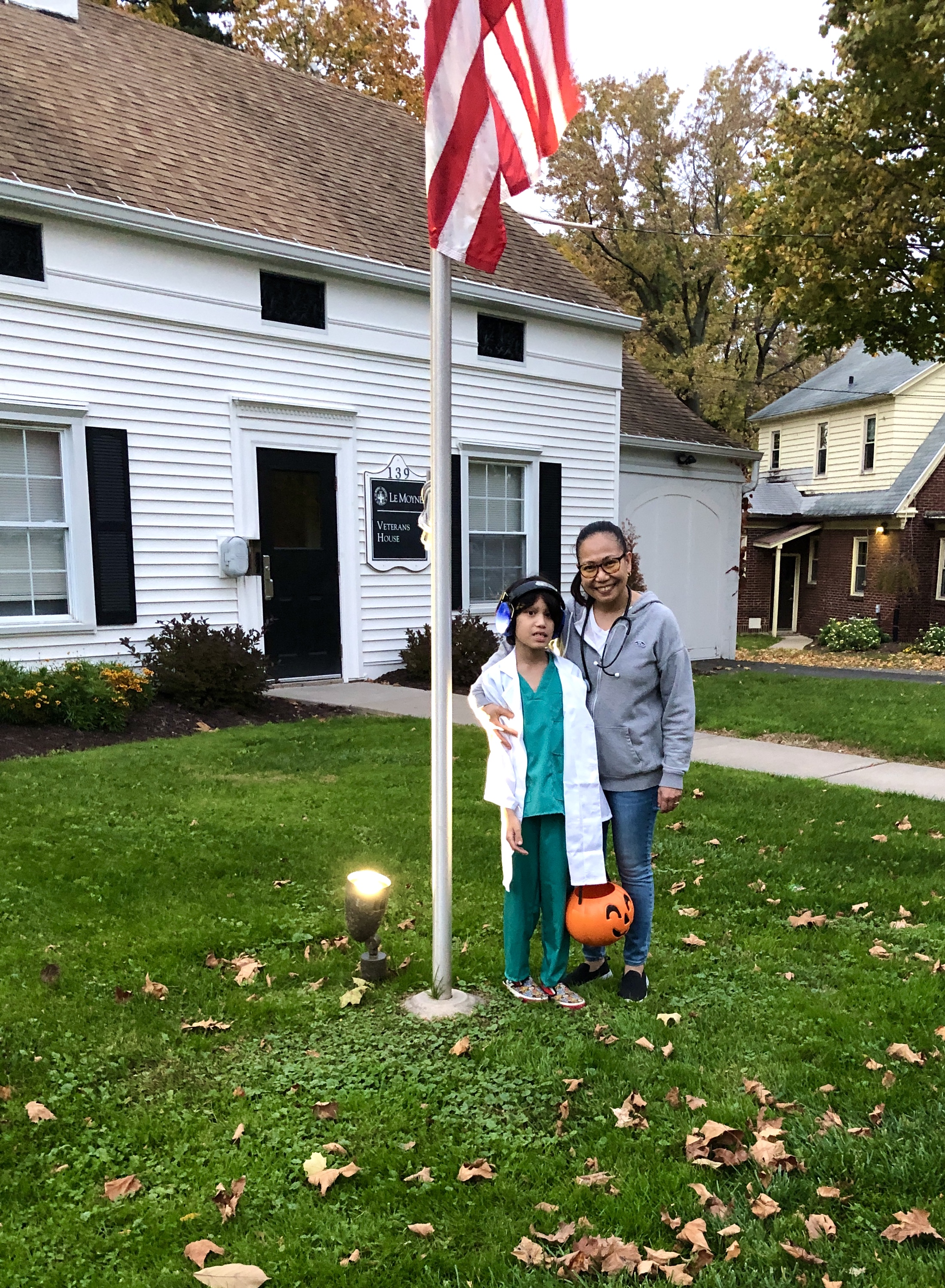
Now, since autumn is on my mind with another page of the calendar being ripped, October giving way to November, I want to share some family photos from Halloween.
Colin Joe walking in his school parade.
It was a special day for our family since our eight-year-old autistic son, Colin, participated in a parade at his elementary school and was excited and eager to go trick-or-treating in our neighborhood.
Colin Joe dressed as a doctor for Halloween.
In other years, we had to drag him out of the house. This year, dressed in his doctor’s costume, he slipped on his sneakers and gripped his pumpkin candy bucket, leading Mom and Dad in search of treats.
While walking on the campus of Le Moyne College last Sunday, I saw this bronze plaque with a poem in honor of a deceased student. The wording captured my interest.
Abby Bohnert ’19
Everyone’s friend.
Red lipstick and thick socks.
Giggles so loud they echo down the hall.
“She is Heaven and Hell’s love child.
Hold her. Name her poem.”
















 Francis DiClemente