One year ago today, a neurosurgery and ENT team at Upstate University Hospital took a nasal approach to remove the remnants of a craniopharyngioma (a benign tumor on the pituitary gland). It marked my sixth brain surgery since age 15.
I have fully recovered from the surgery, resuming all activities, although I still suffer occasional bloody noses and have peripheral double vision (which is likely permanent).
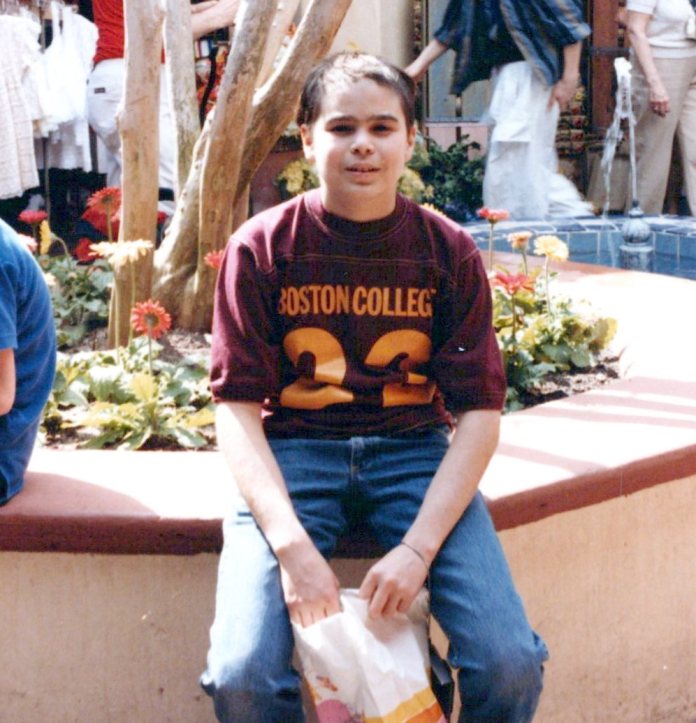
Photo of me last summer, after my surgery.
Vestiges of the tumor—what my neurosurgeon calls “membranes and scar tissue” still reside inside my head, as outlined in my latest MRI report:
FINDINGS:
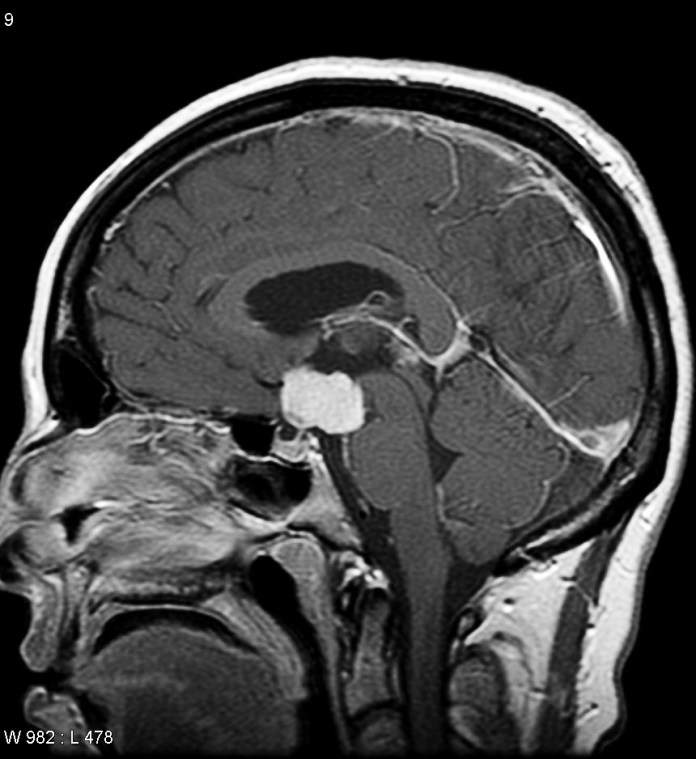
“. . . In the right paramedian aspect of the surgical bed in the sellar/suprasellar region again seen is mass with heterogeneous enhancement which measures approximately 1.2 x 1.4 cm by my measurements.”
For now, the mass “remains grossly unchanged,” but the nature of craniopharyngiomas means the tumor will likely grow back to a point where another surgery or radiation will be required.
However, my medical condition is not the subject of this post. I just needed a brief introduction with a reference to the anniversary of my surgery.
Instead, I want to share some musical selections I listened to in the days and weeks following my surgery last summer. These songs aided me, providing succor while I recovered, propped up in bed, unable to sneeze or blow my nose, and moving gingerly around the house.
As I listened to the songs, I reflected on my life, swelling with gratitude for being alive and making gradual progress—supported by my wife, Pamela.
I think the tunes can provide positive affirmation for anyone facing adversity.
“I’m Still Standing” by Elton John
“Winning” by Santana
“Back in the High Life Again” by Steve Winwood
“Better Days” by Bruce Springsteen
More about Bruce later . . .
As someone who grew up in the 1980s, I am mesmerized by the concert footage available on YouTube. It is amazing to think you can see bands performing in 4K (some clips with multicam edits) hours after a show. When I was a kid, I listened to 95X in Syracuse after a concert by the Rolling Stones at the Carrier Dome so I could hear the DJ run down the setlist.
During The Cure’s 2023 North American tour, they played five original songs that I believe will be included in their forthcoming album, Songs of a Lost World. Two of my favorites from the new batch are “Alone” and “Nothing is Forever,” which I listened to repeatedly during my recovery. They put me in a dreamy headspace where I could forget about my health problems.
“Alone” by The Cure
“And Nothing is Forever” by The Cure
I also turned to the Grateful Dead for repeat listening during the late summer of 2023—often clicking on two tracks from the Dead’s famed 1977 concert at Barton Hall at Cornell University.
“Morning Dew” by the Grateful Dead
“Terrapin Station” by the Grateful Dead
And finally, there’s Bruce.
Bruce Springsteen and the E Street Band were initially scheduled to perform at the JMA Wireless Dome in Syracuse in early September 2023, but the show was canceled because of Bruce’s peptic ulcer disease. It was fortunate for me because I would have been in no condition to climb the concrete steps to the upper rafters of the Dome just a few weeks after brain surgery. But I attended the rescheduled show in April 2024, and I’ll leave you with “Backstreets” (which references summer).
“Backstreets” by Bruce Springsteen and the E Street Band
I’ve written about this in many entries over the years, but I can’t let the Dec. 12th date pass without mentioning my gratitude for still being here. Today marks my “tumorversary.” Thirty-nine years ago today, on Dec. 12, 1984, surgeons at SUNY Upstate Medical Center in Syracuse, New York (now named Upstate University Hospital), removed a large craniopharyngioma that had engulfed my pituitary gland, leading to stunted growth and delayed puberty in my teenage years, as well as lifelong hypopituitarism.
In my last blog post, I wrote about my follow-up appointment with my neurosurgeon after my summer operation—my sixth brain surgery. But who’s counting?
I want to share some positive news. I had my follow-up appointment with my neurosurgeon yesterday. Fear gripped me heading into the exam room because the radiologist’s report detailing my latest MRI included this troubling language: “Unchanged heterogeneously enhancing prominence in the right anterolateral suprasellar area, causing mass effect with deformity and right optic tract and proximal portion of the right optic nerve.”
But Dr. H., who is always sanguine, stepped into the room, shook my hand, and sat down, adjusting his glasses and mask, then quickly put me at ease. “We think we got about seventy to eighty percent of the tumor,” he said. He explained the rest—what the MRI report referred to on the right side—was the membrane of the tumor, similar to what’s left over after a balloon bursts. He said he expects the membrane to shrink and form scar tissue.
Although my vision will never go back to the way it was prior to the swelling of the tumor in recent years, I felt relieved when Dr. H. said we can resume a wait-and-see approach, meaning I need no other treatment besides another MRI in six months.
That reassurance was the best present I’ll receive during this Christmas season. Clean, safe, and grateful are the words that hovered in my head when I left the office yesterday. I believe in the power of prayer, especially the petitions made by Aunt Teresa, a Roman Catholic nun in Florida who uses the term “storming heaven” when referring to her supplications.
I am thankful to have endured my latest medical ordeal, but I also know tomorrow could bring a whole new heap of trouble. That’s why I am trying to honor my good fortune by living in the present each day. Of course, this is impossible to do consistently amid the pressures of work and family life.
But I’m trying.
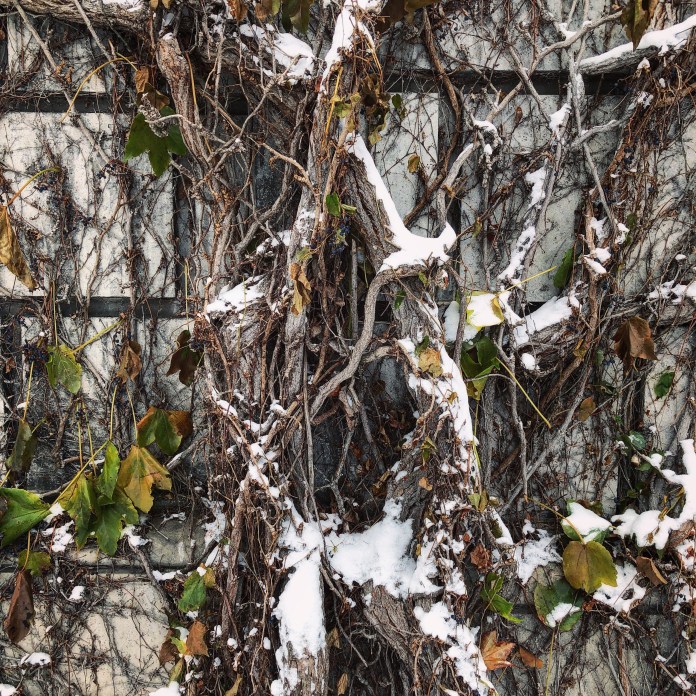
Here are a couple of photos I snapped recently—two visual gifts the universe offered because I was willing to pay attention in the moment.
Snow on Branches 2023. Photo by Francis DiClemente.
I want to wish everyone a Happy Thanksgiving. I have much to be grateful for this year, as Black Friday marks four months since my transsphenoidal (through the nose) brain surgery on July 24.
I have rebounded. I’m back to running and lifting light weights, and I can sneeze and blow my nose without any concern about bleeding or cerebral spinal fluid leaks. I am so thankful my recovery has been steady and unremarkable, with no complications (fingers still crossed).
Interpreting the medical jargon in my latest MRI report—it seems residual tumor matter is still pressing against the optic chiasm and affecting the optic nerve. And my vision has not been fully restored since the tumor grew back a few years ago (and likely never will be). I still have double vision when looking to the far right in my peripheral field, and I need a prism on my reading glasses, which I use when working on the computer. But I can drive because I have no double vision straight on.
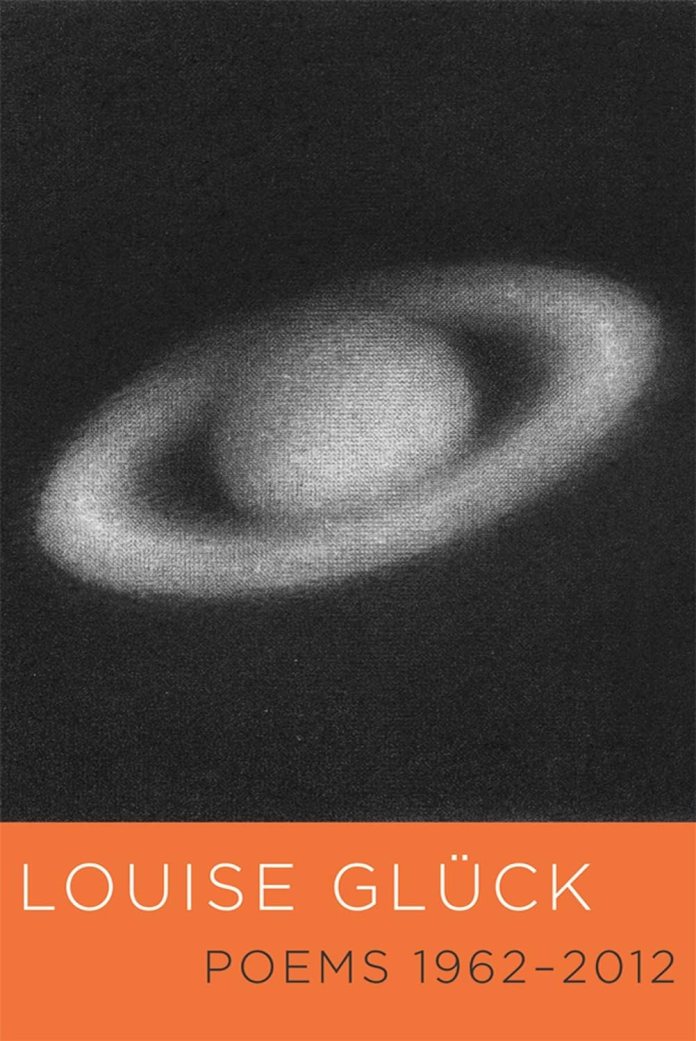
I want to share a few Thanksgiving-themed poems. I am currently reading Poems 1962-2012 by the late poet Louise Glück.
Here are two poems that struck me and are relevant for the season. I must admit I don’t understand the meaning of many of Louise’s poems, but I thoroughly respect and admire her artistry with language. And the works remain open to interpretation by the reader.
Autumnal by Louise Glück
Public sorrow, the acquired
gold of the leaf, the falling off,
the prefigured burning of the yield:
which is accomplished. At the lake’s edge,
the metal pails are full vats of fire.
So waste is elevated
into beauty. And the scattered dead
unite in one consuming vision of order.
In the end, everything is bare.
Above the cold, receptive earth
the trees bend. Beyond,
the lake shines, placid, giving back
the established blue of heaven.
The word
is bear: you give and give, you empty yourself
into a child. And you survive
the automatic loss. Against inhuman landscape,
the tree remains a figure for grief; its form
is forced accommodation. At the grave,
it is the woman, isn’t it, who bends,
the spear useless beside her.
Thanksgiving by Louise Glück
They have come again to graze the orchard,
knowing they will be denied.
The leaves have fallen; on the dry ground
the wind makes piles of them, sorting
all it destroys.
What doesn’t move, the snow will cover.
It will give them away; their hooves
make patterns which the snow remembers.
In the cleared field, they linger
as the summoned prey whose part
is not to forgive. They can afford to die.
They have their place in the dying order.
And in doing some research, I found another “Thanksgiving” poem, this one by Ella Wheeler Wilcox (1850-1919)
Thanksgiving by Ella Wheeler Wilcox
We walk on starry fields of white
And do not see the daisies;
For blessings common in our sight
We rarely offer praises.
We sigh for some supreme delight
To crown our lives with splendor,
And quite ignore our daily store
Of pleasures sweet and tender.
Our cares are bold and push their way
Upon our thought and feeling.
They hand about us all the day,
Our time from pleasure stealing.
So unobtrusive many a joy
We pass by and forget it,
But worry strives to own our lives,
And conquers if we let it.
There’s not a day in all the year
But holds some hidden pleasure,
And looking back, joys oft appear
To brim the past’s wide measure.
But blessings are like friends, I hold,
Who love and labor near us.
We ought to raise our notes of praise
While living hearts can hear us.
Full many a blessing wears the guise
Of worry or of trouble;
Far-seeing is the soul, and wise,
Who knows the mask is double.
But he who has the faith and strength
To thank his God for sorrow
Has found a joy without alloy
To gladden every morrow.
We ought to make the moments notes
Of happy, glad Thanksgiving;
The hours and days a silent phrase
Of music we are living.
And so the theme should swell and grow
As weeks and months pass o’er us,
And rise sublime at this good time,
A grand Thanksgiving chorus.
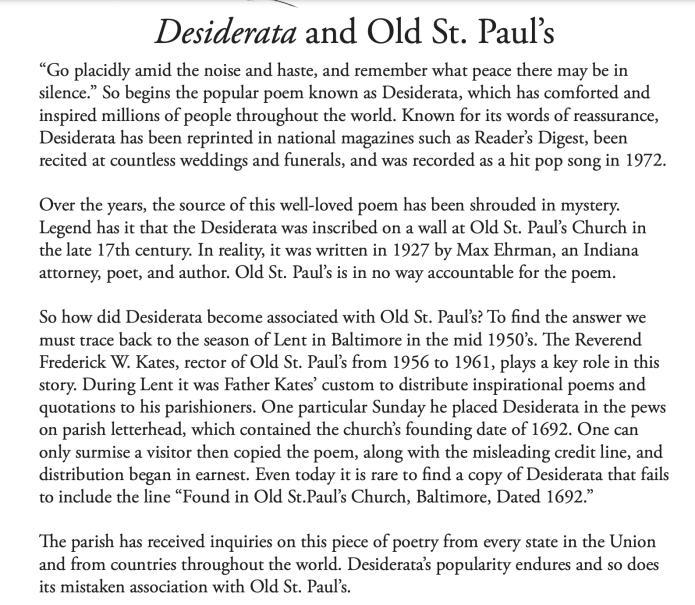
Lastly, at a recent appointment at my primary care doctor’s office, I noticed a framed picture of a prose poem entitled “Desiderata” hanging on the wall in an exam room.
The line at the bottom of the page reads, “Found in Old St. Paul’s Church, Baltimore, Dated 1692.” But the piece was actually written in 1927 by Max Ehrman, an Indiana attorney and poet. Some information on the website of Old St. Paul’s Church recounts the story.
And here is the full text. I highlighted some parts that stood out to me.
Desiderata by Max Ehrmann
Go placidly amid the noise and the haste, and remember what peace there may be in silence. As far as possible, without surrender, be on good terms with all persons.
Speak your truth quietly and clearly; and listen to others, even to the dull and the ignorant; they too have their story.
Avoid loud and aggressive persons; they are vexatious to the spirit. If you compare yourself with others, you may become vain or bitter, for always there will be greater and lesser persons than yourself.
Enjoy your achievements as well as your plans. Keep interested in your own career, however humble; it is a real possession in the changing fortunes of time.
Exercise caution in your business affairs, for the world is full of trickery. But let this not blind you to what virtue there is; many persons strive for high ideals, and everywhere life is full of heroism.
Be yourself. Especially do not feign affection. Neither be cynical about love; for in the face of all aridity and disenchantment, it is as perennial as the grass.
Take kindly the counsel of the years, gracefully surrendering the things of youth.
Nurture strength of spirit to shield you in sudden misfortune. But do not distress yourself with dark imaginings. Many fears are born of fatigue and loneliness.
Beyond a wholesome discipline, be gentle with yourself. You are a child of the universe no less than the trees and the stars; you have a right to be here.
And whether or not it is clear to you, no doubt the universe is unfolding as it should. Therefore be at peace with God, whatever you conceive Him to be. And whatever your labors and aspirations, in the noisy confusion of life, keep peace in your soul. With all its sham, drudgery and broken dreams, it is still a beautiful world. Be cheerful. Strive to be happy.
Today marks the thirty-eighth anniversary of my first brain surgery. As I’ve written about before, on Dec. 12, 1984, surgeons at SUNY Upstate Medical Center (now named Upstate University Hospital) in Syracuse, New York, removed a large craniopharyngioma that had engulfed my pituitary gland, leading to stunted growth and delayed puberty in my teenage years, as well as lifelong hypopituitarism.
The tumor has returned over the years, requiring follow-up surgeries and Gamma Knife radiation. It’s something I’ve learned to live with, and I’m grateful my condition is manageable.
Here’s a poem reminiscent of that initial post-surgical time period:
Craniopharyngioma (Youthful Diary Entry)
Craniopharyngioma gave me
an excuse for being unattractive.
I had a problem inside my head.
It wasn’t my fault
I stood four foot eight inches tall
and looked like I was
twelve years old instead of eighteen—
and then nineteen
instead of twenty-four.
I couldn’t be blamed for
my sans testosterone body
straddling the line
between male and female.
The brain tumor
spurred questions
about my appearance,
aroused ridicule
and provoked sympathy.
I heard voices whispering:
“Guess how old that guy is?”
And, “Is that a dude or a chick?”
And while I waited for my
body to mature, to fall in line
and to achieve normal progression,
I remember wishing the surgeons
had left the scalpel
inside my skull
before they closed me up,
knitting the stitches
from ear to ear.
I prayed the scalpel
would twist and twirl
while I slept at night—
carving my brain
like a jack-o’-lantern—
splitting the left and right
hemispheres,
and effacing the memory
of my existence.
I just wanted to share that I have a couple of new poems published on Osamase Ekhator’s Featured Poets blog. You can find out more about Osamase Ekhator on his personal website. And here’s a direct link to the Featured Poets page.
I had a recent follow-up appointment with my radiation oncologist to discuss the treatment plan for the regrowth of my craniopharyngioma (pituitary tumor).
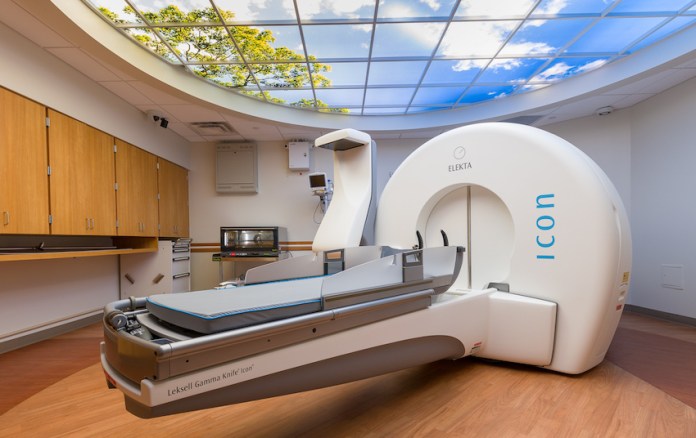
Dr. M. said the team believes Gamma Knife radiosurgery offers the best option for delivering precise, targeted radiation—without affecting nearby cranial nerves—as opposed to hitting me with five separate radiation treatments.
Gamma Knife image. UT Southwestern Medical Center.
Nothing is scheduled yet, but I recall the last time I had Gamma Knife in 2012. I remember the surgeons drilling screws in the surface of my skull and attaching a helmet that looked like an old metal macaroni strainer to my head. The procedure was quick and I had no issues recovering from it. So here’s hoping for the best. I came up with a short poem to summarize the treatment plan.
Regrowth
Tumor back.
Seeing double
In field of vision.
Radiation set.
Gamma Knife
Gonna restore
Sight and
Eradicate tumor.
Or at least that’s
The surgeon’s plan.
I’ll believe it
When two becomes
One again.
Disclaimer: The following is my interpretation of what the doctors told me recently. The medical information may not be 100-percent accurate. I wanted to get the details down primarily for my benefit, as a log of my symptoms, hospital visits and treatment plan.
##
This month marks 35 years since surgeons at Upstate University Hospital in Syracuse extracted a tumor that had been growing on my pituitary gland.
At Disney World in the winter of 1985; the scar from my Dec. 1984 surgery is visible and my hair has not grown completely back.
Subsequent surgeries to remove regrowth followed in 1988 and 2011, along with Gamma Knife radiosurgery in 2012 as a preventative measure.
Two for the Price of One
I had planned to write my annual post, expressing gratitude that I remain tumor free, but it appears a residual craniopharyngioma is now affecting my vision. I started experiencing double vision a few weeks ago, mainly when looking at someone or something from the front—at a distance of a few feet—or at a 45-degree angle. I noticed the faces of my colleagues would separate when I glanced at them across our cubicles. Also of note: I see fine with a hand over either eye. The double vision comes when I look at things with both of my eyes.
Craniopharyngioma example
I went to see my eye doctor prior to Thanksgiving; after a series of tests, he stated my eyes seem to be crossing, whereas previously they had diverged slightly. I asked if the double vision could be caused by his new eyeglass prescription and he said, “No, it’s definitely something neurological.” He contacted my neurosurgeon, who scheduled me for an MRI.
The MRI was performed with and without contrast on Dec. 4, and I saw the neurosurgeon later in the day. When Dr. W. came into the exam room, chewing gum and wearing brown tortoise shell glasses, he said, “OK, so we have some good news. The scan is beautiful, very clear. There’s very little change from the one in September, nothing pressing on the optic nerve. But we have to find out what’s causing the double vision.”
He said he believes scar tissue in the sella turcica, a saddle-shaped cavity at the base of the brain where the pituitary gland rests, is affecting the cranial nerves and causing the double vision.
He said surgery may not help and could exacerbate the problem or damage healthy nerves and blood vessels in the region. He recommended an appointment with Dr. M., the radiation oncologist who teamed up with Dr. W. for the Gamma Knife procedure in 2012.
I asked if the double vision could be caused by a new tumor in another part of the brain or by an aneurysm. He said no. I asked if it could be caused by a stroke and he said, “No, you would have other symptoms.”
He also offered some positive news—he mentioned my eye doctor could prescribe prism lenses, an add-on to prescription glasses that can correct double vision. It doesn’t address the underlying problem, but it allows you to see normally.
I felt relieved because the MRI had not revealed a massive tumor pressing on the optic nerve or infiltrating another area of the brain. No insidious glioblastoma—giving me a death sentence within six to nine months. This was my old friend/foe visiting me again—a benign tumor, slow- growing but capable of causing problems, a health issue leading to concern but not panic.
Radiation Oncology Consultation
At my next appointment on Dec. 13, the tall, thin figure of Dr. M. entered the room and I noticed his hair had become gray in the intervening years. He shook my hand and said, “We’ve made a lot of progress in seven years,” referring to more advanced procedures in radiation treatments.
He held up his right index finger and had me follow it. He asked if I was seeing double vision all the time and whether it was getting worse. “Are you seeing two of me now?” he asked. I said, “Yes,” and I used the wall bumper as an example. “If I look at that thing with both of my eyes, I see two. When I hold a hand over one eye, I see one.”
I told him the eye doctor had performed some tests, including a visual field test, which had showed defects in both the right and left sides.
Dr. M. told me the tumor was tube-like in appearance and near the cavernous sinus, impacting the cranial nerves that control the muscles of the eye.
He recommended five radiation treatments over the course of a week, as opposed to another round of Gamma Knife surgery. He ran through a series of figures—percentages about the efficacy of treatment compared to the risks. I had trouble following the complex information, but the basic idea is to give me the highest dose of radiation possible without causing any damage to healthy structures, e.g. blood vessels in the cavernous sinus. A safe but effective course of action.
He said I may experience some fatigue, but I can return to work every day after the treatments, which should only last about a half hour.
He also made a disheartening statement. “There’s no guarantee the radiation will correct the double vision. But if we don’t do anything, the craniopharyngioma will keep growing.”
Strapping on the Goalie Mask
On Monday, Dec. 16, I received a call at work from Upstate to come in do a radiation map of my brain. When I arrived at the Upstate Cancer Center in the afternoon, the waiting room was packed with patients sitting in the large, comfy faux leather white chairs; one irate man complained he had been waiting longer than an hour past his appointment time. He dropped some profanity and his blonde-haired wife tried to calm him down, to no avail. “This is fucking ridiculous,” he said.
A female radiation doctor called me and brought me to an exam room. She had me sign the treatment consent form and asked if I had any questions. I inquired about side effects. She said the main side effect is fatigue; patients can also experience headaches and some hair loss. She added, “Think of it more like surgery than chemotherapy.”
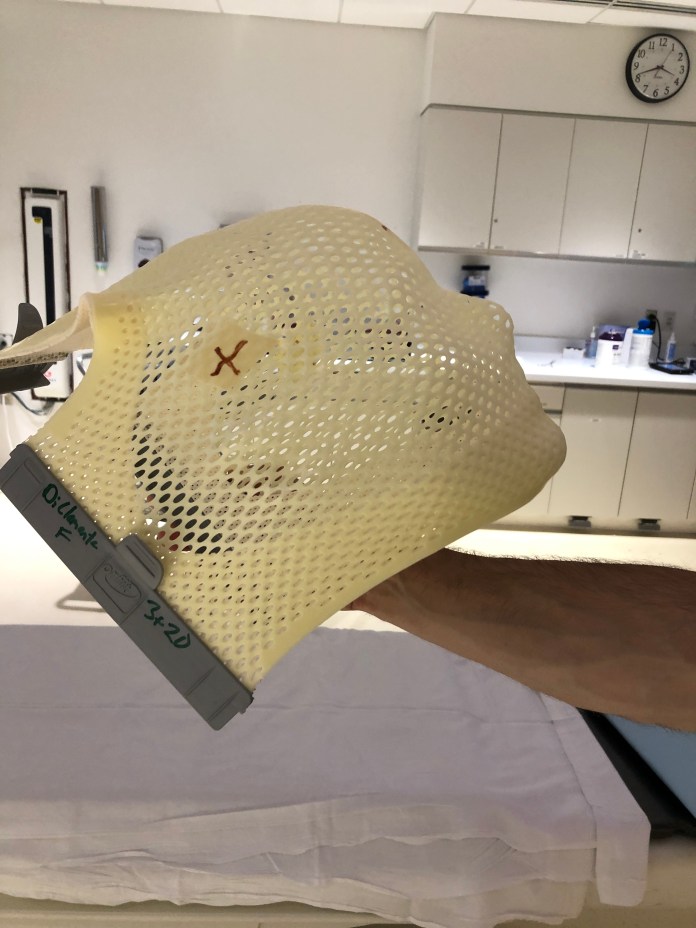
Then a male tech with dark hair ushered me into a large room with the CT machine. A number of nurses and techs scurried about. They asked me to remove my sweater and dress shirt, leaving me with just my white undershirt and khakis. They had me lie down on the table as they positioned a few different head rests. Once they had the right one in place, they applied to my face what felt like a wet, tight-fitting mask—with the consistency of rubber or papier-mâché. The mask had numerous holes in it, but it was still hard to breathe.
The test itself took very little time; I remained still while the machine moved my body in and out of the tube. When it was done, they pulled me out and the male tech held up the mask so I could see it. I thought it looked like a goalie mask and I asked if could snap a picture with my phone.
Radiation mask
Song Rewind
Since the double vision began, I’ve had Lou Gramm’s voice playing over and over in my head, with the words from the 1978 Foreigner song titled “Double Vision”:
Fill my eyes with that double vision
No disguise for that double vision
Ooh, when it gets through to me, it’s always new to me
My double vision gets the best of me …
An interesting side note: Gramm was diagnosed with a craniopharyngioma in the late 1990s; the tumor caused headaches and memory problems, and Gramm underwent surgery to have it removed. The story is included in Gramm’s autobiography, Juke Box Hero: My Five Decades in Rock ‘N’ Roll, co-written by Rome, New York native Scott Pitoniak.
In conclusion, I present a breakdown of my current health situation.
The negative facts:
The tumor has regrown.
It is causing double vision
The radiation treatments may not fix the problem.
The positive facts:
No glioblastoma or other malignant tumor is swelling inside my head.
I don’t have an aneurysm and I did not suffer a stroke.
The craniopharyngioma is not pressing against the optic nerve.
Prism glasses can be prescribed to correct the double vision.
And so gratitude hits me again, as I feel lucky every time I step inside Upstate University Hospital, thankful that my heart beats and I can breathe, walk, talk, see and hear. Not everyone inside Upstate can say the same thing.
Today marks a momentous anniversary in my personal history. As I’ve written about before, on this date, thirty-four years ago, surgeons at SUNY Upstate Medical Center (now Upstate University Hospital) in Syracuse, New York, removed a large craniopharyngioma that had enveloped my pituitary gland, leading to stunted growth and delayed puberty in my early teenage years.
Craniopharyngioma example.
The surgery left me with panhypopituitarism, a deficiency of all of the hormones the pituitary gland produces. The tumor returned twice during the intervening years and I would need follow-up surgeries to wipe away the remnants, along with Gamma Knife radiosurgery in 2012 to keep the neoplasm from coming back. So far, so good; my last MRI showed no traces of my benign nemesis.
My objective with this post is not to elicit sympathy by rehashing my medical past. Instead, I want to pause, reflect on the adversity I’ve faced and express gratitude that I’m still here. If you spend any time in a hospital you discover how quickly life can be snatched away. As I type these words, someone is dying and loved ones are mourning that person’s death. My story could have had a darker, alternate ending.
In looking back on my health crisis, I am thankful for the following.
My vision works—despite my need for progressive lenses and reading glasses. In waking up after the surgery, I could see, and this was not a given since craniopharyngiomas can cause visual disturbances because of their location near the optic nerve.
At Disney World in the winter of 1985; the scar from my surgery is visible and my hair has not grown completely back.
My brain function remains intact; the wedge of cauliflower in my head is capable of reasoning, performing calculations and doing what it’s intended to do (the majority of the time). And while my adult intelligence and decision-making ability could be open to interpretation, the surgery did not—as I had feared it would—disrupt my mental capacity or alter my cognitive function. When I woke up in my hospital bed, I knew my name, the date and the president of the United States (Ronald Reagan). And I remain thankful to this day because the me I knew as me had not disappeared after the surgeons cut open my skull.
Boy to Man
Although my youthful appearance lingered into my late twenties (a direct result of the delayed puberty caused by the tumor), I am grateful I finally matured with the assistance of injections of synthetic growth hormone and testosterone, which spurred growth and the development of secondary sex characteristics. I have shed the outer skin of a boy, revealing the man I knew resided underneath.
My wife Pam and son Colin.
My health has diminished with the subsequent diagnoses of osteoporosis and rheumatoid arthritis, and panhypopituitarism requires constant and vigilant management, e.g. making sure I take the numerous drugs that sustain my life. Even so, today I live a pretty normal existence. The surgery did not provoke a desire to engage in thrill seeking activities. I don’t think you can go full throttle all the time—“living each day as if it’s your last.”
I am content to wake up, blink my eyes and focus on my surroundings, climb out of bed and face each new day with the knowledge of how truly lucky I am.
I just wanted to share that I have a short patient essay published on the website of The Pituitary Foundation. It’s part of a coming-of-age memoir in progress. You can read the piecehere. Thanks for taking a look. I am still working to shape the messy memoir into a very bad first draft.