I traveled to my hometown earlier this week to do a reading at Cafe Vinci. It was a perfect fall day, and I witnessed the peak foliage colors of orange, yellow, red, and maroon as I drove from Syracuse to Rome along Route 5. And it was a wonderful experience being surrounded by friends as I shared my story.
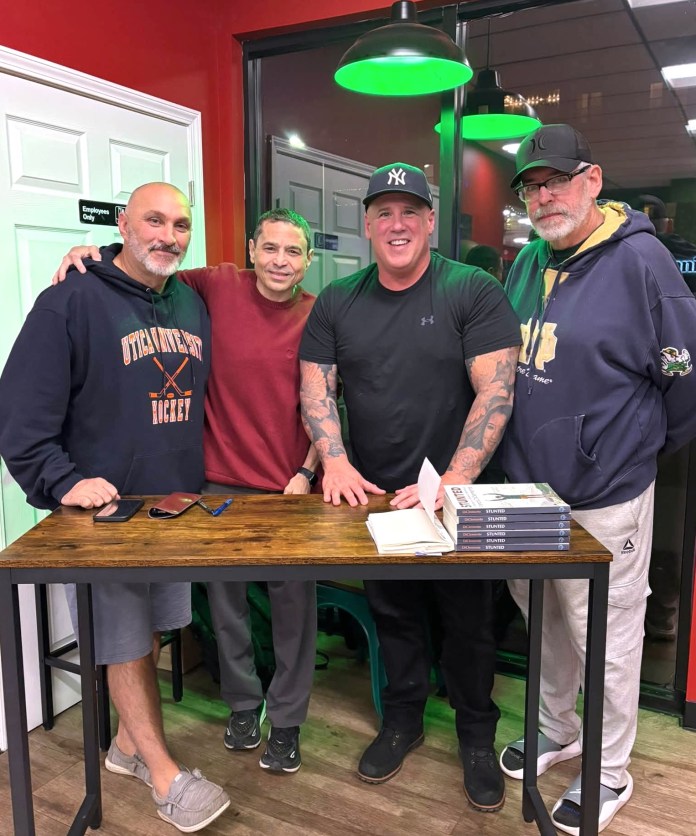
Here is a photo of me with Bill Vinci (left), the owner of Cafe Vinci, and two other childhood friends, Phil Schillaci and Bob Taylor.
I also thought I would share another excerpt from my memoir, Stunted: A Memoir of Delayed Manhood.
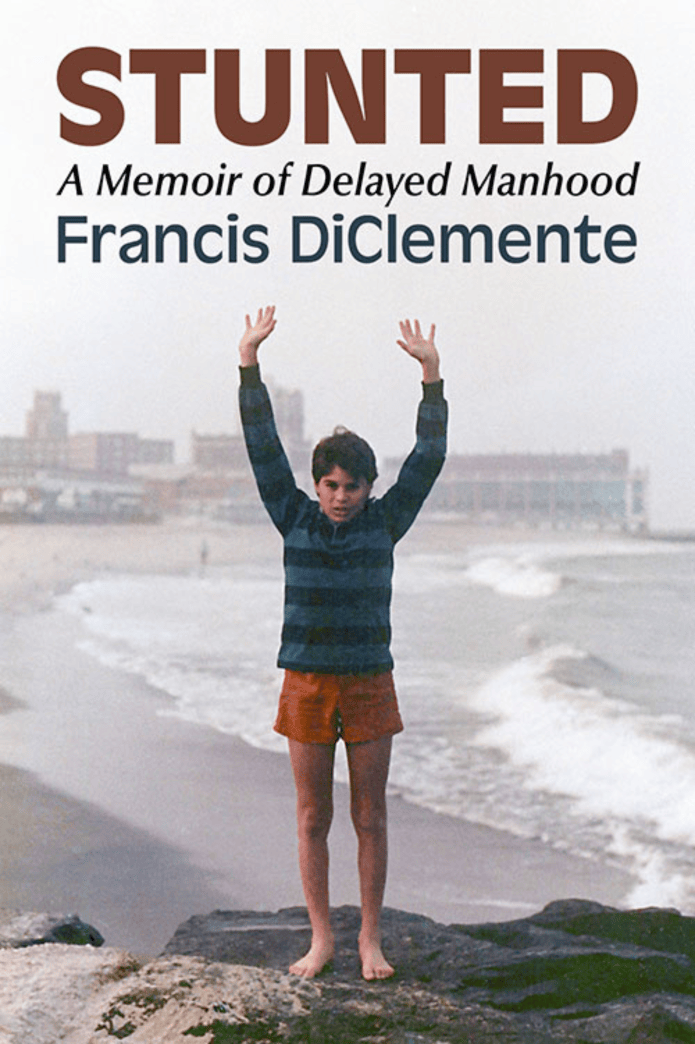
Chapter One: No Growth
In the early summer of 1984, as I prepared to enter high school in my hometown of Rome, New York, the feeling that I was different from other kids intensified. I had always been one of the shortest students in my elementary and junior high classes, but my lack of stature never held me back. I excelled academically, played competitive sports, and was popular with my classmates.
But now, while the other boys had added height and mass to their frames and surged with signs of puberty, I remained unaltered—a short, chubby figure with soft, feminine features. I had no summer growth spurt. No germinating of coarse fibers on the upper lip or patches of pubic or underarm hair. My high-pitched voice did not deepen, and I didn’t require deodorant because I rarely broke a sweat or reeked of body odor. The gap between me and the other kids widened, and I felt like I was standing in place on a deserted highway while they were whizzing past me in fast cars, squealing with laughter as they looked back at me in the rearview mirror.
Terror devoured me as I anticipated walking the halls of Rome Free Academy as a sophomore. I dreaded making the jump from ninth to tenth grade, going from the safety of Staley Junior High to the public high school in Rome, a squat, imposing building with a tan brick facade. I wondered how I could fit in if I still looked like a child—if my physical presence could not match the maturity of the other students.
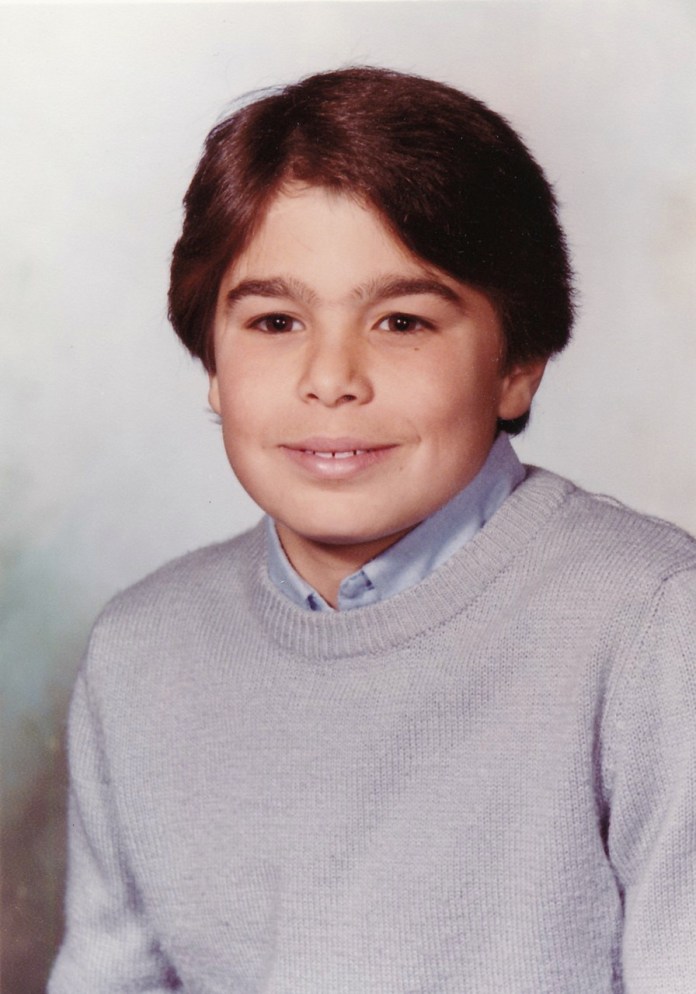
Would bullies stuff me in a locker or douse my head in a toilet bowl? Would the boys call me names and the girls laugh at me for being so small? But when I started high school, the girls in my grade would not mock me; instead, they would consider me cute and cuddly, treating me like a little French poodle—a soft, sweet creature meant to pet and pamper but not date.
During that summer, I lifted weights, ran mile after mile, and performed numerous drills with a soccer ball as I intended to try out for the junior varsity soccer team at RFA. An underlying motivation drove me to push myself, as I believed if I did not grow in height, I would continue spreading out in width and would become a fat, short kid instead of just a shrimp.

Around this time, on a weeknight, one of my mother’s colleagues from the bank where she worked came to our house to have coffee and talk with my mother.
My mother, Carmella, began her professional career as an entry-level teller at Rome Savings Bank and rose to become a branch manager and later a compliance officer and assistant vice president. She baked cakes for employees on their birthdays, brought trays of Italian Christmas cookies to the office during the holidays, and invited co-workers to our house for coffee, dinner, and family celebrations. So it was common for people to visit from time to time.
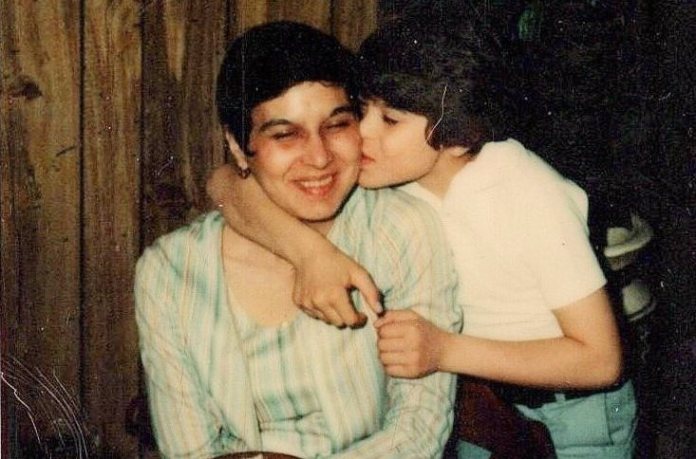
Here’s me kissing my mom, Carmella, sometime in the late 1970s or early 1980s.
Sandra was a short woman with sandy-brown hair who sported round, silver glasses and had a pasty complexion. My mother must have informed Sandra about my growth concerns because when I came into the kitchen to grab a slice of zucchini bread, Sandra said, “Fran, do you mind if I tell you something?”
“Sure,” I said and sat down next to her. Mom’s ashtray was filled with cigarette butts, and smoke hung in the air. The women sipped coffee from green ceramic mugs, and a warm, yellow light emanating from an overhead tungsten bulb suffused the table, making the gold cross Mom wore around her neck sparkle.
“Your mom mentioned that you’re worried about not growing,” Sandra said.
“Yeah,” I said, glaring at Mom. Although I was annoyed at my mother for not respecting my privacy by sharing my secret fears with a stranger, something about Sandra’s polite and soft-spoken manner disarmed me, and I remained calm as I listened to her words.
She turned to me and said, “I just want you to know, my husband, Scott, is short and he looks young for his age. And do you know what?”
“What?”
“Honestly, it doesn’t make a bit of difference. I love him, and he’s no different from anyone else. He’s fine.”
“Thanks,” I said. My mother smiled at me because I didn’t storm off when Sandra mentioned my short stature, as I was prone to do when someone brought up my height or youthful appearance.
“He’s sensitive about it,” Mom said. “But like I told him, ‘His father’s short and I’m short, so he’s probably going to be short too.’ And he needs to accept that.” (Dad stood about five feet five inches tall, while Mom was about five foot tall.)

A photo of my father and me following my Confirmation in 1984.
“I know,” I said. But it doesn’t help me much now.”
“Don’t worry, Fran,” Sandra said. “You’ll grow soon.” I stayed at the table for a little longer before getting up and leaving the kitchen. I appreciated Sandra’s kind words, and I understood they came from her heart, motivated by a desire to assuage my concerns; but at the same time, I ignored her sentiments, casting them out of my mind as soon as I walked away.
I sought tangible results in my body—evidence of physical changes—not empty, pat reassurances that would do me no good when I strode through the hallways of a high school packed with tall and muscular male students.
Flash forward to a warm, sunny day later in the summer when my mother hosted a party at our house on a Sunday afternoon.
My best friend, Billy, and I were playing kickball in the backyard with a group of kids, mostly neighbors from our rural area in south Rome that I had invited to the party.
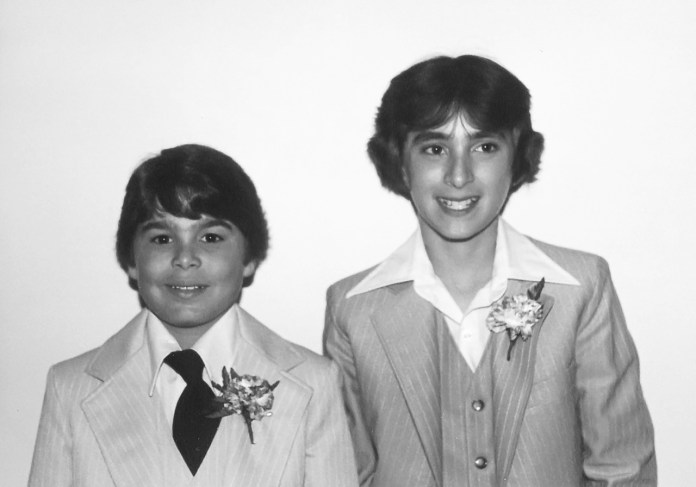
Bill Vinci and me after we graduated from sixth grade in 1981.
The air was redolent with the smell of fresh-cut grass, the sunlight had a soft, milky quality, and you could hear crickets chirping and the rush of cars speeding along State Route 365 behind our house.
Kids were scattered throughout the yard, and Billy rolled the ball to me as I stood at home plate, waiting to wallop it. But the game was suspended when Mom came around the side of the house and asked us to stop playing for a moment.
Mom and Sandra walked toward me, accompanied by a small, chubby, dough-faced man I presumed was Sandra’s husband. Mom introduced us. “Fran, this is Sandra’s husband, Scott. I wanted you to meet him.”
I greeted Sandra and shook Scott’s hand. After the introductions were made, Mom and Sandra walked away, rejoining the party, leaving Scott standing next to me at home plate. He wore glasses, a striped rugby shirt, and a baseball cap too small for his head; for some reason, whenever I recollect this scene, I conjure the image of a little beanie divided into red, green, and blue sections with a propeller on top, which I want to flick so I can watch it spin on Scott’s head.
During the break in the action, the players chatted among themselves in the field while Scott started addressing me like a teacher in an after-school special on TV. He didn’t waste any time with small talk, saying, “Fran, I just want you to know it’s OK to be short.”
As other people had done, he tried to tell me I would eventually grow, but he added an important disclaimer to the lesson he tried to impart. Using himself as an example, he told me that even if I remained short and young looking for my age when I became an adult, I could still have a normal, productive, happy life.
“Look at me,” he said. “I’m grown up, and I’m happily married.”
“OK, thanks,” I said. But I refused to look him in the eyes, and I didn’t listen to the words he spoke. I let them bounce off me in the sunlight. I had no use for them because they could not help me. I sought normalcy as a teenager. I needed growth and maturation in the present.
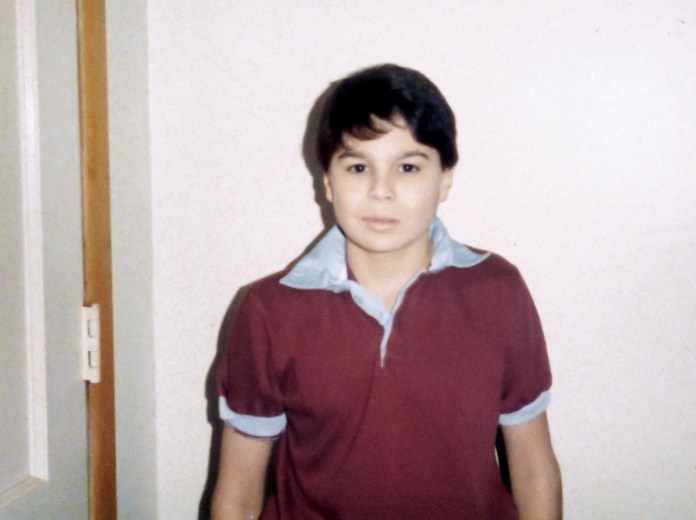
Here’s me, likely in mid-1980s.
I had no interest in being told everything would work out eventually. Eventually meant nothing to a fifteen-year-old boy. I couldn’t wait for “eventually” to come. I couldn’t see beyond the start of the school year in September. And I viewed myself as an athlete playing a game, not a boy needing a pep talk.
I yelled to Billy, asking him to resume the game and roll the ball to me; the other players got ready. I kicked a ball into the field and reached base safely. Standing on the white paper plate that served as first base, I cheered on the next “batter” as the inning stayed alive.
Scott stood a few feet from home plate, looking uncomfortable with his arms held stiffly at his sides. He watched the game for a little while longer and then sauntered away, disappearing around the side of the house. I think he was bored or annoyed by my lack of respect or lack of interest in his presence. Watching him walk away, I felt a twinge of guilt.
When we switched sides at the end of the inning and Billy’s team came in to “hit,” Billy asked me, “Hey, who was that guy?” I told him he was the husband of one of my mom’s co-workers.
“Oh, I thought he was a kid,” he said. “I was gonna ask him if he wanted to play.”

