Gifting Books

I hate writing book promotion posts. But this is just a reminder that books make nice holiday gifts and they’re easy to wrap. My latest poetry collection, The Truth I Must Invent, can be purchased in numerous places. You can find it on Amazon, Barnes & Noble, and Bookshop. It’s also available from the publisher, Poets’ Choice. And a new author profile has been posted on the Poets’ Choice website. Happy holidays everyone.

The Truth I Must Invent book cover.

Standard

A Textual Thanksgiving

I want to wish everyone a Happy Thanksgiving. I have much to be grateful for this year, as Black Friday marks four months since my transsphenoidal (through the nose) brain surgery on July 24.

I have rebounded. I’m back to running and lifting light weights, and I can sneeze and blow my nose without any concern about bleeding or cerebral spinal fluid leaks. I am so thankful my recovery has been steady and unremarkable, with no complications (fingers still crossed).

Interpreting the medical jargon in my latest MRI report—it seems residual tumor matter is still pressing against the optic chiasm and affecting the optic nerve. And my vision has not been fully restored since the tumor grew back a few years ago (and likely never will be). I still have double vision when looking to the far right in my peripheral field, and I need a prism on my reading glasses, which I use when working on the computer. But I can drive because I have no double vision straight on.

I want to share a few  Thanksgiving-themed poems. I am currently reading Poems 1962-2012 by the late poet Louise Glück.

Here are two poems that struck me and are relevant for the season. I must admit I don’t understand the meaning of many of Louise’s poems, but I thoroughly respect and admire her artistry with language. And the works remain open to interpretation by the reader.

Autumnal by Louise Glück

Public sorrow, the acquired
gold of the leaf, the falling off,
the prefigured burning of the yield:
which is accomplished. At the lake’s edge,
the metal pails are full vats of fire.
So waste is elevated
into beauty. And the scattered dead
unite in one consuming vision of order.
In the end, everything is bare.
Above the cold, receptive earth
the trees bend. Beyond,
the lake shines, placid, giving back
the established blue of heaven.

The word
is bear: you give and give, you empty yourself
into a child. And you survive
the automatic loss. Against inhuman landscape,
the tree remains a figure for grief; its form
is forced accommodation. At the grave,
it is the woman, isn’t it, who bends,
the spear useless beside her.

Thanksgiving by Louise Glück

They have come again to graze the orchard,
knowing they will be denied.
The leaves have fallen; on the dry ground
the wind makes piles of them, sorting
all it destroys.

What doesn’t move, the snow will cover.
It will give them away; their hooves
make patterns which the snow remembers.
In the cleared field, they linger
as the summoned prey whose part
is not to forgive. They can afford to die.
They have their place in the dying order.

And in doing some research, I found another “Thanksgiving” poem, this one by Ella Wheeler Wilcox (1850-1919)
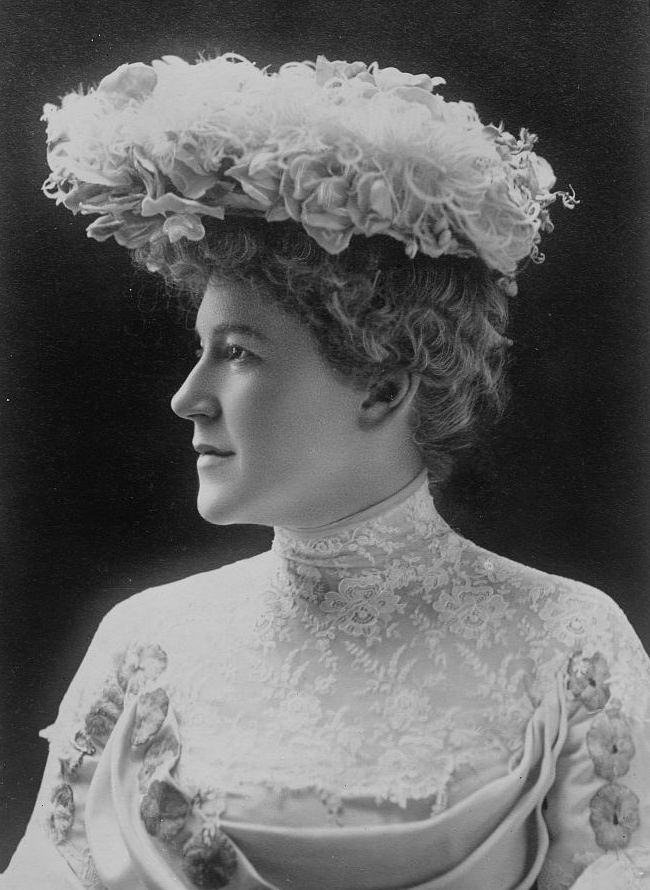
Thanksgiving by Ella Wheeler Wilcox

We walk on starry fields of white
And do not see the daisies;
For blessings common in our sight
We rarely offer praises.
We sigh for some supreme delight
To crown our lives with splendor,
And quite ignore our daily store
Of pleasures sweet and tender.

Our cares are bold and push their way
Upon our thought and feeling.
They hand about us all the day,
Our time from pleasure stealing.
So unobtrusive many a joy
We pass by and forget it,
But worry strives to own our lives,
And conquers if we let it.

There’s not a day in all the year
But holds some hidden pleasure,
And looking back, joys oft appear
To brim the past’s wide measure.
But blessings are like friends, I hold,
Who love and labor near us.
We ought to raise our notes of praise
While living hearts can hear us.

Full many a blessing wears the guise
Of worry or of trouble;
Far-seeing is the soul, and wise,
Who knows the mask is double.
But he who has the faith and strength
To thank his God for sorrow
Has found a joy without alloy
To gladden every morrow.

We ought to make the moments notes
Of happy, glad Thanksgiving;
The hours and days a silent phrase
Of music we are living.
And so the theme should swell and grow
As weeks and months pass o’er us,
And rise sublime at this good time,
A grand Thanksgiving chorus.

Lastly, at a recent appointment at my primary care doctor’s office, I noticed a framed picture of a prose poem entitled “Desiderata” hanging on the wall in an exam room.

The line at the bottom of the page reads, “Found in Old St. Paul’s Church, Baltimore, Dated 1692.” But the piece was actually written in 1927 by Max Ehrman, an Indiana attorney and poet. Some information on the website of Old St. Paul’s Church recounts the story.
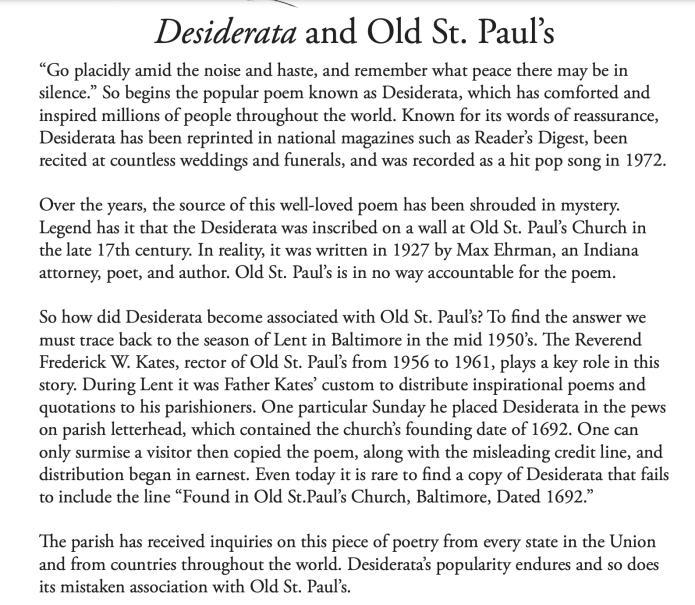
And here is the full text. I highlighted some parts that stood out to me.

Desiderata by Max Ehrmann

Go placidly amid the noise and the haste, and remember what peace there may be in silence. As far as possible, without surrender, be on good terms with all persons.

Speak your truth quietly and clearly; and listen to others, even to the dull and the ignorant; they too have their story.

Avoid loud and aggressive persons; they are vexatious to the spirit. If you compare yourself with others, you may become vain or bitter, for always there will be greater and lesser persons than yourself.

Enjoy your achievements as well as your plans. Keep interested in your own career, however humble; it is a real possession in the changing fortunes of time.

Exercise caution in your business affairs, for the world is full of trickery. But let this not blind you to what virtue there is; many persons strive for high ideals, and everywhere life is full of heroism.

Be yourself. Especially do not feign affection. Neither be cynical about love; for in the face of all aridity and disenchantment, it is as perennial as the grass.

Take kindly the counsel of the years, gracefully surrendering the things of youth.

Nurture strength of spirit to shield you in sudden misfortune. But do not distress yourself with dark imaginings. Many fears are born of fatigue and loneliness.

Beyond a wholesome discipline, be gentle with yourself. You are a child of the universe no less than the trees and the stars; you have a right to be here.

And whether or not it is clear to you, no doubt the universe is unfolding as it should. Therefore be at peace with God, whatever you conceive Him to be. And whatever your labors and aspirations, in the noisy confusion of life, keep peace in your soul. With all its sham, drudgery and broken dreams, it is still a beautiful world. Be cheerful. Strive to be happy.


 

Standard

Sidewalk Stories: Kindle Version

I’m excited to announce that there is a new Kindle version of my full-length poetry book Sidewalk Stories. The book is a collection of free-verse narrative and philosophical poems and was published by Kelsay Books in 2017.

Cover art by Donatas1205 (via Shutterstock).

Some of the story poems are autobiographical; other works are fictional, including some that imagine the inner life of animals. The collection explores the universal themes of gratitude, romance, self-esteem, family, illness, advancing age, and death.

Here are the blurbs from the back of the book:

What poet and songwriter Rob McKuen created during the turbulent late ’60s and ’70s in San Francisco with his book Stanyan Street and Other Sorrows, Francis DiClemente has accomplished in Sidewalk Stories. With the backdrop of the gritty streets of Syracuse, New York, DiClemente manages to create a poetic canvas and find beauty in the midst of the harsh realities of life in upstate New York.

—Joanne Storkan, screenwriter and film producer (Honest Engine Films)

Sidewalk Stories is an inspired collection of meditations and personal vignettes, vividly capturing the range of human experience. Francis DiClemente channels his inner Charles Bukowski to present an unflinching look at youth and encroaching middle age. Amidst unprepossessing urban decay, we meet a cast of characters whose stories of regret and missed opportunity are probably as much DiClemente’s as they are their own. That some of them manage to remain sanguine about the future—and their mortality—is part of DiClemente’s charm as a storyteller. These poems leap off the page and onto the sidewalks of our imagination.

—Rob Enslin, author/journalist

In Sidewalk Stories, poet Francis DiClemente invites us to be his companion on an intimate journey. We walk with him on gritty sidewalks, observe through his eyes the plight and the beauty of the beings with whom we share the world. An old woman, a blind man, a little girl twirling, even a rabbit and an overturned turtle are viewed with deep compassion. Here is a poet who doesn’t just look; he sees. And his vision is no less unflinching when he brings us with him into his own life.

But don’t worry. Though many of DiClemente’s poems are infused with a sense of loneliness, they also convey a stronger sense of courage and endurance. And watch for the irrepressible whimsy and humor as, for example, a cowboy lassos a star, and when the poet rants about the tyranny of poetry. With each poem in this collection, DiClemente will take you deep inside a thoughtful man, and then, deeper inside yourself.

—Kathleen Kramer, playwright and poet; author of the poetry collections Boiled Potato Blues and Planting Wild Grapes

And here are a few excerpts from the collection:

Stooped

An old woman hunched over,
looking down at the sidewalk,
adjusting her knit hat.
She limps forward,
shuffling along,
riddled with pain.
Her face reveals
the hurt she endures.
She receives no aid,
no intercession
from human or heaven.
I pass her on the sidewalk,
and I say a quick prayer
that her suffering wanes.
It may not do any good,
but I send the thought aloft
and hope someone is listening.
The woman crosses the street
and fades out of sight.
I then hear an inner voice say,
“You were there,
you could have helped her.”

Hard Shell

What goes through the mind of a turtle
When it’s sprawled on its back and can’t roll over?
Does it panic as its legs squirm in the air?
Does it stick out its tongue and try to scream for help?
Does it curse its maker as it writhes on the asphalt,
With the sun scorching its belly?
How long does it wait before giving up and accepting fate?

No. This turtle does not think.
It lacks the capacity to reason.
Instincts fire as it battles to survive:
“Get off your shell. Roll over. On your feet.”
It rocks from side to side as it labors to turn over.
It strains, twists, and kicks … but fails.

And no one will intervene—
There’s no Tom Sawyer kid with a hickory stick,
Skipping along and flipping the turtle over.
No semi truck rumbles down the road,
Stirring up a blast of air and setting the turtle upright.

It struggles alone, refusing to quit
As it attempts to conquer physics.
The turtle keeps working
Until the sun desiccates its flesh,
And it releases a final breath—
A low croak that goes unheard along the deserted road.
The turtle is gone and no one witnessed the fight.

Dinner in a Chinese Restaurant

February in Syracuse—
dinner at a Chinese restaurant
on a frigid Wednesday night.
Panda West on Marshall Street.
Steamed chicken with mixed vegetables
and a piping hot kettle of oolong tea.
Lights dimmed and nearby diners
conversing at low volume.
A Middle Eastern man discusses the
practice of anesthesiology
with a woman (a female colleague I presume),
who leans over the table toward the man,
eager to comprehend each word
emanating from his dark lips.

I scan the New York Times arts section
as I gobble my dinner,
then call to the waiter to box up the leftovers.
I pay the bill, leave the tip, and
depart the warmth of the restaurant,
returning to the dampness of Marshall Street.
I walk down South Crouse Avenue,
turn right on East Genesee Street,
and arrive at the door to my empty apartment.

I put the leftovers in the refrigerator,
and feel relieved that dinner is over.
I’m glad I don’t need to fix anything,
or eat another meal at my living room card table,
with a Netflix movie streaming on my laptop computer.

Tonight I was a person.
Tonight I ate dinner in a restaurant,
surrounded by human beings.
And even if I wasn’t part of their conversations,
at least I was there, out in the world,
regardless of being alone.

The Auction

If my poems were auctioned off,
what sum would they fetch?
What value would they hold
in the marketplace?
What dollar amount would anyone pay
for these words coalescing on paper,
these mad scribbles in verse form?
I can see it now:
Sotheby’s would start the bidding
and no one would make an offer.
The gavel would strike and the bidding close.
But before the auctioneer could move on
to the next item in the evening’s catalog,
I would raise my hand and ask
if I could pick up the unclaimed poems
and take them back to my room,
where they could stay free of charge.

Ode to Thomas Wolfe

A pebble, a brook, a passageway
to time flowing in reverse,
a mirrored labyrinth reflecting
memories of adolescence.
A path leading back
to the days of my youth,
from whence I came,
to where I am,
brimming with a hunger—
a gnawing restlessness
that never wanes.

Landscape

Beauty abounds.
Just look around
and you will see—
a quivering leaf,
a patch of grass,
billowing clouds,
and a slash of light
beneath the bridge.
It’s not a bad world, really—
we just need
to train our eyes
to gaze with wonder,
and marvel at the
transcendental pageantry.
It’s there before you.
But you must zoom out,
zoom out
and refocus the image.
There. Hold it.
Do you see it now?

Rise

To find peace
One must
Unravel the self,
Let it fall away,
Drop to the floor.
Unencumbered by
This anchor weight,
The man or woman
Who pursues
Spiritual freedom
Discovers the
Ability to soar.

Standard

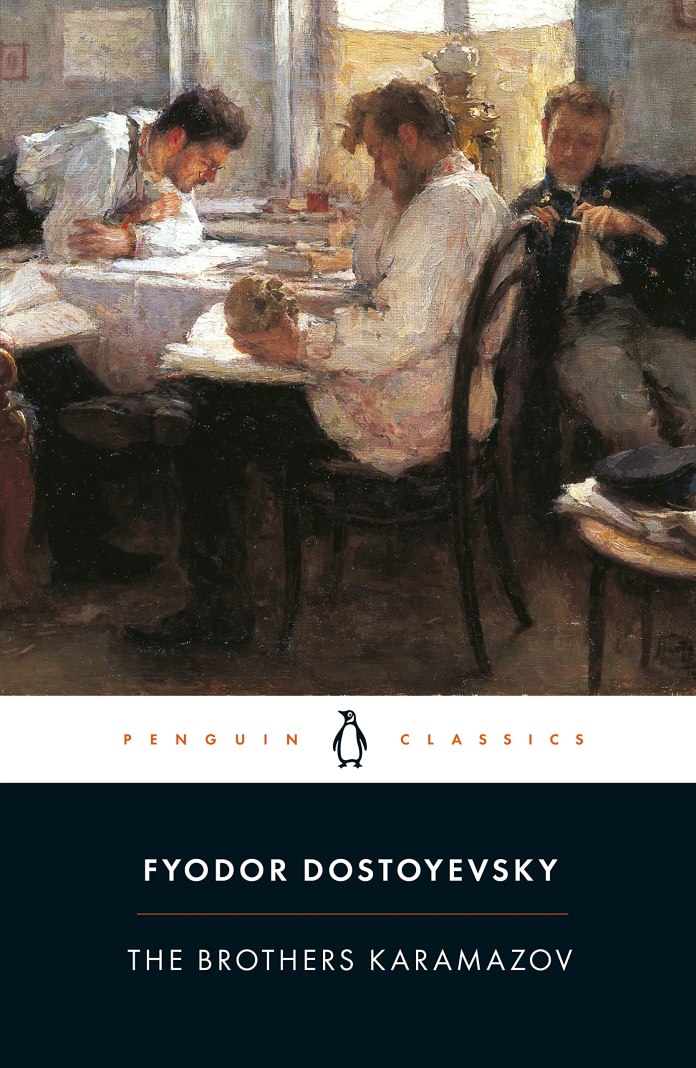
Dostoyevsky Doorstop

I just finished reading David Copperfield by Charles Dickens. Clocking in at nearly 800 pages, the book remained in my Kindle library for more than a year. Even as I skipped through page after page, the completion rate remained at about 62 percent. I thought I would never finish. Now I am tackling another classic tome of literature—The Brothers Karamazov by Fyodor Dostoyevsky. I’m only 27 pages into it, and I’m already confused by the multiple characters the author has introduced. But I think having a print copy will make the reading easier than Copperfield.

I always struggle with longer novels, but they can also be the most satisfying. Two of my favorite novels are longer works—Look Homeward Angel by Thomas Wolfe and The Town and the City by Jack Kerouac.

I’m approaching Karamazov like I mentally approach a Central New York winter. You can’t see the end of winter in late October. You have to take it one day at a time, one snowstorm at a time. So I can’t anticipate reading the last sentence of page 985 and then closing the book. I just have to plug along, page by page, day by day until I reach the end. My goal is to finish by Christmas.

Standard

Purging Paperwork

Here are some remnants from the second draft edit of my work-in-progress memoir.

I’m in the process of moving, and it felt good to purge these pages from my “working” tote. I’m taking a little break from the project in hopes I can go from a “shitty” first draft to a “not so shitty” second draft to a “totally mediocre” third draft—and down the line until I arrive at “somewhere near decent.” I’m afraid that could take me some time. But I will persist.

Standard

Books for Sale Locally

Two of my books, Dreaming of Lemon Trees: Selected Poems and Outward Arrangements: Poems are available in the Local Authors section in Parthenon Books, the new bookstore located on Salina Street in Syracuse. I stopped by Sunday morning and was excited to see the books lining the shelf, in company with works by other Central New York writers.

Books on display.


Standard

Summer Reading Inspiration

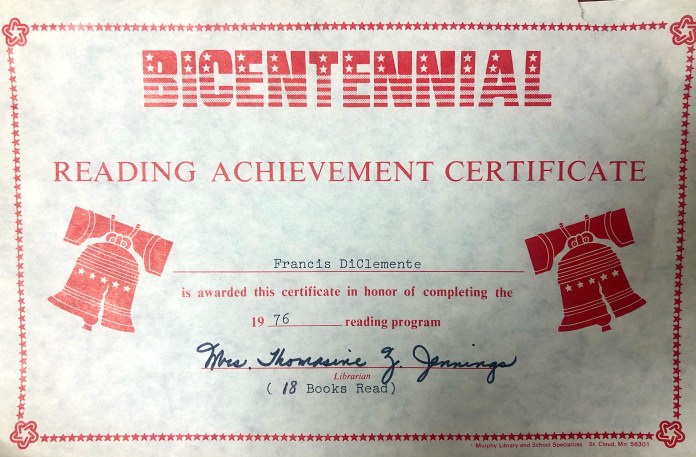
Digging through some totes in my living room, I found this archival evidence of my early obsession with books.

Library reading certificate, 1976.

During America’s Bicentennial year of 1976, my mother had enrolled me in a summer reading program at Jervis Public Library in my hometown of Rome, New York. The librarian had divided the group into two teams—the Cincinnati Reds and the New York Yankees—and we competed against each other for the most books read over the course of the summer. I can’t remember which side I was on, but the librarian was prescient, because Cincinnati would meet New York in the World Series later that year, with the Reds sweeping the Yankees to win the title.

I wish I had a list of the eighteen books I had read during the summer of ’76, as I would like to revisit some of them now.

As for this summer’s reading list, I am starting off with these selections.

The Beauty of Dusk: On Vision Lost and Found, a memoir by Frank Bruni.

Frank Bruni book cover.

Jack Kerouac: Collected Poems, published by Library of America, and The Closers by Michael Connelly.

Jack Kerouac: Collected Poems, published by Library of America.

Standard

Paperback Mysteries

Books are recyclable works of art that have transference of ownership. And I love making discoveries in the pages of used paperbacks—books that have been discarded from public libraries, purchased at garage sales, or pulled from bargain bins.

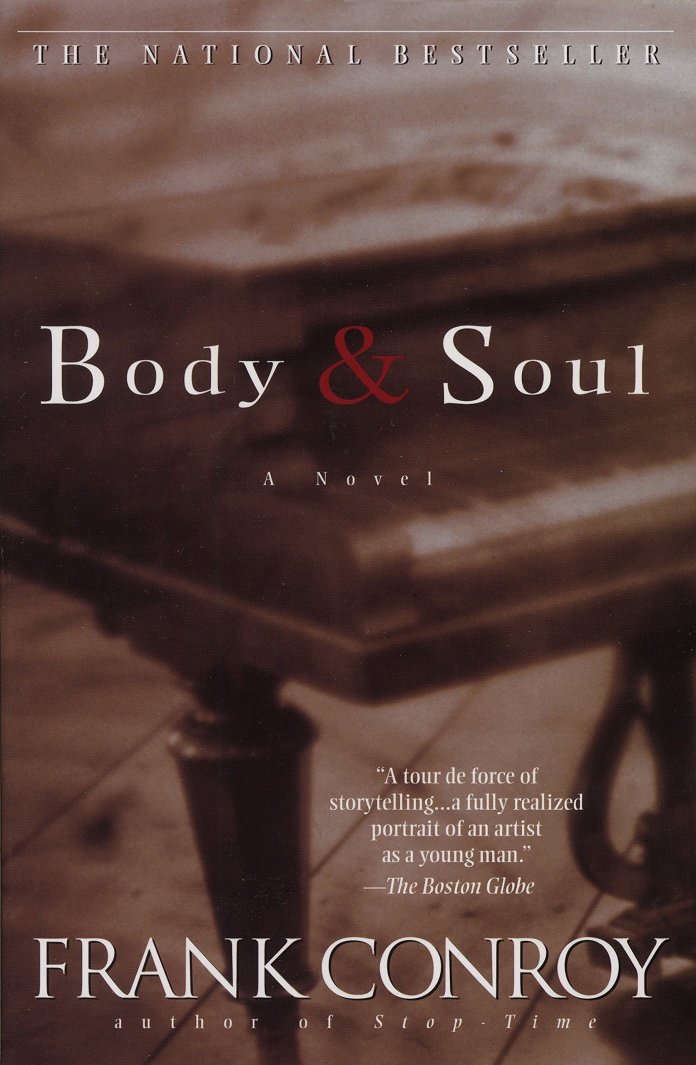
Case in point: my gently used copy of the novel Body and Soul by Frank Conroy. The bildungsroman tells the story of musical wunderkind Claude Rawlings, starting from his childhood in New York City in the 1940s. The late Conroy, who had served as director of the Writers’ Workshop at the University of Iowa, is known for penning the influential memoir Stop-Time.

Body and Soul by Frank Conroy.

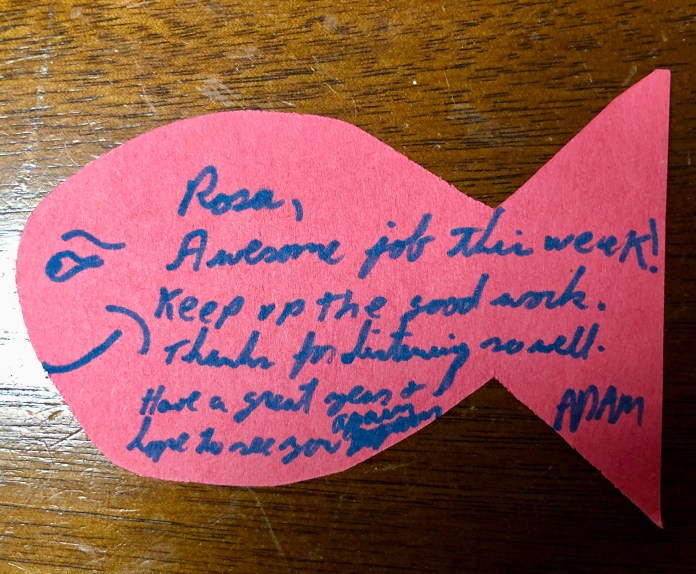
I read Body and Soul several years ago when residing in Phoenix, Arizona. I bought my current copy on Amazon. And stuffed between the pages, I found vestiges left behind by the previous owners—a bookmark and two notes. The first note is dated Oct. 13 (year not included). It’s from CB and addressed to Kristen: “Here’s the book about the piano protege I mentioned in Balto.”

The second note is written on a piece of red paper cut into the shape of a fish. It’s addressed to Rosa from Adam. “Awesome job this week! Keep up the good work. Thanks for listening so well. Have a great year + hope to see you again.”

Multiple scenarios run through my head. I’d like to know more about the people who touched the book I now grasp. I’m curious about the relationships between Kristen and CB and Rosa and Adam. Is Kristen a musician and is “Balto” short for “Baltimore?” Was Adam a teacher and Rosa his student?

I know my questions will go unanswered and the paperback mysteries will remain unsolved. But on the bright side, I still have Conroy’s story to explore.

Standard

Book Selection

Have you ever gone into a store with the intention of buying one thing but end up selecting another? You want a black belt, but you decide the brown leather one looks and feels better encircling your waist? Or you crave pancakes, but when the waitress comes around, you order a Denver omelet with home fries and wheat toast?

This happens to me frequently when I go to the library in search of a particular book. I write down the call number and head off in the direction of its location. But when I roam through the rows of the repository, my attention gets diverted, I discover a different book, and I choose that one instead.

Here’s an example. On a recent Sunday afternoon I climbed the steps of Carnegie Library at Syracuse University, walked through the grand Reading Room, filled with students studying, and went into the upper level stacks in search of a nonfiction book, The Noonday Demon: An Atlas of Depression by Andrew Solomon (with a call number in the range of RC537).

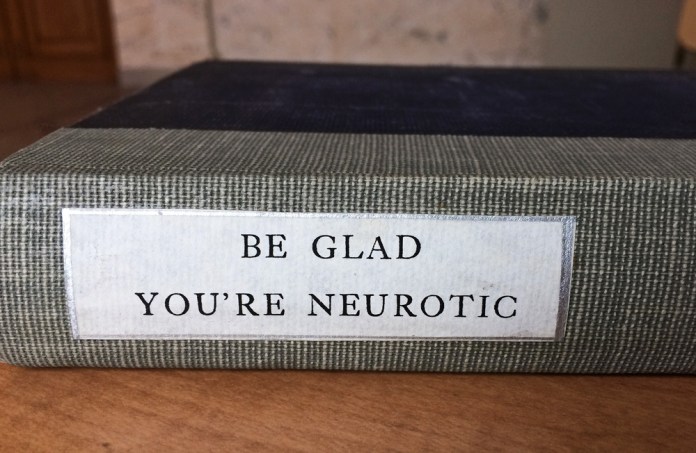
I had scribbled the call number on a scrap of paper, and perhaps serendipity led me in a different direction because I went to the wrong row, as I had transposed the call number in my head. I started scanning the shelves in the area of RC357, and there, amid a plethora of books about amnesia and other medical problems, a title jumped out at me and seized my attention. Its name: Be Glad You’re Neurotic.

Be Glad You’re Neurotic by Louis E. Bisch, M.D., Ph.D.

Be Glad You’re Neurotic by Louis E. Bisch, M.D., Ph.D.

“Wow, was this battered blue and gray hardcover placed in this exact spot just for my eyes?” I wondered. “Am I the intended audience?”

I grabbed it and flipped through the book, and my cursory glance indicated it offered some self-help advice, which, with all of my odd predilections, proclivities, and obsessive-compulsive tendencies, I am willing to accept.

Be Glad You’re Neurotic was written by Louis E. Bisch, M.D., Ph.D., and published in 1936 by Whittlesey House, a division of the McGraw-Hill Book Company, Inc. Its earliest library check-out date was January 6, 1965; and the last stamp is dated October 7, 1997.

I’m hoping the book will do me some good. A sentence in the preface reads, “Neurotic states are more common than the common cold.”

And some of the chapter headings inspire me and make me feel better about myself. Chapter I: I’m a Neurotic Myself and Delighted. Chapter II: To Be Normal Is Nothing to Brag About. And Chapter IV: Your Neurotic Development Was Inevitable.

I haven’t read any further yet, and that’s because I have a stack of books I am still waiting to tackle; currently I have five books checked out from the library, while also reading two others via Kindle.

Books waiting to be read.

Books waiting to be read.

And this experience at the library made me realize two things. One—how sad it is that I’ll never have the time to read all of the books I want to. Many titles on my “to-read” list will remain unread. I consider it a metaphor for how there are certain things in life you’ll never achieve or get to do. My dream trip to Ireland and Italy—well, keep dreaming.

The second revelation is that I’m fed up with always seeking out the next book instead of thoroughly enjoying the one I’m currently reading. As a voracious reader, this book lust is a real problem for me. All it takes is a New York Times review or an interview with an author on Fresh Air with Terry Gross to set me off in search of the title in question. My Amazon “wish list” has hundreds of books sitting in the queue.

So after I plow through the pile of books sitting on top of my bedroom dresser, I will try to limit myself to reading only one novel and one nonfiction book at a time—a two-book limit. But I am not sure if I will be successful. I don’t know if I can stop myself from going to the library before I finish reading them both. And I still need to check out a copy of The Noonday Demon.

Standard

Books on James: A Feature Story

I just wanted to point out that a feature story I wrote about two independent bookstores in Syracuse has been published on LivableCNY.com, a website that celebrates the people, places, businesses and leaders that make Central New York a special place to live and work. You can read the story here.

The story includes some photographs of the two stores, and I have added a few extra shots here. Thanks for taking a look.

Exterior of Books and Melodies bookstore on James Street in Syracuse, New York. (Photos by Francis DiClemente)

Exterior of Books and Melodies bookstore on James Street in Syracuse, New York. (Photos by Francis DiClemente)

Books and Melodies bookstore in Syracuse, New York.

Books and Melodies bookstore in Syracuse, New York.

Examples of “ephemera” merchandise inside Books and Melodies bookstore.

Books End owner Jim Roberts works behind the counter.

Books End owner Jim Roberts works behind the counter.

Books line shelves inside Books End bookstore in Syracuse, New York.

Books line shelves inside Books End bookstore in Syracuse, New York.

Interior of Books End bookstore in Syracuse.

Interior of Books End bookstore in Syracuse.

Inside Books End bookstore in Syracuse, New York.

Inside Books End bookstore in Syracuse, New York.

Standard