Glimpses of Existence (2021)

My experimental documentary short Glimpses of Existence (2021) is now available for viewing on YouTube. I consider it a companion piece to Fragments of the Living (2015).

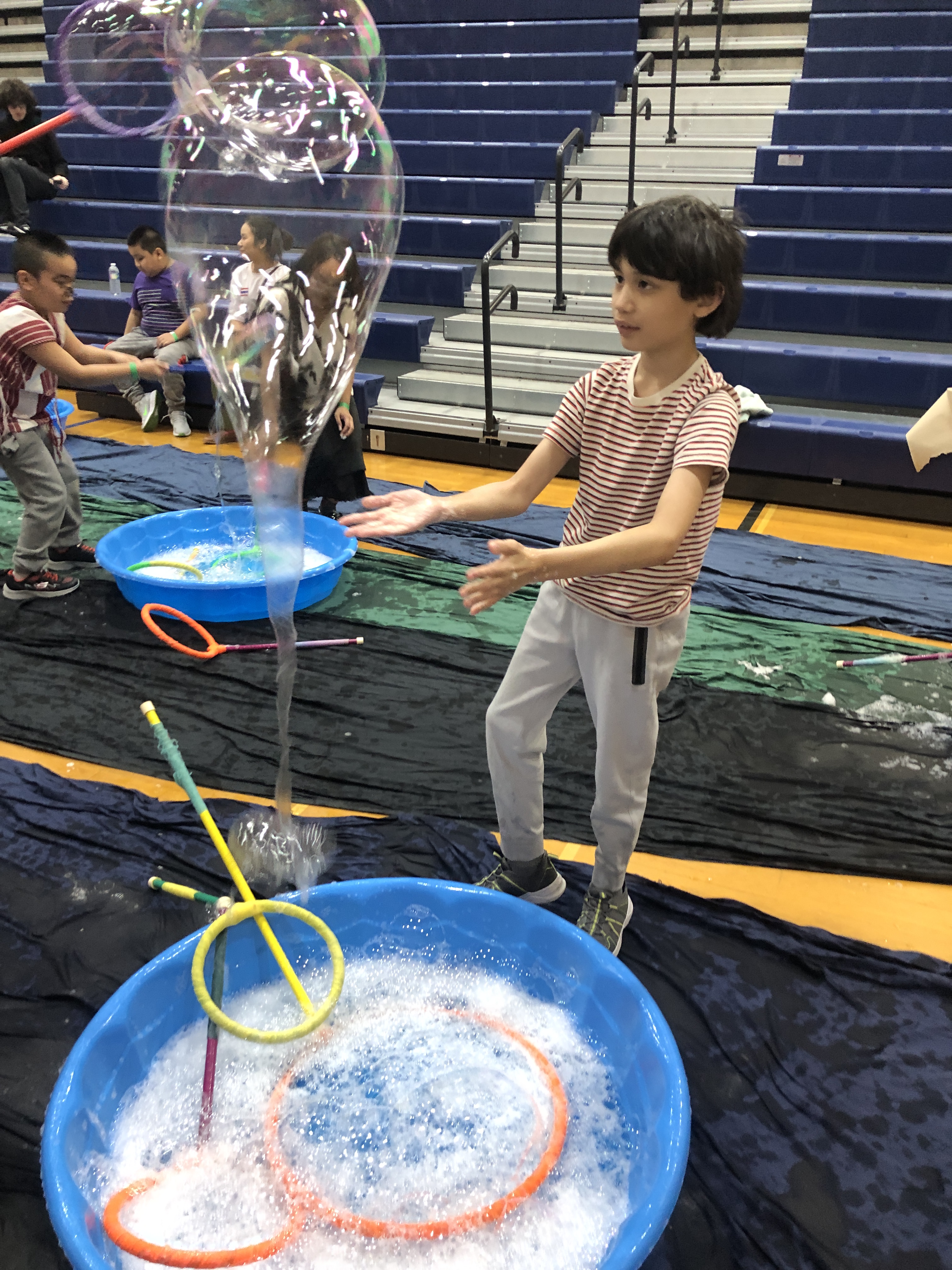
Glimpses of Existence is a zero-budget film in the form of video collage. Using scenes captured with an old iPhone—mostly during the pandemic—it attempts to find meaning in the mundane moments of our lives, seeking the extraordinary amid the ordinary.

The central focus of the film is my son, Colin, who is autistic. He’s nine years old now, but he was about five when this was made. Despite his condition, Colin finds joy in everyday activities, and through his eyes we recognize the importance of treasuring the tiny segments of life we are granted—minutes, seconds, hours—while being reminded about the transitory nature of existence.

Produced, Directed and Edited by Francis DiClemente.

Distributed by OTV – Open Television

Film Festivals:

2023: Official Selection in the Festival of Arts and Cinema, London
2022: Official Selection, Life is Short Film Festival, Los Angeles
2021: Honorable Mention, Global Shorts Film Festival, Los Angeles
2021: Official Selection, NewFilmmakers NY Short Films Program, New York
2021: Semifinalist, Official Selection, Blow-Up International Arthouse Filmfest, Chicago

Standard

Artwork by Kiddo

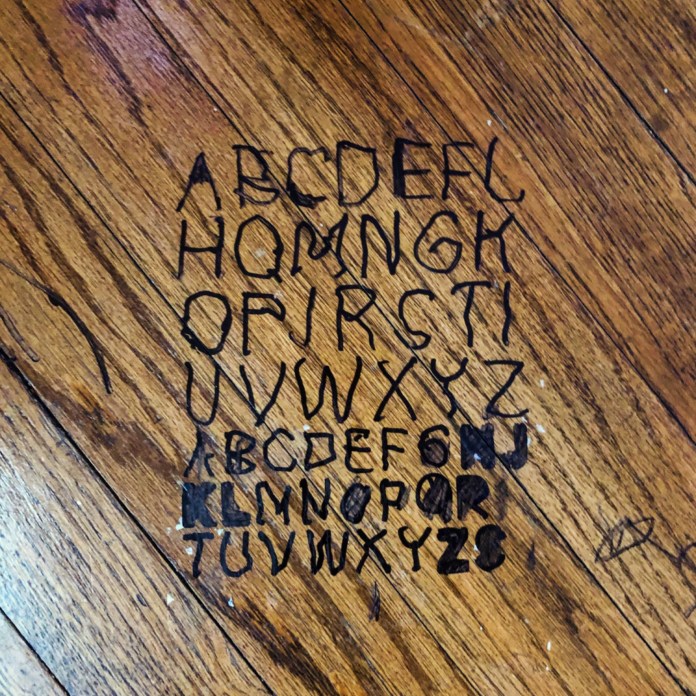
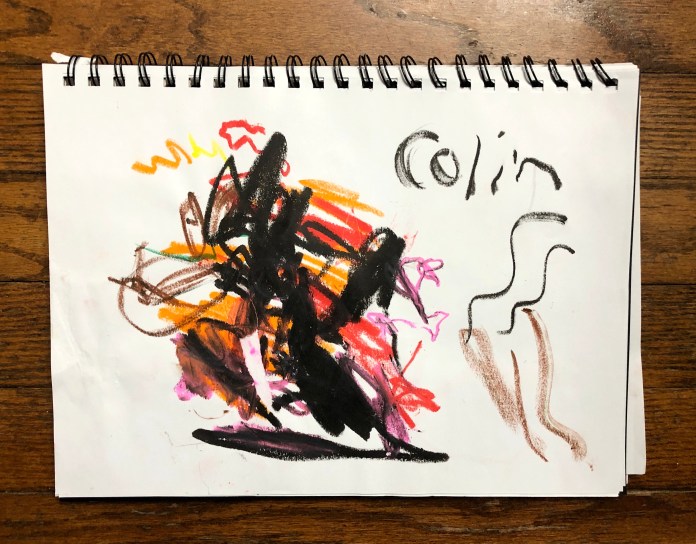
Here is an original artwork by my nine-year-old son, Colin (with minimal photo editing). It made me think that sometimes the chaos wrought by autism can render beauty. I like the use of white space and the Jackson Pollock feel.

Untitled by Colin DiClemente.

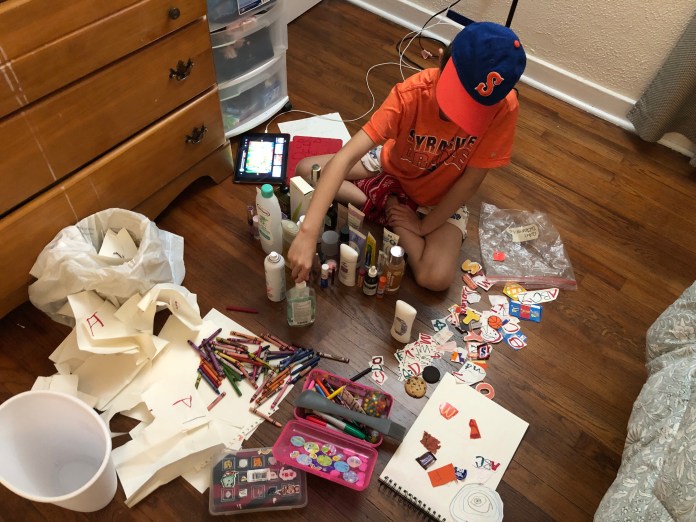
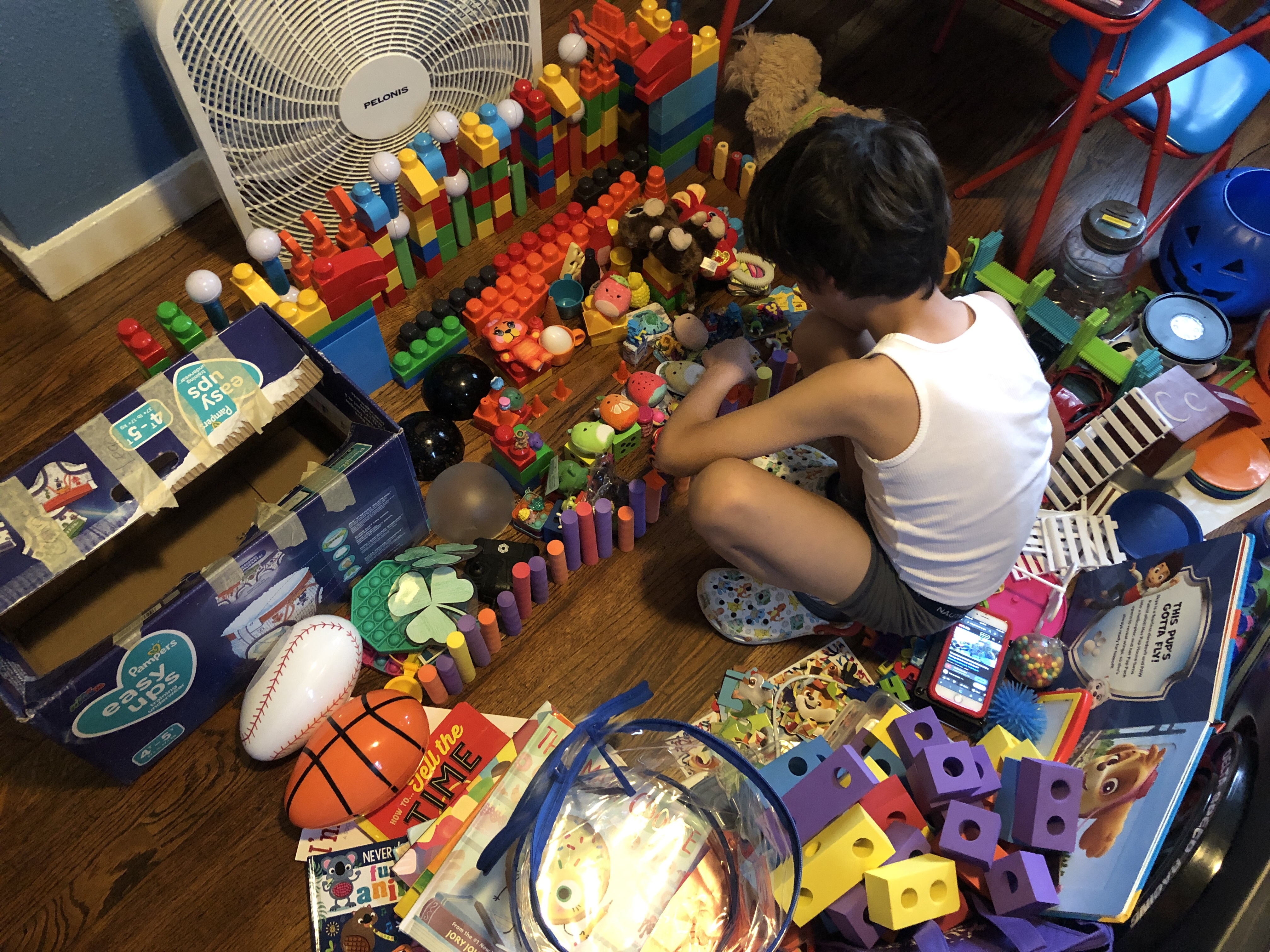
But the sundry objects and paper cutouts scattered in his bedroom and on our dining room table might indicate his preferred medium will be collage.

Dining room scene.

Often, when Colin is doing his repetitive tasks, such as lining up blocks or wooden letters of the alphabet, I’ll ask him questions, like, “What job do you want to do when you grow up?” If you could only be one, would it be a police officer, a firefighter, a doctor, a teacher, an artist, or a cook? And I’ll name a whole bunch of other occupations. But nearly every time, Colin’s answer will either be Artist or Cook (he loves mixing the batter for pancakes and muffins).

I joke with my wife, Pam, that we should encourage him to pursue a career as an accountant because earning a living will be easier than working as an artist or chef. I also tell her we should let Colin pursue his artistic endeavors so that he can 1) Explore and develop his creative expression 2) Maybe sell a few paintings one day that will pay off the mortgage and perhaps fund some experimental or documentary film projects.

I also realize that the parents of an autistic child have to let go of any desire for a neat and orderly home. It’s just not possible, at least in my experience. Pam and I try to laugh about it and embrace the futility of those moments when Colin takes up too much real estate in our house with his strewn objects or refuses to pick up his mess.

Standard

Book Giveaway

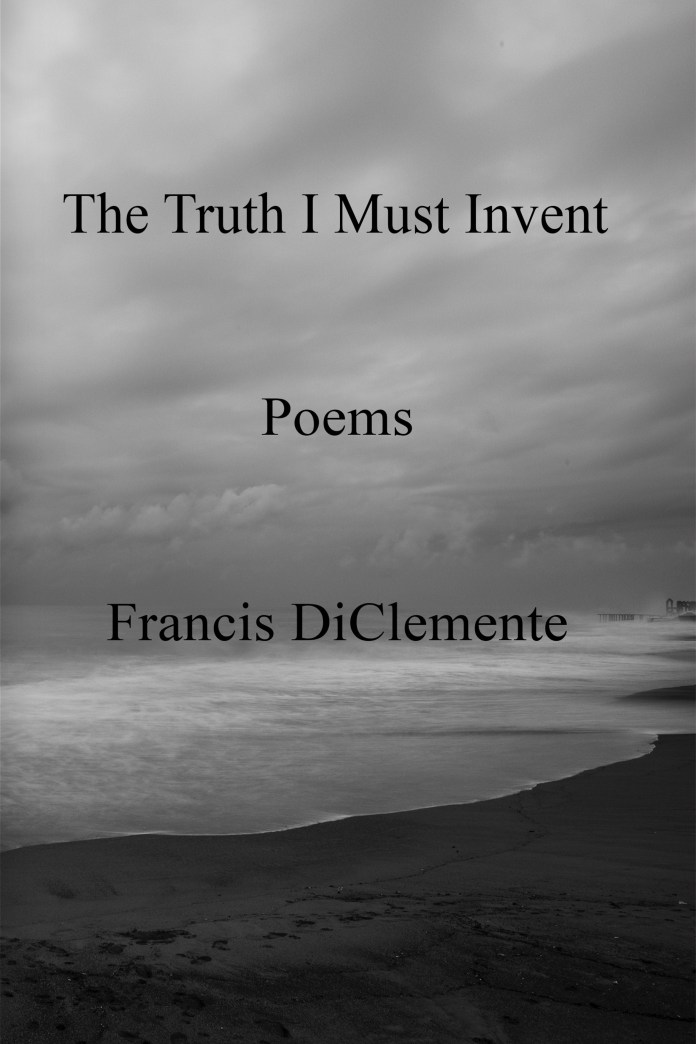
This week marks two years since my last poetry collection, The Truth I Must Invent, was released. The book is available from the publisher, Poets Choice. You can also find it on Bookshop and a Kindle version on Amazon.

The Truth I Must Invent is a collection of narrative and philosophical poems written in free-verse style. The book explores the themes of self, identity, loneliness, memory, existence, family, parenthood, disability, gratitude, and compassion.

I am giving away three print copies of the book, which I will mail to anyone in the U.S. You can use the contact form or email me directly at the gmail address listed in the form.

The Truth I Must Invent book cover.

Selections from the collection:

Man Inside Nighthawks

I assume I was nothing
before I found myself sitting here,
staring straight ahead.

I can’t move my head.
I can’t smoke the cigarette
pressed between the fingers
of my right hand or drink the cup
of coffee resting on top of the counter.
I can’t touch the woman seated next to me
or talk to the other men in the diner.

This is my life: suspended in warm, yellow light,
trapped in a soundless environment—
no water running, no fan whirring, or grill sizzling.
No sirens or street sounds beyond the glass.

Time drags on with no discernible shift—
no transition to morning.
Here, night never ends.

Yet my mind still works.
In fact, it never stops.
I’m cursed with thoughts that run continuously.

Why am I here?
And where exactly is here?
What purpose do I serve?

Do I have a past? Did I live elsewhere,
before I became frozen in this moment—
captured and imprisoned for eternity?

If only I could talk.
If only I could open my lips and make a sound.
Then I could scream for help.
But who would hear my voice?

If only I could stand up
and walk around,
stretch my legs and
stare outside the window.

But since I can’t move,
the composition will remain unaltered,
as I will stay locked in place
inside this painting,
hanging on a gallery wall.

Looking Through Spindles

I climb out of bed and clutch
the white balusters at the top of the stairs
as harsh words fly behind walls
too thin to hold my parents’ rage.

My sister creeps out of her room,
shrugs her shoulders,
and moves toward me in the hallway,
passing the door to the master bedroom.
She sits down next to me
and whispers, “What happened now?”
“I don’t know,” I say.
And we listen for clues, trying to determine
the cause of the latest fight.

Did Dad come to bed drunk
and make advances on our mother?
Did she recoil or lash out, scratching his eyes?
But we hear no violent action
on the other side of the white door—
only voices laced with acrimony.
And we remain seated on the stairs,
exhausted but unable to fall back asleep.

Zooming out, I see those siblings
in a Polaroid image, sealed under a plastic sheet
in a leather-bound photo album.
And as the adult looking back,
breaking the fourth wall,
I wonder why this memory pricks my brain
when so many others would illuminate my parents’
kindness, decency, and exemplary work ethic.
Why, when I could have chosen from
a myriad of positive scenarios,
does this one seize my attention,
demanding to be chronicled?

My mother and father are both dead
and can’t defend their actions.
And I feel riddled with guilt
for tarnishing their memories.
I also understand that the truth
doesn’t always tell the full story.
My conscience obligates me to explain that
while Mom and Dad weren’t perfect,
they loved us and endured sacrifices
to make our lives a little better.
And while that’s a weak way to end a poem,
the wider perspective allows me to
forgive my mother and father for being human—
for being real people and not just my parents.

Craniopharyngioma (Youthful Diary Entry)

Craniopharyngioma gave me
an excuse for being unattractive.
I had a problem inside my head.
It wasn’t my fault
I stood four foot eight inches tall
and looked like I was
twelve years old instead of eighteen—
and then nineteen
instead of twenty-four.
I couldn’t be blamed for
my sans-testosterone body
straddling the line
between male and female.

The brain tumor
spurred questions
about my appearance,
aroused ridicule,
and provoked sympathy.
I heard voices whispering:
“Guess how old that guy is?”
And, “Is that a dude or a chick?”

And while I waited for my
body to mature, to fall in line,
and to achieve normal progression,
I remember wishing the surgeons
had left the scalpel
inside my skull
before they closed me up,
knitting the stitches
from ear to ear.

I prayed the scalpel
would twist and twirl
while I slept at night—
carving my brain
like a jack-o’-lantern—
splitting the left and right
hemispheres,
and effacing the memory
of my existence.

Mattress Moment

You don’t get to cry
“No Fair”
Mr. Hyman Roth.

This is the life
you have chosen.

You don’t get to pine
for your salad days,
whatever the fuck that means.

You don’t get to
flip over the mattress
on the bed you’ve made.

The Wanting is the Hardest Part

Tom Petty was wrong.
The waiting isn’t the hardest part.
The wanting is the hardest part.

Wanting fucks everything up—
wanting a better job, a better marriage,
a better house, a better life.
That seed of desire fucks with your head,
makes you think you can be something you’re not.

What if I discarded desire? What if stopped wanting?
What if I no longer sought a better life?
Can I let go of that fantasy
and accept who I am right now,
without seeking a better version of myself—
the idealized me I hold inside my head?

Resolution

You must
Live the life
You have

And not
The one
You want.

Witness

I look up as a group of birds
circles buildings in downtown Syracuse.
I resist the urge to pull out my cellphone
and snap a picture for Instagram.

Instead, I hold my gaze skyward,
letting the wind swirl around my face
and the rain patter my forehead,
as the birds duck in unison
behind a limestone structure—
the moment preserved nowhere except in my mind.

No pictures retained or sound recorded.
No trace of the birds in digital form.
And I think that’s the point, that’s life—
a collection of these impromptu glimpses of existence,
built into a collage, a kaleidoscope of images
demanding attention when presented.

Crying at Bedtime

Nothing prepares a parent
for the tantrums of an autistic child.
There’s no well of patience to draw from.
You adapt. You divert. You distract.
You do whatever it takes to calm the child down—
until you earn that blessed moment of peace,
when his eyelids drop and he drifts off to sleep,
his small body folded in the cradle of your arms.

Fingers in Hair

I run my fingers through
my son’s tangled mop of brown hair
as he lies next to me in bed.
It’s 4:30 a.m. and we can’t fall asleep.

He waves his hands in front of his eyes,
making stimming motions,
and I imagine his head slamming
against the windshield,
a spiderweb crack forming
in the sheet of glass and
blood pouring from
an opening in his skull.

I press my hand to his head
to try to stop the bleeding,
but the crimson liquid
slips through my fingers
and stains the carpet
and fabric seat covers.

I am reminded of a
Gospel passage (Luke 12:7 NIV):
“Indeed, the very hairs
of your head are all numbered.”

I hold some of my son’s hairs
in my hand and realize
I cannot prevent a
car accident, fall, gunshot wound,
or disease from killing my son.
I can’t prolong or preserve his life.
I can only love him while he still lives.

His hands whip in front of his face,
and he prattles phrases
only he understands.
I bury my fingers deeper
into the mound of his hair and whisper,
“Come on now, sleepy time, Colin.”


Standard

Falling Back

To mark the end of Daylight Saving Time, I present a poem inspired by autumn scenery. I drafted this poem more than 25 years ago while living with my sister in Toledo, Ohio. I have revised it multiple times over the years, never satisfied with the final result. While this version may not be perfect, I think it’s about the best I can do, and so I release it here.

Falling Back (2024)

Alone on an empty school playground in Toledo, Ohio,
my worn-out sneakers shuffle on asphalt
as I practice left-handed hook shots
on a bent basketball rim with a rusted chain-link net.
The sound of the bouncing ball reverberates
off the school’s red brick façade,
as my reflection jumps out at me in the first-floor windows
adorned with orange paper jack-o’-lanterns.

A towering oak tree with branches like octopus tentacles
observes me as I heave an air ball from three-point land.
It studies my movements while a sharp wind
strips away its cloak of golden-brown leaves.

The cold sticks to my fingertips as I lick them
to get a better grip on the Spalding rubber ball.
And with my nose running incessantly and my chest heaving,
I swallow the chill in the air, trapping it deep inside my lungs.

I pick up my dribble—then stop, smell, look and listen.
Streetlights flicker on in the suburban neighborhood,
and across the road, a pumpkin is perched
on the porch of a modest white house.
The scent of burning leaves wafts in the air.
Charcoal-gray clouds brood in the sky,
and on the western horizon, near a row of pine trees,
there’s a feathering of soft pink light.

At the nearby park, soccer goals stand naked and netless,
and on the gravel softball field,
silence reigns on the base paths and outfield grass.
In the schoolyard, monkey bars are free of tiny, groping hands,
and empty swings sway in the stiff breeze—
calling out for the children to return.

But summer delight has long since passed,
and now Daylight Saving Time concludes again,
with me falling back to the days of my youth in Rome, New York.
I remember two-hand-touch football at Franklyn’s Field,
Friday nights watching the Rome Free Academy Black Knights
trounce visiting opponents under bright stadium lights,
blades of grass and windshields glazed with morning frost,
and autumn’s first taste of a juicy Macintosh.
There is magic and harmony in nature’s ever-spinning cycle.
I need only to look around,
and I find myself back in upstate New York—
my body planted in Ohio, but my mind
transported home to my native land.

Now, since autumn is on my mind with another page of the calendar being ripped, October giving way to November, I want to share some family photos from Halloween.

Colin Joe walking in his school parade.

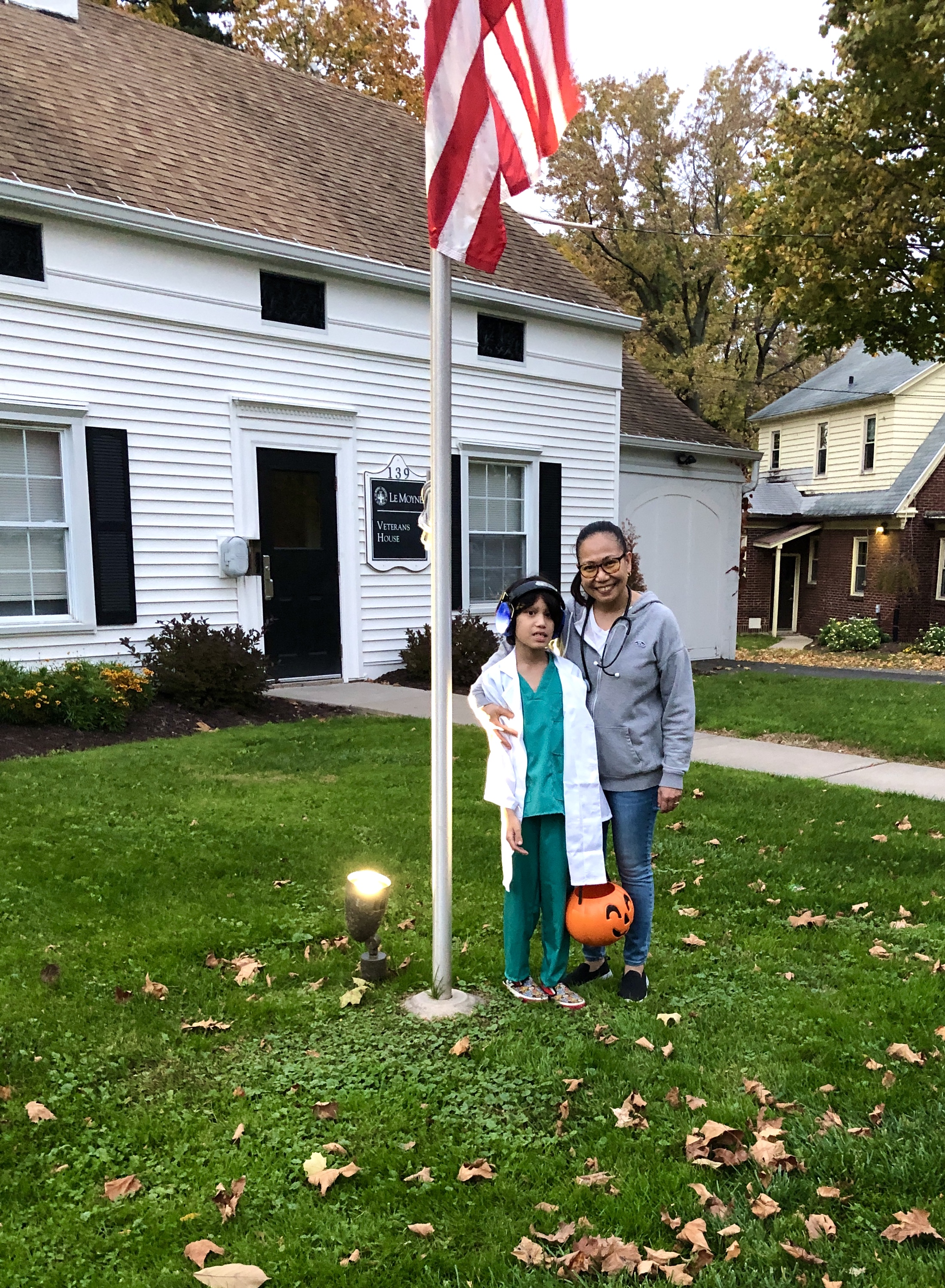
It was a special day for our family since our eight-year-old autistic son, Colin, participated in a parade at his elementary school and was excited and eager to go trick-or-treating in our neighborhood.

Colin Joe dressed as a doctor for Halloween.

In other years, we had to drag him out of the house. This year, dressed in his doctor’s costume, he slipped on his sneakers and gripped his pumpkin candy bucket, leading Mom and Dad in search of treats.

Pam and Colin, Halloween 2024.

Standard

Embrace the Futility

This essay was published in the Spring 2024 issue of The Awakenings Review. I’m grateful to editor Robert Lundin for giving me permission to publish the essay on my blog.

##

In the pediatric surgery waiting room, my wife, Pam, and I sit on a couch, watching a television screen as Facebook CEO Mark Zuckerberg testifies before a House subcommittee about the data-sharing scandal involving Cambridge Analytica. It’s April 2018, and we’ve been here all morning since bringing our two-year-old son, Colin, to the hospital for an anesthesia-induced auditory brainstem response (ABR) test.

The audiologist steps into the room and shuffles toward us with his eyes cast downward. He’s short and balding with grayish-brown hair on the sides of his head. After he directs us to a more private area, he says in a low voice, “He’s doing fine. The test went well. It’s good news from my perspective, but maybe bad news for you. His hearing is fine, perfectly normal.”

“So what does that mean?” I say.

“It means his hearing isn’t the cause of his delayed speech.”

“I knew it. I knew it,” Pam says.

We would receive the official diagnosis of autism spectrum disorder (ASD) a few months later. And as Colin has grown, during moments when he refuses to eat, take a bath, or leave the house, or when he throws tantrums—his face bright red, his arms flapping, and his voice emitting high-pitched screams that reverberate off the walls and ceiling—I have repeated two mantras in my head: “Embrace the Futility” and its softer sibling, “Accept the Inevitable.”

Colin’s room. He loves to line up his toys in patterns,

I use these twin sayings as coping mechanisms to brook the vagaries and hardships of life.

I take no credit for inventing the verbiage of Embrace the Futility. One of my co-workers at a broadcast news wire service in Arizona shouted the phrase several years ago when we were understaffed on the overnight shift and getting inundated with news summaries and audio files sent to us from multiple markets across the country.

Embrace the Futility sounds like a negative concept, but it is a positive and freeing principle (at least for me).

It guides my behavior with one central dictum: I am not in control. The world is a dealer at a Las Vegas blackjack table, and the house always wins. My mental approach is, “Expect the worst and be pleased when it doesn’t turn out that way.”

At an early age, our parents teach us that we will live for a short time and then die. The rules of the game are rigged. We know the score at the outset, and the contest ends in our defeat.

Embrace the Futility and Accept the Inevitable give me the freedom to let go of things I am powerless to control. As a result, I reconcile myself to an existence dictated by failure, sickness, and eventual death.

This is a personal philosophy based on my lived experience; it may not work for everyone. But Embrace the Futility and Accept the Inevitable have helped me to endure the inexorable rough patches in life.

##

I am consumed with pity for my son, knowing his autism—his diminished ability to communicate verbally—puts him out of alignment with the rest of the world. In this case, love proves impotent to effect change or prevent the hurt he will absorb as he grows.

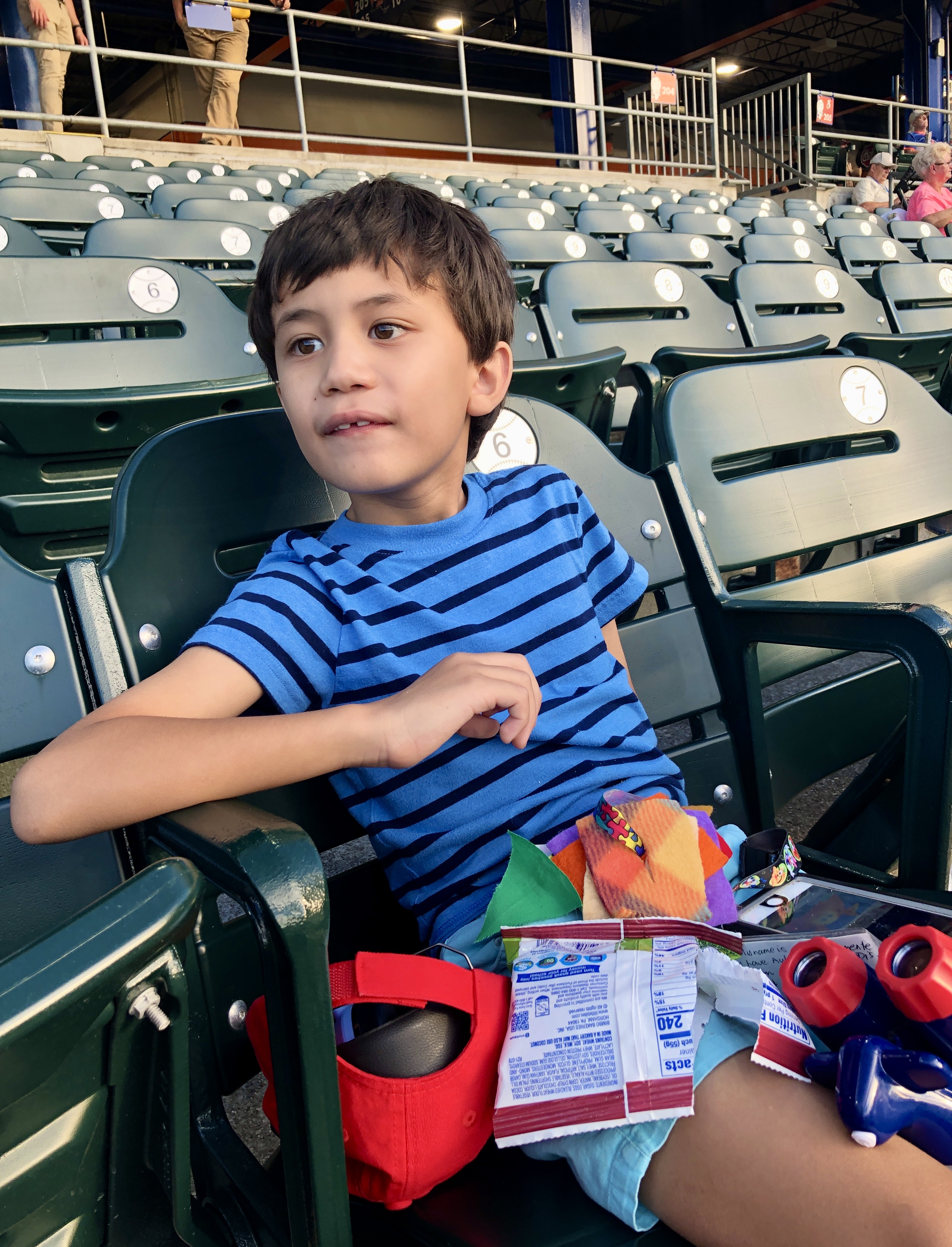
Colin sitting in the stands on the first-base line.

I understand I am professing ableism. I recognize Colin’s disability should not be viewed as a problem that needs to be fixed. But as a parent, I know his autism dictates his future, making his life more difficult. Colin may never lead an independent life. He may never enjoy what neurotypical kids experience—playing organized sports, going to college, falling in love, and working full-time.

I can’t wish away his autism or intervene to make him “normal.”

I could lament the diagnosis. I could resist—to metaphorically bang my head against a cinder block wall and expect to make an opening. Instead, I acknowledge that I cannot “cure” Colin, and I accept him unconditionally. And amid the many challenges of raising an autistic child, Pam and I savor ordinary moments with Colin, relishing his squeals of laughter and his blithesome presence as he jumps around our living room.

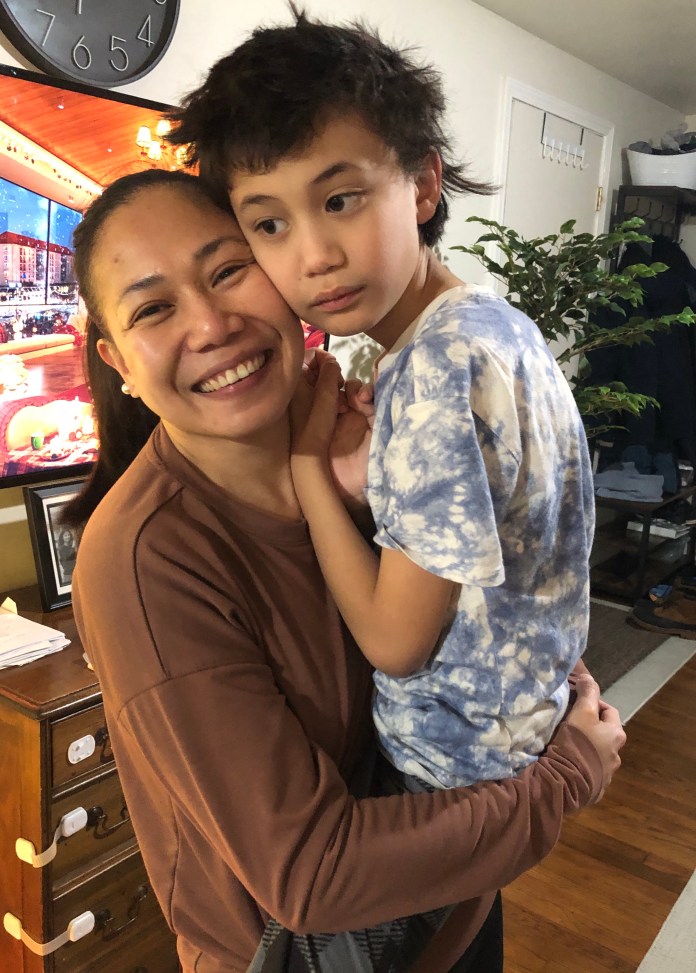
Pam and Colin.

But Embrace the Futility and Accept the Inevitable have universal applications. Your car breaks down. You file for divorce. Bankruptcy, fraud, cancer, a broken femur, or a flooded basement—sure, bring it on. 

Embrace the Futility and Accept the Inevitable can help anyone reframe the unavoidable “suckiness” of life. You don’t ignore the mess, but you admit you can’t control it. And it’s OK to let go—to reconcile yourself to what the universe throws at you.

Since age fifteen, I’ve had multiple surgeries and radiation treatments for a slow-growth, benign tumor at the base of the brain, near the pituitary gland. The latest surgical intervention came in July 2023, when a neurosurgeon and an ears, nose, and throat specialist teamed up, taking a transsphenoidal approach (through the nose) to extract tumor remnants that had affected my vision. Even as I write these words, I know the craniopharyngioma will eventually expand in my head and another date on the operating table looms in my future.

I was also diagnosed with rheumatoid arthritis in 2017. The disease has altered my digestion and lung function while leaving me with bent, aching fingers.

And while I do my share of complaining about these medical conditions, I also Embrace the Futility of my body breaking down, since the decline is inescapable.

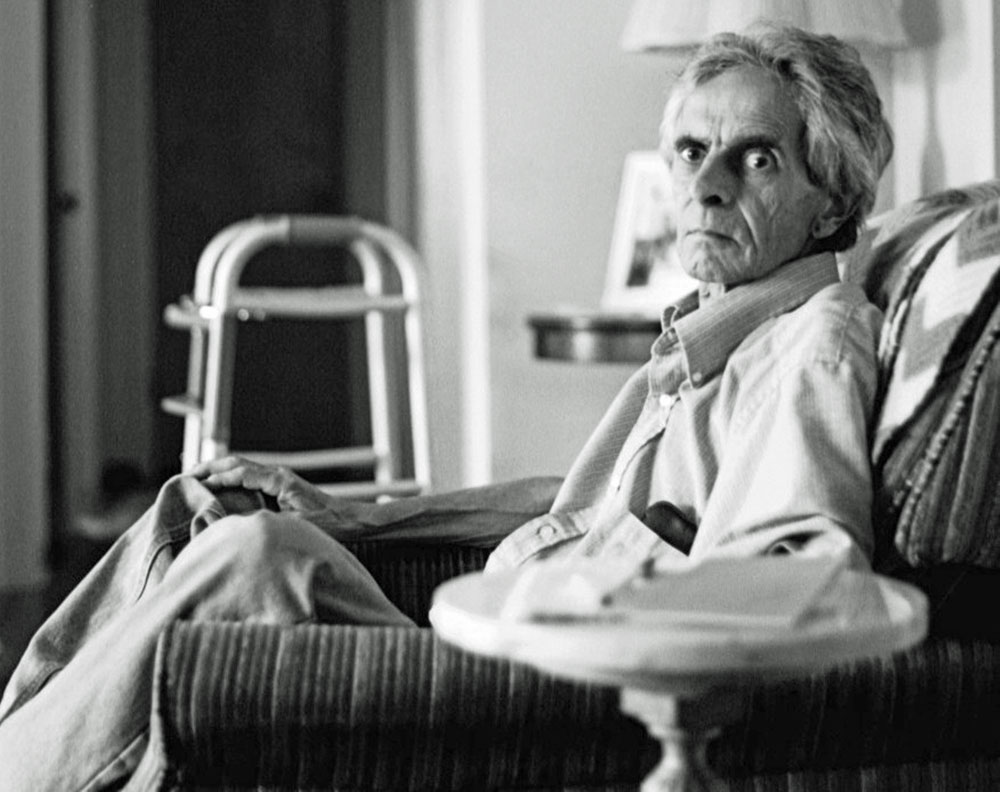
My late father, Francis Sr., offered the best example of Accepting the Inevitable.

When he was diagnosed with lung cancer in 2007, an oncologist gave him the option of starting chemotherapy, but the doctor stressed the dismal odds of the treatment elongating my father’s life. My dad curled his bottom lip and said, “Why bother? What’s the point?”

Dad, side angle. Photo by Francis DiClemente.

He rejected tubes, injections, and trips to the hospital. He endured his fate with stoicism, making the best of his last six months on earth, placing bets at OTB (Off-Track Betting), racking up credit card debt (which would be wiped out with his death), and eating sweets he had eschewed previously—Klondike bars and Little Debbie snacks—before dying at home under hospice care.

So now, when circumstances beyond my control arise, I follow my father’s model. I submit, acquiesce, and capitulate—assenting myself to a fate I cannot sway. And this allows me to move forward without resistance to the vicissitudes of life.

Standard

Birthday Note

I celebrated my birthday yesterday by relaxing at home with my family. As kids are wont to do, my son, Colin, blew out the candle on the cake, so we had to light it twice.

Colin Joe getting reading to blow out the candle.

I snuck in a couple of wishes, but mostly I felt enormous gratitude for still being here for another day and another year.

The night before I reflected on my recovery from surgery and my birthday, journaling for a few minutes while standing near my bedroom dresser. I am not a habitual journal writer, but I have notebooks scattered throughout the house to be available when the urge strikes me. Often my journal entries—which I always convert to a long-running Word document—contain mundane facts and banal thoughts with no potential to become raw material for a poem, story, or essay. However, sometimes the act of moving my pen on paper will lead me to a line that initiates energy.

And this is what I came up with the other night. It’s not a great poem, but I was happy I wrote it in a spontaneous burst and finished it in one draft.

On the Eve of My Fifty-Fourth Birthday

There has to be more
to this life than
just what we see.

Or else there isn’t—
in which case
death won’t be
so scary.

It’ll just be a
harmless place
devoid of life.

And you and I
can handle that, right?

Standard

The Truth I Must Invent

I’m excited to report I have a new poetry collection available. It’s entitled The Truth I Must Invent, and it was my pleasure working with publisher Akshay Sonthalia from Poets’ Choice to bring the book to fruition.

The Truth I Must Invent book cover. Cover Design by Koni Deraz; Cover Photo by Engin Akyurt; Book Design by Adil Ilyas.

You can find a print version on the publisher’s site. It’s also available on Bookshop.

The Truth I Must Invent is a collection of narrative and philosophical poems written in free-verse style. In it, I explore the themes of self, identity, loneliness, memory, existence, family, parenthood, disability, gratitude, and compassion. The work examines the conflicting web of emotions all adults face and the truths that lie in between. It also suggests that even in our darkest moments, joy and contentment can be found through resilience and a willingness to hope.

Here are a few excerpts:

Cake Mistake

Peggy made a huge mistake
when she baked a
grocery store celebration cake.
She put a D
where a T should be
in the middle of the
word CONGRATULATIONS.

The customer was pissed.
But Peggy kept silent
as the irate woman left the store
without paying for her order.

Peggy’s manager docked her pay,
and yelled at her for making
such a stupid mistake,
to which Peggy replied:

“Look, I never went to college
and there’s no spell-check when baking a cake.
And I’m sorry I screwed up, but I think that D
will taste just as sweet as a T,
so I’ll take that cake home for my kids to eat.”

Camera Angle

What would I choose
if I were given a chance
to lead a different life?

What mistakes
would I correct?
What new road
would I take?

But you can’t splice
the scenes of your life
to edit the past.
You can only point
the camera forward
and zoom into the future.

Observation After Eating Out

Pity for my son swells.
Yet I feel helpless,
Unable to intervene
To make his autism
Go away.

Our patience dwindles
As his outbursts intensify.
But love does not wane.
Instead, it grows stronger.

I have only one son.
Yes, he is different.
He is noisy and
Requires constant attention.
But I am thankful for
His presence in my life.
And who needs the quiet anyway?

©2023 Francis DiClemente
The Truth I Must Invent (Poets’ Choice)

Standard

Glimpses of Existence Now Streaming

I am excited and honored to announce that my experimental documentary short Glimpses of Existence has found a distribution home at OTV – Open Television. You can find it here.

“OTV is an Emmy-nominated nonprofit platform for intersectional television, with artists and their creative visions at the center.”

Glimpses of Existence premiered in 2021 in an online screening presented by NewFilmmakers NY.

It’s a zero-budget film in the form of video collage. I took inspiration from the experimental films of Jonas Mekas, in particular Walden. Using poetry and scenes captured with my iPhone—primarily during the pandemic—the film attempts to find meaning in the ephemeral moments of our lives, seeking the extraordinary amid the ordinary.

The central focus of the film is my son, Colin, who has been diagnosed with autism spectrum disorder. Despite his condition, Colin finds joy in everyday activities, and through his eyes we recognize the importance of treasuring the tiny segments of life we are granted—minutes, seconds, hours—while being reminded about the transitory nature of existence.

Glimpses is a companion piece to a previous experimental documentary—Fragments of the Living. You can download the @weareotv app Free on Apple, Android, Roku, and FireTV, or stream at watch.weareo.tv.

Standard

Celebrating Seven Years

I don’t usually post family-related stuff on this blog, but I wanted to share that we celebrated Colin’s seventh birthday on Sunday. And last Friday morning, Colin completed his feeding therapy program at the Golisano Center for Special Needs. The amazing staff there gave him presents, a card, a certificate, and a cap and gown—which he refused to wear.

Colin is not interested in wearing the cap.

Staff members streamed into his therapy room, saying things like: “Congratulations. Way to go, buddy. You did it. You worked so hard. We’re so proud of you.”

As the father of an autistic child, I realize the importance of celebrating these milestones, these little victories along the way. But the main credit belongs to my wife, Pam, who took Colin to therapy every weekday morning, drove him to school afterward, and employed the tools of therapy at home.

Colin playing in the feeding therapy room.

And Colin has made significant progress. Before we started the program, his diet consisted of milk with yogurt, Entenmann’s Little Bites muffins (brownie flavor), Chips Ahoy! and Oreo cookies, and different varieties of potato chips.

Now he will eat yogurt with a spoon, cereal bars, Life and Cheerios cereal (no milk), French toast, and pizza.

He entertains me with the way he eats pizza in stages. He eats the cheese first and then the sauce, before digging out the dough and leaving behind the crust, like a shell (which I usually eat).

Colin’s feeding therapy certificate.

##

On Sunday morning, Pam made pancakes for his birthday, but Colin opted for potato chips. Later in the day, he blew out the number 7 candle on his cake, licked some frosting and ate the candy balloons on top, and then picked at a slice of Wegmans’ cheese pizza.

Colin’s birthday cake.

He also played with the foam blocks and dice Pam bought him, and he slipped on the slightly oversized Pokémon Crocs. I think the shoes were his favorite present.

It’s hard to imagine he is now seven years old. It seems like just yesterday we brought him home from the hospital—Pam and I both nervous (me terrified) about being new parents. And about two-and-a-half years after his birth, we received the official diagnosis of autism spectrum disorder (ASD) and adjusted our expectations for our child.

Colin celebrating his seventh birthday.

Life with Colin is fraught with challenges, but the joy of his presence illuminates our days.

And he’s showing improvement. He talks a little when prompted by Pam and he can add and subtract now.

I am grateful for this little boy, and he has taught me love and patience beyond my perceived ability, beyond what I thought I was capable of.

I’ll leave you with a silly little poem.

Poem for Colin

Seven years old.
The joy of our son.
Sadness for
Lack of communication.
But love everlasting.

Colin sporting his new Crocs.

Standard

Night at the Ballpark

Here I am, back to the blog. It’s been so long. I apologize for the absence, but I’ve been preoccupied with work, family, and side creative endeavors (which I will keep private to prevent jinxing the results). And now summer has ended, and a new semester is unfolding on the campus of Syracuse University.

NBT Bank Stadium. Photo by Francis DiClemente.

I have one note worth sharing. My family and I attended a Syracuse Mets game for the first time this August. My father used to take me to Syracuse Chiefs games at the old MacArthur Stadium, and I was impressed with the confines of NBT Bank Stadium, the ease of parking, the friendliness of the stadium workers, and the blue and orange color scheme in keeping with the New York Mets affiliation.

Mr. Met image on a stairwell at NBT Bank Stadium. Photo by Francis DiClemente.

My wife Pam and I debated taking our autistic son Colin to the ballpark, but in the end, we decided exposing him to the experience of a live baseball game on a perfect summer night was worth the risk of potential outbursts. We feel it’s worth trying new things with him, even though we endure stress, frustration, and humiliation when he acts out. Our hope is he grows more comfortable in public settings.

Colin sitting in the stands on the first-base line. Photo by Francis DiClemente.

And on this night, he fared well. He ate French fries, popcorn, and mini brownie muffins (brought from home). He paid no attention to the action on the field, and when the crowd roared, he unleashed high-pitch screams, drawing the attention of other fans. We left in about the fourth inning with the Buffalo Bisons leading the Mets by several runs. But we considered the evening a minor victory and felt encouraged to attend another game in the future.

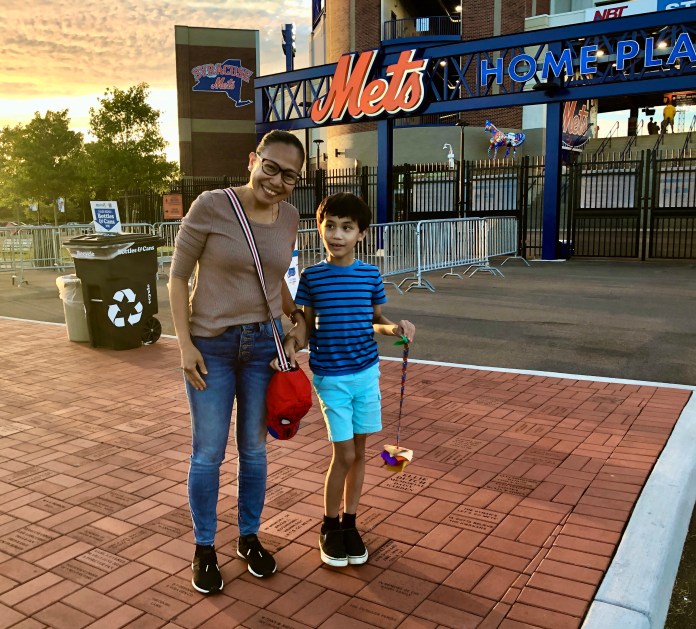
Pam and Colin outside NBT Bank Stadium. Photo by Francis DiClemente.

Standard