Oh William!

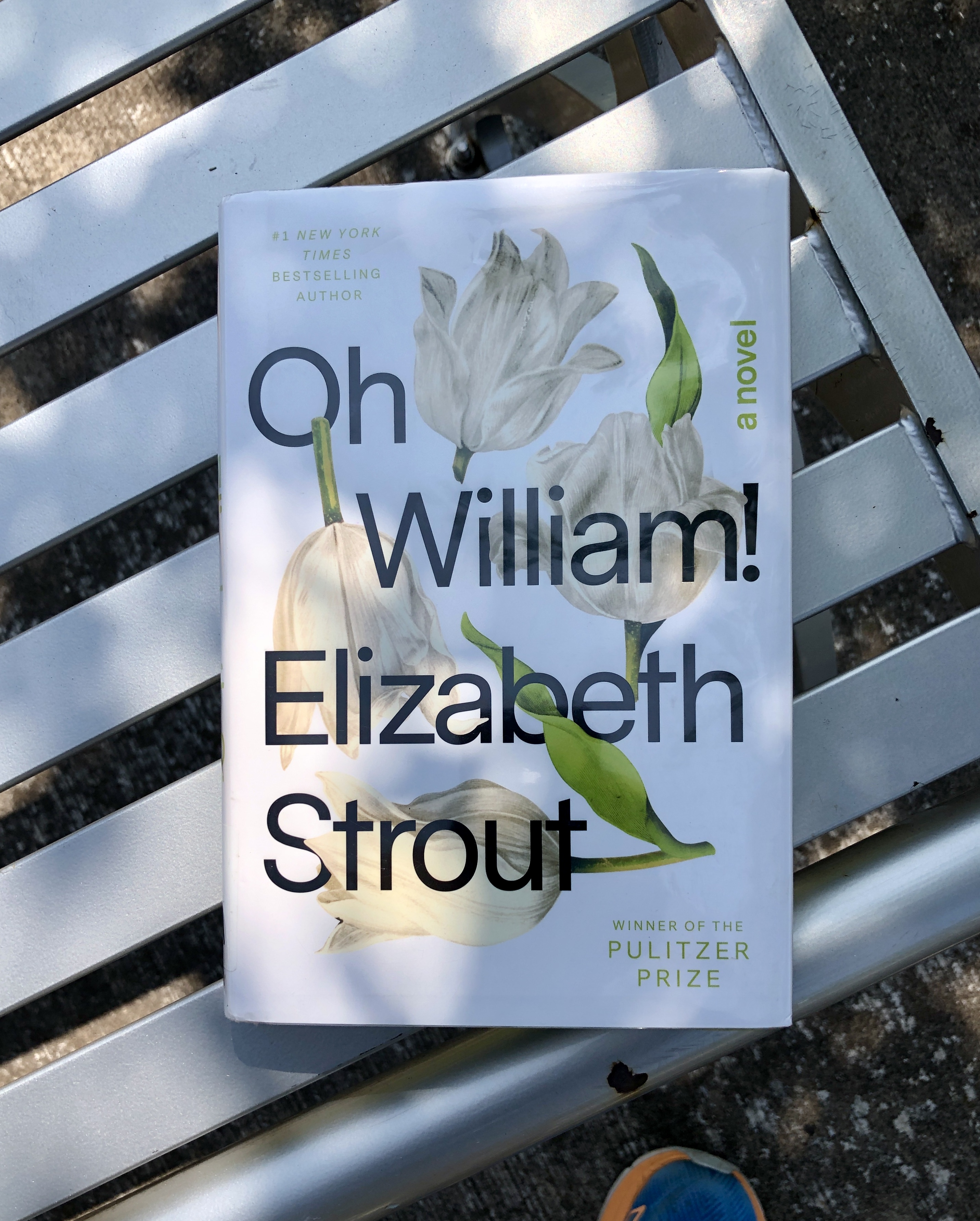
For habitual cheapskates like me, you can’t beat Little Free Library. Today while out on my run/walk, I picked up a perfect condition hardcover copy of Oh William! by Pulitzer Prize-winning author Elizabeth Strout (who is also a Syracuse University College of Law alum). The book had been languishing on my Goodreads “want to read” list for years. But now I’ve become the Fred Sanford of books, stalking the different Little Free Library sites in my surrounding area for literary steals. I do contribute some of my “read” books to the drop-off sites (but nowhere near as many volumes as I claim). Happy Sunday reading everyone.

Oh William! by Elizabeth Strout.

Standard

Saturday Morning

I was reviewing some old poems and came across this little throwaway. I thought I’d share it as a reflection for today:

Saturday Morning

There’s something special
about Saturday mornings—
waking up with no demands to be met
and owning the hours you clock.
So what are your plans today?

Standard

Where Angels Fear to Tread (1905)

I recently finished reading the novel Where Angels Fear to Tread by E.M. Forster. The work was published in 1905. I won’t give a review or provide a plot summary. You can look that up online or watch the 1991 movie starring Helen Mirren and Helena Bonham Carter.

Here’s an excellent description of the book I found through the Modernism Lab at Yale University.

What I want to share are a couple of excerpts that struck me. The first is from the third-person omniscient point of view (if my high school English reference is correct):

“For a wonderful physical tie binds the parents to the children; and—by some sad, strange irony—it does not bind us children to our parents. For if it did, if we could answer their love not with gratitude but with equal love, life would lose much of its pathos and much of its squalor, and we might be wonderfully happy.”

Angel in Asheville, NC. Photo by Francis DiClemente.

In the second quote, the character Philip Herriton is talking to Miss Abbott:

“Miss Abbott, don’t worry over me. Some people are born not to do things. I’m one of them; I never did anything at school or at the Bar. I came out to stop Lilia’s marriage, and it was too late. I came out intending to get the baby, and I shall return an ‘honourable failure.’ I never expect anything to happen now, and so I am never disappointed. You would be surprised to know what my great events are. Going to the theatre yesterday, talking to you now—I don’t suppose I shall ever meet anything greater. I seem fated to pass through the world without colliding with it or moving it—and I’m sure I can’t tell you whether the fate’s good or evil. I don’t die—I don’t fall in love. And if other people die or fall in love, they always do it when I’m just not there. You are quite right; life to me is just a spectacle, which—thank God, and thank Italy, and thank you—is now more beautiful and heartening than it has ever been before.”

Standard

In Honor of Abby

While walking on the campus of Le Moyne College last Sunday, I saw this bronze plaque with a poem in honor of a deceased student. The wording captured my interest.

Abby Bohnert ’19

Everyone’s friend.

Red lipstick and thick socks.
Giggles so loud they echo down the hall.
“She is Heaven and Hell’s love child.
Hold her. Name her poem.”

February 5, 1997 – August 8, 2016

A quick Google search shows that Abby died suddenly in 2016. And her mother passed away days later, making the story even more tragic.

I don’t have any wise words to share, except that Abby must have been a very special woman to be remembered with such a beautiful tribute on campus.

Standard

365 Days Later

One year ago today, a neurosurgery and ENT team at Upstate University Hospital took a nasal approach to remove the remnants of a craniopharyngioma (a benign tumor on the pituitary gland). It marked my sixth brain surgery since age 15.

I have fully recovered from the surgery, resuming all activities, although I still suffer occasional bloody noses and have peripheral double vision (which is likely permanent).

Photo of me last summer, after my surgery.

Vestiges of the tumor—what my neurosurgeon calls “membranes and scar tissue” still reside inside my head, as outlined in my latest MRI report:

FINDINGS:

“. . . In the right paramedian aspect of the surgical bed in the sellar/suprasellar region again seen is mass with heterogeneous enhancement which measures approximately 1.2 x 1.4 cm by my measurements.”

For now, the mass “remains grossly unchanged,” but the nature of craniopharyngiomas means the tumor will likely grow back to a point where another surgery or radiation will be required.

However, my medical condition is not the subject of this post. I just needed a brief introduction with a reference to the anniversary of my surgery.

Instead, I want to share some musical selections I listened to in the days and weeks following my surgery last summer. These songs aided me, providing succor while I recovered, propped up in bed, unable to sneeze or blow my nose, and moving gingerly around the house.

As I listened to the songs, I reflected on my life, swelling with gratitude for being alive and making gradual progress—supported by my wife, Pamela.

I think the tunes can provide positive affirmation for anyone facing adversity.

“I’m Still Standing” by Elton John

“Winning” by Santana

“Back in the High Life Again” by Steve Winwood

“Better Days” by Bruce Springsteen

More about Bruce later . . .

As someone who grew up in the 1980s, I am mesmerized by the concert footage available on YouTube. It is amazing to think you can see bands performing in 4K (some clips with multicam edits) hours after a show. When I was a kid, I listened to 95X in Syracuse after a concert by the Rolling Stones at the Carrier Dome so I could hear the DJ run down the setlist.

During The Cure’s 2023 North American tour, they played five original songs that I believe will be included in their forthcoming album, Songs of a Lost World. Two of my favorites from the new batch are “Alone” and “Nothing is Forever,” which I listened to repeatedly during my recovery. They put me in a dreamy headspace where I could forget about my health problems.

“Alone” by The Cure

“And Nothing is Forever” by The Cure

I also turned to the Grateful Dead for repeat listening during the late summer of 2023—often clicking on two tracks from the Dead’s famed 1977 concert at Barton Hall at Cornell University.

“Morning Dew” by the Grateful Dead

“Terrapin Station” by the Grateful Dead

And finally, there’s Bruce.

Bruce Springsteen and the E Street Band were initially scheduled to perform at the JMA Wireless Dome in Syracuse in early September 2023, but the show was canceled because of Bruce’s peptic ulcer disease. It was fortunate for me because I would have been in no condition to climb the concrete steps to the upper rafters of the Dome just a few weeks after brain surgery. But I attended the rescheduled show in April 2024, and I’ll leave you with “Backstreets” (which references summer).

“Backstreets” by Bruce Springsteen and the E Street Band

Standard

A Small, Good Thing

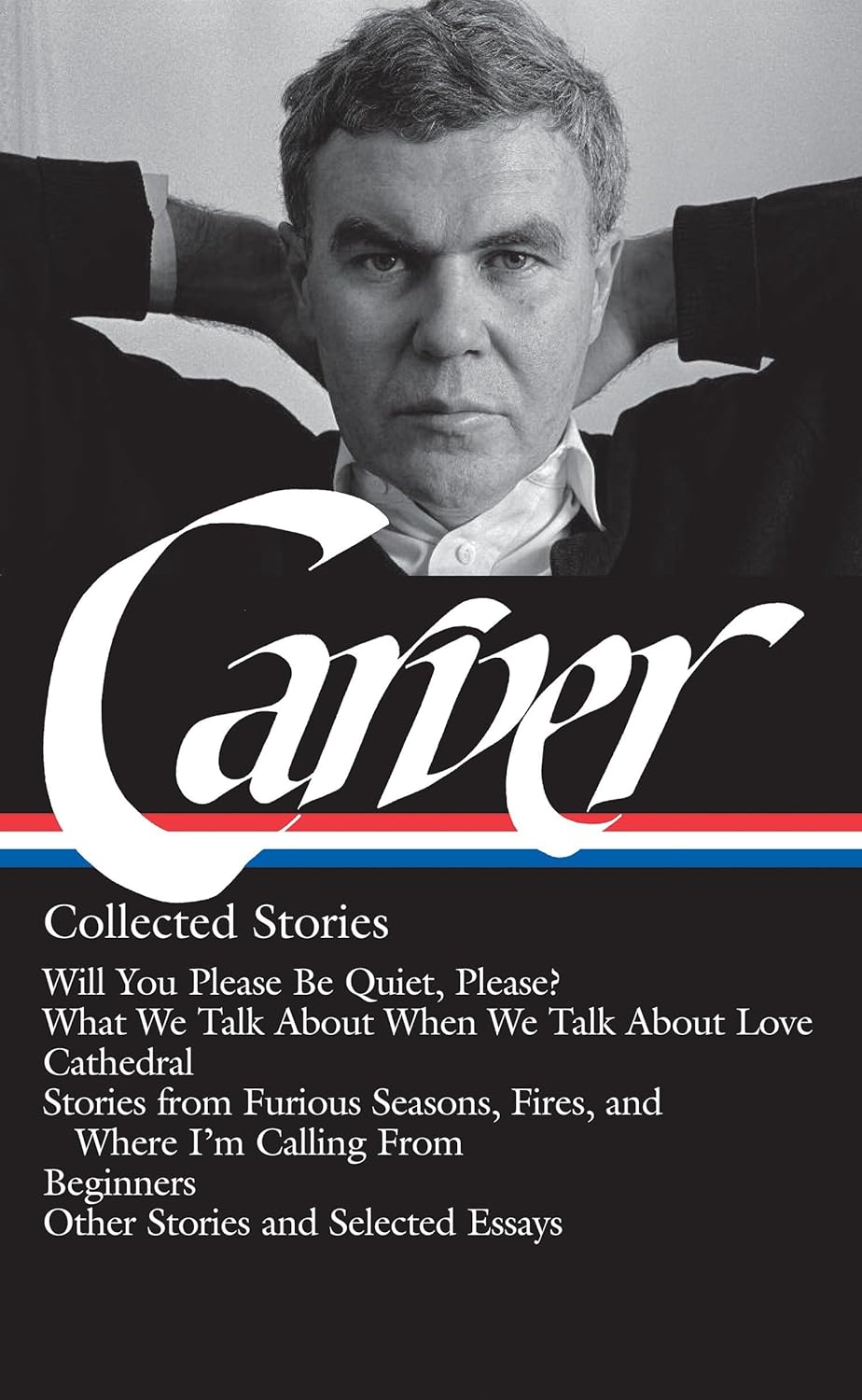
I am currently reading Raymond Carver: Collected Stories, published by the Library of America, and I wanted to share one story that I found devastating on an emotional level. You don’t have to be a parent to appreciate it, but being one heightens the intensity of the story.

I won’t go into plot summary of the story, other than to say it’s about boy who falls into coma after being struck by a car. Here’s a link to the full text.

Or, if you prefer, here’s an audio version:

Standard

Smiles of a Summer Night

I’ve been digging through some old poems and found an unpublished poem inspired by Swedish director Ingmar Bergman’s 1955 comedy Smiles of a Summer Night.

Bergman is a huge inspiration for me, and I’m obsessed with his work. But Smiles is too light for my taste. I prefer the more somber, melancholy Bergman works—The Seventh Seal, Wild Strawberries, Persona, Through a Glass Darkly and Winter Light.

Nonetheless, I’m glad his summer comedy led to a poem. The verse never found its way into one of my collections because I don’t think it’s worthy of publication. I’m posting it here only because summer is slipping away, and I think it captures the feeling of the season.

Smiles of a Summer Night
(With Apologies to Ingmar Bergman)

Smiles of a summer night
emerge on a human canvas
smeared with cotton candy
and dripping watermelon juice.

Smiles of a summer night
collide in a lovers’ embrace
shielded by corn stalks.

Smiles of a summer night
burst open in collective
“oohs” and “ahs”
elicited by fireworks.

Smiles of a summer night
come caked with dirt after a
head-first slide into home plate.

Smiles of a summer night
are everything that is possible
under the setting sun.

Smiles of a summer night
are fleeting, fleeting, fleeting.
And smiles of summer night
with the onset of September are done.


Standard

Groundwork by Paul Auster

I’m currently reading a work of collected nonfiction by the late author Paul Auster. Auster is one of my favorite writers, and his book The Invention of Solitude inspired me to work on my memoir project.

The title of the collected volume is Groundwork: Autobiographical Writings, 1979–2012, and it contains Auster’s memoir Hand to Mouth: A Chronicle of Early Failure (1996). Two great paragraphs illuminate the nature of working writers—writers employed in other professions to pay the bills and provide for their families, all while stealing time to scribble and peck away at personal writing projects (some of which may go unpublished).

The late author Paul Auster.

Auster’s words hit home for me because I’m a working writer who rises at 3:30 a.m. on weekdays to write. He inspired me by pointing out that other artists have blazed a similar path.

Excerpt from the book: 

“Becoming a writer is not a “career decision” like becoming a doctor or a policeman. You don’t choose it so much as get chosen, and once you accept the fact that you’re not fit for anything else, you have to be prepared to walk a long, hard road for the rest of your days. Unless you turn out to be a favorite of the gods (and woe to the man who banks on that), your work will never bring in enough to support you, and if you mean to have a roof over your head and not starve to death, you must resign yourself to doing other work to pay the bills. I understood all that, I was prepared for it, I had no complaints. In that respect, I was immensely lucky. I didn’t particularly want anything in the way of material goods, and the prospect of being poor didn’t frighten me. All I wanted was a chance to do the work I felt I had it in me to do.”

Groundwork by Paul Auster.

“Most writers lead double lives. They earn money at legitimate professions and carve out time for their writing as best they can: early in the morning, late at night, weekends, vacations. William Carlos Williams and Louis-Ferdinand Céline were doctors. Wallace Stevens worked for an insurance company. T.S. Eliot was a banker, then a publisher. Among my own acquaintances, the French poet Jacques Dupin is codirector of an art gallery in Paris. William Bronk, the American poet, managed his family’s coal and lumber business in upstate New York for over 40 years. Don DeLillo, Peter Carey, Salman Rushdie, and Elmore Leonard all worked for long stretches in advertising. Other writers teach. … Who can blame them? The salaries may not be big, but the work is steady and the hours good.”

Paul Auster. Groundwork: Autobiographical Writings, 1979–2012. Picador (2020).

Standard

Embrace the Futility

This essay was published in the Spring 2024 issue of The Awakenings Review. I’m grateful to editor Robert Lundin for giving me permission to publish the essay on my blog.

##

In the pediatric surgery waiting room, my wife, Pam, and I sit on a couch, watching a television screen as Facebook CEO Mark Zuckerberg testifies before a House subcommittee about the data-sharing scandal involving Cambridge Analytica. It’s April 2018, and we’ve been here all morning since bringing our two-year-old son, Colin, to the hospital for an anesthesia-induced auditory brainstem response (ABR) test.

The audiologist steps into the room and shuffles toward us with his eyes cast downward. He’s short and balding with grayish-brown hair on the sides of his head. After he directs us to a more private area, he says in a low voice, “He’s doing fine. The test went well. It’s good news from my perspective, but maybe bad news for you. His hearing is fine, perfectly normal.”

“So what does that mean?” I say.

“It means his hearing isn’t the cause of his delayed speech.”

“I knew it. I knew it,” Pam says.

We would receive the official diagnosis of autism spectrum disorder (ASD) a few months later. And as Colin has grown, during moments when he refuses to eat, take a bath, or leave the house, or when he throws tantrums—his face bright red, his arms flapping, and his voice emitting high-pitched screams that reverberate off the walls and ceiling—I have repeated two mantras in my head: “Embrace the Futility” and its softer sibling, “Accept the Inevitable.”

Colin’s room. He loves to line up his toys in patterns,

I use these twin sayings as coping mechanisms to brook the vagaries and hardships of life.

I take no credit for inventing the verbiage of Embrace the Futility. One of my co-workers at a broadcast news wire service in Arizona shouted the phrase several years ago when we were understaffed on the overnight shift and getting inundated with news summaries and audio files sent to us from multiple markets across the country.

Embrace the Futility sounds like a negative concept, but it is a positive and freeing principle (at least for me).

It guides my behavior with one central dictum: I am not in control. The world is a dealer at a Las Vegas blackjack table, and the house always wins. My mental approach is, “Expect the worst and be pleased when it doesn’t turn out that way.”

At an early age, our parents teach us that we will live for a short time and then die. The rules of the game are rigged. We know the score at the outset, and the contest ends in our defeat.

Embrace the Futility and Accept the Inevitable give me the freedom to let go of things I am powerless to control. As a result, I reconcile myself to an existence dictated by failure, sickness, and eventual death.

This is a personal philosophy based on my lived experience; it may not work for everyone. But Embrace the Futility and Accept the Inevitable have helped me to endure the inexorable rough patches in life.

##

I am consumed with pity for my son, knowing his autism—his diminished ability to communicate verbally—puts him out of alignment with the rest of the world. In this case, love proves impotent to effect change or prevent the hurt he will absorb as he grows.

Colin sitting in the stands on the first-base line.

I understand I am professing ableism. I recognize Colin’s disability should not be viewed as a problem that needs to be fixed. But as a parent, I know his autism dictates his future, making his life more difficult. Colin may never lead an independent life. He may never enjoy what neurotypical kids experience—playing organized sports, going to college, falling in love, and working full-time.

I can’t wish away his autism or intervene to make him “normal.”

I could lament the diagnosis. I could resist—to metaphorically bang my head against a cinder block wall and expect to make an opening. Instead, I acknowledge that I cannot “cure” Colin, and I accept him unconditionally. And amid the many challenges of raising an autistic child, Pam and I savor ordinary moments with Colin, relishing his squeals of laughter and his blithesome presence as he jumps around our living room.

Pam and Colin.

But Embrace the Futility and Accept the Inevitable have universal applications. Your car breaks down. You file for divorce. Bankruptcy, fraud, cancer, a broken femur, or a flooded basement—sure, bring it on. 

Embrace the Futility and Accept the Inevitable can help anyone reframe the unavoidable “suckiness” of life. You don’t ignore the mess, but you admit you can’t control it. And it’s OK to let go—to reconcile yourself to what the universe throws at you.

Since age fifteen, I’ve had multiple surgeries and radiation treatments for a slow-growth, benign tumor at the base of the brain, near the pituitary gland. The latest surgical intervention came in July 2023, when a neurosurgeon and an ears, nose, and throat specialist teamed up, taking a transsphenoidal approach (through the nose) to extract tumor remnants that had affected my vision. Even as I write these words, I know the craniopharyngioma will eventually expand in my head and another date on the operating table looms in my future.

I was also diagnosed with rheumatoid arthritis in 2017. The disease has altered my digestion and lung function while leaving me with bent, aching fingers.

And while I do my share of complaining about these medical conditions, I also Embrace the Futility of my body breaking down, since the decline is inescapable.

My late father, Francis Sr., offered the best example of Accepting the Inevitable.

When he was diagnosed with lung cancer in 2007, an oncologist gave him the option of starting chemotherapy, but the doctor stressed the dismal odds of the treatment elongating my father’s life. My dad curled his bottom lip and said, “Why bother? What’s the point?”

Dad, side angle. Photo by Francis DiClemente.

He rejected tubes, injections, and trips to the hospital. He endured his fate with stoicism, making the best of his last six months on earth, placing bets at OTB (Off-Track Betting), racking up credit card debt (which would be wiped out with his death), and eating sweets he had eschewed previously—Klondike bars and Little Debbie snacks—before dying at home under hospice care.

So now, when circumstances beyond my control arise, I follow my father’s model. I submit, acquiesce, and capitulate—assenting myself to a fate I cannot sway. And this allows me to move forward without resistance to the vicissitudes of life.

Standard

Poetic Precision

During my staycation this week, I ventured to Bird Library at SU to peruse some novels by Larry McMurtry (author of Lonesome Dove, Terms of Endearment and The Last Picture Show). I took a little literary detour when I got sidetracked in the stacks—flipping through the volume New and Selected Poems by Samuel Menashe. Menashe’s author photo caught my attention because he reminds me of a young Christopher Walken.

New and Selected Poems by Samuel Menashe.

I’m drawn to Menashe’s concise and illuminating poems that tackle the universal themes of life, death and existentialism.

Here are some of my favorite poems.

Autumn

I walk outside the stone wall
Looking into the park at night
As armed trees frisk a windfall
Down paths that lampposts light.

The Dead of Winter

In my coat I sit
At the window sill
Wintering with snow
That did not melt
It fell long ago
At night, by stealth
I was where I am
When the snow began.

The Living End

Before long the end
Of the beginning
Begins to bend
To the beginning
Of the end you live
With some misgivings
About what you did.

Grief

Disbelief
To begin with—
Later, grief
Taking root
Grapples me
Wherever I am
Branches ram
Me in my bed
You are dead.

Voyage

Water opens without end
At the bow of the ship
Rising to descend
Away from it

Days become one
I am who I was.

Passive Resistance by Samuel Menashe.

Downpour

Windowed I observe
The waning snow
As rain unearths
That raw clay—
Adam’s afterbirth—
No one escapes
I lie down, immerse
Myself in sleep
The windows weep.

Samuel Menashe: New and Selected Poems, Bloodaxe Books; revised edition (January 1, 2009).

Standard