A woman with scraggly red hair approaches me at the bus stop near the corner of Washington and Warren streets in Syracuse. She’s dressed in a thin flannel shirt, sweatpants, and sneakers. In a soft voice, she asks, “Do you have a cigarette and a dollar?”
“What?” I ask. I could barely hear her.
“Do you have a cigarette and a dollar?” she repeats.
I don’t smoke, and although I had some dollars in my wallet, I said, “No.”
I didn’t want to remove my gloves because of the cold, and I need the singles for bus fare.
“God bless you, honey,” she said, then walked toward the edge of the curb, paused to look around, and crossed the street, shuffling ahead of the traffic that had the right of way.
I wanted to cross the intersection, chase after her, yank out my wallet, and give her a dollar, but my feet remained planted on the sidewalk as guilt and shame washed over me.
At that moment, selfishness prevailed over compassion. I ignored the woman’s plight and rejected an opportunity to offer kindness to another human being.
And while I can’t help the woman now, I hope awareness about my failure means I will do better the next time someone asks me for assistance.
With Central New York under a Lake Effect Snow Warning and temperatures set to plummet in the next few days, I am sharing some of my winter-themed poems, along with some recent photos.
Winter Evening
Night—streetlights flicker.
Snow falls softly on sidewalks.
Crews plow the streets clean.
Contrast
Feathers replace leaves
In the naked trees
Looming above Genesee Street,
As flocks of crows arrive to
Take their repose and roost for the night,
The clumps of birds stretching for blocks,
A curtain of black set against
The landscape bleached white by
Fresh-fallen snow and layers of rock salt.
In California, the sun is shining.
In Syracuse, snow is falling.
I want to defrost my toes
by burying them in the sand
at Santa Monica Beach—
watch the waves crashing ashore,
hear the seagulls squawking
and smell the salty air.
But I’m pulled out
of this reverie
by the sound of a
shovel blade
striking pavement
and exhaust fumes
entering my nostrils,
bringing me back to the reality
of a Central New York
scene I can’t escape.
I get in the car and
the warm air from the
heater smacks me in the face
as I scan the FM radio stations,
hoping to come across
the Mamas and the Papas
singing “California Dreamin’.”
That’s as close as I’ll get
to the Golden State
on such a winter’s day.
It takes one fall
on the icy sidewalk
for your life to be ruined.
That’s right, just one tumble—
arms flailing,
legs scissoring in the air,
back parallel to the ground,
eyes looking up at a gray sky
unable to intervene—
in a brief suspended
moment before wham—
skull meets ground and blackness ensues.
Traumatic brain injury follows,
and you slip into a coma.
Your family huddles bedside,
waiting for you to rouse,
to wake up and rejoin the living,
like a grizzly bear stepping out
of its den after hibernation.
If you do come out of it
with some brain activity intact,
you may be a shell—withering
in a long-term nursing home.
And while you exist inside,
the costs mount for your family,
and the world outside your window
drags on, unaware of your predicament.
All this because some ice tripped you up.
So don’t be surprised if you see me
walking gingerly on the
glassy surface of the sidewalk,
digging my heels into a
pile of rock salt near the curb,
spreading it around on my soles,
strapping on a pair of
Yaktrax over my boots,
or cutting across the snow-covered lawns.
I guess I don’t mind dying,
or being knocked unconscious,
but I would feel awfully foolish
if a patch of frozen moisture does me in.
The only way to survive
a Syracuse winter
is to think of the snow
as a friend and not a foe.
When you scrape the ice
crusted on your windshield
and the snow clogs the streets,
when your tires spin,
or your car veers off the road—
regarding the snow
as a friend and not a foe
will help you to tolerate the season.
Even when the snow lashes
your face as it blows sideways,
or frozen clumps melt inside your boots,
making your feet cold and damp,
you must remember to
view the snow as a friend instead of a foe.
And what a friend … a friend that keeps on
giving and giving and giving
six months out of the year.
To which I say:
Thank you, my dear friend,
but I don’t need your generosity.
In a blizzard like this, you can’t determine gender.
People are just stooped figures,
black forms trudging through the heavy, wet snow,
swallowed by the maw of the storm.
I usually don’t make New Year’s resolutions, but this one came to me amid my battle with a post-Christmas stomach bug (maybe norovirus). In my febrile state, I told myself, “I will stop looking back on the past with regret.”
As someone who writes memoir, I often live in the past—reviewing incidents and conversations that occurred years and decades ago and trying to cull sensory details from those moments to make scenes come alive on the page. So I spend a lot of time on yesterday. My office is overflowing with manuscripts documenting countless yesterdays.
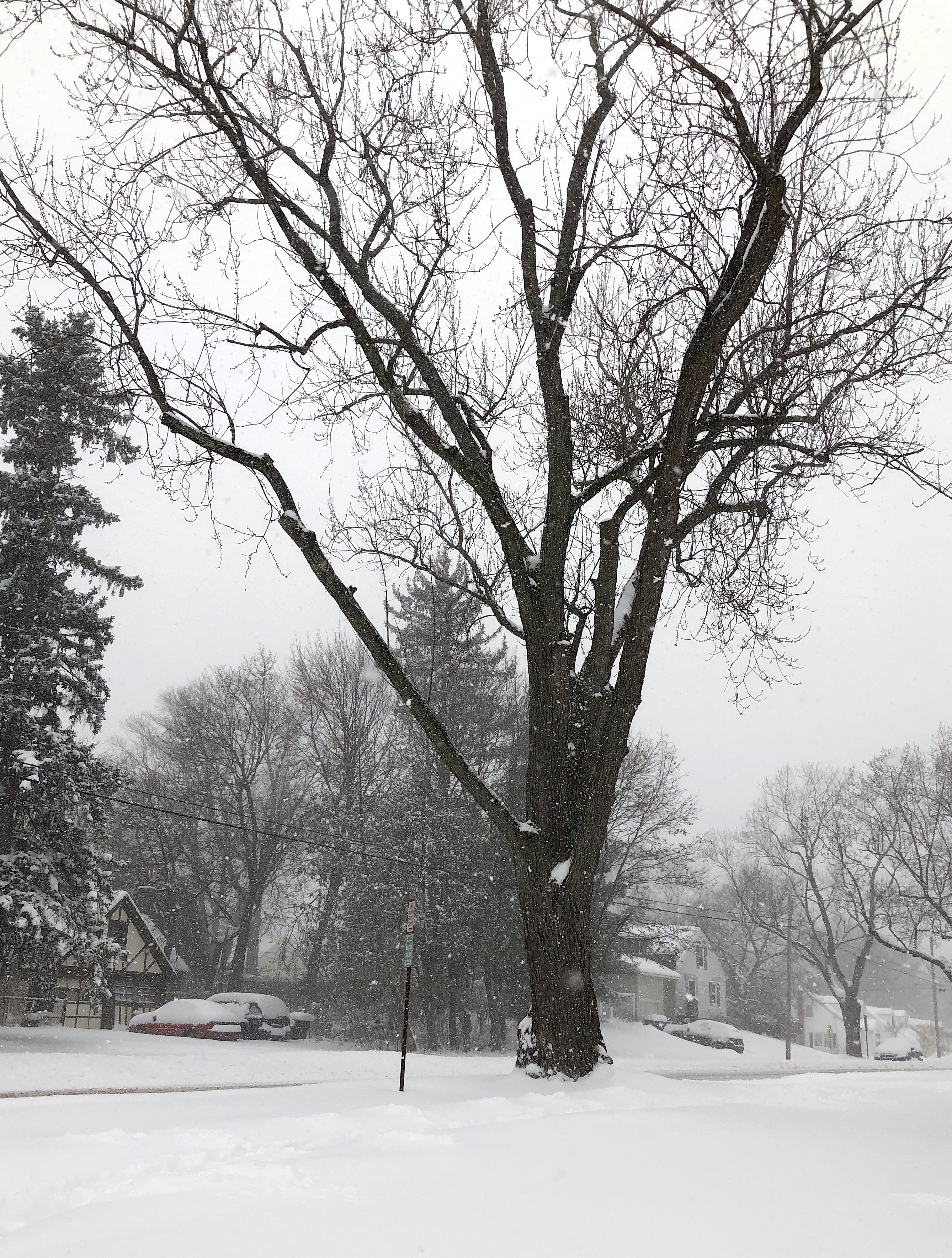
A tree in my neighborhood, observed on Dec. 31, 2024.
But for my 2025 New Year’s resolution, I will attempt to stop that negative line of thought regarding “what could’ve been.” I will instruct myself to stop replaying the poor decisions I made in my progression from boy to man.
And I do have regrets. Many. Most nettlesome are the ones where I let fear stand in the way of opportunity—when I was too frightened to take a risk, either professionally or personally. Some of those decisions still haunt me. In this previous blog post, I wrote about my regret about not moving to California after graduating from college.
But in my sickened state, while I tossed and turned in my son’s twin bed—separated from my wife and son so as not to infect them—I thought, “What have all these regrets done for me?” They certainly don’t make the present more bearable or the future more promising. So why hold on to them?
So in 2025, when I get that tickling of regret inside my brain, I will try to shut it down before it festers.
And one of the poems from my collection The Truth I Must Invent seems fitting for me on this New Year’s Eve. I wish everyone a safe and happy New Year. The poem follows. And I apologize for the profanity, but a clean word replacement wouldn’t have the same effect.
The Wanting is the Hardest Part
Tom Petty was wrong.
The waiting isn’t the hardest part.
The wanting is the hardest part.
Wanting fucks everything up—
wanting a better job, a better marriage,
a better house, a better life.
That seed of desire fucks with your head,
makes you think you can be something you’re not.
What if I discarded desire? What if I stopped wanting?
What if I no longer sought a better life?
Can I let go of that fantasy
and accept who I am right now,
without seeking a better version of myself—
the idealized me I hold inside my head?
December 26th is
the most dreaded
day of the year.
All the anticipation
of Christmas
has now passed.
The turkey stuffed,
cooked and consumed.
Tins of cookies devoured,
packages ripped apart,
wine bottles drained—
bellies full and
waistlines expanded.
It’s back to work,
with a fat credit card
statement delivered
securely to your inbox.
And yes, you can still say
“Happy Holidays,”
but it doesn’t have
the same ring
on the day
after Christmas.
And New Year’s Day
is a distant cousin
of Christmas—
with January 1st
lacking the allure
and magic of
December 25th.
While watching the film Red One (starring Dwayne Johnson and J.K. Simmons) recently, a childhood memory connected to Christmas and Santa Claus popped into my head. When Santa’s massive, modern North Pole complex appeared on screen, I mentioned to my wife, Pamela, that my parents had taken my sister, Lisa, and me to Santa’s Workshop, a theme park in North Pole, New York, up in the Adirondacks, one summer when we were small kids in the early 1970s.
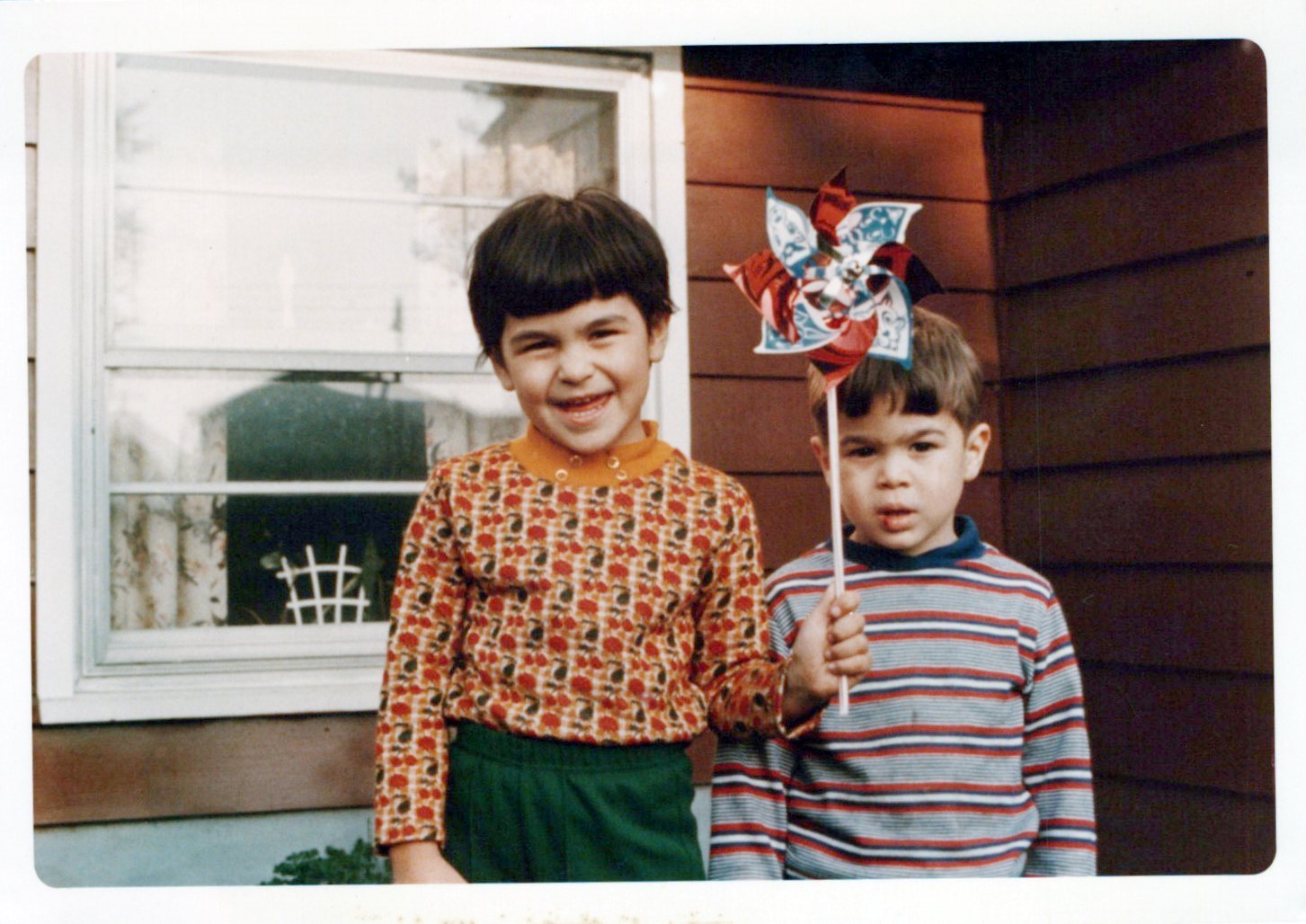
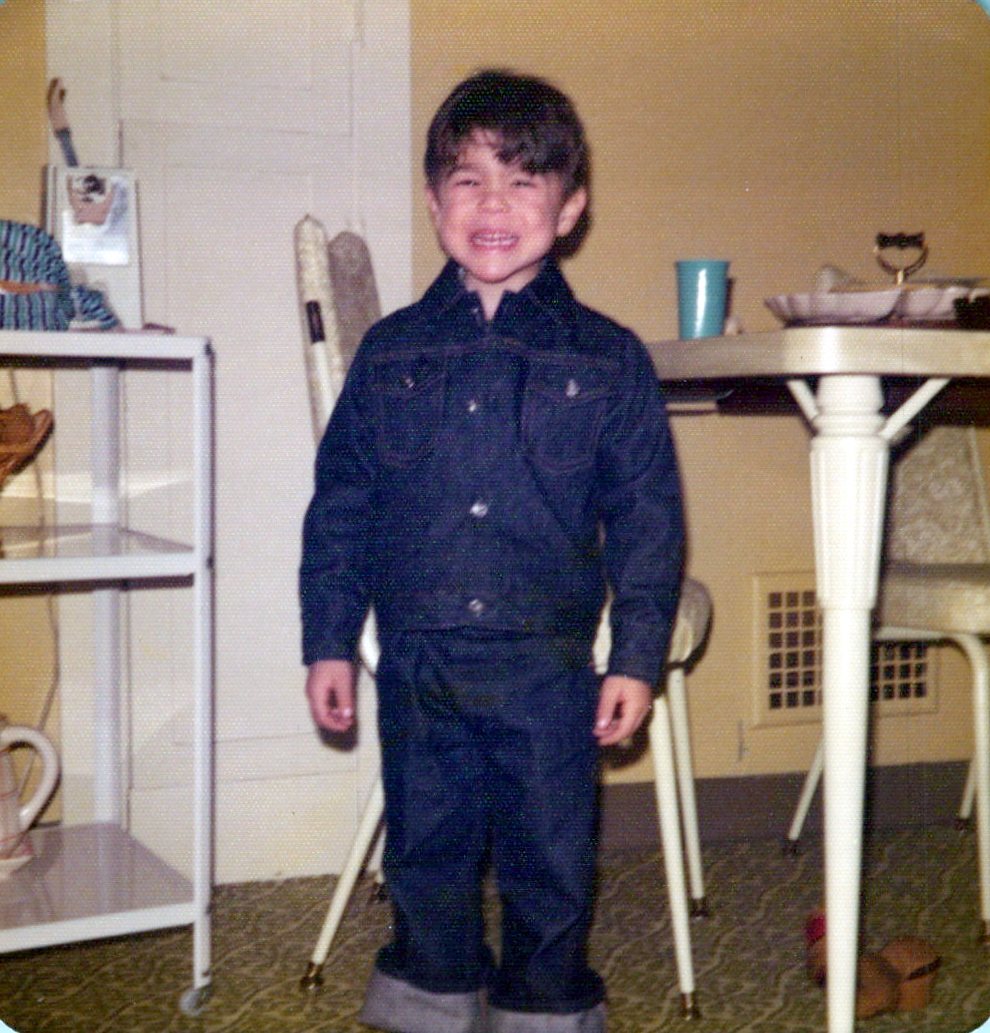
My sister Lisa and me when we were small.
When we embarked on the family trip, I was around five years old, and my parents were still married. My ears plugged as our little green station wagon (if I recall correctly) navigated the road, climbing higher into the mountains. Along the way, we stopped for a pancake breakfast at a roadside diner. After hopping out of the car, I observed the ring of surrounding blue mountains, felt the warm sunshine on my neck, and smelled the clean outdoor air.
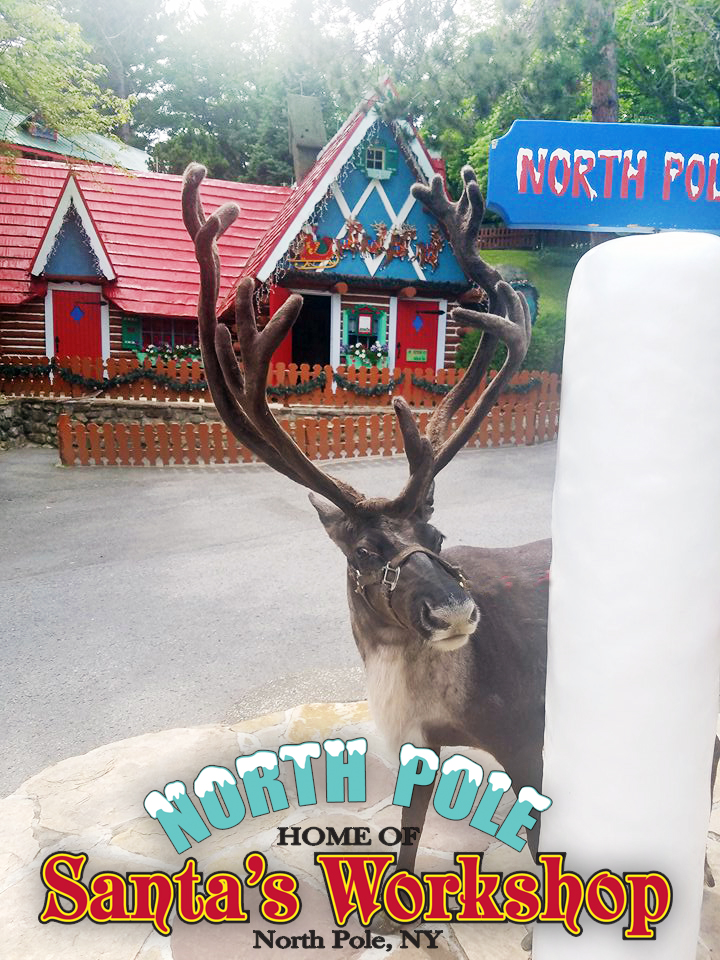
Once we arrived at the park, I couldn’t wait to see Santa’s reindeer. The animals were housed in individual stalls in a barn, and their nameplates identified them as Dasher, Dancer, Prancer, Vixen, Comet, Cupid, Donner, Blitzen, and Rudolph.
Photo Credit: North Pole, NY
But a scary moment followed when I left the barn and entered a petting zoo. An angry white goat chased me in the ring, nipping at my heels and chomping at my butt. I fell and became terrified the goat would chew my face off. My father laughed, picked me up, and shook off the dust that had covered my blue jeans.
An age appropriate image for the story.
Later, when it was my time to sit on Santa’s lap, I said to the older man wearing the fake white beard and red suit, “Listen, Santa, I have to tell you something.”
“Go on, young man,” he said.
“One of your goats was not very nice. He chased me and tried to bite me.”
“Oh, I’m very sorry to hear that,” Santa said. “I’ll go to the barn later and have a word with him. I promise you that won’t happen again.”
“Thank you, Santa,” I said and then proceeded to give him my Christmas wishes.
##
The North Pole visit was one of our last vacations as a nuclear family. My parents would divorce a few years later.
Now, when I work on nonfiction and memoir projects, I find it mysterious and blessed how one little thing—such as seeing the Red One—can trigger a sense of recall, starting the movie projector running within your personal memory vault. It’s like all the scenes from our past are still tucked inside, and we just need a way to access them. For me, the key is trying to remember the sensory details from a particular incident or time period.
I wish everyone a very Merry Christmas and Happy Holidays.
I am celebrating an important milestone today—the 40th anniversary of my first brain surgery to remove a benign tumor engulfing my pituitary gland. I have written about this ordeal many times in the past, including in this long 2014 post.
On this day, four decades ago, surgeons cracked open my skull and extracted the craniopharyngioma that had stunted my growth and delayed my transition from boy to man.
In this essay, I reflect on my experience as a teenager in 1984 while a patient at SUNY Upstate Medical Center (renamed Upstate University Hospital) in Syracuse, New York. I am limiting the narrative period to the day of surgery and my immediate recovery.
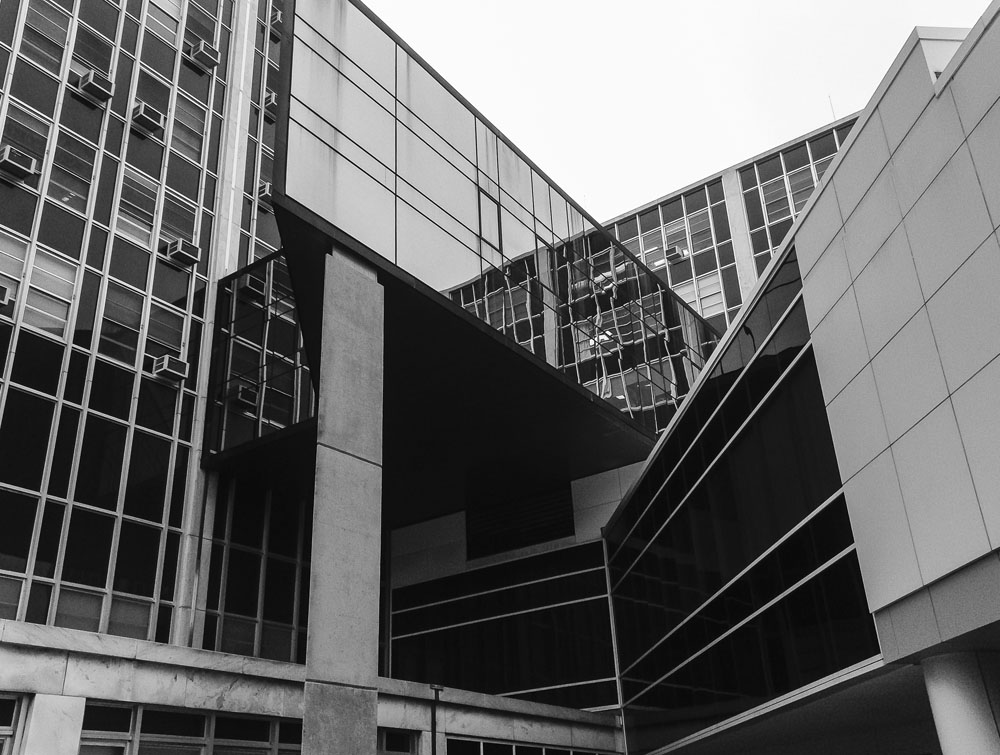
Upstate University Hospital
Surgery Day: An Essay
1.
Early morning. Blackness. I can smell the breakfast trays delivered on the hospital floor—watery eggs, ham and bacon, soggy oatmeal, and weak tea and coffee. The noise outside my room grows as patients awaken and nurses draw blood and administer medicine.
My appointment with the medical intervention team has arrived. I am fifteen years old and ready for surgery day, prepared for the trauma that awaits me on the table. My head will be shaved, and my skull sawed open. The tumor growing in my head—wrapped around my pituitary gland and stifling my maturation—will be plucked free, yanked out like an infected molar and then examined under a microscope to determine its classification. We must name our enemies to defeat them.
Once removed, the lesion will relinquish dominion over my body. I will be cut loose from its tentacles. The surgery will disrupt my endocrine system, leading to a permanent condition known as hypopituitarism and propelling me on a long road toward “catch-up” growth and development.
A photo of my father and me two months before the operation in 1984.
2.
A nurse enters my room and hands me a small plastic cup filled with a few pills. “This will just relax you,” she says as I swallow the pre-surgery drugs. About a half-hour later, she returns and says, “It’s time for you to go down now.” A softness squishes against the edges of my mind; I am drifting from consciousness.
An orderly comes to take me away—filling nearly the entire space inside the door frame. A hulking figure with thick, black hair, a black beard, and muscular forearms, he reminds me of Bluto from the Popeye the Sailor cartoons. But for some reason, I call him Hugo.
“OK, Hugo,” I say, “I’m ready now.” Hugo helps me slide over from my bed to a stretcher as the nurse covers me with a sheet and a blanket.
My family gathers around me, bending down to kiss me and wish me “good luck.” What does “good luck” mean on the operating table? I wonder.
Tears stream down my mother’s cheeks, which are red and wind-burned and feel cold against my skin as she kisses my face and forehead; she squeezes my hand and then releases her grip and steps away.
Hugo unlocks the wheels of the gurney and steers it out of the room and into the hallway. Even though I am sleepy, I stay awake for the ride, keeping my eyes open and watching the panels of fluorescent lights pass overhead as we make our way through the hospital corridors and into an elevator. We take a silent ride down to the surgical wing.
The temperature drops when we enter the frigid, sterile operating room. A chill runs over my body; my lips tremble as gooseflesh buds on my arms.
The surgical team members buzz around the operating room, each doctor or nurse carrying out a specific task. They transfer me from the stretcher to the operating table. An overhead light shines into my eyes while I lay splayed on the table.
A nurse covers me with an extra blanket and stretches tight, white stockings over my calves. She says the stockings will help to prevent blood clots after surgery.
One of the doctors sits down near the table and says he will shave my head. When he asks me if I want my whole head sheared or just the front, I make the mistake of telling him to clip only the front. As a result, weeks after the surgery, my hair remains uneven—bald in front and growing long in the back—similar to the long hair sticking out the back of helmets worn by hockey players with mullets.
After they jab an IV in my arm, I grow drowsy, my eyelids shutting; but before I drift off, I tell one of the nurses that I need to pee. The woman chuckles and says, “Oh, you don’t have to worry about that now. We’ve already put in a catheter.”
And then I leave the world—falling under the power of general anesthesia for about eight-and-a-half hours while the surgeons perform their work.
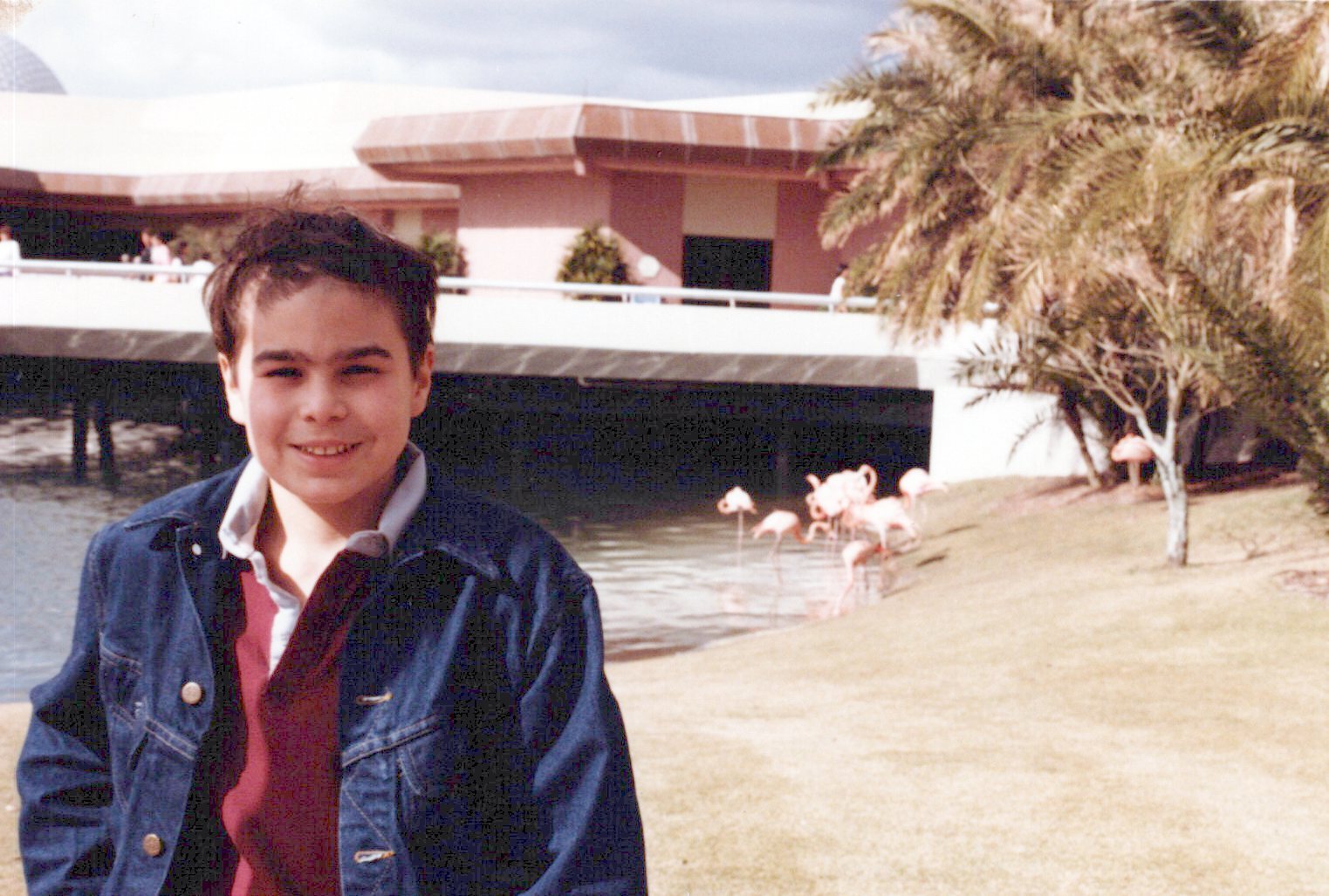
At Walt Disney World in February 1985.
3.
I have often wondered where I traveled to during that gap of time. What realms or landscapes did I explore in my mind while my skull lay open and I remained unconscious on the operating table?
Here is me stepping out of the story momentarily to travel back in time and investigate the scene. It’s a fantasy of the man I hoped I would become once the surgeons extracted the tumor. It’s the future I had envisioned for myself—marked by maturation and normalcy, playing the role of a fully formed male accompanied by a female partner.
A green canopy of trees. A trilling stream. Sunlight filtering through leaves overhanging a hiking path. Birds chirp, and tree limbs sway in the wind.
Boots touch the soft, muddy earth. A man emerges from a wooded path. He is dressed in a red checkered flannel shirt, tan khakis, and hiking boots, and he carries a knapsack on his shoulders. He is about five feet six inches tall, lean and muscular, and has a slight beard.
A twig snaps, and we see a woman walking out of a clearing. She’s wearing a fleece sweatshirt, jeans, hiking boots, and a backpack. The two figures stride toward one another, share a kiss, and then grasp hands. Sunlight bathes them as they leave the clearing and start walking on a path leading over a ridge. They climb the slight incline and disappear as they walk down the other side, their bodies concealed by the curve of the Earth.
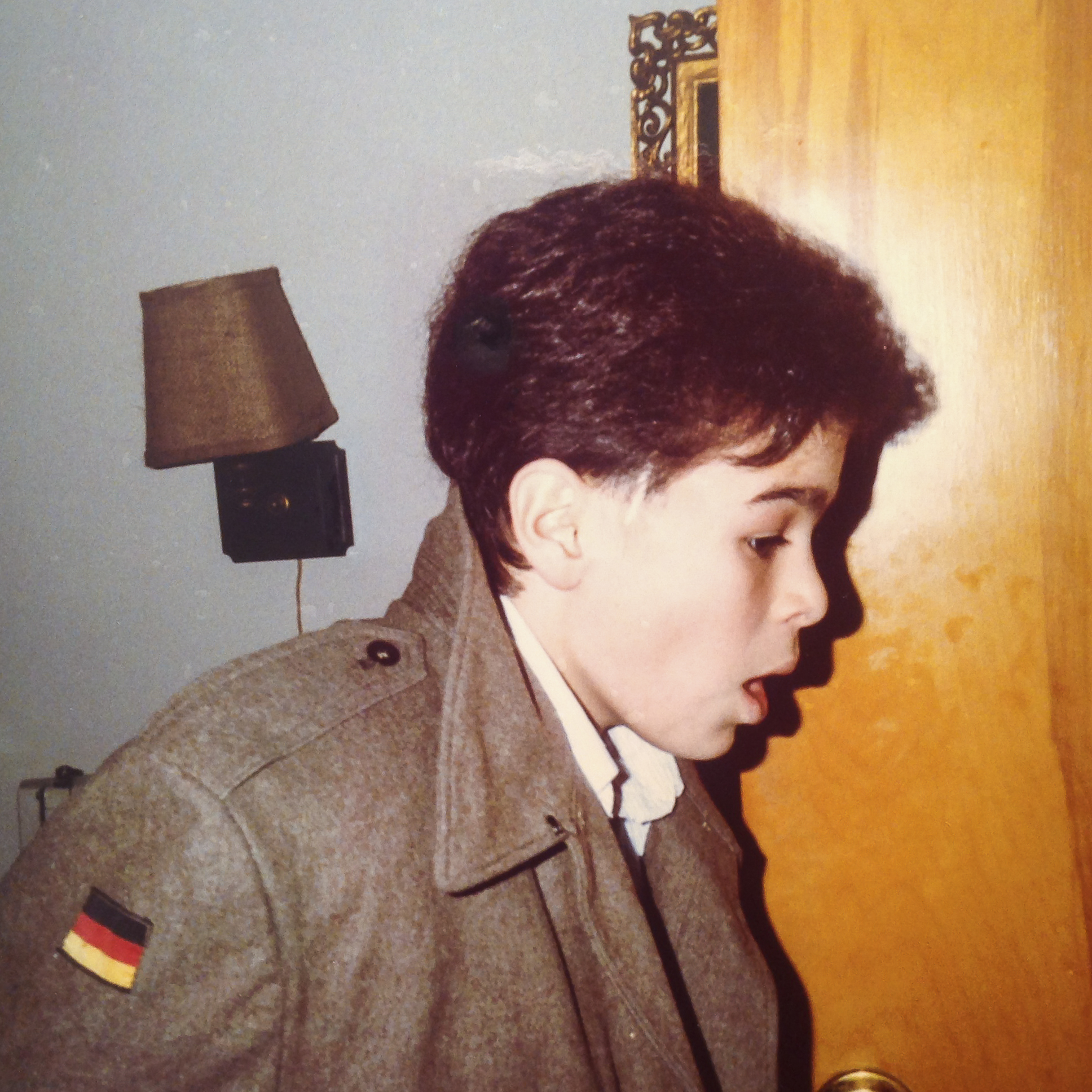
Late high school or early college years.
4.
I wake up in a bed tucked in a corner of the surgical intensive care unit. I feel dizzy, and a dull, continuous ache presses against my head as if my skull is being squeezed in a vice. Nurses inject the opioid Demerol into my thighs over several hours to alleviate the pain, and I keep drifting in and out of sleep. I hear machines beeping and the sound of a respirator somewhere on the floor. The gentle sound of the ventilator puts me at ease as I listen to it—in and out, in and out, in and out.
EKG stickers are pressed to my chest, and machines monitor my heart rate and blood pressure. Vaseline has been smeared on my eyelids and eyelashes, clouding my vision, and I feel like I am straining to see from under the cover of a heavy, wet blanket. The white stockings the surgical team had given me are pulled up to my knees and constrict the circulation in my lower limbs.
I feel small—shriveled up in the bed like a green-gray alien being prodded by U.S. government doctors and scientists on an operating table in Roswell or Los Alamos, New Mexico. A scar runs the entire length of my head, from the tip of my right ear to the tip of my left ear. I tap a slight dent in my skull (produced by a right frontal craniotomy during surgery), about the width of two fingers, just above my forehead on the right side.
The stitches itch, and I reach up to feel the thick, black threads. I wonder if I resemble a twisted version of the Mr. Met mascot.
5.
But I feel relieved because I have awakened from the operation, and my brain function remains intact. Some doctors lean over my bed and ask me a series of questions: Do I know my name, the current year, the president of the U.S., and the name of the city I am in? I answer the questions correctly, and when instructed, I squeeze their fingers, wiggle my toes, puff my cheeks, stick out my tongue, and follow a penlight with my eyes.
My senses function properly, as I can see, hear, speak, and smell. I can form thoughts, and the trauma of the surgery has not altered my mental ability or effaced my memory.
My mother, father, sister, and Aunt Teresa huddle around my bed, their faces beaming like those of Dorothy’s relatives in the scene when she wakes up from the dream at the end of The Wizard of Oz.
“Hey, buddy,” my dad says.
My mom leans over the bed rail, kisses my face and eyelids, and says, “You did great, honey, just great.”
“Yeah, Dr. B. said he got most of it,” Dad says.
“Was it big?” I ask.
My mom holds up her right thumb, indicating the size of the tumor. “It was about the size of a thumb,” she says. She caresses my face and adds, “Dr. B. said there’s a little bit left over, but we don’t need to worry about that now.”
“OK,” I say, closing my eyes and returning to sleep.
High school graduation in 1987.
6.
I wake up on the first night with a raging thirst in my parched throat. I feel like I have been deprived of water for days. But because the doctors are concerned about swelling in the brain, they load me with corticosteroids and restrict my fluid intake. My face is swollen, and I feel bloated from the steroids; I am not allowed to drink water, but I am permitted to suck on ice chips.
However, late in the evening, with the lights dimmed on the floor after visiting hours have ended, I turn my head, look around, and notice a sink in the corner, only a few feet away from my bed.
Somehow, despite being woozy, I lower the bed rail, swing my legs out to the side, and climb out of bed. I try to be quiet as I wheel my IV stand toward the small, stainless-steel sink. I turn on the foot pedal faucet, cup my hands, and gulp the water like it’s rushing in an icy mountain river.
The cold liquid pours down my throat and gives me immediate relief. I want to stay here and drink more water, but a man—a male nurse or an orderly—races toward me and pulls me away from the sink.
“What are you doing?” he yells. “You just had brain surgery.”
He then escorts me back to bed, swings my legs over, covers me with the blankets, and lifts the bed rail.
“Now, don’t get up again,” he says. “What do you wanna do, crack your head open and screw up the work those surgeons did?”
And now tucked back into bed, I resume sleeping, drifting off until the next wave of pain hits, and I press the call button to request another dose of Demerol.
##
Recalling these past forty years, I run a tally of my surgeries at Upstate. The number stands at six—counting the initial surgery in 1984 and the subsequent operations to remove tumor regrowth in 1988, 2011, 2012 (Gamma Knife), 2020 (Gamma Knife), and 2023.
I have some double vision when looking at things up close and to my extreme right (right sixth nerve palsy), and I must be hyper-vigilant in the management of my care to treat my hypopituitarism. But except for my corticosteroid-induced osteoporosis and rheumatoid arthritis (unrelated to the tumor), I am a healthy, middle-aged man.
My next MRI is scheduled for Dec. 18. And with the stubborn resilience of craniopharyngiomas, I know more surgeries (or radiation treatments) loom in the future. But I face each day with gratitude, recognizing how lucky I am to have survived the scalpel on multiple occasions. I also don’t look beyond each six-month window of time between MRIs. Once my current neurosurgeon orders the next MRI, I go about my life without thinking about the tumor still lurking in my head.
Late high school or early college years.
##
And because of the significance of the number 40 on this anniversary date, I’ll leave you with U2 playing “40” live at Red Rocks Amphitheatre in Colorado in 1983.
I want to wish everyone a Happy Thanksgiving. May you and your families be blessed this holiday season. I would also like to share this little poem inspired by a recent trip to the supermarket.
Thanksgiving Dinner
Woman overheard talking on the phone in a grocery store:
“If I’m cookin’ Thanksgiving dinner at my home,
it’s gonna be my mom, my dad, and my kids. That’s it.
I’ll tell her, ‘Look you have a house.
I ain’t cookin’ for you in my little apartment.
Get outta here with that.
Cook your own damn dinner.’”
My mother passed away from lung cancer thirteen years ago today. It’s hard to believe she’s been gone that long. When Carmella died, I was recovering from transsphenoidal brain surgery (through the nose) and couldn’t attend her wake or funeral mass. The surgeons instructed me to avoid blowing my nose for at least eight weeks, and I was concerned about getting emotional at the services and springing a cerebral spinal fluid leak.
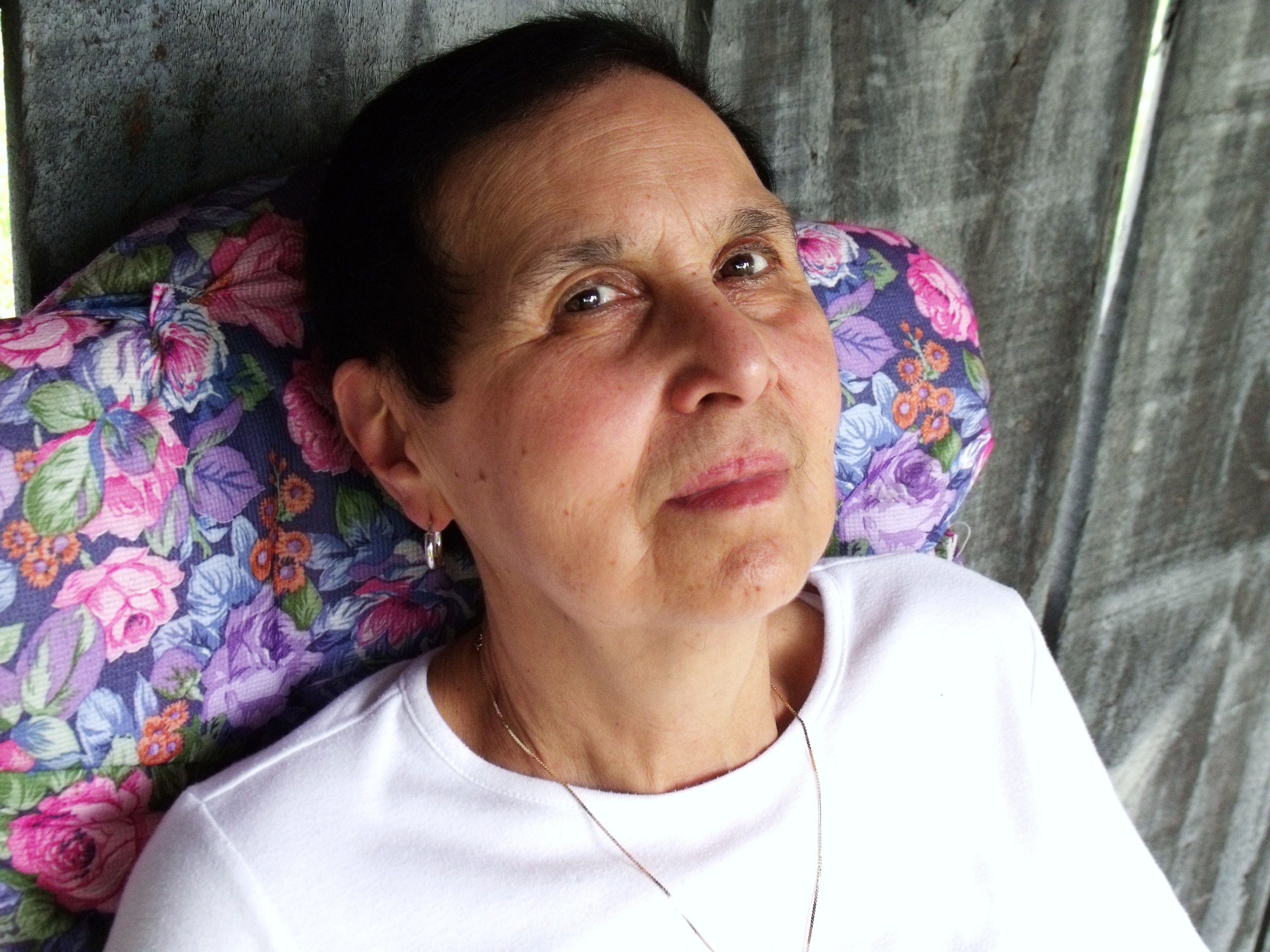
Carmella DeCosty Ruane.
These days, I think about Carm when washing the dishes she gave me or ruminating about how she would have loved spoiling my son, Colin.
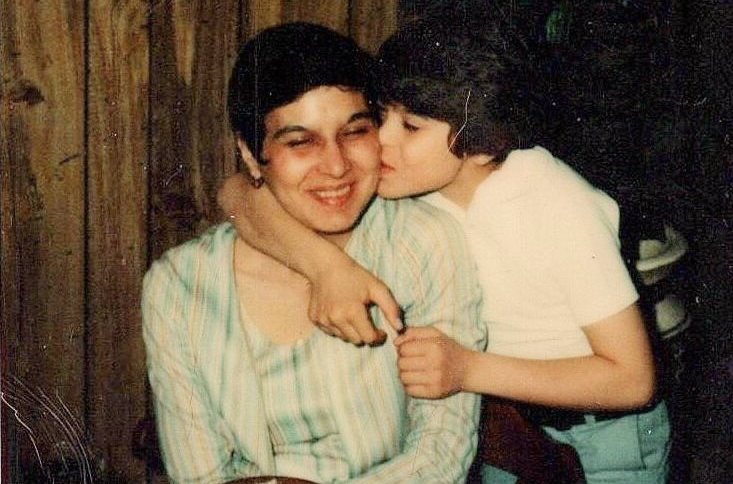
My parents and my sister, Lisa, kissing me.
Here are two poems that capture the memory and spirit of my mother.
Morning Coffee
My mother sits
in the kitchen chair
after she recites
her morning prayers.
Sunlight streams through
the lace curtains
and cigarette smoke
is suspended in the air.
She bows her small head
and presses her fingers
to the bridge of her nose,
as she contemplates
the chores for the day,
while her milky coffee cools
in a blue ceramic mug
resting within reach
on the laminate counter.
Vestiges
My parents are gone.
They walk the earth no more,
both succumbing to lung cancer,
both cremated and turned to ash.
With each passing year,
their images become more turbid in my mind,
as if their faces are shielded
by expanding gray-black clouds.
I try to retain what I remember—
my father’s deep-set, dark eyes and aquiline nose,
my mother’s small head bowed in thought or prayer
while smoking a cigarette in the kitchen.
I search for their eyes
in the constellations of the night sky.
I listen for their voices in the wind.
Is that plastic bag snapping in the breeze
the voice of my father whispering,
letting me know he’s still around …
somewhere … over there?
Does the squawking crow
perched in the leafless maple tree
carry the voice of my mother,
admonishing me for wearing a stained sweater?
Resorting to a dangerous habit,
I use people and objects as “stand-ins”
for my mother and father,
seeking in these replacements
some aspect of my parents’ identities.
A sloping, two-story duplex with cracked green paint
embodies the spirit of my father saddled with debt,
playing the lottery, hoping for one big payoff.
I want to climb up the porch steps and ring the doorbell,
if only to discover who resides there.
In a grocery store aisle on a Saturday night
I spot an older woman
standing in front of a row of Duncan Hines cake mixes.
With her short frame, dark hair, and glasses,
she casts a similar appearance to my mother.
She is scanning the labels,
perhaps looking for a new flavor,
maybe Apple Caramel, Red Velvet, or Lemon Supreme,
just something different to bake
as a surprise for her husband.
A feeling strikes me and
I wish to claim her as my “fill-in” mother.
I long to reach out to this stranger in the store,
fighting the compulsion
to place a hand on her shoulder
and tell her how much I miss her.
I fear that if my parents disappear
from my consciousness,
then I too will become invisible.
And the reality of a finite lifespan sets in,
as I calculate how many years I have left.
But I realize I am torturing myself
with this twisted personification game.
I must remember my parents are dead
and possess no spark of the living.
And I can no longer enslave them in my mind,
or try to resurrect them in other earthly forms.
I have to let them go.
I have to dismiss the need for physical ties,
while holding on to the memories they left behind.
And so on the night I see the woman
in the grocery store aisle,
I do not speak to her,
and she does not notice me lurking nearby.
But as I walk away from her,
I cannot resist the impulse to turn around
and look at her one last time—
just to make sure
my mother’s “double” is still standing there.
I want her to lift her head and smile at me,
but she never diverts her eyes
from the boxes of cake mixes lining the shelf.
It’s the season of beautiful colors, exquisite light and streaming A Charlie Brown Christmas by the Vince Guaraldi Trio. While returning home from a recent jog, the piles of leaves in my neighborhood incited an idea for a poem. Fortunately, I had a pen and some paper to capture the idea before it slipped away.
The Casualties of Autumn
Every leaf strewn in a pile
collected at the curb
had a life before it
separated from the tree
and twirled to the earth.
Is there a home reserved
for the departed souls of leaves—
a place of repose
for the casualties of autumn?
To mark the end of Daylight Saving Time, I present a poem inspired by autumn scenery. I drafted this poem more than 25 years ago while living with my sister in Toledo, Ohio. I have revised it multiple times over the years, never satisfied with the final result. While this version may not be perfect, I think it’s about the best I can do, and so I release it here.
Falling Back (2024)
Alone on an empty school playground in Toledo, Ohio,
my worn-out sneakers shuffle on asphalt
as I practice left-handed hook shots
on a bent basketball rim with a rusted chain-link net.
The sound of the bouncing ball reverberates
off the school’s red brick façade,
as my reflection jumps out at me in the first-floor windows
adorned with orange paper jack-o’-lanterns.
A towering oak tree with branches like octopus tentacles
observes me as I heave an air ball from three-point land.
It studies my movements while a sharp wind
strips away its cloak of golden-brown leaves.
The cold sticks to my fingertips as I lick them
to get a better grip on the Spalding rubber ball.
And with my nose running incessantly and my chest heaving,
I swallow the chill in the air, trapping it deep inside my lungs.
I pick up my dribble—then stop, smell, look and listen.
Streetlights flicker on in the suburban neighborhood,
and across the road, a pumpkin is perched
on the porch of a modest white house.
The scent of burning leaves wafts in the air.
Charcoal-gray clouds brood in the sky,
and on the western horizon, near a row of pine trees,
there’s a feathering of soft pink light.
At the nearby park, soccer goals stand naked and netless,
and on the gravel softball field,
silence reigns on the base paths and outfield grass.
In the schoolyard, monkey bars are free of tiny, groping hands,
and empty swings sway in the stiff breeze—
calling out for the children to return.
But summer delight has long since passed,
and now Daylight Saving Time concludes again,
with me falling back to the days of my youth in Rome, New York.
I remember two-hand-touch football at Franklyn’s Field,
Friday nights watching the Rome Free Academy Black Knights
trounce visiting opponents under bright stadium lights,
blades of grass and windshields glazed with morning frost,
and autumn’s first taste of a juicy Macintosh.
There is magic and harmony in nature’s ever-spinning cycle.
I need only to look around,
and I find myself back in upstate New York—
my body planted in Ohio, but my mind
transported home to my native land.
Now, since autumn is on my mind with another page of the calendar being ripped, October giving way to November, I want to share some family photos from Halloween.
Colin Joe walking in his school parade.
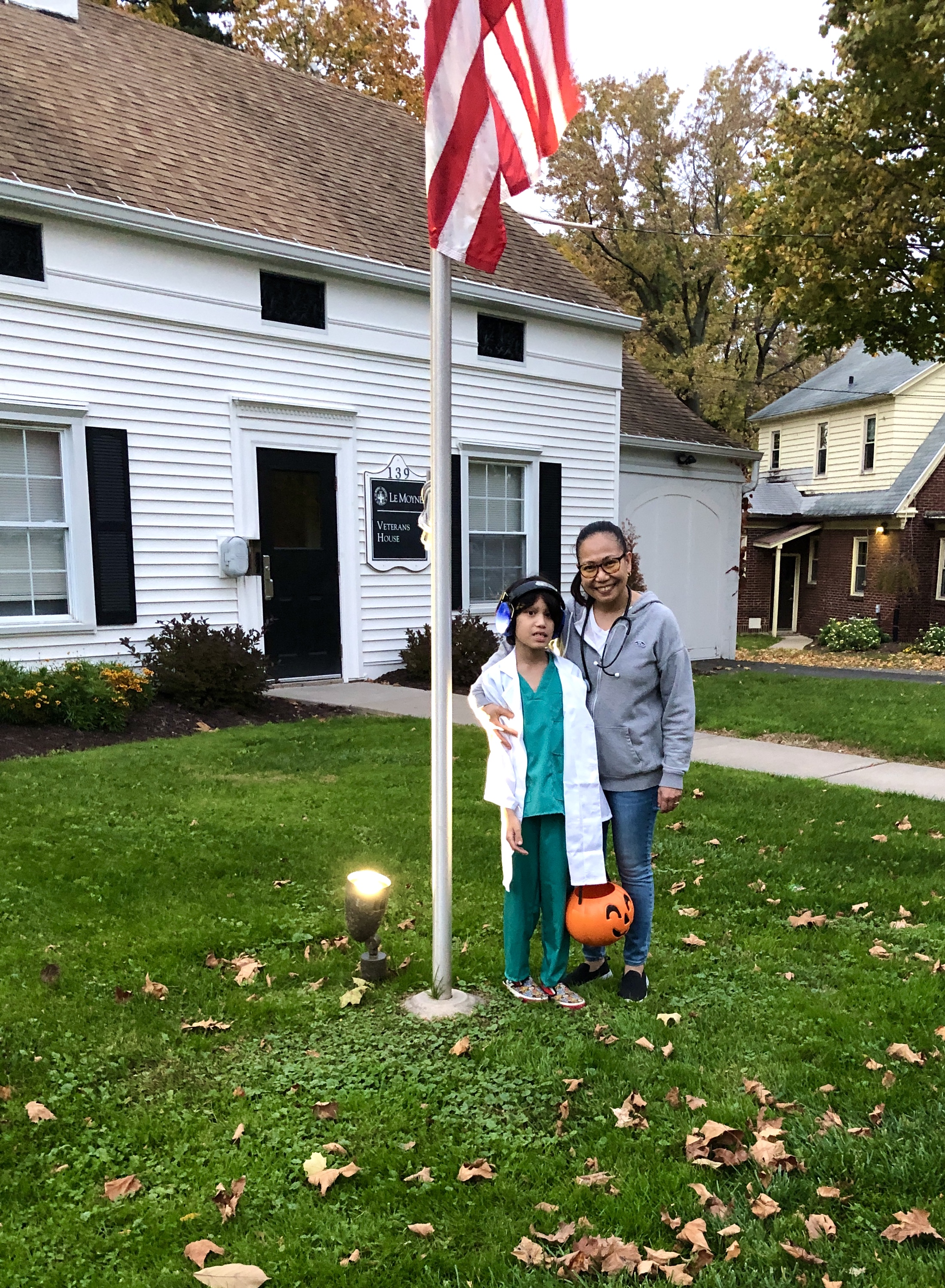
It was a special day for our family since our eight-year-old autistic son, Colin, participated in a parade at his elementary school and was excited and eager to go trick-or-treating in our neighborhood.
Colin Joe dressed as a doctor for Halloween.
In other years, we had to drag him out of the house. This year, dressed in his doctor’s costume, he slipped on his sneakers and gripped his pumpkin candy bucket, leading Mom and Dad in search of treats.









 Francis DiClemente