Just: Urban Art

I was walking along Walton Street in downtown Syracuse earlier this week and saw a large painting in a window that captured my attention.

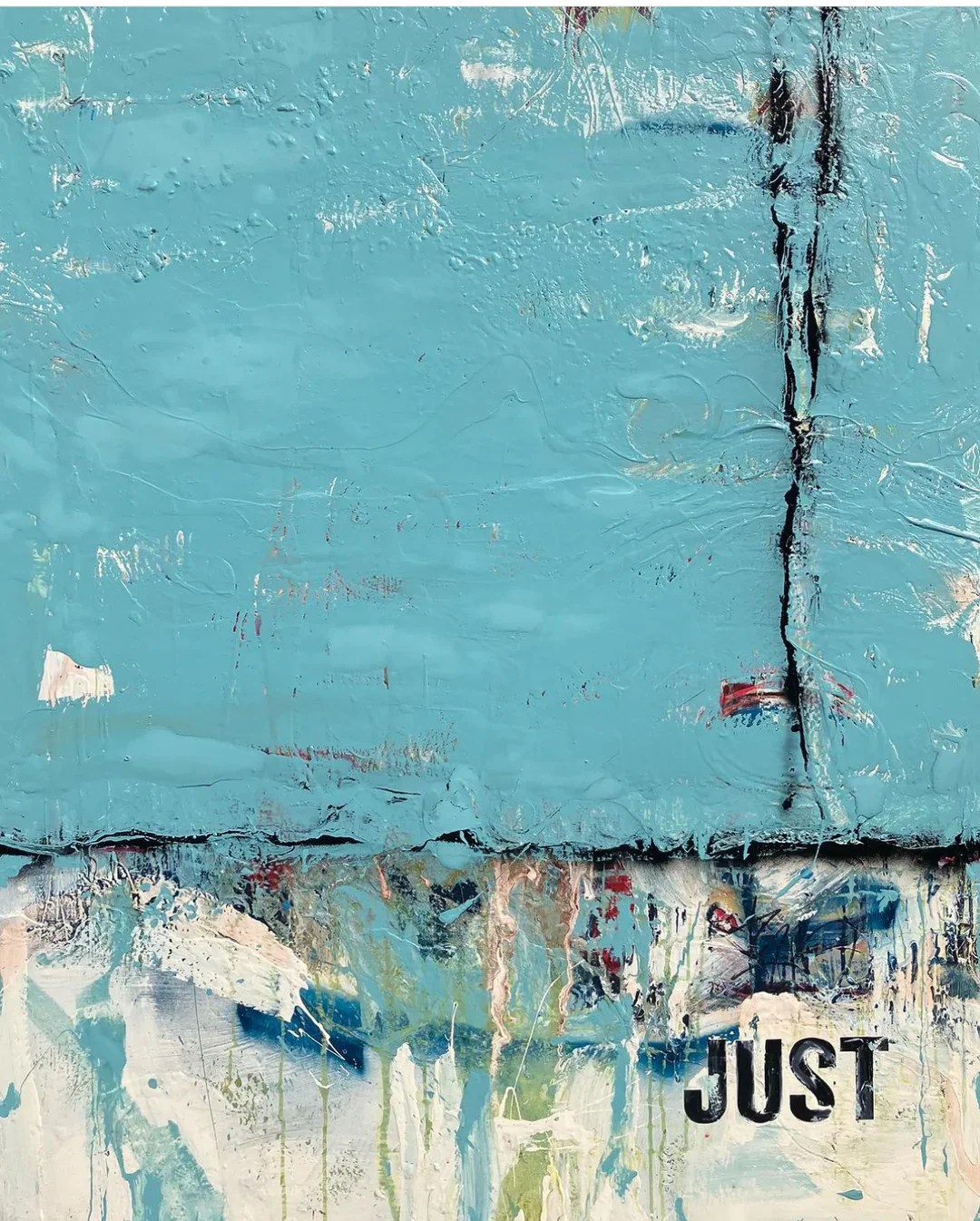
Just by Tyrone Johnson-Neuland.

The work is part of a “street gallery” curated by Midoma Gallery co-founder Marianna Ranieri-Schwarzer.

The piece is entitled Just by Tyrone Johnson-Neuland. It reminded me a little of the stock image I used for the cover of my poetry collection Sidewalk Stories (Kelsay Books, 2017).

I like the aquamarine space in the upper two-thirds of Johnson-Neuland’s painting with the running black horizontal and vertical lines.

And forgive my digression, but can anyone tell me if there is a difference between the colors Aqua, Teal and Turquoise? Or are the terms synonymous? I never know if I am using the correct color.

When I hear aqua or teal, I immediately think of the Miami Dolphins.

When I first noticed the painting in the window, the stenciled letter “Just” in the bottom right corner provoked a stream-of-consciousness fusillade of words that popped into my head.

Just by Tyrone Johnson-Neuland.

The first was “Just what?”
And, of course, “Just do it.” (Nike)

But then:

Just jump.
Just smile.
Just hug.
Just leave.
Just love.
Just care.
Just try.
Just live.
Just die.
Just f%$k off.
Just cry.
Just quit.
Just keep going.
Just(ine).

I love experiencing art in the city, and in this case, the work is an open-ended conversation whereby the viewer completes the piece that Johnson-Neuland so beautifully created.

Standard

A Poem for Autumn

Now that we’re well into October, I’ve broken out the winter coat and put rock salt and shovels in the tool shed. While I love the light and colors of autumn, the change of season ushers in a feeling of trepidation. Fall to me is more than playoff baseball, apple fritters, and pumpkin-spiced coffee (or lattes or whatever other beverages they doctor with pumpkin spice).

Genesee Street Tree. Photo by Francis DiClemente.

Autumn is a time of preparation for yet another Central New York winter, which means heavy coats and boots, shoveling and salting, and trying to avoid slipping and shattering a hip.

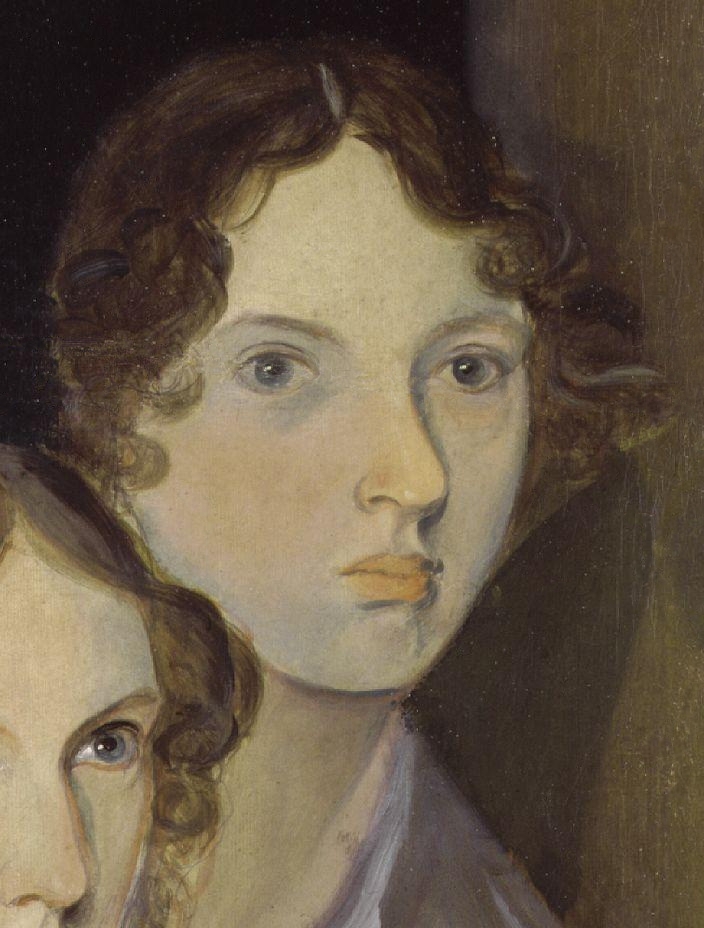
With these thoughts heavy on my mind, I discovered an autumn-themed poem written by Emily Brontë. Something about the words made me think I could hear Robert Smith of The Cure singing them as lyrics to a song. And speaking of music: I will listen to the album October by U2 from start to finish to deepen my autumn mood.

Emily Brontë by Patrick Branwell Brontë

Fall, leaves, fall

Fall, leaves, fall; die, flowers, away;
Lengthen night and shorten day;
Every leaf speaks bliss to me
Fluttering from the autumn tree.
I shall smile when wreaths of snow
Blossom where the rose should grow;
I shall sing when night’s decay
Ushers in a drearier day.

Standard

Happy Accidents

It’s been over a month since I’ve posted anything on the blog. I’ve been inundated at my day job and working on some long-term writing projects in my off hours—plugging away in the messy, first-draft stage.

And in reviewing some old poems recently, I found a few that are my favorites. I thought I would share them.

They’re not the best poems in the world. I have no inflated sense about their worth.

But I love them because they were delivered to me almost in complete form, needing little revision. Instead of writing the poems, I merely served as a portal through which they could be born.

Phoenix landscape.

The first one I wrote under my carport in the parking lot at my apartment complex in Phoenix, Arizona (sometime between 1998 and 2001). I had been out driving late at night with the windows open, looking at the stars, smelling the desert sage, and listening to “Terrapin Station” by the Grateful Dead.

And these words came to me as I shut off the engine. I changed only two lines slightly in the final version.

Revelation (final)

A courtship of contempt,
filled with swirling fury and churning angst,
not halted by the hands of God.
Zealous rituals express unwavering faith,
and outstretched arms set hearts aflame.

Trees topple under a crescent moon—
a gleaming scythe that carves the frost-burnt night,
invoking stones to crush the gnarled root,
as fragments of identity rupture
into paralyzing self-hate.

Revelation (rough)

A courtship of contempt,
filled with swirling fury and churning angst,
not halted by the hands of God.
Zealous rituals express unwavering faith,
and outstretched arms set hearts aflame.

Trees topple under a crescent moon—
a gleaming scythe that carves the frost-burnt night,
invoking stones to crush the gnarled root,
as fragments of salvation disintegrate
into insurmountable self-hate.

Three other poems from that same Phoenix period follow. “Side Dish” emerged from one my evening walks before heading to work as a night shift news editor.

Inaudible Expression

A great sigh emitted,
arising and then dissipating,
but remaining forever unheard,
the echo of a soul reverberating,
in resignation of the inexorable.

The Feast of Life

Swallow the anguish.
Extract the juice
of this bitter fruit,
and expel the residue
upon the already
splattered canvas.

Side Dish

A mundane scene of modern living
played out one evening
while I walked along Ninth Street
near East Grovers Avenue in north Phoenix.

I heard the sound of a sliding glass door
opening from behind a retaining wall
running parallel to the sidewalk.

And although I had
no intention of eavesdropping,
I then overheard a woman call out:
“And now the great vegetable debate, green beans or corn?”

The question evoked a few seconds of silence,
followed by a man’s reply:
“Uh . . . both,” he said.

And as I turned the corner,
heading up the next block,
I was tempted to stop and ask the couple,
“Hey, what else is for dinner?”

The last poem popped into my head while driving eastbound on the New York State Thruway between Syracuse and Rome (sometime between 2006 and 2008).

Departure

Vagabond bones creakin’ down the road,
bound for somewhere in between,
a home-sweet-home dissenter,
relishing the unknown.


Standard

Oh William!

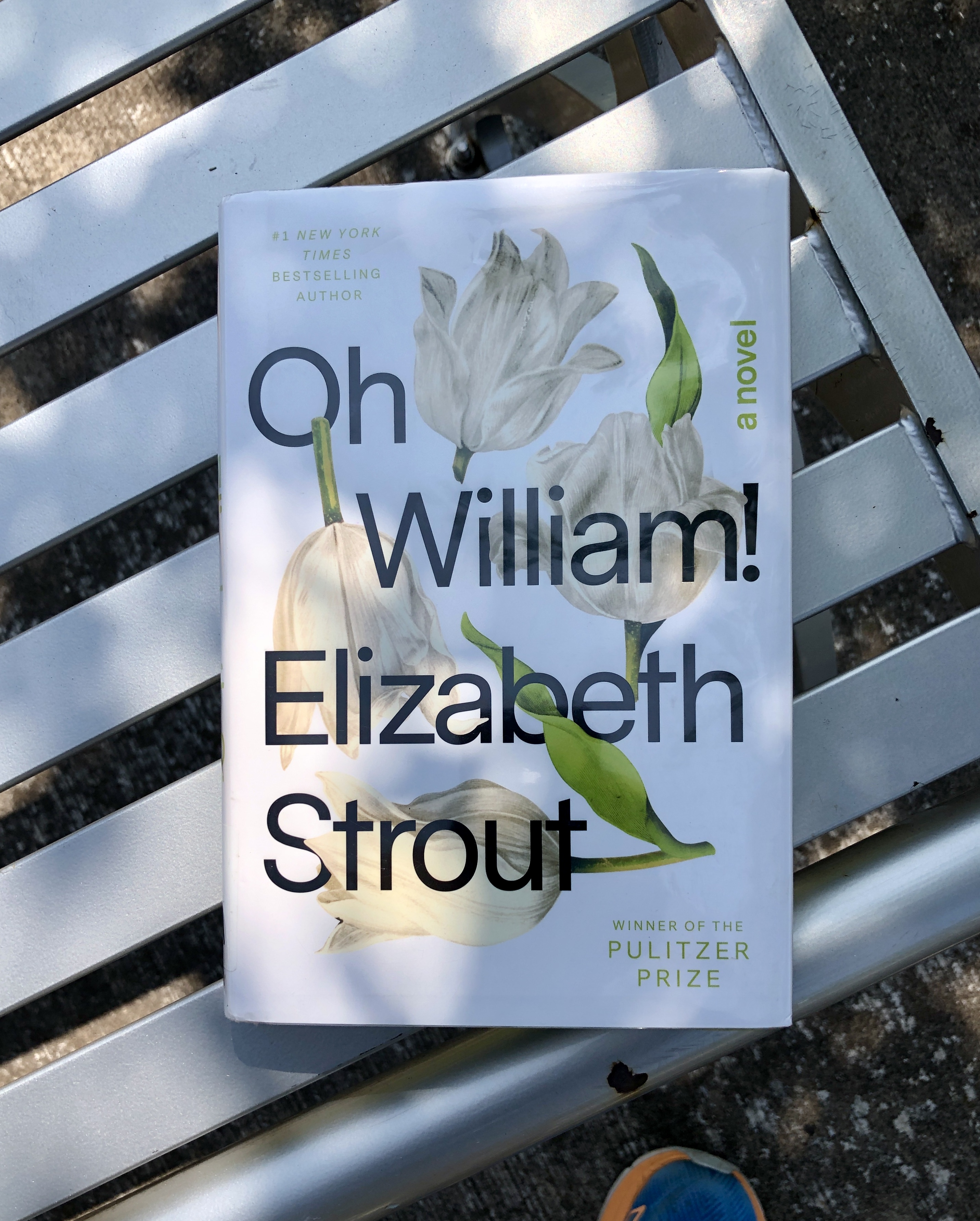
For habitual cheapskates like me, you can’t beat Little Free Library. Today while out on my run/walk, I picked up a perfect condition hardcover copy of Oh William! by Pulitzer Prize-winning author Elizabeth Strout (who is also a Syracuse University College of Law alum). The book had been languishing on my Goodreads “want to read” list for years. But now I’ve become the Fred Sanford of books, stalking the different Little Free Library sites in my surrounding area for literary steals. I do contribute some of my “read” books to the drop-off sites (but nowhere near as many volumes as I claim). Happy Sunday reading everyone.

Oh William! by Elizabeth Strout.

Standard

Saturday Morning

I was reviewing some old poems and came across this little throwaway. I thought I’d share it as a reflection for today:

Saturday Morning

There’s something special
about Saturday mornings—
waking up with no demands to be met
and owning the hours you clock.
So what are your plans today?

Standard

Where Angels Fear to Tread (1905)

I recently finished reading the novel Where Angels Fear to Tread by E.M. Forster. The work was published in 1905. I won’t give a review or provide a plot summary. You can look that up online or watch the 1991 movie starring Helen Mirren and Helena Bonham Carter.

Here’s an excellent description of the book I found through the Modernism Lab at Yale University.

What I want to share are a couple of excerpts that struck me. The first is from the third-person omniscient point of view (if my high school English reference is correct):

“For a wonderful physical tie binds the parents to the children; and—by some sad, strange irony—it does not bind us children to our parents. For if it did, if we could answer their love not with gratitude but with equal love, life would lose much of its pathos and much of its squalor, and we might be wonderfully happy.”

Angel in Asheville, NC. Photo by Francis DiClemente.

In the second quote, the character Philip Herriton is talking to Miss Abbott:

“Miss Abbott, don’t worry over me. Some people are born not to do things. I’m one of them; I never did anything at school or at the Bar. I came out to stop Lilia’s marriage, and it was too late. I came out intending to get the baby, and I shall return an ‘honourable failure.’ I never expect anything to happen now, and so I am never disappointed. You would be surprised to know what my great events are. Going to the theatre yesterday, talking to you now—I don’t suppose I shall ever meet anything greater. I seem fated to pass through the world without colliding with it or moving it—and I’m sure I can’t tell you whether the fate’s good or evil. I don’t die—I don’t fall in love. And if other people die or fall in love, they always do it when I’m just not there. You are quite right; life to me is just a spectacle, which—thank God, and thank Italy, and thank you—is now more beautiful and heartening than it has ever been before.”

Standard

In Honor of Abby

While walking on the campus of Le Moyne College last Sunday, I saw this bronze plaque with a poem in honor of a deceased student. The wording captured my interest.

Abby Bohnert ’19

Everyone’s friend.

Red lipstick and thick socks.
Giggles so loud they echo down the hall.
“She is Heaven and Hell’s love child.
Hold her. Name her poem.”

February 5, 1997 – August 8, 2016

A quick Google search shows that Abby died suddenly in 2016. And her mother passed away days later, making the story even more tragic.

I don’t have any wise words to share, except that Abby must have been a very special woman to be remembered with such a beautiful tribute on campus.

Standard

365 Days Later

One year ago today, a neurosurgery and ENT team at Upstate University Hospital took a nasal approach to remove the remnants of a craniopharyngioma (a benign tumor on the pituitary gland). It marked my sixth brain surgery since age 15.

I have fully recovered from the surgery, resuming all activities, although I still suffer occasional bloody noses and have peripheral double vision (which is likely permanent).

Photo of me last summer, after my surgery.

Vestiges of the tumor—what my neurosurgeon calls “membranes and scar tissue” still reside inside my head, as outlined in my latest MRI report:

FINDINGS:

“. . . In the right paramedian aspect of the surgical bed in the sellar/suprasellar region again seen is mass with heterogeneous enhancement which measures approximately 1.2 x 1.4 cm by my measurements.”

For now, the mass “remains grossly unchanged,” but the nature of craniopharyngiomas means the tumor will likely grow back to a point where another surgery or radiation will be required.

However, my medical condition is not the subject of this post. I just needed a brief introduction with a reference to the anniversary of my surgery.

Instead, I want to share some musical selections I listened to in the days and weeks following my surgery last summer. These songs aided me, providing succor while I recovered, propped up in bed, unable to sneeze or blow my nose, and moving gingerly around the house.

As I listened to the songs, I reflected on my life, swelling with gratitude for being alive and making gradual progress—supported by my wife, Pamela.

I think the tunes can provide positive affirmation for anyone facing adversity.

“I’m Still Standing” by Elton John

“Winning” by Santana

“Back in the High Life Again” by Steve Winwood

“Better Days” by Bruce Springsteen

More about Bruce later . . .

As someone who grew up in the 1980s, I am mesmerized by the concert footage available on YouTube. It is amazing to think you can see bands performing in 4K (some clips with multicam edits) hours after a show. When I was a kid, I listened to 95X in Syracuse after a concert by the Rolling Stones at the Carrier Dome so I could hear the DJ run down the setlist.

During The Cure’s 2023 North American tour, they played five original songs that I believe will be included in their forthcoming album, Songs of a Lost World. Two of my favorites from the new batch are “Alone” and “Nothing is Forever,” which I listened to repeatedly during my recovery. They put me in a dreamy headspace where I could forget about my health problems.

“Alone” by The Cure

“And Nothing is Forever” by The Cure

I also turned to the Grateful Dead for repeat listening during the late summer of 2023—often clicking on two tracks from the Dead’s famed 1977 concert at Barton Hall at Cornell University.

“Morning Dew” by the Grateful Dead

“Terrapin Station” by the Grateful Dead

And finally, there’s Bruce.

Bruce Springsteen and the E Street Band were initially scheduled to perform at the JMA Wireless Dome in Syracuse in early September 2023, but the show was canceled because of Bruce’s peptic ulcer disease. It was fortunate for me because I would have been in no condition to climb the concrete steps to the upper rafters of the Dome just a few weeks after brain surgery. But I attended the rescheduled show in April 2024, and I’ll leave you with “Backstreets” (which references summer).

“Backstreets” by Bruce Springsteen and the E Street Band

Standard

A Small, Good Thing

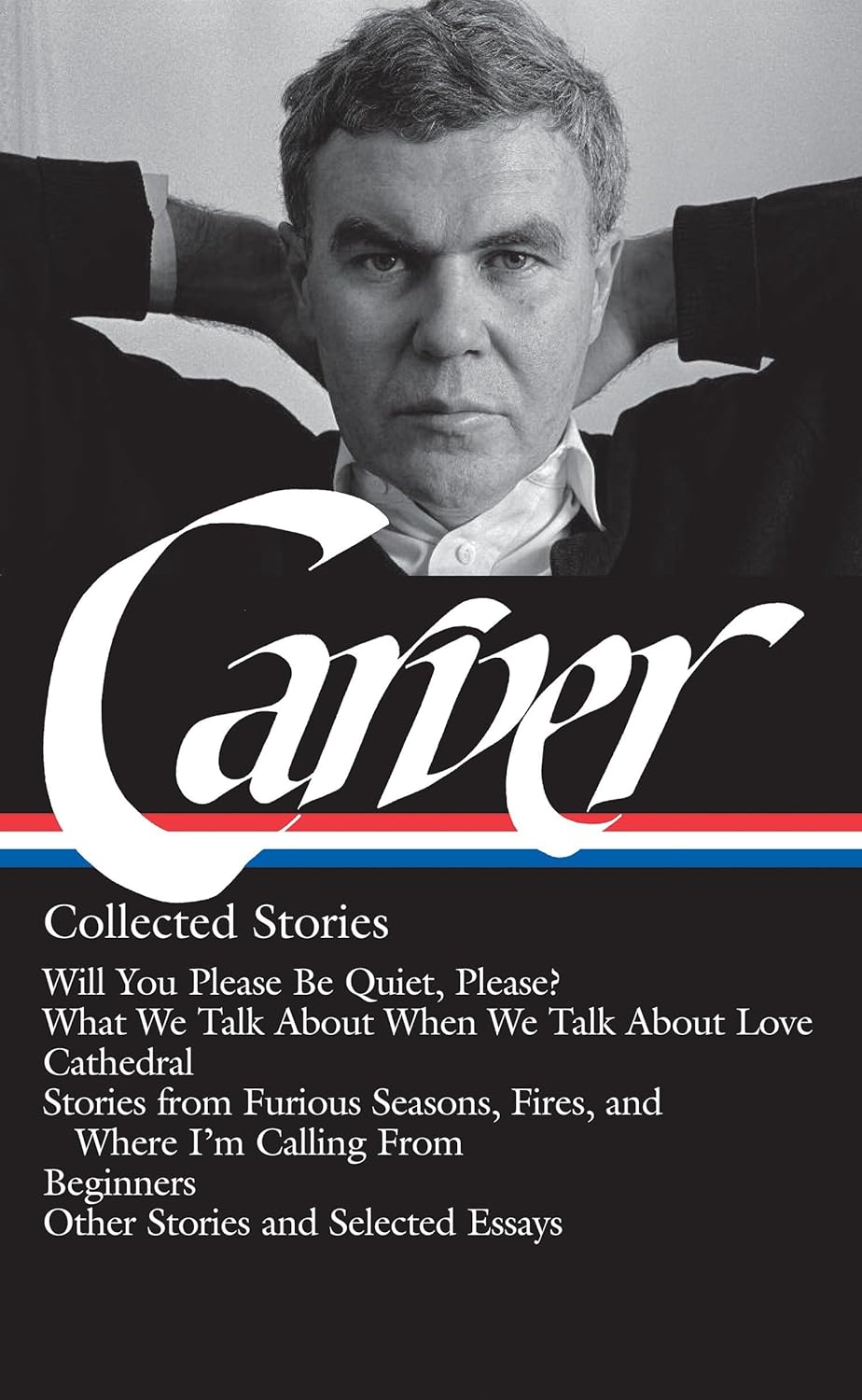
I am currently reading Raymond Carver: Collected Stories, published by the Library of America, and I wanted to share one story that I found devastating on an emotional level. You don’t have to be a parent to appreciate it, but being one heightens the intensity of the story.

I won’t go into plot summary of the story, other than to say it’s about boy who falls into coma after being struck by a car. Here’s a link to the full text.

Or, if you prefer, here’s an audio version:

Standard

Smiles of a Summer Night

I’ve been digging through some old poems and found an unpublished poem inspired by Swedish director Ingmar Bergman’s 1955 comedy Smiles of a Summer Night.

Bergman is a huge inspiration for me, and I’m obsessed with his work. But Smiles is too light for my taste. I prefer the more somber, melancholy Bergman works—The Seventh Seal, Wild Strawberries, Persona, Through a Glass Darkly and Winter Light.

Nonetheless, I’m glad his summer comedy led to a poem. The verse never found its way into one of my collections because I don’t think it’s worthy of publication. I’m posting it here only because summer is slipping away, and I think it captures the feeling of the season.

Smiles of a Summer Night
(With Apologies to Ingmar Bergman)

Smiles of a summer night
emerge on a human canvas
smeared with cotton candy
and dripping watermelon juice.

Smiles of a summer night
collide in a lovers’ embrace
shielded by corn stalks.

Smiles of a summer night
burst open in collective
“oohs” and “ahs”
elicited by fireworks.

Smiles of a summer night
come caked with dirt after a
head-first slide into home plate.

Smiles of a summer night
are everything that is possible
under the setting sun.

Smiles of a summer night
are fleeting, fleeting, fleeting.
And smiles of summer night
with the onset of September are done.


Standard