Ice Cream Poem

I saw a melting ice cream cone on the sidewalk while out for my Sunday run today. Luckily, I brought along a pen and a scrap of paper. I jotted down some notes, which became the sweaty, messy first draft of this poem.

Melting Cone

A Drumstick ice cream cone
lying in the middle of the sidewalk
on a blistering July Sunday—
the vanilla ice cream liquified,
while ants scale the surface of
the dented waffle cone.

Did the child cry
when the cone hit the ground?
And did Mom let the girl
run back inside to
grab another from the freezer?
But maybe a kid didn’t drop it—
because in reality,
ice cream misfortune
could befall anyone.

The forecast calls for storms.
Soon heavy rain will scatter the ants
and cleanse the sidewalk,
erasing the evidence of this calamity,
as one more taste of summer fades away.

Standard

A Poem for Autumn

Now that we’re well into October, I’ve broken out the winter coat and put rock salt and shovels in the tool shed. While I love the light and colors of autumn, the change of season ushers in a feeling of trepidation. Fall to me is more than playoff baseball, apple fritters, and pumpkin-spiced coffee (or lattes or whatever other beverages they doctor with pumpkin spice).

Genesee Street Tree. Photo by Francis DiClemente.

Autumn is a time of preparation for yet another Central New York winter, which means heavy coats and boots, shoveling and salting, and trying to avoid slipping and shattering a hip.

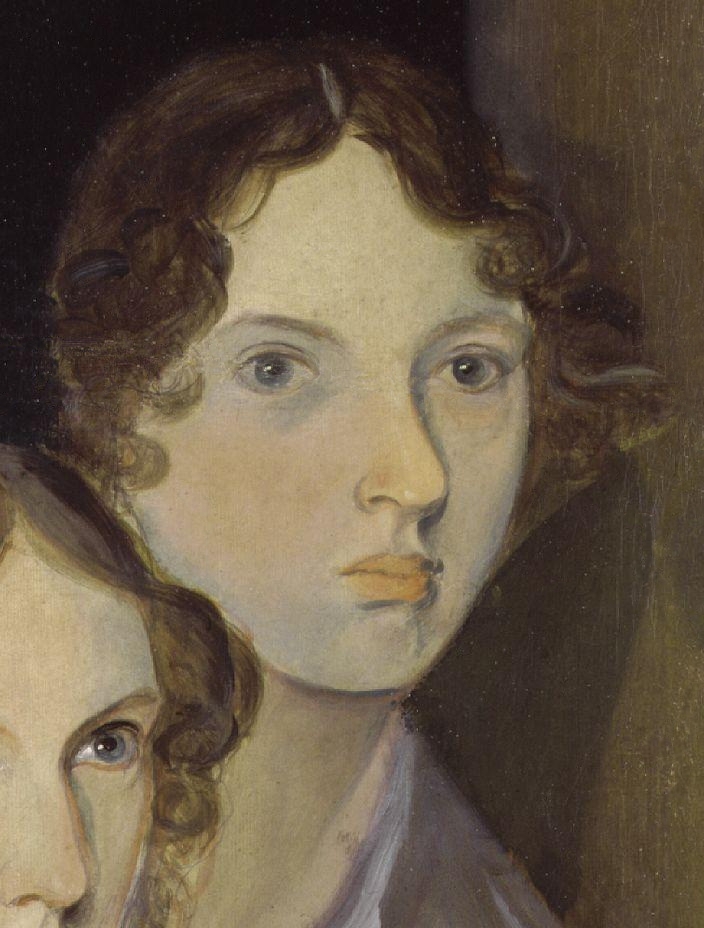
With these thoughts heavy on my mind, I discovered an autumn-themed poem written by Emily Brontë. Something about the words made me think I could hear Robert Smith of The Cure singing them as lyrics to a song. And speaking of music: I will listen to the album October by U2 from start to finish to deepen my autumn mood.

Emily Brontë by Patrick Branwell Brontë

Fall, leaves, fall

Fall, leaves, fall; die, flowers, away;
Lengthen night and shorten day;
Every leaf speaks bliss to me
Fluttering from the autumn tree.
I shall smile when wreaths of snow
Blossom where the rose should grow;
I shall sing when night’s decay
Ushers in a drearier day.

Standard

Saturday Morning

I was reviewing some old poems and came across this little throwaway. I thought I’d share it as a reflection for today:

Saturday Morning

There’s something special
about Saturday mornings—
waking up with no demands to be met
and owning the hours you clock.
So what are your plans today?

Standard

Cut While Shaving

I recently finished reading The Last Night of the Earth Poems by Charles Bukowski (Ecco, 2002; previously published by Black Sparrow Press in 1992). Bukowski feels like an old friend to me, and I love picturing him sitting in his house, drinking wine and listening to classical music on the radio while he bangs away at the typewriter.

The book is a beefy collection filled with the typical Bukowski charm—a combination of vulgarity, humor and humanity.

As someone of advancing age, often filled with regret over the detours and wrong decisions I’ve made in my life, one particular poem hit home for me.

Cut While Shaving

It’s never quite right, he said, the way people look,
the way the music sounds, the way the words are
written.
It’s never quite right, he said, all the things we are
taught, all the loves we chase, all the deaths we
die, all the lives we live,
they are never quite right,
they are hardly close to right,
these lives we live
one after the other,
piled there as history,
the waste of the species,
the crushing of the light and the way,
it’s not quite right,
it’s hardly right at all
he said.

don’t I know it? I
answered.

I walked away from the mirror.
it was morning, it was afternoon, it was
night

nothing changed
it was locked in place.
something flashed, something broke, something
remained.

I walked down the stairway and
into it.

Standard

Jumpcuts of Thought

I was flipping through one of my older poetry books—Dreaming of Lemon Trees: Selected Poems (Finishing Line Press, 2019)—and I came upon “Jumpcuts of Thought.” I like the stupid absurdity of it, and I thought I would share the poem, since many people have not read it in book form. It’s also one of the only poems I’ve written that employs the use of rhyme.

Jumpcuts of Thought

Clorox shine
and Rust Belt mine.

Ruddy hue
and Spade gumshoe.

Tootsie Pop
and soiled mop.

J.S. Bach
and Shakur, Tupac.

Codeine high
and ham on rye.

Minnie Mouse
and adobe house.

Petrie dish
and sardine fish.

Rockwell print
and strand of lint.

Ruby Dee
and Wounded Knee.

Swollen lip
and radar blip.

Clark Gable
and Aesop fable.

Toilet seat
and sirloin meat.

Shower stall
and Camus’s The Fall.

Mustard green
and college dean.

Lowell, Mass.
and Namath pass.

The odd pairings
go on and on,
in this celebration of incongruity—
a verbal exercise
to stimulate the mind.


Standard

Late August

Today marks one month since my brain surgery. My recovery is going well, but I’m still not back to full strength.

I’ve been walking in my neighborhood to build up my stamina. I’m still using the cane I received when I was discharged from the hospital, but I hope to ditch it soon.

When I walk, I don’t listen to music or podcasts. For safety reasons, I need to hear cars approaching, and I also keep my ears open for stimulating sounds—birds, wind chimes, children playing, etc.

A lot of times, I get ideas for poems while out on my walks. Often, one line will pop into my head and start me down the path of writing a poem. Recently, I was walking and thinking about the end of August, and this line came to me: It’s always sad when summer ends. I jotted the line down in the small notebook I carry with me. After some work, this is the poem I produced:

Late August

It’s always sad when summer ends.
But avoidance of the inevitable is impossible.
And in this season of life, a little winter must come.
So I tell myself to stop being disgruntled
by summer’s death and autumn’s arrival,
and instead get to work—starting with
descending the cellar steps and bringing up
the long johns, flannel shirts, and heavy wool socks.

It’s not the greatest poem in the world. But I like that I followed the trajectory the poem wanted to take—starting with one line, then others scribbled in my notebook, followed by revisions on the computer.

So I recognize the importance of awareness and paying attention to both external and internal stimuli to use as raw material for poetry (and stories, etc.).

And this reminds me of a line from the Grateful Dead song “Scarlet Begonias” (thank you, Robert Hunter):

Once in a while, you get shown the light
In the strangest of places if you look at it right …

Standard

Words in the Night

This never happens to me—a poem came to me in a dream. Granted, it’s not much of a poem. But I appreciate the intercession of some muse tapping on my head while I slept.

In the dream, a news report revealed that artist Alanis Morissette had suffered an accident and had lost her singing voice (fortunately not true).

I was standing in the middle of a coffee shop when I heard the news on TV. I then announced two sentences to the baristas and a few customers seated at a long wood counter. I’ve edited the words slightly, but here’s the result:

The One Thing

What is the one thing
that makes you
uniquely you?
And who would
you become
if you lost that thing?

The beauty (and terror) of the question is that the response is different for everyone.

Standard

A Sunday Poem

Sunday Malaise

The August sunlight
entering the room
cannot quell
the dreary feeling that
overcomes me every Sunday.
Lying in my bed,
listening to Brahms,
while trying to take a nap
to fill the afternoon.
Waking up later,
the room shrouded in darkness,
with the day erased,
bringing me hours closer
to Monday morning,
and a reset of the week—
safe from harm:
Sunday still far away.

Standard

Farewell Summer: A Poem

Here’s a short poem I wrote about the shift of seasons, as we transition from late summer to fall.

Wiki photo by Acidburn24m.

Farewell Summer (Apologies to Bradbury)

The death of summer—
sadness reigns
as the season wanes.
No more soft-serve
ice cream cones,
lakeside walks,
baseball games and
backyard cookouts.
Late August
blues ensue,
giving way to the
birth of autumn.
And you know
what comes next.
Mother Nature
pulls Old Man Winter
down from the attic,
sharpens his dentures
and deprives him of food—
until she’s ready
to set him loose
on the world again.

©2018 Francis DiClemente


Standard

Two Great Ladies of Verse

I finished reading two books recently by two female poets from the past. I had always wanted to read something by the 20th century writer Dorothy Parker, so I took out The Portable Dorothy Parker from the library. At the same time, I was reading Poems by Emily Dickinson, Three Series, Complete using the Kindle app on my iPad mini.

Parker, a member of the famed Algonquin Round Table, a group of writers who met at the Algonquin Hotel in New York City in the 1920s, was noted for her acerbic wit, cosmopolitan-themed short stories that rely on dialogue to carry the plot and poetry punctuated by both humor and pathos.

Dorothy Parker

Dorothy Parker

The Portable Dorothy Parker serves as a good introduction to the author’s work, as it contains a mix of poems, short stories, book reviews and theater criticism. The stories feel dated to the time period Parker lived, but two stories, Big Blonde and A Telephone Call, are worth checking out.

I also felt a pang of sadness when reading this line in Parker’s New York Times obituary: “Miss Parker left no survivors.” No human survivors—but she did leave behind a lot of written material to explore.
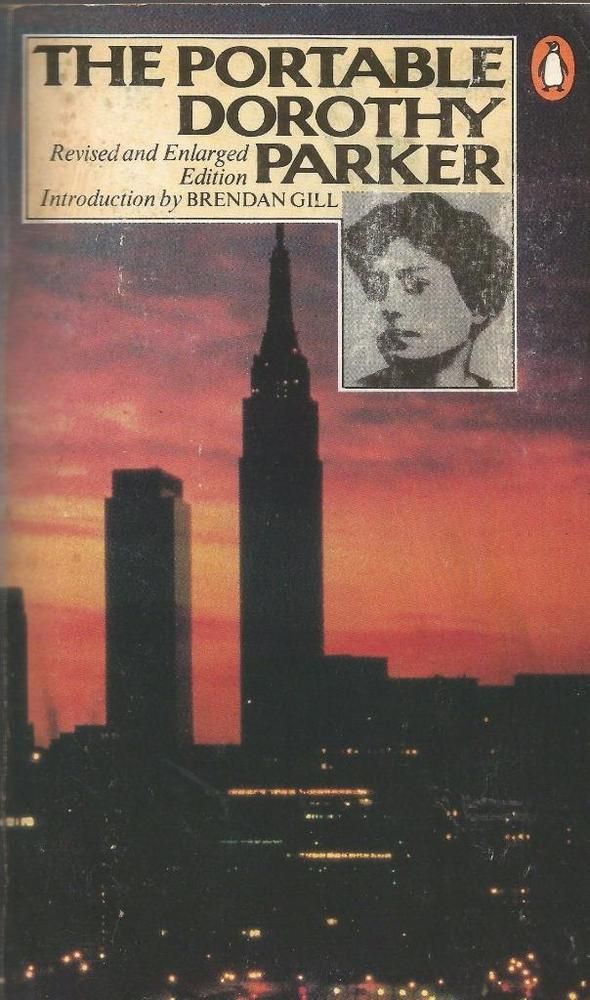
The Portable Dorothy Parker

The Portable Dorothy Parker

In both collections, Parker and Dickinson give us little gems in verse form focusing on weighty themes like life, death and love, along with observations on a myriad of other subjects.

These brief poems—gleaming verbal diamonds—carry an authentic voice and pack emotional truth, and both women knew how to play with language in such a way as to delight readers.

I picked through both volumes and selected some short poems worth sharing. They can be consumed in small bites, such as while riding public transportation or waiting in the grocery store checkout aisle.

From The Portable Dorothy Parker:

The Small Hours

No more my little song comes back;
And now of nights I lay
My head on down, to watch the black
And wait the unfailing gray.

Oh, sad are winter nights, and slow;
And sad’s a song that’s dumb;
And sad it is to lie and know
Another dawn will come.

Godspeed

Oh, seek, my love, your newer way;
I’ll not be left in sorrow.
So long as I have yesterday,
Go take your damned tomorrow!

The Thin Edge

With you, my heart is quiet here,
And all my thoughts are cool as rain.
I sit and let the shifting year
Go by before the windowpane,
And reach my hand to yours, my dear . . .
I wonder what it’s like in Spain.

Experience

Some men break your heart in two,
Some men fawn and flatter,
Some men never look at you;
And that cleans up the matter.

My Own

Then let them point my every tear,
And let them mock and moan;
Another week, another year,
And I’ll be with my own

Who slumber now by night and day
In fields of level brown;
Whose hearts within their breasts were clay
Before they laid them down.

Two-Volume Novel

The sun’s gone dim, and
The moon’s turned black;
For I loved him, and
He didn’t love back.

Rhyme Against Living

If wild my breast and sore my pride,
I bask in dreams of suicide;
If cool my heart and high my head,
I think, “How lucky are the dead!”

News Item

Men seldom make passes
At girls who wear glasses.

And lastly, the following is one of my all-time favorite poems (right up there with Paul Laurence Dunbar’s We Wear the Mask and Richard Cory by Edwin Arlington Robinson), and Parker’s piece could be considered a companion poem or a bookend to Langston Hughes’ Suicide’s Note.

Resumé

Razors pain you;
Rivers are damp;
Acids stain you;
And drugs cause cramp.
Guns aren’t lawful;
Nooses give;
Gas smells awful;
You might as well live.

Parker, Dorothy. The Portable Dorothy Parker (Revised and Enlarged Edition). New York: Penguin Books, 1976. Print.

Emily Dickinson

Emily Dickinson

And here are the selections from Poems by Emily Dickinson, Three Series, Complete:

The Mystery of Pain

Pain has an element of blank;
It cannot recollect
When it began, or if there were
A day when it was not.

It has no future but itself,
Its infinite realms contain
Its past, enlightened to perceive
New periods of pain.

With a Flower

I hide myself within my flower,
That wearing on your breast,
You, unsuspecting, wear me too—
And angels know the rest.

I hide myself within my flower,
That, fading from your vase,
You, unsuspecting, feel for me
Almost a loneliness.

I’m Nobody! Who are you?

I’m nobody! Who are you?
Are you nobody, too?
Then there’s a pair of us—don’t tell!
They’d banish us, you know.

How dreary to be somebody!
How public, like a frog
To tell your name the livelong day
To an admiring bog!

Simplicity

How happy is the little stone
That rambles in the road alone,
And doesn’t care about careers,
And exigencies never fears;
Whose coat of elemental brown
A passing universe put on;
And independent as the sun,
Associates or glows alone,
Fulfilling absolute decree
In casual simplicity.

A Word

A word is dead
When it is said,
Some say.
I say it just
Begins to live
That day.

The Inevitable

While I was fearing it, it came,
But came with less of fear,
Because that fearing it so long
Had almost made it dear.
There is a fitting a dismay,
A fitting a despair.
’Tis harder knowing it is due,
Than knowing it is here.
The trying on the utmost,
The morning it is new,
Is terribler than wearing it
A whole existence through.

Lost Faith

To lose one’s faith surpasses
The loss of an estate,
Because estates can be
Replenished, — faith cannot.

Inherited with life,
Belief but once can be;
Annihilate a single clause,
And Being’s beggary.

A Book

There is no frigate like a book
To take us lands away,
Nor any coursers like a page
Of prancing poetry.
This traverse may the poorest take
Without oppress of toll;
How frugal is the chariot
That bears a human soul!

Love

Love is anterior to life,
Posterior to death,
Initial of creation, and
The exponent of breath.

Dickinson, Emily. Poems by Emily Dickinson, Three Series, Complete. Kindle Edition.


Standard