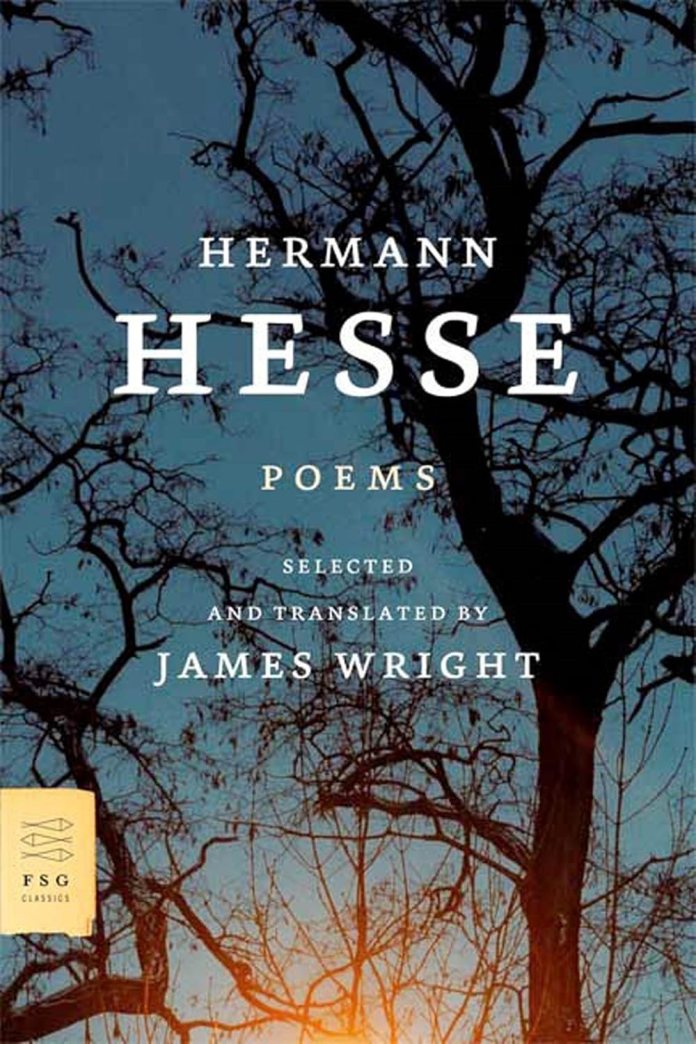
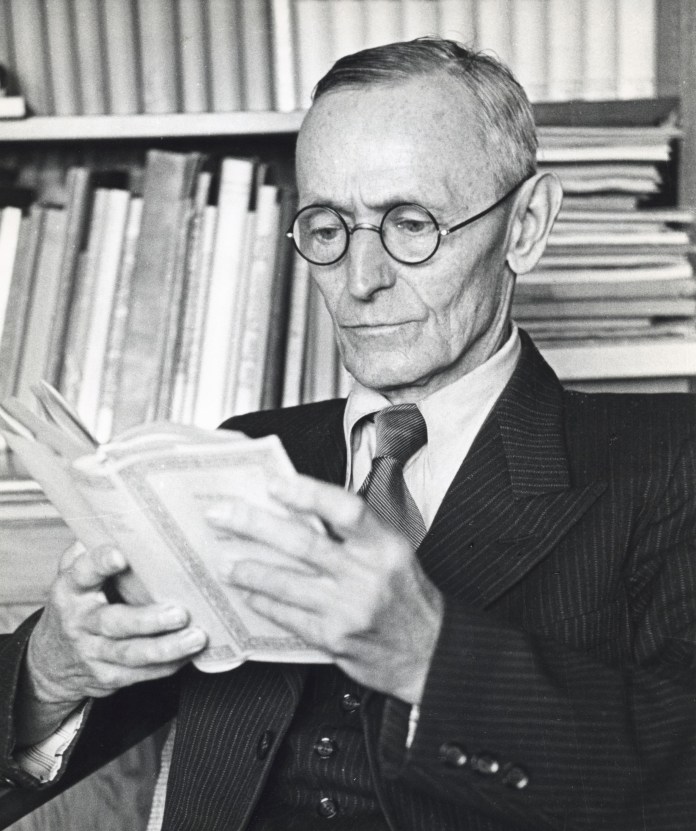
I am re-readingSiddharthaby Hermann Hesse. And in doing a little Wiki research on the German novelist, I discovered he also wrote poetry. I bought a collection of his verses entitled Poems by Hermann Hesse: Selected and Translated By James Wright(Farrar, Straus and Giroux, 1970). Most of the poems are short (which I love), and he explores such themes as youth, nature, identity, longing, and loneliness.
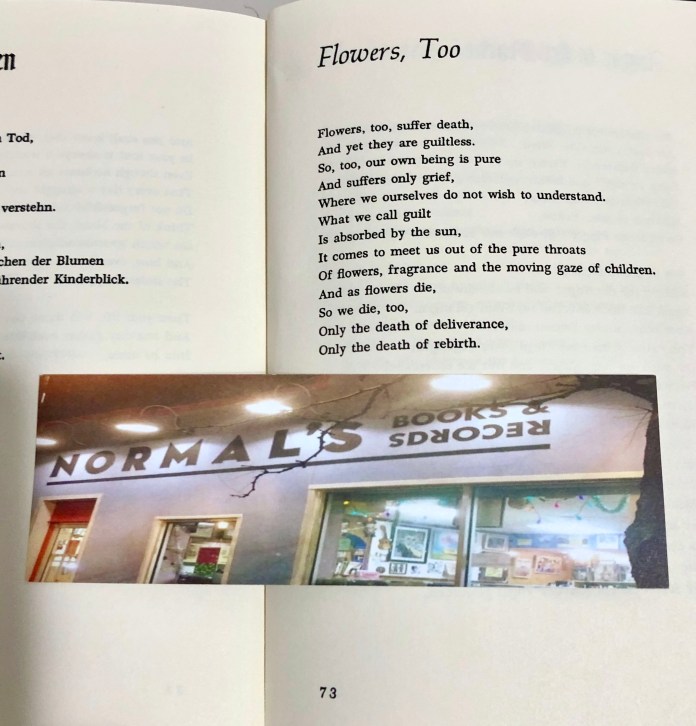
An added bonus—the used book arrived with a nice bookmark from Normals Books & Records in Baltimore, which looks like a really cool store.
Here are a few selections from the book that I wanted to share:
Mountains at Night
The lake has died down,
The reed, black in its sleep,
Whispers in a dream.
Expanding immensely into the countryside,
The mountains loom, outspread.
They are not resting.
They breathe deeply, and hold themselves,
Pressed tightly, to one another.
Deeply breathing,
Laden with mute forces,
Caught in a wasting passion.
On a Journey
Don’t be downcast, soon the night will come,
When we can see the cool moon laughing in secret
Over the faint countryside,
And we rest, hand in hand.
Don’t be downcast, the time will soon come
When we can have rest. Our small crosses will stand
On the bright edge of the road together,
And rain fall, and snow fall,
And the winds come and go.
Night
I like the dark night well enough;
But sometimes, when it turns bleak
And peaked, as my suffering laughs at me,
Its dreadful kingdom horrifies me,
And I wish to God I could take one look at the sunlight
And the blue of heaven brought back to light by its clouds,
And I want to lie down warm in the wide spaces of the day.
Then I can dream of the night.
Destiny
In our fury and muddle,
We act like children, cut off,
Fled from ourselves,
Bound by silly shame.
The years clump past
In their agony, waiting.
Not a single path leads back
To the garden of our youth.
How Heavy The Days . . .
How heavy the days are.
There’s not a fire that can warm me,
Not a sun to laugh with me,
Everything bare,
Everything cold and merciless,
And even the beloved, clear
Stars look desolately down,
Since I learned in my heart that
Love can die.
And here are a few spring-themed poems:
The First Flowers
Beside the brook
Toward the willows,
During these days
So many yellow flowers have opened
Their eyes into gold.
I have long since lost my innocence, yet a memory
Touches my depth, the golden hours of morning, and gazes
Brilliantly upon me out of the eyes of flowers.
I was going to pick flowers;
Now I leave them all standing
And walk home, an old man.
Spring Day
Wind in bushes and bird piping
And high in the highest fresh blue
A haughty cloud ship, becalmed . . .
I dream of a blond woman,
I dream of my youth,
The high heaven blue and outspread
Is the cradle of my longing
Where I choose to lie calm
And blessedly warm
With the soft humming,
Just like a child held
On his mother’s arm.
Flowers, Too
Flowers, too, suffer death,
And yet they are guiltless.
So, too, our own being is pure
And suffers only grief,
Where we ourselves do not wish to understand.
What we call guilt
Is absorbed by the sun,
It comes to meet us out of the pure throats
Of flowers, fragrance and the moving gaze of children.
And as flowers die,
So we die, too,
Only the death of deliverance,
Only the death of rebirth.
Here are some poems for Valentine’s Day. They were culled from previous collections and were written when I was still single and living in Phoenix, Arizona. I added some photos I took during that time period (1998-2006).
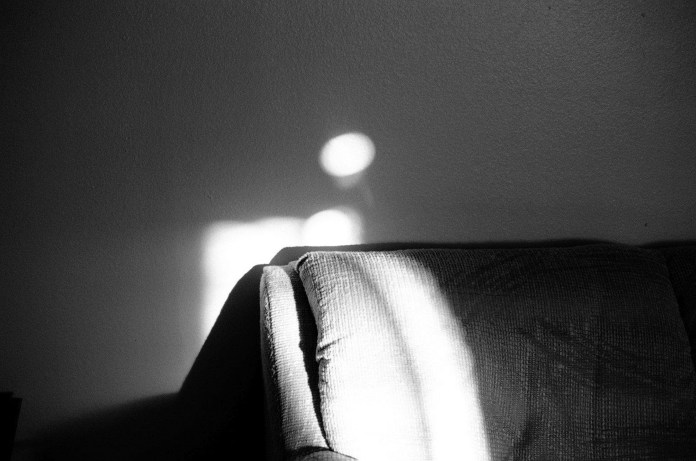
Heart Sunlight. Photo by Francis DiClemente.
Solo V-Day
There is no love without another,
no romance when no companion is present.
The self cannot survive on its own.
Affection needs an outlet,
a target to these romantic thoughts.
And happiness demands reciprocation,
because desire withers when forced to remain inside,
and love has no point when Cupid’s bow fails to strike.
Morning on Fairmount Avenue. Photo by Francis DiClemente.
An Involuntary Condition
Here’s to all those whose
birthday wishes never came true—
for the unloved, unlucky and desperate,
for the manic and passive,
for the childless Demeter searching
in vain for her unborn Persephone,
for the clones of Sisyphus rolling
the stones of their loneliness,
groaning under the weight,
straining in the face of repeated defeat.
For the wedding days when
you will not stand upon the altar,
for the groves of family trees
shriveled and lacking offspring.
For all the men and women
who hate being single
and rebel against it every day,
but can do nothing to prevent
becoming orphans in their adulthood.
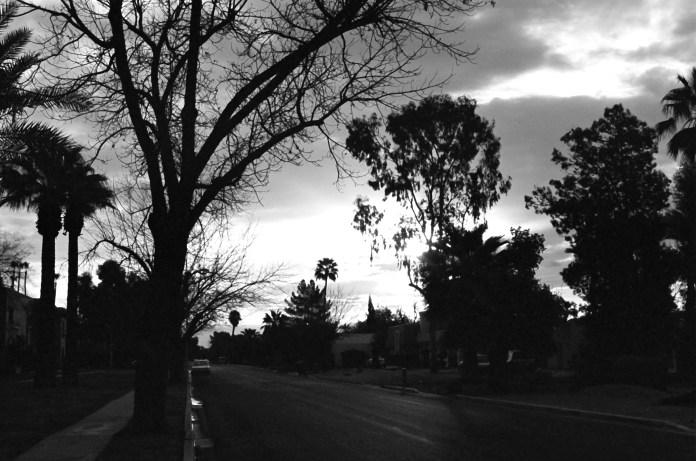
Slanting Desert Tree. Photo by Francis DiClemente.
Nightingale
I have worshipped at the
altar of loneliness for far too long.
I need a love intervention—
a woman, an angel, a friend,
a nightingale to swoop in on my life
and replace the discordant, recurring song.
Late Afternoon Light. Photo by Francis DiClemente.
Roommates
My pursuit of a union has ended,
And the desire to keep looking is gone,
Dissolved like Kool-Aid
Crystals in cold water.
I no longer fear the inevitable,
Because it already resides here.
I accept the reality of my adult life:
Loneliness is my only mate,
A discarnate presence
Occupying my twin bed at night.
Overnight Stay
The unattached go unnoticed
in hotel bars and lobbies,
watching couples and
overhearing conversations.
They retreat to their rooms
and fall asleep to the
sound of cable television,
turning up the volume
before drifting off
in order to shut out
the animal noises of
the man and woman
enjoying themselves
in the adjacent room—
while being reminded again
that others are not
spending the night alone.
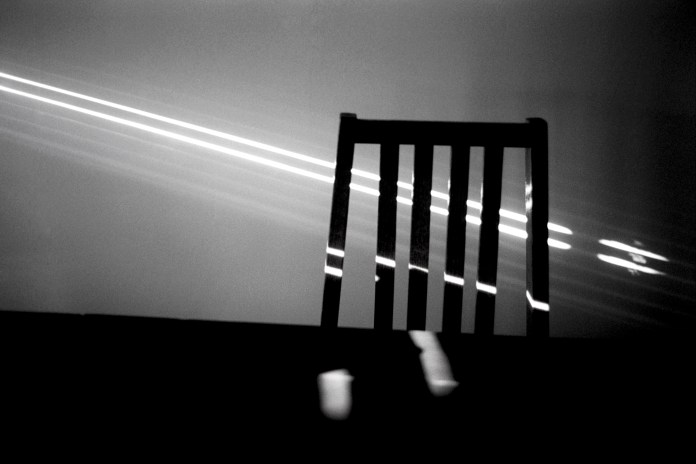
Sunlight on Chair. Photo by Francis DiClemente.
Saturday Night at the Cinema
Couples hurry down the aisle
of a movie theater,
finding seats as the house lights dim
and the previews start.
Locked in a state of solitude,
I gaze at them with envy.
For I remain alone . . .
a single ticket purchased,
no fingers entwined in a warm lap,
no shared overpriced soda or tub of popcorn,
no arm around her shoulder,
pushing aside her long brown hair.
But I am able to forget my life
while the sprockets are engaged.
The shuttering picture seduces me again,
and I become numb to everything—
until the last frame passes,
when knowledge of my isolation
rumbles like a stagecoach procession
across the Arizona desert
in a John Ford Western.
Then the film noir,
black and white feeling returns.
And as the end credits roll,
I stand up and flee
the darkness of the theater,
stepping into the artificial light
of the shopping mall parking lot.
Left-Hand Fetish
With regard to women,
I am obsessed with one body part.
If I spot a woman I like
seated in a crowded café,
or walking through an airport,
my eyes travel directly
to the top of her left hand.
I need to know right away:
Does she wear an engagement ring
or wedding band?
Is she free to love me,
if she so chooses?
Or is she already partnered
with another man?
The Look
I noticed that look—
that look that
she was looking
at him instead of me.
I was neither cast aside,
nor dismissed outright,
but much worse—
completely overlooked.
Hurtful Words
The voice of a woman
I admire from afar
pierces the afternoon air.
Her voice mingles
with other sounds
inside the lobby
of the Phoenix Art Museum
on a Saturday in February.
The woman does not
intend to be cruel.
Yet she crushes my heart,
dispersing romantic hope,
when she delivers
a simple sentence,
beginning with the words:
“My boyfriend is . . .”
She proceeds to tell a co-worker
about her weekend plans,
but I stop listening,
as I realize
there’s no point
to knowing more.
It’s been too long since my last entry. I’ve been busy with work, family, creative side projects and a recent bout with a stomach flu (now resolved).
Winter has given way to spring-like weather in Central New York, although I’m not hauling my winter coat to the dry cleaner just yet.
And I wanted to return to the blog because today I made some interesting visual discoveries that I wanted to share. I left my cubicle at the office this afternoon to join one of my colleagues on a B-roll video shoot at Shaffer Art Building on the campus of Syracuse University. Some College of Visual and Performing Arts’ students were working on a professional film shoot for a project written and directed by a VPA professor.
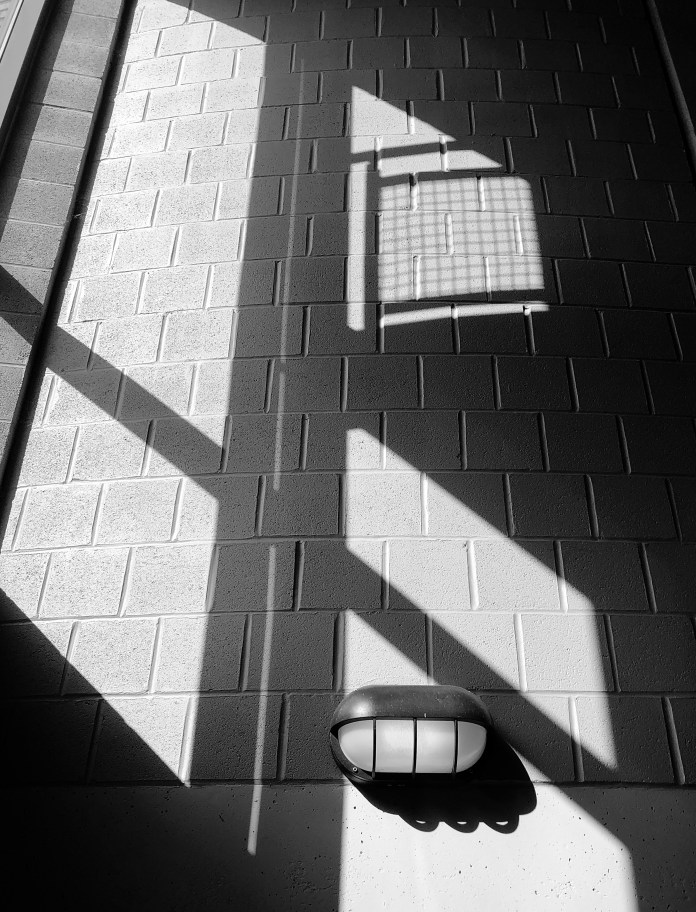
While I stood in the hallway, I took notice of my surroundings and captured these images.
Light hitting wall. Photo by Francis DiClemente.
Steenbeck. Photo by Francis DiClemente.
I was so excited to see this Steenbeck editing machine. It made me think of Martin Scorsese’s longtime editor, Thelma Schoonmaker. I’m sure she edited some projects on a Steenbeck. I actually used one when I was a graduate film student at American University in the early 1990s. The machinery is now a dinosaur in a non-linear, Adobe Premiere/Avid/Final Cut world.
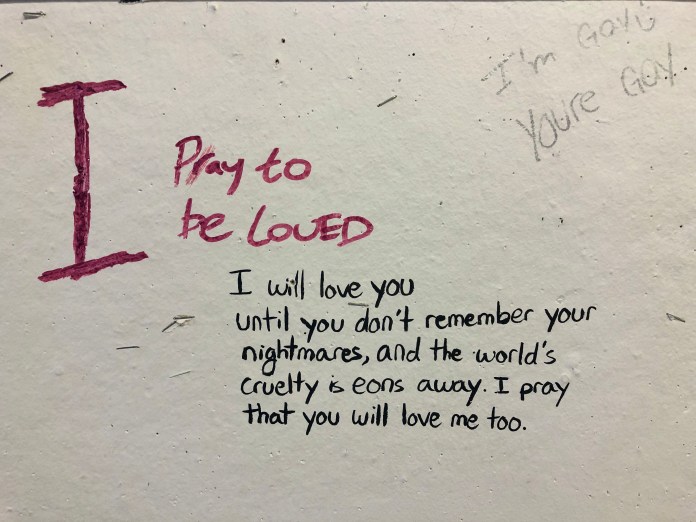
The next two images were terse, profound statements that I consider poetry. The words made me stop, pay attention and ponder their meaning. I wish I had the author’s name to give proper credit and supreme praise.
Selfishness and Loneliness. Photo by Francis DiClemente.
The autobiographical novel, published in 1940, two years after Wolfe’s death in 1938, gets bogged down with scenes that could have been edited out with no loss of narrative structure.
Photo of Thomas Wolfe by Carl Van Vechten; the Carl Van Vechten Photographs Collection at the Library of Congress
However, I enjoyed embarking on a journey of self-discovery with the protagonist, a lonely young writer named George Webber, who pens a famous novel about his hometown, Libya Hill (a fictional setting that could be considered a stand-in for Wolfe’s native Asheville, North Carolina), and then is reviled by his friends and neighbors because the book uncovers the dark secrets of the town.
And although I found myself skipping over sections of the book—descriptions and digressions that slowed down the story—Wolfe’s lyrical voice and ability to construct stunning passages of prose can make a reader stop skimming pages and pay attention to each sentence.
Here are some beautiful paragraphs where Wolfe seemed to capture some central truths about life and humanity.
“So, then, to every man his chance—to every man, regardless of his birth, his shining, golden opportunity—to every man the right to live, to work, to be himself, and to become whatever thing his manhood and his vision can combine to make him—this, seeker, is the promise of America.”
Thomas Wolfe Memorial Angel, Asheville, NC (Photo by Francis DiClemente)
“For four years George Webber lived and wrote in Brooklyn, and during all this time his life was about as solitary as any that a modern man can know. Loneliness, far from being a rare and curious circumstance, is and always has been the central and inevitable experience of every man. Not only has this been true of the greatest poets, as evidenced by the huge unhappiness of their published grief, but now it seemed to George to apply with equal force to all the nameless ciphers who swarmed about him in the streets.”
Thomas Wolfe Memorial Angel Quote (Photo by Francis DiClemente)
“All things belonging to the earth will never change—the leaf, the blade, the flower, the wind that cries and sleeps and wakes again, the trees whose stiff arms clash and tremble in the dark, and the dust of lovers long since buried in the earth … they go back into the earth that lasts forever. Only the earth endures, but it endures forever.”
Thomas Wolfe’s mother’s boardinghouse in Asheville, NC. It’s now called the Thomas Wolfe Memorial. (Photo by Francis DiClemente)
“You can’t go back home to your family, back home to your childhood, back home to romantic love, back home to a young man’s dreams of glory and of fame … back home to the father you have lost and have been looking for, back home to someone who can help you, save you, ease the burden for you, back home to the old forms and systems of things which once seemed everlasting but which are changing all the time—back home to the escapes of Time and Memory.”
Wolfe, Thomas. You Can’t Go Home Again. New York: Scribner (A Division of Simon and Schuster, Inc.), 2011 (first published in 1940). Print.
I have a long-form essay published in the latest issue of the Connotation Press, an online literary magazine. You can read the story here. The piece includes reflections about my paternal grandmother, Amelia.
My grandmother Amelia sitting in her kitchen.
And in working on the essay, I did some research about Sundays that I did not include in the final edit of the piece. I found the information interesting, and so I am posting it here:
Many people have shared with me their contempt for Sundays, and there seems to be no shortage of psychiatric literature referring to a “Sunday neurosis” or a feeling of gloom related to the day.
Hungarian psychoanalyst Sandor Ferenczi, who died in 1933, is believed to have originated the term “Sunday neuroses.” In his book Further Contributions to the Theory and Technique of Psycho-Analysis (1927), Ferenczi wrote:
“I treated several neurotics the history of whose illness, recounted spontaneously or reproduced during the analysis, contained the information that certain nervous conditions developed—mostly in youth—on a certain day of the week, and had then regularly recurred.
Most of them experienced these periodic returns of the disturbances on Sundays. They were mostly headaches or stomach disturbances that were wont to appear on this day without any particular cause, and often utterly spoilt the young people’s one free day of the week.”
Ferenczi, Sandor. Further Contributions to the Theory and Technique of Psycho-Analysis. New York: Boni and Liveright Publishers, 1927.
Ferenczi states that on Sundays people are “free from all the fetters that the duties and compulsions of circumstances impose upon us.” As a result, we feel an inner liberation and repressed instincts are set free.
But he writes, “the neurotically disposed will be inclined just on such occasions to a reversal of affect, either because he has much too dangerous impulses to control which he must guard closely, particularly when tempted by the bad example of others; or because his hypersensitive conscience will not overlook even little omissions.”
In a sense, a person is given too much freedom on Sundays and this lack of control can produce anxiety.
A clearer line of thought regarding Sunday neurosis comes from Austrian neurologist and psychiatrist Viktor E. Frankl (1905-1997). Frankl was the founder of logotherapy and existential analysis. He referred to a prevailing “existential vacuum” occurring in the 20th century, often manifesting itself in a state of boredom. His theory, outlined in his book Man’s Search for Meaning, addressed feelings of discontentment on Sundays:
“Let us consider … “Sunday neurosis,” that kind of depression which afflicts people who become aware of the lack of content in their lives when the rush of the busy week is over and the void within themselves becomes manifest.”
Frankl, Viktor E., Man’s Search for Meaning. Boston: Beacon Press, 1959.
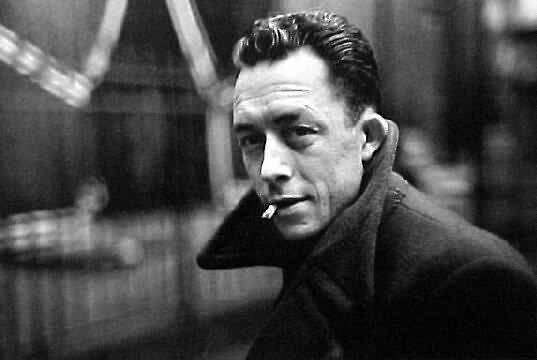
Looking to literature, one character who seems to epitomize this existential vacuum is Meursault, Albert Camus’ protagonist from the 1942 novel The Stranger.
Albert Camus
In chapter two of the book, Meursault wakes up on a Sunday morning after his lover Marie has left his room. His thoughts turn to the day of the week:
“I remembered it was a Sunday, and that put me off; I’ve never cared for Sundays.”
Meursault spends the day inside his flat, accomplishing nothing except passing time. He fries some eggs and eats them out of the pan, reads an old newspaper and later goes out on the balcony to observe the activity on the main street of the district. He sees a family dressed in “their Sunday best” taking an afternoon walk.
He smokes cigarettes and watches as night falls, the street lamps flickering on and the stars glimmering. Meursault eats his spaghetti dinner standing up and then closes the window when he feels a chill. His thoughts seem to reflect the mundane nature of Sundays: “It occurred to me that somehow I’d got through another Sunday, that Mother now was buried, and tomorrow I’d be going back to work as usual. Really, nothing in my life had changed.”
##
Two large-scale European studies have documented that some people experience the doldrums on Sundays.
In a 2009 study, Alpaslan Akay and Peter Martinsson from the Department of Economics at the University of Gothenburg in Sweden analyzed subjective well-being related to the day of the week. The researchers used the German Socio-Economic Panel (GSOEP), a large panel data set consisting of thousands of interviews over a twenty-year period, to come up with their findings.
Participants were asked: “How satisfied are you at present with your life, all things considered?” Zero indicated a person was completely dissatisfied and ten meant the subject was completely satisfied.
In the study, titled “Sundays Are Blue: Aren’t They? (The Day-of-the-Week Effect on Subjective Well-Being and Socio-Economic Status),” Akay and Martinsson reported “Sunday is the bluest day in Germany”—the day when “individuals on average report the lowest level of subjective well-being.”
They also found that weekends result in lower subjective well-being than weekdays.
A 2014 study published in the journal Applied Economics, “Rhythms and Cycles in Happiness,” examined time-dependent rhythms in happiness. The researchers from the University of Hamburg, Germany, also relied on data from the German Socio-Economic Panel, and determined that “the Sunday neurosis exists exclusively for men with a medium level of education and both men and women with high levels of education.”
Maennig, M. Steenbeck, M. Wilhelm. “Rhythms and Cycles in Happiness.” Applied Economics, 46(1), 2014: 70-78.
So is there a reason why some people experience the Sunday blues? Is there something inherent about Sunday that makes people unhappy? Does anxiety about the impending work week spur a feeling of disillusionment on Sundays?
One plausible explanation for the Sunday blues could be tied to relationship status. Sunday is traditionally a day set aside for family activities: attending church, doing yard work, eating a relaxing Sunday brunch or visiting a park or a lake. Hence, do the unattached feel disconnected from the rest of society on Sundays?
In her book Alone in America: The Search for Companionship (1986), Louise Bernikow reported on the loneliness experienced by single professional women on Sundays. Bernikow interviewed Houston psychotherapist Ellie Chaikind. Chaikind stated that her female patients described how Saturdays would be filled with domestic chores and “catching up,” while Sundays loomed “like a nightmare in the week.” Chaikind said the women would try to occupy their Sundays by doing activities like going to a bookstore or to a library.
Bernikow, Louise. Alone in America: The Search for Companionship. New York: Harper & Row, 1986.
Bernikow also interviewed a woman named Sally, an agent in the film business in Los Angeles. Sally told Bernikow she would work on a project to fill up her time or spend the weekend reading to help her forget about feeling lonely. But she stated, “Sunday nights are the worst.” Bernikow writes that for women like Sally, “it seems the rest of the world is hooked up and only the lonely person is floating free.”
##
And I will leave you with a short poem about the Sunday blues:
Sunday Malaise
The August sunlight
entering the room
cannot quell
the dreary feeling that
overcomes me every Sunday.
Lying in my bed,
listening to Brahms,
while trying to take a nap
to fill the afternoon.
Waking up later,
the room shrouded in darkness,
with the day erased,
bringing me hours closer
to Monday morning,
and a reset of the week—
safe from harm:
Sunday still far away.









 Francis DiClemente