Book Giveaway

This week marks two years since my last poetry collection, The Truth I Must Invent, was released. The book is available from the publisher, Poets Choice. You can also find it on Bookshop and a Kindle version on Amazon.

The Truth I Must Invent is a collection of narrative and philosophical poems written in free-verse style. The book explores the themes of self, identity, loneliness, memory, existence, family, parenthood, disability, gratitude, and compassion.

I am giving away three print copies of the book, which I will mail to anyone in the U.S. You can use the contact form or email me directly at the gmail address listed in the form.

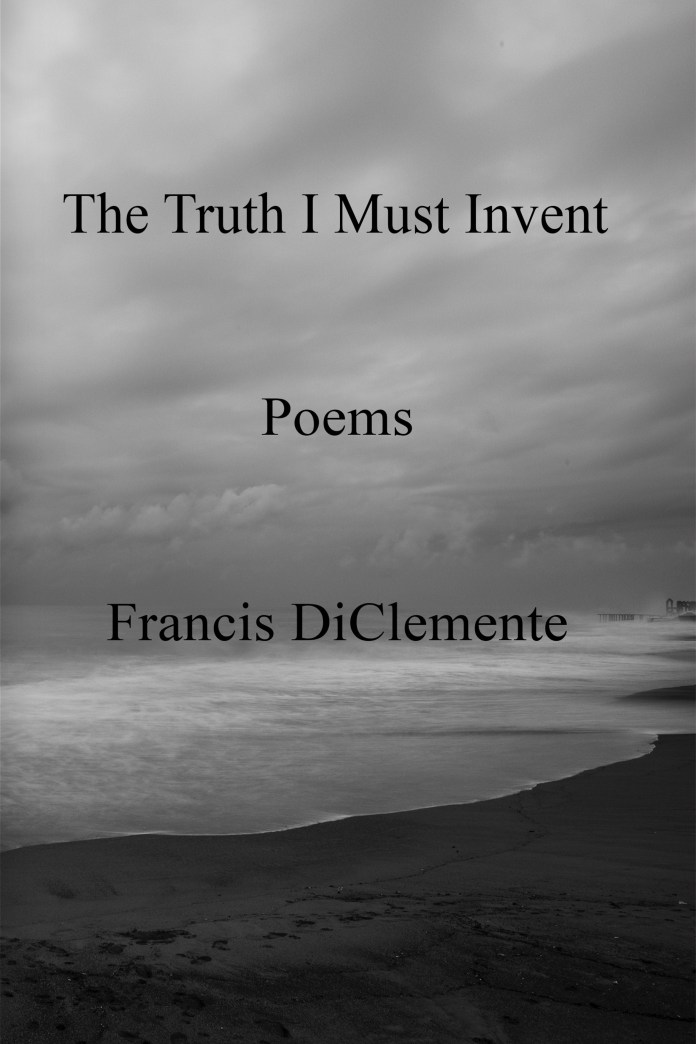
The Truth I Must Invent book cover.

Selections from the collection:

Man Inside Nighthawks

I assume I was nothing
before I found myself sitting here,
staring straight ahead.

I can’t move my head.
I can’t smoke the cigarette
pressed between the fingers
of my right hand or drink the cup
of coffee resting on top of the counter.
I can’t touch the woman seated next to me
or talk to the other men in the diner.

This is my life: suspended in warm, yellow light,
trapped in a soundless environment—
no water running, no fan whirring, or grill sizzling.
No sirens or street sounds beyond the glass.

Time drags on with no discernible shift—
no transition to morning.
Here, night never ends.

Yet my mind still works.
In fact, it never stops.
I’m cursed with thoughts that run continuously.

Why am I here?
And where exactly is here?
What purpose do I serve?

Do I have a past? Did I live elsewhere,
before I became frozen in this moment—
captured and imprisoned for eternity?

If only I could talk.
If only I could open my lips and make a sound.
Then I could scream for help.
But who would hear my voice?

If only I could stand up
and walk around,
stretch my legs and
stare outside the window.

But since I can’t move,
the composition will remain unaltered,
as I will stay locked in place
inside this painting,
hanging on a gallery wall.

Looking Through Spindles

I climb out of bed and clutch
the white balusters at the top of the stairs
as harsh words fly behind walls
too thin to hold my parents’ rage.

My sister creeps out of her room,
shrugs her shoulders,
and moves toward me in the hallway,
passing the door to the master bedroom.
She sits down next to me
and whispers, “What happened now?”
“I don’t know,” I say.
And we listen for clues, trying to determine
the cause of the latest fight.

Did Dad come to bed drunk
and make advances on our mother?
Did she recoil or lash out, scratching his eyes?
But we hear no violent action
on the other side of the white door—
only voices laced with acrimony.
And we remain seated on the stairs,
exhausted but unable to fall back asleep.

Zooming out, I see those siblings
in a Polaroid image, sealed under a plastic sheet
in a leather-bound photo album.
And as the adult looking back,
breaking the fourth wall,
I wonder why this memory pricks my brain
when so many others would illuminate my parents’
kindness, decency, and exemplary work ethic.
Why, when I could have chosen from
a myriad of positive scenarios,
does this one seize my attention,
demanding to be chronicled?

My mother and father are both dead
and can’t defend their actions.
And I feel riddled with guilt
for tarnishing their memories.
I also understand that the truth
doesn’t always tell the full story.
My conscience obligates me to explain that
while Mom and Dad weren’t perfect,
they loved us and endured sacrifices
to make our lives a little better.
And while that’s a weak way to end a poem,
the wider perspective allows me to
forgive my mother and father for being human—
for being real people and not just my parents.

Craniopharyngioma (Youthful Diary Entry)

Craniopharyngioma gave me
an excuse for being unattractive.
I had a problem inside my head.
It wasn’t my fault
I stood four foot eight inches tall
and looked like I was
twelve years old instead of eighteen—
and then nineteen
instead of twenty-four.
I couldn’t be blamed for
my sans-testosterone body
straddling the line
between male and female.

The brain tumor
spurred questions
about my appearance,
aroused ridicule,
and provoked sympathy.
I heard voices whispering:
“Guess how old that guy is?”
And, “Is that a dude or a chick?”

And while I waited for my
body to mature, to fall in line,
and to achieve normal progression,
I remember wishing the surgeons
had left the scalpel
inside my skull
before they closed me up,
knitting the stitches
from ear to ear.

I prayed the scalpel
would twist and twirl
while I slept at night—
carving my brain
like a jack-o’-lantern—
splitting the left and right
hemispheres,
and effacing the memory
of my existence.

Mattress Moment

You don’t get to cry
“No Fair”
Mr. Hyman Roth.

This is the life
you have chosen.

You don’t get to pine
for your salad days,
whatever the fuck that means.

You don’t get to
flip over the mattress
on the bed you’ve made.

The Wanting is the Hardest Part

Tom Petty was wrong.
The waiting isn’t the hardest part.
The wanting is the hardest part.

Wanting fucks everything up—
wanting a better job, a better marriage,
a better house, a better life.
That seed of desire fucks with your head,
makes you think you can be something you’re not.

What if I discarded desire? What if stopped wanting?
What if I no longer sought a better life?
Can I let go of that fantasy
and accept who I am right now,
without seeking a better version of myself—
the idealized me I hold inside my head?

Resolution

You must
Live the life
You have

And not
The one
You want.

Witness

I look up as a group of birds
circles buildings in downtown Syracuse.
I resist the urge to pull out my cellphone
and snap a picture for Instagram.

Instead, I hold my gaze skyward,
letting the wind swirl around my face
and the rain patter my forehead,
as the birds duck in unison
behind a limestone structure—
the moment preserved nowhere except in my mind.

No pictures retained or sound recorded.
No trace of the birds in digital form.
And I think that’s the point, that’s life—
a collection of these impromptu glimpses of existence,
built into a collage, a kaleidoscope of images
demanding attention when presented.

Crying at Bedtime

Nothing prepares a parent
for the tantrums of an autistic child.
There’s no well of patience to draw from.
You adapt. You divert. You distract.
You do whatever it takes to calm the child down—
until you earn that blessed moment of peace,
when his eyelids drop and he drifts off to sleep,
his small body folded in the cradle of your arms.

Fingers in Hair

I run my fingers through
my son’s tangled mop of brown hair
as he lies next to me in bed.
It’s 4:30 a.m. and we can’t fall asleep.

He waves his hands in front of his eyes,
making stimming motions,
and I imagine his head slamming
against the windshield,
a spiderweb crack forming
in the sheet of glass and
blood pouring from
an opening in his skull.

I press my hand to his head
to try to stop the bleeding,
but the crimson liquid
slips through my fingers
and stains the carpet
and fabric seat covers.

I am reminded of a
Gospel passage (Luke 12:7 NIV):
“Indeed, the very hairs
of your head are all numbered.”

I hold some of my son’s hairs
in my hand and realize
I cannot prevent a
car accident, fall, gunshot wound,
or disease from killing my son.
I can’t prolong or preserve his life.
I can only love him while he still lives.

His hands whip in front of his face,
and he prattles phrases
only he understands.
I bury my fingers deeper
into the mound of his hair and whisper,
“Come on now, sleepy time, Colin.”


Standard

Complaining to Santa Claus

While watching the film Red One (starring Dwayne Johnson and J.K. Simmons) recently, a childhood memory connected to Christmas and Santa Claus popped into my head. When Santa’s massive, modern North Pole complex appeared on screen, I mentioned to my wife, Pamela, that my parents had taken my sister, Lisa, and me to Santa’s Workshop, a theme park in North Pole, New York, up in the Adirondacks, one summer when we were small kids in the early 1970s.

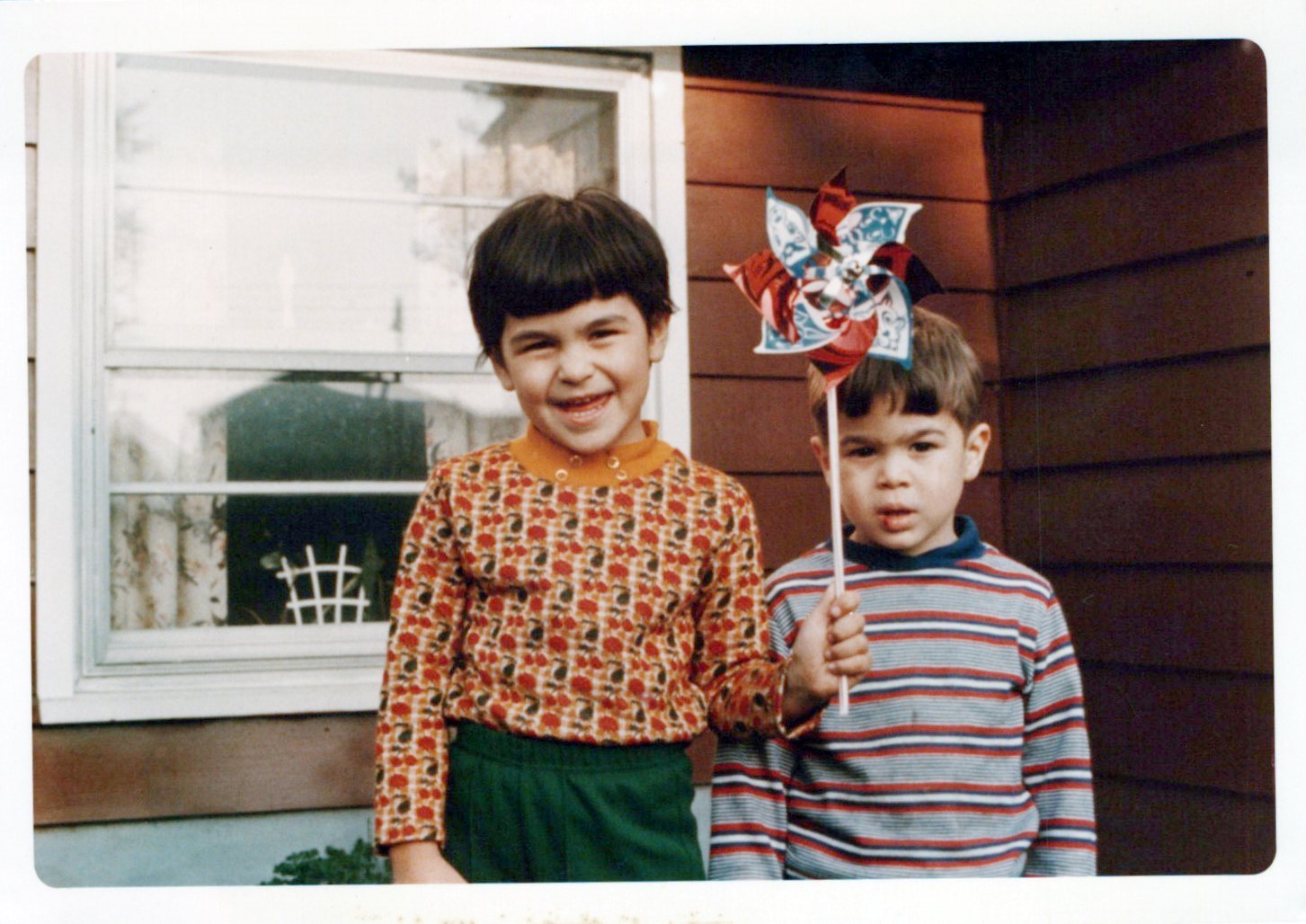
My sister Lisa and me when we were small.

When we embarked on the family trip, I was around five years old, and my parents were still married. My ears plugged as our little green station wagon (if I recall correctly) navigated the road, climbing higher into the mountains. Along the way, we stopped for a pancake breakfast at a roadside diner. After hopping out of the car, I observed the ring of surrounding blue mountains, felt the warm sunshine on my neck, and smelled the clean outdoor air.

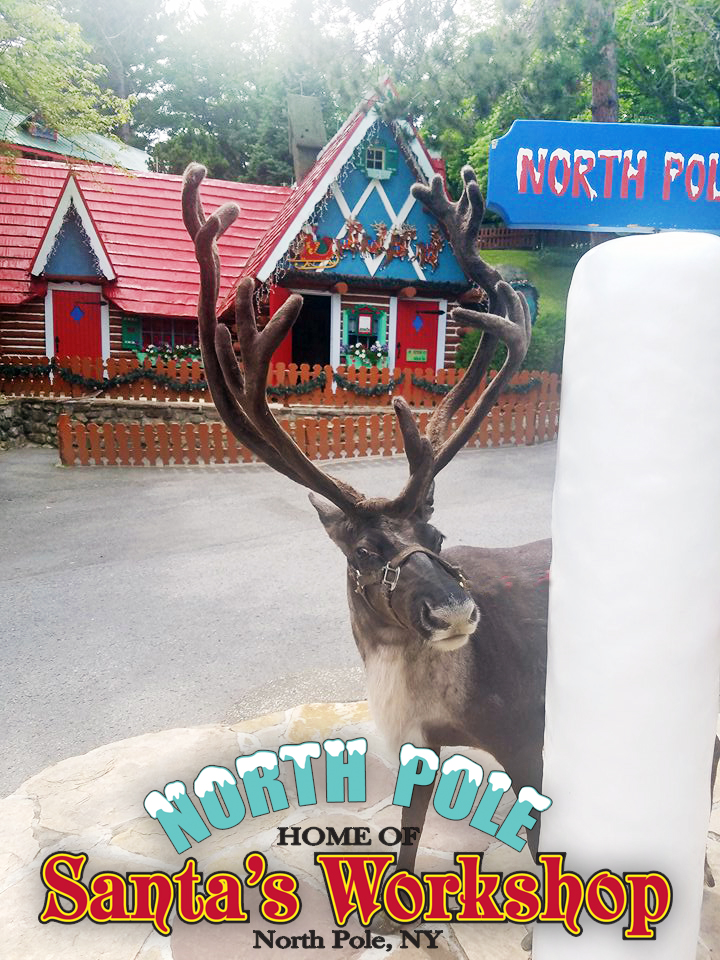
Once we arrived at the park, I couldn’t wait to see Santa’s reindeer. The animals were housed in individual stalls in a barn, and their nameplates identified them as Dasher, Dancer, Prancer, Vixen, Comet, Cupid, Donner, Blitzen, and Rudolph.

Photo Credit: North Pole, NY

But a scary moment followed when I left the barn and entered a petting zoo. An angry white goat chased me in the ring, nipping at my heels and chomping at my butt. I fell and became terrified the goat would chew my face off. My father laughed, picked me up, and shook off the dust that had covered my blue jeans.

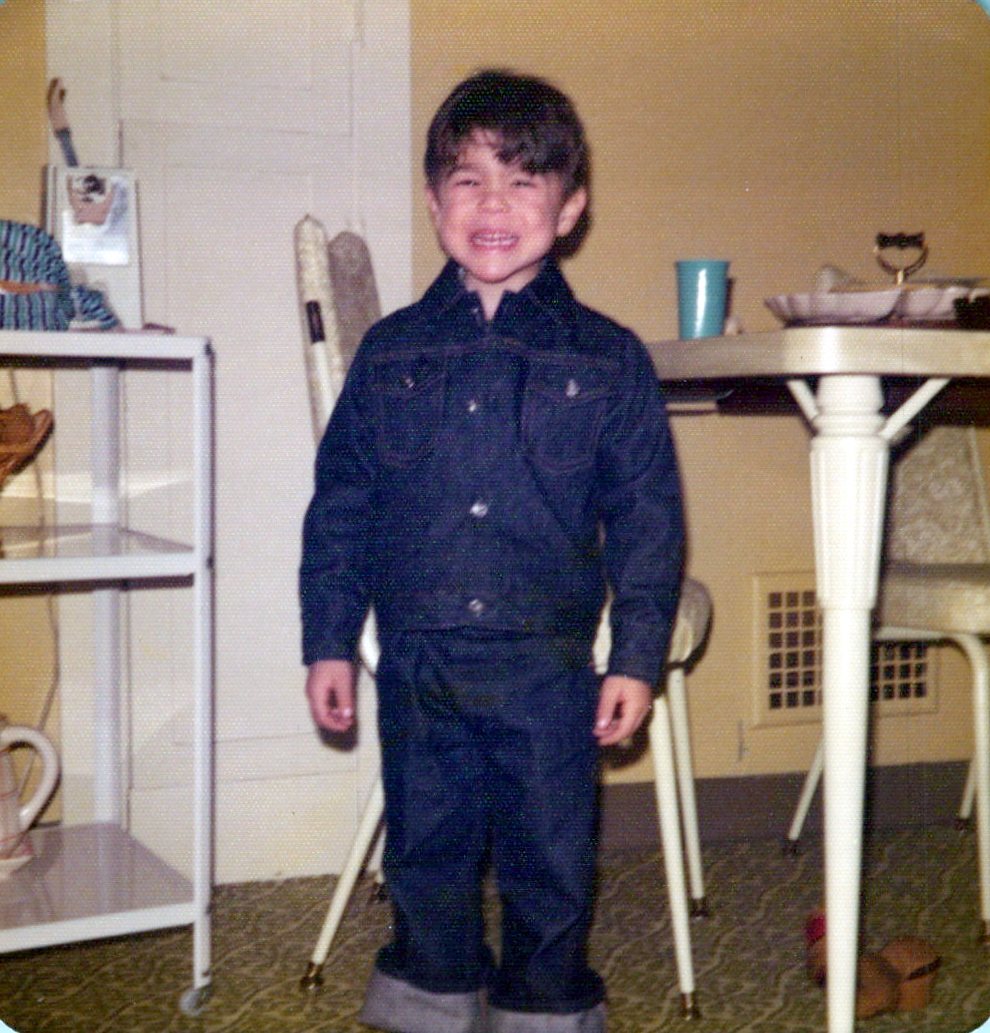
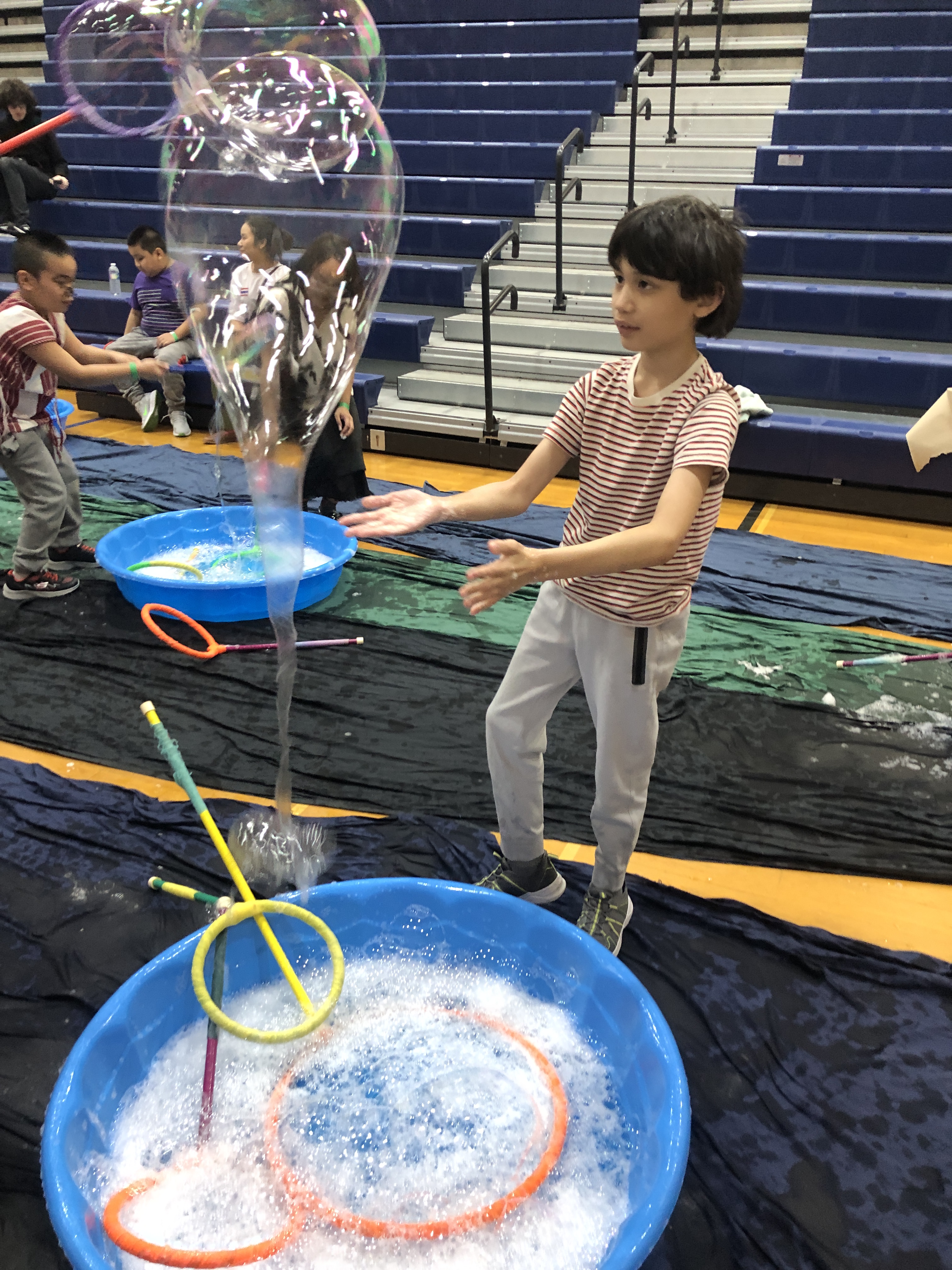
An age appropriate image for the story.

Later, when it was my time to sit on Santa’s lap, I said to the older man wearing the fake white beard and red suit, “Listen, Santa, I have to tell you something.”

“Go on, young man,” he said.

“One of your goats was not very nice. He chased me and tried to bite me.”

“Oh, I’m very sorry to hear that,” Santa said. “I’ll go to the barn later and have a word with him. I promise you that won’t happen again.”

“Thank you, Santa,” I said and then proceeded to give him my Christmas wishes.

##

The North Pole visit was one of our last vacations as a nuclear family. My parents would divorce a few years later.

Now, when I work on nonfiction and memoir projects, I find it mysterious and blessed how one little thing—such as seeing the Red One—can trigger a sense of recall, starting the movie projector running within your personal memory vault. It’s like all the scenes from our past are still tucked inside, and we just need a way to access them. For me, the key is trying to remember the sensory details from a particular incident or time period.

I wish everyone a very Merry Christmas and Happy Holidays.

Standard

Happy Thanksgiving

I want to wish everyone a Happy Thanksgiving. May you and your families be blessed this holiday season. I would also like to share this little poem inspired by a recent trip to the supermarket.

Thanksgiving Dinner

Woman overheard talking on the phone in a grocery store:

“If I’m cookin’ Thanksgiving dinner at my home,
it’s gonna be my mom, my dad, and my kids. That’s it.
I’ll tell her, ‘Look you have a house.
I ain’t cookin’ for you in my little apartment.
Get outta here with that.
Cook your own damn dinner.’”


Standard

Memories of My Mother

My mother passed away from lung cancer thirteen years ago today. It’s hard to believe she’s been gone that long. When Carmella died, I was recovering from transsphenoidal brain surgery (through the nose) and couldn’t attend her wake or funeral mass. The surgeons instructed me to avoid blowing my nose for at least eight weeks, and I was concerned about getting emotional at the services and springing a cerebral spinal fluid leak.

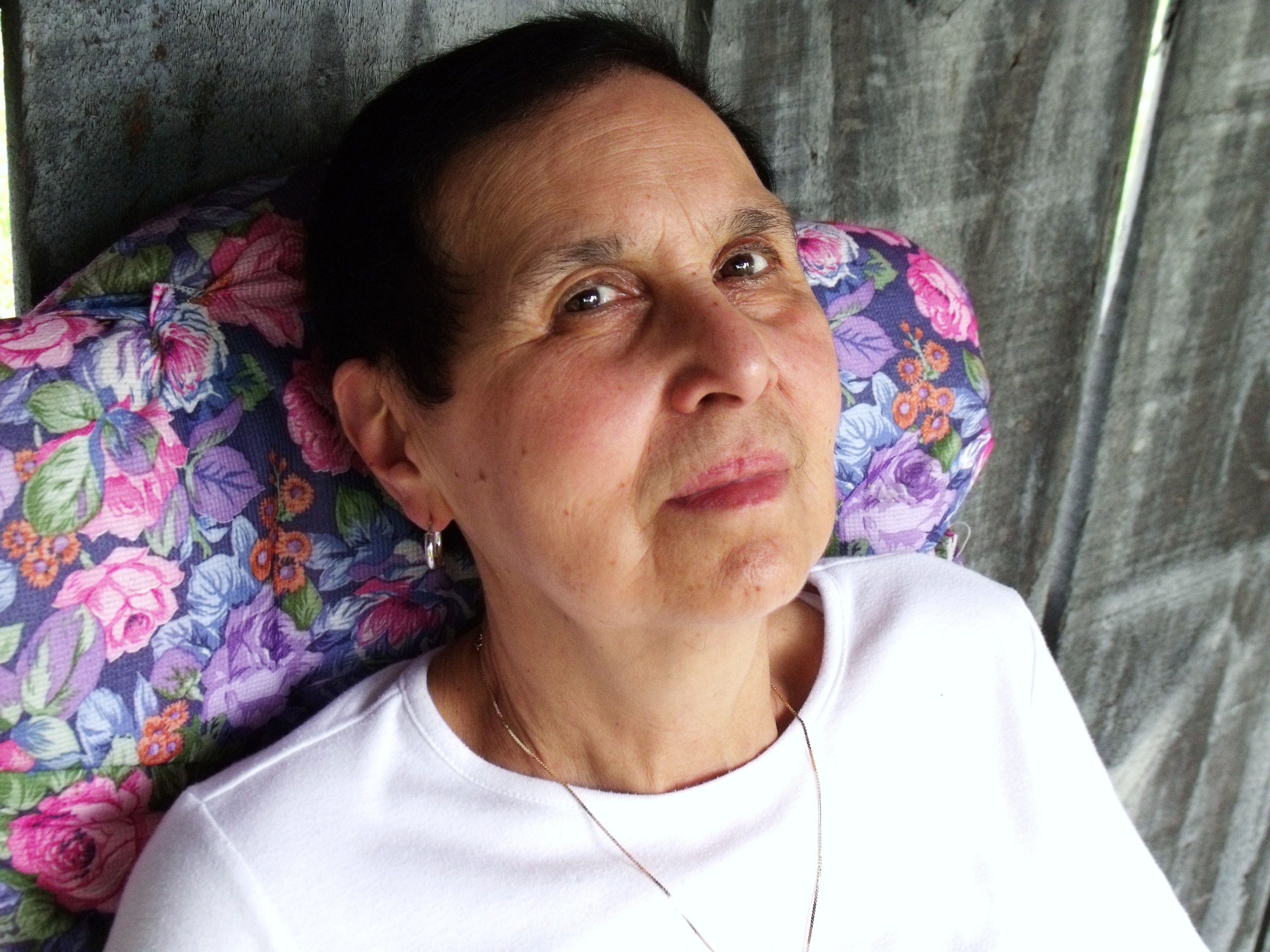
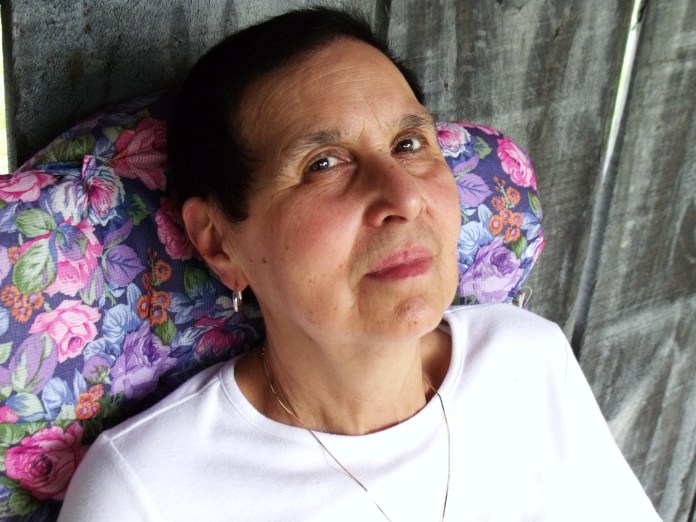
Carmella DeCosty Ruane.

These days, I think about Carm when washing the dishes she gave me or ruminating about how she would have loved spoiling my son, Colin.

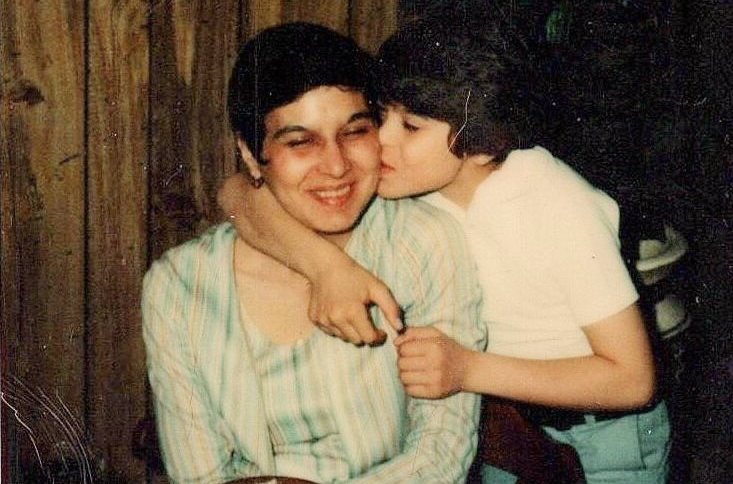
My parents and my sister, Lisa, kissing me.

Here are two poems that capture the memory and spirit of my mother.

Morning Coffee

My mother sits
in the kitchen chair
after she recites
her morning prayers.
Sunlight streams through
the lace curtains
and cigarette smoke
is suspended in the air.
She bows her small head
and presses her fingers
to the bridge of her nose,
as she contemplates
the chores for the day,
while her milky coffee cools
in a blue ceramic mug
resting within reach
on the laminate counter.

Vestiges

My parents are gone.
They walk the earth no more,
both succumbing to lung cancer,
both cremated and turned to ash.

With each passing year,
their images become more turbid in my mind,
as if their faces are shielded
by expanding gray-black clouds.
I try to retain what I remember—
my father’s deep-set, dark eyes and aquiline nose,
my mother’s small head bowed in thought or prayer
while smoking a cigarette in the kitchen.

I search for their eyes
in the constellations of the night sky.
I listen for their voices in the wind.
Is that plastic bag snapping in the breeze
the voice of my father whispering,
letting me know he’s still around …
somewhere … over there?
Does the squawking crow
perched in the leafless maple tree
carry the voice of my mother,
admonishing me for wearing a stained sweater?

Resorting to a dangerous habit,
I use people and objects as “stand-ins”
for my mother and father,
seeking in these replacements
some aspect of my parents’ identities.

A sloping, two-story duplex with cracked green paint
embodies the spirit of my father saddled with debt,
playing the lottery, hoping for one big payoff.
I want to climb up the porch steps and ring the doorbell,
if only to discover who resides there.

In a grocery store aisle on a Saturday night
I spot an older woman
standing in front of a row of Duncan Hines cake mixes.
With her short frame, dark hair, and glasses,
she casts a similar appearance to my mother.
She is scanning the labels,
perhaps looking for a new flavor,
maybe Apple Caramel, Red Velvet, or Lemon Supreme,
just something different to bake
as a surprise for her husband.
A feeling strikes me and
I wish to claim her as my “fill-in” mother.
I long to reach out to this stranger in the store,
fighting the compulsion
to place a hand on her shoulder
and tell her how much I miss her.

I fear that if my parents disappear
from my consciousness,
then I too will become invisible.
And the reality of a finite lifespan sets in,
as I calculate how many years I have left.
But I realize I am torturing myself
with this twisted personification game.
I must remember my parents are dead
and possess no spark of the living.
And I can no longer enslave them in my mind,
or try to resurrect them in other earthly forms.
I have to let them go.
I have to dismiss the need for physical ties,
while holding on to the memories they left behind.

And so on the night I see the woman
in the grocery store aisle,
I do not speak to her,
and she does not notice me lurking nearby.
But as I walk away from her,
I cannot resist the impulse to turn around
and look at her one last time—
just to make sure
my mother’s “double” is still standing there.
I want her to lift her head and smile at me,
but she never diverts her eyes
from the boxes of cake mixes lining the shelf.

Standard

A Small, Good Thing

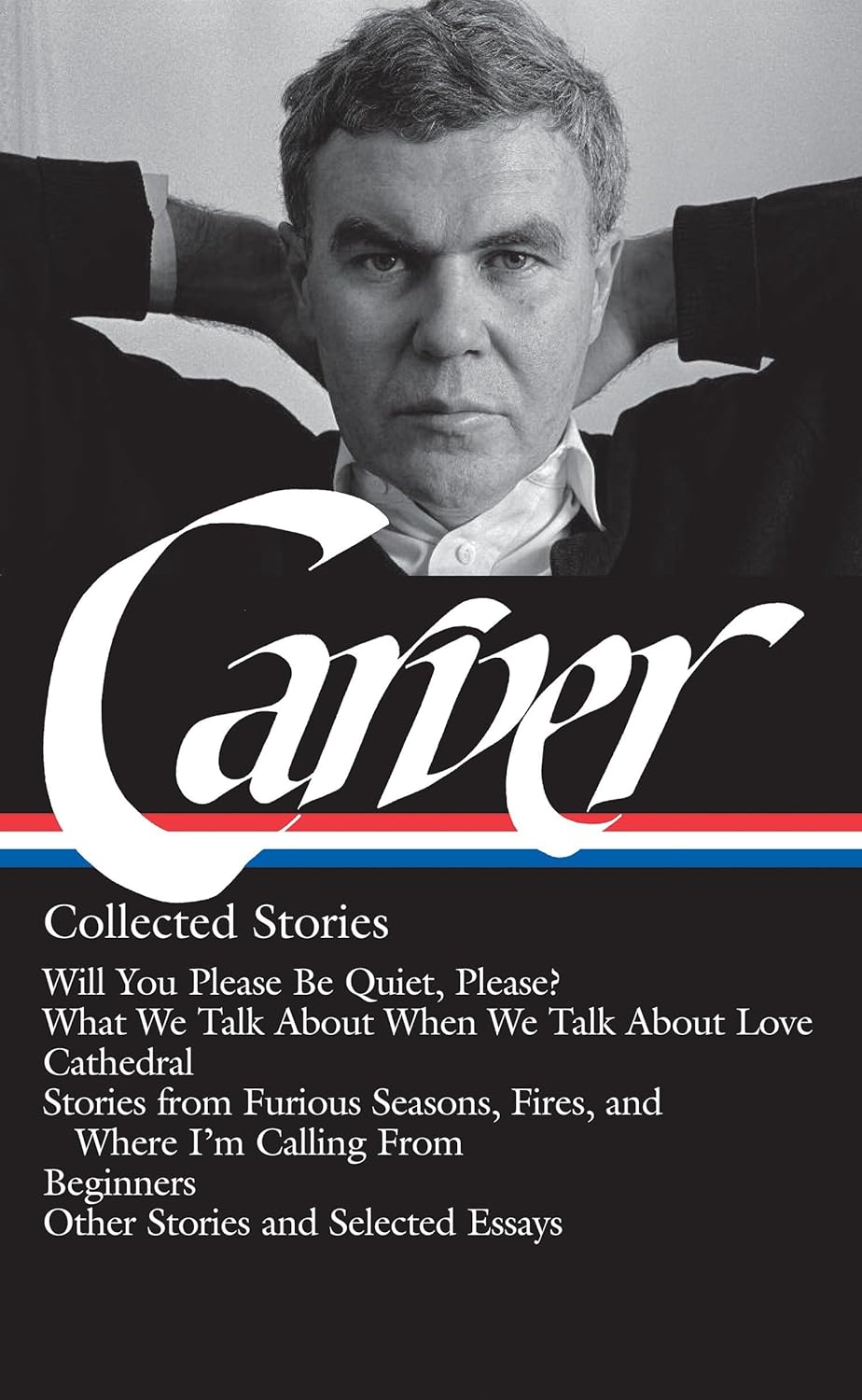
I am currently reading Raymond Carver: Collected Stories, published by the Library of America, and I wanted to share one story that I found devastating on an emotional level. You don’t have to be a parent to appreciate it, but being one heightens the intensity of the story.

I won’t go into plot summary of the story, other than to say it’s about boy who falls into coma after being struck by a car. Here’s a link to the full text.

Or, if you prefer, here’s an audio version:

Standard

Embrace the Futility

This essay was published in the Spring 2024 issue of The Awakenings Review. I’m grateful to editor Robert Lundin for giving me permission to publish the essay on my blog.

##

In the pediatric surgery waiting room, my wife, Pam, and I sit on a couch, watching a television screen as Facebook CEO Mark Zuckerberg testifies before a House subcommittee about the data-sharing scandal involving Cambridge Analytica. It’s April 2018, and we’ve been here all morning since bringing our two-year-old son, Colin, to the hospital for an anesthesia-induced auditory brainstem response (ABR) test.

The audiologist steps into the room and shuffles toward us with his eyes cast downward. He’s short and balding with grayish-brown hair on the sides of his head. After he directs us to a more private area, he says in a low voice, “He’s doing fine. The test went well. It’s good news from my perspective, but maybe bad news for you. His hearing is fine, perfectly normal.”

“So what does that mean?” I say.

“It means his hearing isn’t the cause of his delayed speech.”

“I knew it. I knew it,” Pam says.

We would receive the official diagnosis of autism spectrum disorder (ASD) a few months later. And as Colin has grown, during moments when he refuses to eat, take a bath, or leave the house, or when he throws tantrums—his face bright red, his arms flapping, and his voice emitting high-pitched screams that reverberate off the walls and ceiling—I have repeated two mantras in my head: “Embrace the Futility” and its softer sibling, “Accept the Inevitable.”

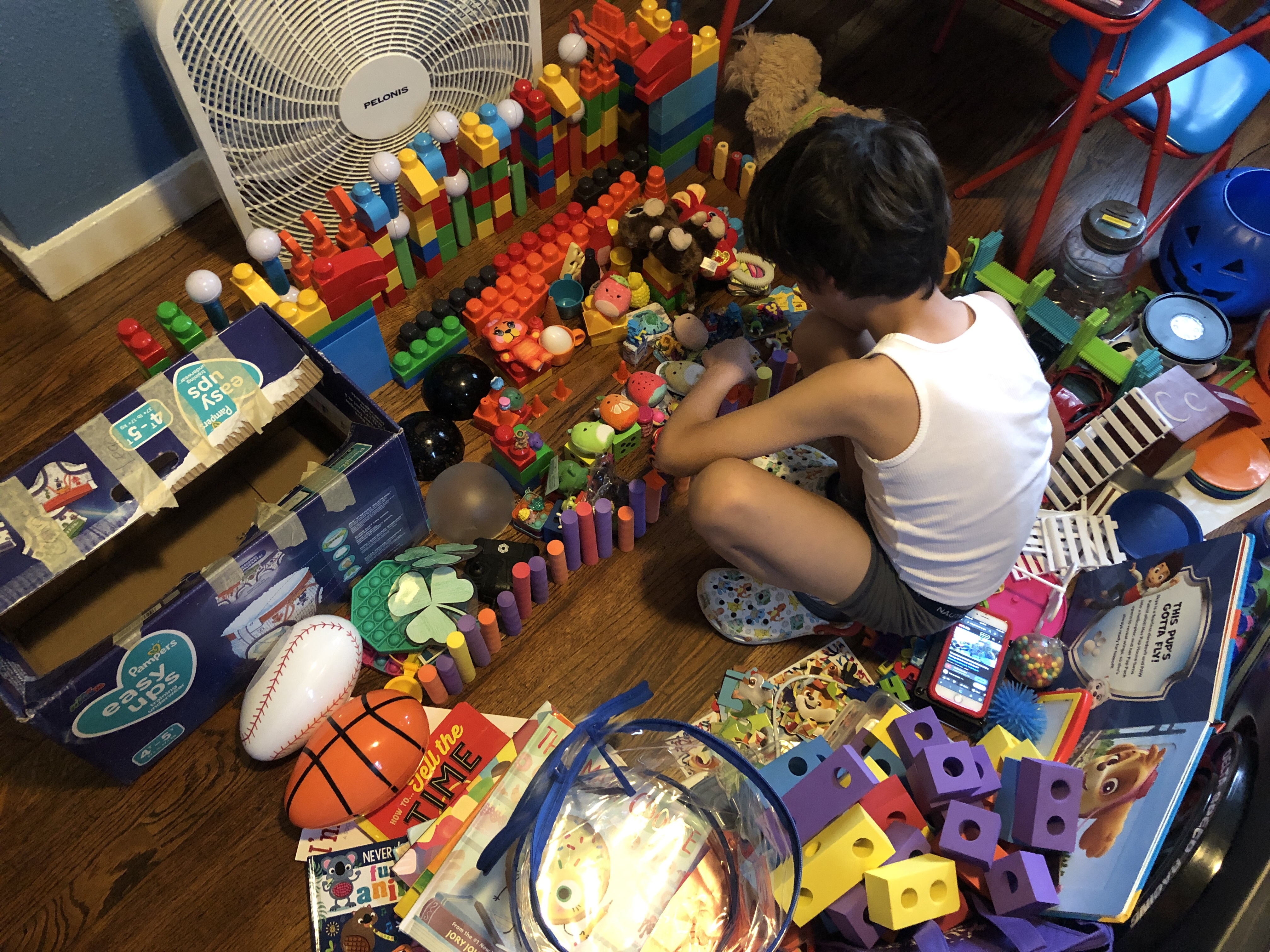
Colin’s room. He loves to line up his toys in patterns,

I use these twin sayings as coping mechanisms to brook the vagaries and hardships of life.

I take no credit for inventing the verbiage of Embrace the Futility. One of my co-workers at a broadcast news wire service in Arizona shouted the phrase several years ago when we were understaffed on the overnight shift and getting inundated with news summaries and audio files sent to us from multiple markets across the country.

Embrace the Futility sounds like a negative concept, but it is a positive and freeing principle (at least for me).

It guides my behavior with one central dictum: I am not in control. The world is a dealer at a Las Vegas blackjack table, and the house always wins. My mental approach is, “Expect the worst and be pleased when it doesn’t turn out that way.”

At an early age, our parents teach us that we will live for a short time and then die. The rules of the game are rigged. We know the score at the outset, and the contest ends in our defeat.

Embrace the Futility and Accept the Inevitable give me the freedom to let go of things I am powerless to control. As a result, I reconcile myself to an existence dictated by failure, sickness, and eventual death.

This is a personal philosophy based on my lived experience; it may not work for everyone. But Embrace the Futility and Accept the Inevitable have helped me to endure the inexorable rough patches in life.

##

I am consumed with pity for my son, knowing his autism—his diminished ability to communicate verbally—puts him out of alignment with the rest of the world. In this case, love proves impotent to effect change or prevent the hurt he will absorb as he grows.

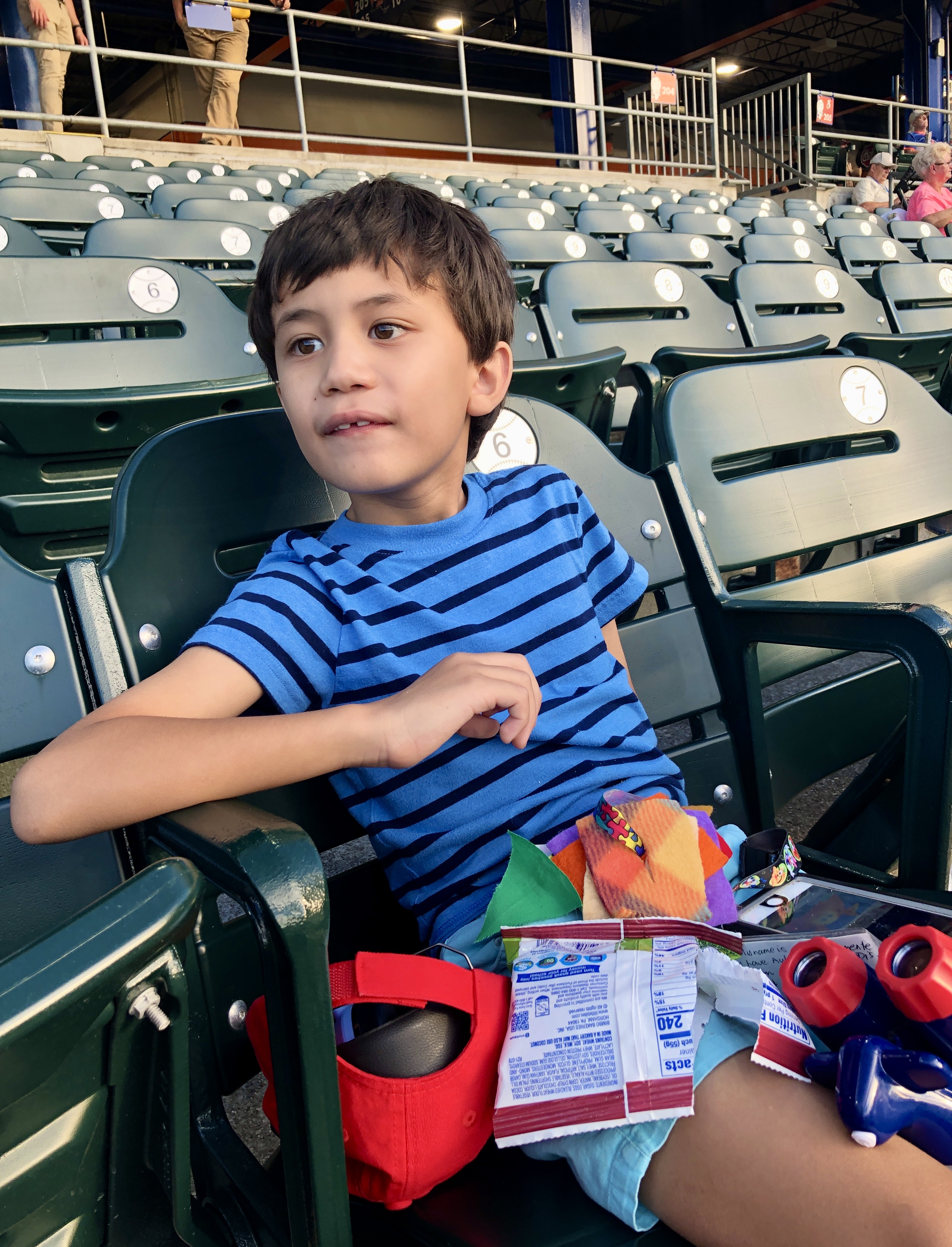
Colin sitting in the stands on the first-base line.

I understand I am professing ableism. I recognize Colin’s disability should not be viewed as a problem that needs to be fixed. But as a parent, I know his autism dictates his future, making his life more difficult. Colin may never lead an independent life. He may never enjoy what neurotypical kids experience—playing organized sports, going to college, falling in love, and working full-time.

I can’t wish away his autism or intervene to make him “normal.”

I could lament the diagnosis. I could resist—to metaphorically bang my head against a cinder block wall and expect to make an opening. Instead, I acknowledge that I cannot “cure” Colin, and I accept him unconditionally. And amid the many challenges of raising an autistic child, Pam and I savor ordinary moments with Colin, relishing his squeals of laughter and his blithesome presence as he jumps around our living room.

Pam and Colin.

But Embrace the Futility and Accept the Inevitable have universal applications. Your car breaks down. You file for divorce. Bankruptcy, fraud, cancer, a broken femur, or a flooded basement—sure, bring it on. 

Embrace the Futility and Accept the Inevitable can help anyone reframe the unavoidable “suckiness” of life. You don’t ignore the mess, but you admit you can’t control it. And it’s OK to let go—to reconcile yourself to what the universe throws at you.

Since age fifteen, I’ve had multiple surgeries and radiation treatments for a slow-growth, benign tumor at the base of the brain, near the pituitary gland. The latest surgical intervention came in July 2023, when a neurosurgeon and an ears, nose, and throat specialist teamed up, taking a transsphenoidal approach (through the nose) to extract tumor remnants that had affected my vision. Even as I write these words, I know the craniopharyngioma will eventually expand in my head and another date on the operating table looms in my future.

I was also diagnosed with rheumatoid arthritis in 2017. The disease has altered my digestion and lung function while leaving me with bent, aching fingers.

And while I do my share of complaining about these medical conditions, I also Embrace the Futility of my body breaking down, since the decline is inescapable.

My late father, Francis Sr., offered the best example of Accepting the Inevitable.

When he was diagnosed with lung cancer in 2007, an oncologist gave him the option of starting chemotherapy, but the doctor stressed the dismal odds of the treatment elongating my father’s life. My dad curled his bottom lip and said, “Why bother? What’s the point?”

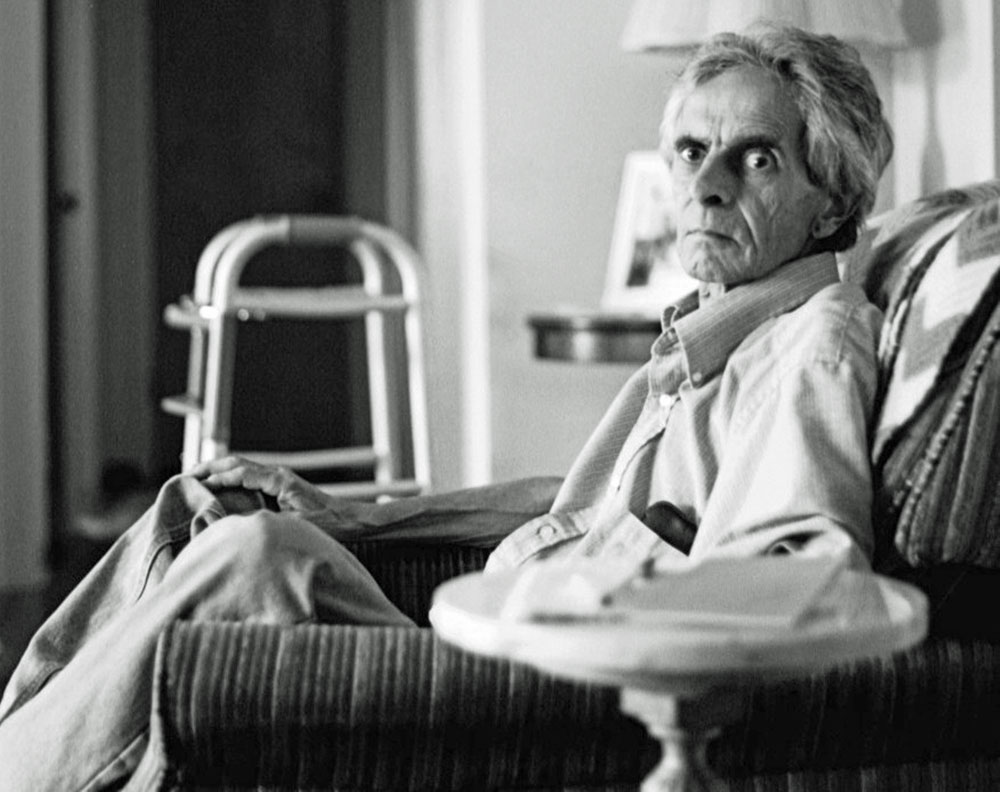
Dad, side angle. Photo by Francis DiClemente.

He rejected tubes, injections, and trips to the hospital. He endured his fate with stoicism, making the best of his last six months on earth, placing bets at OTB (Off-Track Betting), racking up credit card debt (which would be wiped out with his death), and eating sweets he had eschewed previously—Klondike bars and Little Debbie snacks—before dying at home under hospice care.

So now, when circumstances beyond my control arise, I follow my father’s model. I submit, acquiesce, and capitulate—assenting myself to a fate I cannot sway. And this allows me to move forward without resistance to the vicissitudes of life.

Standard

Honoring My Two Dads

On this Father’s Day, I pay tribute to my two dads, the late Francis DiClemente Sr. and my stepfather, the late William Ruane. I was blessed to have these two wonderful men nurture me and influence my life. Here are some photos and writing selections honoring them.

That’s me on the left with my father, mother and sister Lisa.

Open Heart

My father was born
with a hole in his heart,
and although repaired,
nothing in his life,
ever filled it up.
The defect remained,
despite the surgeon’s work—
a void, a place I could never touch.

Outskirts of Intimacy (Flutter Press, 2010) and Dreaming of Lemon Trees: Selected Poems (Finishing Line Press, 2019)

Photo of my dad and me from my Confirmation at St. John the Baptist Church in Rome, NY.

The Galliano Club

From street-level sunlight to cavernous darkness,
then down a few steps and you enter The Galliano Club.
Cigar smoke wafts in the air above a cramped poker table.
Scoopy, Fat Pat and Jules are stationed there,
along with Dominic, who monitors it all,
pacing pensively with fingers clasped behind his back.

A pool of red wine spilled on the glossy cherry wood bar,
matches the hue of blood splattered on the bathroom wall.
A cracked crucifix and an Italian flag loom above,
as luck is coaxed into the club with a roll of dice
and a sign of the cross.

Pepperoni and provolone are piled high for Tony’s boys,
who man the five phone lines
and scrawl point spreads on thick yellow legal pads.
Bocce balls collide as profanity whirls about . . .
and in between tosses, players brag about
cooking calamari (pronounced “calamad”).

Each Sunday during football season,
after St. John’s noon Mass,
my father strolls across East Dominick Street
and places his bets,
catapulting his hopes on the shoulder pads of
Bears, Bills, Packers and Giants.
His teams never cover
and he’s grown accustomed to losing . . .
as everything in Rome, New York exacts a toll,
paid in working class weariness and three feet of snow.

But once inside The Galliano, he feels right at home,
recalling his heritage, playing cards with his friends.
And here he’s no longer alone,
as all have stories of chronic defeat.
Blown parlays, slashed pensions
and wives sleeping around,
constitute the cries of small-town men
who have long given up on their out-of-reach dreams.

For now, they savor the moment—
a winning over/under ticket, a sip of Sambuca
and Sunday afternoons shared in a place all their own.

Outskirts of Intimacy (Flutter Press, 2010) and Dreaming of Lemon Trees: Selected Poems (Finishing Line Press, 2019)
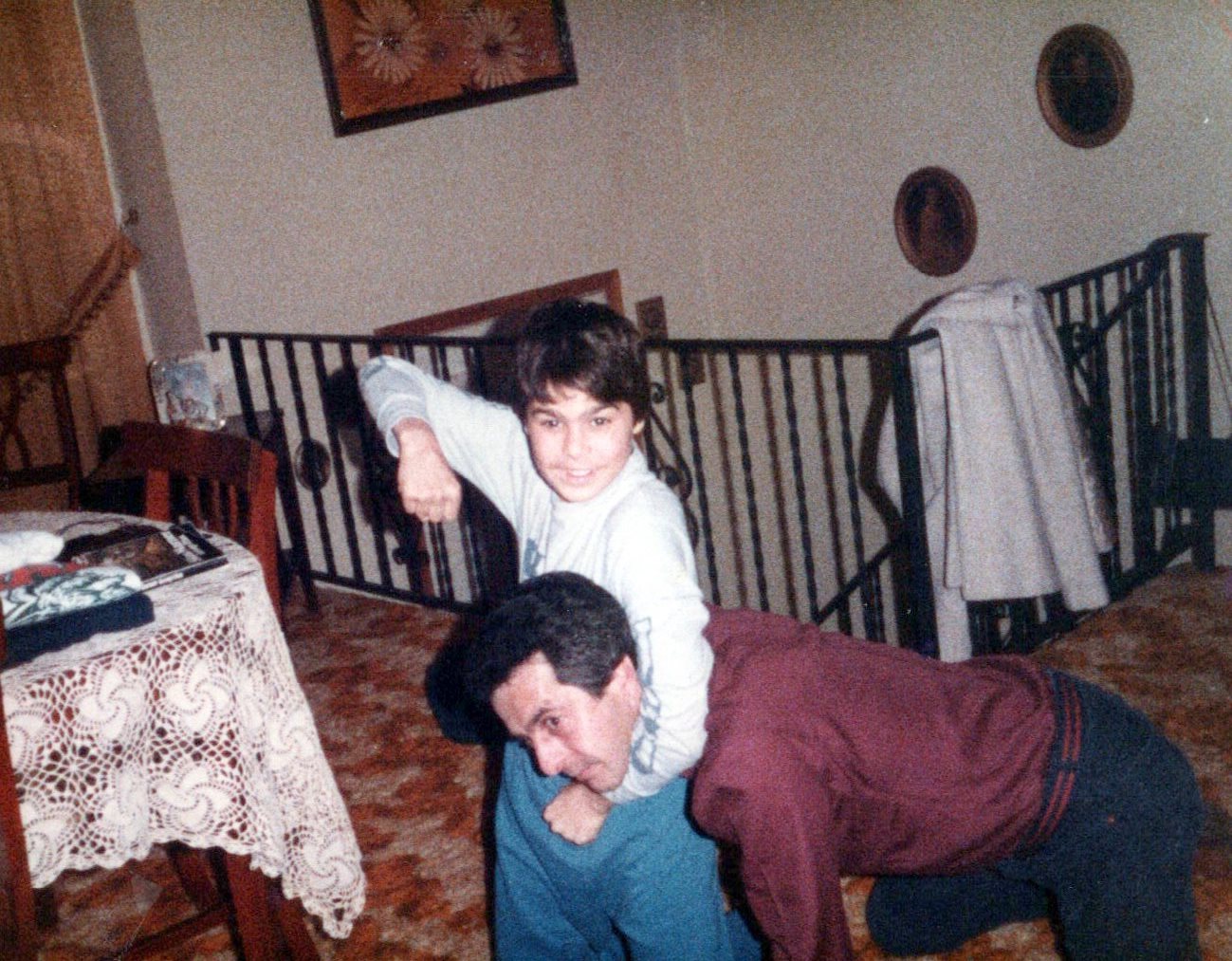
Dad and I rolling around on the floor.

Diagnosis

Dad put the car in park and let it idle,
and as I slid into the passenger seat and adjusted myself,
he leaned over and kissed me on the cheek,
his tan winter coat brushing against the steering wheel.
I felt a trace of his razor stubble against my skin,
and I could smell a faint odor of Aqua Velva or Brut,
combined with cigarette smoke.
The heater hummed, and he lowered the blast of air.
I wondered why we weren’t moving yet.
He wasn’t crying,
but he appeared on the verge of spilling emotions.

“What’s the matter, Dad?” I asked.
“The hospital called your mother today.”
He switched on the overhead light,
reached into his jacket pocket,
and pulled out a torn piece of paper.
“Here,” he said, handing me the slip of paper,
“This is what they think you have.
I wrote it down, but I don’t think I spelled it right.”
Scribbled in faint blue ink was a misspelling
of the word “craniopharyngioma.”
My father’s voice cracked as he said,
“It’s cranio-phah-reng,
something like that . . . oh, I don’t know,
it’s some kind of brain tumor.”

I looked at the paper and felt a wave of satisfaction
as my father let out a sigh.
He seemed locked into position in the driver’s seat,
unable to shake off the news and go through the motions
of putting the car in gear and driving away.
We clutched hands, and I said, “It’s OK, Dad. Don’t worry.
But what do we do now? What’s next?”
“You have to go back there for more tests,” he said.
You may need surgery.”
“All right,” I said.
He switched off the overhead light,
and we exited the parking lot.
We grew silent inside the car
as we passed the naked trees lining Pine Street
in our city of Rome, New York.

While my father was crestfallen,
I felt elated as I sat in the passenger seat.
The CT scan with contrast had given me
a medical diagnosis—
a reason for my growth failure at age fifteen.
It explained why my body had not changed,
why I had not progressed through puberty,
and why I was so different from the other boys my age.
I still considered myself a physical anomaly,
but the tumor proved it wasn’t my fault.

That knowledge gave me satisfaction
and a stirring of excitement.
I looked down at the piece of paper again
and studied the word—“craniopharyngioma.”
I tried to sound it out in my head while my dad drove on.
I thought the word would roll off my tongue
like poetry if I said it out loud.
Craniopharyngioma. Cranio-Phar-Ryng-Ee-Oh-Mah . . .
sort of like onomatopoeia.

The Truth I Must Invent (Poets Choice, 2023)

Dad in the kitchen. Photo by Francis DiClemente.

Death Mask

Assume the death mask,
put on your final face
like those insolent characters
in that Twilight Zone episode—you know the one,
with their cruel faces contorted
and fixed there for all time’s sake.

My father wore his death mask.
He kept it on even though I arrived after his passing
on that soft warm August evening.
I’ll never forget the way he looked,
with his mouth agape, eyes vacant, cheeks sunken,
body withered and shriveled,
curled up in the fetal position on his deathbed
in my grandmother’s sweltering death house.

I allowed myself to look at him for just a moment.
I then turned around and left him alone
in his small bedroom.
I did this for my benefit, since I wanted to remember him
as a father and a man
and not as a corpse in a locked-up state.
This is because the death mask grips its lonely victim
and sucks out the life and extinguishes the person.

I shuffled into the living room,
rejoining the Hospice nurse and the neighbors
who came across the street
to comfort my grandmother and express remorse.
And Grandma, still acting as host
despite the occasion and the heat,
asked me to make a pot of coffee for her guests.
The neighbors sat on the old, out-of-style couches
and chairs in my grandmother’s ranch home
off Turin Road in north Rome.
They conversed in hushed tones and sipped coffee
while we waited for the workers from the funeral parlor
To drive up to the house and wheel away my father.

Outskirts of Intimacy (Flutter Press, 2010) and Dreaming of Lemon Trees: Selected Poems (Finishing Line Press, 2019)

Dad in his chair. It’s out of focus, but I love how he looks directly at the camera. Photo by Francis DiClemente.

St. Peter’s Cemetery

I extend a hand to touch an angel trapped in marble.
Its face is cool and damp, like the earth beneath the slab.
I pose a question to my deceased father,
Knowing the answer will elude me.
For his remains are not buried in this cemetery,
But instead rest on a shelf in my sister’s suburban Ohio house.

Outskirts of Intimacy (Flutter Press, 2010) and Dreaming of Lemon Trees: Selected Poems (Finishing Line Press, 2019)

Dad rocking the denim cut-off shorts.

Vestiges

My parents are gone.
They walk the earth no more,
both succumbing to lung cancer,
both cremated and turned to ash.

With each passing year,
their images become more turbid in my mind,
as if their faces are shielded
by expanding gray-black clouds.
I try to retain what I remember—
my father’s deep-set, dark eyes and aquiline nose,
my mother’s small head bowed in thought or prayer
while smoking a cigarette in the kitchen.

I search for their eyes
in the constellations of the night sky.
I listen for their voices in the wind.
Is that Rite Aid plastic bag snapping in the breeze
the voice of my father whispering,
letting me know he’s still around . . .
somewhere . . . over there?
Does the squawking crow
perched in the leafless maple tree
carry the voice of my mother,
admonishing me for wearing a stained sweater?

Resorting to a dangerous habit,
I use people and objects as “stand-ins”
for my mother and father,
seeking in these replacements
some aspect of my parents’ identities.

A sloping, two-story duplex with cracked green paint
embodies the spirit of my father saddled with debt,
playing the lottery, hoping for one big payoff.
I want to climb up the porch steps and ring the doorbell,
if only to discover who resides there.

In a grocery store aisle on a Saturday night
I spot an older woman
standing in front of a row of Duncan Hines cake mixes.
With her short frame, dark hair, and glasses,
she casts a similar appearance to my mother.
She is scanning the labels,
perhaps looking for a new flavor,
maybe Apple Caramel, Red Velvet, or Lemon Supreme,
just something different to bake
as a surprise for her husband.
A feeling strikes me and
I wish to claim her as my “fill-in” mother.
I long to reach out to this stranger in the store,
fighting the compulsion
to place a hand on her shoulder
and tell her how much I miss her.

I fear that if my parents disappear
from my consciousness,
then I too will become invisible.
And the reality of a finite lifespan sets in,
as I calculate how many years I have left.
But I realize I am torturing myself
with this twisted personification game.
I must remember my parents are dead
and possess no spark of the living.
And I can no longer enslave them in my mind,
or try to resurrect them in other earthly forms.
I have to let them go.
I have to dismiss the need for physical ties,
while holding on to the memories they left behind.

And so on the night I see the woman
in the grocery store aisle,
I do not speak to her,
and she does not notice me lurking nearby.
But as I walk away from her,
I cannot resist the impulse to turn around
and look at her one last time—
just to make sure
my mother’s “double” is still standing there.
I want her to lift her head and smile at me,
but she never diverts her eyes
from the boxes of cake mixes lining the shelf.

Sidewalk Stories (Kelsay Books, 2017)

##

A fictional poem with a Father’s Day theme.

Father’s Day Forgotten

Daddy and Christi parted ways at a bus depot
In the early morning hours.
No big scene, just a kiss on the cheek,
Then she turned around and was gone for good—
Hopping aboard a Trailways bus
Headed westbound for Chicago.
And she never looked back.

Daddy went home to his beer bottle and sofa seat,
And he drew the living room curtains
On the rest of the world,
Letting those four eggshell walls close in
And swallow him up,
Wasting away in three empty rooms and a bath.

And the memories can’t replace his lost daughter and wife.
So he tries not to remember his mistakes
Or how he drove them away.
Instead, he recalls Halloween pumpkins
Glowing on the front porch,
Training wheels moving along the uneven sidewalk,
Little hands reaching for bigger ones in the park,
And serving Saltine crackers and milk
To chase away the goblins that haunted
Dreams in the middle of the night.

Now Christi has a life of her own,
And she lets the answering machine catch
Daddy’s Sunday afternoon phone call.
She never picks up and rarely calls back.
So Daddy returns to the green couch
Pockmarked with cigarette burns.
He closes his eyes, opens the door to his memory vault
And watches the pictures play in slow-motion.
He rewinds again and again,
Without noticing the film has faded
And the little girl has stepped out of the frame.

Vestiges (Alabaster Leaves Publishing/Kelsay Books, 2012) and Dreaming of Lemon Trees: Selected Poems (Finishing Line Press, 2019)

##

Carm and Bill celebrating Bill’s birthday.

I never called Bill “Dad,” but I considered him a second father instead of a stepfather. He and my mother, Carmella, started dating around 1985 and were married in 1990. From about the time I turned fifteen, during my formative years, Bill was always there, and he played an instrumental role in my transition from boy to man.

Weekend in Albany

Night—diminished faith now fights for restoration,
aided by rosary beads pressed between the gnarled fingers
of the retired Sisters of the Academy of Holy Names.
And silent petitions are mouthed
in an air-conditioned hospital chapel,
as Sister Carmella—my Aunt Theresa—
storms the gates of heaven for healing intervention,
sending out special pleas to Our Lady of Perpetual Help.

Inside the surgical Intensive Care Unit,
fluorescent lights reveal my stepfather Bill’s post-op image.
The sight of his figure catches me unprepared—
glassy eyes, belly stained with iodine,
an incision running down the sternum,
and a ventilator forcing air into his smoker’s lungs.
Mom stays close to his bed,
afraid to look away or leave the room.
Her small body trembles and
displays the effects of chemotherapy’s wrath,
evident in hollow cheeks
and in the absence of her black hair.

Unbearable heat conquers the Capital District,
and Mom finally crumbles when our used Chevy Blazer
hisses and groans and stalls along New Scotland Avenue.
She sits down on the roadside curb, dejected.
Her tears cannot be held in any longer . . . they gush forth
as she holds a cigarette and sips a lukewarm cup of coffee.
Almost in slow motion,
a few drops fall toward her Styrofoam cup.
I reach out to catch them,
but they slip through my outstretched fingers.

And after two days in Albany, my sister and I
must leave our mother to return home to Toledo.
On the flight back, in a plane high above
the patchwork of northwest Ohio’s farms and fields,
streaks of pink and lavender compose the sunset’s palette.
And I realize all I can do is pray;
I’m left to trust faith in this family crisis.
I ask God to hasten Bill’s recovery,
while giving Mom the strength to abide.

I lean against the window
as the plane touches down in Toledo.
I close my eyes and consider if my prayers
are just wishes directed toward the clouds.
No matter, I tell myself, pray despite a lack of trust.
And so I do. I focus my thoughts on my stepfather
breathing without a ventilator
and being moved out of the ICU.

Outskirts of Intimacy (Flutter Press, 2010) and Dreaming of Lemon Trees: Selected Poems (Finishing Line Press, 2019)

##

This essay was published in 2013 in Star 82 Review.

Man in the Chair

It is late in the afternoon on a fall or winter day, and I am visiting my mother and stepfather at their home in Rome, New York. They are sitting in their family room watching TV; if I had to guess, I’d say the show is Judge Judy, Criminal Minds or NCIS.

My stepfather Bill, who owns his own contracting business, is reclining in his favorite chair, wearing a work-stained hoodie and sipping a cup of coffee. I walk into the room and sidle up to him. I put my hand on the bald crown of his head, which has a fringe of brownish-gray hair on the sides, and I feel the warmth emanating from his skull. Often when I do this, Bill will say, “God, your hand is freezing.” But he does not say anything, and I leave my hand on top of his head and take a glance at the television screen while darkness gathers outside the windows.

A sick realization makes me shudder. I pull my hand away because I recognize in the moment that the head of this man I love could, in a matter of seconds, be crushed with a baseball bat or cracked open with an ax blade. Blood could splatter against the walls, and he would slump over in the chair, inert.

And I think this not because I am homicidal or possess a desire to kill my stepfather. Quite the opposite. Fear sets in because I realize the man sitting in the chair, with a beating heart, functioning brain and sense of humor, could be gone in an instant. He could be animated in one moment and his breath snuffed out in the next.

Bill getting a haircut from George, a barber in Rome, New York. Photo by Francis DiClemente.

Most likely my stepfather will not be killed by a blow to the head or a tree crashing through the house. A heart attack, stroke or cancer will probably get him in the end. And while I already know this, I pause and allow this knowledge to sink in, so I will appreciate him better.

A year or two after this dark afternoon, my mother would lose her battle with cancer. And her death would remind me that we do not live life all at once. It’s not one big project we need to complete by a deadline or a trip to Europe you have planned for years.

Instead, we experience life in small doses, tiny beads of time on a string. And it helps to recognize them, to acknowledge you are present and alive even in the most mundane circumstances—while you are talking with co-workers in the parking lot before heading home for the day, running errands, doing laundry, baking a chocolate cake, tossing a football with friends and reading to your kids at bedtime. These are subplots that drive our stories forward. They are not exciting. They are not memorable. But they are part of our existence, and we must value them before they and we are gone.

So, after I pull my hand away from Bill’s head, I decide to sit on the couch next to my mother. She hates when people talk during a program because it distracts her, so I look at the screen even though I am not interested in the show, and I do not say a word. But during a commercial break, she mutes the sound with the remote control, and Bill and I converse about something. And I can’t remember the topic we discussed, and it doesn’t really matter.

##

These clown wind chimes once hung on the walkway leading to Bill’s back door.

Black and white clown wind chimes. Photo by Francis DiClemente.

I wrote this poem in haste after finding out that Bill passed away on Dec. 25, 2021.

Poem for Bill 

I wonder where he is right now.
Is he soaring through the layers
of space between earth and heaven?

Is he sitting in a holding cell,
awaiting his purgatory sentence?

Is his body weightless
and his brain wiped clean?

Does he know he’s dead?
Or is there nothing left to know?

Standard

A Mother’s Day Poem

Here is a Mother’s Day poem in honor of my mom, Carmella. It’s from my collection The Truth I Must Invent (Poets’ Choice, 2023). I realize it’s a dark poem, but it doesn’t fully express my mother’s identity.

Aplomb by Francis DiClemente. Copyright 2023.

As a dad now, I also understand that all parents are flawed, imperfect people. My mother likely struggled with undiagnosed depression. And this particular poem captures only one side of Carmella, not revealing the truth of her kindness, generosity, diligence, faith and love.

Carmella DeCosty Ruane.

I also believe any memory of deceased family members and friends—even negative ones—venerate the individuals and keep their spirits alive. Happy Mother’s Day to all the moms and mother figures out there. Where would any of us be without you?

Standard

New Year’s Reflections

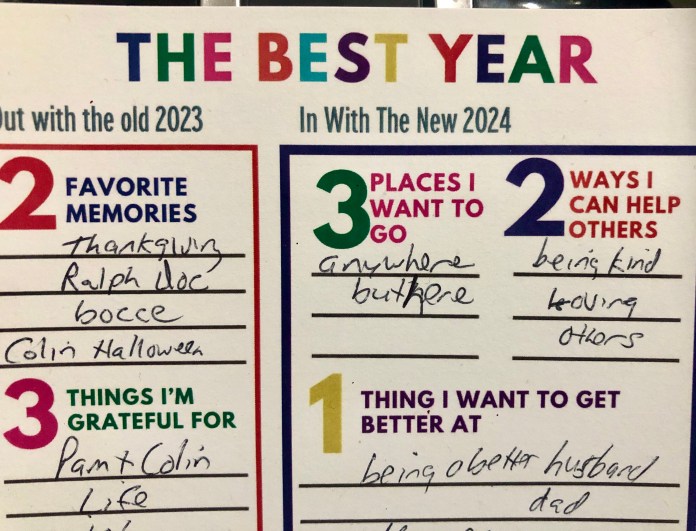
New Year’s Eve 2023. Time to rewind and then hit reset.

I’m grateful for getting another 365 tokens to drop into the slot machine. Another 365 scratch-off lottery tickets to play. Another 365 chances to be better than the day before.

Card from David’s Refuge.

I’m closing out the year filled with both anxiety and excitement.

By all accounts, 2023 was a pretty good year for me. I made some strides as a writer and filmmaker.

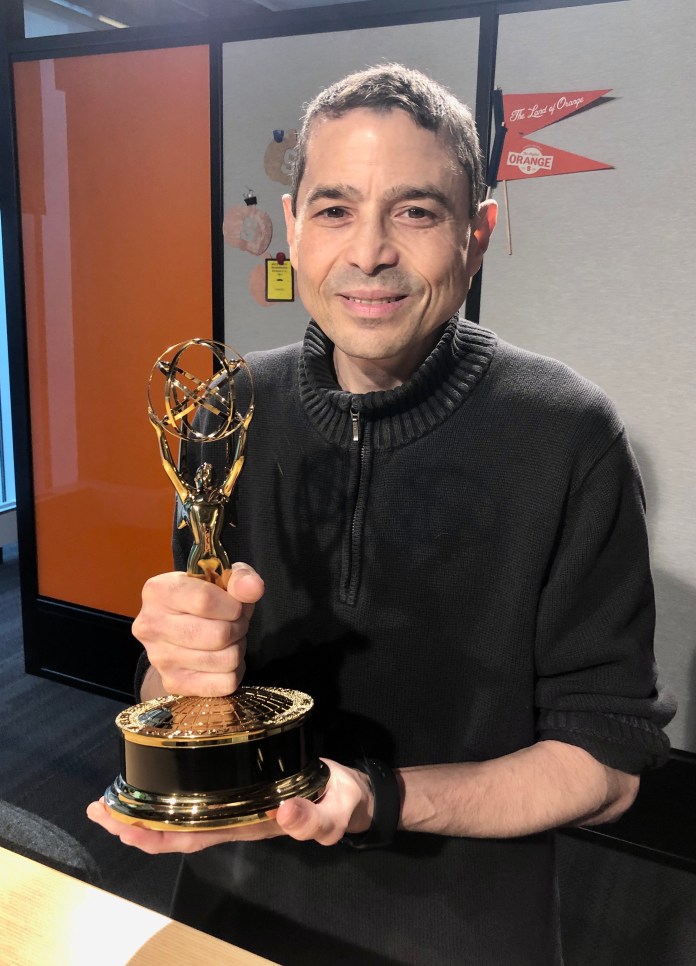
I earned an Emmy (my second) as part of a production team at Syracuse University.

Photo by Shane Johnson.

I published a full-length poetry collection, The Truth I Must Invent. I published a couple of short stories and a short play in some literary magazines.

The Truth I Must Invent book cover.

I completed two short documentary films, Ralph Rotella: The Sole of Syracuse, which premiered at the Syracuse International Film Festival and was an official entry at the Culver City Film Festival, and The World Series of Bocce: A Celebration of Sport, Family and Community, which is awaiting festival decisions.

World Series of Bocce title screenshot.

I completed a feature screenplay and a full-length coming-of-age memoir (a ten-year project!). But despite numerous revisions, I still don’t know if the words on the page are memorable or whether either project will come to fruition (e.g., production or publication).

So those are my accomplishments in 2023. Big whoop, right? Yada-yada-yada. Blah-blah-blah.

Here are the standout moments during the last calendar year.

In June, my Aunt Teresa, a.k.a. Sister Carmella DeCosty, visited Central New York to attend the funeral of her brother, my Uncle Fee, in Rome, New York. She stayed with us in Syracuse, and we had a lot of fun catching up.

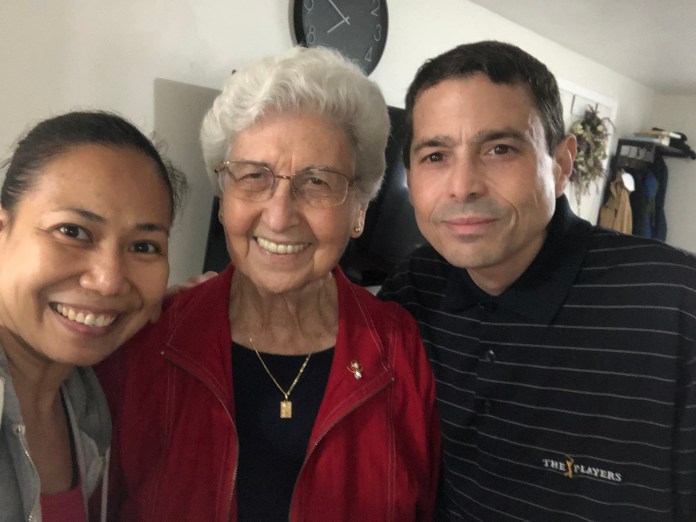
Pam and Aunt T.

A flashback of Aunt T. during a holiday at my maternal grandparents’ house. I think that’s me on her lap, with my mom in red and my Aunt Pat in black.

My seven-year-old son, Colin, who is autistic, enjoyed trick-or-treating for the first time this Halloween. I think he actually “got it” this year.

Colin getting ready to trick-or-treat.

I spent Thanksgiving with my brother Dirk and his family in Rome and my sister Lisa and her family from Ohio. The best part—no snow!

For the holiday season, my wife Pam hung a stocking for Colin in mid-December and gave him little presents every day—stuff like Kinder Joy eggs and Play-Doh. He seemed to understand the concept of Santa Claus, and he was excited to open presents on Christmas morning.

Pam and Colin.

Pam went back to school this fall, enrolling in an occupational therapy assistant program at Bryant & Stratton College. The workload was arduous, but Pam scored high grades during her first semester.

But the most significant event of 2023—I survived my sixth brain surgery with my brain function and memory intact. In July, a team of neurosurgeons and ENT surgeons at Upstate performed a transsphenoidal (through the nose) surgery to remove parts of a craniopharyngioma that had been growing near the pituitary region, affecting my vision. I had a cerebral spinal fluid leak during surgery, but the ENT surgeon repaired it, and the patch is holding nearly six months later.

I wish all good things for you in 2024. A partial list includes: Love, family, faith (whatever you choose that to be), employment, health, health insurance, kind co-workers, transportation, clean drinking water, food, a home, a roof, four walls, a furnace, indoor plumbing, electricity, clean air, and trees. Lots of trees. I am supremely thankful for all of the above.

I leave you with a couple of New Year’s-themed poems. It’s amazing what you can find when you do a word search on the Poetry Foundation website.

January by Weldon Kees

Morning: blue, cold, and still.
Eyes that have stared too long
Stare at the wedge of light
At the end of the frozen room
Where snow on the windowsill,
Packed and cold as a life,
Winters the sense of wrong.

Poetry magazine, March 1951.

New Year’s Eve by Maurice Lesemann

The towers give tongue, the wailing horns grow loud;
And this odd planet where we wake and are
Has once again, amid a tumult of cloud,
Swung safely and serenely round its star.

Poetry magazine, April 1932.


Standard

Birthday Note

I celebrated my birthday yesterday by relaxing at home with my family. As kids are wont to do, my son, Colin, blew out the candle on the cake, so we had to light it twice.

Colin Joe getting reading to blow out the candle.

I snuck in a couple of wishes, but mostly I felt enormous gratitude for still being here for another day and another year.

The night before I reflected on my recovery from surgery and my birthday, journaling for a few minutes while standing near my bedroom dresser. I am not a habitual journal writer, but I have notebooks scattered throughout the house to be available when the urge strikes me. Often my journal entries—which I always convert to a long-running Word document—contain mundane facts and banal thoughts with no potential to become raw material for a poem, story, or essay. However, sometimes the act of moving my pen on paper will lead me to a line that initiates energy.

And this is what I came up with the other night. It’s not a great poem, but I was happy I wrote it in a spontaneous burst and finished it in one draft.

On the Eve of My Fifty-Fourth Birthday

There has to be more
to this life than
just what we see.

Or else there isn’t—
in which case
death won’t be
so scary.

It’ll just be a
harmless place
devoid of life.

And you and I
can handle that, right?

Standard