Praise for Poecabulary

I’m not a fan of the promotional aspect of writing, but I want to share this positive review of Poecabulary because the Reedsy Discovery reviewer, Stephen Dudas, summarized exactly what I was trying to achieve with my wacky experimental book project. Nearly all of the time, I’m tossing words in the dark, hoping they find their way to readers. So it’s nice, and rare, when my stray verbal arrows hit the mark.
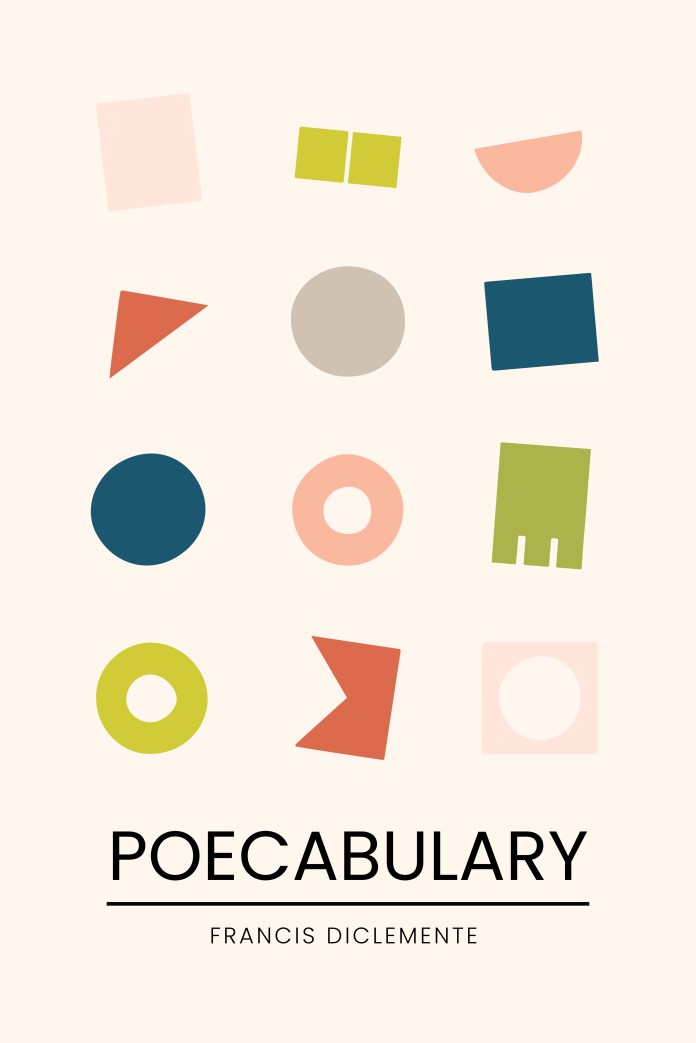
Poecabulary front cover.

Some of my favorite pull quotes:.

“Francis DiClemente’s Poecabulary is a stunning example of that now all-too-rare book in our contemporary poetry landscape: a genuine, focused experiment with specific elements of the English language.

“… Poecabulary is fully intended as a collaborative experience (all reading is, of course, but collaboration is at the forefront of this particular collection). To read the collection is to be brought into a creative and intellectual game. What is similar? What is different? What does one word mean to the other? What arguments, stories, commentaries, dreams, songs, etc. might spin out from where these words meet?

Poecabulary does what any good poetry collection should—it offers itself up as the site of interactive play between a poet’s invitation and a reader’s interpretation.”

—Reviewed by Stephen Dudas, Reedsy Discovery


Standard

Poecabulary Book Released

I am excited to announce the publication of my new book, a minimalistic, experimental poetry collection entitled Poecabulary.

Here is the description:

Poecabulary is a minimalist poetry collection that blurs the line between vocabulary and verse. Words appear in unexpected pairings, creating connections that surprise, challenge, and invite reflection. Each combination is a deliberate act of linguistic play, where alliteration, sound, appearance, randomness, rhyme, and meaning collide.

The author explores how similar or opposing words interact, encouraging readers to discover their interpretations and associations. Both a playful exercise and a meditation on language, Poecabulary celebrates the power and flexibility of words.

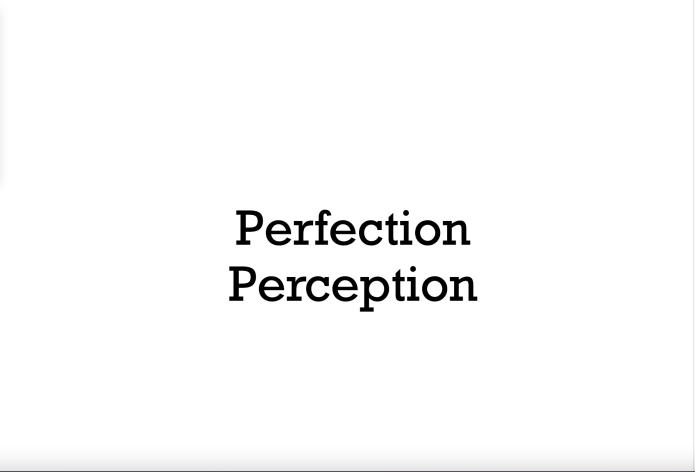
This collection will resonate with language lovers, poetry enthusiasts, and anyone curious about how words shape meaning. Sample pairings include Autistic/Artistic, Diffident/Different, Lonely/Lovely, Perfection/Perception, and Reject/Respect.

Poecabulary front cover.

The book began with my obsession with vocabulary and discovering connections between word pairings.

As part of my compulsive, lexical behavior, I check four different online dictionaries daily for their “Word of the Day” features:

TheFreeDictionary.com
Dictionary.com
Merriam-Webster.com
WordGenius.com

This project is an example of how the crazy ideas that percolate and fester in my brain are the ones I need to chase, since they are the ones that elevate my creativity and spur risk taking.

Here is the author’s note from the front of the book:

Obsessed with vocabulary, I created this work as wordplay—an exercise to incite imagination and elicit connections in the reader’s mind. I consider the word pairings a hybrid of vocabulary and poetry—which could be labeled as “Poecabulary” or “Voetry.”

Quite honestly, I don’t even know if you can call Poecabulary a book, but I do believe some “word nerd” readers may enjoy it. And it’s a quick read. Although it’s 190 pages long, the word count is less than 650.

I would also love to collaborate with a visual artist who could make large-scale paintings featuring select word pairings from the collection. I could see the text-based works hanging in a gallery space.

Here are a few of my favorite word combinations:

Autistic/Artistic

Diffident/Different

Lonely/Lovely

Perfection/Perception

Reject/Respect

Standard

Oh William!

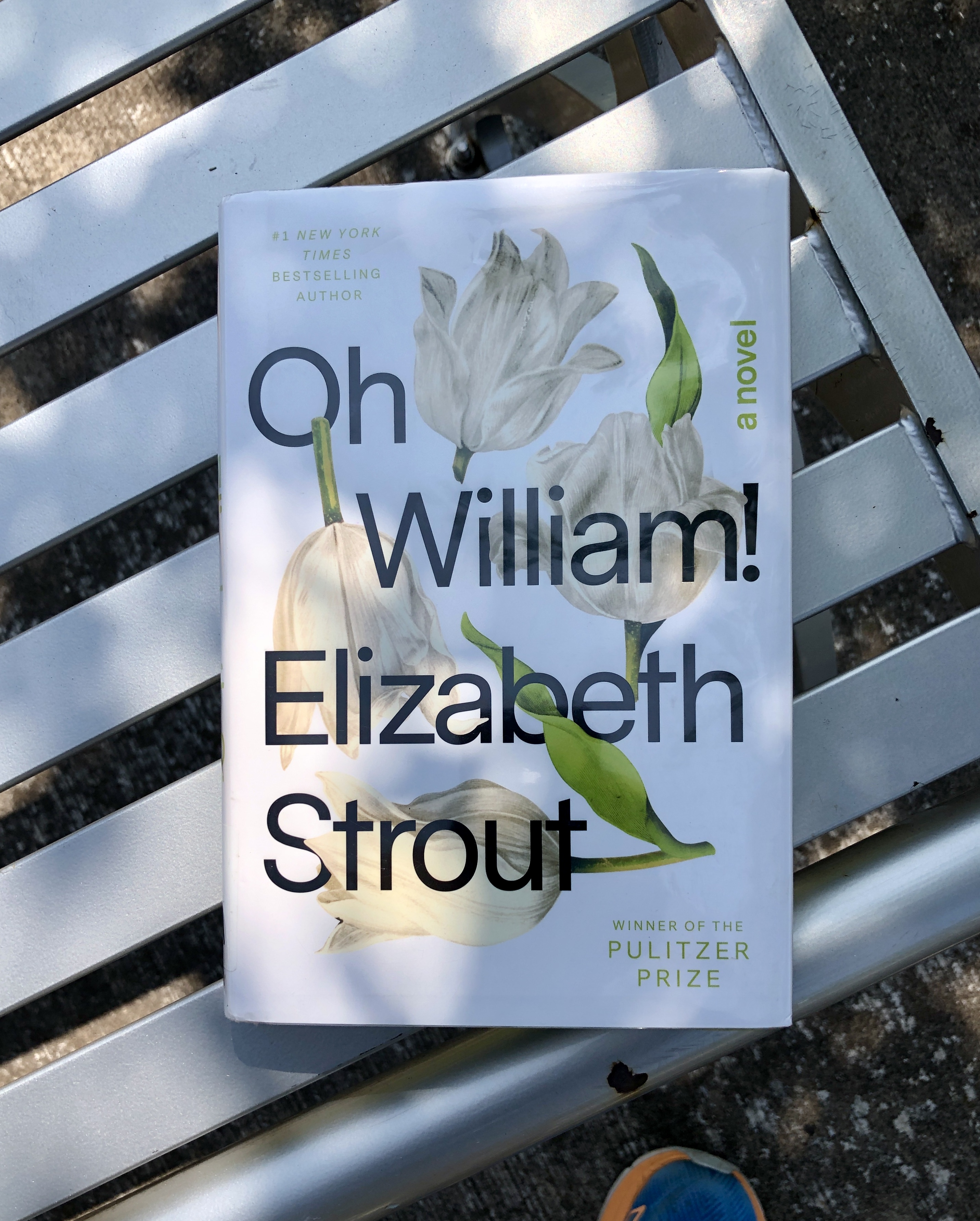
For habitual cheapskates like me, you can’t beat Little Free Library. Today while out on my run/walk, I picked up a perfect condition hardcover copy of Oh William! by Pulitzer Prize-winning author Elizabeth Strout (who is also a Syracuse University College of Law alum). The book had been languishing on my Goodreads “want to read” list for years. But now I’ve become the Fred Sanford of books, stalking the different Little Free Library sites in my surrounding area for literary steals. I do contribute some of my “read” books to the drop-off sites (but nowhere near as many volumes as I claim). Happy Sunday reading everyone.

Oh William! by Elizabeth Strout.

Standard

Where Angels Fear to Tread (1905)

I recently finished reading the novel Where Angels Fear to Tread by E.M. Forster. The work was published in 1905. I won’t give a review or provide a plot summary. You can look that up online or watch the 1991 movie starring Helen Mirren and Helena Bonham Carter.

Here’s an excellent description of the book I found through the Modernism Lab at Yale University.

What I want to share are a couple of excerpts that struck me. The first is from the third-person omniscient point of view (if my high school English reference is correct):

“For a wonderful physical tie binds the parents to the children; and—by some sad, strange irony—it does not bind us children to our parents. For if it did, if we could answer their love not with gratitude but with equal love, life would lose much of its pathos and much of its squalor, and we might be wonderfully happy.”

Angel in Asheville, NC. Photo by Francis DiClemente.

In the second quote, the character Philip Herriton is talking to Miss Abbott:

“Miss Abbott, don’t worry over me. Some people are born not to do things. I’m one of them; I never did anything at school or at the Bar. I came out to stop Lilia’s marriage, and it was too late. I came out intending to get the baby, and I shall return an ‘honourable failure.’ I never expect anything to happen now, and so I am never disappointed. You would be surprised to know what my great events are. Going to the theatre yesterday, talking to you now—I don’t suppose I shall ever meet anything greater. I seem fated to pass through the world without colliding with it or moving it—and I’m sure I can’t tell you whether the fate’s good or evil. I don’t die—I don’t fall in love. And if other people die or fall in love, they always do it when I’m just not there. You are quite right; life to me is just a spectacle, which—thank God, and thank Italy, and thank you—is now more beautiful and heartening than it has ever been before.”

Standard

A Small, Good Thing

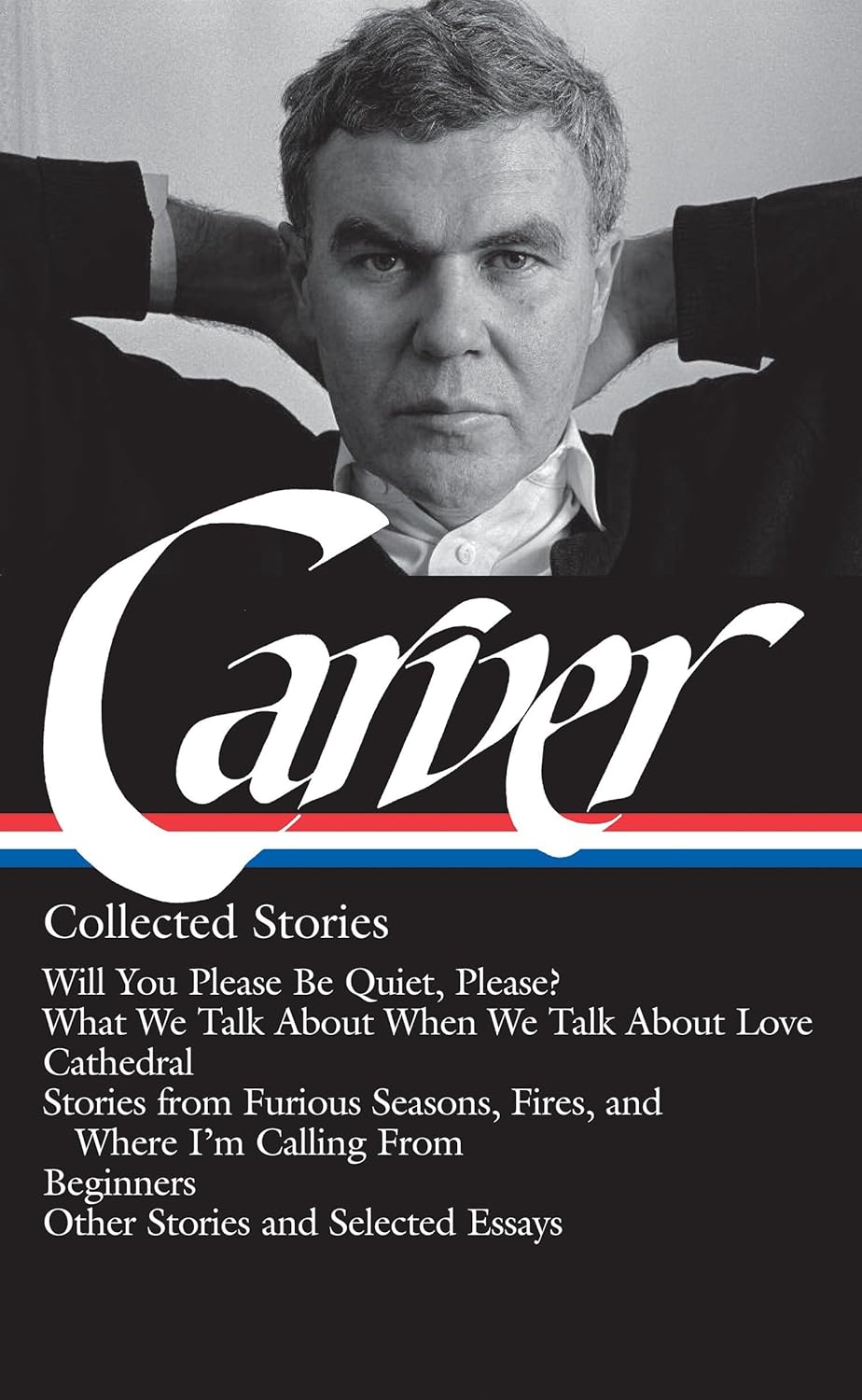
I am currently reading Raymond Carver: Collected Stories, published by the Library of America, and I wanted to share one story that I found devastating on an emotional level. You don’t have to be a parent to appreciate it, but being one heightens the intensity of the story.

I won’t go into plot summary of the story, other than to say it’s about boy who falls into coma after being struck by a car. Here’s a link to the full text.

Or, if you prefer, here’s an audio version:

Standard

Groundwork by Paul Auster

I’m currently reading a work of collected nonfiction by the late author Paul Auster. Auster is one of my favorite writers, and his book The Invention of Solitude inspired me to work on my memoir project.

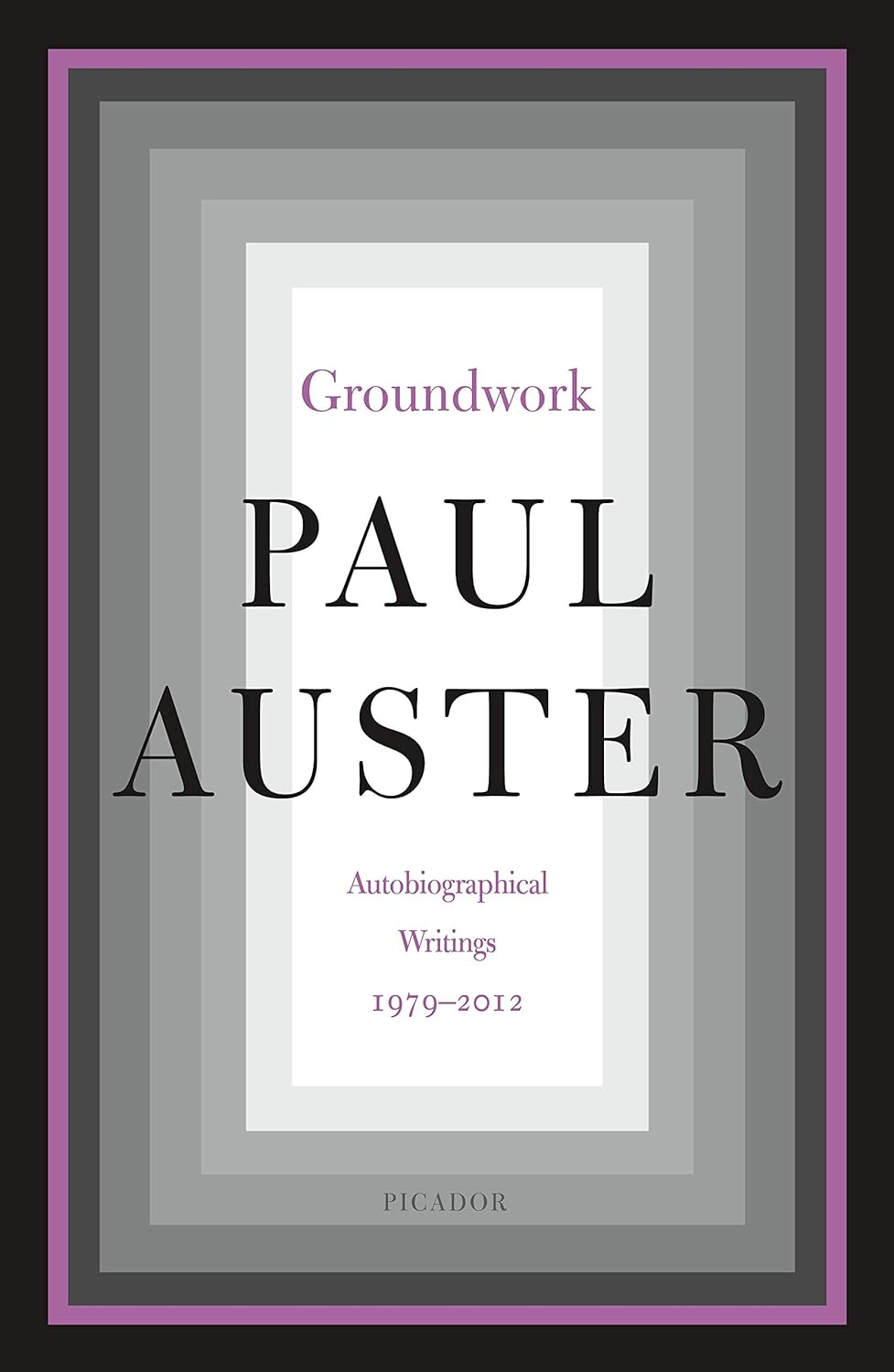
The title of the collected volume is Groundwork: Autobiographical Writings, 1979–2012, and it contains Auster’s memoir Hand to Mouth: A Chronicle of Early Failure (1996). Two great paragraphs illuminate the nature of working writers—writers employed in other professions to pay the bills and provide for their families, all while stealing time to scribble and peck away at personal writing projects (some of which may go unpublished).

The late author Paul Auster.

Auster’s words hit home for me because I’m a working writer who rises at 3:30 a.m. on weekdays to write. He inspired me by pointing out that other artists have blazed a similar path.

Excerpt from the book: 

“Becoming a writer is not a “career decision” like becoming a doctor or a policeman. You don’t choose it so much as get chosen, and once you accept the fact that you’re not fit for anything else, you have to be prepared to walk a long, hard road for the rest of your days. Unless you turn out to be a favorite of the gods (and woe to the man who banks on that), your work will never bring in enough to support you, and if you mean to have a roof over your head and not starve to death, you must resign yourself to doing other work to pay the bills. I understood all that, I was prepared for it, I had no complaints. In that respect, I was immensely lucky. I didn’t particularly want anything in the way of material goods, and the prospect of being poor didn’t frighten me. All I wanted was a chance to do the work I felt I had it in me to do.”

Groundwork by Paul Auster.

“Most writers lead double lives. They earn money at legitimate professions and carve out time for their writing as best they can: early in the morning, late at night, weekends, vacations. William Carlos Williams and Louis-Ferdinand Céline were doctors. Wallace Stevens worked for an insurance company. T.S. Eliot was a banker, then a publisher. Among my own acquaintances, the French poet Jacques Dupin is codirector of an art gallery in Paris. William Bronk, the American poet, managed his family’s coal and lumber business in upstate New York for over 40 years. Don DeLillo, Peter Carey, Salman Rushdie, and Elmore Leonard all worked for long stretches in advertising. Other writers teach. … Who can blame them? The salaries may not be big, but the work is steady and the hours good.”

Paul Auster. Groundwork: Autobiographical Writings, 1979–2012. Picador (2020).

Standard

Poetic Precision

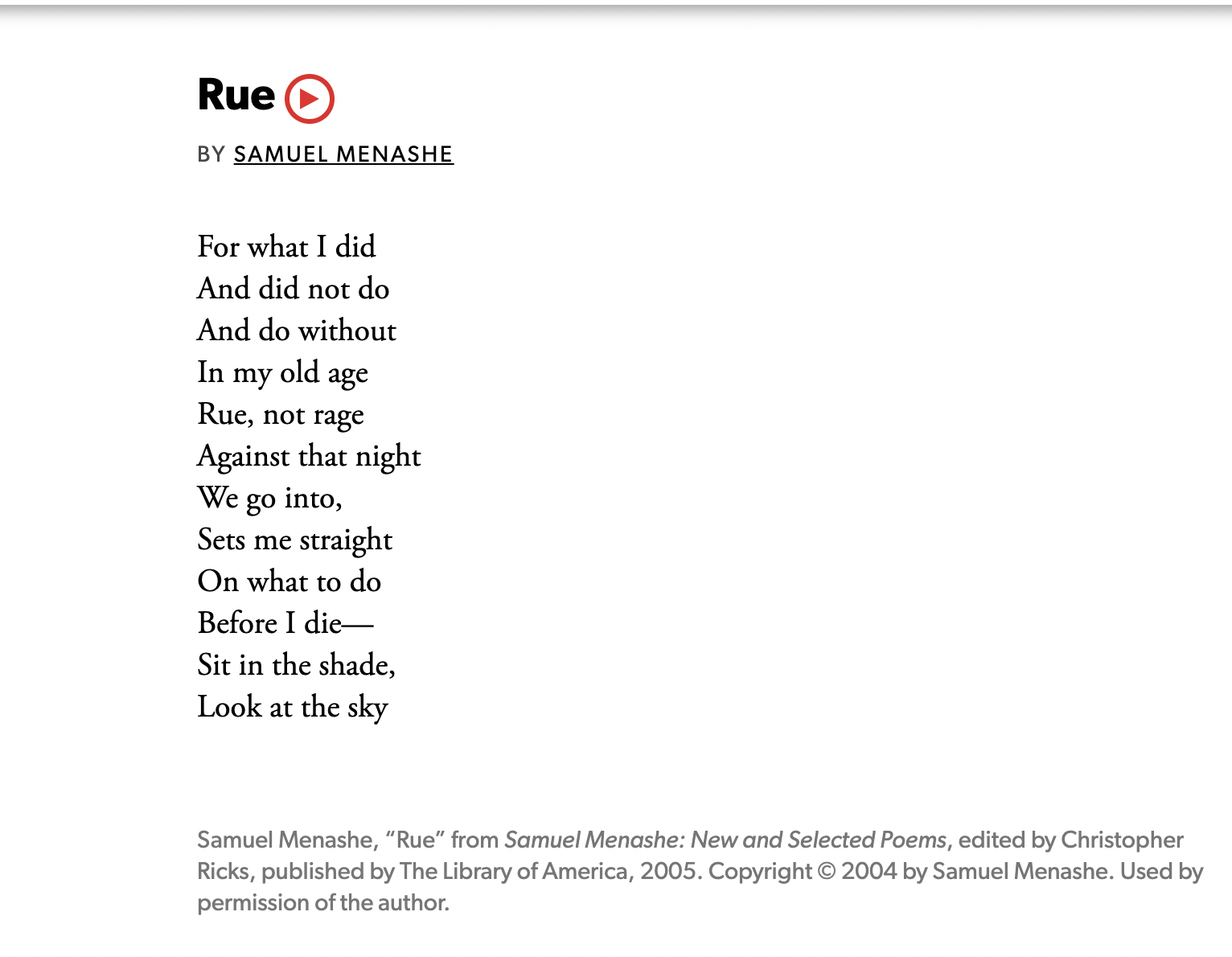
During my staycation this week, I ventured to Bird Library at SU to peruse some novels by Larry McMurtry (author of Lonesome Dove, Terms of Endearment and The Last Picture Show). I took a little literary detour when I got sidetracked in the stacks—flipping through the volume New and Selected Poems by Samuel Menashe. Menashe’s author photo caught my attention because he reminds me of a young Christopher Walken.

New and Selected Poems by Samuel Menashe.

I’m drawn to Menashe’s concise and illuminating poems that tackle the universal themes of life, death and existentialism.

Here are some of my favorite poems.

Autumn

I walk outside the stone wall
Looking into the park at night
As armed trees frisk a windfall
Down paths that lampposts light.

The Dead of Winter

In my coat I sit
At the window sill
Wintering with snow
That did not melt
It fell long ago
At night, by stealth
I was where I am
When the snow began.

The Living End

Before long the end
Of the beginning
Begins to bend
To the beginning
Of the end you live
With some misgivings
About what you did.

Grief

Disbelief
To begin with—
Later, grief
Taking root
Grapples me
Wherever I am
Branches ram
Me in my bed
You are dead.

Voyage

Water opens without end
At the bow of the ship
Rising to descend
Away from it

Days become one
I am who I was.

Passive Resistance by Samuel Menashe.

Downpour

Windowed I observe
The waning snow
As rain unearths
That raw clay—
Adam’s afterbirth—
No one escapes
I lie down, immerse
Myself in sleep
The windows weep.

Samuel Menashe: New and Selected Poems, Bloodaxe Books; revised edition (January 1, 2009).

Standard

Cut While Shaving

I recently finished reading The Last Night of the Earth Poems by Charles Bukowski (Ecco, 2002; previously published by Black Sparrow Press in 1992). Bukowski feels like an old friend to me, and I love picturing him sitting in his house, drinking wine and listening to classical music on the radio while he bangs away at the typewriter.

The book is a beefy collection filled with the typical Bukowski charm—a combination of vulgarity, humor and humanity.

As someone of advancing age, often filled with regret over the detours and wrong decisions I’ve made in my life, one particular poem hit home for me.

Cut While Shaving

It’s never quite right, he said, the way people look,
the way the music sounds, the way the words are
written.
It’s never quite right, he said, all the things we are
taught, all the loves we chase, all the deaths we
die, all the lives we live,
they are never quite right,
they are hardly close to right,
these lives we live
one after the other,
piled there as history,
the waste of the species,
the crushing of the light and the way,
it’s not quite right,
it’s hardly right at all
he said.

don’t I know it? I
answered.

I walked away from the mirror.
it was morning, it was afternoon, it was
night

nothing changed
it was locked in place.
something flashed, something broke, something
remained.

I walked down the stairway and
into it.

Standard

Illuminating Poem: The Thing Is

I want to share this poem I read in a Substack post by Maya C. Popa. It’s entitled “The Thing Is” from Mules of Love by Ellen Bass (published by BOA Editions in 2002). I love the language, clarity and gut-punching delivery. Some snippets that jumped out at me: “the silt of it,” “grief sits with you,” “obesity of grief” and “a plain face.”

“The Thing Is” by Ellen Bass from the book Mules of Love (BOA Editions, 2002)

Standard

Gifting Books

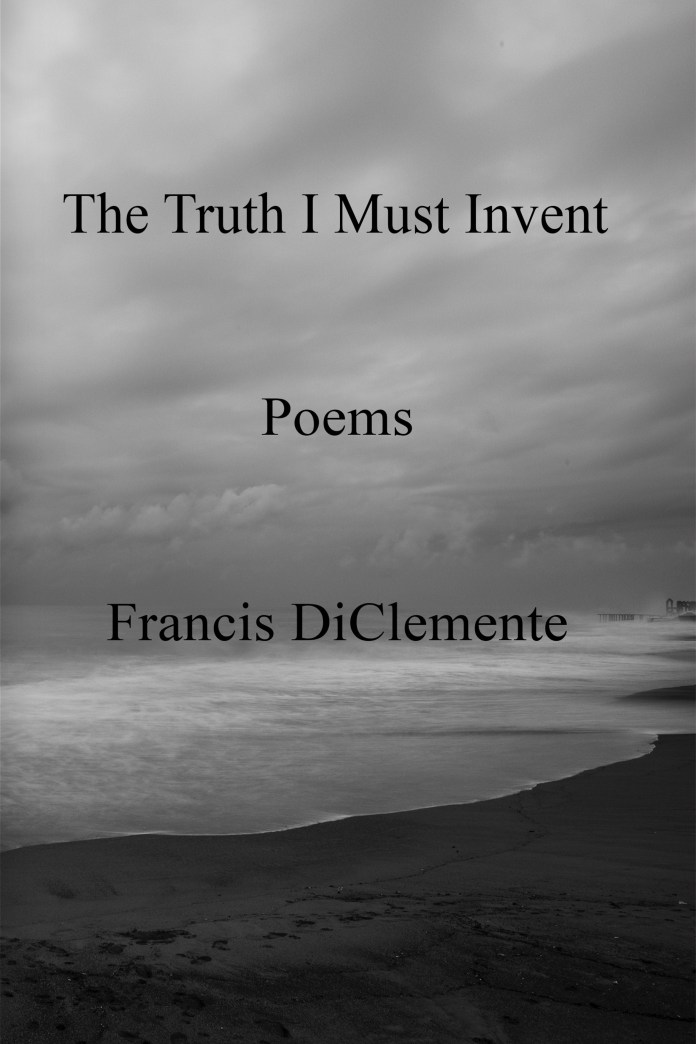
I hate writing book promotion posts. But this is just a reminder that books make nice holiday gifts and they’re easy to wrap. My latest poetry collection, The Truth I Must Invent, can be purchased in numerous places. You can find it on Amazon, Barnes & Noble, and Bookshop. It’s also available from the publisher, Poets’ Choice. And a new author profile has been posted on the Poets’ Choice website. Happy holidays everyone.

The Truth I Must Invent book cover.

Standard