Love on the Lake Shore Limited

The travel website GoNomad.com has published an essay I wrote about a trip I took on Amtrak’s Lake Shore Limited. Here’s the story. And the text of the piece follows:

I am riding on Amtrak’s Lake Shore Limited, traveling westbound as the train slices through the dark environs of upstate New York on this Friday night in late October 2010. I boarded the train in Syracuse and I am headed for Toledo, Ohio, to see my sister and her family for Halloween.

A man and woman are seated one row ahead of me and to my left. I have a clear view of them with a diagonal line of sight.

The light above their seat is on and the woman sitting in the aisle seat—we’ll call her Anna—is in her mid-twenties with dark eyes and dark shoulder-length hair, which she continually pushes out of her face. She wears a blue denim shirt, black spandex pants and black boots, and pink nail polish coats her fingernails.

She explains to the man, whom we’ll call Richard, that she recently lost her house. I do not hear the details of her explanation but I wonder if she got laid off from work or lost her home through foreclosure as a result of the sinking economy.

Or did she need to move out because a relationship ended badly? Or did the house catch fire one night and burn to the ground? I consider these possibilities as I gaze at her in the darkness.

She tells Richard she is living with her parents now. She speaks with a clipped upstate New York accent and delivers her words quickly, as if the consonants and vowels are jumping from her mind to her lips. And she gesticulates as she converses, throwing her hands up several times as if to say, “Well, there’s nothing I can do now.”

She stands up on her seat, reaches into the upper baggage compartment and grabs a large brown shopping bag; it’s filled with Halloween costumes. She says she is going to a party in Chicago on Halloween night (at her sister’s I believe), and she is trying to decide what to wear; she has two options.

One costume is a tight black skeleton suit with white painted-on bones running down the front. She slips it on, stands in the aisle and models it for Richard. She takes off the costume, reaches into the bag and pulls out a mock version of an orange astronaut suit. Anna steps into the suit and pulls it over her shoulders. I hear Richard laughing and it appears the fake NASA suit is the winner.

From their conversation I infer Richard is a master’s or doctoral student, perhaps studying political science, economics or law. And he is also traveling to Chicago for the weekend.

He speaks with a melodic British accent and one could assume by hearing his voice that he is a thespian. He has short reddish-brown hair and he wears a polo shirt and jeans. I see his white hands moving as he talks to Anna and I notice he has clean and trimmed fingernails. He shows Anna a book he’s reading; it’s a thick U.S.A. travel guide. He and Anna flip through the pages detailing the tourist sights in Chicago.

I have my small mp3 player with me and it’s loaded with new music. But I keep taking my headphones off so I can listen to Richard and Anna discussing a myriad of topics. They talk about politics, art, entertainment and music.

From their body language as they sit close together I can tell Richard and Anna are attracted to one another. And I think to myself, this is how two young people meet and hook up or fall in love. It’s a simple formula. You take two single, intelligent and good-looking subjects—one an international student and the other a woman in her mid-twenties searching for excitement or some change in her life—and you place them in the same seat on a train for more than 12 hours straight. What else could happen but a blossoming of affection?

And I know it’s only a matter of time until the talking ends and the action begins and I stay awake because I want to witness it. You can call me a pervert, a peeping Tom or a nosy eavesdropper, but I feel more like a social scientist studying the courting and mating rituals of young people. And in my defense, I can’t sleep and it’s too dark to read. Watching the man and woman in the seat in front of me makes the time pass, and the distance between where we are now and my destination of Toledo is diminishing.

We pass Buffalo. Outside of Angola, the lights drop, and I notice Anna is closing her eyes. Their overhead light has been off for a while and I think they may try to sleep now.

But as soon as we pull out of Erie, Pa., and the train lights dim and darkness blankets the car again, Richard reaches across the seat, grabs Anna’s neck and pulls her toward him. She nuzzles closer to him and they start making out. It’s as if they have come to an agreement at the same time, and say, “OK, it’s on. Let’s go.” The words cease and their bodies take over.

As they kiss and caress each other, my next thought is, how far are they going to go? How far will their passion escalate inside this train? He wraps his arms around her hips and pulls her closer to him. Anna’s hair is disheveled. She takes off her denim shirt and then removes a black tank top, revealing red bra straps against her muscular back and shoulders.

They try to use a heavy red coat—turned inside out with the flannel lining showing—to conceal their actions, but it doesn’t help much. There’s too little fabric to cover them both and the coat keeps slipping off the seat. And anyone who walks by can witness what is happening.

We cross into Ohio and they continue to make out, changing positions in the seat several times. Anna is now straddling Richard’s lap, and I wonder if they are just dry humping or doing the real thing.

A black woman in her late fifties or early sixties with short salt-and-pepper hair is sitting across from me, one seat behind Richard and Anna. But she can see what they are doing because Anna remains perched on top of Richard’s lap and faces the woman.

A small paper strip the porter had placed above the woman’s seat reads “Cleveland,” so I know that’s where she’s getting off. And we are coming to Cleveland now. The woman shakes her head, looks at me and smiles. Her expression seems to say, “Get a load of these two fools.” I smile back at her and shake my head as well.

In Cleveland, the train stops on the tracks for a long time and Richard and Anna continue to carry on, apparently unaware that the train is no longer moving.

Finally the train lurches forward and we race across the belly of Lake Erie along the south shore. We pass Elyria, Sandusky and Port Clinton and then come to Toledo, where I get off.

As I leave the train, I wonder if Richard and Anna have fully consummated their actions on board the Lake Shore Limited. I also consider what will happen to them when they arrive in Chicago. Will they go their separate ways or get a hotel room together?

Will Richard stroll along Michigan Avenue and get a chance to check off the highlighted sights in his guidebook? Or will Richard and Anna stay inside their hotel room all weekend, making love, watching movies and ordering room service?

Will they start dating or will the encounter be a memory, one-time physical act—nothing more than a chance to have sex on a moving train, the Amtrak version of the Mile High Club?

And what will happen when the weekend ends and they board the train again for the return trip home? Will they be traveling together or making solo journeys?

I realize the futility of my questions since they can never be answered. Part of me would have liked to stay on the train and then get off in Chicago and follow them. I wanted to track Richard and Anna not because of a desire to stalk them, but rather to find out what would happen. How would the story end?

Perhaps they were still going at it in Chicago and forgot to get off the train. Maybe they rode it all the way to Los Angeles. Maybe they are lying on a sun-drenched beach right now, making out as the waves of the Pacific Ocean crash ashore. And I guess that’s how I would like to picture them.

Standard

Night Moves

Marco Polo Arts Mag, an online literary and arts magazine, has published a prose poem/experimental essay I wrote. It’s entitled Night Moves and the text follows:

Who says the trees don’t dance when no one is looking? A 3 a.m. when darkness surrounds the neighborhood, they might catch the wind in their leaves and amplify it. They might wave their limbs and shake their trunks and jump around on the front lawn.

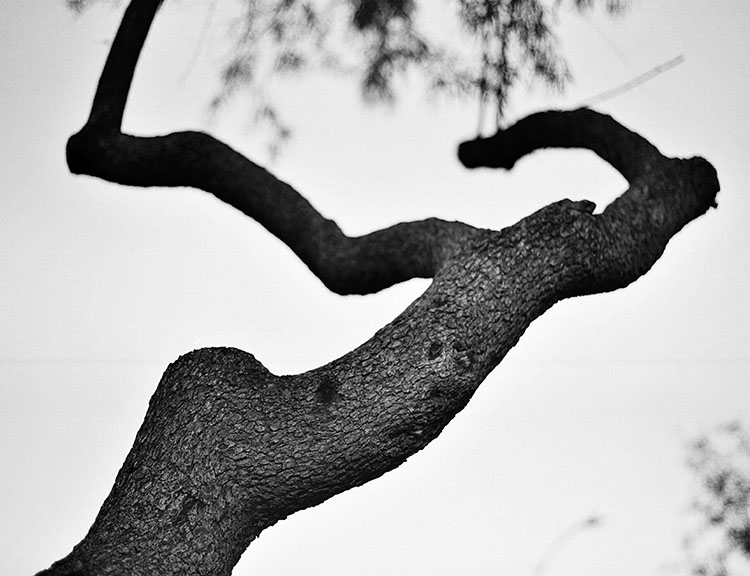
Slanting Desert Tree. Photo by Francis DiClemente.

Slanting Desert Tree. Photo by Francis DiClemente.

Who says trees have to act stoic all the time—just stand there like boulders and endure the weather? Why can’t they have some fun?

For all you know, while you’re sleeping, they may choose sides and face off in a team dance competition. The maple and oak would have to be the captains because they are the most athletic trees. But all varieties would get to dance: the poplar, birch, elm, ash, hickory, locust, walnut, sycamore, etc. Even the evergreen trees—the pine, spruce and fir—would participate; however, they get picked last because they have no rhythm. All they can do is sway their tops a little.

Waltz, salsa, tap, modern, ballroom and line dancing—you name it, these trees can do it.

While you’re in bed you hear the wind rattling against the house and leaves rustling outside your window. But this is nature’s night music and the trees are showing off their moves, gyrating in the backyards, parks, cemeteries and forests of North America. They make the stars jealous because the stars can’t dance; they aren’t in tune with the Earth vibe. They can only look down on the green canopies and shine some light.

Fall Trees. Photo by Francis DiClemente.

Fall Trees. Photo by Francis DiClemente.

The trees draw other spectators too, as deer, cats, skunks, dogs, squirrels, crows and rabbits gather to watch the action. Sometimes the insomniac Mr. Johnson will stand at the curb and observe the trees when he’s out walking his collie Garrett at 3 a.m.

Mr. Johnson told me the secret of the dancing trees while I was raking leaves one October day. He said he heard a rumor that the winning regional team will travel by chartered semi to California to compete against a team of palm trees.

The maples and oaks don’t like them anyway. The palm trees think they’re such hot shit because they don’t lose their fronds with the seasons and get to bask in the sunshine all year long.

The trees of the Northeast and Midwest want to remind the palms that while deciduous trees lose their leaves in autumn, at least they don’t have to worry about water running out.

The maple team captain already has some smack planned for the palms. When he sees them, he’s gonna say: “Are you guys thirsty? Well, too bad. You only get seven inches of rain a year. Don’t drink it all at once.” The oak captain thought it was funny and said he’d steal the joke if his team beats the maples.

Maybe one of these nights when I can’t sleep, I’ll look outside my kitchen window in the predawn stillness and catch the trees in the act of dancing. Maybe if I step outside they’ll allow me to keep score or judge the dancers. Maybe they’ll even let me hear the music they make so I can dance too.

Standard

Jumpcuts of Text: Continued

As promised in my last blog post, here are the excerpts from books six through ten that I pulled off the shelves at random recently at Syracuse University’s Bird Library.

Table in Library

Table in Library

Book 6: Saville by David Storey

“I haven’t said he’ll never do it,” Colin said.

Richard had covered his face in his hands: his head was shaken from side to side; he his shoulders shook, some fresh anguish broke from him as his father touched his back.

“Nay, love,” his father said. “It’s not important.”

“It is,” his brother said, his voice buried by his moans.

Storey, David. Saville. New York: Harper & Row, Publishers, Inc., 1976. Print.

Editor’s note: I forgot to write down the page number and then was unable to find the passage while skimming through the book.

Book 7: Music of the Mill by Luis J. Rodriguez

“Eventually it wasn’t a fantasy. I often walked home from school, which was hard at first since I got so many stares and whistles, especially from the paisas, the Mexicanos, freshly wet from over the Rio Grande. There were run-down motellike apartments on Florence Avenue that I had to pass by every day. Nothing but newly arrived men lived in them. They worked in local construction and factory jobs. By the afternoon, many of them were hanging out, already drinking beer, with the shirts off, wearing Mexican vaquero hats, a type of cowboy hat. They always yelled and whistled at me.”

Rodriguez, Luis J. Music of the Mill. New York: HarperCollins Publishers, 2005. 216. Print.

Book 8: These Are Not Sweet Girls: Poetry by Latin American Women. Edited by Marjorie Agosin.

From the poem Rosa/Fili by Maria Arrillaga:

III.

“He did not leave
You left, Rosa, Rosario, Rosina, Rosaura/Fili
Your name grows
In that new path
Furrows flee your face
Your features are refined
In the contour of precise strokes
Calm you are
The towering heights of the past
Become the happy landscape
Of your big waist
Your hair undulates defying
He who will appreciate your body
You are intelligent, Fili
You have your life
You have yourself
It’s no small thing.”

Agosin, Marjorie. These Are Not Sweet Girls: Poetry by Latin American Women. Fredonia, New York: White Pine Press, 1994. 194. Print.

Book 9: The Tartar Steppe by Dino Buzzati

“One September morning, Giovanni Drogo, being newly commissioned, set out from the city for Fort Bastiani; it was his first posting.

He had himself called while it was still dark and for the first time put on his lieutenant’s uniform. When he had done, he looked at himself in the mirror by the light of an oil lamp but failed to find there the expected joy. There was a great silence in the house but from a neighbouring room low voices could be heard; his mother was rising to bid him farewell.

This was the day he had looked forward to for years—the beginning of his real life.”

Buzzati, Dino. The Tartar Steppe. New York: Carcanet Press, 1987. 1. Print.

Book 10: Strindberg: A Life by Sue Prideaux

“When they had left for France, Siri was pregnant again. She knew when they reached their destination she could not hope for a career on the French stage. They stood on the platform, smartly dressed as always, with their children, their nanny Eva, their trunks and cases of books and the blue and white pram with its milk-stained top. Siri’s career as an actress, apart from her creation of the role of Miss Julie in Denmark in 1888, was over.”

Prideaux, Sue. Strindberg: A Life. New Haven and London: Yale University Press, 2012. 104. Print.

Books on Table

Books on Table

Standard

Jumpcuts of Text: A Research Experiment

Several years ago I worked as an editor at a national broadcast news wire service in Arizona. My roommate Dave and I worked the same 10 p.m. to 6 a.m. shift, and we would commute together, one of us taking turns driving each week. Often in the morning, after our shift ended, we would go grocery shopping, eat breakfast at a Denny’s or a Village Inn or search for some other activity to do to help us wind down before heading home, closing the Venetian blinds and trying to fall asleep in the Arizona sunlight. Such is the dilemma of night shift workers, struggling to sleep in daylight in opposition to your body’s circadian rhythm.

One morning Dave and I went to a bookstore near Indian School Road in Phoenix. The place offered a hodgepodge of entertainment-related merchandise: books, CDs (this was around 2001), board games, video games and porn (both magazines and video).

I remember buying used copies of Jack Kerouac’s The Town and the City and Frank Conroe’s Body and Soul. Both remain two of my all-time favorite books.

Dave and I wandered through the store and then we decided to play a game. We each went into a row in the used paperback section. Dave would pull out a book and a read a paragraph aloud. And then it was my turn and I would do the same thing. As the game progressed, I recall Dave stretching out on the floor of his row, surrounded by a stack of books.

Our selected passages included excerpts from spy thrillers, Dick Francis mysteries and Harlequin romance novels emblazoned with cover art images of men with bulging biceps and ripped pectorals.

Something about the incongruity, the verbal juxtaposition of the different passages, struck me as satisfying. These were books I never would have opened if I was browsing in the bookstore alone. The random act of pulling any volume and reading it aloud was like walking into a movie theater and knowing only the title of a film or buying a CD based solely on the artist’s name or the cover art.

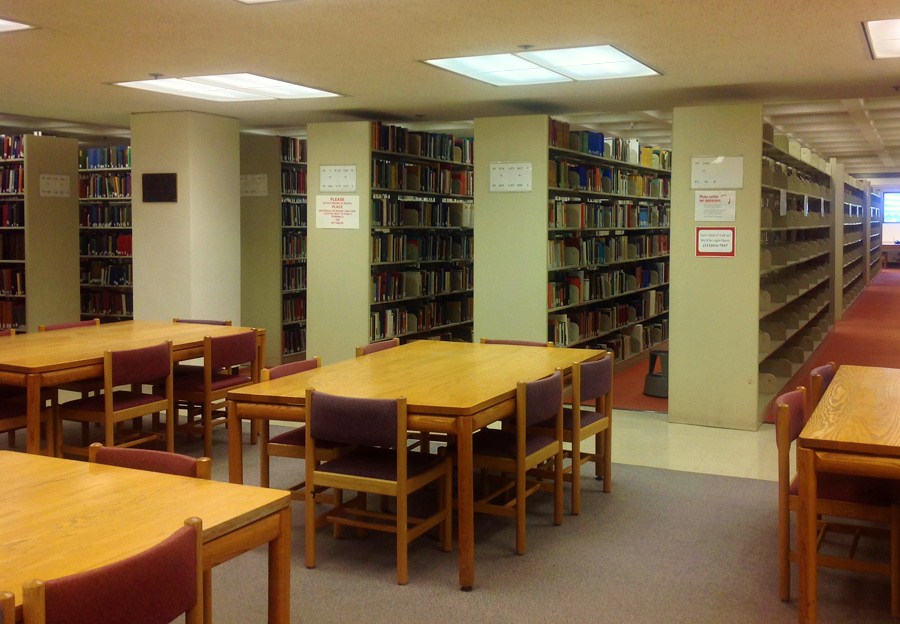
I thought it would be fun to try to duplicate the exhilarating feeling of making a literary discovery. I decided to create an adapted research experiment by going to the fifth floor of Syracuse University’s Bird Library on a recent Saturday afternoon and pulling ten books off the shelves at random.

Table in Library

Table in Library

I spread the books on a table and for each book, I wrote down the author, title and publisher. I then opened the book to any page and read the first passage or paragraph that my eyes traveled to.

At first I wanted to replicate the work of a collage artist by compiling the sentences to form a textual conglomerate—to see the various passages edited into one composition. However, after I transcribed the paragraphs from the ten books, I realized they should each stand alone as a completed work of art. To me each book signifies a surprise that is worth exploring.

And, as a result, my “to-do” reading list has grown by ten titles.

I also wanted to make this a two-part blog post. So here are the selections from the first five books I grabbed off the shelves. I will add books six through ten later in the week.

Random Library Books

Random Library Books

Book 1: Evading Class in Contemporary British Literature by Lawrence Driscoll; an excerpt from The Book of Dave by Will Self.

“Dave keeps walking and soon we have the kitchen-sink drama moment when the protagonist looks back at his home town, as Dave looks down on London from the height of Essex:

Towards evening Dave found himself mounting up a hill. Up he went…Dave turned back to see the city he had lost   spreading to the far hills of the south in  brick peak after tarmac trough…In the mid distance a river streaked silver and beside it a mighty wheel revolved so slowly.”

Driscoll, Lawrence. Evading Class in Contemporary British Literature. New York: Palmgrave Macmillan, 2009. 89-90. Print.

Book 2: Blake, Kierkegaard, and the Spectre of the Dialectic by Lorraine Clark

“Kierkegaard’s attack on the spectre of negation that dissolves the ethical contraries once again focuses on the “phantom” of the Hegelian negative:

Leaving logic to go on to ethics, one encounters here again the negative, which is indefatigably active in the whole Hegelian philosophy. Here too a man discovers to his amazement that the negative is the evil. Now the confusion is in full swing; there is no bound to brilliancy.”

Clark, Lorraine. Blake, Kierkegaard, and the Spectre of the Dialectic. New York: Cambridge University Press, 1991. 134. Print.

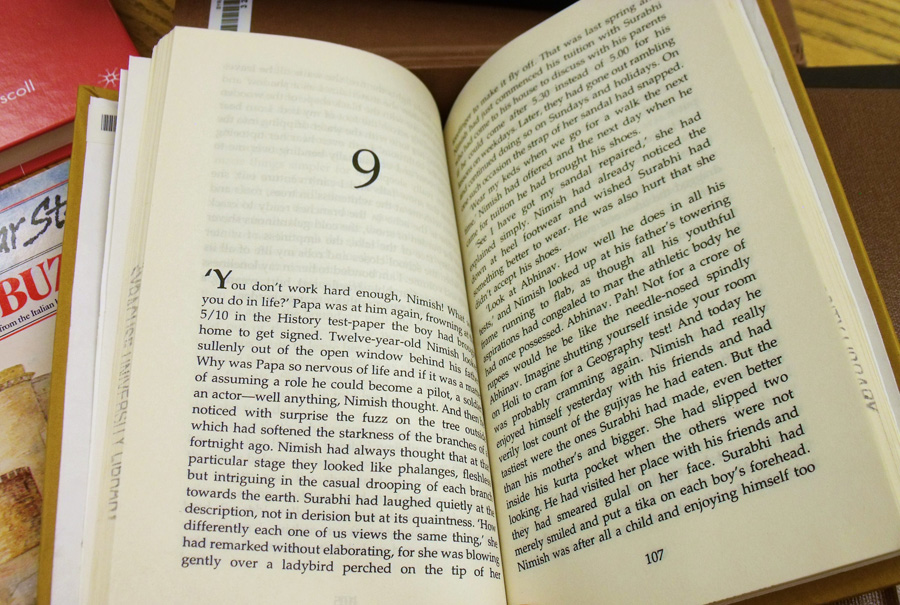
Book 3: The Solitude of Surabhi by Deepa Shah

“Twelve-year-old Nimish looked sullenly out of the open window behind his father. Why was Papa so nervous of life and if it was a matter of assuming a role he could become a pilot, a soldier, an actor—well anything, Nimish thought. And then he noticed with surprise the fuzz on the tree outside which had softened the starkness of the branches of a fortnight ago.”

Shah, Deepa. The Solitude of Surabhi. New Delhi: Penguin Books India, 1997. 106. Print.

The Solitude of Surabhi

The Solitude of Surabhi

Book 4: Black Order by James Rollins

“Keep a historical perspective, Mr. Crowe. The Nazis were convinced that they would give rise to the next superrace. And here was a tool to do it in a generation. Morality held no benefit. There was a larger imperative.”

“To create a master race. To rule the world.”

Rollins, James. Black Order. New York: William Morrow, an imprint of HarperCollins Publishers, 2006. 190. Print.

Book 5: Bird Cloud by Annie Proulx

“I had to go to Germany and while I was gone the James Gang and the tile setter handled the enormous job of moving all the furniture and the full bookcases, of closing off and filling in the unwanted floor outlets, of measuring, cutting and laying the tile. The floor was almost the floor of my dreams, clean, smooth, elegant and a ravishing color. I swore always to have tiled floors wherever I lived. The bookcases were perfectly in place. How had they done all this in two weeks? I will never know.”

Proulx, Annie. Bird Cloud. New York: Scribner, a division of Simon & Schuster, Inc., 2011. 137. Print.

Standard

Notes from New York City

I’ve been busy lately with video productions and haven’t had a chance to blog in a while. But after making two recent work-related trips to New York, I came away with these observations. I thought I would share them in one post, since they seem linked. The photos are from a previous trip.

Photo by Francis DiClemente

Table for One

The thin brunette hostess at Serafina on 61st Street in New York City shows my colleague Bob and I to a small table along a brick wall inside the restaurant. It is about 5:30 on a sunny Wednesday evening and we’re tired after finishing video production shoots in Connecticut and Manhattan.

We are seated next to a small, sandy-haired Italian woman in her late fifties or early sixties. Her thin lips are formed into a smile and her working-class hands are folded together and resting on top of the table.

It’s obvious she’s been here several times. She talks intimately with the bald Italian waiter. She orders a Riesling and the Branzino Al Forno; the dish is a Northern Italian sea bass baked with lemon and rosemary and served with roasted potatoes and broccoli.

The woman looks up and her eyes scan the restaurant, taking in the surroundings. She comments about the U.S. Open tennis match on the wall-mounted HD television. “It looks really nice there,” she says. She mentions to her waiter that one of the Hispanic waiters looks just like Yankee second baseman Robinson Cano.

It’s not long before she starts chatting with us. She asks if we come here often. Bob explains that we work for Syracuse University and when we travel to New York on business we usually stay at the university’s Joseph I. Lubin House, located about a block away on 61st Street.

The woman says she works as a maid near 69th Street and Park Avenue. “I have a good job,” she says. She smiles and adds, “And I got some compliments from my boss today, so I’m celebrating.”

As I listen to the woman, I realize she looks familiar to me. Of course I have never met her, but her appearance and personality remind me of Thelma Ritter’s character in the 1953 film noir movie Pickup on South Street, directed by Samuel Fuller. Both women seem to possess an indomitable spirit, a grittiness needed to survive life in the city.

And I love hearing her story, even though I’m surprised that a woman in New York City sitting at a table for one would give away so many details about her life to two strangers. She says, “I like eating out. I’m single, you know, and I work all day. I don’t want to go home and have to cook.” She adds, “Let someone else prepare the dinner.”

Bob laughs and says, “There you go.”

“Yeah,” the woman says, “and I can go grocery shopping just once a month.”

She tells us she lives in Astoria, Queens and it takes about a half-hour to get there from Manhattan. She says she has a small apartment near the subway station and she likes taking the train.

Bob and I order two appetizers, bruschetta and carpaccio (thin slices of beef), and the waiter takes our dinner order. I select the same meal as the woman.

Her food arrives and she starts eating quickly. She looks over at us and says she wants to get home in time to watch the Yankees-White Sox game on TV. “They’re starting to play better,” she says, “but they can’t lose many more games.”

In between mouthfuls she tells us that she’s Italian. I say, “I am too.”

“Nap-a-la-tan?” she asks.

I assume she means Neapolitan or Napoletano, even though the word she uses is one I have heard several times in reference to people from Naples. My grandfather used to say it all the time.

I tell her my maternal grandfather’s family originated from Naples several generations down the line. “My grandfather was born in the U.S. and we didn’t speak Italian,” I say.

She says she plans to order Rosetta Stone language software so she can learn Italian. She says she will be visiting Tuscany next year with her daughter and son and their families. “It’s a trip of a lifetime,” she says. “I can’t wait.”

Bob says since we stay at the Lubin House when we’re in town and eat at Serafina usually once a year, maybe we’ll run into her again. “You never know,” he says. “We may see you again sometime. You can tell us about the trip.”

The woman says, “That’s right.” She also says her daughter will be taking lots of pictures. She finishes her wine, pays the bill with a credit card and heads home, saying goodbye to us.

The conversation makes me think about New York as a city of possibilities, chance encounters and interactions that could alter your life in the course of an afternoon. As an outsider, it’s exciting to discover that despite New York’s congestion and frenzied pace, the potential exists to form intimate connections with people.

The next morning Bob and I are walking on the street toward a coffee shop and we spot the woman. She’s walking nearby and doesn’t notice us. She seems to be peering in a window, doing some browsing on her way to work. Bob and I look at each other and smile. I say, “That’s her, right?” He nods his head and I say, “What a great lady.”

I wish we had exchanged names and phone numbers. It would be nice to eat dinner with her again and resume our conversation the next time we are in Manhattan. And she could share some of the images from her trip to Italy.

I can see her pushing aside her glass of wine or appetizer, spreading out her photos on the table and asking us to move closer as she narrates the details of her journey to Tuscany.

Photo by Francis DiClemente

Smile on 61st Street

A black man wearing a Yankee hat
and a gray polo shirt
rests against a brick wall
on 61st Street in Manhattan.
He sits on milk crates wrapped in plastic
and covered with a dirty blanket.
The man nods his head and smiles at me
as I pass by him on the sidewalk.
His face beams in recognition
of a fellow human being,
and his smiles seems to say:
“Hey there. Here I am.
I exist. I am alive today.
Aren’t you glad to be here too?”

I nod and smile back at him,
and then stride toward my destination,
unsure whether the apparent homeless man
is just friendly or deranged.
But I carry with me the joy of living
he passes on this afternoon.
I’m sure he’ll concur that smiles are free
and goodwill contagious.
And so I’ll look to share what he gave away
to a stranger on a city block.

Woman on the Sidewalk

A woman with hooded eyelids and a skeleton frame huddles against the building unnoticed as pedestrians sidestep her, marching with purpose on the sidewalk toward the entrance to Central Park. She has thin wrists and fine tawny hair. Her eyes are closed and her lips pressed together. She wears a white long sleeve T-shirt and a pink visor encircles her head.

The afternoon light caresses her waxen cheeks as she sleeps or feigns sleep on the sidewalk. I look back at her as I walk by and she seems so frail, as if the slightest breeze could carry her away or the rays of sun melt her face or dissolve her body into a puddle of golden liquid.

This troubles me, but I continue walking, keeping pace with the other pedestrians on the block. But still I wonder if the woman is sound asleep or just faking it to get attention. What does she want from the people who pass her on the street? Money, food, a kind word or gesture? Or is she simply resting her eyes and legs for a few minutes? I guess I’ll never know the truth and this also bothers me; yet I do not stop to ask the woman to find out the answers.

Photo by Francis DiClemente

A New York City Night

The elevator carries the weight of my body upward as the metal box climbs toward heaven. I look up and watch the floor numbers advancing in red digital light. I gaze at the New York City inspection log and see that the car had been inspected in July (it’s now September).

And then my imagination runs wild as the elevator rises past the third and fourth floors. What if it gets stuck? I wonder. How long would the oxygen last? How quickly would I suffocate? What would be worse, suffocating or having the hydraulic system fail or a cable snap, causing the car to drop five flights to the ground, smashing into pieces with me inside? Neither scenario is appealing.

None of this happens, though. The doors part and I step out of the elevator. I walk to the door of my hotel room and go inside. I cross the room, lower the temperature on the air-conditioning unit and pull back the curtains to look at the NYC night. I grab the remote control, switch on the HD TV and find the YES Network.

The Yankees blow a three-run lead to the Orioles in the bottom of eighth inning. I shut off the television, convinced that Baltimore will get a walk-off win in the ninth.

I climb into bed, burrow under the covers and close my eyes as I listen to the combination of the traffic noise and A/C hum. I drift off to slip but wake up later in the night. I turn on the TV again and find out the Yankees won 6-5.

Standard

Out of the Past: Phone Booths in the Library

Until recently, three telephone booths—with wooden frames, glass doors and their electronic “guts” removed—stood idle on the fifth floor of E.S. Bird Library at Syracuse University, appearing like obsolete artifacts from the past.

Phone booths at Bird Library. Photo by Francis DiClemente.

Phone booths at Bird Library. Photo by Francis DiClemente.

I spotted them a few years ago when I first started taking out books at Bird Library, after being hired as a staff member at SU. It’s one of the best perks, along with being able to work out for free at the university’s fitness centers.

I had noticed identical phone booths on other floors of the building, and they seemed out of place amid the countless volumes of books in a 21st Century university library. According to library officials, the phone booths were part of the original construction and were in place when the building opened in 1972. One booth on each floor was a campus phone and the others were pay phones.

Phone booths at Bird Library. Photo by Francis DiClemente

Phone booths at Bird Library. Photo by Francis DiClemente.

Close up of phone booth at Bird Library. Photo by Francis DiClemente.

Close up of phone booth at Bird Library. Photo by Francis DiClemente.

But although they were installed in the early 1970s, the pay phones made me think of an earlier time period in cinema—from the 1940s to the 1960s.

The image of Cary Grant’s character (Roger Thornhill) using a pay phone in Grand Central Station to call his mother in Alfred Hitchcock’s North by Northwest (1959) jumped into my mind. Here’s the scene, courtesy of YouTube.

I also thought about scenes in film noir movies where a reporter would use a pay phone to call his editor to offer an update on a trial or a murder investigation.

One of the most dramatic phone booth scenes from the time period involves Burt Lancaster and Barbara Stanwyck in the 1948 movie Sorry, Wrong Number.

I’ve never seen the film, but it’s about a woman, Leona Stevenson (played by Stanwyck), who overhears a murder plot. Her husband, Henry, played by Lancaster, is talking to her on the phone, and the drama intensifies as the conversation unfolds. Here’s the scene.

Of course there are several other memorable cinematic phone booth scenes. I’m sure you’ll think of some. The obvious one is Clark Kent using a phone booth to “change into Superman.” Another is the gas station sequence in Hitchcock’s The Birds from 1963, with Tippi Hedren’s character seeking shelter in a glass phone booth as violent gulls attack.

But back to reality . . .

A facilities coordinator for Syracuse University Libraries says all of the phone booths at Bird have now been dismantled and will be replaced by recycling stations.

Close up of phone booth at Bird Library. Photo by Francis DiClemente.

Close up of phone booth at Bird Library. Photo by Francis DiClemente.

Phone booths removed from Bird Library. Photo by Francis DiClemente

Phone booths removed from Bird Library. Photo by Francis DiClemente.

I’m a little disappointed that I will no longer see them when I visit Bird. I think it would have been fun to try to re-create a film noir-style scene using the library’s phone booths. I could imagine a cool “DOLLY IN” move to one of the booths as our protagonist slides the glass door shut, scrambles to find a coin and hurries to make a call—a call that could save his or her life.

I did, however, preserve my memory of the library phone booths, through a short poem I wrote that appeared in my 2010 poetry chapbook, Outskirts of Intimacy, published by Flutter Press.

Here it is:

Disconnected Landlines

Three phone booths stand
Idle and unnoticed on the fifth floor
Of Syracuse University’s Bird Library.
And in this repository of knowledge,
They present themselves
With sliding glass doors ajar
And phone units ripped out—
Relics from the pre-digital age,
No longer able to make or receive calls.

Standard

Girl on the Sidewalk

The beauty of having a blog is that you can write about anything at anytime. So here’s a brief dispatch from the streets of Syracuse:

While walking home tonight I caught a glimpse of a little black girl who was smiling as she twirled around on the sidewalk in front of an apartment building. She had bright white teeth and was wearing a blue tank top and denim shorts.

Nearby, her father was bent down as he unloaded his car in front of the curb. As I walked farther down the block, I turned my head and took one last peek at the little girl. Her father had said something to her and she smiled and answered him.

Of course I didn’t hear the conversation, but I thought: that’s what life is really about. That’s what matters; that’s what endures. A girl spinning around in the sunshine on a small patch of Earth—alive, animated and free. A father and his daughter finding joy in an ordinary moment. Human interaction and simple pleasures.

And I was smiling too as I made my way closer to home.

Standard

Historic Theater Celebrates the Past, Faces Uncertain Future

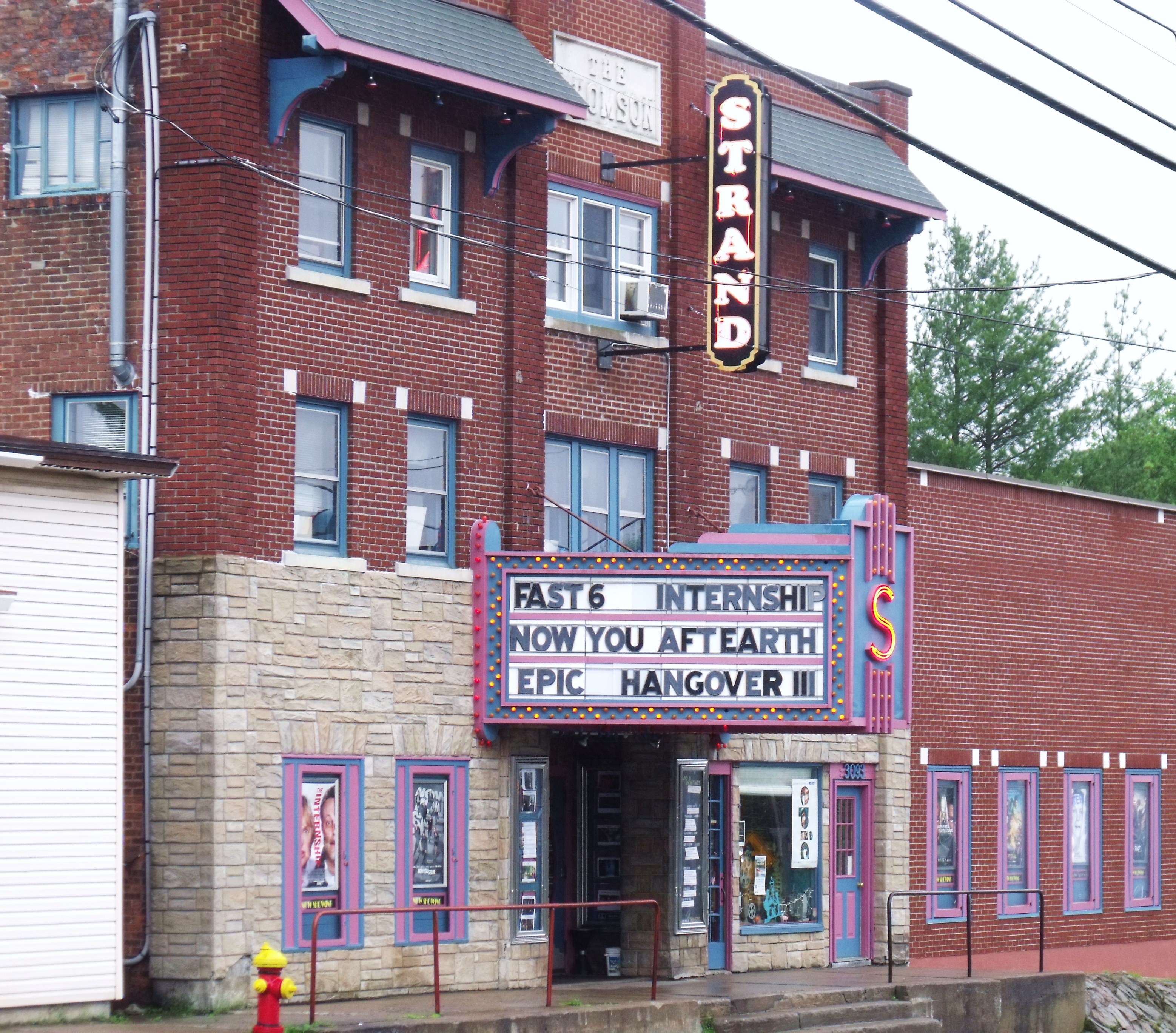
The historic Strand Theatre in Old Forge, N.Y.

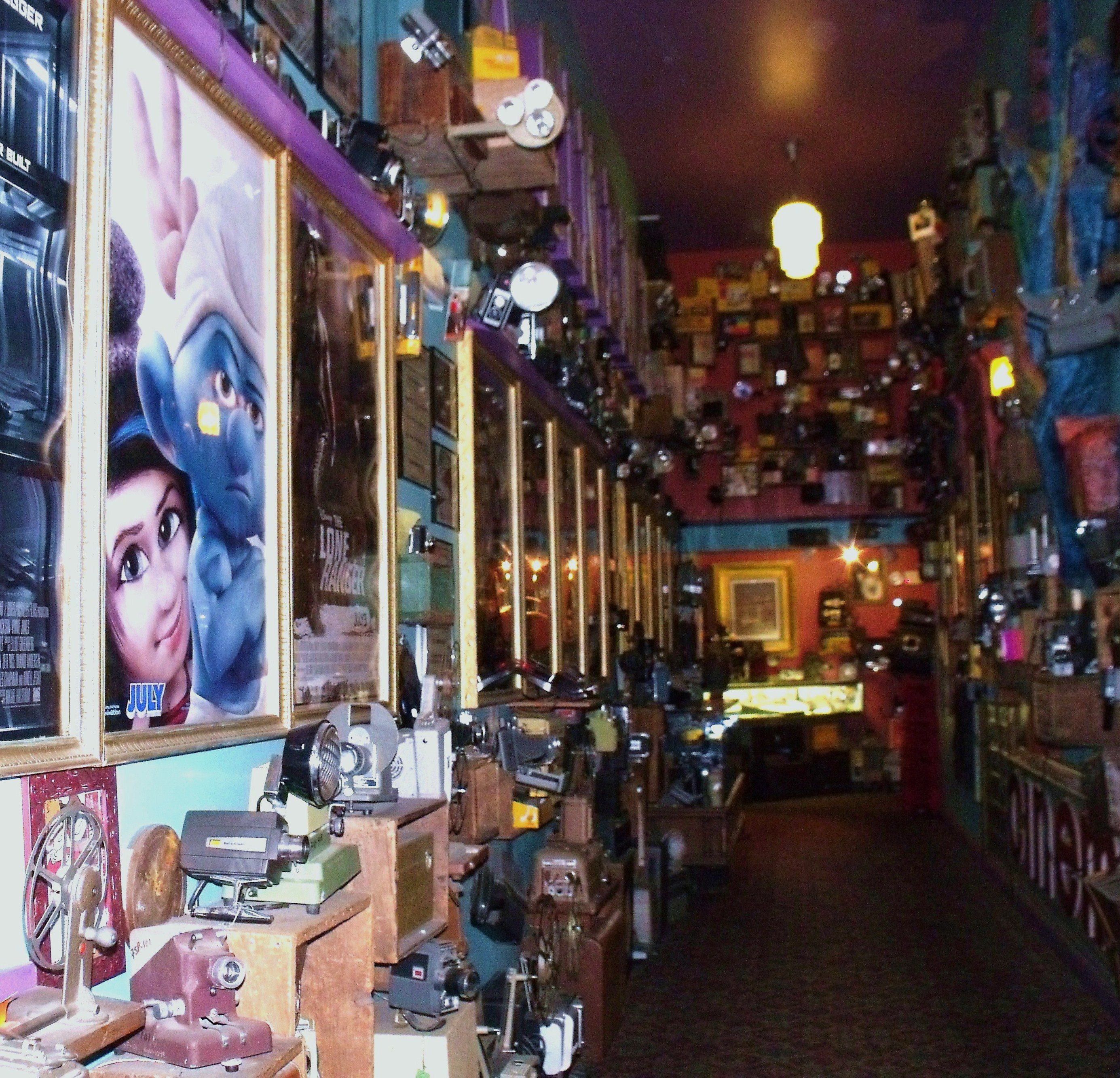
For movie junkies, entering The Strand Theatre in Old Forge, N.Y., is like stepping back in time to the golden age of cinema, and the dust of past decades clings to the old cameras, projectors, editing systems, film reels and movie posters scattered throughout the small theater.

The theater opened in March of 1923 and is celebrating its 90th anniversary this year. But it still shows the latest releases.

While I was on vacation in Old Forge in early June I saw Vince Vaughn’s The Internship and Now You See Me at The Strand. Walking around before one of the shows I gazed up at a promotional poster for the 1938 film Angels with Dirty Faces, starring James Cagney, Pat O’Brien and Humphrey Bogart. Seeing that item alone would have made my night.

But then I turned a corner inside the theater, just past the snack bar, and a wave of nostalgia hit me. I felt like an archaeologist unearthing the instruments of a lost civilization, as the long narrow room was filled from floor to ceiling with film cameras, projectors, advertisements, photos, posters and newspaper clippings—a museum-quality display of movie memorabilia and analog 20th Century technology.

Movie cameras and projectors on display inside The Strand Theatre.

Owners Bob Card and Helen Zyma bought The Strand in November of 1991 and opened on Memorial Day in 1992.

Card says the collection stretches back to the early 1980s, when the theater was under different management. But he says it continues to grow. “Customers leave off cameras all the time,” he says. “Sometimes you open, you know, and they’ll be a bag or box of cameras in front of the door, and you don’t even know where it came from.” He adds, “Other people, clearly, they give you their family’s cameras and then, you know, they come back and visit them.”

Still cameras on view inside The Strand Theatre.

The collection didn’t seem to be in any particular order, which made it fun to explore.

Some of the items I saw included: a Kodak Ektasound 240 movie camera; some Bell & Howell 8mm movie cameras and Bell & Howell 8mm home projectors; a Kodascope projector; some Brownie vintage cameras and Brownie movie cameras and projectors; a Keystone 8mm camera; some Polaroid cameras; a Kodak Ektralite 10 camera and a Kalart Editor Viewer Eight.

A large Simplex Standard 35mm projector stood inside one of the auditoriums. A pink Post-it note taped to the projector stated that two identical Simplex Standard projectors were installed at The Strand in 1934 and retired in mid-1993.

Card says the cameras and projectors are interesting from a design standpoint. “So many different ideas were tried with them. They’re fun to look at. They used to be fun to use.”

Something else about The Strand made the movie-going experience even more entertaining; Card’s dog, a brown and white Siberian husky named Noah, serves as the theater’s mascot and greets customers as they buy tickets or get snacks at the concession stand. Noah also does cleanup work; on one of the nights I was there, he came into the auditorium, padded down the aisle and scooped up some popcorn that had fallen onto the floor in one of the rows.

Card, who is lean with an angular face and has long shaggy brown hair—picture a lead guitarist for a 1970s rock band—says Noah is a working husky and feels right at home in the theater. “He’s a social butterfly. He loves everybody.”

The “Big Burden” of Digital Conversion

Many independent movie theaters like The Strand are facing an economic challenge that threatens their existence. They must convert from 35mm projectors to digital systems because the studios will no longer distribute film prints.

“Most of the major theater circuits have converted to digital, so there’s very few people still running film at this point,” Card says. “A year ago … it was still almost half and half … and so the pressure’s on.” He adds, “there’s one lab making 35mm prints now instead of four. We’ll find this summer after Labor Day it’s gonna be thinner, the availability.”

He says there’s no hard and fast deadline for the conversion, “but this fall seems to be the deadline based on what distributors are saying, that there really won’t be that much film available.”

In order to make the switch, The Strand will need four digital projectors, along with computer servers, lenses and networking equipment. “Our bills are right at $300,000 to do four auditoriums,” Card says.

“We don’t have to change our screens. Some theaters do. We don’t have to change our sound. Our sound’s up to spec. So while our burden’s pretty severe, some theaters have a higher burden.”

The Adirondack North Country Association (ANCA) and the Adirondack Film Society have launched a fund-raising effort to support the digital conversion for The Strand and a number of other movie theaters in small communities across northern New York. The campaign is dubbed “Go Digital or Go Dark” and the goal is to raise enough money for each theater to complete the upgrade by the end of the year.

For more information or to contribute, go to http://www.adirondack.org/GoDigital/. And here’s a trailer for the campaign.

Card says the best part about being an independent movie theater owner is “visiting with people, seeing people come in, and, you know, when they like the film and when they like the place in particular. That’s very joyful.”

And as for the future of The Strand, he says: “We want it to always be here. Hopefully it will.”

Standard

Saroyan Shopping List

My latest stumbled-upon literary discovery at Syracuse University’s Bird Library revealed a clue to a mystery I will never solve. But I was thrilled to find it pressed between the pages of William Saroyan’s The Assyrian and Other Stories.

Books on shelves at Syracuse University's Bird Library. Photo by Steve Sartori.

Books on shelves at Bird Library. Photo by Steve Sartori.

I was searching through the stacks on the fifth floor one morning last week, before heading to work. I wanted to pick up ‘Tis by Frank McCourt and The Human Comedy by Saroyan. After I grabbed The Human Comedy I decided to peruse the large selection of other Saroyan books resting on the shelves nearby.

I flipped through The Assyrian and decided to check it out as well because the book contains an essay written by W.S. called The Writer on the Writing. In it he talks about his writing philosophy and the prolific short story work he produced in the mid to late 1930s.

I found his words to be inspiring.

He writes: “Anxiety at work is what tires a writer most. Writing without anxiety is certain to do the writer himself good; which takes me back to what it was I had hoped to achieve for myself when I wrote so many short stories in 1934-1939. I felt that it was right to just write them and turn them loose and not take myself or the stories too seriously. I had hoped to achieve an easier way for a man to write: that is, a more natural way.”

(Saroyan, William. The Assyrian and Other Stories. New York: Harcourt, Brace and Company, 1949. Print.)

He goes on to say the writer should have “implicit faith in himself, in his character, and in what he is apt to write. He must believe that it is possible for him to achieve writing as good as he might ever achieve by writing easily, swiftly and with gladness.”

However, the sage advice from Saroyan was not the only thing the book divulged.

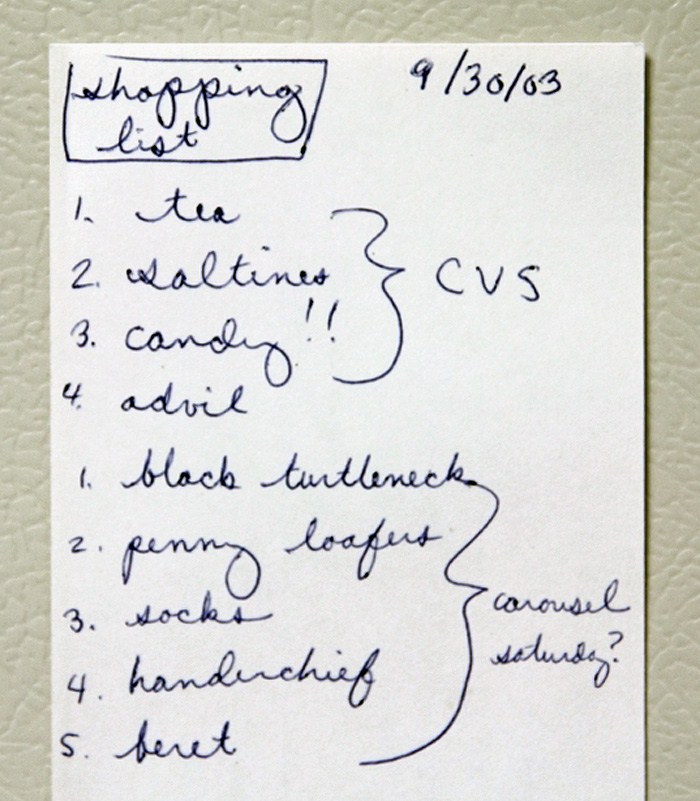
Inside I found a 3×5 index card dated 9/30/03. A shopping list was written vertically in blue ballpoint ink on the unlined side of the card. The list was divided into two areas; one section had the word “CVS” next to it and listed the following items numerically:

1. tea
2. Saltines
3. candy!! (double exclamation points)
4. Advil

The second section mentioned “Carousel Saturday?”—pointing to a possible trip to the mall. Carousel Center was the former name of the Destiny USA mall in Syracuse. For this part the list read:

1. black turtleneck
2. penny loafers
3. socks
4. handerchief (misspelled for handkerchief).
5. beret

A shopping list written on a 3x5 index card, found in the book The Assyrian and Other Stories by William Saroyan.

A shopping list written on a 3×5 index card, found in the book The Assyrian and Other Stories by William Saroyan.

I tried to imagine the person who made out this list. Was it a man or a woman? I narrowed my hunches to either a young professor or a graduate student (both male) picking up some needed supplies and clothes at the beginning of a fall semester. Maybe this student was pursuing his MFA in creative writing. I pictured him with brown hair, a tall, thin frame and wearing his black turtleneck, beret and penny loafers while reciting a manuscript at a cafe poetry reading.

Finding the list made me think that in another life I would have made a good library detective, sort of like Mr. Bookman (Philip Baker Hall) in that popular Seinfeld episode.

I’m not sure why these little discoveries inside books amuse me so much, but they do. Maybe my life is so boring I need to live vicariously through other people. Or maybe it’s just the element of surprise that excites me. It’s fun to uncover something that has been hidden in between the pages of a book for many years.

The only due-date stamp for The Assyrian and Other Stories is Oct. 24, 2003, so I wondered if I was the only person to open this book since then.

I also consider the index card a timeline marker for its owner. It proves he was here; this was a snapshot of his life on Sept. 30, 2003. He existed in a fixed place at a set time. He bought candy and tea and Advil and probably looked stylish in his black turtleneck, beret and penny loafers. He was alive and had dreams.

Our shopping list author is not the same person today. He is older and may have a wife and kids. Perhaps he applied the advice of Saroyan in his own creative work. Maybe he completed his MFA and now teaches creative writing at SU. Maybe he published his own short story collection or a couple of novels. Maybe I will find his books in circulation in this same library.

Unfortunately, maybe is as far as my investigation will take me. I’m left with only suppositions, as answers to the mystery of the index card and its owner elude me.

Standard

Man At Work

Here’s a reminder that grace and honor can be found in just about any setting where working men and women toil. This point was illuminated recently while I waited for a Buffalo-bound bus at the Regional Transportation Center in Syracuse.

I was scheduled to take Amtrak’s westbound Lake Shore Limited, as I was heading to Toledo, Ohio, to spend a week with my sister and her family. But a freight train derailment in Montgomery County, N.Y., forced a service disruption between Albany and Buffalo, so Amtrak passengers had to be bused between the locations.

While I sat inside the station I noticed a custodian working his shift. His diligence caught my attention. He was likely in his mid to late 30s with short brownish-blond hair and a goatee. He wore a light blue golf shirt, white sweatpants with navy blue trim on the side, white sneakers and latex gloves.

His face was red and moist from his labor. He was pushing a yellow cart loaded with supplies and kept moving between the garbage cans inside the station, emptying the trash and replacing the plastic bags. He wasted no movement and made no delay in going between the cans; it was clear he wasn’t clock-watching, trying to stall while waiting for his shift to end. He was there to do work and he followed through with alacrity on every task.

Then I saw him again in the men’s room. He was emptying the trash and wiping down the urinals, stalls and sinks.

After the majority of passengers boarded the Greyhound bus that would take us to Buffalo, the driver, a blond-haired man in his 50s with a mustache, stood in front of the terminal talking to some Amtrak employees and a Border Patrol agent. The driver and Amtrak workers checked the tickets of latecomers and loaded the oversized luggage into the baggage compartment in the bottom of the bus.

As I looked out my window, facing the terminal, I saw the janitor working outside. And while the driver and Amtrak workers stood chatting, the custodian emptied the exterior trash cans and recycle bins. He pulled up the full garbage bags, tied them tightly and stacked them on top of his cart; then he would take clean plastic bags, snap them open and insert them into the cans.

He did this a number of times, going from can to can and never saying a word to anyone. He blended into the background of people smoking outside and the employees talking at the curb.

I thought about the janitor’s life. He has a thankless job that requires tedious physical effort and the touching of dirty paper towels and leftover food. I can’t imagine he makes more than 10 or 12 dollars an hour, and I wonder if he has a family to support. I bet he wants a higher-paying job, maybe something that doesn’t require manual labor.

And on this Saturday night it was late, around 9:30 p.m. He looked tired, but that did not slow him down.

Once all of the trash was piled high on his cart, he pushed it inside the station, going through the automatic doors at the front entrance, and most likely wheeled the cart to a Dumpster outside, at the back of the station.

Soon he would punch out and head home. Maybe he would have a late meal and catch some sports highlights on ESPN.

I admired this man for his effort when no one was paying attention to him. I believe our nation’s productivity could increase substantially if we all worked as hard as the janitor.

I’m sure he does not love his job. But it’s clear he takes pride in it. And honest labor in any capacity deserves recognition.

Standard