Thomas Wolfe: You Can’t Go Home Again

I recently finished reading Thomas Wolfe’s paperweight of a book You Can’t Go Home Again.

The autobiographical novel, published in 1940, two years after Wolfe’s death in 1938, gets bogged down with scenes that could have been edited out with no loss of narrative structure.

Photo by Carl Van Vechten; the Carl Van Vechten Photographs Collection at the Library of Congress

Photo of Thomas Wolfe by Carl Van Vechten; the Carl Van Vechten Photographs Collection at the Library of Congress

However, I enjoyed embarking on a journey of self-discovery with the protagonist, a lonely young writer named George Webber, who pens a famous novel about his hometown, Libya Hill (a fictional setting that could be considered a stand-in for Wolfe’s native Asheville, North Carolina), and then is reviled by his friends and neighbors because the book uncovers the dark secrets of the town.

And although I found myself skipping over sections of the book—descriptions and digressions that slowed down the story—Wolfe’s lyrical voice and ability to construct stunning passages of prose can make a reader stop skimming pages and pay attention to each sentence.

Here are some beautiful paragraphs where Wolfe seemed to capture some central truths about life and humanity.

“So, then, to every man his chance—to every man, regardless of his birth, his shining, golden opportunity—to every man the right to live, to work, to be himself, and to become whatever thing his manhood and his vision can combine to make him—this, seeker, is the promise of America.”

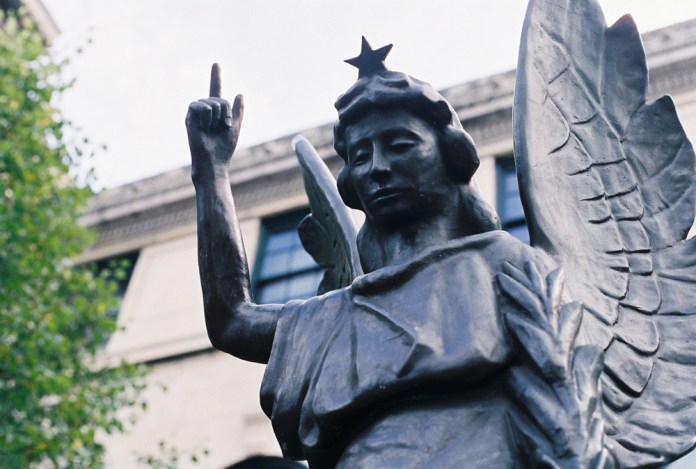
Thomas Wolfe Memorial Angel, Asheville, NC (Photo by Francis DiClemente)

Thomas Wolfe Memorial Angel, Asheville, NC (Photo by Francis DiClemente)

“For four years George Webber lived and wrote in Brooklyn, and during all this time his life was about as solitary as any that a modern man can know. Loneliness, far from being a rare and curious circumstance, is and always has been the central and inevitable experience of every man. Not only has this been true of the greatest poets, as evidenced by the huge unhappiness of their published grief, but now it seemed to George to apply with equal force to all the nameless ciphers who swarmed about him in the streets.”

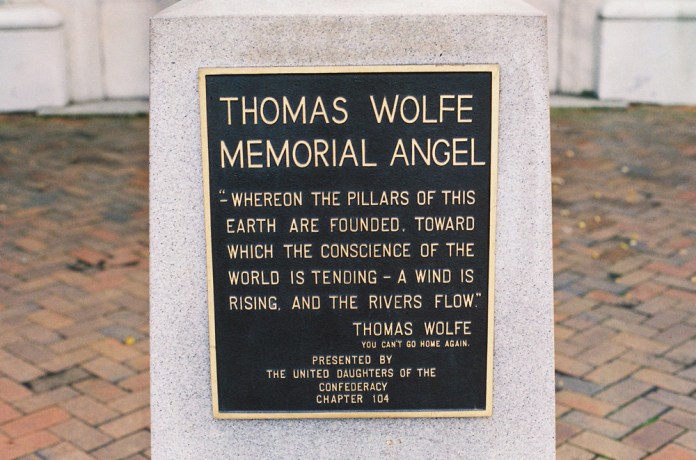
Thomas Wolfe Memorial Angel Quote (Photo by Francis DiClemente)

Thomas Wolfe Memorial Angel Quote (Photo by Francis DiClemente)

“All things belonging to the earth will never change—the leaf, the blade, the flower, the wind that cries and sleeps and wakes again, the trees whose stiff arms clash and tremble in the dark, and the dust of lovers long since buried in the earth … they go back into the earth that lasts forever. Only the earth endures, but it endures forever.”

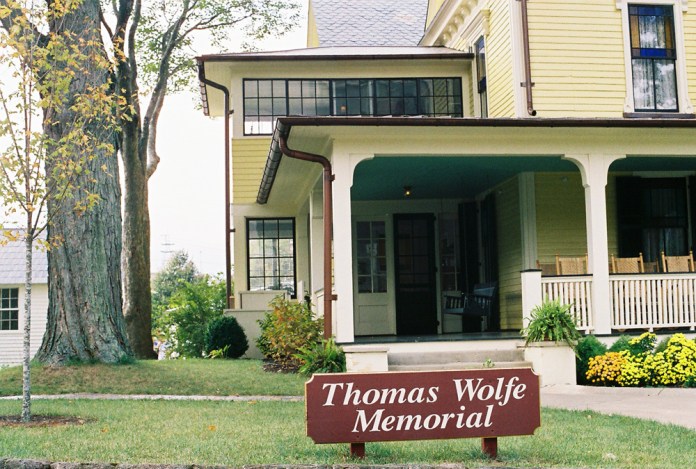
Thomas Wolfe's mother's boardinghouse in Asheville, NC. It's now called the Thomas Wolfe Memorial (Photo by Francis DiClemente)

Thomas Wolfe’s mother’s boardinghouse in Asheville, NC. It’s now called the Thomas Wolfe Memorial. (Photo by Francis DiClemente)

“You can’t go back home to your family, back home to your childhood, back home to romantic love, back home to a young man’s dreams of glory and of fame … back home to the father you have lost and have been looking for, back home to someone who can help you, save you, ease the burden for you, back home to the old forms and systems of things which once seemed everlasting but which are changing all the time—back home to the escapes of Time and Memory.”

Wolfe, Thomas. You Can’t Go Home Again. New York: Scribner (A Division of Simon and Schuster, Inc.), 2011 (first published in 1940). Print.

Standard

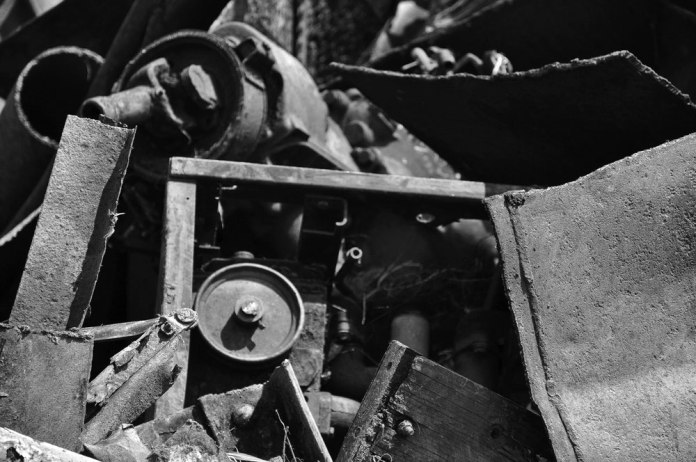
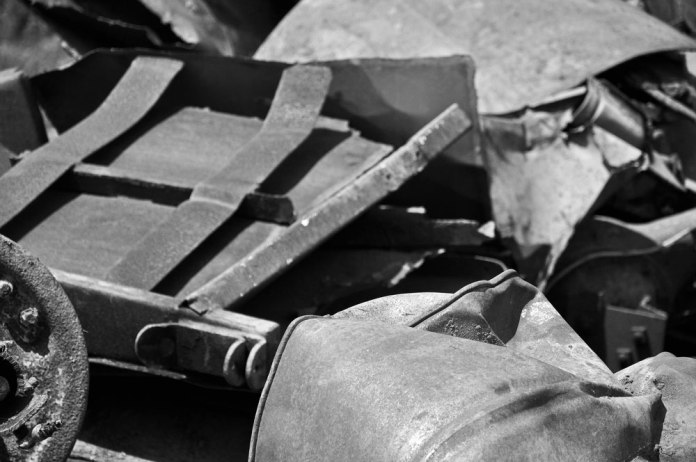
Metal on the Side of the Road: A Photo Essay

I just wanted to share a link to a photo essay I have published in PRIVATE, an online photography magazine. The piece is entitled Metal on the Side of the Road.

And here are two additional photos from the project that were not included in the essay.

Metal debris on the side of the road in Otsego County, New York. Photos by Francis DiClemente

Metal debris on the side of the road in Otsego County, New York. Photos by Francis DiClemente.


Standard

Remembering My Father On His Birthday

Today marks the birthday of my late father, Francis DiClemente Sr., who passed away from lung cancer at the age of 64 in August of 2007. He was a quiet man who led a solitary life.

My late father, Francis DiClemente Sr.

My late father, Francis DiClemente Sr. Photo by Francis DiClemente.

He put in 32 years at the Sears Roebuck store in Rome, New York, before the company decided to close it in the early 1990s. He rose to the ranks of a sales manager after starting his employment in his late teens, and he served in all departments: electronics, home improvement, heating and cooling, paints and even the automotive center.
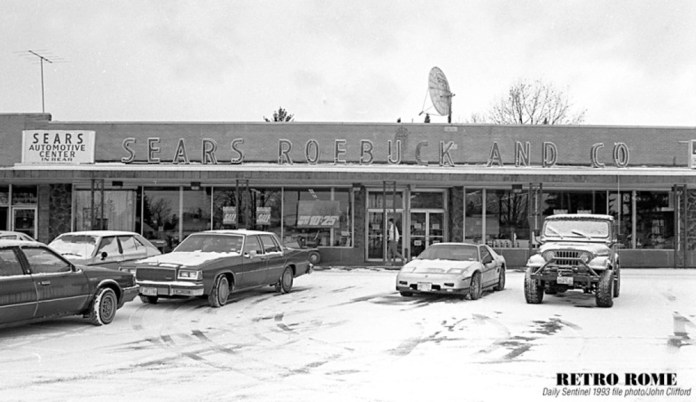
The Sears store in Rome in 1993. Photo by John Clifford/Daily Sentinel.

The Sears store in Rome in 1993. Photo by John Clifford/Daily Sentinel.

One of my childhood thrills was visiting him at the store after school, as we would descend a flight of stairs into a warehouse in the basement—filled with washers and dryers, lawnmowers, rolls of carpet and other merchandise. We would go into the break room, and he would buy me a soda from the glass vending machine—usually Nehi grape, root beer or Dr. Pepper—and then pour a cup of coffee for himself. We’d sit and talk at a little round table covered with the latest edition of the Utica Observer-Dispatch or the Rome Daily Sentinel newspaper.

Things I recall about him:

His lupine face with dark, searching eyes, bushy eyebrows and thick, black hair.

Being a devoted player of the New York Lottery. He scored some jackpots on occasion, including one that totaled more than a thousand dollars. But the scant prizes could never make up for what he spent on a daily basis.

After he died, I went through his room to clean out things, and I discovered innumerable losing lottery tickets stuffed inside one of his dresser drawers. I couldn’t understand why he would save tickets that held zero value. Was he trying to run the numbers through some elaborate mathematical system in order to calculate a winning combination, some key to unlock the mystery of how to beat the odds?

Being a habitual gambler with a penchant for playing football parlays. But his real joy came from betting the horses at the local OTB, sharing camaraderie with other men infected with the same urges, all of them standing around scribbling in the margins of the Daily Racing Form.

After the Sears store closed, he took a low-paying sales job at a carpet store. He complained about the crumbling upstate New York economy and grumbled about his bad luck, repeating the phrase, “I can never catch a break.” Even so, he endured his situation and became a valued employee at the store—one who was highly regarded for treating customers well and giving them deals whenever he could.

When he was diagnosed with cancer, the doctor told him he could try chemotherapy, but it would only give him a slim chance of living slightly longer. He decided against the treatment, noting, “What’s the point?” And so in February of 2007, he stoically accepted his fate, knowing he had only about six to nine months left to live.

Dad in his chair. It's out of focus, but I love how he looks directly at the camera. Photo by Francis DiClemente.

Dad in his chair. It’s out of focus, but I love how he looks directly at the camera. Photo by Francis DiClemente.

I had recently relocated to central New York from Arizona, and I was fortunate enough to spend a lot of time with him before he passed.

He lived with his mother, my grandmother Amelia, a stooped, red-haired woman who had coddled my father from the early days of his youth. He clung to her as the anchor of his life, which contributed to the demise of my parents’ marriage and also affected our relationship.

My late grandmother, Amelia DiClemente.

My late grandmother, Amelia DiClemente. Photo by Francis DiClemente.

I don’t fault my grandmother because I don’t think she could have helped herself when it came to trying to protect my dad. He had been born with a hole in his heart, and the life-threatening condition worsened as he grew. He was a short, frail and underweight boy who was mocked by other kids about his size, labeled as a “shrimp.”

In the late 1950s, my grandparents took my father to Minneapolis, where pioneering heart surgeon C. Walton Lillehei repaired the ventricular septal defect in a seven-and-a-half-hour operation at the University of Minnesota Heart Hospital.

Renowned heart surgeon C. Walton Lillehei. Photo credit: University of Minnesota.

Renowned heart surgeon C. Walton Lillehei. Photo credit: University of Minnesota.

And Dad was proud to have been among the first batch of patients to survive open-heart surgery in the U.S. Whenever he told the story to someone, he would lift up his shirt and show off the long scar snaking down the middle of his chest.

As the months passed in the spring and early summer of 2007, he became weaker and weaker as the cancer ate away at his body, leaving him looking like a shriveled scarecrow.

He had always eschewed desserts and when offered them, would say, “No. I hate sweets.” But as his time on earth elapsed, he went all out when it came to food—eating Klondike bars, Little Debbie snacks, Hostess cupcakes and other junk food. His philosophy was “Why not?”

Although he had Medicaid, Dad left behind a staggering amount of unpaid medical bills. But what troubles me more, what I have been unable to reconcile, is how he ran up thousands of dollars in debt in the last few months of his life, the largest chunk coming from ATM cash withdrawals using my grandmother’s credit card.

I was never able to pin down how he spent the money. He made no large purchases of electronics or home furnishings. I assumed he used the money to gamble; but in some way I wish he had supported a mistress or a family he never told us about, or that he gave away the cash to charities. Instead, I am only left with unanswerable questions. I helped him to file for bankruptcy, but in an ironic turn to the story, he died before a decision was reached in the case.
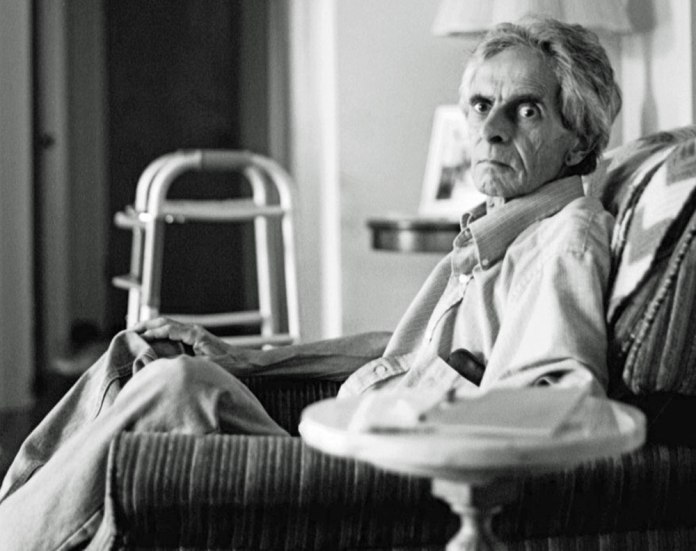
Dad, side angle.

Dad, side angle. Photo by Francis DiClemente.

I remember a funny conversation I had with him one afternoon while we sat in the living room of my grandmother’s small ranch house in north Rome. Sunlight poured through a large bay window, past the partially opened silk curtains. Outside I could see a clear sky and trees burgeoning with leaves—a bright, saturated landscape of blue and green.

I sat in a corner of the room and he sat in a forest-green recliner covered with worn upholstery.

“What’s the name of the angel of death?” he asked me.

I was surprised by the question, and I said, “I think he’s just called the angel of death.”

“No, he has another name,” he said.

And after a few seconds it came to me. “The Grim Reaper.”

“That’s right, that’s it,” he said.

“Why do you want to know?” I asked. “Did you see him in a dream or something?

“No, but I want to know his name when he comes.”

I could go on and on about my dad, but that’s the strongest memory I have of him in his waning days.

Dad in the kitchen. Photo by Francis DiClemente.

Dad in the kitchen. Photo by Francis DiClemente.

And I don’t normally use this space to write about my family, but I felt compelled to pay tribute to a man who left no significant contribution to humanity (as judged by the world’s standards)—he never earned prestigious academic honors, never published a book, never ran a company or made enough money in his lifetime to buy a retirement home in Florida.

Instead, he toiled away in obscurity and mediocrity as a working-class person. My sister and I received no inheritance, save a small insurance policy that paid out after his death. And his shy, aloof nature created a buffer with other people, a barrier to forming deep relationships (except with a few close friends).

Fabric of my Father, a collage I made comprised of objects from his life. Photo by Francis DiClemente.

Fabric of my Father, a collage I made comprised of objects from his life. Photo by Francis DiClemente.

Yet in reviewing his life, I know his kindness, work ethic and willingness to help others set an example for me that I have tried to uphold. And the debts he accrued do not cancel out those qualities.

The one word I keep coming back to is decency. My father was a good and decent man. That may not be cause for celebration in our society. But it’s enough to fill me with pride, and I hope to carry on his values as I carry on his name.
Standard

Anniversary Day

Gratitude fills me on this day, Dec. 12, as I recall an important moment from my life.

Thirty-two years ago this morning, on Dec. 12, 1984, surgeons at SUNY Upstate Medical Center in Syracuse (now named Upstate University Hospital) pried open my skull and pulled out a large tumor that had swallowed my pituitary gland, stunting my growth and delaying my maturation during my teenage years.

Upstate University Hospital (Photo by Francis DiClemente)

Upstate University Hospital (Photo by Francis DiClemente)

Although it was benign, the position of the tumor, a craniopharyngioma located near the optic nerve, meant it could have caused a loss of vision if left untreated. But the surgeons plucked out most of the tumor in a successful eight-hour operation.

The damage to the pituitary gland left me with two lifelong diseases—panhypopituitarism (a deficiency of all of the hormones the pituitary gland produces) and central diabetes insipidus (a condition caused by a lack of the hormone vasopressin, producing the symptoms of excessive urination and extreme thirst).

Still, despite the need for heavy doses of prescription drugs and constant management and monitoring of my health, more than three decades later I am happy to report my last MRI showed I am tumor free. My vision remains intact, with the exception of reaching the age where I require progressive lenses and reading glasses.

Doctors had to perform two follow-up, through-the-nose surgeries, along with a round of Gamma Knife radiosurgery, in order to achieve the positive results. And I know the slow-growth tumor could make a return appearance a few years from now.

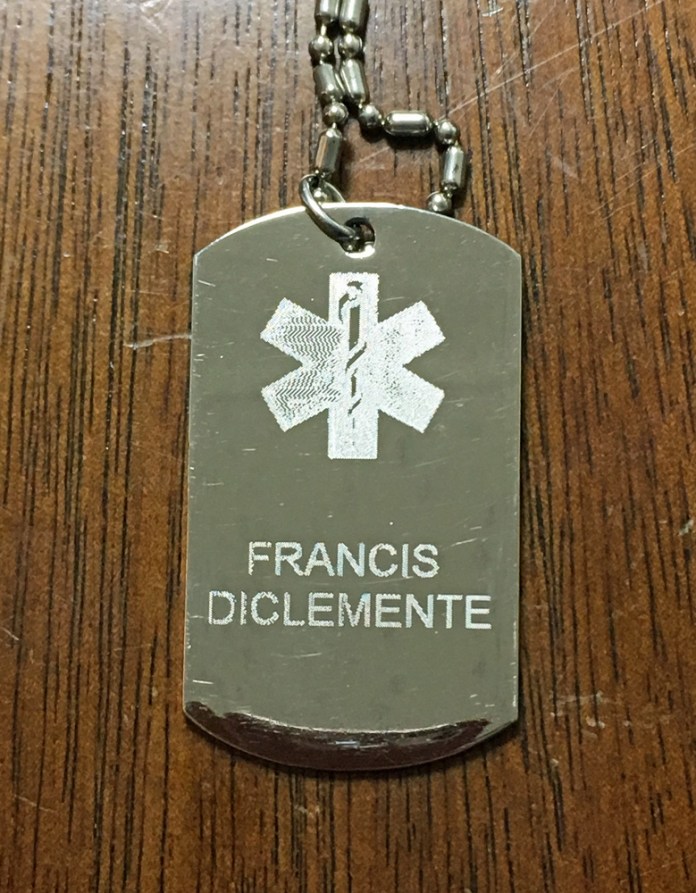
My medical ID necklace

My medical ID necklace

But for today I am free of its tentacles.

Today I am thankful for being alive, knowing things could have turned out differently. One error from a surgeon 32 years ago could have meant diminished mental capacity or motor function, or even worse, blindness. Any number of factors could have changed the outcome.

Instead I am nearly 50 now and married to a wonderful woman. And we have a beautiful young son, a nine-month-old tyrant named Colin Joe.

I believe the prayers my family hurled at heaven on Dec. 12, 1984, had something to do with helping me survive the delicate operation. On this feast day of Our Lady of Guadalupe, I can’t help thinking that the petitions my aunt, Sister Carmella DeCosty, made to the Blessed Mother that day were answered. And in this season of blessings and gratitude, I will take a moment to say my own prayer of thanksgiving.

Our Lady of Guadalupe

Our Lady of Guadalupe

Standard

Two Great Ladies of Verse

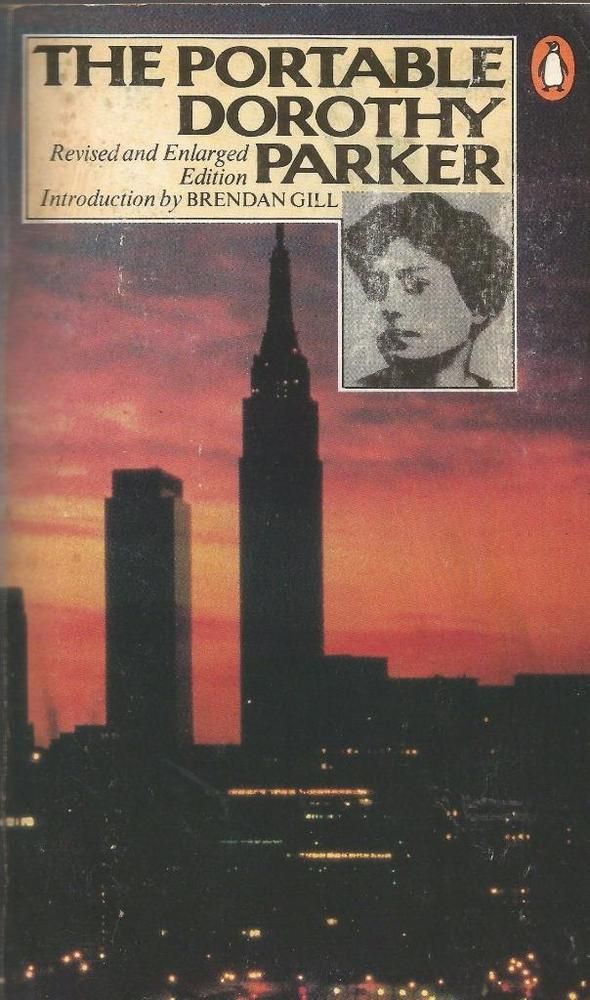
I finished reading two books recently by two female poets from the past. I had always wanted to read something by the 20th century writer Dorothy Parker, so I took out The Portable Dorothy Parker from the library. At the same time, I was reading Poems by Emily Dickinson, Three Series, Complete using the Kindle app on my iPad mini.

Parker, a member of the famed Algonquin Round Table, a group of writers who met at the Algonquin Hotel in New York City in the 1920s, was noted for her acerbic wit, cosmopolitan-themed short stories that rely on dialogue to carry the plot and poetry punctuated by both humor and pathos.

Dorothy Parker

Dorothy Parker

The Portable Dorothy Parker serves as a good introduction to the author’s work, as it contains a mix of poems, short stories, book reviews and theater criticism. The stories feel dated to the time period Parker lived, but two stories, Big Blonde and A Telephone Call, are worth checking out.

I also felt a pang of sadness when reading this line in Parker’s New York Times obituary: “Miss Parker left no survivors.” No human survivors—but she did leave behind a lot of written material to explore.

The Portable Dorothy Parker

The Portable Dorothy Parker

In both collections, Parker and Dickinson give us little gems in verse form focusing on weighty themes like life, death and love, along with observations on a myriad of other subjects.

These brief poems—gleaming verbal diamonds—carry an authentic voice and pack emotional truth, and both women knew how to play with language in such a way as to delight readers.

I picked through both volumes and selected some short poems worth sharing. They can be consumed in small bites, such as while riding public transportation or waiting in the grocery store checkout aisle.

From The Portable Dorothy Parker:

The Small Hours

No more my little song comes back;
And now of nights I lay
My head on down, to watch the black
And wait the unfailing gray.

Oh, sad are winter nights, and slow;
And sad’s a song that’s dumb;
And sad it is to lie and know
Another dawn will come.

Godspeed

Oh, seek, my love, your newer way;
I’ll not be left in sorrow.
So long as I have yesterday,
Go take your damned tomorrow!

The Thin Edge

With you, my heart is quiet here,
And all my thoughts are cool as rain.
I sit and let the shifting year
Go by before the windowpane,
And reach my hand to yours, my dear . . .
I wonder what it’s like in Spain.

Experience

Some men break your heart in two,
Some men fawn and flatter,
Some men never look at you;
And that cleans up the matter.

My Own

Then let them point my every tear,
And let them mock and moan;
Another week, another year,
And I’ll be with my own

Who slumber now by night and day
In fields of level brown;
Whose hearts within their breasts were clay
Before they laid them down.

Two-Volume Novel

The sun’s gone dim, and
The moon’s turned black;
For I loved him, and
He didn’t love back.

Rhyme Against Living

If wild my breast and sore my pride,
I bask in dreams of suicide;
If cool my heart and high my head,
I think, “How lucky are the dead!”

News Item

Men seldom make passes
At girls who wear glasses.

And lastly, the following is one of my all-time favorite poems (right up there with Paul Laurence Dunbar’s We Wear the Mask and Richard Cory by Edwin Arlington Robinson), and Parker’s piece could be considered a companion poem or a bookend to Langston Hughes’ Suicide’s Note.

Resumé

Razors pain you;
Rivers are damp;
Acids stain you;
And drugs cause cramp.
Guns aren’t lawful;
Nooses give;
Gas smells awful;
You might as well live.

Parker, Dorothy. The Portable Dorothy Parker (Revised and Enlarged Edition). New York: Penguin Books, 1976. Print.

Emily Dickinson

Emily Dickinson

And here are the selections from Poems by Emily Dickinson, Three Series, Complete:

The Mystery of Pain

Pain has an element of blank;
It cannot recollect
When it began, or if there were
A day when it was not.

It has no future but itself,
Its infinite realms contain
Its past, enlightened to perceive
New periods of pain.

With a Flower

I hide myself within my flower,
That wearing on your breast,
You, unsuspecting, wear me too—
And angels know the rest.

I hide myself within my flower,
That, fading from your vase,
You, unsuspecting, feel for me
Almost a loneliness.

I’m Nobody! Who are you?

I’m nobody! Who are you?
Are you nobody, too?
Then there’s a pair of us—don’t tell!
They’d banish us, you know.

How dreary to be somebody!
How public, like a frog
To tell your name the livelong day
To an admiring bog!

Simplicity

How happy is the little stone
That rambles in the road alone,
And doesn’t care about careers,
And exigencies never fears;
Whose coat of elemental brown
A passing universe put on;
And independent as the sun,
Associates or glows alone,
Fulfilling absolute decree
In casual simplicity.

A Word

A word is dead
When it is said,
Some say.
I say it just
Begins to live
That day.

The Inevitable

While I was fearing it, it came,
But came with less of fear,
Because that fearing it so long
Had almost made it dear.
There is a fitting a dismay,
A fitting a despair.
’Tis harder knowing it is due,
Than knowing it is here.
The trying on the utmost,
The morning it is new,
Is terribler than wearing it
A whole existence through.

Lost Faith

To lose one’s faith surpasses
The loss of an estate,
Because estates can be
Replenished, — faith cannot.

Inherited with life,
Belief but once can be;
Annihilate a single clause,
And Being’s beggary.

A Book

There is no frigate like a book
To take us lands away,
Nor any coursers like a page
Of prancing poetry.
This traverse may the poorest take
Without oppress of toll;
How frugal is the chariot
That bears a human soul!

Love

Love is anterior to life,
Posterior to death,
Initial of creation, and
The exponent of breath.

Dickinson, Emily. Poems by Emily Dickinson, Three Series, Complete. Kindle Edition.


Standard

Woman on the Sidewalk

I’ve been lax with blogging lately, as I’ve been busy with video work and a couple of large-scale, long-term writing projects. But certain incidents in life make me stop and recognize the fragility of our existence, which, in turn, leads to deep rumination. And my ensuing thoughts, once processed, seem suited for this blogging space.

Something happened to me recently that disrupted my daily routine and forced me to pay attention to a person in peril.

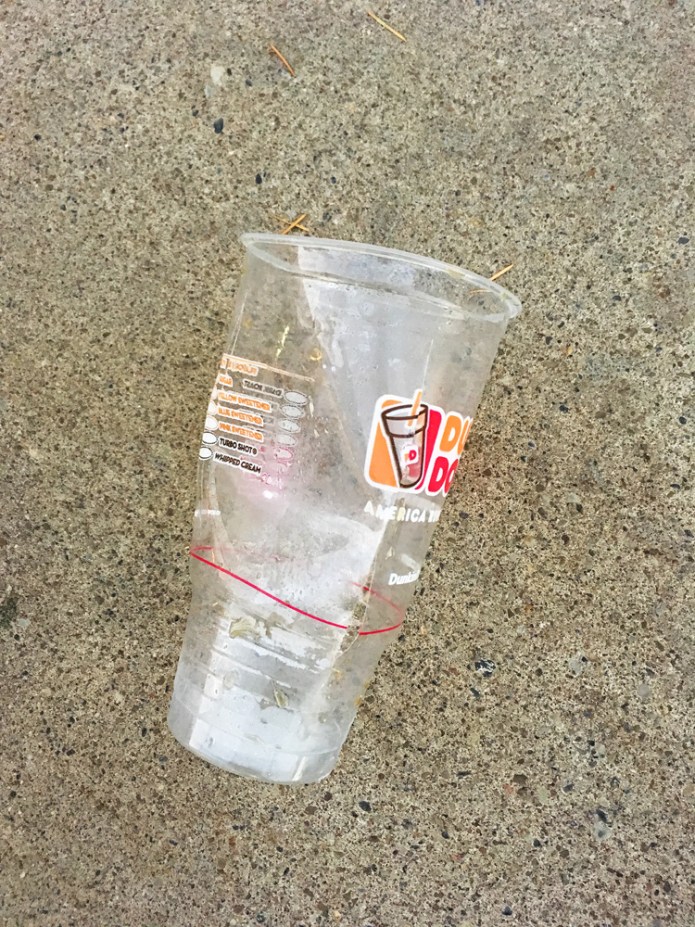
While walking home from work Thursday night, heading down South Crouse Avenue between Harrison and Madison streets, I came across an African-American woman in her thirties sprawled out on the sidewalk in front of me, with her iPhone lying next her to body and a plastic Dunkin’ Donuts cup and ice cubes scattered nearby.

Dunkin’ Donuts cup and straw on the sidewalk (not staged or rearranged).

When I first noticed her figure in the distance, I thought it was a dummy or some type of debris, like a cardboard box. But her details sharpened as I approached her. She was dressed in a Dunkin’ Donuts uniform with a name tag that read “Natasha,” and she was positioned on her back, looking up at the darkening sky dotted with crows swooping overhead. Rush hour traffic sped along Harrison Street toward downtown and the onramp to I-81.

While it’s not usual to encounter people asking for money in the area surrounding Syracuse University, something about the woman told me she was not a panhandler or someone faking an illness to get attention. I surmised she had just finished her shift at Dunkin’ Donuts and was walking down the hill to catch a bus or continue on foot the rest of the way home. I bent over her body as I surveyed the scene. The woman’s glazed eyes stared back at me, and she appeared disoriented.

I said, “Mam are you OK? Did you fall? Are you hurt?” She was unable to respond with a complete sentence. “What?” she asked.

“Mam, why are you on the sidewalk?” She continued to hold a frightened expression on her face, but she did not say anything else. I said, “I’m gonna call someone for you.” I started to dial 911 as a man with a mustache and wearing a tan coat and an orange baseball cap walked across South Crouse Avenue toward us. “Are you calling an ambulance?” he asked as I pressed my cellphone to my ear so I could hear the operator above the traffic noise.

A female 911 operator took my call. “Nine-one-one, what’s your location?” she asked.

“South Crouse between Harrison and Madison.”

“OK, what’s going on?”

I relayed the details of my encounter with the woman on the sidewalk.

And the woman asked me a flurry of questions. “Does she appear injured? Is she breathing? Is she conscious? Is she intoxicated? Can you ask her her name and whether she has a medical condition?”

I did my best to get the answers the operator sought. The other man also tried to talk to Natasha. “Mam, what happened? Why are you on the sidewalk?” he asked.

Natasha could not vocalize any responses, and she just looked at us with her dark, glassy eyes. I don’t think she was aware of the situation or knew what had happened to her.

The man said he had to leave to “go to a founders dinner.” He crossed the street and I lost sight of his figure. The 911 operator said the ambulance was on the way, and a short time later, with sirens blaring, it pulled to the curb along Madison Street. Two young EMTs, one male and one female, hopped out of the ambulance and wheeled a gurney up South Crouse Avenue toward the woman.

“What happened?” the man asked. I told him I had found the woman on the sidewalk. “OK,” he said, “we got it.”

And with that, I left. I said a Hail Mary for Natasha, praying the paramedics would get her to the hospital quickly and doctors would determine what was wrong with her.

A passing thought also tickled my brain. I thought it would be nice to work in some capacity where I could help people on a daily basis, as opposed to simply pursuing my own career goals of a higher salary and a more prestigious position.

I also felt proud of myself for interceding on Natasha’s behalf. I say this not because I consider myself a humanitarian or a Good Samaritan, but because the incident made me realize how vulnerable humans are and how easy it would have been for me to turn away from the figure on the sidewalk and walk by the woman, deciding not to get involved.

I believe we are only as capable as our bodies allow us to be. And as someone who suffers from hypopituitarism, hypokalemia (low potassium), diabetes insipidus and hyponatremia (low sodium), I decided to stop and render aid to Natasha because other people have helped me in the past when my potassium dropped or my sodium level plummeted to a dangerous mark, below 120 (normal range 133-145). I’ve passed out before and also became weak, dazed and disoriented. And people could have perceived that I was drunk or high on drugs. Instead they helped me and I got the medical treatment I needed.

Dunkin' Donuts cup on the sidewalk (not staged or rearranged).

Dunkin’ Donuts cup on the sidewalk (not staged or rearranged).

The following morning I walked to work up South Crouse Avenue toward the SU campus. Natasha’s Dunkin’ Donuts cup was still lying on the sidewalk, and I hoped by now she had been given some intravenous fluids at Upstate or at another area hospital and was either resting comfortably in a hospital bed or had been discharged. I also hoped I would see her on her feet behind the counter the next time I stopped to get coffee at Dunkin’ Donuts.

Standard

Recent Writing

I’ve been busy lately with video work, a long-term writing project and watching over my seven-month-old son, Colin, who is now crawling and standing up (with the assistance of furniture). But in the meantime, I have a few short nonfiction pieces posted online that I would like to share. Thanks for taking a look.

The first is a meditation on prayer and faith, published in PILGRIM: A Journal of Catholic Experience.

The second presents some reflections about the loss of my parents. It was published in ENTROPY.

And in the third story, an opinion piece that appears on the blog of South 85 Journal, I muse about Charles Bukowski and my love for gritty, honest poetry.

Standard

Doctor Office Visit

Hopper-esque sunlight pours through the fifth-floor windows of an exam room in a medical office building in Syracuse. The light clings to the white walls on this Tuesday morning as I await the appearance of my neurosurgeon to give me the results of the MRI of the brain I had done earlier in the morning.

I notice the stenciling of letters on the wall directly across from me. The uplifting slogan reads: “Life isn’t about waiting for the storm to pass. It’s about learning to Dance in the Rain.” The words hold little meaning to me on this bright sunny day with highs expected in the eighties.

Words on a wall

Words on a wall

Dr. H. comes in a short time later; I rise from the chair, greet him and shake his hand. He is bald, thin, wears brown-rimmed glasses and is chewing gum. He takes a seat across from me and says, “Everything on your scan—the one you just had—is perfect. No change from a year ago.”

I ask him about residual scar tissue from the Gamma Knife surgery he performed in 2012 to remove remnants of a craniopharyngioma, a benign tumor in the sellar region of the brain, near the pituitary gland. The neoplasm was initially removed at Upstate in 1984, but it grew back and I needed follow-up surgeries in 1988 and in 2011. But it has not returned since the Gamma Knife procedure four years ago.

“It’s just scar tissue,” Dr. H. says. “Everything is clear. So we’ll just plan another MRI in a year. We’ll get you in before the winter comes.”

And so I can proclaim that I am tumor-free for another year. We have kept the craniopharyngioma at bay. And although I push the fear of its return to the outskirts of my mind, I know the tumor could sneak up again at any time. But on this morning I am thankful for the reprieve. It means no follow-up scans, no biopsies, no inpatient admission and no additional surgeries. I am grateful that I don’t need to wait for the storm to pass or learn to dance in the rain—at least for now.

Standard

Late Summer Melange

It’s been a busy summer at work, as I’ve been shooting and editing Syracuse University-related video projects. Last week, a colleague and I traveled to Washington, DC and Baltimore to conduct interviews in the District and in Charm City. Here are a couple of iPhone photos I took outside our hotel in downtown Baltimore, across the street from Oriole Park at Camden Yards, home of the Baltimore Orioles.

Oriole Park at Camden Yards, Baltimore, MD

Oriole Park at Camden Yards, Baltimore, MD

Brooks Robinson statue, Baltimore, MD

Brooks Robinson statue, Baltimore, MD

I also wanted to point out that I had a couple of essays published online this week. The first was about an episode of low potassium and periodic paralysis I suffered while living in Toledo, Ohio, in the 1990s. The piece was published on the Be Yourself blog at Medium. It’s entitled Pursuit of Gratitude. And here’s a photo of the medication I now need to take twice a day to compensate for my condition of hypokalemia (low potassium).

Potassium effervescent medication

Potassium effervescent medication

And lastly, an essay about my mother’s love of the 1965 movie musical The Sound of Music was published by The Millions. The story is called Comfort Objects.

Thanks for listening to my ramblings and for reading my stories. Enjoy the rest of the warm summer weather before the cold air takes over (at least here in central New York).


Standard

Goodbye Ford Focus

We said goodbye to a member of the family last weekend—my 2001 white Ford Focus, as I traded it in, fetching only $500, and bought a new-used vehicle, a 2007 Honda CR-V. The switch was long overdue. The Focus had outlived its time. It had rust, dings, scratches and a rotting subframe that my mechanic told me wouldn’t make it through another winter or pass another New York State inspection.

The Ford Focus

The Ford Focus

So after doing some online research, I decided to buy a used vehicle, as opposed to leasing. I went with the Honda CR-V because of its reliability and the all-wheel drive feature for the snow. Also, as a larger vehicle, it’s well suited for our small family that includes my wife, Pam, and my nearly six-month-old son, Colin Joe.

I test drove the CR-V a couple of weeks ago, and at first felt odd sitting in such a large vehicle. But after driving it on the highway and in my neighborhood, I felt more comfortable navigating the roads. I’m still not used to it yet, and I think parking may take me some time to master.

The Honda CR-V

The Honda CR-V

As for the Focus, I had mixed feelings as we parted ways. The car certainly didn’t owe me anything and had sustained a long—although at times troublesome—life.

I bought the Focus in November 2001 at Bell Ford in Phoenix, Arizona, where I used to reside, after a woman ran a red light and slammed into my used, root-beer colored Honda Accord, caving in the passenger side, causing damage too great to repair. I decided to go with an American car during the post 9-11 days when patriotic Americans felt the need to buy U.S.-made vehicles. In Arizona the car was perfect; it had air conditioning and got great gas mileage.

Ford Focus paperwork

Ford Focus paperwork

I was single at the time with no kids. I was working an overnight shift at a news wire service in Scottsdale and made the half-hour, one-way commute from my apartment in Phoenix to the office park each night. Other than running errands and making occasional trips to Turf Paradise racetrack to watch the thoroughbreds and bet a few races, my driving was limited so I didn’t put a lot of miles on the car.

Turf Paradise in Phoenix. Photo credit: Q-Racing Journal

Turf Paradise in Phoenix. Photo credit: Q-Racing Journal

But the Focus had its share of problems:

The fuel pump died along the steep incline of State Route 87 northbound during a trip I made from Phoenix to Pine, Arizona. I was on my way to visit some friends who lived in Pine, and the vehicle started losing power, puttering along. I had to turn on my emergency flashers and the car finally died on the side of the road. The highway patrol came along, and I called a tow truck to tow me into Payson, where the car was left with a mechanic in town. My friend came to pick me up and I had to stay the weekend in Pine and wait until the fuel pump was replaced on Monday morning.

In 2006 I decided to relocate to upstate New York, and for a short time stayed with my mother and stepdad, Bill, at the their home in Rome. I left Phoenix on a clear, star-filled night and drove northbound on I-17 and then eastbound on I-40 into New Mexico, Texas and Oklahoma—where I almost got washed off the road during a torrential thunderstorm in Tulsa.

In the early part of the winter of 2006-07, I drove from Rome to nearby Utica during a snowstorm. I had a job interview scheduled at WKTV-TV, but I never made it there because I had failed to realize that all-season tires on a small car would simply not perform well enough in the snow of a fierce central New York winter. My car kept sliding down Smith Hill Road, and I became so afraid that I would end up stuck on the side of the road that I just turned around and drove home, dejected.

Imagine my embarrassment when I called the operations manager to apologize for being a no-show and had to give the lame excuse that I couldn’t make it to the station in the snow.

Even after I put on new snow tires, the Focus still struggled in the snow. I had one scare where I did a 180 on Route 5 in Madison County during a snowstorm, with traffic coming at me in the opposite lane. Fortunately, the other motorists were driving slowly and they saw me ahead of time and were able brake and avoid a collision. I was able to steer back to my lane and keep going on my way.

Since the time I started working at Syracuse University in 2007, I have lived within walking distance to campus. So during the winter I would leave the car in my apartment parking space or in the University Avenue Garage a short distance away. I walk to work practically every day and only took out the car out in the winter for grocery shopping or other errands. I also rarely visit my family in Rome between Christmas and Easter because of the snow.

As a result of my limited driving, when I finally traded in the Focus, its mileage read about 87,000. Not bad for nearly 15 years of existence.

What else gave me headaches?

The car’s wheel bearings went another time. Then the power window on the driver’s side malfunctioned and wouldn’t go back up, getting stuck halfway in between.

One year the Focus failed the New York State inspection because the machine couldn’t read the mileage. The mechanic told me to just keep driving and bring it back. I ended up having to drive an additional 300 miles before the computer reset and the state inspection machine could read the mileage and run the test.

But the car had been paid off since 2006 and although I had to put some money into repairs, it had been a decent car for me for the past several years. Although I realized how small it was when our son came along and we had to add the car seat. It was always hard getting Colin situated in the car seat in the backseat because the Focus had just two doors. And I was always afraid I would trip while lifting his car seat and stepping out of the car.

So in many ways, I had no choice but to buy a new-used car, even though I didn’t want to have to carry a monthly car payment. I’m hoping I’ll get adjusted to the CR-V soon and will come to appreciate the added size. But I’ve also realized cars are finite machines, and eventually they all break down. I hope this one gives me a little life. It has about 97,000 miles on it and I’m hoping to stretch it to at least 160,000 to 200,000.

Standard