The Truth I Must Invent

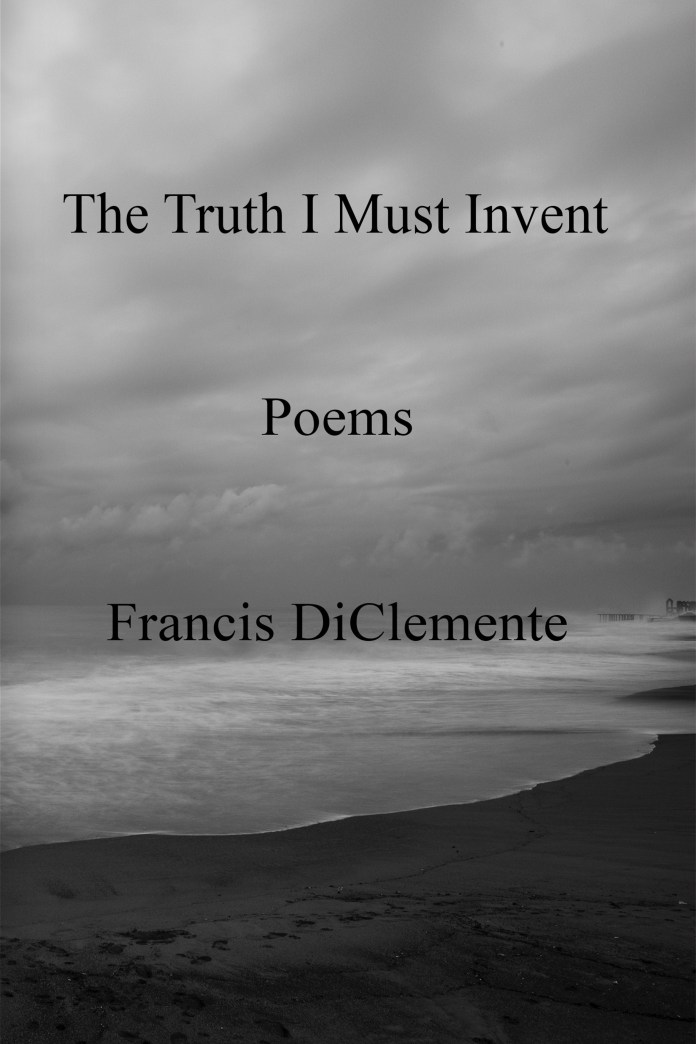
I’m excited to report I have a new poetry collection available. It’s entitled The Truth I Must Invent, and it was my pleasure working with publisher Akshay Sonthalia from Poets’ Choice to bring the book to fruition.

The Truth I Must Invent book cover. Cover Design by Koni Deraz; Cover Photo by Engin Akyurt; Book Design by Adil Ilyas.

You can find a print version on the publisher’s site. It’s also available on Bookshop.

The Truth I Must Invent is a collection of narrative and philosophical poems written in free-verse style. In it, I explore the themes of self, identity, loneliness, memory, existence, family, parenthood, disability, gratitude, and compassion. The work examines the conflicting web of emotions all adults face and the truths that lie in between. It also suggests that even in our darkest moments, joy and contentment can be found through resilience and a willingness to hope.

Here are a few excerpts:

Cake Mistake

Peggy made a huge mistake
when she baked a
grocery store celebration cake.
She put a D
where a T should be
in the middle of the
word CONGRATULATIONS.

The customer was pissed.
But Peggy kept silent
as the irate woman left the store
without paying for her order.

Peggy’s manager docked her pay,
and yelled at her for making
such a stupid mistake,
to which Peggy replied:

“Look, I never went to college
and there’s no spell-check when baking a cake.
And I’m sorry I screwed up, but I think that D
will taste just as sweet as a T,
so I’ll take that cake home for my kids to eat.”

Camera Angle

What would I choose
if I were given a chance
to lead a different life?

What mistakes
would I correct?
What new road
would I take?

But you can’t splice
the scenes of your life
to edit the past.
You can only point
the camera forward
and zoom into the future.

Observation After Eating Out

Pity for my son swells.
Yet I feel helpless,
Unable to intervene
To make his autism
Go away.

Our patience dwindles
As his outbursts intensify.
But love does not wane.
Instead, it grows stronger.

I have only one son.
Yes, he is different.
He is noisy and
Requires constant attention.
But I am thankful for
His presence in my life.
And who needs the quiet anyway?

©2023 Francis DiClemente
The Truth I Must Invent (Poets’ Choice)

Standard

Sidewalk Stories: Kindle Version

I’m excited to announce that there is a new Kindle version of my full-length poetry book Sidewalk Stories. The book is a collection of free-verse narrative and philosophical poems and was published by Kelsay Books in 2017.

Cover art by Donatas1205 (via Shutterstock).

Some of the story poems are autobiographical; other works are fictional, including some that imagine the inner life of animals. The collection explores the universal themes of gratitude, romance, self-esteem, family, illness, advancing age, and death.

Here are the blurbs from the back of the book:

What poet and songwriter Rob McKuen created during the turbulent late ’60s and ’70s in San Francisco with his book Stanyan Street and Other Sorrows, Francis DiClemente has accomplished in Sidewalk Stories. With the backdrop of the gritty streets of Syracuse, New York, DiClemente manages to create a poetic canvas and find beauty in the midst of the harsh realities of life in upstate New York.

—Joanne Storkan, screenwriter and film producer (Honest Engine Films)

Sidewalk Stories is an inspired collection of meditations and personal vignettes, vividly capturing the range of human experience. Francis DiClemente channels his inner Charles Bukowski to present an unflinching look at youth and encroaching middle age. Amidst unprepossessing urban decay, we meet a cast of characters whose stories of regret and missed opportunity are probably as much DiClemente’s as they are their own. That some of them manage to remain sanguine about the future—and their mortality—is part of DiClemente’s charm as a storyteller. These poems leap off the page and onto the sidewalks of our imagination.

—Rob Enslin, author/journalist

In Sidewalk Stories, poet Francis DiClemente invites us to be his companion on an intimate journey. We walk with him on gritty sidewalks, observe through his eyes the plight and the beauty of the beings with whom we share the world. An old woman, a blind man, a little girl twirling, even a rabbit and an overturned turtle are viewed with deep compassion. Here is a poet who doesn’t just look; he sees. And his vision is no less unflinching when he brings us with him into his own life.

But don’t worry. Though many of DiClemente’s poems are infused with a sense of loneliness, they also convey a stronger sense of courage and endurance. And watch for the irrepressible whimsy and humor as, for example, a cowboy lassos a star, and when the poet rants about the tyranny of poetry. With each poem in this collection, DiClemente will take you deep inside a thoughtful man, and then, deeper inside yourself.

—Kathleen Kramer, playwright and poet; author of the poetry collections Boiled Potato Blues and Planting Wild Grapes

And here are a few excerpts from the collection:

Stooped

An old woman hunched over,
looking down at the sidewalk,
adjusting her knit hat.
She limps forward,
shuffling along,
riddled with pain.
Her face reveals
the hurt she endures.
She receives no aid,
no intercession
from human or heaven.
I pass her on the sidewalk,
and I say a quick prayer
that her suffering wanes.
It may not do any good,
but I send the thought aloft
and hope someone is listening.
The woman crosses the street
and fades out of sight.
I then hear an inner voice say,
“You were there,
you could have helped her.”

Hard Shell

What goes through the mind of a turtle
When it’s sprawled on its back and can’t roll over?
Does it panic as its legs squirm in the air?
Does it stick out its tongue and try to scream for help?
Does it curse its maker as it writhes on the asphalt,
With the sun scorching its belly?
How long does it wait before giving up and accepting fate?

No. This turtle does not think.
It lacks the capacity to reason.
Instincts fire as it battles to survive:
“Get off your shell. Roll over. On your feet.”
It rocks from side to side as it labors to turn over.
It strains, twists, and kicks … but fails.

And no one will intervene—
There’s no Tom Sawyer kid with a hickory stick,
Skipping along and flipping the turtle over.
No semi truck rumbles down the road,
Stirring up a blast of air and setting the turtle upright.

It struggles alone, refusing to quit
As it attempts to conquer physics.
The turtle keeps working
Until the sun desiccates its flesh,
And it releases a final breath—
A low croak that goes unheard along the deserted road.
The turtle is gone and no one witnessed the fight.

Dinner in a Chinese Restaurant

February in Syracuse—
dinner at a Chinese restaurant
on a frigid Wednesday night.
Panda West on Marshall Street.
Steamed chicken with mixed vegetables
and a piping hot kettle of oolong tea.
Lights dimmed and nearby diners
conversing at low volume.
A Middle Eastern man discusses the
practice of anesthesiology
with a woman (a female colleague I presume),
who leans over the table toward the man,
eager to comprehend each word
emanating from his dark lips.

I scan the New York Times arts section
as I gobble my dinner,
then call to the waiter to box up the leftovers.
I pay the bill, leave the tip, and
depart the warmth of the restaurant,
returning to the dampness of Marshall Street.
I walk down South Crouse Avenue,
turn right on East Genesee Street,
and arrive at the door to my empty apartment.

I put the leftovers in the refrigerator,
and feel relieved that dinner is over.
I’m glad I don’t need to fix anything,
or eat another meal at my living room card table,
with a Netflix movie streaming on my laptop computer.

Tonight I was a person.
Tonight I ate dinner in a restaurant,
surrounded by human beings.
And even if I wasn’t part of their conversations,
at least I was there, out in the world,
regardless of being alone.

The Auction

If my poems were auctioned off,
what sum would they fetch?
What value would they hold
in the marketplace?
What dollar amount would anyone pay
for these words coalescing on paper,
these mad scribbles in verse form?
I can see it now:
Sotheby’s would start the bidding
and no one would make an offer.
The gavel would strike and the bidding close.
But before the auctioneer could move on
to the next item in the evening’s catalog,
I would raise my hand and ask
if I could pick up the unclaimed poems
and take them back to my room,
where they could stay free of charge.

Ode to Thomas Wolfe

A pebble, a brook, a passageway
to time flowing in reverse,
a mirrored labyrinth reflecting
memories of adolescence.
A path leading back
to the days of my youth,
from whence I came,
to where I am,
brimming with a hunger—
a gnawing restlessness
that never wanes.

Landscape

Beauty abounds.
Just look around
and you will see—
a quivering leaf,
a patch of grass,
billowing clouds,
and a slash of light
beneath the bridge.
It’s not a bad world, really—
we just need
to train our eyes
to gaze with wonder,
and marvel at the
transcendental pageantry.
It’s there before you.
But you must zoom out,
zoom out
and refocus the image.
There. Hold it.
Do you see it now?

Rise

To find peace
One must
Unravel the self,
Let it fall away,
Drop to the floor.
Unencumbered by
This anchor weight,
The man or woman
Who pursues
Spiritual freedom
Discovers the
Ability to soar.
Standard

Free Kindle for Outward Arrangements

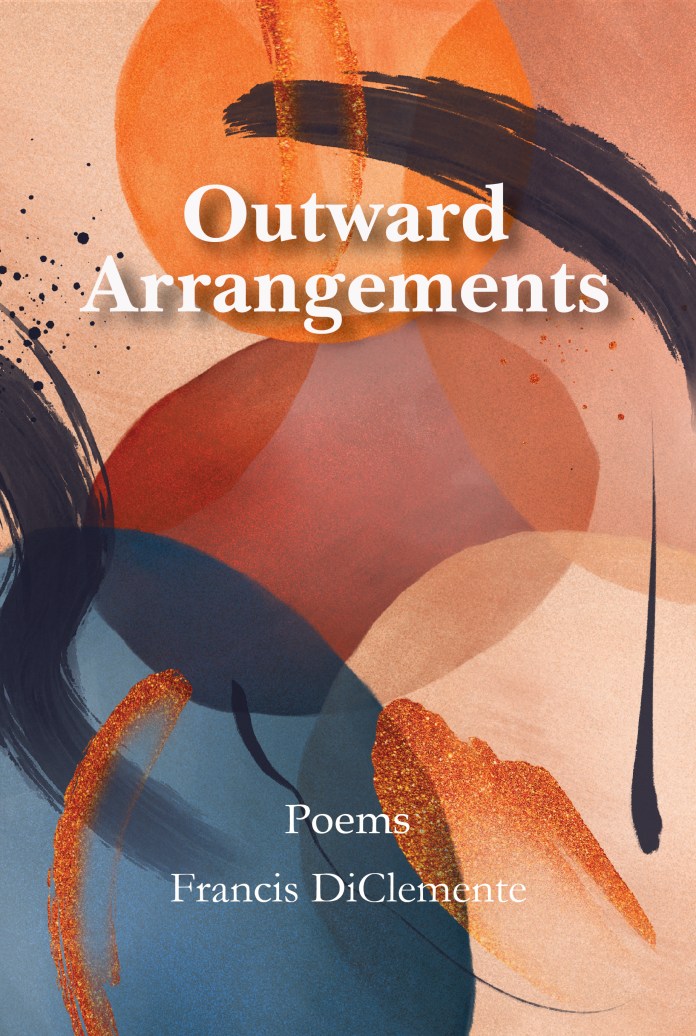
It’s been two years since I published my last poetry collection, Outward Arrangements: Poems. To mark the anniversary, I am running a free Kindle book promotion. It starts today and ends on April 7. You can find the book here.

Outward Arrangements Cover

Standard

Hippocampus Forgets

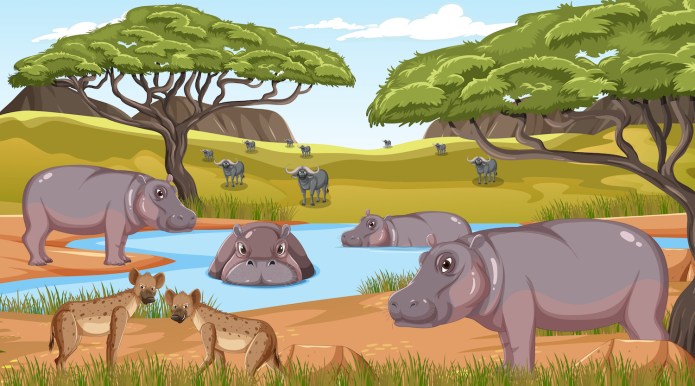
I’m excited to share that my short story “Hippocampus Forgets” appears in Issue 990 of Bewildering Stories, an online magazine for speculative writing. It’s a fantasy story about a female hippopotamus. The idea sprang from a goofy thought I had one day—what if a hippopotamus named Hippocampus suffered memory problems? The idea set me off on a long road of writing, revising, and rejection before finally getting accepted.

Image by brgfx on Freepik.

The best part of the whole process was following the internal drama of the character Hippocampus, a mother of four who keeps forgetting the name of her youngest child, her son Corpe. Her memory lapse stems from a violent premonitory dream that serves as a warning as Corpe’s fifth birthday approaches.

Image by brgfx on Freepik.

In writing the first draft, I felt like I served as a portal for Hippocampus to materialize. I wasn’t so much writing as dictating the story from her. It’s a rare occurrence for me, but in this case, I followed the characters where they wanted me to go. And nearly six-thousand words later, “Hippocampus Forgets” was born.

Standard

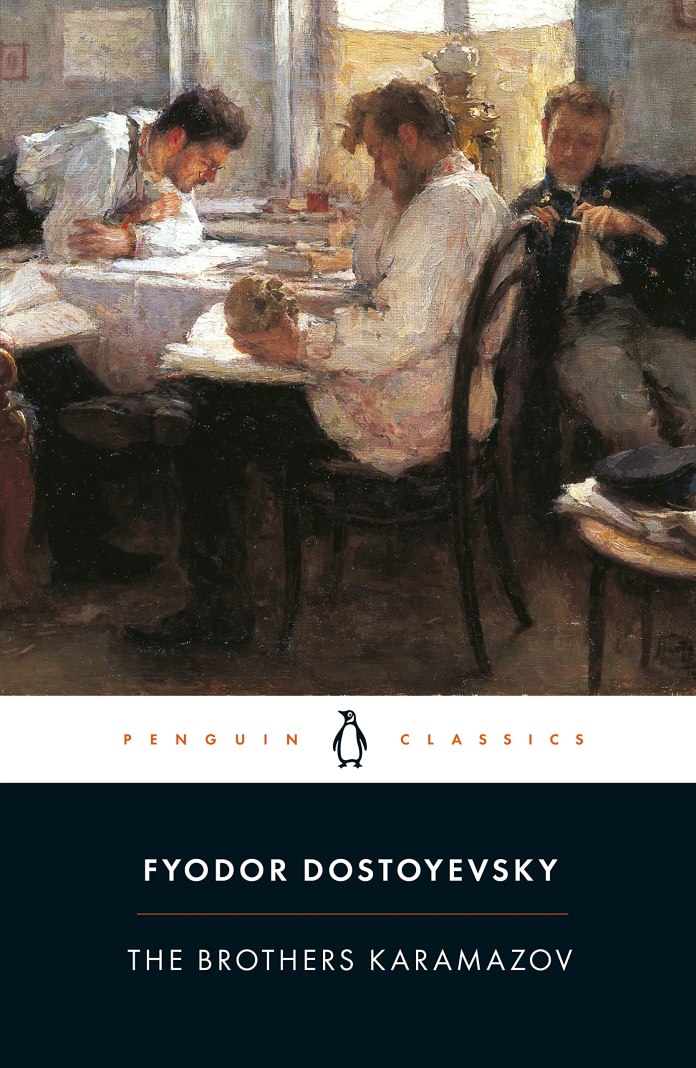
Dostoyevsky Doorstop

I just finished reading David Copperfield by Charles Dickens. Clocking in at nearly 800 pages, the book remained in my Kindle library for more than a year. Even as I skipped through page after page, the completion rate remained at about 62 percent. I thought I would never finish. Now I am tackling another classic tome of literature—The Brothers Karamazov by Fyodor Dostoyevsky. I’m only 27 pages into it, and I’m already confused by the multiple characters the author has introduced. But I think having a print copy will make the reading easier than Copperfield.

I always struggle with longer novels, but they can also be the most satisfying. Two of my favorite novels are longer works—Look Homeward Angel by Thomas Wolfe and The Town and the City by Jack Kerouac.

I’m approaching Karamazov like I mentally approach a Central New York winter. You can’t see the end of winter in late October. You have to take it one day at a time, one snowstorm at a time. So I can’t anticipate reading the last sentence of page 985 and then closing the book. I just have to plug along, page by page, day by day until I reach the end. My goal is to finish by Christmas.

Standard

Memories of Mr. Lanzi

Francis DiClemente's avatarFrancis DiClemente

I heard the sad news that one of my favorite teachers, Anthony Lanzi, passed away. This is an essay I wrote about him a few years ago.

Mr. Lanzi’s sixth-grade class, DeWitt Clinton Elementary School, Rome, New York (1980-81). I’m third from the left in the first row.

Our sixth-grade teacher, Mr. Lanzi, was a towering figure with a swarthy complexion and dark, wavy hair teased high and coated with hairspray. Not a strand seemed out of place. Imagine, if you will, a taller, thinner, nattier version of Elvis Presley. That’s how I remember Mr. Lanzi.

I think he had previously studied or worked in the theater, and he wore a hint of makeup to class—light powder on his cheeks—as if he might be called upon in the middle of a school day to fill the role of an understudy and he wanted to be prepared to take the stage…

View original post 546 more words

Standard

Tree on the Horizon

I know winter is not over yet, but my favorite time of the year is snowmelt season in Syracuse. A blanket of white still covers the ground, but the roads are mostly clear. I have probably jinxed us with a big lake-effect mess in the near future.

I like how the trees remain stoic with their naked branches (prior to blooming in spring). I captured this photo while traversing through my neighborhood on my Sunday walk.

Tree on the Horizon. Photo by Francis DiClemente.

March is filled with good things. We have Lenten fish fry specials and St. Patrick’s Day. And I think it’s the best time of year for sports fans. The NCAA basketball tournament, NHL and NBA playoffs, and the start of the MLB season all loom on the horizon. So I will enjoy these March days as we get ready to transition from winter to spring.

Standard

Glimpses of Existence Now Streaming

I am excited and honored to announce that my experimental documentary short Glimpses of Existence has found a distribution home at OTV – Open Television. You can find it here.

“OTV is an Emmy-nominated nonprofit platform for intersectional television, with artists and their creative visions at the center.”

Glimpses of Existence premiered in 2021 in an online screening presented by NewFilmmakers NY.

It’s a zero-budget film in the form of video collage. I took inspiration from the experimental films of Jonas Mekas, in particular Walden. Using poetry and scenes captured with my iPhone—primarily during the pandemic—the film attempts to find meaning in the ephemeral moments of our lives, seeking the extraordinary amid the ordinary.

The central focus of the film is my son, Colin, who has been diagnosed with autism spectrum disorder. Despite his condition, Colin finds joy in everyday activities, and through his eyes we recognize the importance of treasuring the tiny segments of life we are granted—minutes, seconds, hours—while being reminded about the transitory nature of existence.

Glimpses is a companion piece to a previous experimental documentary—Fragments of the Living. You can download the @weareotv app Free on Apple, Android, Roku, and FireTV, or stream at watch.weareo.tv.

Standard

Celebrating Seven Years

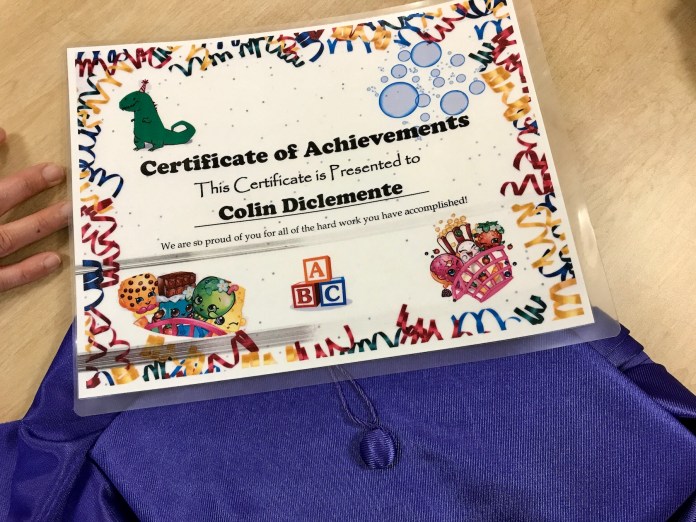
I don’t usually post family-related stuff on this blog, but I wanted to share that we celebrated Colin’s seventh birthday on Sunday. And last Friday morning, Colin completed his feeding therapy program at the Golisano Center for Special Needs. The amazing staff there gave him presents, a card, a certificate, and a cap and gown—which he refused to wear.

Colin is not interested in wearing the cap.

Staff members streamed into his therapy room, saying things like: “Congratulations. Way to go, buddy. You did it. You worked so hard. We’re so proud of you.”

As the father of an autistic child, I realize the importance of celebrating these milestones, these little victories along the way. But the main credit belongs to my wife, Pam, who took Colin to therapy every weekday morning, drove him to school afterward, and employed the tools of therapy at home.

Colin playing in the feeding therapy room.

And Colin has made significant progress. Before we started the program, his diet consisted of milk with yogurt, Entenmann’s Little Bites muffins (brownie flavor), Chips Ahoy! and Oreo cookies, and different varieties of potato chips.

Now he will eat yogurt with a spoon, cereal bars, Life and Cheerios cereal (no milk), French toast, and pizza.

He entertains me with the way he eats pizza in stages. He eats the cheese first and then the sauce, before digging out the dough and leaving behind the crust, like a shell (which I usually eat).

Colin’s feeding therapy certificate.

##

On Sunday morning, Pam made pancakes for his birthday, but Colin opted for potato chips. Later in the day, he blew out the number 7 candle on his cake, licked some frosting and ate the candy balloons on top, and then picked at a slice of Wegmans’ cheese pizza.

Colin’s birthday cake.

He also played with the foam blocks and dice Pam bought him, and he slipped on the slightly oversized Pokémon Crocs. I think the shoes were his favorite present.

It’s hard to imagine he is now seven years old. It seems like just yesterday we brought him home from the hospital—Pam and I both nervous (me terrified) about being new parents. And about two-and-a-half years after his birth, we received the official diagnosis of autism spectrum disorder (ASD) and adjusted our expectations for our child.

Colin celebrating his seventh birthday.

Life with Colin is fraught with challenges, but the joy of his presence illuminates our days.

And he’s showing improvement. He talks a little when prompted by Pam and he can add and subtract now.

I am grateful for this little boy, and he has taught me love and patience beyond my perceived ability, beyond what I thought I was capable of.

I’ll leave you with a silly little poem.

Poem for Colin

Seven years old.
The joy of our son.
Sadness for
Lack of communication.
But love everlasting.

Colin sporting his new Crocs.

Standard

Musings by Marcus

I recently finished Meditations by Marcus Aurelius, and so many poetic passages in the book stuck with me.

This line in the Amazon description sums up the book: “Nearly two thousand years after it was written, Meditations remains profoundly relevant for anyone seeking to lead a meaningful life.”

Meditations: A New Translation Paperback by Marcus Aurelius and translated by Gregory Hays.

Here are some of my favorite passages.

Book Two: On the River Gran, Among the Quandi

17. Human life.

Duration: momentary. Nature: changeable. Perception: dim. Condition of Body: decaying. Soul: spinning around. Fortune: unpredictable. Lasting Fame: uncertain. Sum Up: The body and its parts are a river, the soul a dream and mist, life is warfare and a journey far from home, lasting reputation is oblivion.

Book Three: In Carnuntum

10. Forget everything else. Keep hold of this alone and remember it: Each of us lives only now, this brief instant. The rest has been lived already, or is impossible to see.

Book Seven:

22. To feel affection for people even when they make mistakes is uniquely human. You can do it, if you simply recognize: that they’re human too, that they act out of ignorance, against their will, and that you’ll both be dead before long. And, above all, they they haven’t really hurt you.

Book Eight:

36. Don’t let your imagination be crushed by life as a whole. … Then remind yourself that past and future have no power over you. Only the present—and even that can be minimized.

44. Give yourself a gift: the present moment.

Book Nine:

13. Today I escaped from anxiety. Or no, I discarded it, because it was within me, in my own perceptions—not outside.

Book Ten:

17. Continual awareness of all time and space, of the size and life span of the things around us. A grape seed in infinite space. A half twist of a corkscrew against eternity.

18. Bear in mine that everything that exists is already fraying at the edges, and in transition, subject to fragmentation and to rot. Or that everything was born to die.

Book Twelve:

2. God sees all our souls freed from their fleshly containers, stripped clean of their bark, cleansed of their grime. He grasps with his intelligence alone what was poured and channeled from himself into them. If you learn to do the same, you can avoid a great deal of distress. When you see through the flesh that covers you, will you be unsettled by clothing, mansions, celebrity—the painted sets, the costume cupboard?

Standard