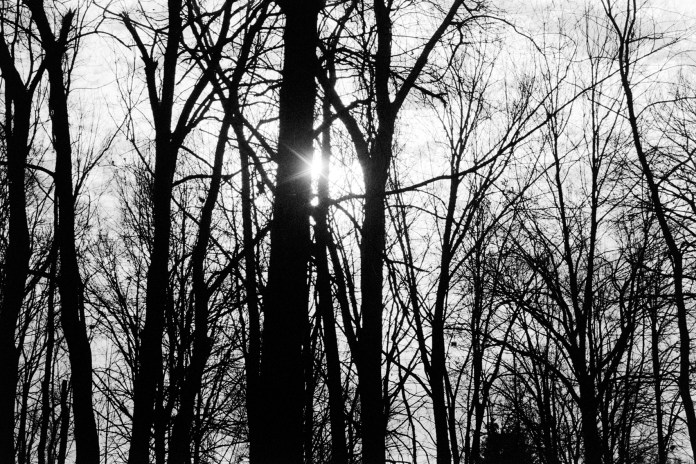
Poems by Hermann Hesse

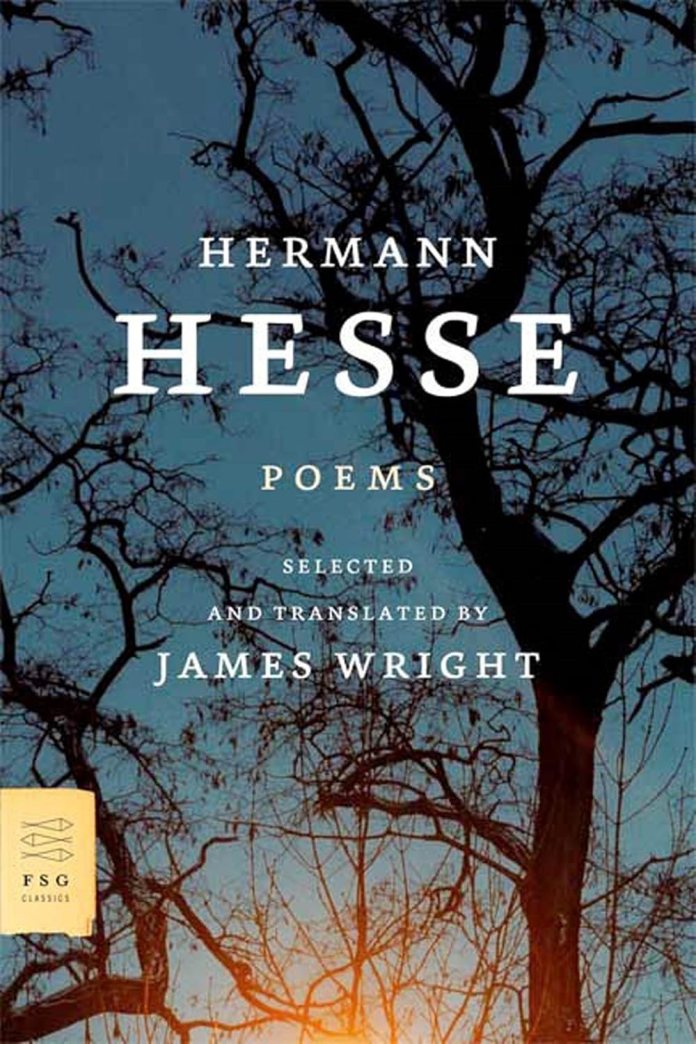
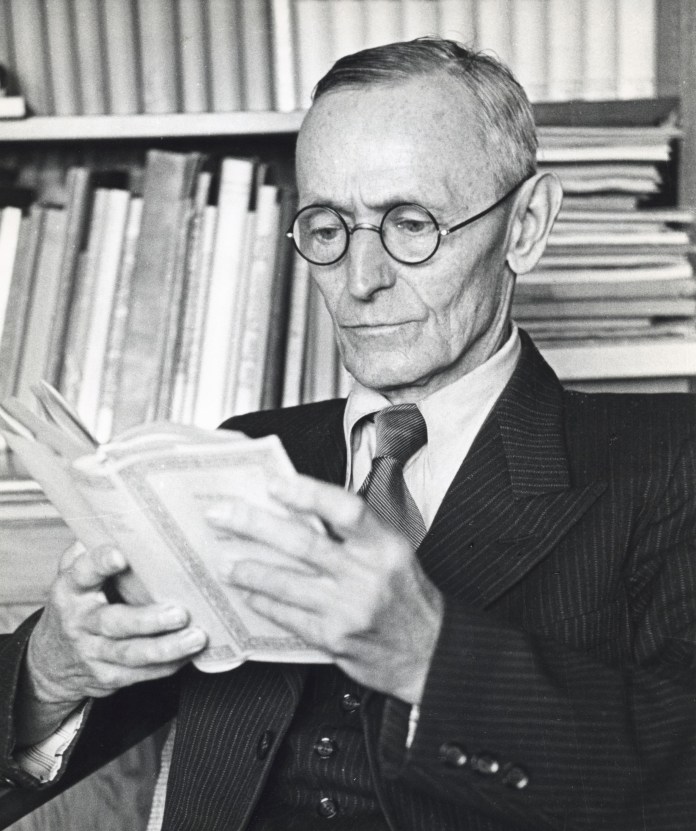
I am re-reading Siddhartha by Hermann Hesse. And in doing a little Wiki research on the German novelist, I discovered he also wrote poetry. I bought a collection of his verses entitled Poems by Hermann Hesse: Selected and Translated By James Wright (Farrar, Straus and Giroux, 1970). Most of the poems are short (which I love), and he explores such themes as youth, nature, identity, longing, and loneliness.
An added bonus—the used book arrived with a nice bookmark from Normals Books & Records in Baltimore, which looks like a really cool store.
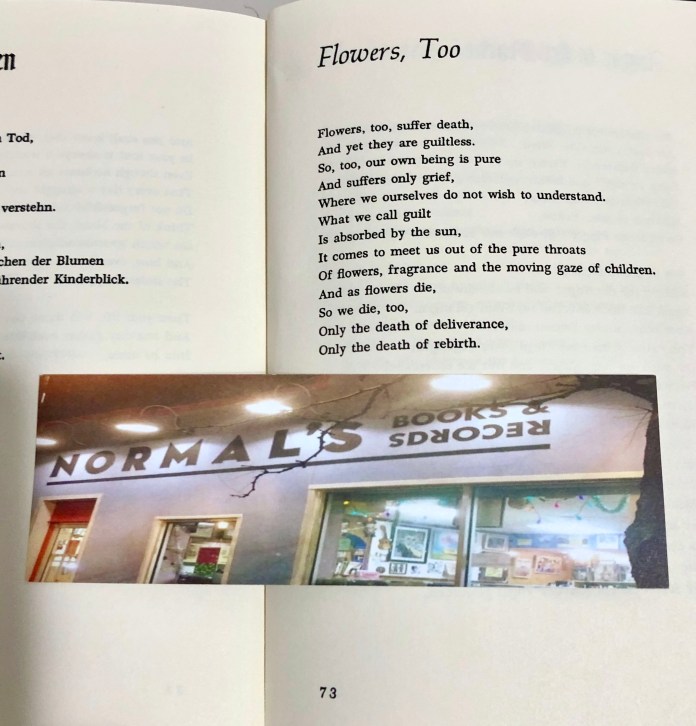
Here are a few selections from the book that I wanted to share:

Mountains at Night

The lake has died down,
The reed, black in its sleep,
Whispers in a dream.
Expanding immensely into the countryside,
The mountains loom, outspread.
They are not resting.
They breathe deeply, and hold themselves,
Pressed tightly, to one another.
Deeply breathing,
Laden with mute forces,
Caught in a wasting passion.

On a Journey

Don’t be downcast, soon the night will come,
When we can see the cool moon laughing in secret
Over the faint countryside,
And we rest, hand in hand.

Don’t be downcast, the time will soon come
When we can have rest. Our small crosses will stand
On the bright edge of the road together,
And rain fall, and snow fall,
And the winds come and go.

Night

I like the dark night well enough;
But sometimes, when it turns bleak
And peaked, as my suffering laughs at me,
Its dreadful kingdom horrifies me,

And I wish to God I could take one look at the sunlight
And the blue of heaven brought back to light by its clouds,
And I want to lie down warm in the wide spaces of the day.
Then I can dream of the night.
Destiny

In our fury and muddle,
We act like children, cut off,
Fled from ourselves,
Bound by silly shame.

The years clump past
In their agony, waiting.
Not a single path leads back
To the garden of our youth.

How Heavy The Days . . . 

How heavy the days are.
There’s not a fire that can warm me,
Not a sun to laugh with me,
Everything bare,
Everything cold and merciless,
And even the beloved, clear
Stars look desolately down,
Since I learned in my heart that
Love can die.

And here are a few spring-themed poems:

The First Flowers

Beside the brook
Toward the willows,
During these days
So many yellow flowers have opened
Their eyes into gold.
I have long since lost my innocence, yet a memory
Touches my depth, the golden hours of morning, and gazes
Brilliantly upon me out of the eyes of flowers.
I was going to pick flowers;
Now I leave them all standing
And walk home, an old man.

Spring Day

Wind in bushes and bird piping
And high in the highest fresh blue
A haughty cloud ship, becalmed . . .
I dream of a blond woman,
I dream of my youth,
The high heaven blue and outspread
Is the cradle of my longing
Where I choose to lie calm
And blessedly warm
With the soft humming,
Just like a child held
On his mother’s arm.

Flowers, Too

Flowers, too, suffer death,
And yet they are guiltless.
So, too, our own being is pure
And suffers only grief,
Where we ourselves do not wish to understand.
What we call guilt
Is absorbed by the sun,
It comes to meet us out of the pure throats
Of flowers, fragrance and the moving gaze of children.
And as flowers die,
So we die, too,
Only the death of deliverance,
Only the death of rebirth.
Standard

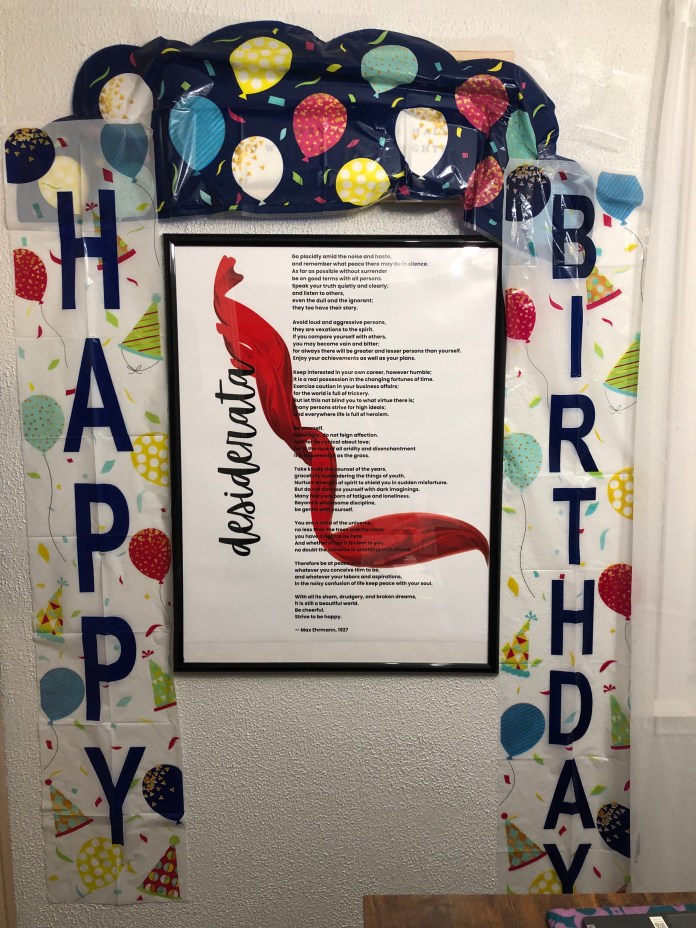
Happy Birthday Colin

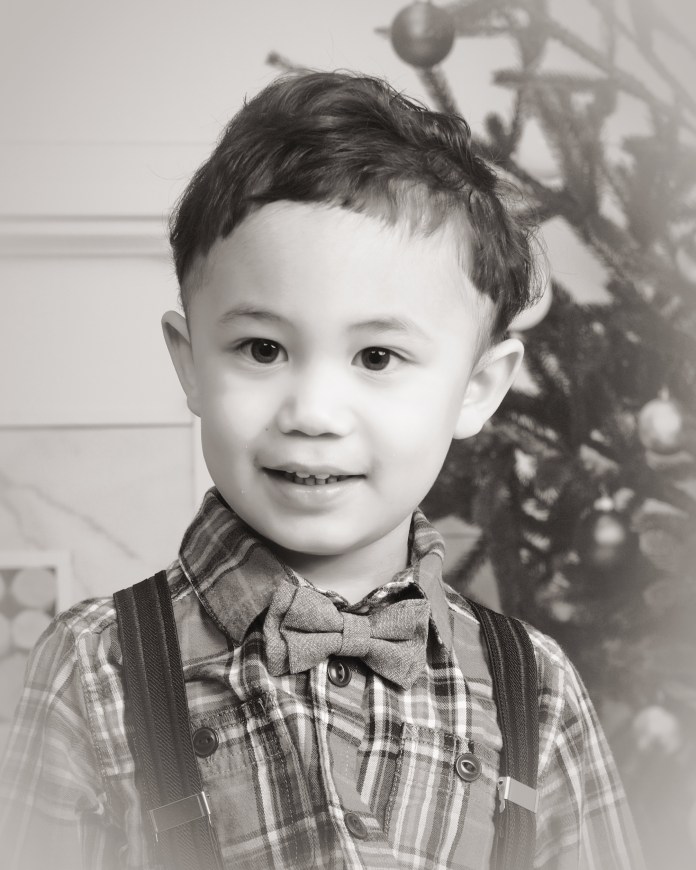
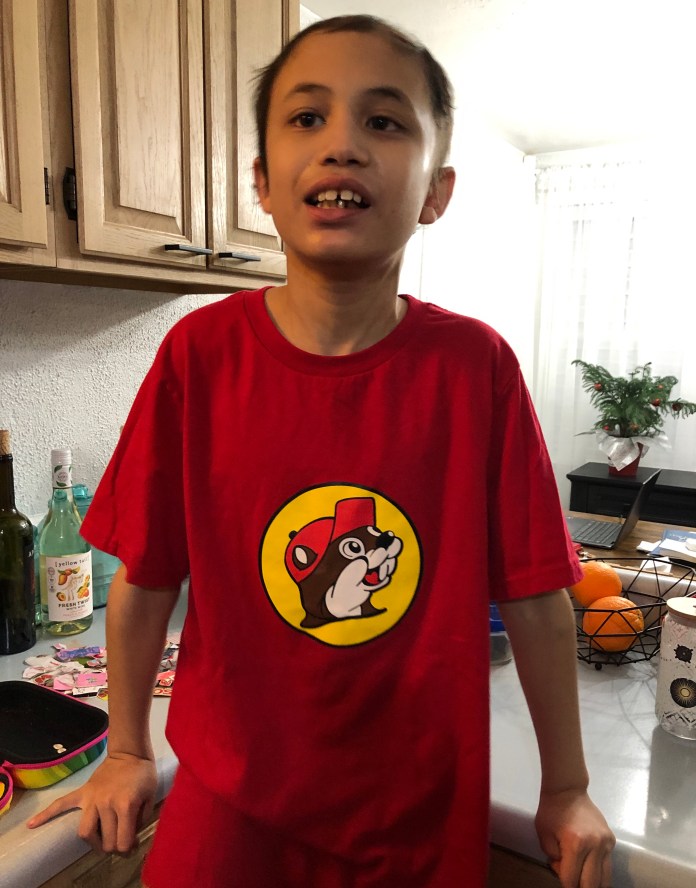
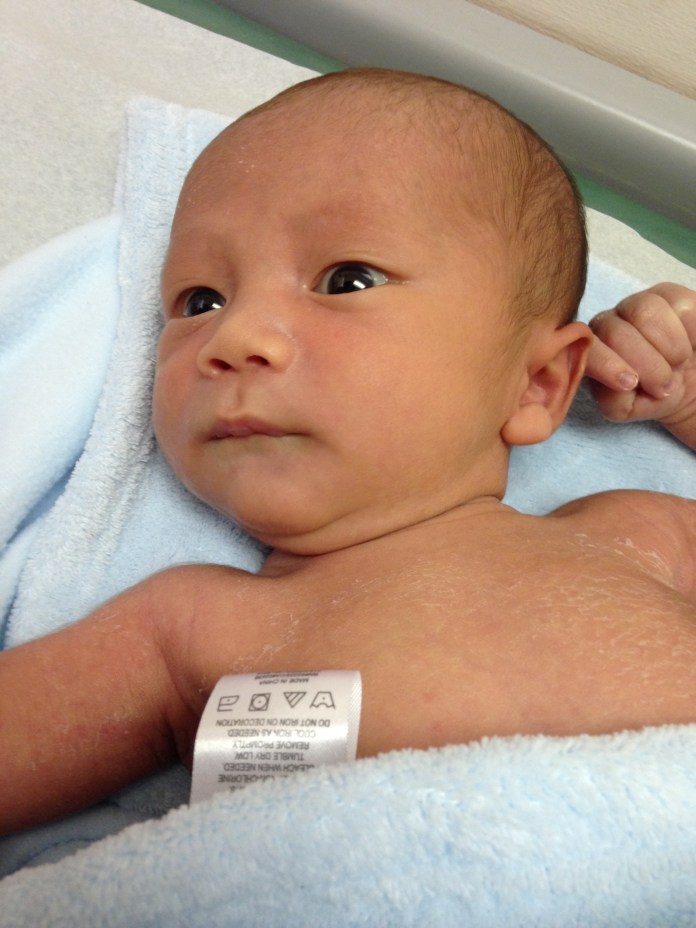
My son, Colin, turns ten years old today. I wasn’t planning to write about his birthday, but the significance of the occasion struck me as I warmed my coffee in the microwave this morning.

And right or wrong, every thought and emotion about Colin is filtered through the lens of his autism. He was diagnosed with Autism Spectrum Disorder in 2018. I wrote about that experience in this essay.

I realize how lucky I am to be Colin’s dad, especially since I was so late to the game of marriage and family. His presence reframes my existence. My job, my creative ambitions, and everything else in my life are secondary to being a good husband to my wife, Pam, and a good father to Colin.

Before rushing off to work, I wanted to share some previously published poems about parenthood and Colin, along with some photos of him.

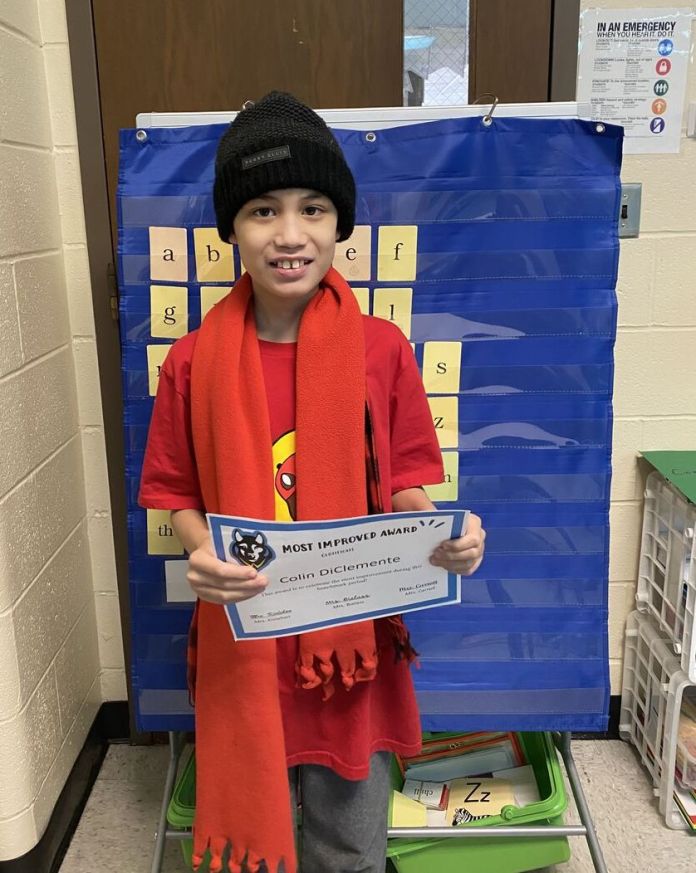
Colin Joseph DiClemente at the pediatrician’s office.

Entrance

As blood, urine and feces stain the hospital sheets,
a nurse tells a mother-to-be,
“Honey, don’t be embarrassed.
What happens in the delivery room,
stays in the delivery room.”

The mother-to-be moans and sheds tears
as the epidural wears off and the labor reaches its climax
with a medieval torture method known as “Tug of War”—
sheets wrapped around ankles, legs hoisted in the air
and pulled apart as the mother-to-be screams
and squeezes her muscles and makes the final push until …
a tiny male human, slimy and alien-looking,
pops out of the womb with a full head of downy, brown hair
and soft, pliable ears like a Teddy bear.

The mother blurts out three words:
“Baby, baby, baby.”
The doctor transfers the squirming newborn to her breast,
and the two bond with skin-to-skin contact.
Love and happiness flow.
The task is completed, the effort done.
The child has safely entered the world.
But the real hard work has just begun.

Colin Joseph DiClemente. Age 2 years, 8 months.

The Great Equalizer

The democratic nature of parenthood.
It doesn’t matter who you are—
man, woman or trans, gay or straight,
Black, white or any other shade,
tall or short, skinny or fat, rich or poor—
when your toddler is wailing
in a grocery store or shopping mall,
when the feet are stomping, the arms swinging,
the cheeks reddened and the tears rolling—
all you want to do is pick up the child
and make the crying stop.

Wealth, social standing and comely looks
mean nothing to kids; they’re not impressed
by your credentials and you can’t negotiate
with these little angels and tyrants who rule the world.
Two clichés apply here:
parenting wipes the slate clean
and levels the playing field.

All mothers and fathers desire the same thing—
the health, safety and
development of their offspring.
The goals are simple amid the frenzy
of a life marked by stress and lack of sleep.
They are: eat the chicken nuggets, drink the apple juice,
recite the alphabet, put away the toys, finish the milk,
wave bye-bye and go down easy at nap time.

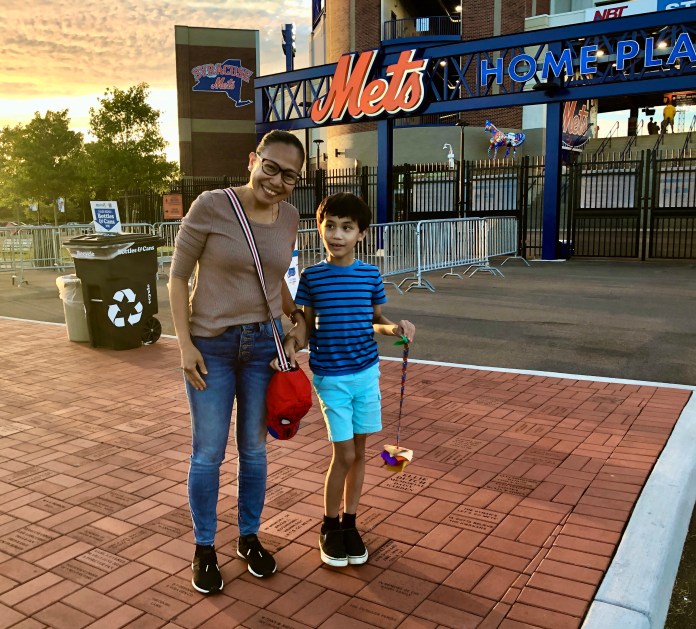
Pam and Colin outside NBT Bank Stadium.

Human Anatomy

Beneath the ribs
beats the heart
of a child,
waiting for its mother,
longing to be fed—
not just with milk and food,
but also with love.

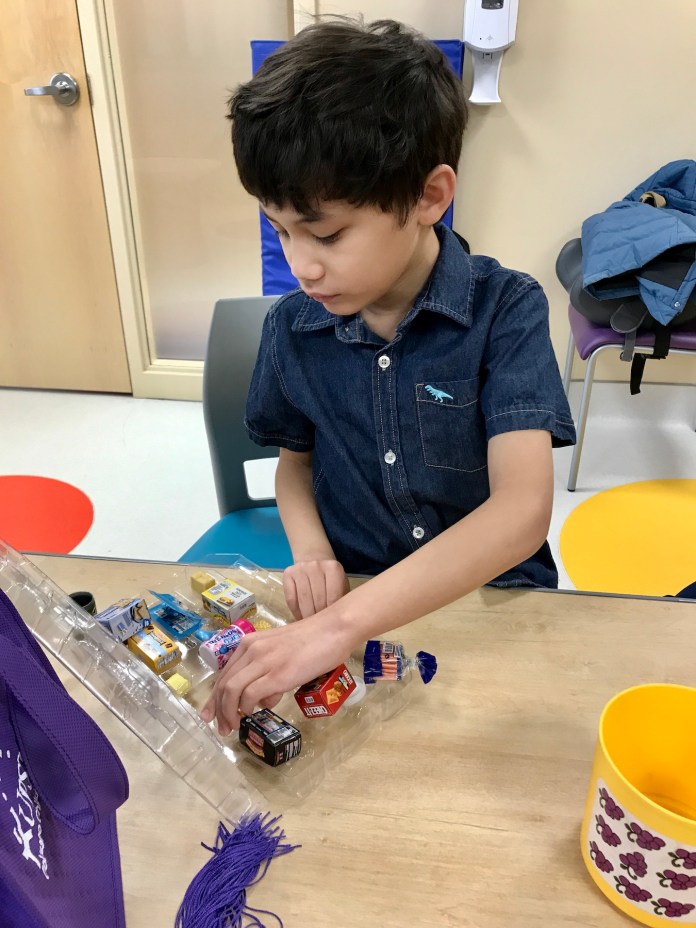
Colin playing in the feeding therapy room.

Nap Time

Late afternoon, Sunday, gray light
seeping in through parted curtains.

Mother and baby sleeping on the couch,
hair tousled, right cheek against left breast,
elbows curved at equal angles.

I am awake, drinking coffee,
watching their chests rise and fall,
and trying not to make any noise.

My whole life revealed in the space
of three sofa cushions occupied by
two human beings who need me.

Soon the boy will stir;
soon he will squirm and cry, scatter his toys
and race around the cluttered living room.
Soon we will fix dinner
and wash dishes and take out the garbage.

But now time is suspended like a Rod Serling
freeze frame in a Twilight Zone episode—
a halting of activity, a pause in my Sunday
leading to reflection and gratitude for my blessings.

Warmth, safety and responsibility
are the words that pop into my head
while I observe mother and child stretched out together.
I don’t think about what I lack
or what I hope to attain and achieve.
In this moment, I have everything I need.

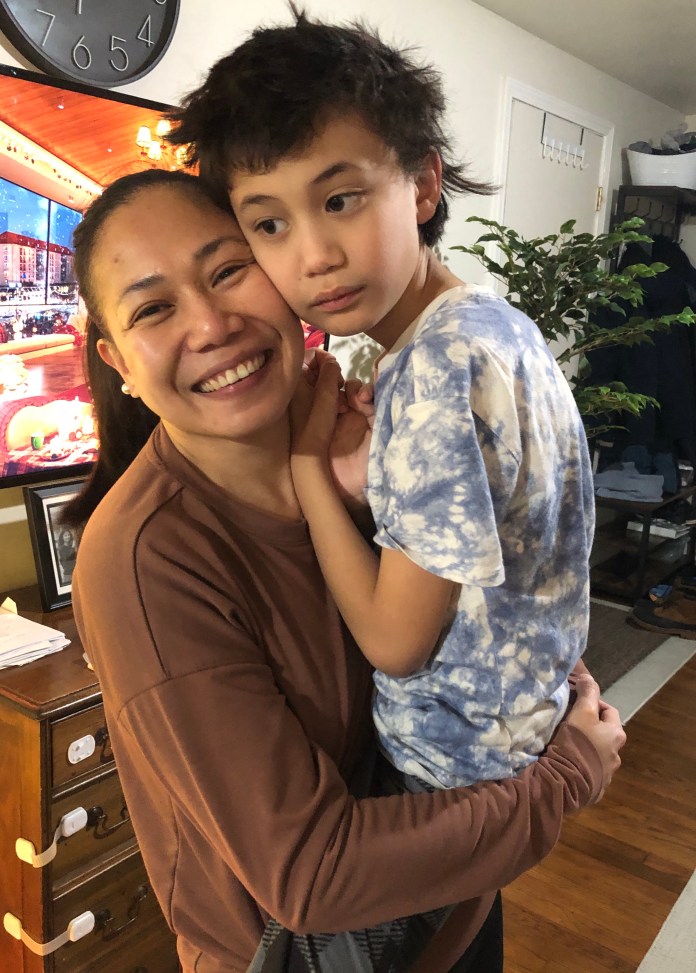
Pam and Colin.

Exam Room Revelation

“Autism Spectrum Disorder.”
The moment those words
escape the doctor’s lips,
our son’s future
appears bleaker.
The phrases
“special needs,
delayed communication
and lack of
social interaction” follow.

Sorrow for my son Colin
gushes inside me.
I feel sadness
for the challenges
he will endure,
and for his inability
to have a normal life.

In this case,
love proves impotent.
You can’t intercede
with your heart.
And compassion won’t fix
the little boy
sleeping in his bed
as I type out
this bad poem
while lamenting
the diagnosis.

But love for him
does not decrease.
Instead, it grows stronger.
I am grateful
for the blessing
of the boy he is …
and the man
I hope
he will become—
regardless of autism.

Bedtime

Eventually, I’ll fall asleep,
but until then my kid
keeps annoying me,

flicking on the bedroom light
and screaming incoherent phrases—
bits of songs that make
some sense inside his mind.

Telling him “shh” does no good,
and I can’t decipher the words he speaks,
but I do enjoy hearing the sounds they make
when they escape his mouth,
as I close my eyes and try to get some sleep.

Crying at Bedtime

Nothing prepares a parent
for the tantrums of an autistic child.
There’s no well of patience to draw from.
You adapt. You divert. You distract.
You do whatever it takes to calm the child down—
until you earn that blessed moment of peace,
when his eyelids drop and he drifts off to sleep,
his small body folded in the cradle of your arms.

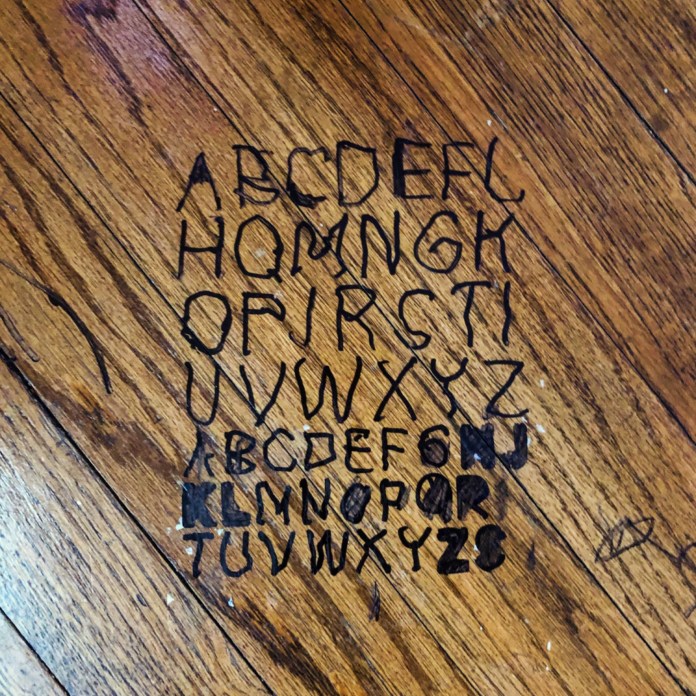
Colin drew with a Sharpie on the living room floor.

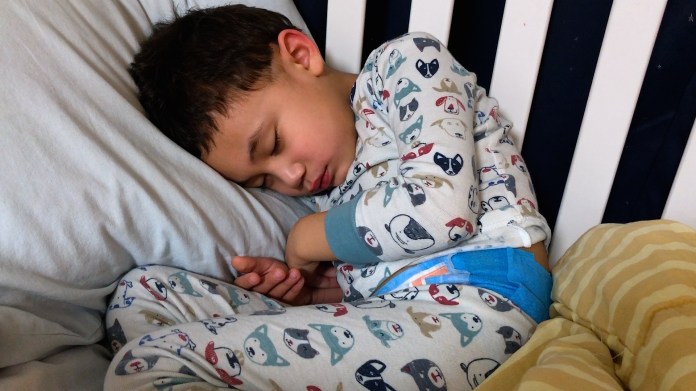
Autism Sleeps

My son sleeps,
curled under a blanket
on the couch.

His outbursts have ceased.
His cries and screams quieted.
His stimming stopped.

It’s like his autism
is in remission.
In sleep, he becomes
like any other child.

Observation After Eating Out

Pity for my son swells.
Yet I feel helpless,
Unable to intervene
To make his autism
Go away.

Our patience dwindles
As his outbursts intensify.
But love does not wane.
Instead, it grows stronger.

I have only one son.
Yes, he is different.
He is noisy and
Requires constant attention.
But I am thankful for
His presence in my life.
And who needs the quiet anyway?

Standard

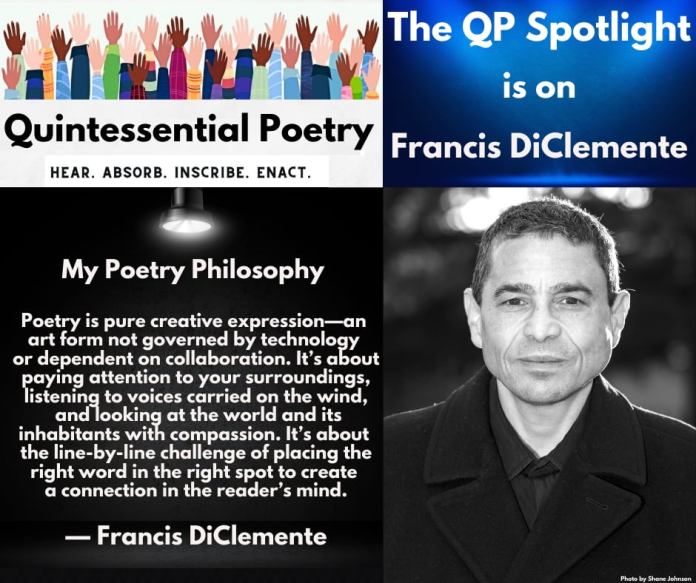
Quintessential Poetry Spotlight

I wanted to share that poet Michael Anthony Ingram has highlighted me for his Quintessential Poetry Spotlight. The post includes a PDF with some sample poems.


Standard

May You Live

I was leafing through a hefty stack of unpublished poems in my home office yesterday, and this one struck me. I think the you referenced in the poem is actually me—so I need to heed my own advice.

May You Live

May you come to the realization
That you have no control.

May you relinquish your desire
To dictate the path of your existence.

May you surrender to the absurdity
Of this exercise in futility,

Understanding that this beautiful mess
Known as life will lead you
where it wants you to go. No exceptions.

May you realize that death is rushing toward you,
And it’s coming for all of us.

May you realize that your family and friends
Will be unable to spare you from this fate.

Why do I pester you with these dark thoughts?
Simply so you’ll pause to appreciate the few moments
We are granted on the surface of this earth.

The chance to mix and mingle
And touch and caress with flesh and spirit.

The opportunity to laugh and love and interact
before disease and illness and old age

Make us weary of carrying around
A body that will soon be a corpse.

Standard

Onward to 2026

I want to wish everyone a Happy New Year. I’m not going to list an inventory of accomplishments (or lack thereof) from 2025 or state any intended resolutions for 2026.

Instead, I will take the day to rest up after shoveling snow in the wake of a massive storm that walloped Central New York.

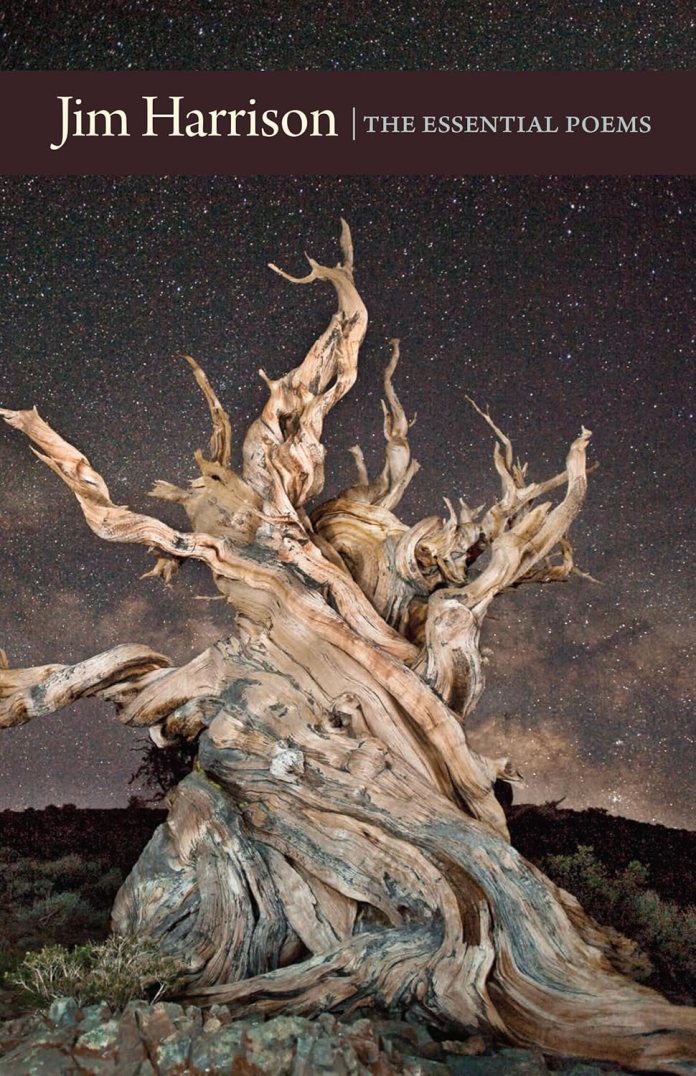
And I will also share a poem I recently read in The Essential Poems by Jim Harrison.

It seems fitting for New Year’s Eve, as does one of my previous poems about the essence of time (below). I love the line about “my imperishable stupidity,” since I can relate.

Calendar

Back in the blue chair in front of the green studio
another year has passed, or so they say, but calendars lie.
They’re a kind of cosmic business machine like
their cousin clocks but break down at inopportune times.
Fifty years ago I learned to jump off the calendar
but I kept getting drawn back on for reasons
of greed and my imperishable stupidity.
Of late I’ve escaped those fatal squares
with their razor-sharp numbers for longer and longer.
I had to become the moving water I already am,
falling back into the human shape in order
not to frighten my children, grandchildren, dogs and friends.
Our old cat doesn’t care. He laps the water where my face used to be.

Harrison, Jim. Jim Harrison: The Essential Poems. Edited by Joseph Bednarik, Copper Canyon Press, 2019.

Clock on the Wall

Time is an entity unconcerned
With our hopes and aspirations.
It marches on unimpeded,
Multiplying seconds to minutes
And making centuries.
It is unswayed by emotions
And unaffected by our wishes and ambitions.
It is heartless in its swiftness—
A thief and a robber,
And life’s only true survivor.
It is unmerciful in its lack of discretion,
And unstoppable in its one-way direction.
It does not yield, it never ends and
It does not ask us our permission.
And yet, we still ask it for more.

Dreaming of Lemon Trees: Selected Poems by Francis DiClemente (Finishing Line Press, 2019)

Standard

Cue the Vince Guaraldi Music

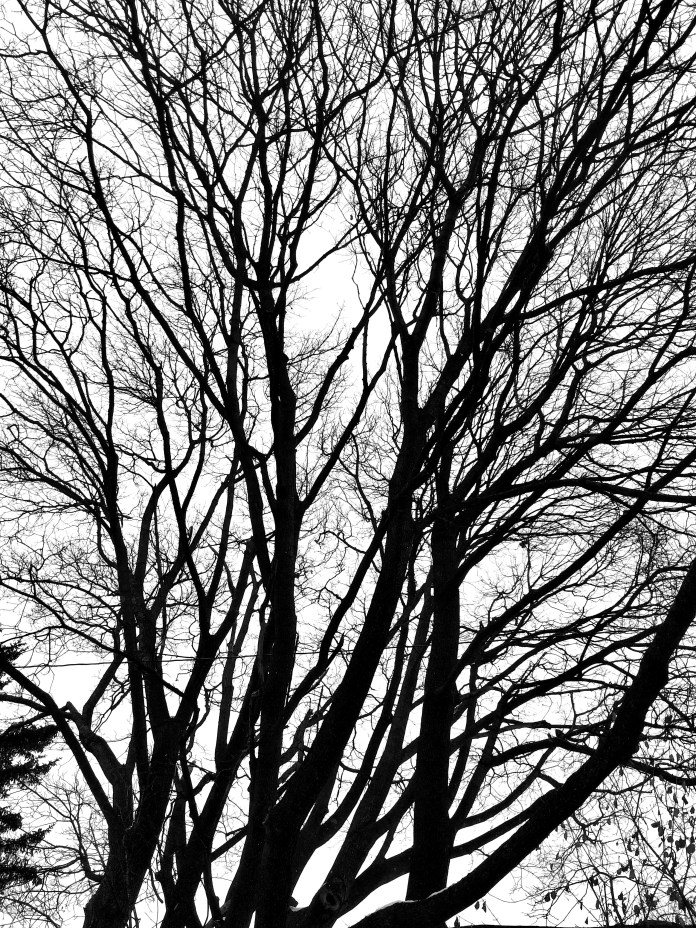
Stoic Slanting Tree

A small tree on a hill
overlooking East Syracuse
leans and tilts but does not topple—
remaining unperturbed
as it wrestles daily
with the forces of gravity.
How many more days
will it stay upright?

Standard

Thanksgiving Poem

Here is a short poem for Thanksgiving. I found it while transcribing some journals for a work-in-progress memoir project.

November 25, 2004 (Thanksgiving)

I exist.
I endure.
I survive.
I go on, for now,
bathed in the light.
That’s something
to be thankful for.

Toledo Trees by Francis DiClemente.


Standard

Book Sighting

It’s always a thrill when I see one of my books hanging out in a library. Last week, while working a B-roll shoot at Bird Library at Syracuse University, I found my latest book, Poecabulary, residing in this section. I’m SU staff, not faculty or alumni, but it was exciting to find one of my books in physical form resting on a shelf, waiting to be discovered by a reader (or so one hopes).

Bird Library at Syracuse University.

Poecabulary at Bird Library.

Standard

Hallowed Verse

1.

Halloween on Lamphear Road (1970s)

Blackness shrouds the land
between the houses on a
long stretch of rural road
in Rome, New York.

You and your best friend, Billy,
are shining flashlights
as you go trick-or-treating
on a Halloween night.
The smells of cow manure,
burning leaves and ripe apples
permeate the air.

You and Billy walk briskly
along the edge of the road,
chattering about sports,
movies and girls—
trying not to express
the terror you both feel as you
navigate the darkness.

You fear a witch, a ghost
or another malevolent force
will emerge from the adjacent fields,
snatch you and fly away.

You tell yourself to calm down
and keep walking—you are safe
and there’s nothing to be afraid of
on this country road.
And all you have to do is make it
to the next house, the next doorbell,
and the next fun-size Snickers bar.

2. 

Halloween Screening

You can’t fault
Frankenstein’s creature
For what he became.

He never had a choice.
He didn’t ask to be born.
He didn’t seek existence.

With an abnormal brain
And cobbled parts,
He can’t be blamed for
The terror he unleashed.

He was only acting
According to his nature.
The real monster here
Is the man who
Created the creature.

The Truth I Must Invent (Poets Choice, 2023)

3. 

In Need of Houdini

You are wrapped in chains
and stuffed in a metal chest.
The key has been discarded
and the box dumped
into the ocean.

You can’t stretch your legs
or flap your arms,
and you’re stuck in the box—
unable to lift the latch
and swim free.

How long can you
hold your breath?

Outward Arrangements: Poems (independently published, 2021)

4. 

Hike

The trees are haunted with ten-thousand eyes,
hanging in the place where leaves should be—
the remains of those who came this way before,
but did not survive in the forest.

They study me as I hike along the path,
searching for an opening to the other side.
I grow weary and stop to rest.

And then ten-thousand eyes blink in unison.
It seems like a signal.
And as I look around,
buzzards and crows fly at me,
then peck away at the flesh.
I fall to the ground and
the birds snatch pieces of me
as they take off in flight.

Sidewalk Stories (Kelsay Books, 2017)

Standard