The End of the Weekend

Am I the only one who feels the actual weekend never lives up to the promise or anticipation of the weekend? In no time you go from the Thursday night high to the Sunday afternoon doldrums. Then a new week and back to work.

A couple of poems on the subject:

Weekend

Another Saturday night
in a lifetime of Saturday nights,
leading to a succession
of dismal Sundays.

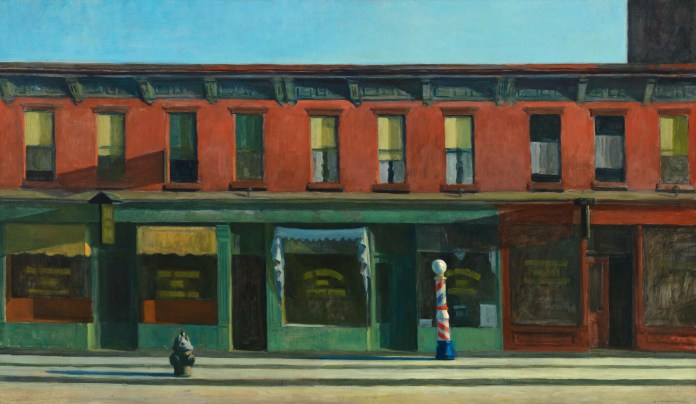
Early Sunday Morning (1930) by Edward Hopper. Whitney Museum of American Art.

Sunday Blues

Sundays always depress me.
I wish we could pull
them from the calendar,
make the weekend
Friday and Saturday,
and then skip
straight to Monday.

Sunday (1926) by Edward Hopper.
The Phillips Collection.

And of course—the best expression of the “Sunday Blues” is Johnny Cash singing “Sunday Mornin’ Comin’ Down,” with lyrics by Kris Kristofferson.


Standard

Sidewalk Discoveries

One of the joys of walking to work is making discoveries along the way. People, nature, art, and inanimate objects capture my attention as I stride toward downtown Syracuse.

This morning, I saw a pile of clothes and some plastic trash bags strewn on the sidewalk near the intersection of South Crouse Avenue and East Genesee Street. I walked past the pile, then backed up and snapped a picture. I was filled with pity as I surveyed the situation, and I wondered what happened to the owner of the clothes—likely a female. Obviously, I don’t know the reason why the clothes were dumped on the sidewalk, but there must be a sad story behind it.

Clothes on the sidewalk. Photo by Francis DiClemente.

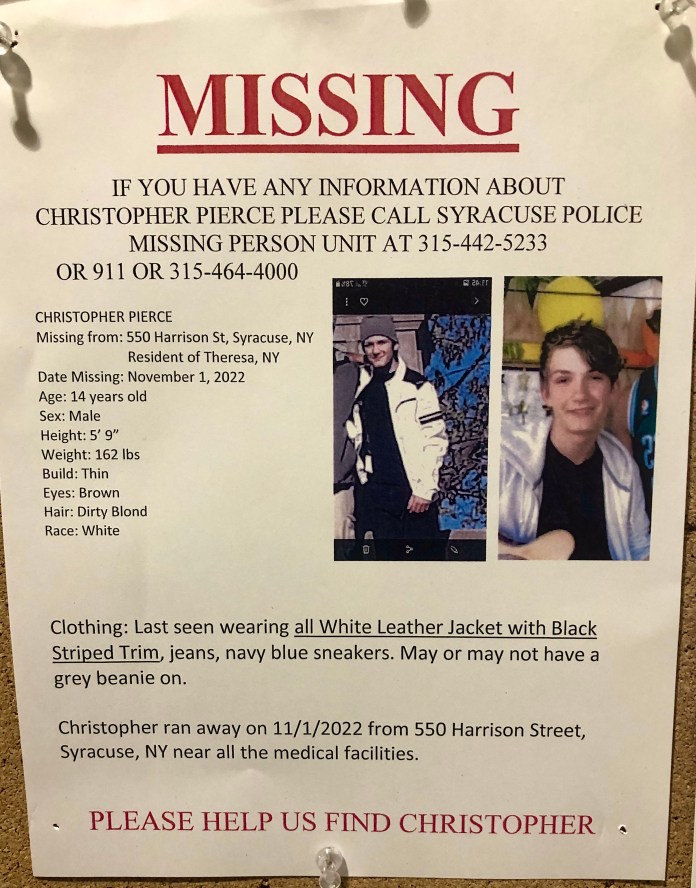
Later in my foot-powered commute, I found some medical notes and records on the sidewalk near Upstate Health Care Center, close to the intersection of Harrison and Townsend streets.

Being a medical records junkie, I grabbed the papers and stuffed them in my bookbag. Later when I reviewed them, I was intrigued by the doctor’s handwriting and the medical terminology listed. I hope and pray the notes refer to more than one patient, because if one patient has all of these issues, that person is in serious trouble (or could be dead by now). Words that stood out for me: hypokalemia (low potassium), neurosurgery, pancreatic cancer, cerebral aneurysms, craniotomy (opening the skull), renal cause, liver and palliative consult.

Handwritten medical notes.

Along with the handwritten notes, there were a few computer printout pages. They detailed the hospital admission of a 56-year-old man with COPD (chronic obstructive pulmonary disease) and a history of hypoxic hypercarbic respiratory failure “who continues to smoke few cigarettes a day.” The records state “the patient has been losing weight despite good appetite” and has “severe protein calorie malnutrition.”

The patient’s BMI (body mass index) was calculated at 14.4, which would make him very underweight. But the good news—he was discharged with prescriptions for oral steroids and other medications and “will continue on his routine respiratory neb (nebulizer?) treatment regimen w/ Budesonide and DuoNeb (inhaler).”

Medical records.

Both the clothes on the sidewalk and the patient’s records reminded me just how harsh, fleeting and fragile life can be. It doesn’t take much for us to have our shit tossed on the street or end up in the hospital.

I remember my sodium and potassium levels crashing in the past, sending me to the ER, so I can relate to the male patient’s distress. He was probably scared as he underwent a battery of tests and was examined by multiple doctors. I wonder if he’s resting comfortably at home, eating enough food and breathing without difficulty.

Standard

Kerouac Poetry

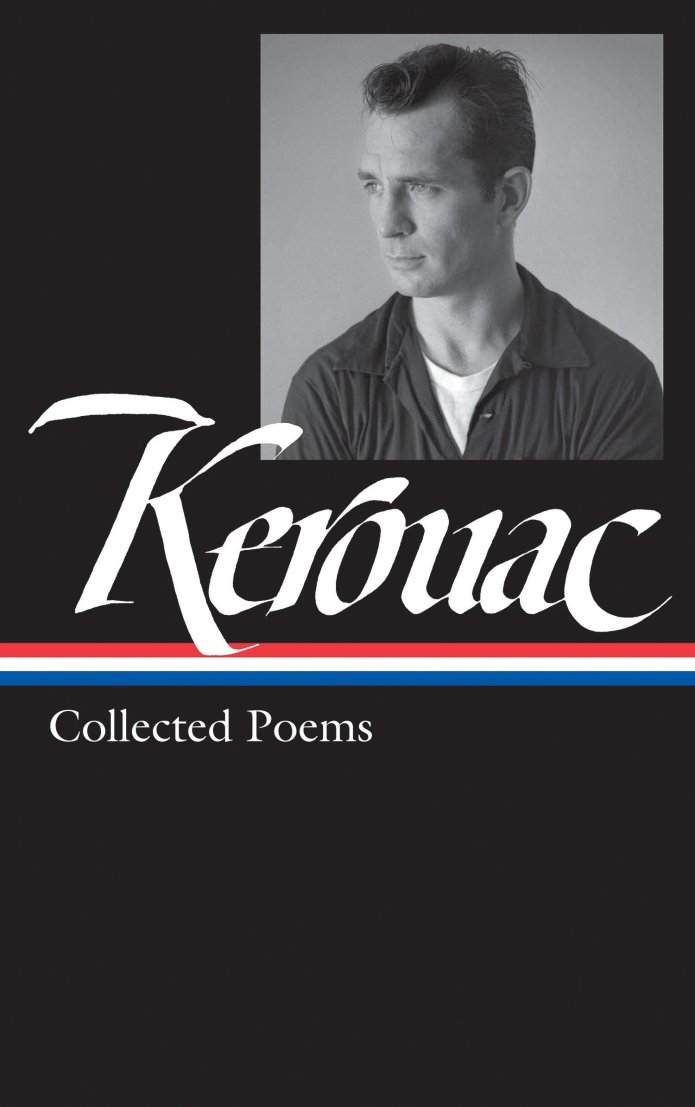
I’ve been reading Jack Kerouac: Collected Poems, which includes the works Mexico City Blues, San Francisco Blues, The Scripture of the Golden Eternity and Book of Haikus. The Beat Generation novelist and author of On the Road inspired my writing of poetry many years ago. Kerouac, Langston Hughes and Charles Bukowski taught me that you didn’t need an MFA to write poetry, as their art sprang from life experiences. They showed me the power of raw and real voices and stories expressed in the form of free verse.

Kerouac’s collection has more than 600 pages of poetry, but I found much of it gibberish—stream-of-consciousness thoughts, rantings and Buddhist and Catholic references. Yet Kerouac also delivers heart-crushing beauty within the pages of this doorstop.

The poem “Hymn” appears in a section entitled Pomes All Sizes.

“Hymn”

And when you showed me the Brooklyn Bridge
in the morning,
Ah God,

And the people slipping on ice in the street,
twice,
twice,
two different people
came over, goin to work,
so earnest and tryful,
clutching their pitiful
morning Daily News
slip on the ice & fall
both inside 5 minutes
and I cried I cried

That’s when you taught me tears, Ah
God in the morning,
Ah Thee

And me leaning on the lamppost wiping
eyes,
eyes,
nobody’s know I’d cried
or woulda cared anyway
but O I saw my father
and my grandfather’s mother
and the long lines of chairs
and the tear-sitters and dead,
Ah me, I knew God You
had better plans than that

So whatever plan you have for me
Splitter of majesty
Make it short
brief
Make it snappy
Bring me home to the Eternal Mother
Today

At your service anyway,
(and until)

I also enjoyed many of the pieces in the section Book of Haikus. I believe Kerouac’s haikus do not follow the strict Japanese pattern of three lines of five, seven and five syllables.

Here are some autumn-related selections:

Late moon rising
—Frost
On the grass

Waiting for the leaves
to fall;—
There goes one!

First frost dropped
All leaves
Last night—leafsmoke

Crisp cold October morning
—the cats fighting
In the weeds

A yellow witch chewing
A cigarette,
Those Autumn leaves

Kerouac, Jack. Jack Kerouac: Collected Poems. New York: Library of America, 2012.

The book also served another purpose for me. Late last night I found a nail sticking out of the cheap wood paneling in the bedroom of my apartment. I was worried my son would catch himself on it, but I didn’t feel like going to the closet to grab my hammer. So I used the book to bang the nail back into place. Thanks Jack!

Standard

Coach Myz Reflection

There’s some sad news from my hometown of Rome, New York, as Coach Tom Myslinski Sr. has passed away after a battle with cancer. Myslinski had served for many years as Rome Free Academy’s offensive line and strength and conditioning coach, during the glory days when RFA football won many Section Three championships.

Rome Free Academy football field.

His son, Tom Jr., and I were classmates, and he was a standout center at the University of Tennessee—snapping the ball to and blocking for quarterback Peyton Manning. He went on to a distinguished career in the NFL, playing for the Cowboys, Steelers, Browns, and other teams. He’s currently an assistant strength and conditioning coach for the New York Jets.

Tom Myslinski Jr.

In the summer of 1984, between my ninth and tenth-grade years, I participated in a summer weightlifting program supervised by Coach Myz. He was a trailblazer in terms of using resistance training to improve athletic performance. He encouraged (or maybe required) most of his players to lift weights over the summer in preparation for the season.

At the time, I stood about four feet eight inches tall and weighed about eighty pounds with a still-undiagnosed pituitary tumor growing inside my head. I had no business training in the same weight room as the massive jocks who benched over 300 pounds and grunted as they completed their lifts and tossed around metal plates in a basement gym at RFA ripe with body odor and buzzing fluorescent lights.

But Coach Myz treated me no differently than any other student, and I remember his beefy forearms, booming voice, and calm, patient demeanor.

Coach Myz gave me his time and attention, never looking down on me even though I was a pipsqueak who could barely bench the 45-pound bar and my work would never benefit the Rome Free Academy football team.

RFA football team photo. Coach Myz is second from the right on the bottom row, next to #77.

And he conveyed two lessons I have carried with me throughout my life.

The first is practice proper form. I’m paraphrasing, but he said something like: “Don’t worry about lifting heavy weights. Just use proper form and build your strength.” This mantra can be applied to many aspects of life. Don’t go through the motions. Use proper form. Start light and build up.

The other is simple—discipline and effort produce results. Show up and do the work. It takes discipline, but the exertion pays off. And I did gain strength through the summer training program—strength that I believe helped me to recover from my brain surgery in December of 1984.

Coach Myz was a man of character whose powerful presence belied his inherent kindness, and his instruction and direction—both in and out of the weight room—helped countless kids in Rome make the transition to adulthood.

Standard

Books for Sale Locally

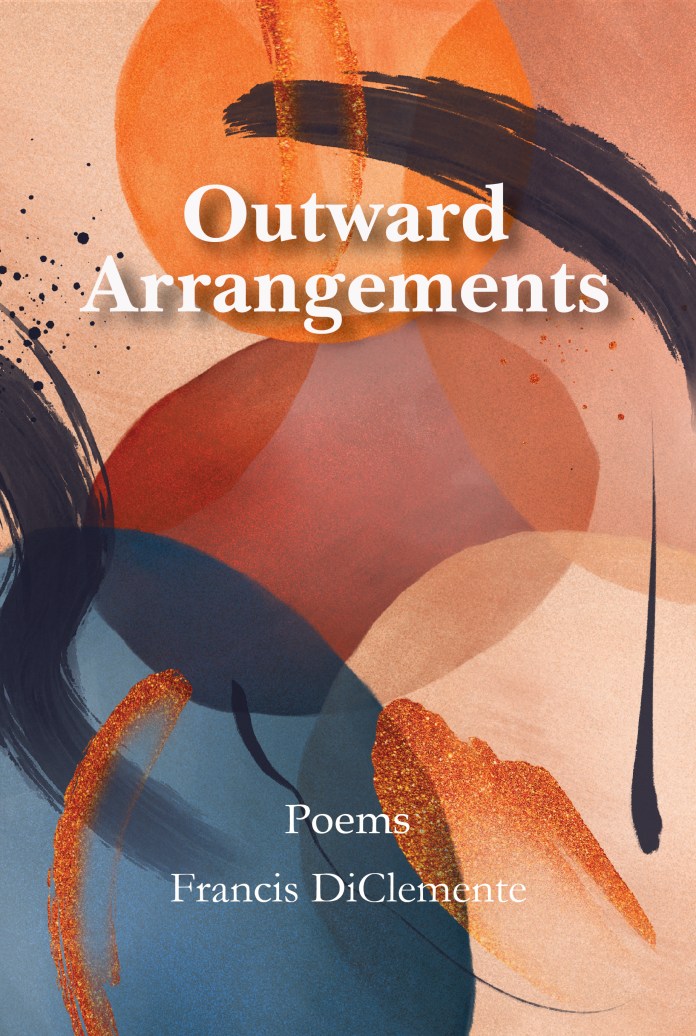
Two of my books, Dreaming of Lemon Trees: Selected Poems and Outward Arrangements: Poems are available in the Local Authors section in Parthenon Books, the new bookstore located on Salina Street in Syracuse. I stopped by Sunday morning and was excited to see the books lining the shelf, in company with works by other Central New York writers.

Books on display.


Standard

Urban Sculpture Mystery

While walking to work this morning, I noticed a new bronze sculpture parked in a traffic median, blending in with some trees, along a busy stretch of Genesee Street.

Unnamed urban sculpture. Photo by Francis DiClemente.

The male figure is wearing glasses and carrying scientific or mathematical equipment. Two words at the base of sculpture—“Inventive Spirit”—offer no further details about the piece. No artist name is listed.

Inventive Spirit. Photo by Francis DiClemente.

I wish I knew some background about the piece and the artist who crafted it. But the mystery also appeals to me.

Sculpture along Genesee Street in Syracuse. Photo by Francis DiClemente.

When I first saw the sculpture, the person who jumped into my mind was Tom Jones.

Tom Jones.

If nothing else, the encounter inspired me to listen to some Tom Jones tunes on shuffle on Amazon Music. I forgot what a booming, masculine voice he possesses, and I embraced the nostalgic feelings he stirred in me. Hearing his songs reminded me of my parents and a 1970s living room scene with me camped in front of a boxy TV set. And I hit replay on”Green Green Grass of Home” at least three times.


Standard

Meditations by Marcus

My end-of-summer reading list has ballooned with my “Currently Reading” page on Goodreads looking ridiculous with nine titles on view (although I’m actually only reading seven).

One book I’m reading is Meditations by Marcus Aurelius.

Meditations: A New Translation Paperback by Marcus Aurelius and translated by Gregory Hays.

Even though his words were written centuries ago, Marcus’s observations are very prescient with keen observations for the living. This passage from from Book Two: On the River Gran, Among the Quadi hit home with me.

7. Do external things distract you? Then make time for yourself to learn something worthwhile; stop letting yourself be pulled in all directions. But make sure you guard against the other kind of confusion. People who labor all their lives but have no purpose to direct every thought and impulse toward are wasting their time—even when hard at work.

It inspired a short poem that sums up my activities both at home and on the job:

Not Done Yet

My whole life
is a To Do list
that never
gets done.

And a similar line of thought:

Multitasking

In the process
of multitasking,
I feel like I’m
half-assing
everything.

Standard

Night at the Ballpark

Here I am, back to the blog. It’s been so long. I apologize for the absence, but I’ve been preoccupied with work, family, and side creative endeavors (which I will keep private to prevent jinxing the results). And now summer has ended, and a new semester is unfolding on the campus of Syracuse University.

NBT Bank Stadium. Photo by Francis DiClemente.

I have one note worth sharing. My family and I attended a Syracuse Mets game for the first time this August. My father used to take me to Syracuse Chiefs games at the old MacArthur Stadium, and I was impressed with the confines of NBT Bank Stadium, the ease of parking, the friendliness of the stadium workers, and the blue and orange color scheme in keeping with the New York Mets affiliation.

Mr. Met image on a stairwell at NBT Bank Stadium. Photo by Francis DiClemente.

My wife Pam and I debated taking our autistic son Colin to the ballpark, but in the end, we decided exposing him to the experience of a live baseball game on a perfect summer night was worth the risk of potential outbursts. We feel it’s worth trying new things with him, even though we endure stress, frustration, and humiliation when he acts out. Our hope is he grows more comfortable in public settings.

Colin sitting in the stands on the first-base line. Photo by Francis DiClemente.

And on this night, he fared well. He ate French fries, popcorn, and mini brownie muffins (brought from home). He paid no attention to the action on the field, and when the crowd roared, he unleashed high-pitch screams, drawing the attention of other fans. We left in about the fourth inning with the Buffalo Bisons leading the Mets by several runs. But we considered the evening a minor victory and felt encouraged to attend another game in the future.

Pam and Colin outside NBT Bank Stadium. Photo by Francis DiClemente.

Standard