A vanilla ice cream cone
covered with sprinkles of dirt,
a handful tossed by small, grimy hands
across a chain-link fence.
A blond child’s whine—
flat, constant and eerily melodic.
The girl then turning away,
screaming upstairs to her mother,
sound asleep in the mid-August heat,
the lime-green curtains fluttering in the
second-story window of the adjacent brick building.
The child just standing there, scraping off the grit
and licking the melting residue
trickling down her forearm.
Streetlight Paradise
Chalk marks on sidewalks,
fireflies stalking the night,
creaky porch steps,
chain-link nets and
the crack of the bat.
Sour-puss lips break a smile,
then sneak a kiss.
It’s cool to hold hands with
the girl of your dreams,
the one who says she’ll
love you forever.
But forever is too far away.
Our time is now—a passing moment
when our parents look the other way.
Summer fun in the springtime
of our lives, sucking it all in
under this streetlight paradise.
The Mystery of the Wolf
A summer evening in upstate New York—
a backyard sprinkler hisses
while the smell of fresh-cut grass
is pungent and delicious.
Crickets chirp and a coffee-colored mare
snorts from across the barbed-wire fence.
I am alone, kicking a soccer ball,
when a gray wolf emerges from
the high weeds lining the fence.
I try to run, but my legs lock up,
and I tumble to the ground.
The wolf circles me,
then sweeps in on my limp frame.
I can hear its stomach growling
as it hovers over me.
The tongue is extended
and drool splashes my face.
The wolf takes my neck in its mouth,
but does not bite down.
And I wake up in my bed,
thankful that the encounter is just a dream.
I am safe, and no wolf invades my room.
Yet I remain troubled,
afraid of closing my eyes,
drifting back to sleep
and ending up at the mercy
of another predator.
Minors
Toledo in July—a Mud Hens game:
Big league dreamers with names like Bubba, Fausto and Tyler
toil away in the minors,
hustling for the scouts perched behind home plate,
diving for line drives and sliding head first,
with egos in check and mouths full of dirt.
Pillars of artificial light frame the setting sun,
and from beyond the azure sky,
the ghosts of washed-up utility infielders
and middle relief pitchers
pull for these hard luck Triple-A players.
They want to scream, “Take heed, savor it now,
for this is the best you will ever be.”
But they’re under orders to keep their mouths shut,
and can only blow a home run foul every once in a while.
The steel girder stands are filled with a crowd
that still believes in this clockless game.
They listen intently for the crack of the bat,
and sing with all their might during the seventh-inning stretch.
Little kids with hot pink shorts and noisy flip-flops
smear their faces with mustard and hug Muddy the mascot.
They scatter peanut shells and scamper after foul balls,
and for them the score is merely an afterthought.
The summer night comes to a close
with a game-ending double play and a fireworks barrage.
The fans file out and load into their cars,
going back to real life with memories of Mud Hens
now stitched in the seams of their minds.
In celebration of opening day in Major League Baseball (Go Yankees!), I am posting two baseball-themed poems. Both appear in my collection Dreaming of Lemon Trees: Selected Poems (Finishing Line Press, 2019).
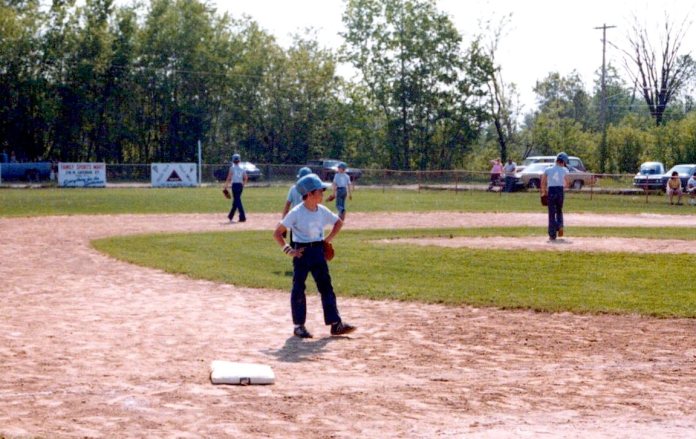
Playing third base in youth league baseball in Rome, New York, in the late 1970s.
The Shed
Independence Day, Late 1970s (Rome, New York)
Whipped-cream clouds smear a powder blue sky,
while Grandpa nurses a carafe of Chianti
and dreams of waltzing down Bourbon Street.
The DeCosty family gathers on the patio,
with Uncle Fee roasting sausage and peppers
and Nana dribbling olive oil over fresh tomatoes,
then adding alternating pinches of basil and parsley.
Inside the backyard bordered by overgrown hedges,
the rambunctious cousins wham Wiffle balls
with a thin, banana-colored plastic bat,
evoking the hollers of Grandpa …
who watches out for his mint-green aluminum shed,
situated perfectly in left-center field—
serving as our own Green Monster.
And when we get ahold of that little white ball,
it smacks up against the aluminum obstacle,
clashing like two marching band cymbals in a halftime show.
And with sweat coursing down his neck,
Grandpa barks out his familiar line under the patio awning:
“Son of a bitch … keep that goddamn ball away from my shed.”
But Nana is always on our side,
and cancels out his power and keeps him in check.
“Fiore, you let those kids play and mind your mouth,” she says.
Grandpa abandons his no-win cause,
turns up the volume on the Yankee game
and pours himself another glass of red wine.
He watches quietly as the shed stands erect
in the late afternoon sun,
sacrificing its facade for our slew of ground-rule doubles.
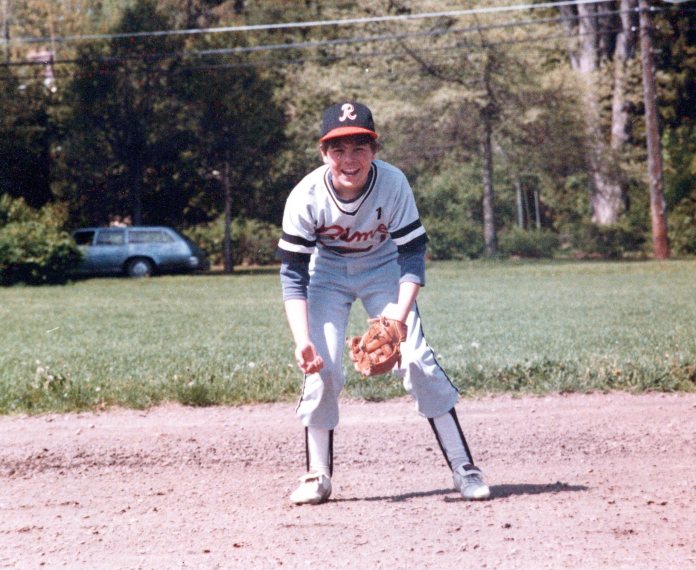
Playing freshman baseball in Rome, New York, in 1984.
Minors
Toledo in July—a Mud Hens game:
Big league dreamers with names like Bubba, Fausto and Tyler
toil away in the minors,
hustling for the scouts perched behind home plate,
diving for line drives and sliding head first,
with egos in check and mouths full of dirt.
Pillars of artificial light frame the setting sun,
and from beyond the azure sky,
the ghosts of washed-up utility infielders
and middle relief pitchers
pull for these hard luck Triple-A players.
They want to scream, “Take heed, savor it now,
for this is the best you will ever be.”
But they’re under orders to keep their mouths shut,
and can only blow a home run foul every once in a while.
The steel girder stands are filled with a crowd
that still believes in this clockless game.
They listen intently for the crack of the bat,
and sing with all their might during the seventh-inning stretch.
Little kids with hot pink shorts and noisy flip-flops
smear their faces with mustard and hug Muddy the mascot.
They scatter peanut shells and scamper after foul balls,
and for them the score is merely an afterthought.
The summer night comes to a close
with a game-ending double play and a fireworks barrage.
The fans file out and load into their cars,
going back to real life with memories of Mud Hens
now stitched in the seams of their minds.
My cousin Derek DeCosty passed away earlier this year in Jacksonville, Florida. He had been sick around Christmas with a respiratory illness, and we texted on New Year’s Eve. He died on Jan. 3, one day before his 57th birthday. Here’s his obituary.
I’ve spent time processing this loss and bringing the memories of Derek to the surface of my mind—flipping through photo albums, seeing his face, and hearing his ebullient laughter as I recalled moments we shared.
While I felt compelled to write about him, I also dreaded it because this loss is too personal. And what could I say that would make any difference? How could my reflections ease my grief or the sorrow of my relatives? But I hope my words can honor Derek and offer a glimpse into the life of this beautiful soul.
Derek’s father, Fiore (Fee) DeCosty, and his sister Carmella, my mother, were raised in Rome, New York, along with two other siblings, my Aunt Teresa—who goes by her religious name of Sister Carmella—and my Uncle Frank. Derek’s mother, Patricia (my Aunt Pat), is a member of the Caddo Nation of Oklahoma and settled in central New York with Uncle Fee.
A Special Bond
Growing up in Rome, I spent a lot of time with Derek, his older brother, Fiore (Fee), and his younger brother, Damon.
Although I wasn’t a brother to them, I felt something stronger than a typical cousin bond. Derek and I had a special connection because we were only one grade apart in school.
Both of our nuclear families experienced divorce in the early 1980s, and I believe that shared pain also drew us closer.
And being related to the DeCosty boys had its perks.
They were athletes, part of the popular crowd, and because of them, I received party invitations I wouldn’t have gotten otherwise. Pretty girls who swooned over Derek talked to me because they knew I had a direct line to him. And as a short, chubby tenth-grader scurrying through the halls of Rome Free Academy high school for the first time during my sophomore year in 1984, no students teased or bullied me because they knew I was related to the DeCostys.
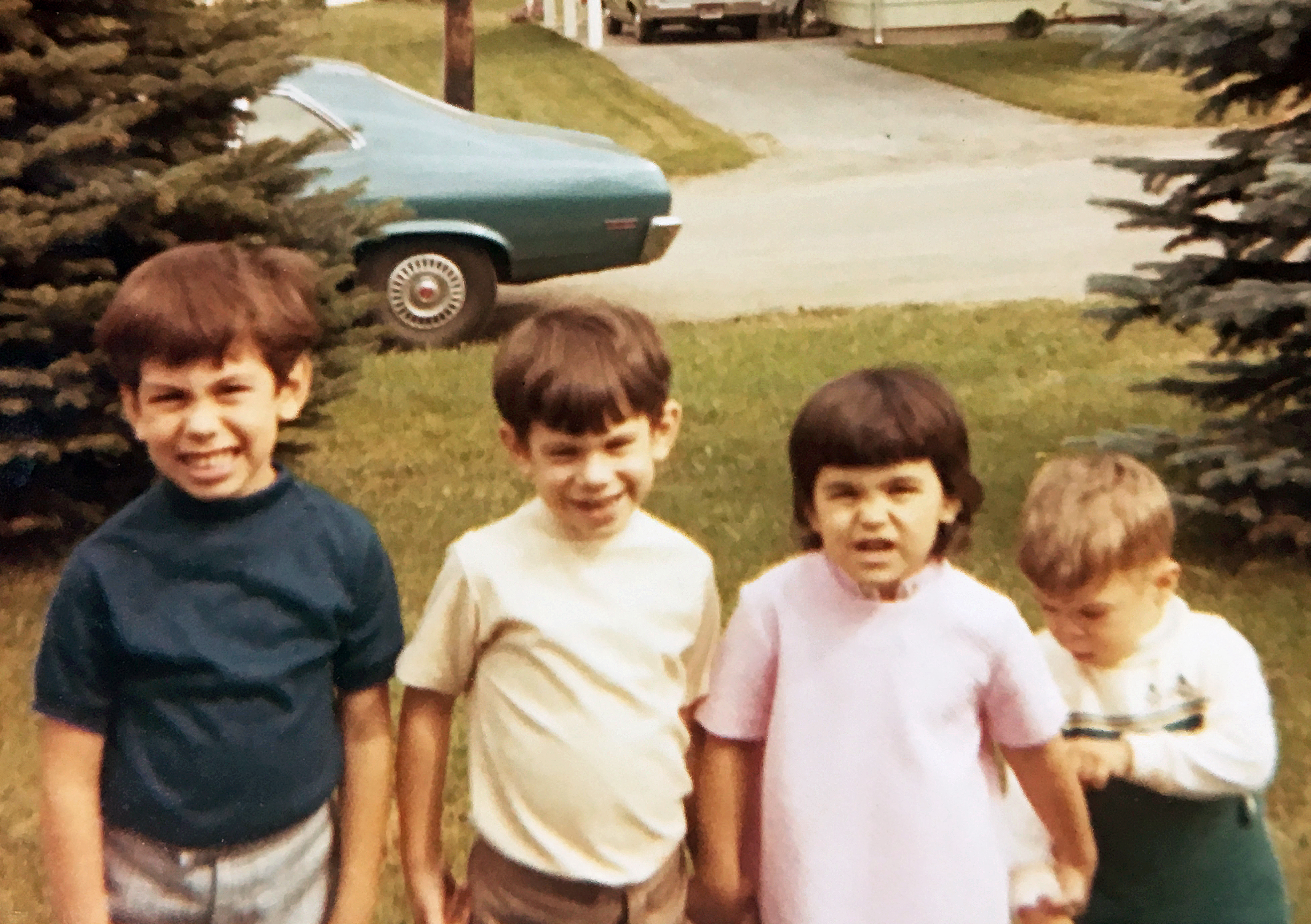
Cousins gathered at our grandmother’s house. My cousin Chris is in the front row. Second row, from left to right, is Damon, my sister, Lisa, and me; Fee and Derek are in the back row.
Weekends at the DeCosty household were a regular part of my youth. I attended their hockey games (sometimes traveling with my Uncle Fee on road trips) and stretched out on the couch in their cramped ranch house on Seville Drive in north Rome.
If I remember correctly, Damon had a bedroom on the main level, while Derek and Fee slept in the basement in two small, makeshift rooms separated by thin drywall. Three mounds of fetid and sweat-drenched hockey equipment were piled high near the washer and dryer. A boom box blasted music—with The Rolling Stones, The Who, Genesis, The Fixx, and The Police getting frequent play.
The boys practiced their wrist, snap, and slapshots by firing hockey pucks at a white cement wall, festooning the surface with pockmarks and black spots.
Although I was a rabid hockey fan, I had given up playing the sport when I was young because I couldn’t skate. Picture Bambi slipping on the ice. So when Fee, Derek, and Damon were not playing ice hockey, I tried to stir up a game of street hockey or floor hockey. Floor hockey was my favorite, especially on holidays at our Grandma Josephine’s house. We would get on our knees in the living room and use mini sticks and a rolled-up ball of athletic tape as the puck in fierce battles that left us with elbows to the face and rugburns on our knees.
One holiday, Damon, Derek, and I played a football game called “goal-line stance” in Derek’s bedroom. The memory is murky, but this is what I think happened.
With the twin bed pushed against the wall, the front of the mattress was the goal line. Derek was the ball carrier. He was getting annoyed because Damon and I were double-teaming him and standing him up, so he stuffed the football under his arm and leaped over us, Walter Payton style, his body parallel to the ground, until his shoulder slammed into the wall with a loud bang as he landed on the bed.
The collision created a large dent in the drywall, evoking our laughter. “Ah, shit,” Derek said.
My dad, who worked in home improvement (among other areas) at the local Sears store, was at the house for the holiday. I went upstairs, found him in the kitchen, and waved for him to come downstairs.
“What’s up?” he said as we descended the stairs.
“We hit the wall while playing. Can you look at it?”
When my father inspected the damage, he laughed and said, “Oh, you can’t fix that. You boys better hang a poster over it.”
And that’s what Derek and Damon did. I don’t know if my Uncle Fee ever discovered the dent.
Moments in Time
When you lose a loved one, it’s often the small, seemingly insignificant moments that trigger memories. For my deceased father, I picture him sitting in his green easy chair, reading glasses perched on his nose, making his football parlay and Lotto picks (or reviewing the losing tickets).
For my mother, who passed away in 2011, I remember the anxiety that weighed on her—like an oak beam pressing on her shoulders—as she smoked her first cigarette of the morning and drank coffee from a blue ceramic mug, her head bowed, her fingers pressed to her forehead.
For Derek, I remember him chopping ice in Josephine’s driveway and hitting one of his toes, which bled profusely (but did not require medical attention). From then on, if he walked around the house barefoot, I would ask him, “Hey, Derek, can you tell me which one of your toes had difficulty?” To which he would say, “Shut up, man.”
Other things I recall about Derek:
His deep, dark brown eyes; his mixed Italian and Native American heritage; his copper-colored skin in the middle of summer; his large ears that I loved to flick.
From left to right: Fee, Derek, my sister, Lisa, and me. When I posted this photo on Facebook, Derek wrote: “Take it down cuz!!!! Look at the size of me ears!!!!”
The way he would fly on the ice and the joy he exhibited in playing the sport he loved. His big hands, smooth and soft, as he used them to thread a pass or deke a goalie.
And with those hands, he created beautiful artwork. I can imagine him sitting at our grandma’s dining room table, his left hand making a charcoal drawing on a sketch pad.
A pencil sketch Derek made during junior high school.
His love of eating—not just food but the act of eating with family. One of his favorites was Josephine’s pasta beans (pasta fazool), made with cannellini beans and ditalini pasta. “Yeah, pasta beans,” he would say when entering the house on Thursday nights in the winter when Grandma often cooked the dish. He would dunk huge chunks of Ferlo’s Italian bread in the bowl, sopping up the juice, and say, “Ah, Grandma, this is so good. So good.”
His booming voice. He never called me Fran. Whenever I saw or talked to him on the phone, it was always, “Franny D. My man. What’s up?”
His infectious laugh. It started deep in his throat, rolling upward until it was released in waves. Hearing him laugh made you want to join in the fun.
He lit up any room he walked into with his charisma and humility. People were attracted to him because of his inherent goodness and gratitude for whatever you gave him.
And the true beauty of Derek is that he never thought he was better than anyone else. Despite being a star athlete, talented artist, and Honor Society scholar in high school, he was never arrogant or looked down on others.
Fee, Derek, and me in the summer of 1990.
The closest analogy I can make is the scene with Edie McClurg as the secretary Grace in Ferris Bueller’s Day Off, when she’s describing Ferris to Principal Ed Rooney, played by Jeffrey Jones.
Grace: “Oh, he’s very popular, Ed. The sportos, the motorheads, geeks, sluts, bloods, wastoids, dweebies, dickheads—they all adore him. They think he’s a righteous dude.”
That was Derek.
A Cherished Memory
In October 1984, I received the Catholic sacrament of Confirmation at St. John the Baptist Church in Rome.
In this sacrament of initiation, the baptized person is “sealed with the gift of the Holy Spirit. (United States Conference of Catholic Bishops).”
I made the mistake of asking Derek to be my sponsor because I didn’t understand the commitment it entailed.
I thought it meant his only responsibility would be standing up with me in church during the Mass on Confirmation day. That’s it. Instead, he needed to attend preparation workshops, retreats, and church school events over the course of several weeks. He never complained, even though he was the youngest sponsor. Practically everyone else had their mom or dad serving in that role.
We had to choose a Confirmation name after a saint or a figure from the Bible. Although I knew little about the Old Testament prophet Isaiah, I selected the name because I loved Detroit Pistons guard Isiah Thomas (whose first name is spelled differently).
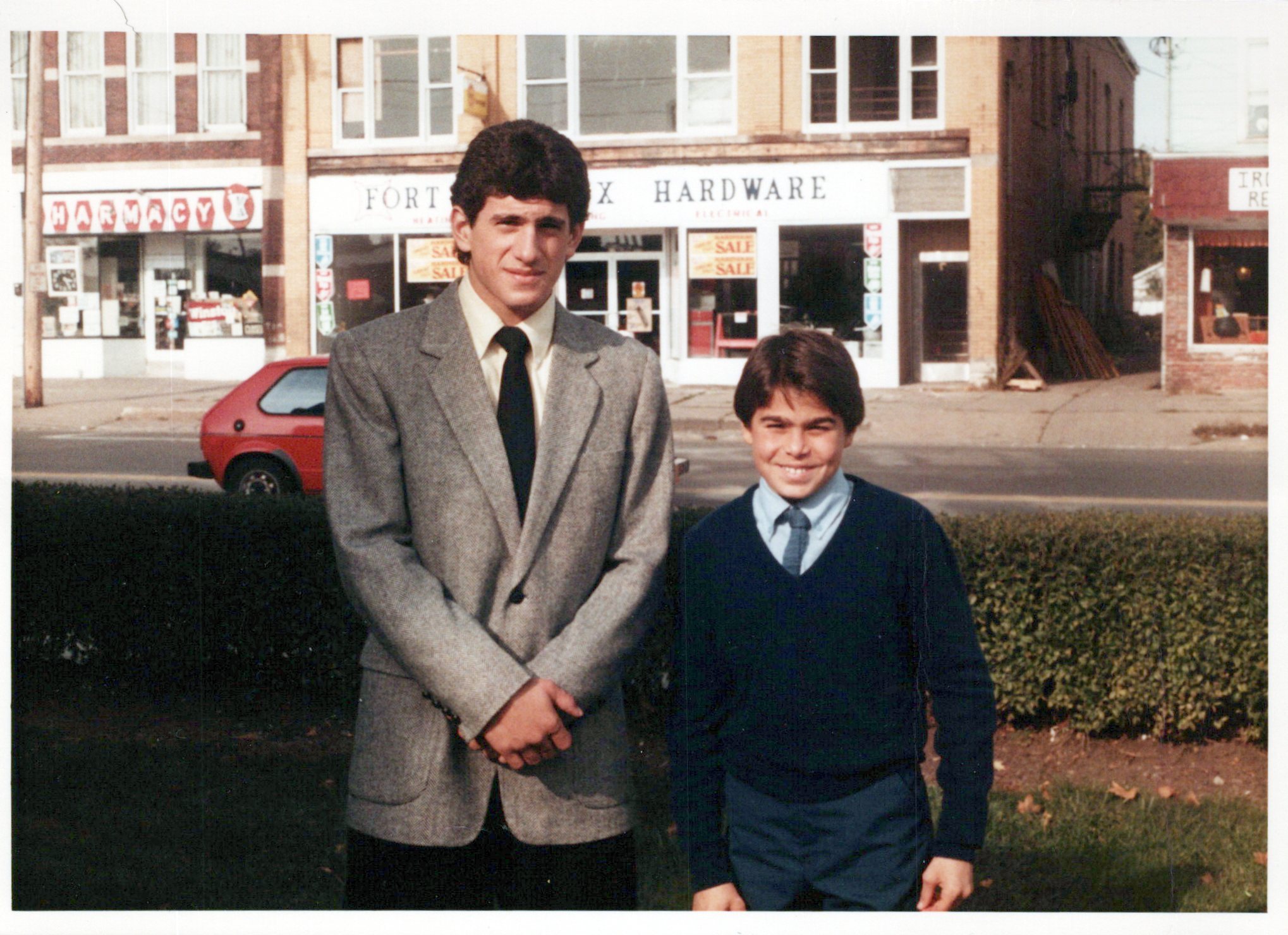
Standing outside St. John’s Church in Rome on the day of my Confirmation in October 1984.
In a photo taken outside the church that day, Derek towers over me, even though he was only about a year-and-a-half older than me. At the time, a benign tumor on my pituitary gland (a craniopharyngioma) was expanding in my brain, stunting my growth and causing delayed puberty. About two months after the photo was taken, surgeons would remove the tumor in an eight-hour operation at SUNY Upstate Medical Center in Syracuse (renamed Upstate University Hospital).
And as I recovered in the surgical intensive care unit, Derek came to visit me, bringing a torn picture of the Sports Illustrated cover featuring an image of Doug Flutie from the “Hail Mary” game against the University of Miami in the Orange Bowl. Derek knew I loved Flutie and was inspired by the quarterback because of his short stature. He pinned the magazine page to my IV stand so I could see it when I looked up from my bed.
Hockey Career: From the Mohawk Valley to Crossing the Atlantic
In 1986, when he was a senior in high school, Derek led Rome Free Academy to its first New York State title in hockey as the Black Knights defeated Skaneateles in Glens Falls. (Damon was a member of the 1988 RFA team that captured the school’s second state championship.)
Derek went on to play Division 1 hockey for the Rensselaer Polytechnic Institute (RPI) Engineers. At the time, Fee was at West Point, playing for the United States Military Academy. In this contest pitting Army against RPI, Fee is chasing Derek and hooking him.
Fee and Derek competing in college hockey.
After I graduated from college and moved away from Rome, I stayed in contact with Derek while his professional hockey career flourished.
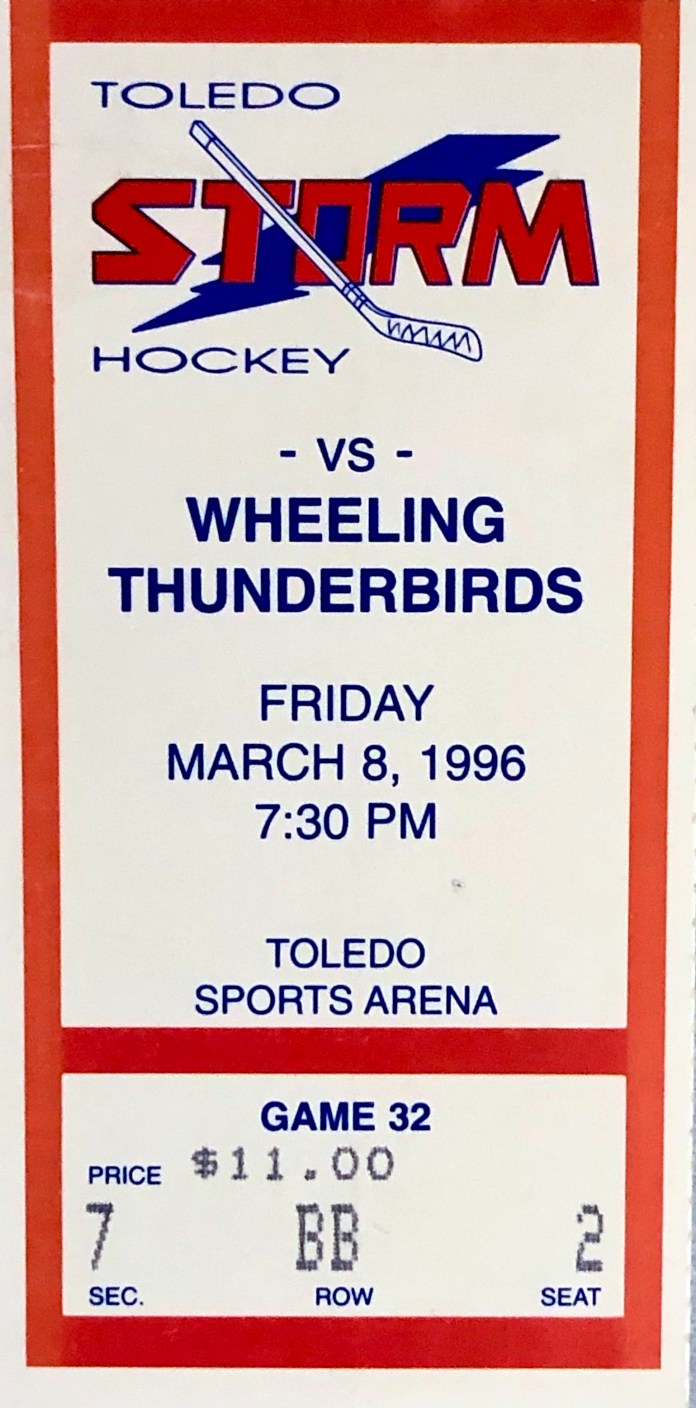
In the mid-1990s, Derek played for the Wheeling Thunderbirds (later renamed Nailers) in the East Coast Hockey League while I was living in Toledo with my sister, Lisa, and working at the news/talk radio station WSPD. Wheeling played the Toledo Storm frequently, and Derek would leave tickets for us at will-call at the Toledo Sports Arena. In exchange for the tickets, we would bring him a case of beer.
I would hang out near the Wheeling locker room and watch the players come out. And then I’d yell, “Hey, DeCosty, you suck.” His head would spin around, and then he’d laugh when he saw me.
After the game, we would grab the beer from the car and talk with Derek for a few minutes near his team bus, the diesel engine roaring and a frigid wind whipping off the Maumee River hitting us in the face.
I took this photo with my Pentax K1000 camera during Derek’s playing days with the Wheeling Thunderbirds.
One night in Toledo, Derek got injured on his first shift of the game. While Derek forechecked with his linemates in the Storm’s zone, a Toledo defenseman whipped the puck along the glass, and it smacked Derek in the face. Blood gushed from his nose, and he went right off the ice and into the locker room. We followed the ambulance as it rushed him to the emergency room. And we spent a few hours talking with Derek in the hospital while the ER doctors treated him.
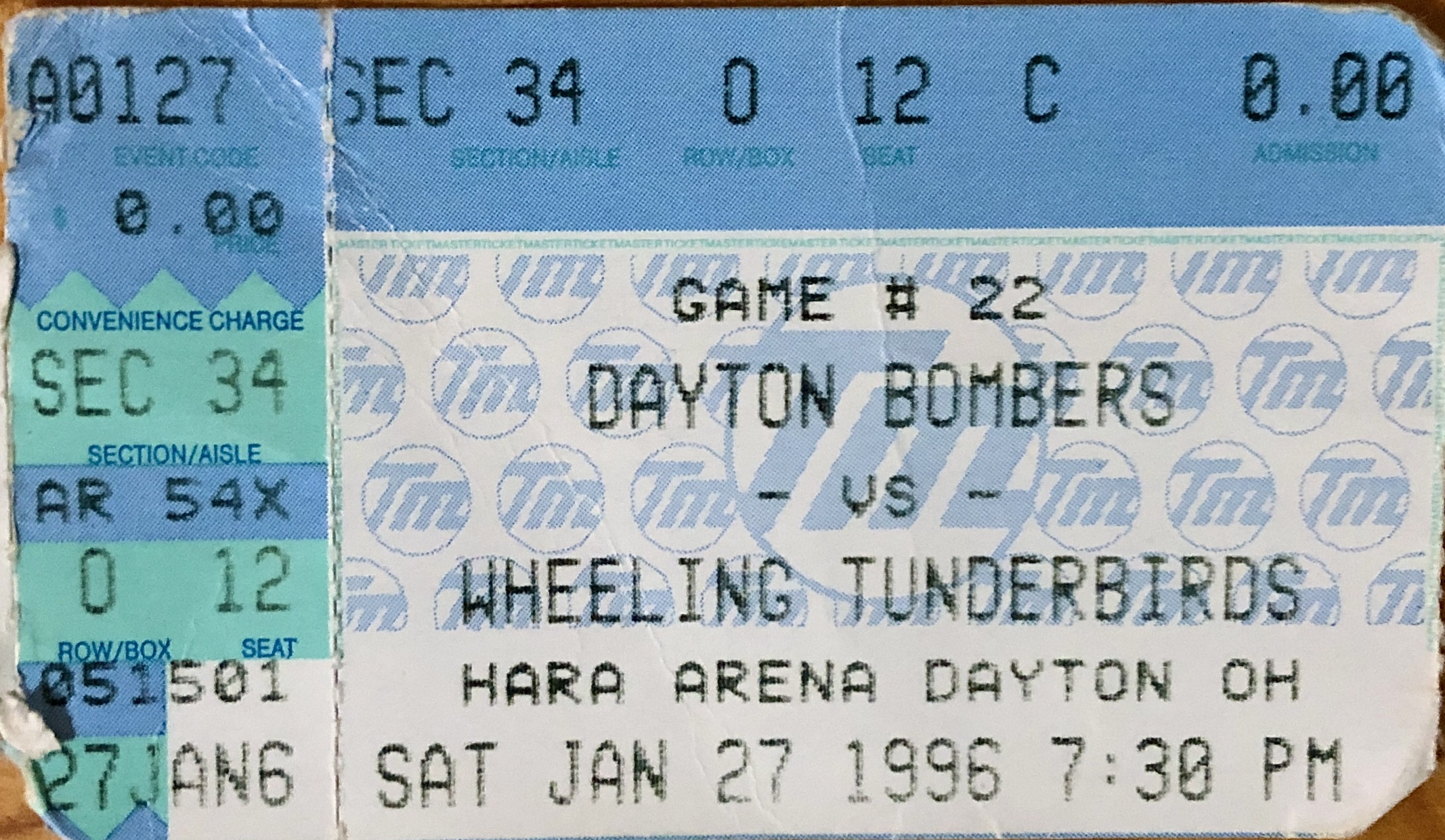
Another time, late on a windy, wintry Saturday afternoon, I found out from my uncle that Derek was playing that night in Dayton, Ohio, about two hours from Toledo. These were the days before cell phones, so I called the arena and left a message for Derek to leave me a ticket at will-call. I was like a hockey groupie.
Strong gusts rocked my Dodge Colt as I filled up at a gas station in Bowling Green, and blowing snow made visibility difficult on I-75. But I made it to the arena, watched Derek play against the Dayton Bombers, talked with him for about twenty minutes, and drove home that night, getting lost on my way out of the city and back onto I-75.
My favorite memory of Derek’s playing days is driving from Toledo to Wheeling one weekend. Derek talked to the coach, who let me ride the team bus for a short road trip from West Virginia to Johnstown, Pennsylvania.
The jocular banter by Derek’s teammates reminded me of scenes from the movie Slap Shot. One player curled up with a blanket in the back of the bus and shouted numerous times: “Hey driver, it’s getting frosty back here. Crank up that heat.”
A hockey card image from his career in Wheeling. Copyright unknown.
But what impressed me most was witnessing how much Derek’s teammates liked and respected him and how his relationship with the friendly people of Wheeling went beyond the surface-level player-fan dynamic. They adored Derek as a valued member of the community, and he returned their affection, making lasting friendships with non-players in the city.
Derek’s professional career later took him abroad as he played for teams in the United Kingdom, including the Guilford Flames and Bracknell Bees.
Relocating to Florida
Derek moved to Florida after his hockey career ended.
And I remember after his father was diagnosed with pancreatic cancer in 2010, Derek drove with Uncle Fee from New York to Jacksonville so he could get treatment at the Mayo Clinic. Derek settled in the Jacksonville area, beginning a career in agronomy at the prestigious TPC Sawgrass Golf Course in Ponte Vedra Beach, home of The Players Championship.
A year later, my wife, Pam, and I spent a few days in Jacksonville, staying with my uncle and his wife, Diane. I remember everyone sitting on the patio on a hot May day while Derek mowed the lawn and trimmed some hedges in the backyard.
Derek was tanned, and he had the most casual, easygoing manner, not complaining that he was doing yard work in the heat while the rest of us were enjoying cool drinks and bantering in the shade. A cigarette dangled from his mouth as he maneuvered around the yard, and he stopped working occasionally to take sips from a bottle of beer.
##
There’s so much more I could say about Derek, so much more I have forgotten and will likely remember later when reminiscing about him.
I took my time drafting this essay. Part of the reason for my slow pace is that I relished roaming around my past accompanied by my beloved cousin.
I feel profound sadness knowing that Derek’s warmth and kind heart are no longer active in the world—that his light, voice, and laughter are no longer accessible to his family, friends, and other people.
But I believe his artwork and the loving impact he made during his short life will endure.
A colorful painting by Derek DeCosty.
With his carefree manner, Derek reminded me a little of Jeff Bridges as the Dude in The Big Lebowski. And I hope Derek’s soul is now at peace and he’s abiding in the cosmos, embarking on celestial wanderings in the afterworld with a sense of curiosity and wonder.
##
I found out about Derek’s death via text when I was at a doctor’s appointment. After I left the medical building, while riding the bus, some words came to me in verse form. I don’t get the heartstrings reference since it’s not a musical instrument, but I guess I conjured the image of an angel playing a harp (like you’d see in old cartoons).
A Poem for Derek
Heartstrings playing in heaven.
Derek is laughing.
But the joke is on us.
He’s gone and won’t be back.
Words that come to me
After the death of my cousin.
No recognition of meaning,
But I must write them anyway—
Words perpetuating memories
To keep my cousin’s spirit alive.
I wish I could hear him laughing,
And ask him what he finds so funny.
Painting by Derek DeCosty.
First-Person Ending
I will end with a few text messages Derek sent me over the past couple of years. I’m sure he wouldn’t mind me sharing them. They reflect his love of life, sense of humor, and compassion for others. I’ve edited them for brevity and clarity.
Note: Because of his family connection to Oklahoma, Derek was a fan of the University of Oklahoma football team (hence the reference to the Sooners). And Colin refers to my son.
The first text is from the summer of 2023, when I needed another brain surgery (my sixth) to remove tumor regrowth. As I awaited my operation, Derek wrote:
June 8, 2023
My beautiful cuz, I understand that you’re going through some shit again regarding those same issues that you’ve conquered in the past and I have no doubt you will again kick ass in our true Bukowski way! I wanted you to know that I have you in my mind, heart, and when I talk to our parents looking down, I’m sure that you have the strength and heart of a buffalo! I love you Fran, don’t ever doubt that you aren’t thought about every day I wake up!
July 24, 2023
My dear cousin, I want you to know that I am thinking about you right now and praying that you are doing well after your surgery. I have you on my mind, in my heart and ask that I take any pain you feel. I love you dearly, more than you know. Stay tough.
October 5, 2024
Good morning my dear cousin!!! This is Derek, this is my new number, new carrier! Just wanted you to have it! Miss and love you all dearly! Saw a really cool tree I have to capture for you. Old crazy oak that I wish you could see! Very photogenic! Anyhow, give Pam and Colin a kiss for me and…..GO YANKS!!!!!
Photo by Derek DeCosty from his Instagram account. He wrote: “Tiny Osprey feather stuck in pro practice green this beautiful morning!”
November 30, 2024
Good afternoon my dear cousin!! Happy Thanksgiving and all that, give my very best to Colin and a big hug for Pam! Hope yall enjoyed the holiday!! Miss and love you dearly!! Crazy day of football today, love it!!! Much love, Go ’Cuse&Boomer Sooner!!
November 30, 2024 (Later)
Sorry Cuz, I had to make a Target run for my mother!
Francis, you’ve always been my Saint, there’s not many people on this earth that understand me in the gracious way you and Damon (sometimes!) get me and the hundred personalities, moods, and craziness that encapsulates all I’m about!! Anyhow, I have to start screaming at the Sooners to get their shit together!!! All my love.
December 31, 2024
My man!!!! Happy New Year to you and all the family! Anyway, straight after Xmas, I caught the flu, of the respiratory type! I’ve been down and out and only going back to work tomorrow!!! Francis, I send my very best to Pam and Colin! Give them a hug for me please! Love and miss you!
Photo by Derek DeCosty from his Instagram account. The text read: “Good morning from the driving range floor, ready for the Players. Happy days!”
I am excited about the restoration of my old Pentax K1000 camera. A few of my younger colleagues at work are avid photographers who practice analog photography; this interest extends beyond a hobby. When I mentioned my busted Pentax K1000, one of my co-workers, Shane, offered to repair the camera, and he and another co-worker, Josh, pitched in to process my first roll and scan the negatives. I had a lot of misfires, but I was also happy a few of the images came out—somewhat in focus and exposed properly.
Alley test shot, photo by Francis DiClemente.
The Pentax K1000 has a nostalgic pull for me. I bought a used one in 1995 from a copyeditor at The Venice Gondolier newspaper, my first employer in journalism. I cut my teeth covering symphony concerts, senior fashion shows, and garden party events.
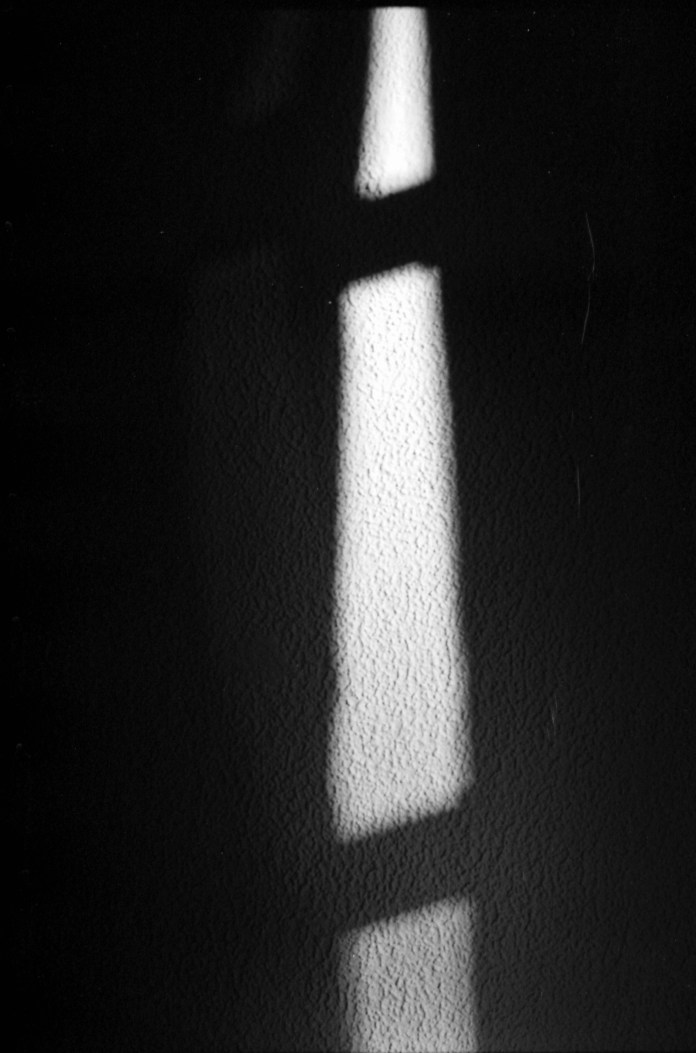
Patch of Light, test shot; photo by Francis DiClemente.
And in a moment of complete stupidity, I picked up the camera and looked through the viewfinder while driving along the Tamiami Trail near Osprey, Florida, causing me to slam into the back of a car driven by an older lady. Fortunately, she wasn’t hurt. My Chevette was transferred to the auto graveyard, but the Pentax stayed with me.
Have A Nice Day, test shot; photo by Francis DiClemente.
Now we’ll see what new pictures I can produce with my heavy-duty camera. One thing I like about analog photography—you have to make your shots count. Using an old camera also reminds me that sometimes the best photos come from pure luck or a gift from the universe.
And because this photography experiment resurrected some memories, I want to share an essay I wrote about my Pentax K1000 in 2010. It was published in a now-defunct online magazine.
Outdated Image Maker
I can’t bring myself to betray my beloved Pentax K1000. We’ve been together for 14 years, the longest relationship I’ve had in my life. I know it sounds absurd. Digital technology is here to stay, and we need to evolve in order to grow. I am also not delusional. I know my Pentax is an inanimate object. It can’t reciprocate my love. Yet I still can’t give it up, not just yet.
Sam, a veteran copyeditor at The Venice Gondolier, a small newspaper in southwestern Florida, sold it to me in 1995 for a price of 100 dollars, including the flash. I needed it for my first job in journalism, as a feature reporter and editor at the paper.
I befriended the camera right away, and it helped me to cover symphony concerts, outdoor festivals, senior citizen fashion shows, and early bird suppers. It accompanied me on my journey to the Midwest, to the gritty environs of Toledo, Ohio. It snapped pictures of barns in rural Monroe County, Michigan, battered warehouses in downtown Toledo, and oak trees stripped of their leaves in late autumn.
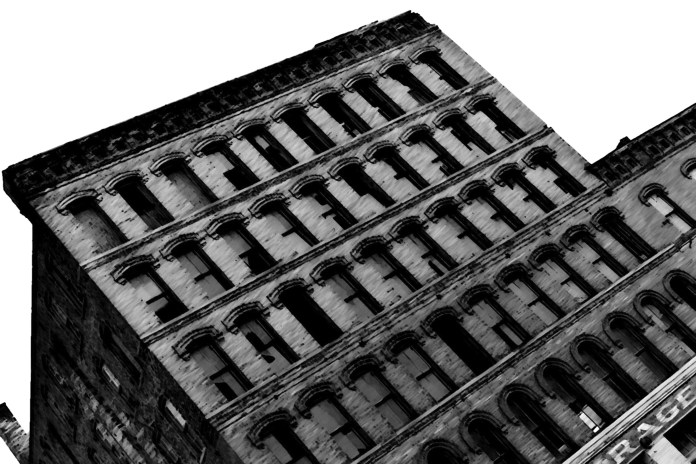
Toledo Warehouse; photo by Francis DiClemente
It crossed the Continental Divide when I relocated to Phoenix, Arizona. In the Valley of the Sun, I took pictures of Sonoran cacti, the McDowell and Camelback mountain ranges, and breathtaking sunrises from the roof of an office building at the Scottsdale Airpark, after my night shift as a copyeditor. But in Phoenix, my camera was especially fond of dancing light patterns created by early morning or late afternoon sunlight in my small, first-floor apartment.
Kitchen Garbage Can; photo by Francis DiClemente.
It also snapped photos on top of the Space Needle and outside the Experience Music Project when I visited Seattle.
When I relocated to upstate New York in 2006, it captured my most treasured photo—the stoic picture of my father, weeks after he was diagnosed with terminal lung and liver cancer.
My late father, Francis DiClemente Sr.
I just love the weight and girth of the camera, the rough black metal, and the feel of the spool of film as it catches the sprockets when I load it.
I am not buying film in bulk, but if I’m in a drug store or other outlet that still sells film, I find myself picking up a roll or two—a necessity like Folgers coffee, smoked turkey, and Kraft Macaroni and Cheese.
But it’s come to the point where almost all of the rolls of film I burn, particularly the black and white ones, need to be sent out for development.
I know the time will come soon when retail outlets will no longer sell or process film and manufacturers like Kodak and Fuji will stop making film altogether (if they haven’t already). But there are certain things we just can’t part with when the attachment remains so strong.
I guess that’s why I don’t want to sell my Pentax at some garage sale or on Craigslist and have it end up in someone’s attic or damp basement. As long as the K1000 works, I’ll still put it to use; and when it doesn’t, I will thank it profusely for its years of service and then clear a spot for the camera on my bookshelf, where it can retire with honor alongside the works of writers like Albert Camus, Raymond Chandler, and Thomas Wolfe.
Then I will not feel guilty about going out and buying a brand-new digital camera, which I imagine will be sleek, efficient, and devoid of shared personal history.
This month marks the 25th anniversary of an incident that forever shaped my outlook on life. And it seems fitting to repost this essay in the middle of Holy Week, a time for reflection, faith, and gratitude for Christ’s sacrifice on the cross. The piece was previously published on Medium. I added some photos I took while residing in Toledo, Ohio, during the late 1990s.
##
My arms and legs stopped working on a gray April day in 1997. I was lying on the carpet in the hallway of my sister’s second-floor condominium in Toledo, Ohio, staring up at the eggshell-colored ceiling, unable to move.
I was living with my sister at the time and working at a news/talk radio station in the city. On that Saturday I was alone in the house, as my sister, Lisa, had left to run errands and attend a couple of social events. I had stayed behind, watching an early season Detroit Tigers game on television and doing some laundry.
Over the course of the day I became weaker and weaker; I fell several times but was able to get on my feet again — until late in the afternoon when I could no longer move my arms or legs.
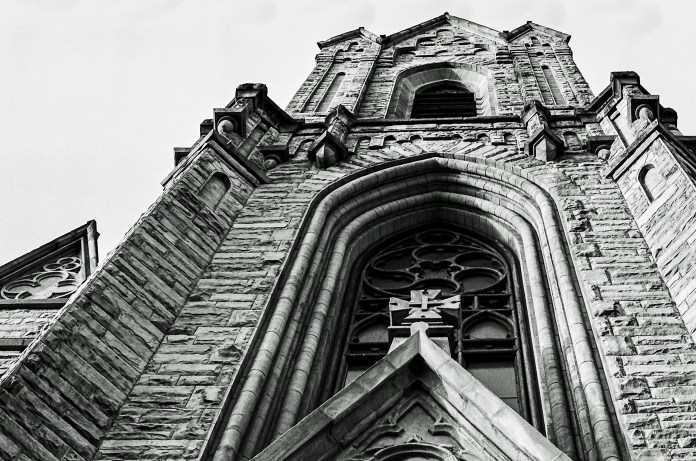
St. Patrick’s Cathedral in Toledo, Ohio. Photo by Francis DiClemente.
I felt relieved when I heard my sister’s keys jangling as she opened the door. She was startled when she walked into the kitchen and saw me sprawled out in the hallway. “What are you doing on the floor?” she asked.
After I explained what had happened, she picked up the phone to dial 911. I asked her not to call, to wait and see if I could recover on my own. “No, you can’t move,” she said.
“I’m calling the ambulance.”
Paramedics came and took me away, carrying the stretcher down the stairs to the parking lot. They measured my vitals and asked me questions about my medical history. I should have been frightened by my unexplained weakness, but oddly I wasn’t. I knew I hadn’t suffered a head or spinal cord injury; I also hadn’t lost consciousness. I suspected a chemical imbalance had caused my paralysis.
The ambulance pulled out of the condo parking lot and sped down the road, and I remember looking out the back window and watching dark tree limbs and streetlights pass by as we made our way to the hospital.
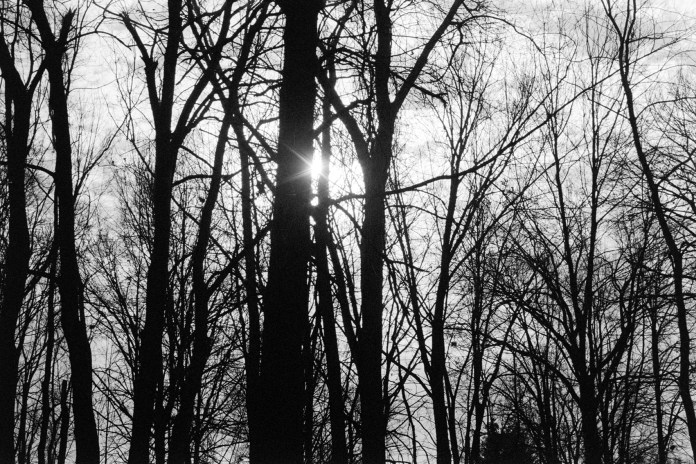
Trees in Toledo. Photo by Francis DiClemente.
When we arrived, a male ER doctor with dark hair, a mustache and a swarthy complexion examined me. An EKG and head CT both came back normal. I still couldn’t stand up, and the doctor kept looking at me and rubbing his chin, appearing flummoxed by my condition. But he soon discovered the cause, as blood tests revealed extremely low potassium levels. The doctor order an IV potassium drip, and my arms and legs rebounded a short time later. I was still weak but could now move my limbs. I lifted my legs from the bed and raised my arms overhead, comforted that my limbs no longer felt like dead weight.
I was admitted to the hospital, as the doctors sought to determine the underlying condition that had caused the potassium levels to drop; they also wanted to rule out any neuromuscular disorders.
The following day a male doctor with a beard performed a test using electrodes to measure electrical activity in my muscles. My endocrinologist also visited me in the hospital and did some medical research on my condition. He later diagnosed me with hypokalemic periodic paralysis, a genetic disorder that he said was unrelated to my hypopituitarism, which I had been diagnosed with at age 15 after having surgery to remove a pituitary tumor.
I stayed in the hospital for about a week while the staff continued to monitor my heart rhythm and electrolyte levels. A physical therapist also worked with me to do some exercises to rebuild muscle strength.
I was discharged on a bright spring day. Stepping outside and heading to my sister’s car parked in front of the hospital, my legs did not fold under me; I realized they could now support my bodyweight. And I rejoiced in being able to walk forward, to execute the simple motion of putting one foot in front of the other. No one had to carry me to the car.
And I took stock of my life in that instant and counted my blessings. My family cared about me, I had a place to live and a full-time job with health coverage (although my radio salary was low at the time).
More importantly, I had survived my medical ordeal with just a couple of instructions to follow — to modify my diet and take daily potassium supplements to compensate for my condition. I did not need surgery, and I was grateful that the outcome had not been a more serious disease like multiple sclerosis or ALS (Lou Gehrig’s disease).
This theme has echoed throughout my life. I have faced numerous health crises, and after each one I have reevaluated and recalibrated my priorities.
Since my initial brain tumor was excised at age 15, I’ve had two follow-up surgeries to remove remnants, along with two rounds of Gamma Knife radiosurgery with a goal of preventing regrowth. Today I am not tumor free — the craniopharyngioma still resides in my head, affecting my vision. But for now, the doctors are observing the tumor and have decided no surgery or radiation is needed.
In waking up from my both my second surgery in 1988 and my third in 2011, I remember the dim glow of fluorescent lights overhead and the sound of beeping machines in the surgical intensive care units. In both cases, in the instant when I came back to consciousness, my head felt woozy and everything appeared fuzzy; it was as if gobs of Vaseline had been smeared across both eyelids and I couldn’t see clearly.
A nurse or doctor would stand over me and ask me a series of questions. “What’s your name?” “Do you know where you are?” “Can you tell me the date?” “Who is the President of the United States?”
And in being able to respond verbally and answer the questions correctly, I would realize I had survived the surgery with my health seemingly intact; my brain worked and I could speak and form sentences. And in my post-surgical haze I would feel an overwhelming sense of gratitude.
Toledo warehouse. Photo by Francis DiClemente.
But here’s the problem. Each time after leaving the hospital, I could not sustain that feeling of gratitude beyond a few days. I would get caught up again in the daily struggles of life, and my “attitude of gratitude” would slip away.
I am now aware of this flaw in me. I recognize that in the pursuit of a better job, a bigger house, a newer car and a richer bank account, I forget to be thankful for the essentials I’ve been given — oxygen to breathe, clean drinking water, food in the fridge, safe shelter, a loving family and the ability to walk, talk, and think. I forget how easily these things can be taken away.
I need to preserve in my mind the freeing power of gratitude, because gratitude puts the focus on being thankful for what you already have, and sharing some of it, as opposed to seeking what you lack.
I need to stop looking around and asking myself, “What else?” or “What more?” Instead, I must try to be content with my life as it is, at this very moment, and be able to say, “This is plenty. This is more than enough.”
It’s been a busy summer at work, as I’ve been shooting and editing Syracuse University-related video projects. Last week, a colleague and I traveled to Washington, DC and Baltimore to conduct interviews in the District and in Charm City. Here are a couple of iPhone photos I took outside our hotel in downtown Baltimore, across the street from Oriole Park at Camden Yards, home of the Baltimore Orioles.
Oriole Park at Camden Yards, Baltimore, MD
Brooks Robinson statue, Baltimore, MD
I also wanted to point out that I had a couple of essays published online this week. The first was about an episode of low potassium and periodic paralysis I suffered while living in Toledo, Ohio, in the 1990s. The piece was published on the Be Yourself blog at Medium. It’s entitled Pursuit of Gratitude. And here’s a photo of the medication I now need to take twice a day to compensate for my condition of hypokalemia (low potassium).
Potassium effervescent medication
And lastly, an essay about my mother’s love of the 1965 movie musical The Sound of Music was published by The Millions. The story is called Comfort Objects.
Thanks for listening to my ramblings and for reading my stories. Enjoy the rest of the warm summer weather before the cold air takes over (at least here in central New York).















 Francis DiClemente