Remembering Damon DeCosty

My younger cousin Damon DeCosty died of a heart attack in Jacksonville, Florida, on May 25. He was 53 years old. A celebration of his life is planned for July 22 (his birthday) in Jacksonville.
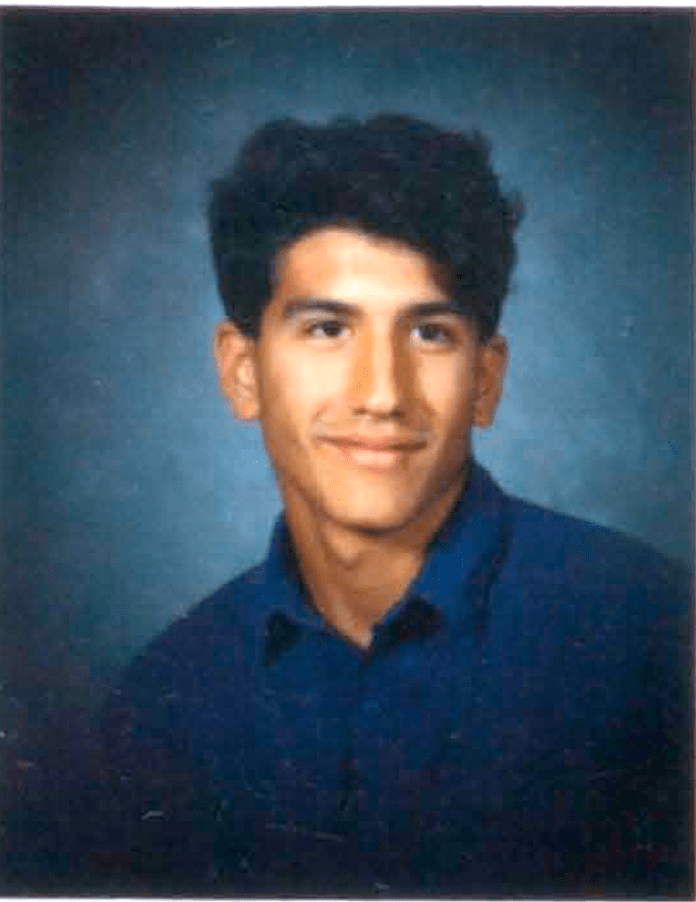
Damon’s high school yearbook photo.

Damon’s death was a huge blow to our family because his older brother, Derek DeCosty, passed away from pneumonia in January 2025.

My high school years overlapped with all three DeCosty brothers—Fiore (nicknamed “Fee”) being the oldest, followed by Derek, and then Damon, who was two years younger than me.

My cousin Fee (right), Damon (center) and I celebrate my sister Lisa’s birthday in 1980.

His obituary notes that he was born in Rome, New York, and was a member of the 1987-1988 undefeated Rome Free Academy hockey team, which won the state title. He played hockey and studied art at the State University of New York at Fredonia. He later worked in construction in Key West before beginning a career in agronomy at TPC Sawgrass Golf Course near Jacksonville.
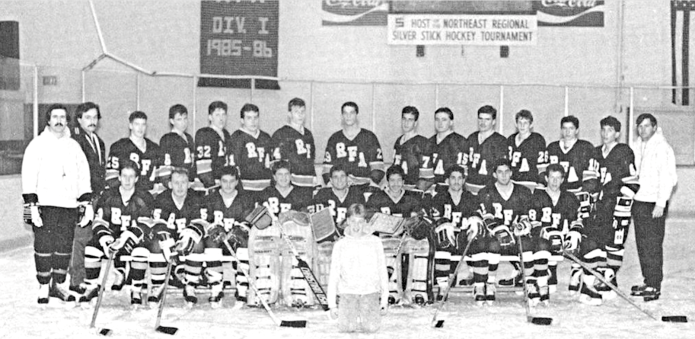
The 1987-88 state champion RFA hockey team. Damon is the last player standing in the second row, next to Coach Dick Meiss.

But those facts don’t resonate with me on an emotional level. And in processing this loss and trying to write about it, no coherent narrative emerged. There’s no Hero’s Journey or three-act structure to guide you in mourning a loved one.

Instead, I recall images and voices—murky memories and episodic scenes that, when juxtaposed, add up to the human being known as Damon DeCosty and what he meant to his family and friends.

The things I remember about Damon:

His bronze skin, dark eyes, and black hair. He was of Italian American descent on his father’s side and Native American, with Caddo Nation heritage, on his mother’s side.

His artistic talent. I remember his hand moving across a sketch pad and seeing his artwork hanging in his room.

His placid, reserved, and affable personality. Although Damon possessed a James Dean coolness, he wasn’t aloof. Instead, you felt a sense of calmness in his presence, and people gravitated to him because of his kindness.

Damon with his dad, my Uncle Fiore DeCosty.

Damon had heart surgery at Crouse Hospital in Syracuse when he was about five years old in 1976. While my Uncle Fiore (Fee) and Aunt Pat stayed with Damon at the hospital, Fee and Derek spent the night at my parents’ house on Stanwix Street in Rome, near the Oneida County Courthouse on North James Street. I think it was a school night, and my mom packed my cousins’ lunches in their twin metal lunch boxes featuring Brazilian soccer legend Pelé.

When Damon recovered from surgery, he insisted on a sleepover at our house because he missed out on the fun, and I remember stretching out on the floor next to him as we slept.

I recall Damon and I spending a summer afternoon at our grandparents’ house on Crossgates Road. No one else was around, and we ran around in our bare feet on the patio, our feet turning black, and frolicked on the lawn, leaping over a sprinkler (a poor kid’s substitute for a swimming pool), our denim jean shorts getting soaked as we inhaled the scent of fresh-cut grass.

My cousins lived in a housing development on Seville Drive in north Rome. It seemed like a subdivision had been dropped in the middle of cleared farmland. Damon’s mom, my Aunt Pat, was a dietitian. And while the growing boys always had enough to eat, she didn’t buy them junk food. Their cereal choices were healthy, whole-grain products, such as Wheaties and Cheerios.

Damon (seated) and Derek with their mom, my Aunt Pat (sometime around 1980).

But on at least one occasion, while spending the weekend with my cousins, I remember my Aunt Pat went out shopping, and Derek and Fee sprang into action. They raced around the house, collecting small bills and coins, and gave the money to Damon with instructions to run across a cornfield and buy a box of sugary cereal at a nearby convenience store. Damon returned with a box of Frosted Flakes, Cocoa Pebbles, Trix, or Lucky Charms (I can’t remember the exact brand). But we all sat at the kitchen table, passing around the milk and wolfing down bowls of cereal, then discarding the box and hiding the evidence before Aunt Pat returned home.

In remembering Damon, I also find myself thinking about my late father, Francis DiClemente Sr., and reflecting on how divorce complicates family relationships, especially for children. When families fracture, the boundaries between relatives blur.

My mother and Damon’s father were siblings. Does that mean when my parents divorced, my dad stopped being an uncle to the DeCosty boys? Or after Damon’s parents divorced, did his mom (who was also my godmother) cease being my aunt?

Does divorce sever relations with non-blood relatives? Do you erase the bonds of love and family just because a couple separates? That’s a topic for a whole separate essay.

I bring this up because many years after my parents split, my dad would ask about Fee, Derek, and Damon. He really cared about them. And if they visited the Sears store in Rome where he worked, they would seek him out and say “hello.”

And it’s not politically correct, but whenever my father asked about Damon, he would say, “Hey, how’s the Little Chief doing? What’s up with the Little Chief? Tell the Little Chief I said ‘hello.’”

I must also admit that when I heard Damon had died, one of the first thoughts that popped into my head was that Fiore is now The Last of the Mohicans (also not politically correct).

Damon and I bonded over our mutual love of music. Our shared tastes included U2, The Cure, Grateful Dead, Genesis, The Replacements, R.E.M., Jane’s Addiction, The Cult, The Smiths, and many other artists.
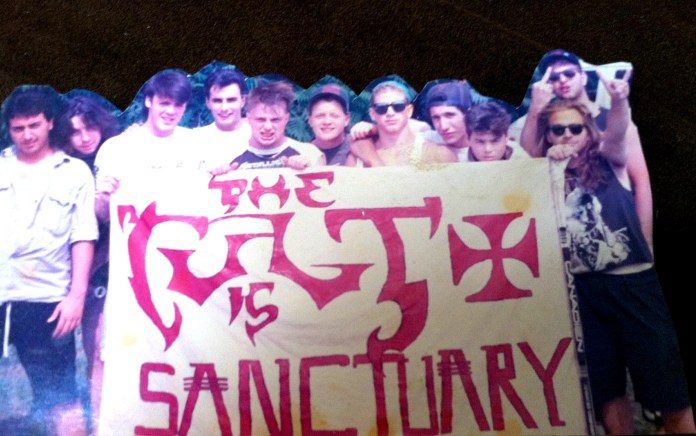
Damon and I were part of a contingent of Romans that went to the Metallica concert in Weedsport, NY on July 16, 1989. We were more eager to see the opening act, The Cult. Damon is wearing the backwards baseball cap.

Fee shared a couple of Damon’s YouTube music playlists with me. One is titled Essential Dead, and includes tracks from the Grateful Dead and other jam bands. The other is titled simply Work.

I enjoy shuffling through the Work playlist and imagining Damon mowing a fairway, adjusting a pin placement at TPC Sawgrass, doing some odd carpentry work, or putting the final touches on a large-scale oil painting. The playlist contains more than 300 tracks—over seven hours of music—and it consoles me knowing I’m listening to songs curated by Damon, tracks that held special meaning for him.

Standard

Black Box experimental film

For a recent film festival, I had to submit my project through an unlisted YouTube account. Now I’d like you use that account to upload some past projects.

The first is Black Box, a 2013 experimental short film that uses the power of music and dance to explore emotions. In the strictest sense, it is a dance film; however, it serves as a conceptual video art piece as opposed to a straight performance work.

The dancer in the piece clutches a black box representing the human heart as a repository of life’s emotions. It is a metaphor for the turmoil and pain we carry inside. Through a series of movements, the character becomes free from the heavy burden of the black box, and he can leave it behind and thus arrive at a state of inner peace.

The idea for this video originated with the music, the second movement of Franz Schubert’s Death and the Maiden. I had always loved this melancholy and stirring piece and thought it could serve as the foundation for an artwork if the song was married to powerful visuals.

Once I developed the concept and treatment for Black Box, I turned to choreographer and dancer Brandon Ellis. Ellis interpreted the concept and developed and executed the dance routine.

For the production I collaborated with Michael Barletta and Courtney Rile, founders of the Syracuse, New York-based production company Daylight Blue Media.

Credits:

Choreography by Brandon Ellis
Cinematography by Michael Barletta and Courtney Rile
Edited by Courtney Rile
Produced and Directed by Francis DiClemente

Official Selection, 2014 Athens International Film and Video Festival (Athens, Ohio)
NewFilmmakers New York screening series (2013)


Standard

365 Days Later

One year ago today, a neurosurgery and ENT team at Upstate University Hospital took a nasal approach to remove the remnants of a craniopharyngioma (a benign tumor on the pituitary gland). It marked my sixth brain surgery since age 15.

I have fully recovered from the surgery, resuming all activities, although I still suffer occasional bloody noses and have peripheral double vision (which is likely permanent).

Photo of me last summer, after my surgery.

Vestiges of the tumor—what my neurosurgeon calls “membranes and scar tissue” still reside inside my head, as outlined in my latest MRI report:

FINDINGS:

“. . . In the right paramedian aspect of the surgical bed in the sellar/suprasellar region again seen is mass with heterogeneous enhancement which measures approximately 1.2 x 1.4 cm by my measurements.”

For now, the mass “remains grossly unchanged,” but the nature of craniopharyngiomas means the tumor will likely grow back to a point where another surgery or radiation will be required.

However, my medical condition is not the subject of this post. I just needed a brief introduction with a reference to the anniversary of my surgery.

Instead, I want to share some musical selections I listened to in the days and weeks following my surgery last summer. These songs aided me, providing succor while I recovered, propped up in bed, unable to sneeze or blow my nose, and moving gingerly around the house.

As I listened to the songs, I reflected on my life, swelling with gratitude for being alive and making gradual progress—supported by my wife, Pamela.

I think the tunes can provide positive affirmation for anyone facing adversity.

“I’m Still Standing” by Elton John

“Winning” by Santana

“Back in the High Life Again” by Steve Winwood

“Better Days” by Bruce Springsteen

More about Bruce later . . .

As someone who grew up in the 1980s, I am mesmerized by the concert footage available on YouTube. It is amazing to think you can see bands performing in 4K (some clips with multicam edits) hours after a show. When I was a kid, I listened to 95X in Syracuse after a concert by the Rolling Stones at the Carrier Dome so I could hear the DJ run down the setlist.

During The Cure’s 2023 North American tour, they played five original songs that I believe will be included in their forthcoming album, Songs of a Lost World. Two of my favorites from the new batch are “Alone” and “Nothing is Forever,” which I listened to repeatedly during my recovery. They put me in a dreamy headspace where I could forget about my health problems.

“Alone” by The Cure

“And Nothing is Forever” by The Cure

I also turned to the Grateful Dead for repeat listening during the late summer of 2023—often clicking on two tracks from the Dead’s famed 1977 concert at Barton Hall at Cornell University.

“Morning Dew” by the Grateful Dead

“Terrapin Station” by the Grateful Dead

And finally, there’s Bruce.

Bruce Springsteen and the E Street Band were initially scheduled to perform at the JMA Wireless Dome in Syracuse in early September 2023, but the show was canceled because of Bruce’s peptic ulcer disease. It was fortunate for me because I would have been in no condition to climb the concrete steps to the upper rafters of the Dome just a few weeks after brain surgery. But I attended the rescheduled show in April 2024, and I’ll leave you with “Backstreets” (which references summer).

“Backstreets” by Bruce Springsteen and the E Street Band

Standard

Nine Months Later

Today marks nine months since my surgery to remove a benign brain tumor on my pituitary gland. Although it’s not a major milestone, it’s tied to a once-in-a-lifetime event—seeing Bruce Springsteen in concert on April 18 in the JMA Wireless Dome in Syracuse.

The concert was originally scheduled for September 7, 2023, and I would have been in no condition during my recovery to climb the concrete steps to the upper rafters of the Dome in Section 336, Row Y. I transferred my ticket to a co-worker, but then the tour was sidelined due to Bruce’s peptic ulcer disease. I’d like to think some heavenly intervention permitted me to attend the rescheduled event in April in a fully restored state.

I went to the concert with my wife, Pam—a rare night out for us and a break for her as she completed her first full year in her occupational therapy assistant program at Bryant and Stratton College. We hired a babysitter and took a Lyft to the show, arriving before the gates opened.

The Dome’s muddy sound system threw me off as the concert began. Bruce’s opening number was “Lonesome Day,” but I couldn’t figure out the tune. I felt like an outfielder in baseball who can’t pick up the ball off the bat. The first song I recognized was “No Surrender,” and the sound quality seemed to improve as the concert wore on.

Bruce and the E Street Band played the anthemic classics, which I have been reliving through the miracle of YouTube: “Badlands,” “Backstreets,” “The Promised Land,” “Thunder Road,” and “Born to Run.”

Up in the nosebleeds, an exuberant middle-aged woman with long, dark hair kept bumping me as she swayed, stomped her feet, clapped her hands, and pumped her fists. She kept apologizing, but I didn’t care about the incidental physical contact. I appreciated the pure joy she displayed, and we formed a bond through our mutual love of the music.

After “Born to Run” finished with a flourish, we shared a two-word conversation—screamed into each other’s ears.

I turned to her and said, “Amazing.”

“Right!” she said.

I hardly go to concerts, and I can’t remember the last stadium concert I attended. It may have been when I saw Bruce in Phoenix in 2002 during The Rising Tour. I went alone to America West Arena during the sweltering heat of August.

A Syracuse woman posted on Facebook that she didn’t enjoy the show because of the behavior of the people around her. And I know a debate persists about proper concert etiquette. As for me, I love it when fans dance and shout the lyrics at the top of their lungs. I mean, if you can’t let loose at a rock concert, where can you? They’re not serving tea and finger sandwiches. I think your ticket should come with a warning like “buyer beware … this isn’t your living room,” and I sang many songs, my voice growing hoarse as the night continued.

Music provides bookmarks for people’s lives. Fans connect songs to significant moments in their lives. Bruce’s music sustained me during my darkest days when I was consumed by loneliness, shame, and self-hatred.

So when Bruce belted out the words to “The Promised Land,” I joined him and thousands of others in screaming:

Blow away the dreams that tear you apart,
Blow away the dreams that break your heart,
Blow away the lies that leave you nothing
But lost and brokenhearted …

And I didn’t care that my voice was way off-key.

Standard

A Sunday Poem

Sunday Malaise

The August sunlight
entering the room
cannot quell
the dreary feeling that
overcomes me every Sunday.
Lying in my bed,
listening to Brahms,
while trying to take a nap
to fill the afternoon.
Waking up later,
the room shrouded in darkness,
with the day erased,
bringing me hours closer
to Monday morning,
and a reset of the week—
safe from harm:
Sunday still far away.

Standard

Built-In Inspiration

One of the great things about working for a university is the opportunity to explore iconic buildings on campus.

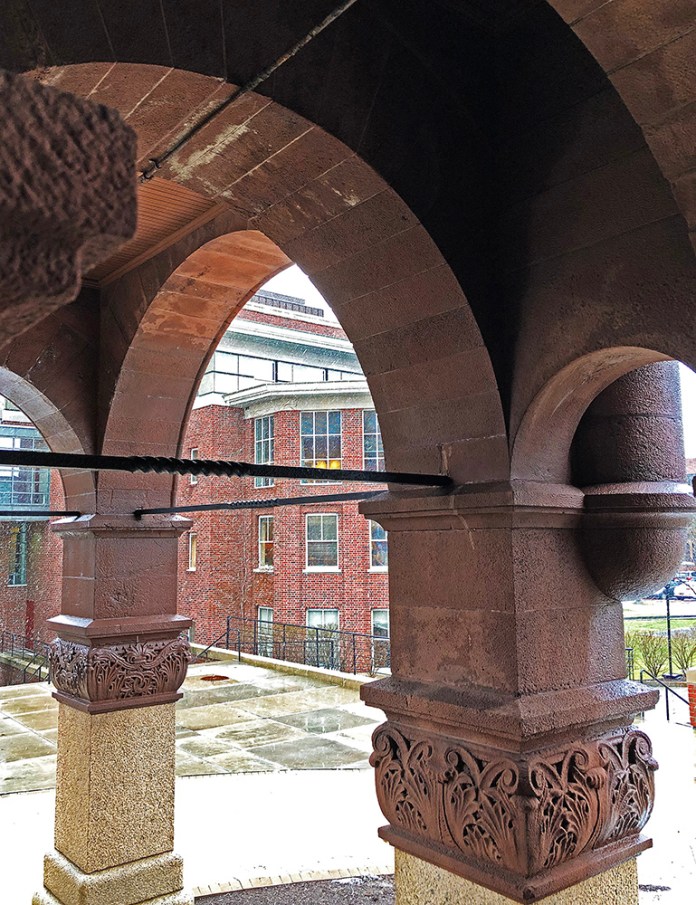
Crouse College exterior. Photo by Francis DiClemente.

Today I had to go to Crouse College—home of Syracuse University’s College of Visual and Performing Arts—to pick up a check from the BBC that was mailed to the wrong office.

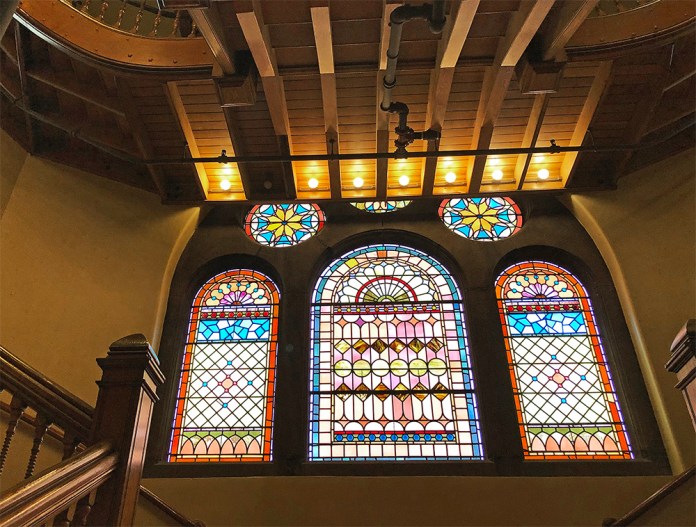
I stood on the steps outside the wooden doors, admiring the exterior archways and the designs on the reddish-brown columns. Stepping inside the building, I noticed sunlight pouring through a stained-glass window above me, while one floor up, someone was playing the organ inside Setnor Auditorium.

Stained-glass window inside Crouse College at Syracuse University. Photo by Francis DiClemente.

An artistic ambience enveloped the place, punctuated by warm tungsten lights illuminating the hallways and panels of medieval artwork hanging on the walls. I walked past the Winged Victory statue as I looked for the business operations office, which was occupied by cheerful employees sitting in cubicles. Large windows framed a postcard winter scene with snow falling on a row of evergreen trees. A woman handed me the lost check and I went on my way.

Winged Victory Statue at Syracuse University. Photo by Steve Sartori.

But before I left the building, I wondered if I could get transferred to an office in VPA or at least do a three-month rotation.

Railing and staircase inside Crouse College.

Then I thought, would such a stimulating environment spur my creativity or would I fall victim to sensory overload, viewing and consuming art every day but not producing any work? Too bad I won’t get the chance to find out.

Standard

Unsung Christmas Song

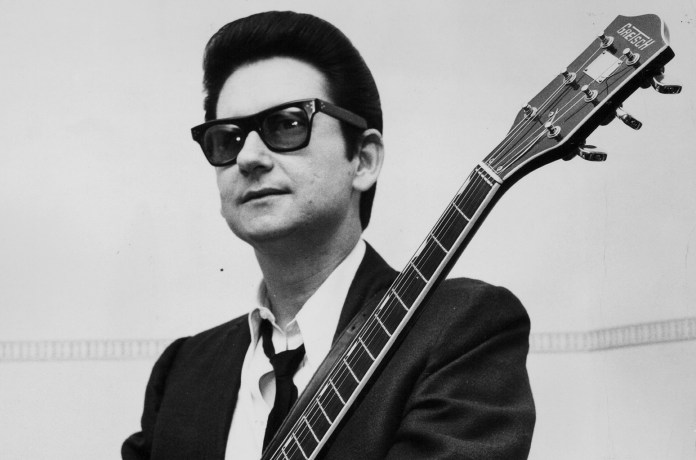
Leave it to legend Roy Orbison to shatter the festive mood of the holiday season.

John Hercock/Central Press/Getty Images

While listening to the “Holiday Favorites” station on Amazon Music, I heard Orbison’s “Pretty Paper” sandwiched somewhere between “Jingle Bell Rock” and Burl Ives’ “Holly Jolly Christmas.”

The song packs a narrative punch in just two minutes and forty-five seconds, as it tells the story of a lonely man on a sidewalk ignored by Christmas shoppers. Sadness prevails in the lyrics and the vulnerability expressed in Orbison’s voice and in the backup vocals draws us into the story, putting the listener on the busy street with the other passersby. I asked myself: Would I pay stop and say “hello” to the man? Would I even bother to notice him?

It’s also worth mentioning that Orbison did not write the lyrics. According to Wikipedia, Willie Nelson wrote “Pretty Paper” in 1963.

Photo by Jeffery Washington, Fort Worth Star-Telegram

The line that devastates me is, “And in the midst of the laughter he cries …”

The full lyrics follow. And I wish everyone a Merry Christmas and Happy New Year.

Pretty Paper
Willie Nelson

Pretty paper, pretty ribbons of blue
Wrap your presents to your darling from you
Pretty pencils to write I love you
Pretty paper, pretty ribbons of blue
Crowded street, busy feet, hustle by him
Downtown shoppers, Christmas is nigh
There he sits all alone on the sidewalk
Hoping that you won’t pass him by
Should you stop? Better not, much too busy
You’re in a hurry, my how time does fly
In the distance the ringing of laughter
And in the midst of the laughter he cries
Pretty paper, pretty ribbons of blue
Wrap your presents to your darling from you
Pretty pencils to write I love you
Pretty paper, pretty ribbons of blue.

Songwriters: Willie Nelson
Pretty Paper lyrics © Roy Orbison Music Company, Sony/ATV Music Publishing LLC, Universal Music Publishing Group, Warner/Chappell Music, Inc.

Standard

Winnowing the CD Collection

I am clearing some space in my one-bedroom apartment, and I recently tackled the project of going through a large blue tote filled with about 200 CDs. All of the albums have been loaded into my iTunes library, so there’s no real reason for me to hang on to them.

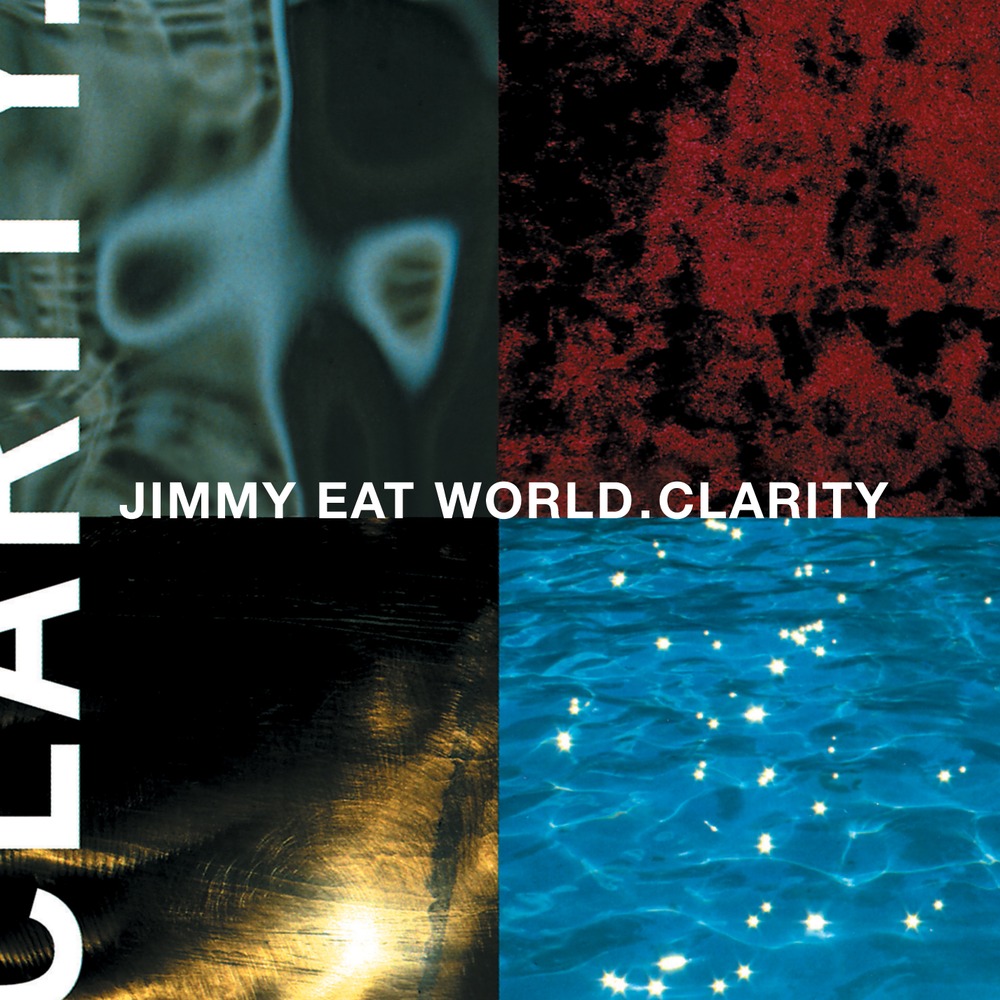
Clarity, by Jimmy Eat World

Clarity by Jimmy Eat World

I separated some that I wanted to keep for sentimental reasons—like The Best of Schubert, Jimmy Eat World’s Clarity and This Desert Life by Counting Crows, which I listened to continuously (on repeat cycle) when trying to decide whether to leave Arizona nine summers ago.

This Desert Life, by Counting Crows

This Desert Life by Counting Crows

I took more than 150 CDs that I wanted to sell to The Sound Garden in Armory Square. Two male clerks divided my collection into a few large stacks and then started going through them, deciding what to buy and what to pass on.

The Sound Garden, located in Armory Square in Syracuse.

The Sound Garden, located in Armory Square in Syracuse.

I was amused as I stood there on the other side of the counter, watching as albums I loved by Bruce Springsteen, Elton John, Otis Redding, Nat King Cole, Roy Orbison, along with other CDs by Guster, The Cure, The Cult and the Rolling Stones, were all returned to me, declined and discarded. One of the clerks said the total they were willing to give me was 93 dollars and I said that was more than fair. I hadn’t expected to make that much.

I took my cash winnings and headed home; I felt like I had just finished hitting a few exactas at the track. The next day I carried a suitcase filled with the remaining CDs to the 3fifteen thrift store in Marshall Square Mall, where the woman working the counter accepted all of them as a donation. She also gave me a coupon for a free cup of coffee next door at Cafe Kubal (not a bad deal from my perspective).

It seems the pruning of my CD collection completes a chapter in my life, as I move into middle age, putting aside the things of my youth and realigning my priorities. Seeing the CDs laid out on the counter at The Sound Garden reminded me of how important my music collection was to me in my early twenties and throughout my thirties. Living alone for most of that time, the CDs were my companions and the songs they played provided another voice, another sound in otherwise lonely apartments.

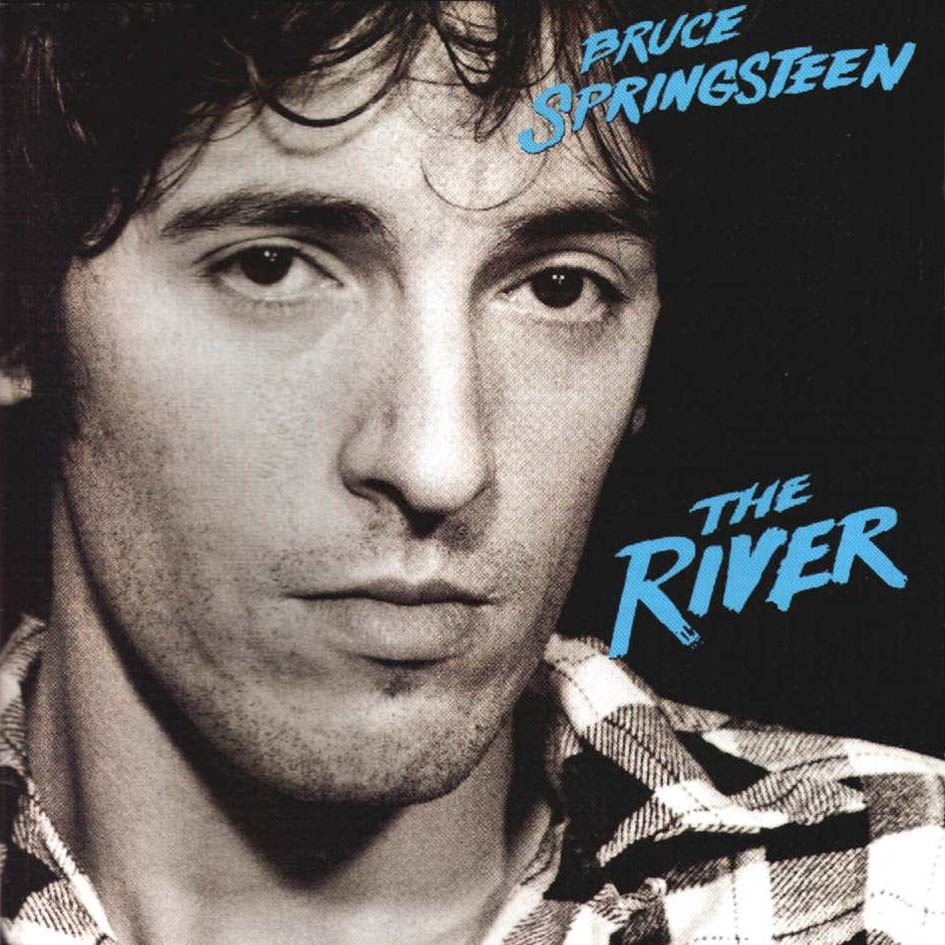
The River by Bruce Springsteen

The River by Bruce Springsteen

But as I shoved the CDs I had saved back into my walk-in closet, I thought of a line from a Bruce Springsteen song. It’s from the title track from the album The River:

“Now all them things that seemed so important
Well mister they vanished right into the air …”

And the song continues, so I’ll let “The Boss” close out this blog post:

“Now I just act like I don’t remember
Mary acts like she don’t care.

But I remember us riding in my brother’s car
Her body tan and wet down at the reservoir
At night on them banks I’d lie awake
And pull her close just to feel each breath she’d take
Now those memories come back to haunt me,
they haunt me like a curse
Is a dream a lie if it don’t come true
Or is it something worse
that sends me down to the river …”

Standard

MRI Music

I recently had an MRI done at 550 Harrison Center in Syracuse.

550 Harrison Center. Photo by Sutton Real Estate Company.

550 Harrison Center. Photo by Sutton Real Estate Company.

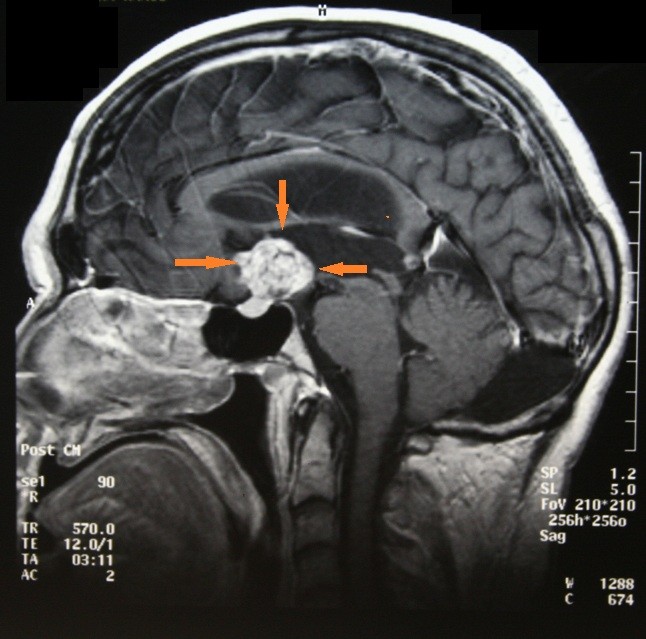
I’ve had several over the years as part of multiple follow-ups for a craniopharyngioma diagnosed in 1984.

Craniopharyngioma

This latest one was for undiagnosed pain in the lower back/sacroiliac joint region. Fortunately, the MRI revealed no abnormalities, although the pain has not diminished.

MRIs never bother me because I have grown so accustomed to receiving them.

I try to get the earliest appointment possible, around 7 a.m., so that way I am half asleep when the X-ray technician straps me in, covers me with a white cotton blanket and leaves the room to take the pictures. Soon the machine begins moving and the noise starts. And I close my eyes, shutting out the fluorescent light and drifting off to sleep inside the white tube. I also like to imagine I am a NASA astronaut blasting off in a shuttle, heading to the International Space Station to deliver much-needed supplies.

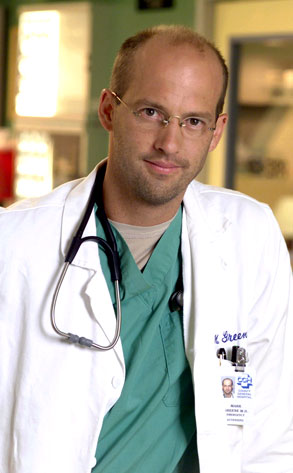
Before the MRI begins at 550 Harrison, you are handed a set of Upstate University Hospital scrubs, led to a small locker area and instructed to change into the medical attire. So before I come out of the changing room, I look at myself in the mirror and pretend I am Dr. Mark Greene (Anthony Edwards) from ER getting ready to start an overnight shift.

Anthony Edwards. Photo by Paul Drinkwater/NBC.

Yes, I suffer from an advanced case of Walter Mitty complex.

The techs at the Harrison Center allow patients to pick music to listen to during the MRI. Before you step into the exam room, you are handed a laminated list of artists and you can choose who you want to listen to.

The genres on the list include country, children’s music, world music, male artists, female artists, easy listening, classical, etc.

I always select U2 because you can never go wrong with the Dublin quartet.

My latest MRI playlist consisted of the following songs: Angel of Harlem, Still Haven’t Found What I’m Looking For, Walk On (Live), The Unforgettable Fire, With or Without You and Peace on Earth.

Here are some other choices on the list that caught my eye:

Male Vocalists: Andrea Bocelli and Luciano Pavarotti

Classical: Bach and Beethoven

Female Artists: Pink and Alicia Keys

Male Artists: Rod Stewart and Elton John

Rock: Boston and Aerosmith (the heavy guitar sound could partially compete with the noise of the MRI machine)

Country: Johnny Cash and Patsy Cline


During my recent MRI I was instructed to lie down on the flatbed of the Hitachi open MRI unit.

Open MRI Unit

It was the first time I had experienced the open MRI version and I must confess I missed the narrow tube. I like the snug feeling of the space-shuttle-like machine.

The tech, a thin middle-aged woman with dark brown hair and black-rimmed glasses, covered me with a blanket, tucking my arms in, and then left the room. A short time later the familiar wup-wup-wup sound started up, as did the music by U2; Bono and the boys did their best to compete with the grating sound of the machine, but they could not drown out the loud mechanical sound.

The woman’s voice came over the intercom and she said, “OK, this round will be six minutes long. Just lie still.” I closed my eyes and tried to sleep.

I was tired and would have preferred to remain locked in the MRI position for the rest of the day, listening to music and catching some ZZZs while the world carried on without me.

And I realize the time spent confined in the MRI tube (or on the table for the open MRI) leads to serious reflection. You start thinking about your life and you pinpoint what is truly important. No matter what body part you have scanned, you are always afraid of the outcome, and you become weighted down with a foreboding sense. You anticipate the worst-case scenario, the discovery of a flaw in your body that will prove fatal.

You think about how you will handle the news if the MRI shows a tumor or cancer. The “what ifs” penetrate your mind. What if it’s an inoperable brain tumor? What if it’s cancer and it has already spread from the lung to the liver? What if I only have six months to live? Of course these are morbid thoughts, but when you’re confined to the machine with your eyes closed and the wup-wup-wup is roaring in your head, you drift into a higher level of thought, one that reaches a profound plane, separated from the trivial concerns of everyday life. And your thoughts become tilted toward your health, your family and your faith.

And in the peaceful white room you realize most of what you worry about in life is insignificant. Your thinking crystalizes. And you tell yourself what matters most is being healthy, living a decent, productive life and loving your family and friends. You tell yourself you will stop worrying about the small stuff. But after a few days, the old inconsequential concerns bubble to the surface. It can’t be helped. It’s human nature.

But I know in my case, the next MRI appointment will give me time for meditation and offer another opportunity to reset my thinking.

The next time, though, I will take a risk and listen to something other than U2. Wup-wup-wup.

Standard