Nine Months Later

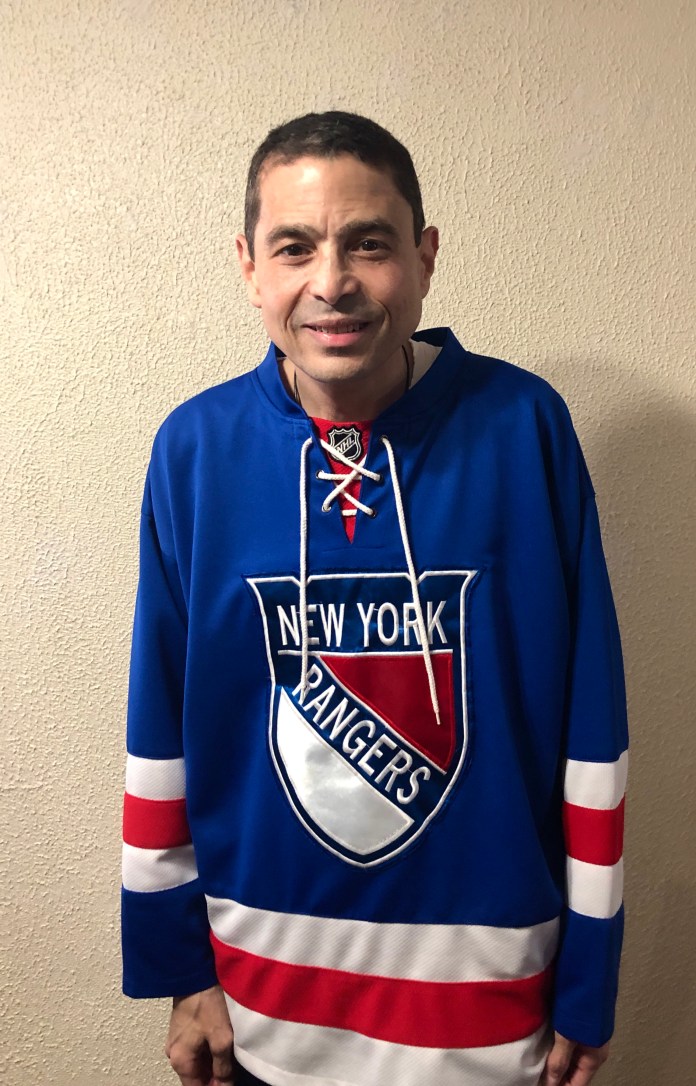
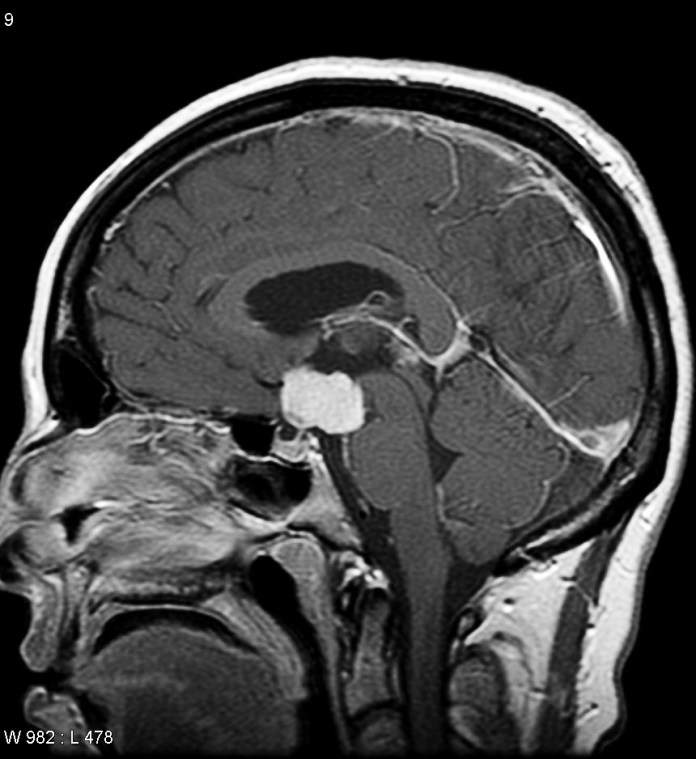
Today marks nine months since my surgery to remove a benign brain tumor on my pituitary gland. Although it’s not a major milestone, it’s tied to a once-in-a-lifetime event—seeing Bruce Springsteen in concert on April 18 in the JMA Wireless Dome in Syracuse.

The concert was originally scheduled for September 7, 2023, and I would have been in no condition during my recovery to climb the concrete steps to the upper rafters of the Dome in Section 336, Row Y. I transferred my ticket to a co-worker, but then the tour was sidelined due to Bruce’s peptic ulcer disease. I’d like to think some heavenly intervention permitted me to attend the rescheduled event in April in a fully restored state.

I went to the concert with my wife, Pam—a rare night out for us and a break for her as she completed her first full year in her occupational therapy assistant program at Bryant and Stratton College. We hired a babysitter and took a Lyft to the show, arriving before the gates opened.

The Dome’s muddy sound system threw me off as the concert began. Bruce’s opening number was “Lonesome Day,” but I couldn’t figure out the tune. I felt like an outfielder in baseball who can’t pick up the ball off the bat. The first song I recognized was “No Surrender,” and the sound quality seemed to improve as the concert wore on.

Bruce and the E Street Band played the anthemic classics, which I have been reliving through the miracle of YouTube: “Badlands,” “Backstreets,” “The Promised Land,” “Thunder Road,” and “Born to Run.”

Up in the nosebleeds, an exuberant middle-aged woman with long, dark hair kept bumping me as she swayed, stomped her feet, clapped her hands, and pumped her fists. She kept apologizing, but I didn’t care about the incidental physical contact. I appreciated the pure joy she displayed, and we formed a bond through our mutual love of the music.

After “Born to Run” finished with a flourish, we shared a two-word conversation—screamed into each other’s ears.

I turned to her and said, “Amazing.”

“Right!” she said.

I hardly go to concerts, and I can’t remember the last stadium concert I attended. It may have been when I saw Bruce in Phoenix in 2002 during The Rising Tour. I went alone to America West Arena during the sweltering heat of August.

A Syracuse woman posted on Facebook that she didn’t enjoy the show because of the behavior of the people around her. And I know a debate persists about proper concert etiquette. As for me, I love it when fans dance and shout the lyrics at the top of their lungs. I mean, if you can’t let loose at a rock concert, where can you? They’re not serving tea and finger sandwiches. I think your ticket should come with a warning like “buyer beware … this isn’t your living room,” and I sang many songs, my voice growing hoarse as the night continued.

Music provides bookmarks for people’s lives. Fans connect songs to significant moments in their lives. Bruce’s music sustained me during my darkest days when I was consumed by loneliness, shame, and self-hatred.

So when Bruce belted out the words to “The Promised Land,” I joined him and thousands of others in screaming:

Blow away the dreams that tear you apart,
Blow away the dreams that break your heart,
Blow away the lies that leave you nothing
But lost and brokenhearted …

And I didn’t care that my voice was way off-key.

Standard

New Year’s Reflections

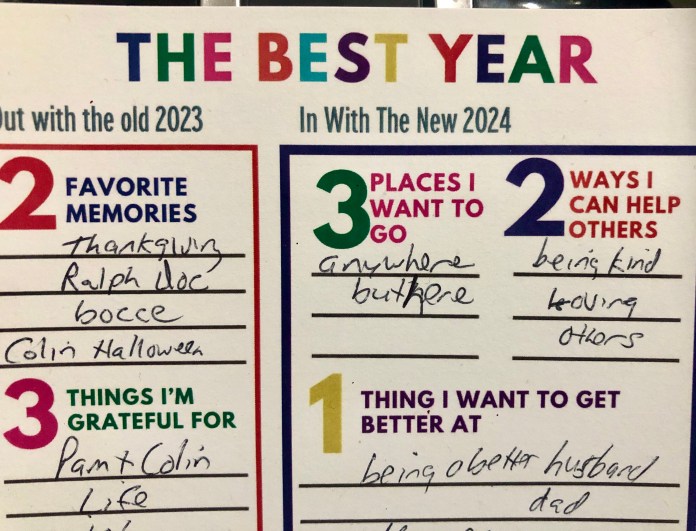
New Year’s Eve 2023. Time to rewind and then hit reset.

I’m grateful for getting another 365 tokens to drop into the slot machine. Another 365 scratch-off lottery tickets to play. Another 365 chances to be better than the day before.

Card from David’s Refuge.

I’m closing out the year filled with both anxiety and excitement.

By all accounts, 2023 was a pretty good year for me. I made some strides as a writer and filmmaker.

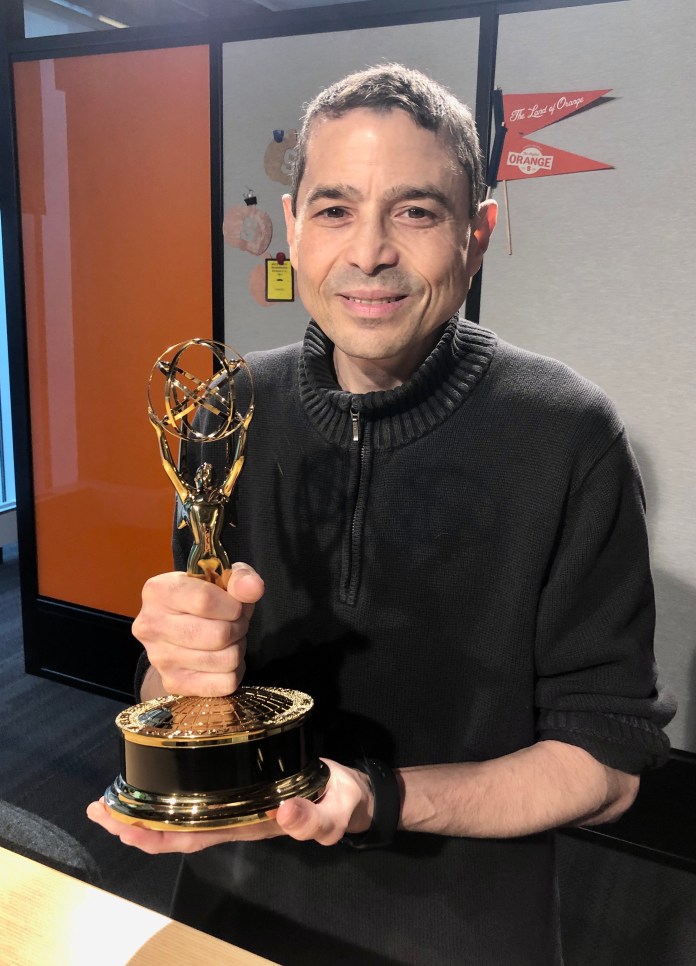
I earned an Emmy (my second) as part of a production team at Syracuse University.

Photo by Shane Johnson.

I published a full-length poetry collection, The Truth I Must Invent. I published a couple of short stories and a short play in some literary magazines.

The Truth I Must Invent book cover.

I completed two short documentary films, Ralph Rotella: The Sole of Syracuse, which premiered at the Syracuse International Film Festival and was an official entry at the Culver City Film Festival, and The World Series of Bocce: A Celebration of Sport, Family and Community, which is awaiting festival decisions.

World Series of Bocce title screenshot.

I completed a feature screenplay and a full-length coming-of-age memoir (a ten-year project!). But despite numerous revisions, I still don’t know if the words on the page are memorable or whether either project will come to fruition (e.g., production or publication).

So those are my accomplishments in 2023. Big whoop, right? Yada-yada-yada. Blah-blah-blah.

Here are the standout moments during the last calendar year.

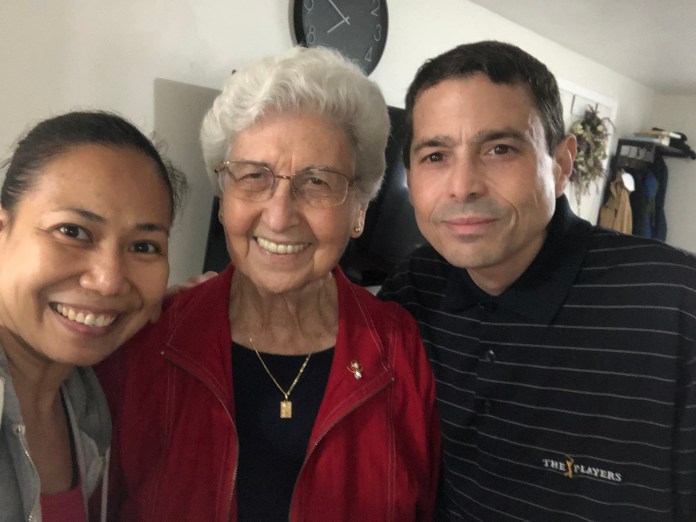
In June, my Aunt Teresa, a.k.a. Sister Carmella DeCosty, visited Central New York to attend the funeral of her brother, my Uncle Fee, in Rome, New York. She stayed with us in Syracuse, and we had a lot of fun catching up.

Pam and Aunt T.

A flashback of Aunt T. during a holiday at my maternal grandparents’ house. I think that’s me on her lap, with my mom in red and my Aunt Pat in black.

My seven-year-old son, Colin, who is autistic, enjoyed trick-or-treating for the first time this Halloween. I think he actually “got it” this year.

Colin getting ready to trick-or-treat.

I spent Thanksgiving with my brother Dirk and his family in Rome and my sister Lisa and her family from Ohio. The best part—no snow!

For the holiday season, my wife Pam hung a stocking for Colin in mid-December and gave him little presents every day—stuff like Kinder Joy eggs and Play-Doh. He seemed to understand the concept of Santa Claus, and he was excited to open presents on Christmas morning.

Pam and Colin.

Pam went back to school this fall, enrolling in an occupational therapy assistant program at Bryant & Stratton College. The workload was arduous, but Pam scored high grades during her first semester.

But the most significant event of 2023—I survived my sixth brain surgery with my brain function and memory intact. In July, a team of neurosurgeons and ENT surgeons at Upstate performed a transsphenoidal (through the nose) surgery to remove parts of a craniopharyngioma that had been growing near the pituitary region, affecting my vision. I had a cerebral spinal fluid leak during surgery, but the ENT surgeon repaired it, and the patch is holding nearly six months later.

I wish all good things for you in 2024. A partial list includes: Love, family, faith (whatever you choose that to be), employment, health, health insurance, kind co-workers, transportation, clean drinking water, food, a home, a roof, four walls, a furnace, indoor plumbing, electricity, clean air, and trees. Lots of trees. I am supremely thankful for all of the above.

I leave you with a couple of New Year’s-themed poems. It’s amazing what you can find when you do a word search on the Poetry Foundation website.

January by Weldon Kees

Morning: blue, cold, and still.
Eyes that have stared too long
Stare at the wedge of light
At the end of the frozen room
Where snow on the windowsill,
Packed and cold as a life,
Winters the sense of wrong.

Poetry magazine, March 1951.

New Year’s Eve by Maurice Lesemann

The towers give tongue, the wailing horns grow loud;
And this odd planet where we wake and are
Has once again, amid a tumult of cloud,
Swung safely and serenely round its star.

Poetry magazine, April 1932.


Standard

39 Years Later

I’ve written about this in many entries over the years, but I can’t let the Dec. 12th date pass without mentioning my gratitude for still being here. Today marks my “tumorversary.” Thirty-nine years ago today, on Dec. 12, 1984, surgeons at SUNY Upstate Medical Center in Syracuse, New York (now named Upstate University Hospital), removed a large craniopharyngioma that had engulfed my pituitary gland, leading to stunted growth and delayed puberty in my teenage years, as well as lifelong hypopituitarism.

In my last blog post, I wrote about my follow-up appointment with my neurosurgeon after my summer operation—my sixth brain surgery. But who’s counting?

Standard

Six-Month Reprieve

I want to share some positive news. I had my follow-up appointment with my neurosurgeon yesterday. Fear gripped me heading into the exam room because the radiologist’s report detailing my latest MRI included this troubling language: “Unchanged heterogeneously enhancing prominence in the right anterolateral suprasellar area, causing mass effect with deformity and right optic tract and proximal portion of the right optic nerve.”

But Dr. H., who is always sanguine, stepped into the room, shook my hand, and sat down, adjusting his glasses and mask, then quickly put me at ease. “We think we got about seventy to eighty percent of the tumor,” he said. He explained the rest—what the MRI report referred to on the right side—was the membrane of the tumor, similar to what’s left over after a balloon bursts. He said he expects the membrane to shrink and form scar tissue.

Although my vision will never go back to the way it was prior to the swelling of the tumor in recent years, I felt relieved when Dr. H. said we can resume a wait-and-see approach, meaning I need no other treatment besides another MRI in six months.

That reassurance was the best present I’ll receive during this Christmas season. Clean, safe, and grateful are the words that hovered in my head when I left the office yesterday. I believe in the power of prayer, especially the petitions made by Aunt Teresa, a Roman Catholic nun in Florida who uses the term “storming heaven” when referring to her supplications.

I am thankful to have endured my latest medical ordeal, but I also know tomorrow could bring a whole new heap of trouble. That’s why I am trying to honor my good fortune by living in the present each day. Of course, this is impossible to do consistently amid the pressures of work and family life.

But I’m trying.

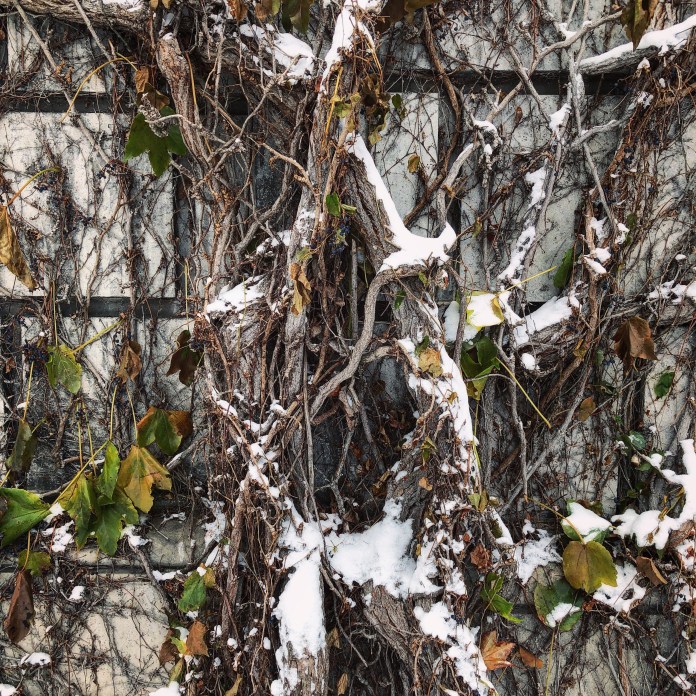
Here are a couple of photos I snapped recently—two visual gifts the universe offered because I was willing to pay attention in the moment.

Snow on Branches 2023. Photo by Francis DiClemente.

Rain Speckled Night. Photo by Francis DiClemente.

Standard

Eight Weeks Later

Today marks two months since my transsphenoidal brain surgery to remove tumor regrowth. I’m happy to report I’m getting stronger every day. I’d say I’m about 80 percent back to normal. I have returned to work and jumped back into the maelstrom of marketing projects, deadlines, and responsibilities.

Eight weeks post-surgery.

My nose still throbs, and I needed a round of antibiotics for a recent infection of the cartilage. I had a follow-up appointment with the ENT surgeon; he mentioned it will take about three to six months for me to be fully healed—not surprising considering they rolled part of my septum and used it as a nasoseptal flap to patch where the cerebral spinal fluid leaked during surgery. But the good news—the seal at the back near the opening of the sphenoid sinus is holding.

My nemesis: the twice-daily nasal rinse bottle.

I still need to do twice-daily saline rinses and take Tylenol for the pain. I lifted “weights” yesterday for the first time in eight weeks—don’t laugh at my little five-pound dumbbells. I hope to resume heaving fifteen-pounders in a couple of weeks.

Hitting the “weights.”

Two songs have been repeating in my head during my recovery.

Elton John’s “I’m Still Standing.”

And Steve Winwood’s “Back in the High Life Again.”

And here’s a photo from a Walgreens: the gift of a beautiful sight revealed to me on a mundane Friday night.

Sublime sunset from a parking lot. Photo by Francis DiClemente.

Standard

Post-Surgery Update

I just wanted to give a quick update on my recovery. More than two weeks have passed since my brain surgery.

I had a follow-up appointment with my ENT surgeon yesterday. For the endoscopic debridement with suction, they stick a probe up your nose and suck out the junk, but I’ll spare you the gory, bloody details.

The last time I had this in-office procedure after the same transsphenoidal surgery in 2011, the surgeon maneuvered the probe too close to my brain stem and I suffered the worst headache of my life.

It felt like a gorilla had grabbed my head and shook my skull like a coconut—side to side and front to back—until my brain swished around and undulated on the waves of cerebral spinal fluid. I almost couldn’t drive myself home afterward.

Hence, I was anticipating a similar experience yesterday. But after Dr. A. performed the procedure, I had only a mild headache throughout the day and into the night.

He also saw no signs of a CSF leak, so I feel incredibly grateful. Although my right peripheral vision loss hasn’t improved yet, I am getting stronger every day and anticipate returning to work before the end of the month.

Thank you very much for the kind words and continued prayers—they are helping me!

Standard

Recovery Update

I never post pictures of myself, but I want to share this photo taken by my wife in our backyard. Eight days have passed since my brain surgery. I’m still a little wobbly, but I am getting stronger every day and trying not to strain myself.

Backyard photo. Credit: Pamela DiClemente.

I am also grateful for being able to soak up the sunshine—standing and breathing on my own. And I wish speedy recoveries for other people enduring health crises.

Thank you for your prayers and kind thoughts.

Standard

Post-Op Notes

Here’s a follow-up to my last post. It’s been less than a week since my surgery, so please excuse my scattered and fragmented thoughts.

A neurosurgery and ENT team at Upstate University Hospital removed a stubborn craniopharyngioma in a four-hour surgery earlier this week.

Upstate University Hospital (Photo by Francis DiClemente)

All test results and surgeons’ notes are posted to the MyChart patient portal, and I love the description of my surgery in ALL CAPS. It reads like poetry to me:

ENDONASAL ENDOSCOPIC TRANSSPHENOIDAL RESECTION OF TUMOR WITH NASAL SEPTAL FLAP

Before surgery, George, one of the neurosurgery residents, stepped into the pre-op room to get me to sign some consent forms. He scared the shit out of me when he ran through the complications—cerebral spinal fluid leak (CSF), bleeding, the need for a blood transfusion, stroke, and death. I thought, maybe I should just get out of bed, put on my clothes, leave the hospital, and let the tumor keep growing until it really messes up my vision.

But I overcame my fear and signed the consent forms. Then I met the anesthesia team, a nurse stuck me with a couple of IVs, and I was off to Fairyland.

I woke up in recovery feeling like only seconds had passed. The pain came in waves—going from zero to eight and centered around my forehead, above the bridge of my nose. I was given fentanyl and oxycodone, while a Foley catheter took care of my urine output.

The neuro team quizzed me: What’s your name? Do you know where you are? What year is it? At first, I said 2013, but then I added ten years to arrive at the correct year.

A parade of surgeons, residents, and interns entered my room in the hospital’s Neuroscience Intensive Care Unit, and someone told me they had encountered a CSF leak, but they patched it with cartilage from my nose. Dr. H., my primary neurosurgeon, said they scooped up most of the craniopharyngioma, but some calcium fragments adhered to structures and had to be left behind.

Craniopharyngioma example.

Lying in that hospital bed—humiliated from lack of privacy, with wires twisted around me, with my gown barely covering my naked body, tumid from the high dosage of corticosteroids—I felt like a wounded animal. After the surgical trauma, I now saw my body as simply an object—a machine that either functions or fails.

And I was now at the mercy of the fine nurses who treated me. I enjoyed my conversations with them, and most were serving as traveling nurses doing rotations at Upstate. And one side note: many of the nurses wore Hoka sneakers.

Because of my persistent headaches, I could not read, watch TV, or even look at my phone. With the wall clock ticking incessantly, I closed my eyes, prayed, and reflected on my life.

This was my sixth surgery if you count two Gamma Knife treatments. And since they didn’t get everything, I wondered, how soon will I be back? Will it be two, four, or ten years? How many surgeries will I need before death claims me?

But when I walked the floor on my second day after surgery, I passed other rooms with patients unresponsive and intubated, and deeper thoughts gave me solace. The words that kept coming to me were nothingness, fragility, and gratitude. I saw myself as a minuscule being with absolutely no control over my body or power to alter my existence. Death could come at any point. This is my fate and everyone’s fate. But I remained alive. I was still here.

And late in the afternoon, two days after surgery, I was discharged. While waiting to get a couple of prescriptions filled at the hospital pharmacy, I was wheeled to the Discharge Hospitality Center. Let me tell you, if you need to be in the hospital, that’s the place to go.

A nurse with blond hair, brown plastic-framed glasses, and wearing orange scrubs, greeted my wife Pam and me, asking us if we wanted a cup of coffee. “Sure,” we said. We enjoyed a cup of coffee and some Lorna Doone cookies while we waited, and I told the nurse that her room was a sanctuary.

Then, while waiting at the circular drive for Pam to pick me up, she asked me about my medical history. When I told her this was my sixth surgery, she expressed concern and said she was sorry I had such problems.

I said, “Yeah, but the thing is, you can’t change it, so you just deal with it. And every time I leave Upstate, I feel lucky that I can just walk and breathe.”

“Right, that’s true,” she said. “That’s a good way to look at it.”

At home, Pam told our autistic son Colin that “Daddy is sick and needs rest.” She put a note on our bedroom door—which has a lock—to remind him not to go inside. With his strong physical presence and his habit of jumping into our bed at night, we need to keep him away so he doesn’t whack me accidentally.

The post-op precautions include no nose blowing and drinking from straws. No straining or lifting more than five pounds. Sneeze with your mouth open and keep your head elevated at least thirty degrees. Pretty simple rules to follow.

I’ll keep you posted as my recovery progresses—slow healing, day by day.

Standard

Tumor Talk

I am undergoing another brain surgery on Monday morning. This marks the fourth time since my craniopharyngioma (benign brain tumor on the pituitary gland) first appeared when I was fifteen years old.

Image by the National Cancer Institute.

My last blast of Gamma Knife radiation in 2020 kept the tumor away, but subsequent regrowth began affecting my vision in the past two years. Another round of radiation could not be performed because the tumor sits only a millimeter away from the optic nerve. My radiation oncologist gave me the grim news that radiation presented a twenty-five percent risk of blindness.

So a neurosurgeon and an ears, nose, and throat surgeon at Upstate will team up for a transsphenoidal approach—meaning they would go through the nose to access the tumor. I had the same surgery in 2011, followed by a rough recovery where I stayed locked in my room for about a month, suffering from excruciating headaches. I have added concerns now because in 2011 I was on my own; now I have my wife and son to think about.

Image by the National Cancer Institute.

Anyway, I want to present a piece of experimental writing inspired by my tumor. I think this falls under the essay category, but it could also be considered fiction.

Tumor Talk: A Conversation with My Craniopharyngioma

“I’m back, baby!”

I heard those words in my head after my radiation oncologist discussed the results of my latest MRI. Dr. L. said my craniopharyngioma—a benign, slow-growth tumor at the base of the brain near the pituitary gland—had grown over the last two years, causing my recent double vision.

Dr. L. said the proximity of the neoplasm to the optic nerve and blood vessels meant radiation was no longer an option. I would need surgery.

“You must be pretty proud of yourself, Fred,” I said to my tumor friend resting inside my head.

“Oh, come on, man, don’t be like that,” Fred said. “You know this was inevitable. Us craniopharyngiomas are like the cockroaches of the tumor world. You know no matter what you do, we always come back. You think that weak-ass radiation was gonna work on me?”

Yes, my tumor has a name. Since he’s been residing inside me for so long, I figured we should at least be on a first-name basis.

And Fred was right. There’s no denying his Terminator instincts for coming back. He’s like Buster Keaton in The General. He keeps barreling down the tracks no matter what you do to him.

Fred first appeared in 1984 as a large tumor engulfing my pituitary gland. His removal led to hypopituitarism and diabetes insipidus (a disease affecting water and sodium balance).

Despite surgeries in 1984, 1988, and 2011, plus two blasts of Gamma Knife radiation, Fred continued to aggregate the tumor vestiges, scooping up the fragments and wrangling them into a well-formed regiment. I gotta give him credit for its spunk and resiliency.

But after leaving the medical office and waiting at the bus stop, I wanted to set some ground rules with Fred, to see if I could talk him down or at least minimize his impact.

“Why are you doing this to me again? Life has been pretty stable with my family. Why do you have to make trouble for us now?”

“Come on, man, get real. Don’t give me those bullshit questions. Why anything? Why do you breathe or drink water? Why does a horse gallop, a deer prance, a cat meow, or a goat bleat? Do I need to go on? I’m a fucking brain tumor.”

“So what if you’re a tumor? Can’t you control yourself? Can’t you stop growing?”

“Now you just sound naïve. I can’t be something other than what I am. And I have a clear objective. As a tumor, my job is to expand and invade. That’s it. That’s why I’m here on this planet.”

What could I say? I couldn’t offer any retort.

“Look, don’t be so glum. You’re in good hands with your doctors, and our history shows we both come out alive.”

“Yeah, but I wish you’d agree to leave.”

“Well if it’s any consolation, I do like where I live. You’re a good host. Don’t get me wrong, I’d prefer to be inside the head of some brilliant mathematician or a swimsuit model reclining on a beach. No offense. Look, you’re not a bad guy. But let’s not get carried away. You’re no fucking Einstein or Dave Chappelle. And frankly, I get a little bored with your prosaic thoughts.”

“Tell me how you really feel.”

“Oh come on, man. I’m just busting your balls a little bit, trying to cheer you up. Which reminds me—I thought of a theme song for our relationship. Come on, sing it with me:

“In your head, in your head,
Zombie, zombie, zombie-ie-ie-ie …”

“Very funny.”

“Come on, man, don’t be like that. We need to learn to live together. Look, I haven’t caused irreparable damage. Your brain functions, memory, and language processing are all intact.”

“I suppose I should thank you for that. But with any luck, the neurosurgeon will go up through the nose and pluck you out.”

“Oh, why so adversarial? We’re just talking here.”

“You have your objective. And I have mine. You’re a squatter. A nuisance tenant who needs to be evicted.”

“Yeah, good luck. I adhere to things. You can’t just kick me out. I stick around. Been doing it for more than thirty-five years.

“Yes, you’re one tough foe.”

“But why do you have to think of me like that?”

“What do you mean?”

“Maybe I’m more friend than foe?”

“I don’t buy it.”

“Just hear me out. You wouldn’t be the man you are today if it weren’t for me.”

“How do you figure?”

“You’re pretty driven, ambitious, and disciplined, right?”

“Yeah, I suppose.”

“Well, if it weren’t for me, you wouldn’t have had to overcome those endocrine challenges—being the shortest guy in your class. I may have stunted your growth, but I gave you determination—a fire in the belly.”

“You know, I have to admit, I think you have a point. From the moment you came along, I felt like you were a ticking time bomb inside my head, and I had to strive to achieve something before you exploded and shattered my skull.”

“But, lucky for you, I’m not a bomb. And I’m not vicious, pernicious fucking glioblastoma. I’m just an aggravating nuisance, a little hangnail or a sliver under the skin. Think of me as a dented fender or a toilet that keeps running.”

“Well, I guess I should say, ‘thank you’ for that.”

“Don’t mention it.”

“Can we at least come to some agreement? Can you just stop growing and stay put for a while, until I have this surgery?”

“I don’t have that kind of control, kid. You give me too much credit. I don’t know where I’m going. I just keep moving.”

“Well listen, after Dr. H. does his transsphenoidal resection work, I’ll let you come back slowly, over the next ten years.”

“I hate to break it to you, but I don’t need your permission to inhabit some space inside your head. And let’s face it—we’re gonna be together for a long, long time. We’ll be two old, shriveled geezers playing shuffleboard in Clearwater. So let’s stay friends.”

I laughed. “I guess you’re right. I don’t know what else to say. See you later, Fred.”

“See you in the operating room, kid.”

Standard

Tumorversary 2022

Today marks the thirty-eighth anniversary of my first brain surgery. As I’ve written about before, on Dec. 12, 1984, surgeons at SUNY Upstate Medical Center (now named Upstate University Hospital) in Syracuse, New York, removed a large craniopharyngioma that had engulfed my pituitary gland, leading to stunted growth and delayed puberty in my teenage years, as well as lifelong hypopituitarism.

The tumor has returned over the years, requiring follow-up surgeries and Gamma Knife radiation. It’s something I’ve learned to live with, and I’m grateful my condition is manageable.

Here’s a poem reminiscent of that initial post-surgical time period:

Craniopharyngioma (Youthful Diary Entry)

Craniopharyngioma gave me
an excuse for being unattractive.
I had a problem inside my head.
It wasn’t my fault
I stood four foot eight inches tall
and looked like I was
twelve years old instead of eighteen—
and then nineteen
instead of twenty-four.
I couldn’t be blamed for
my sans testosterone body
straddling the line
between male and female.

The brain tumor
spurred questions
about my appearance,
aroused ridicule
and provoked sympathy.
I heard voices whispering:
“Guess how old that guy is?”
And, “Is that a dude or a chick?”

And while I waited for my
body to mature, to fall in line
and to achieve normal progression,
I remember wishing the surgeons
had left the scalpel
inside my skull
before they closed me up,
knitting the stitches
from ear to ear.

I prayed the scalpel
would twist and twirl
while I slept at night—
carving my brain
like a jack-o’-lantern—
splitting the left and right
hemispheres,
and effacing the memory
of my existence.

Standard