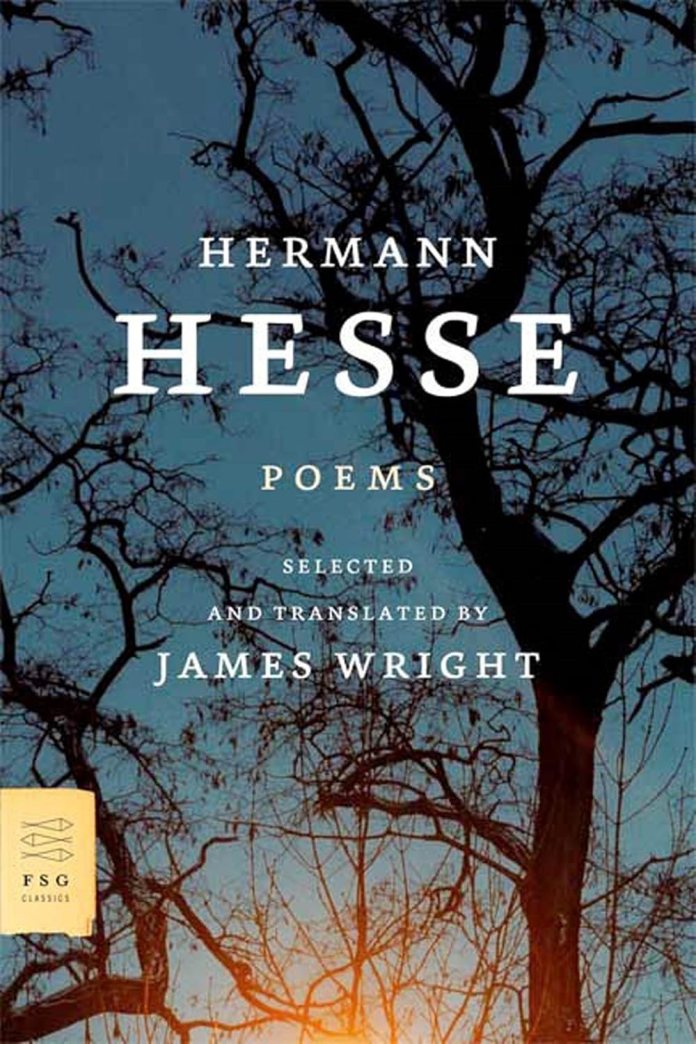
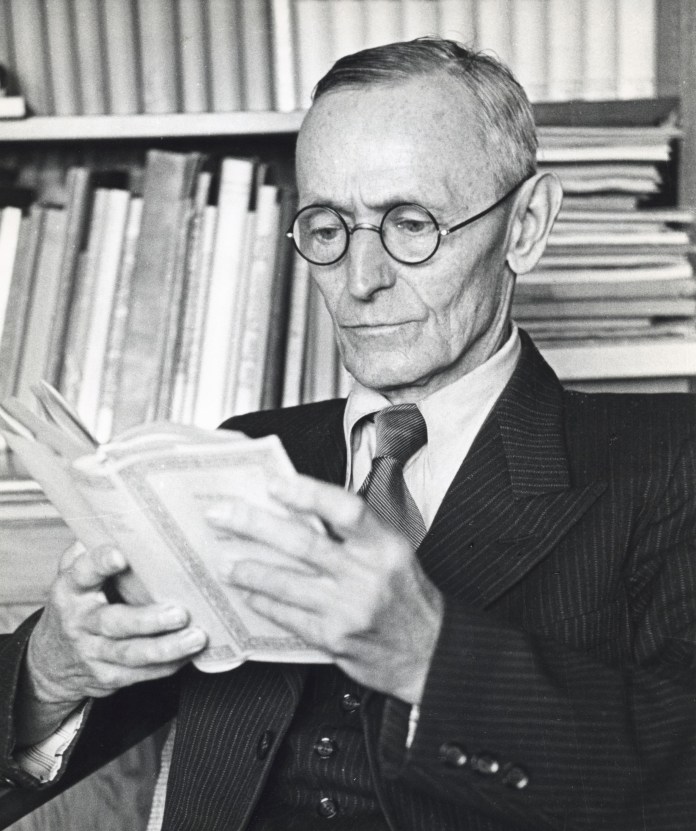
I am re-reading Siddhartha by Hermann Hesse. And in doing a little Wiki research on the German novelist, I discovered he also wrote poetry. I bought a collection of his verses entitled Poems by Hermann Hesse: Selected and Translated By James Wright (Farrar, Straus and Giroux, 1970). Most of the poems are short (which I love), and he explores such themes as youth, nature, identity, longing, and loneliness.
An added bonus—the used book arrived with a nice bookmark from Normals Books & Records in Baltimore, which looks like a really cool store.
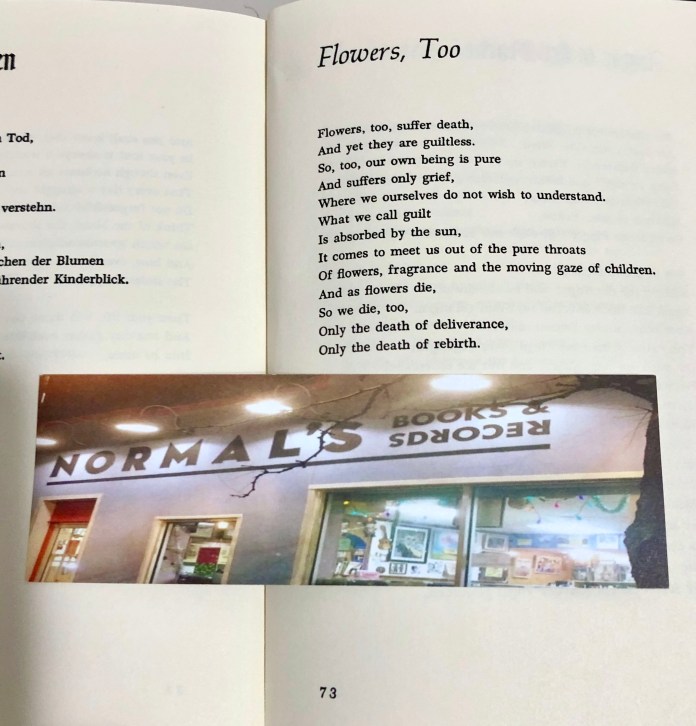
Here are a few selections from the book that I wanted to share:
Mountains at Night
The lake has died down,
The reed, black in its sleep,
Whispers in a dream.
Expanding immensely into the countryside,
The mountains loom, outspread.
They are not resting.
They breathe deeply, and hold themselves,
Pressed tightly, to one another.
Deeply breathing,
Laden with mute forces,
Caught in a wasting passion.
On a Journey
Don’t be downcast, soon the night will come,
When we can see the cool moon laughing in secret
Over the faint countryside,
And we rest, hand in hand.
Don’t be downcast, the time will soon come
When we can have rest. Our small crosses will stand
On the bright edge of the road together,
And rain fall, and snow fall,
And the winds come and go.
Night
I like the dark night well enough;
But sometimes, when it turns bleak
And peaked, as my suffering laughs at me,
Its dreadful kingdom horrifies me,
And I wish to God I could take one look at the sunlight
And the blue of heaven brought back to light by its clouds,
And I want to lie down warm in the wide spaces of the day.
Then I can dream of the night.
Destiny
In our fury and muddle,
We act like children, cut off,
Fled from ourselves,
Bound by silly shame.
The years clump past
In their agony, waiting.
Not a single path leads back
To the garden of our youth.
How Heavy The Days . . .
How heavy the days are.
There’s not a fire that can warm me,
Not a sun to laugh with me,
Everything bare,
Everything cold and merciless,
And even the beloved, clear
Stars look desolately down,
Since I learned in my heart that
Love can die.
And here are a few spring-themed poems:
The First Flowers
Beside the brook
Toward the willows,
During these days
So many yellow flowers have opened
Their eyes into gold.
I have long since lost my innocence, yet a memory
Touches my depth, the golden hours of morning, and gazes
Brilliantly upon me out of the eyes of flowers.
I was going to pick flowers;
Now I leave them all standing
And walk home, an old man.
Spring Day
Wind in bushes and bird piping
And high in the highest fresh blue
A haughty cloud ship, becalmed . . .
I dream of a blond woman,
I dream of my youth,
The high heaven blue and outspread
Is the cradle of my longing
Where I choose to lie calm
And blessedly warm
With the soft humming,
Just like a child held
On his mother’s arm.
Flowers, Too
Flowers, too, suffer death,
And yet they are guiltless.
So, too, our own being is pure
And suffers only grief,
Where we ourselves do not wish to understand.
What we call guilt
Is absorbed by the sun,
It comes to meet us out of the pure throats
Of flowers, fragrance and the moving gaze of children.
And as flowers die,
So we die, too,
Only the death of deliverance,
Only the death of rebirth.
 Francis DiClemente