Recalling my Father on His Birthday

Today marks the birthday of my late father, who passed away from lung cancer at the age of 64 in August of 2007. This post was first published in 2016 and has been revised slightly. Francis DiClemente Sr. was a quiet man who led a solitary life.

My late father, Francis DiClemente Sr.

He put in 32 years at the Sears Roebuck store in Rome, New York, before the company decided to close it in the early 1990s. He rose to the ranks of a sales manager after starting his employment in his late teens, and he served in all departments: electronics, home improvement, heating and cooling, paints, and even the automotive center.
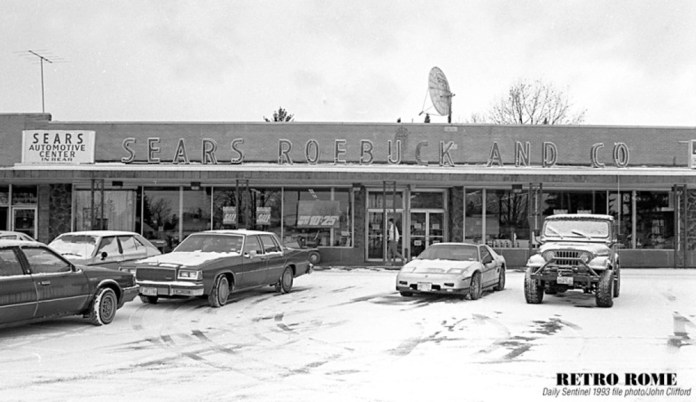
The Sears store in Rome in 1993. Photo by John Clifford/Daily Sentinel.

One of my childhood thrills was visiting him at the store after school, as we would descend a flight of stairs into a warehouse in the basement—filled with washers and dryers, lawnmowers, rolls of carpet, and other merchandise. We would go into the break room, and he would buy me a soda from the glass vending machine—usually Nehi grape, root beer, or Dr. Pepper—and then pour a cup of coffee for himself. We’d sit and talk at a little round table covered with the latest edition of the Utica Observer-Dispatch or the Rome Daily Sentinel newspaper.

Things I recall about him:

His lupine face with dark, searching eyes, bushy eyebrows and thick, black hair.

Being a devoted player of the New York Lottery. He scored some jackpots on occasion, including one that totaled more than a thousand dollars. But the scant prizes could never make up for what he spent on a daily basis.

After he died, I went through his room to clean out things, and I discovered innumerable losing lottery tickets stuffed inside one of his dresser drawers. I couldn’t understand why he would save tickets that held zero value. Was he trying to run the numbers through some elaborate mathematical system in order to calculate a winning combination, some key to unlock the mystery of how to beat the odds?

Being a habitual gambler with a penchant for playing football parlays. But his real joy came from betting the horses at the local OTB, sharing camaraderie with other men infected with the same urges, all of them standing around scribbling in the margins of the Daily Racing Form.

After the Sears store closed, he took a low-paying sales job at a carpet store. He complained about the crumbling upstate New York economy and grumbled about his bad luck, repeating the phrase, “I can never catch a break.” Even so, he endured his situation and became a valued employee at the store—one who was highly regarded for treating customers well and giving them deals whenever he could.

When he was diagnosed with cancer, the doctor told him he could try chemotherapy, but it would only give him a slim chance of living slightly longer. He decided against the treatment, noting, “What’s the point?” And so in February of 2007, he stoically accepted his fate, knowing he had only about six to nine months left to live.

Dad in his chair. It’s out of focus, but I love how he looks directly at the camera. Photo by Francis DiClemente.

I had recently relocated to Central New York from Arizona, and I was fortunate enough to spend a lot of time with him before he passed.

He lived with his mother, my grandmother Amelia, a stooped, red-haired woman who had coddled my father from the early days of his youth. He clung to her as the anchor of his life, which contributed to the demise of my parents’ marriage and also affected our relationship.

My late grandmother, Amelia DiClemente.

I don’t fault my grandmother because I don’t think she could have helped herself when it came to trying to protect my dad. He had been born with a hole in his heart, and the life-threatening condition worsened as he grew. He was a short, frail, and underweight boy who was mocked by other kids about his size, labeled as a “shrimp.”

In the late 1950s, my grandparents took my father to Minneapolis, where pioneering heart surgeon C. Walton Lillehei repaired the ventricular septal defect in a seven-and-a-half-hour operation at the University of Minnesota Heart Hospital.

And Dad was proud to have been among the first batch of patients to survive open-heart surgery in the U.S. Whenever he told the story to someone, he would lift up his shirt and show off the long scar snaking down the middle of his chest.

His medical history inspired this short poem:

Open Heart

My father was born
with a hole in his heart,
and although repaired,
nothing in his life,
ever filled it up.
The defect remained,
despite the surgeon’s work—
a void, a place I could never touch.

Dreaming of Lemon Trees: Selected Poems (Finishing Line Press, 2019)

##

As the months passed in the spring and early summer of 2007, he became weaker and weaker as the cancer ate away at his body, leaving him looking like a shriveled scarecrow.

He had always eschewed desserts and when offered them, would say, “No. I hate sweets.” But as his time on earth elapsed, he went all out when it came to food—eating Klondike bars, Little Debbie snacks, Hostess cupcakes, and other junk food. His philosophy was “Why not?”

Although he had Medicaid, Dad left behind a staggering amount of unpaid medical bills. But what troubles me more, what I have been unable to reconcile, is how he ran up thousands of dollars in debt in the last few months of his life, the largest chunk coming from ATM cash withdrawals using my grandmother’s credit card.

I was never able to pin down how he spent the money. He made no large purchases of electronics or home furnishings. I assumed he used the money to gamble; but in some way I wish he had supported a mistress or a family he never told us about, or that he gave away the cash to charities. Instead, I am only left with unanswerable questions. I helped him to file for bankruptcy, but in an ironic turn to the story, he died before a decision was reached in the case.
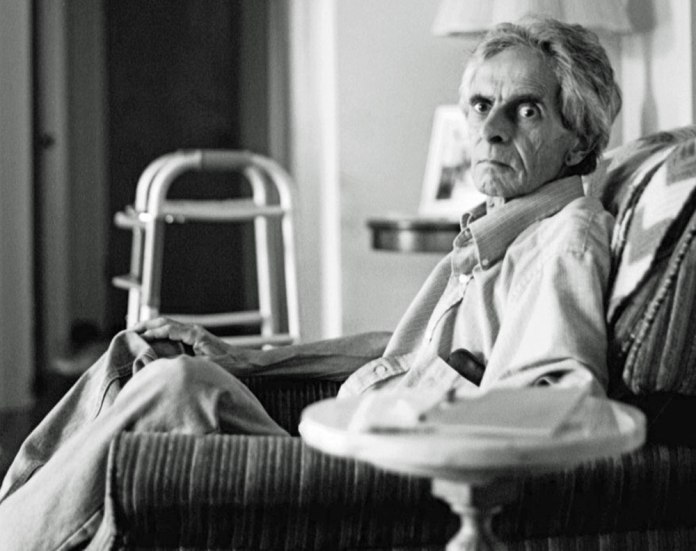
Dad, side angle. Photo by Francis DiClemente.

I remember a funny conversation I had with him one afternoon while we sat in the living room of my grandmother’s small ranch house in north Rome. Sunlight poured through a large bay window, past the partially opened silk curtains. Outside I could see a clear sky and trees burgeoning with leaves—a bright, saturated landscape of blue and green.

I sat in a corner of the room and he sat in a forest-green recliner covered with worn upholstery.

“What’s the name of the angel of death?” he asked me.

I was surprised by the question, and I said, “I think he’s just called the angel of death.”

“No, he has another name,” he said.

And after a few seconds it came to me. “The Grim Reaper.”

“That’s right, that’s it,” he said.

“Why do you want to know?” I asked. “Did you see him in a dream or something?

“No, but I want to know his name when he comes.”

That conversation sparked an idea for a full-length play, entitled Awaiting the Reaper. I could go on and on about my dad, but that’s the strongest memory I have of him in his waning days.

Dad in the kitchen. Photo by Francis DiClemente.

Dad never earned prestigious academic honors, never published a book, never ran a company or made enough money in his lifetime to buy a retirement home in Florida.

Instead, he toiled away in obscurity and mediocrity as a working-class person. My sister and I received no inheritance, save a small insurance policy that paid out after his death. And his shy, aloof nature created a buffer with other people, a barrier to forming deep relationships (except with a few close friends).

A photo of my father and me following my Confirmation in 1984.

Yet in reviewing his life, I know his kindness, work ethic, and willingness to help others set an example for me that I have tried to uphold. And the debts he accrued do not cancel out those qualities.

The one word I keep coming back to is decency. My father was a good and decent man. That may not be cause for celebration in our society. But it’s enough to fill me with pride, and I hope to carry on his values as I carry on his name.

I’ll close this post with two poems. The second one also mentions my late mother, Carmella.

The Galliano Club

From street-level sunlight to cavernous darkness,
then down a few steps and you enter The Galliano Club.
Cigar smoke wafts in the air above a cramped poker table.
Scoopy, Fat Pat and Jules are stationed there,
along with Dominic, who monitors it all,
pacing pensively with fingers clasped behind his back.

A pool of red wine spilled on the glossy cherry wood bar,
matches the hue of blood splattered on the bathroom wall.
A cracked crucifix and an Italian flag loom above,
as luck is coaxed into the club with a roll of dice
and a sign of the cross.

Pepperoni and provolone are piled high for Tony’s boys,
who man the five phone lines
and scrawl point spreads on thick yellow legal pads.
Bocce balls collide as profanity whirls about . . .
and in between tosses, players brag about
cooking calamari (pronounced “calamad”).

Each Sunday during football season,
after St. John’s noon Mass,
my father strolls across East Dominick Street
and places his bets,
catapulting his hopes on the shoulder pads of
Bears, Bills, Packers and Giants.
His teams never cover
and he’s grown accustomed to losing . . .
as everything in Rome, New York exacts a toll,
paid in working class weariness and three feet of snow.

But once inside The Galliano, he feels right at home,
recalling his heritage, playing cards with his friends.
And here he’s no longer alone,
as all have stories of chronic defeat.
Blown parlays, slashed pensions
and wives sleeping around,
constitute the cries of small-town men
who have long given up on their out-of-reach dreams.

For now, they savor the moment—
a winning over/under ticket, a sip of Sambuca
and Sunday afternoons shared in a place all their own.

Dreaming of Lemon Trees: Selected Poems (Finishing Line Press, 2019)

Vestiges

My parents are gone.
They walk the earth no more,
both succumbing to lung cancer,
both cremated and turned to ash.

With each passing year,
their images become more turbid in my mind,
as if their faces are shielded
by expanding gray-black clouds.
I try to retain what I remember—
my father’s deep-set, dark eyes and aquiline nose,
my mother’s small head bowed in thought or prayer
while smoking a cigarette in the kitchen.

I search for their eyes
in the constellations of the night sky.
I listen for their voices in the wind.
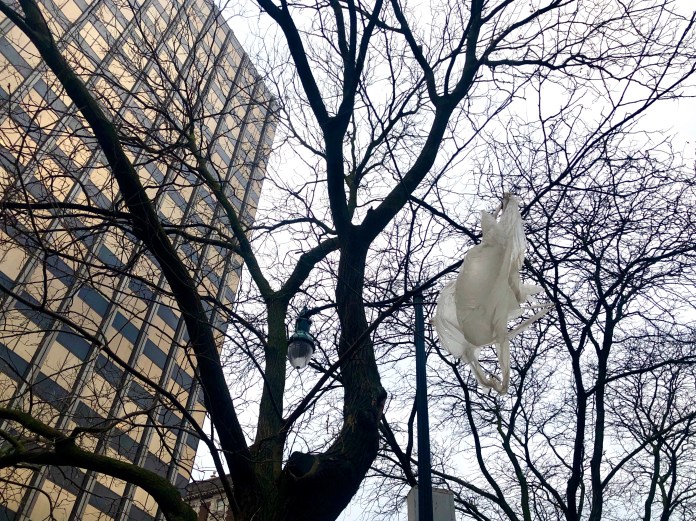
Is that Rite Aid plastic bag snapping in the breeze
the voice of my father whispering,
letting me know he’s still around . . .
somewhere . . . over there?
Does the squawking crow
perched in the leafless maple tree
carry the voice of my mother,
admonishing me for wearing a stained sweater?

Resorting to a dangerous habit,
I use people and objects as “stand-ins”
for my mother and father,
seeking in these replacements
some aspect of my parents’ identities.

A sloping, two-story duplex with cracked green paint
embodies the spirit of my father saddled with debt,
playing the lottery, hoping for one big payoff.
I want to climb up the porch steps and ring the doorbell,
if only to discover who resides there.

In a grocery store aisle on a Saturday night
I spot an older woman
standing in front of a row of Duncan Hines cake mixes.
With her short frame, dark hair, and glasses,
she casts a similar appearance to my mother.
She is scanning the labels,
perhaps looking for a new flavor,
maybe Apple Caramel, Red Velvet, or Lemon Supreme,
just something different to bake
as a surprise for her husband.
A feeling strikes me and
I wish to claim her as my “fill-in” mother.
I long to reach out to this stranger in the store,
fighting the compulsion
to place a hand on her shoulder
and tell her how much I miss her.

I fear that if my parents disappear
from my consciousness,
then I too will become invisible.
And the reality of a finite lifespan sets in,
as I calculate how many years I have left.
But I realize I am torturing myself
with this twisted personification game.
I must remember my parents are dead
and possess no spark of the living.
And I can no longer enslave them in my mind,
or try to resurrect them in other earthly forms.
I have to let them go.
I have to dismiss the need for physical ties,
while holding on to the memories they left behind.

And so on the night I see the woman
in the grocery store aisle,
I do not speak to her,
and she does not notice me lurking nearby.
But as I walk away from her,
I cannot resist the impulse to turn around
and look at her one last time—
just to make sure
my mother’s “double” is still standing there.
I want her to lift her head and smile at me,
but she never diverts her eyes
from the boxes of cake mixes lining the shelf.

Sidewalk Stories (Kelsay Books, 2017)
Standard

Thanksgiving Poem

Here is a short poem for Thanksgiving. I found it while transcribing some journals for a work-in-progress memoir project.

November 25, 2004 (Thanksgiving)

I exist.
I endure.
I survive.
I go on, for now,
bathed in the light.
That’s something
to be thankful for.

Toledo Trees by Francis DiClemente.


Standard

Glimpses of Existence (2021)

My experimental documentary short Glimpses of Existence (2021) is now available for viewing on YouTube. I consider it a companion piece to Fragments of the Living (2015).

Glimpses of Existence is a zero-budget film in the form of video collage. Using scenes captured with an old iPhone—mostly during the pandemic—it attempts to find meaning in the mundane moments of our lives, seeking the extraordinary amid the ordinary.

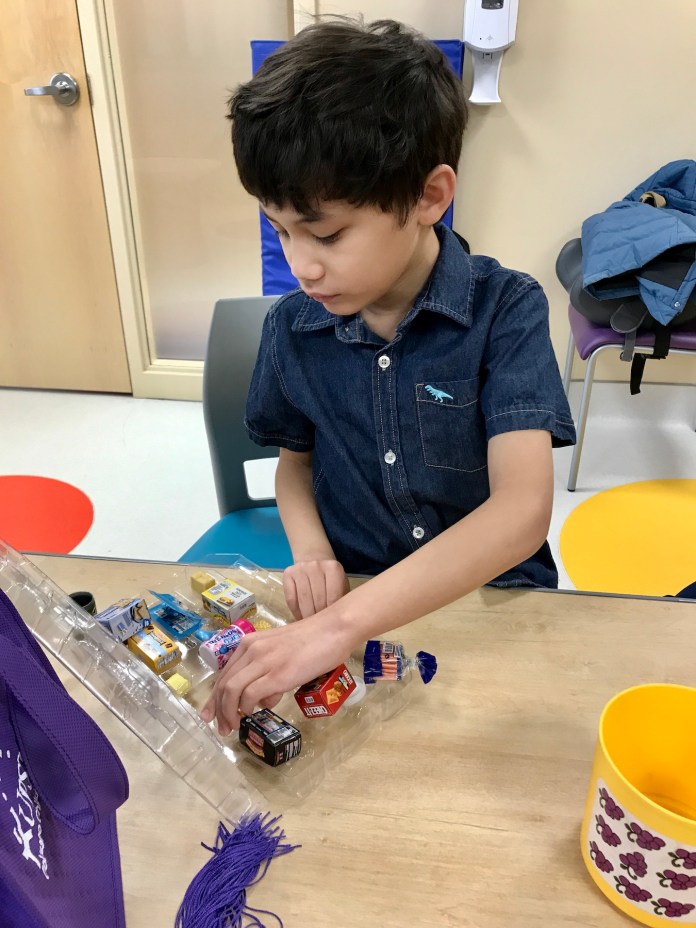
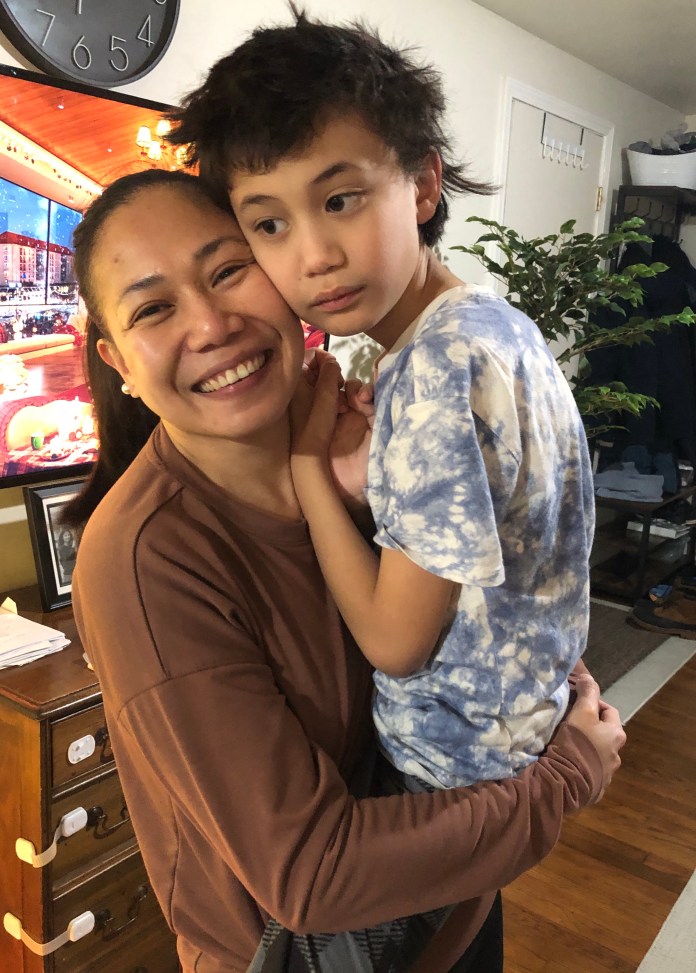
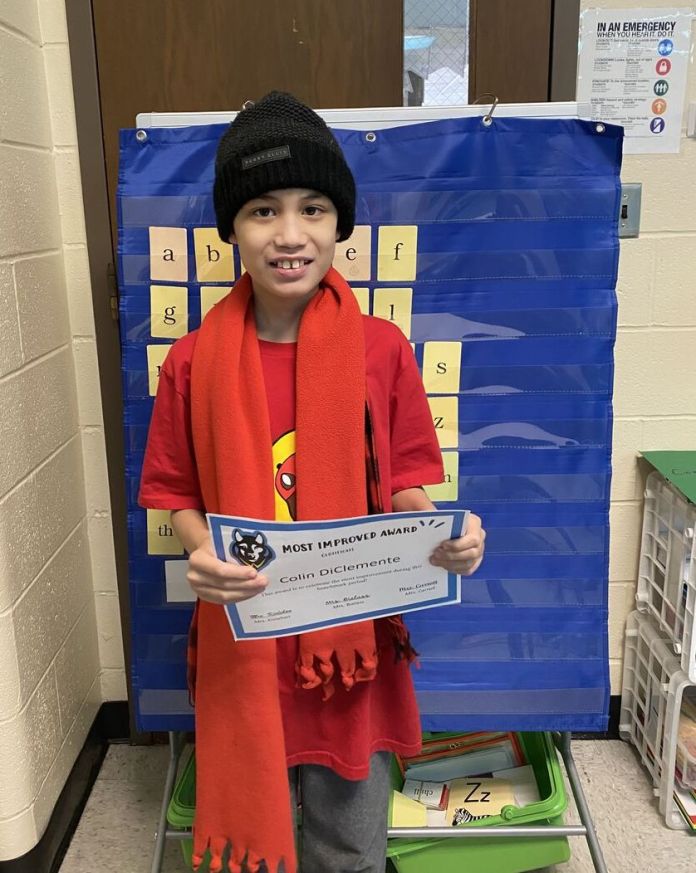
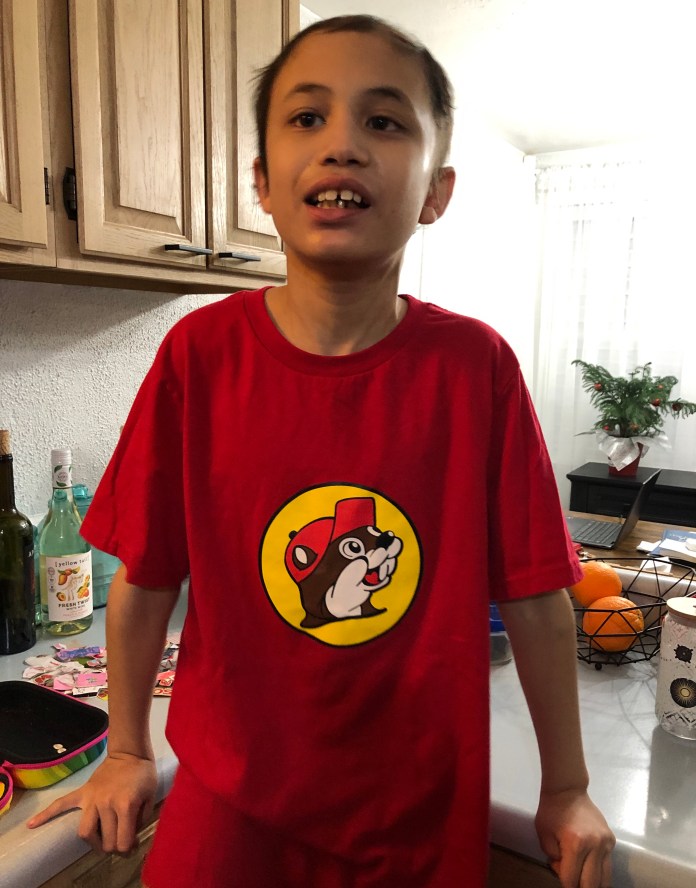
The central focus of the film is my son, Colin, who is autistic. He’s nine years old now, but he was about five when this was made. Despite his condition, Colin finds joy in everyday activities, and through his eyes we recognize the importance of treasuring the tiny segments of life we are granted—minutes, seconds, hours—while being reminded about the transitory nature of existence.

Produced, Directed and Edited by Francis DiClemente.

Distributed by OTV – Open Television

Film Festivals:

2023: Official Selection in the Festival of Arts and Cinema, London
2022: Official Selection, Life is Short Film Festival, Los Angeles
2021: Honorable Mention, Global Shorts Film Festival, Los Angeles
2021: Official Selection, NewFilmmakers NY Short Films Program, New York
2021: Semifinalist, Official Selection, Blow-Up International Arthouse Filmfest, Chicago

Standard

Fragments of the Living (2015)

My experimental documentary short Fragments of the Living is now available for viewing on YouTube. The film is composed of public domain home movie clips. It is a celebration of the American family, a nostalgic salute to the past and a meditation on the fleeting nature of life. It was screened at the NewFilmmakers New York Screening Series (2016), Athens International Film Festival (Athens, OH; 2016), and Syracuse International Film Festival, SpringFest in 2016.


Standard

Remembering Damon DeCosty

My younger cousin Damon DeCosty died of a heart attack in Jacksonville, Florida, on May 25. He was 53 years old. A celebration of his life is planned for July 22 (his birthday) in Jacksonville.

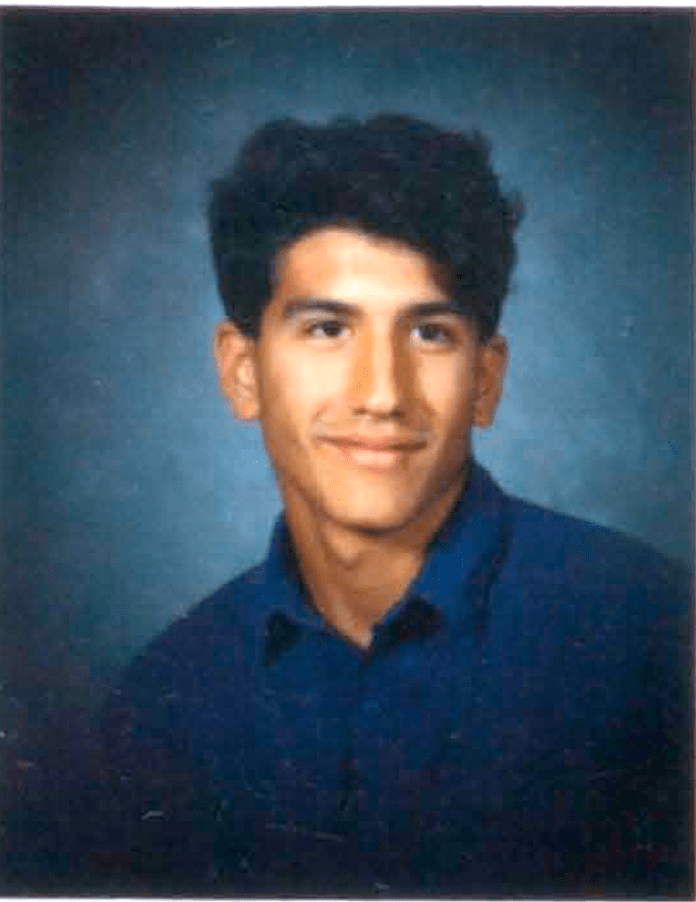
Damon’s high school yearbook photo.

Damon’s death was a huge blow to our family because his older brother, Derek DeCosty, passed away from pneumonia in January 2025.

My high school years overlapped with all three DeCosty brothers—Fiore (nicknamed “Fee”) being the oldest, followed by Derek, and then Damon, who was two years younger than me.

My cousin Fee (right), Damon (center) and I celebrate my sister Lisa’s birthday in 1980.

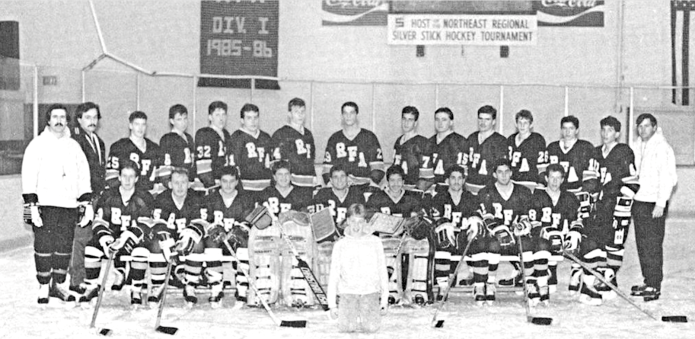
His obituary notes that he was born in Rome, New York, and was a member of the 1987-1988 undefeated Rome Free Academy hockey team, which won the state title. He played hockey and studied art at the State University of New York at Fredonia. He later worked in construction in Key West before beginning a career in agronomy at TPC Sawgrass Golf Course near Jacksonville.

The 1987-88 state champion RFA hockey team. Damon is the last player standing in the second row, next to Coach Dick Meiss.

But those facts don’t resonate with me on an emotional level. And in processing this loss and trying to write about it, no coherent narrative emerged. There’s no Hero’s Journey or three-act structure to guide you in mourning a loved one.

Instead, I recall images and voices—murky memories and episodic scenes that, when juxtaposed, add up to the human being known as Damon DeCosty and what he meant to his family and friends.

The things I remember about Damon:

His bronze skin, dark eyes, and black hair. He was of Italian American descent on his father’s side and Native American, with Caddo Nation heritage, on his mother’s side.

His artistic talent. I remember his hand moving across a sketch pad and seeing his artwork hanging in his room.

His placid, reserved, and affable personality. Although Damon possessed a James Dean coolness, he wasn’t aloof. Instead, you felt a sense of calmness in his presence, and people gravitated to him because of his kindness.

Damon with his dad, my Uncle Fiore DeCosty.

Damon had heart surgery at Crouse Hospital in Syracuse when he was about five years old in 1976. While my Uncle Fiore (Fee) and Aunt Pat stayed with Damon at the hospital, Fee and Derek spent the night at my parents’ house on Stanwix Street in Rome, near the Oneida County Courthouse on North James Street. I think it was a school night, and my mom packed my cousins’ lunches in their twin metal lunch boxes featuring Brazilian soccer legend Pelé.

When Damon recovered from surgery, he insisted on a sleepover at our house because he missed out on the fun, and I remember stretching out on the floor next to him as we slept.

I recall Damon and I spending a summer afternoon at our grandparents’ house on Crossgates Road. No one else was around, and we ran around in our bare feet on the patio, our feet turning black, and frolicked on the lawn, leaping over a sprinkler (a poor kid’s substitute for a swimming pool), our denim jean shorts getting soaked as we inhaled the scent of fresh-cut grass.

My cousins lived in a housing development on Seville Drive in north Rome. It seemed like a subdivision had been dropped in the middle of cleared farmland. Damon’s mom, my Aunt Pat, was a dietitian. And while the growing boys always had enough to eat, she didn’t buy them junk food. Their cereal choices were healthy, whole-grain products, such as Wheaties and Cheerios.

Damon (seated) and Derek with their mom, my Aunt Pat (sometime around 1980).

But on at least one occasion, while spending the weekend with my cousins, I remember my Aunt Pat went out shopping, and Derek and Fee sprang into action. They raced around the house, collecting small bills and coins, and gave the money to Damon with instructions to run across a cornfield and buy a box of sugary cereal at a nearby convenience store. Damon returned with a box of Frosted Flakes, Cocoa Pebbles, Trix, or Lucky Charms (I can’t remember the exact brand). But we all sat at the kitchen table, passing around the milk and wolfing down bowls of cereal, then discarding the box and hiding the evidence before Aunt Pat returned home.

In remembering Damon, I also find myself thinking about my late father, Francis DiClemente Sr., and reflecting on how divorce complicates family relationships, especially for children. When families fracture, the boundaries between relatives blur.

My mother and Damon’s father were siblings. Does that mean when my parents divorced, my dad stopped being an uncle to the DeCosty boys? Or after Damon’s parents divorced, did his mom (who was also my godmother) cease being my aunt?

Does divorce sever relations with non-blood relatives? Do you erase the bonds of love and family just because a couple separates? That’s a topic for a whole separate essay.

I bring this up because many years after my parents split, my dad would ask about Fee, Derek, and Damon. He really cared about them. And if they visited the Sears store in Rome where he worked, they would seek him out and say “hello.”

And it’s not politically correct, but whenever my father asked about Damon, he would say, “Hey, how’s the Little Chief doing? What’s up with the Little Chief? Tell the Little Chief I said ‘hello.’”

I must also admit that when I heard Damon had died, one of the first thoughts that popped into my head was that Fiore is now The Last of the Mohicans (also not politically correct).

Damon and I bonded over our mutual love of music. Our shared tastes included U2, The Cure, Grateful Dead, Genesis, The Replacements, R.E.M., Jane’s Addiction, The Cult, The Smiths, and many other artists.

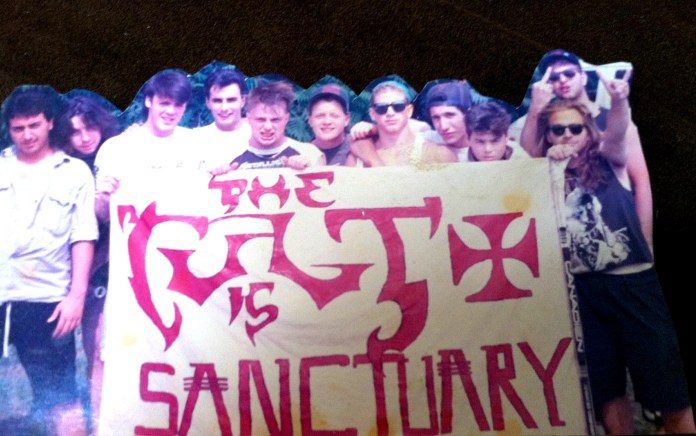
Damon and I were part of a contingent of Romans that went to the Metallica concert in Weedsport, NY on July 16, 1989. We were more eager to see the opening act, The Cult. Damon is wearing the backwards baseball cap.

Fee shared a couple of Damon’s YouTube music playlists with me. One is titled Essential Dead, and includes tracks from the Grateful Dead and other jam bands. The other is titled simply Work.

I enjoy shuffling through the Work playlist and imagining Damon mowing a fairway, adjusting a pin placement at TPC Sawgrass, doing some odd carpentry work, or putting the final touches on a large-scale oil painting. The playlist contains more than 300 tracks—over seven hours of music—and it consoles me knowing I’m listening to songs curated by Damon, tracks that held special meaning for him.

Standard

Artwork by Kiddo

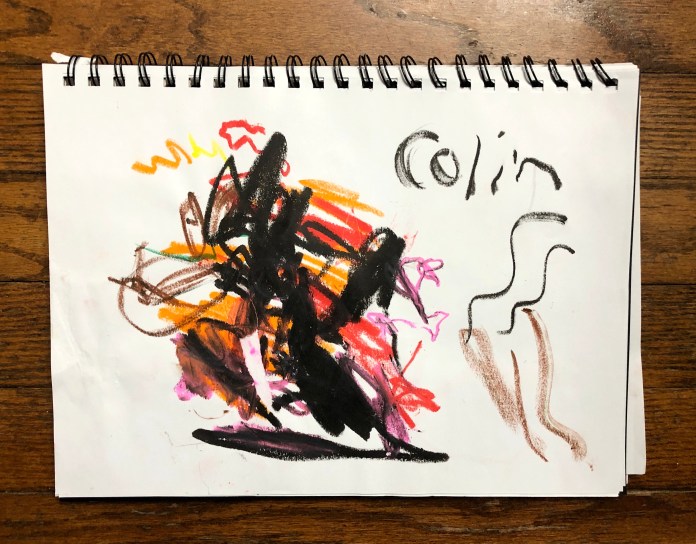
Here is an original artwork by my nine-year-old son, Colin (with minimal photo editing). It made me think that sometimes the chaos wrought by autism can render beauty. I like the use of white space and the Jackson Pollock feel.

Untitled by Colin DiClemente.

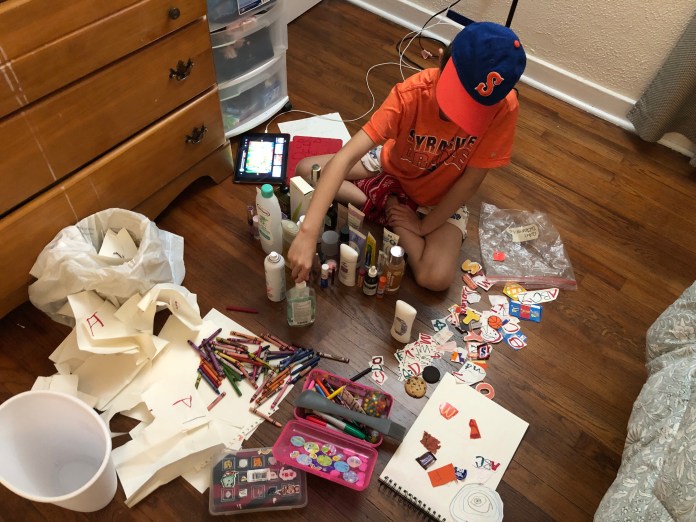
But the sundry objects and paper cutouts scattered in his bedroom and on our dining room table might indicate his preferred medium will be collage.

Dining room scene.

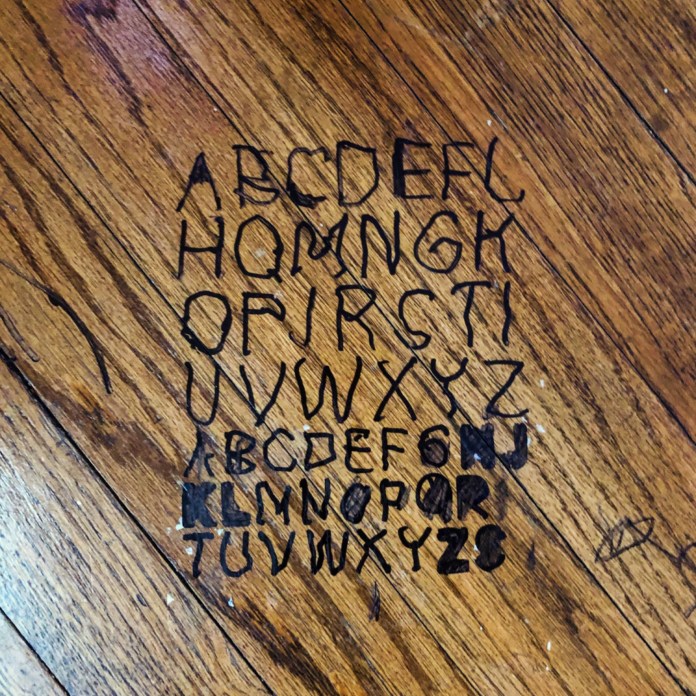
Often, when Colin is doing his repetitive tasks, such as lining up blocks or wooden letters of the alphabet, I’ll ask him questions, like, “What job do you want to do when you grow up?” If you could only be one, would it be a police officer, a firefighter, a doctor, a teacher, an artist, or a cook? And I’ll name a whole bunch of other occupations. But nearly every time, Colin’s answer will either be Artist or Cook (he loves mixing the batter for pancakes and muffins).

I joke with my wife, Pam, that we should encourage him to pursue a career as an accountant because earning a living will be easier than working as an artist or chef. I also tell her we should let Colin pursue his artistic endeavors so that he can 1) Explore and develop his creative expression 2) Maybe sell a few paintings one day that will pay off the mortgage and perhaps fund some experimental or documentary film projects.

I also realize that the parents of an autistic child have to let go of any desire for a neat and orderly home. It’s just not possible, at least in my experience. Pam and I try to laugh about it and embrace the futility of those moments when Colin takes up too much real estate in our house with his strewn objects or refuses to pick up his mess.

Standard

A Mother’s Day Poem

This poem is dedicated to all mothers, for what moms do every day of the year. It appears in my 2019 full-length collection, Dreaming of Lemon Trees: Selected Poems, published by Finishing Line Press.

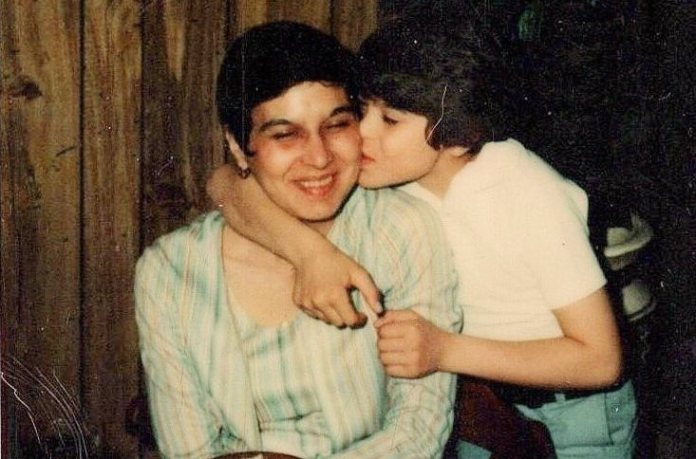
Here’s me kissing my mom, Carmella, sometime in the late 1970s or early 1980s.

Mother at a School Bus Stop

A middle-aged woman with a white canvas coat
stands with her two young children
at a school bus stop on a misty gray morning.
The boy and girl are bundled up
and jabbering as they bounce around—
unaware that Mondays should be devoid of glee.

When the bus pulls up, the mother hugs the children.
The kids separate from her breast,
scurry up the steps and claim an empty seat up front.
The mother waves goodbye to the little faces
pressed against the window and watches
as the bus pushes away from the curb,
ejecting a thin cloud of exhaust.

The woman turns around,
waits for the traffic light to change
and then crosses the street,
marching up the block to return home.
Once there, dirty dishes, unmade beds and
cigarette butts heaped in black plastic ashtrays
demand her attention until mid-morning,
when the woman leaves the house and rushes to work.

She then counts down the hours
until the school bus returns to the curb
and her two kids hop off and leap into her arms,
almost in unison.

Standard

Book Giveaway

This week marks two years since my last poetry collection, The Truth I Must Invent, was released. The book is available from the publisher, Poets Choice. You can also find it on Bookshop and a Kindle version on Amazon.

The Truth I Must Invent is a collection of narrative and philosophical poems written in free-verse style. The book explores the themes of self, identity, loneliness, memory, existence, family, parenthood, disability, gratitude, and compassion.

I am giving away three print copies of the book, which I will mail to anyone in the U.S. You can use the contact form or email me directly at the gmail address listed in the form.

The Truth I Must Invent book cover.

Selections from the collection:

Man Inside Nighthawks

I assume I was nothing
before I found myself sitting here,
staring straight ahead.

I can’t move my head.
I can’t smoke the cigarette
pressed between the fingers
of my right hand or drink the cup
of coffee resting on top of the counter.
I can’t touch the woman seated next to me
or talk to the other men in the diner.

This is my life: suspended in warm, yellow light,
trapped in a soundless environment—
no water running, no fan whirring, or grill sizzling.
No sirens or street sounds beyond the glass.

Time drags on with no discernible shift—
no transition to morning.
Here, night never ends.

Yet my mind still works.
In fact, it never stops.
I’m cursed with thoughts that run continuously.

Why am I here?
And where exactly is here?
What purpose do I serve?

Do I have a past? Did I live elsewhere,
before I became frozen in this moment—
captured and imprisoned for eternity?

If only I could talk.
If only I could open my lips and make a sound.
Then I could scream for help.
But who would hear my voice?

If only I could stand up
and walk around,
stretch my legs and
stare outside the window.

But since I can’t move,
the composition will remain unaltered,
as I will stay locked in place
inside this painting,
hanging on a gallery wall.

Looking Through Spindles

I climb out of bed and clutch
the white balusters at the top of the stairs
as harsh words fly behind walls
too thin to hold my parents’ rage.

My sister creeps out of her room,
shrugs her shoulders,
and moves toward me in the hallway,
passing the door to the master bedroom.
She sits down next to me
and whispers, “What happened now?”
“I don’t know,” I say.
And we listen for clues, trying to determine
the cause of the latest fight.

Did Dad come to bed drunk
and make advances on our mother?
Did she recoil or lash out, scratching his eyes?
But we hear no violent action
on the other side of the white door—
only voices laced with acrimony.
And we remain seated on the stairs,
exhausted but unable to fall back asleep.

Zooming out, I see those siblings
in a Polaroid image, sealed under a plastic sheet
in a leather-bound photo album.
And as the adult looking back,
breaking the fourth wall,
I wonder why this memory pricks my brain
when so many others would illuminate my parents’
kindness, decency, and exemplary work ethic.
Why, when I could have chosen from
a myriad of positive scenarios,
does this one seize my attention,
demanding to be chronicled?

My mother and father are both dead
and can’t defend their actions.
And I feel riddled with guilt
for tarnishing their memories.
I also understand that the truth
doesn’t always tell the full story.
My conscience obligates me to explain that
while Mom and Dad weren’t perfect,
they loved us and endured sacrifices
to make our lives a little better.
And while that’s a weak way to end a poem,
the wider perspective allows me to
forgive my mother and father for being human—
for being real people and not just my parents.

Craniopharyngioma (Youthful Diary Entry)

Craniopharyngioma gave me
an excuse for being unattractive.
I had a problem inside my head.
It wasn’t my fault
I stood four foot eight inches tall
and looked like I was
twelve years old instead of eighteen—
and then nineteen
instead of twenty-four.
I couldn’t be blamed for
my sans-testosterone body
straddling the line
between male and female.

The brain tumor
spurred questions
about my appearance,
aroused ridicule,
and provoked sympathy.
I heard voices whispering:
“Guess how old that guy is?”
And, “Is that a dude or a chick?”

And while I waited for my
body to mature, to fall in line,
and to achieve normal progression,
I remember wishing the surgeons
had left the scalpel
inside my skull
before they closed me up,
knitting the stitches
from ear to ear.

I prayed the scalpel
would twist and twirl
while I slept at night—
carving my brain
like a jack-o’-lantern—
splitting the left and right
hemispheres,
and effacing the memory
of my existence.

Mattress Moment

You don’t get to cry
“No Fair”
Mr. Hyman Roth.

This is the life
you have chosen.

You don’t get to pine
for your salad days,
whatever the fuck that means.

You don’t get to
flip over the mattress
on the bed you’ve made.

The Wanting is the Hardest Part

Tom Petty was wrong.
The waiting isn’t the hardest part.
The wanting is the hardest part.

Wanting fucks everything up—
wanting a better job, a better marriage,
a better house, a better life.
That seed of desire fucks with your head,
makes you think you can be something you’re not.

What if I discarded desire? What if stopped wanting?
What if I no longer sought a better life?
Can I let go of that fantasy
and accept who I am right now,
without seeking a better version of myself—
the idealized me I hold inside my head?

Resolution

You must
Live the life
You have

And not
The one
You want.

Witness

I look up as a group of birds
circles buildings in downtown Syracuse.
I resist the urge to pull out my cellphone
and snap a picture for Instagram.

Instead, I hold my gaze skyward,
letting the wind swirl around my face
and the rain patter my forehead,
as the birds duck in unison
behind a limestone structure—
the moment preserved nowhere except in my mind.

No pictures retained or sound recorded.
No trace of the birds in digital form.
And I think that’s the point, that’s life—
a collection of these impromptu glimpses of existence,
built into a collage, a kaleidoscope of images
demanding attention when presented.

Crying at Bedtime

Nothing prepares a parent
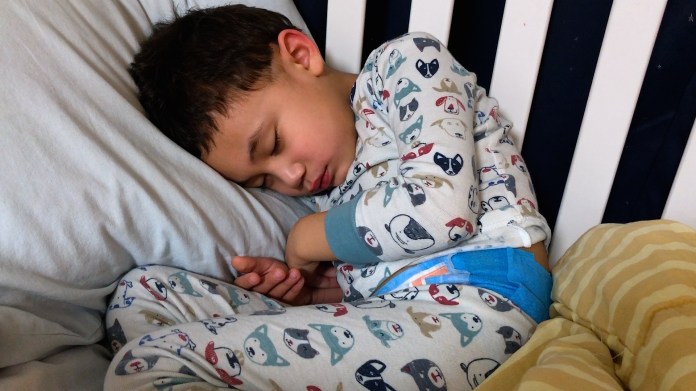
for the tantrums of an autistic child.
There’s no well of patience to draw from.
You adapt. You divert. You distract.
You do whatever it takes to calm the child down—
until you earn that blessed moment of peace,
when his eyelids drop and he drifts off to sleep,
his small body folded in the cradle of your arms.

Fingers in Hair

I run my fingers through
my son’s tangled mop of brown hair
as he lies next to me in bed.
It’s 4:30 a.m. and we can’t fall asleep.

He waves his hands in front of his eyes,
making stimming motions,
and I imagine his head slamming
against the windshield,
a spiderweb crack forming
in the sheet of glass and
blood pouring from
an opening in his skull.

I press my hand to his head
to try to stop the bleeding,
but the crimson liquid
slips through my fingers
and stains the carpet
and fabric seat covers.

I am reminded of a
Gospel passage (Luke 12:7 NIV):
“Indeed, the very hairs
of your head are all numbered.”

I hold some of my son’s hairs
in my hand and realize
I cannot prevent a
car accident, fall, gunshot wound,
or disease from killing my son.
I can’t prolong or preserve his life.
I can only love him while he still lives.

His hands whip in front of his face,
and he prattles phrases
only he understands.
I bury my fingers deeper
into the mound of his hair and whisper,
“Come on now, sleepy time, Colin.”


Standard

Complaining to Santa Claus

While watching the film Red One (starring Dwayne Johnson and J.K. Simmons) recently, a childhood memory connected to Christmas and Santa Claus popped into my head. When Santa’s massive, modern North Pole complex appeared on screen, I mentioned to my wife, Pamela, that my parents had taken my sister, Lisa, and me to Santa’s Workshop, a theme park in North Pole, New York, up in the Adirondacks, one summer when we were small kids in the early 1970s.

My sister Lisa and me when we were small.

When we embarked on the family trip, I was around five years old, and my parents were still married. My ears plugged as our little green station wagon (if I recall correctly) navigated the road, climbing higher into the mountains. Along the way, we stopped for a pancake breakfast at a roadside diner. After hopping out of the car, I observed the ring of surrounding blue mountains, felt the warm sunshine on my neck, and smelled the clean outdoor air.

Once we arrived at the park, I couldn’t wait to see Santa’s reindeer. The animals were housed in individual stalls in a barn, and their nameplates identified them as Dasher, Dancer, Prancer, Vixen, Comet, Cupid, Donner, Blitzen, and Rudolph.

Photo Credit: North Pole, NY

But a scary moment followed when I left the barn and entered a petting zoo. An angry white goat chased me in the ring, nipping at my heels and chomping at my butt. I fell and became terrified the goat would chew my face off. My father laughed, picked me up, and shook off the dust that had covered my blue jeans.

An age appropriate image for the story.

Later, when it was my time to sit on Santa’s lap, I said to the older man wearing the fake white beard and red suit, “Listen, Santa, I have to tell you something.”

“Go on, young man,” he said.

“One of your goats was not very nice. He chased me and tried to bite me.”

“Oh, I’m very sorry to hear that,” Santa said. “I’ll go to the barn later and have a word with him. I promise you that won’t happen again.”

“Thank you, Santa,” I said and then proceeded to give him my Christmas wishes.

##

The North Pole visit was one of our last vacations as a nuclear family. My parents would divorce a few years later.

Now, when I work on nonfiction and memoir projects, I find it mysterious and blessed how one little thing—such as seeing the Red One—can trigger a sense of recall, starting the movie projector running within your personal memory vault. It’s like all the scenes from our past are still tucked inside, and we just need a way to access them. For me, the key is trying to remember the sensory details from a particular incident or time period.

I wish everyone a very Merry Christmas and Happy Holidays.

Standard

Happy Thanksgiving

I want to wish everyone a Happy Thanksgiving. May you and your families be blessed this holiday season. I would also like to share this little poem inspired by a recent trip to the supermarket.

Thanksgiving Dinner

Woman overheard talking on the phone in a grocery store:

“If I’m cookin’ Thanksgiving dinner at my home,
it’s gonna be my mom, my dad, and my kids. That’s it.
I’ll tell her, ‘Look you have a house.
I ain’t cookin’ for you in my little apartment.
Get outta here with that.
Cook your own damn dinner.’”


Standard