I am clearing some space in my one-bedroom apartment, and I recently tackled the project of going through a large blue tote filled with about 200 CDs. All of the albums have been loaded into my iTunes library, so there’s no real reason for me to hang on to them.
Clarity by Jimmy Eat World
I separated some that I wanted to keep for sentimental reasons—like The Best of Schubert, Jimmy Eat World’s Clarity and This Desert Life by Counting Crows, which I listened to continuously (on repeat cycle) when trying to decide whether to leave Arizona nine summers ago.
This Desert Life by Counting Crows
I took more than 150 CDs that I wanted to sell to The Sound Garden in Armory Square. Two male clerks divided my collection into a few large stacks and then started going through them, deciding what to buy and what to pass on.
The Sound Garden, located in Armory Square in Syracuse.
I was amused as I stood there on the other side of the counter, watching as albums I loved by Bruce Springsteen, Elton John, Otis Redding, Nat King Cole, Roy Orbison, along with other CDs by Guster, The Cure, The Cult and the Rolling Stones, were all returned to me, declined and discarded. One of the clerks said the total they were willing to give me was 93 dollars and I said that was more than fair. I hadn’t expected to make that much.
I took my cash winnings and headed home; I felt like I had just finished hitting a few exactas at the track. The next day I carried a suitcase filled with the remaining CDs to the 3fifteen thrift store in Marshall Square Mall, where the woman working the counter accepted all of them as a donation. She also gave me a coupon for a free cup of coffee next door at Cafe Kubal (not a bad deal from my perspective).
It seems the pruning of my CD collection completes a chapter in my life, as I move into middle age, putting aside the things of my youth and realigning my priorities. Seeing the CDs laid out on the counter at The Sound Garden reminded me of how important my music collection was to me in my early twenties and throughout my thirties. Living alone for most of that time, the CDs were my companions and the songs they played provided another voice, another sound in otherwise lonely apartments.
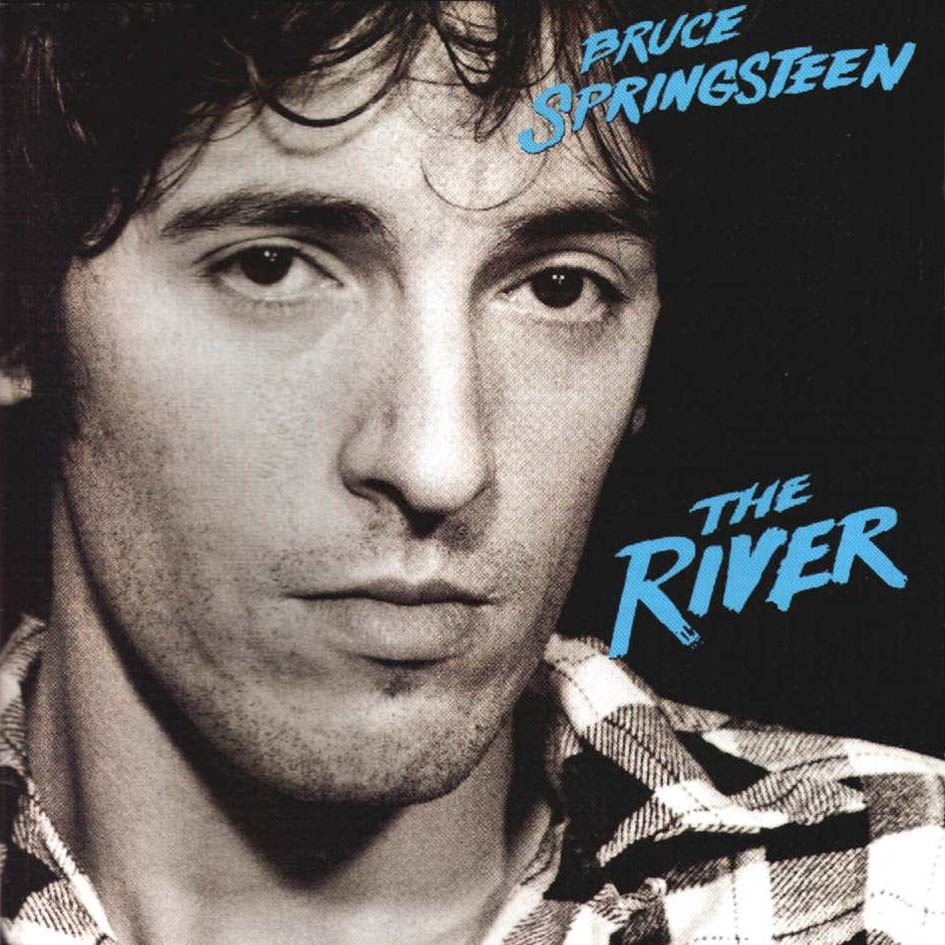
The River by Bruce Springsteen
But as I shoved the CDs I had saved back into my walk-in closet, I thought of a line from a Bruce Springsteen song. It’s from the title track from the album The River:
“Now all them things that seemed so important
Well mister they vanished right into the air …”
And the song continues, so I’ll let “The Boss” close out this blog post:
“Now I just act like I don’t remember
Mary acts like she don’t care.
But I remember us riding in my brother’s car
Her body tan and wet down at the reservoir
At night on them banks I’d lie awake
And pull her close just to feel each breath she’d take
Now those memories come back to haunt me,
they haunt me like a curse
Is a dream a lie if it don’t come true
Or is it something worse
that sends me down to the river …”
I wanted to share some images I’ve edited as part of a photography project called Structures in Decline. Over the past few years, whenever I found time, I would explore my neighborhood and the surrounding area, discovering buildings and structures in various states of disrepair or decay.
I found myself drawn to the buildings because they seemed to haunt the landscape in Syracuse and Central New York, expressing a feeling of loneliness. And although they have deteriorated and been forgotten, most of the buildings once served a purpose in the community and became part of the region’s history.
A major part of this project was capturing the demolition of the former Kennedy Square public housing project near downtown Syracuse. I photographed the site at various stages of the demolition process and was particularly drawn to the winter scenes, punctuated by shimmering piles of construction debris covered with snow.
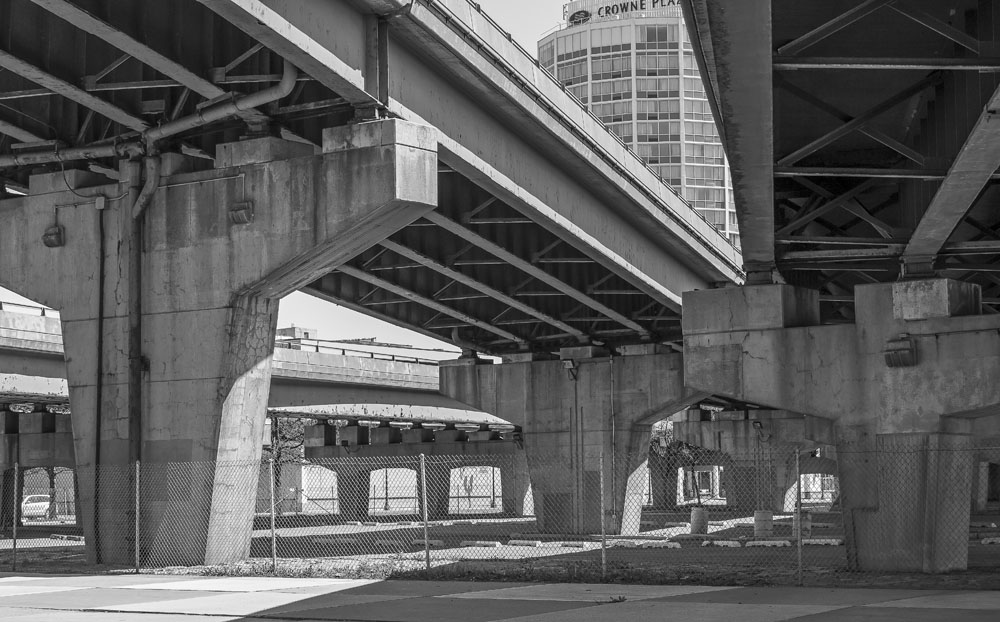
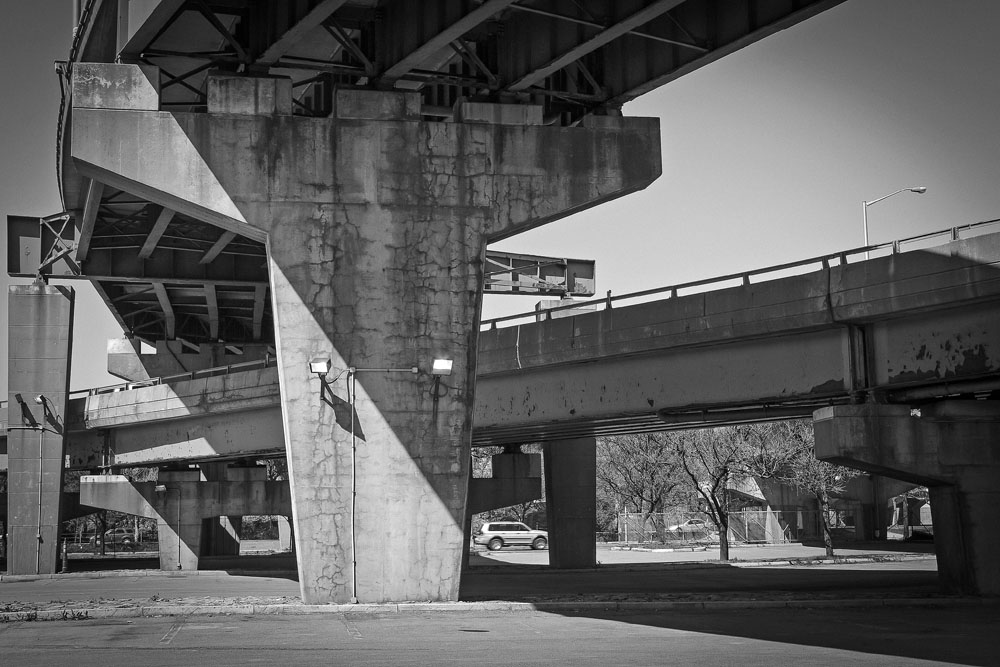
I also photographed the Interstate 81 viaduct/overpass running through downtown Syracuse. I feel I must also mention that this was my first attempt at shooting with DSLR cameras, after having made the transition from my beloved Pentax K1000 35mm camera (which still resides comfortably in my storage closet and can be pulled out when needed for a dose of photo nostalgia).
Here’s a Flickr album where you can see some of the images from the Structures in Decline project.
And I’ve added some others here.
Interstate 81 with Crowne Plaza (photo by Francis DiClemente)
Interstate 81 Structure (photo by Francis DiClemente)
Irving Avenue Apartment Building (photo by Francis DiClemente)
Townsend Street Building Front (photo by Francis DiClemente)
Fayetteville Auto Garage (photo by Francis DiClemente)
Empty Gas Station (photo by Francis DiClemente)
Westcott Street House: Side View (photo by Francis DiClemente)
Westcott Street House Porch (photo by Francis DiClemente)
I just wanted to point out that a feature story I wrote about two independent bookstores in Syracuse has been published on LivableCNY.com, a website that celebrates the people, places, businesses and leaders that make Central New York a special place to live and work. You can read the story here.
The story includes some photographs of the two stores, and I have added a few extra shots here. Thanks for taking a look.
Exterior of Books and Melodies bookstore on James Street in Syracuse, New York. (Photos by Francis DiClemente)
Books and Melodies bookstore in Syracuse, New York.
Examples of “ephemera” merchandise inside Books and Melodies bookstore.
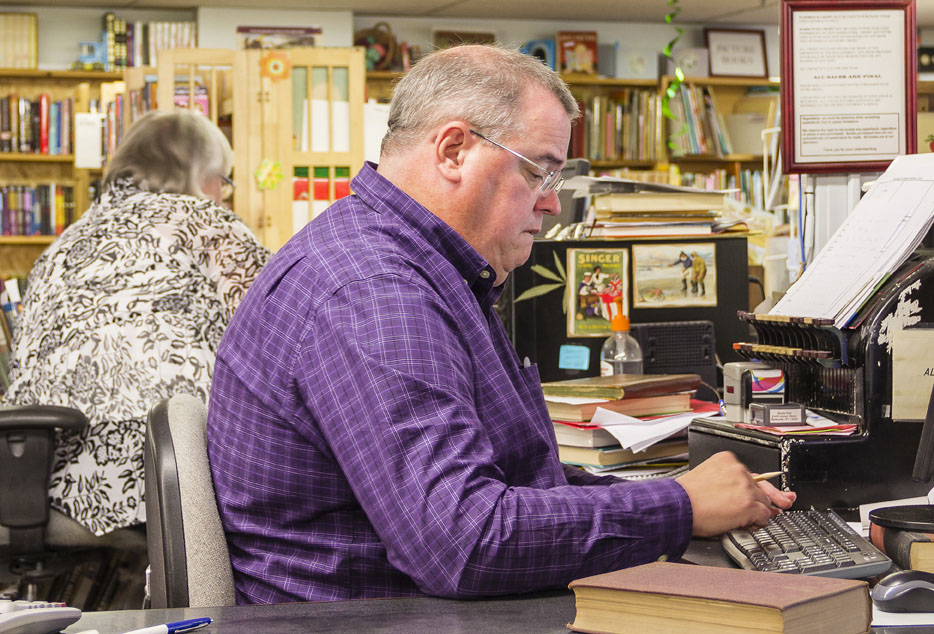
Books End owner Jim Roberts works behind the counter.
Books line shelves inside Books End bookstore in Syracuse, New York.
I am working on a long-term writing project (slogging through the research and first-draft stage) and haven’t had a chance to blog recently. But I wanted to point out that an essay I wrote, The Schoolyard Chase, appears in the Spring/Summer 2015 issue of South85 Journal, an online literary magazine. The piece chronicles a shameful incident from my youth, when I blurted out a racial epithet on the grounds of DeWitt Clinton elementary school in my hometown of Rome, New York. You can read the story here.
I discovered a gem of a short poetry book while roaming through Syracuse University’s Bird Library in search of a Nick Hornby novel (which I was unable to find).
The book,A Sense of Being by John Horder, was published in 1968 as part of the Phoenix Living Poet Series. The book runs 40 pages and I was able to read the entire work during my lunch hour.
A Sense of Being by John Horder.
I couldn’t find any biographical information about Horder online, but I consider his spare, philosophical poems very moving. They made me stop and reflect on my own life and ponder the points Horder raised in his text. And that to me seems like the purpose of good poetry—to remind the reader that time is passing and our existence is fleeting.
Here are a few of my favorite selections from the book.
A Sense of Being
There is nothing in me to assure me of my being.
That is why I so often think
About my heart beating.
Nothing to do with the fear of it stopping.
It’s just it’s so hard to imagine it – beating –
Just as it’s so hard to imagine that I derive from something
That actually works. Something that lives and breathes.
Something that has a sense of its own being.
Oh, it’s so very hard to imagine these things,
And I’ve always been told I was imaginative by nature.
Imagine: a tree has roots: it knows where it springs from.
We have parents. But the orphan and the murderer have one
thing in common.
Something vital in each of them has been wiped out.
It’s hard to explain exactly what. It’s something
A word or a glance from a parent may have set in motion
Or not. It’s not that this gives a child a sense of itself
Just like that. Nothing as simple as that.
But it can be the basis. Something to start from, something
that grows
And will eventually determine who and what he’s to be
Or not to be, as the case may be. Whether he is, or is not.
##
In A Time When I Was Nothing
In a time when I was nothing
I was strangely surprised to see
My name in The Times Literary Supplement.
In a time when I was nothing
There was an emptiness both inside and outside of me
And I felt no thing substantially.
In a time when I was nothing
It was most difficult to separate past from present
And the present moment held no sway.
In a time when I was nothing
There seemed no end to this state of non-being
The bottom had been kicked away from everything.
After a long time being nothing
There came at long last a dim realization
That one day I might eventually become something.
In the time when I was no one
There was simply nothing left to give anyone
And I found myself cut off from everyone.
In the time when I was no one
I knew no man, no woman
And that was when my sense of self began.
##
Everyman’s Vietnam
Our whole lives are designed as a means of escape
From the psychic forces that are deep down within.
We do anything rather than reckon with them.
Rather naively, we make call after call
Upon the telephone, in order to try exorcise them.
These forces which if submerged, first malinger, spit out
then wear our selves thin.
We cram our lives full to the brim with work.
We come home late, too tired even to speak to our wives.
We get drunk, which only makes our ulcers more peptic,
And still these forces won’t leave us alone.
Still they will never allow us a moment of rest.
Still we give them no real means of expression.
We don’t reckon with these forces.
They are demons.
They will run us to the grave
Unless we turn them to the good.
We underestimate their power.
Most of the time, we don’t even acknowledge that
they’re there.
More fool us.
##
Not Far Of
Eternity is not far off:
On a clear day
I feel it to be
Just out of sight.
The folly of men
Is there purposefully ignoring
What is so painfully obvious
On a clear day.
Horder, John. A Sense of Being. Phoenix Living Poet Series. London: Chatto & Windus/The Hogarth Press, 1968. Print.
I have a long-form essay published in the latest issue of the Connotation Press, an online literary magazine. You can read the story here. The piece includes reflections about my paternal grandmother, Amelia.
My grandmother Amelia sitting in her kitchen.
And in working on the essay, I did some research about Sundays that I did not include in the final edit of the piece. I found the information interesting, and so I am posting it here:
Many people have shared with me their contempt for Sundays, and there seems to be no shortage of psychiatric literature referring to a “Sunday neurosis” or a feeling of gloom related to the day.
Hungarian psychoanalyst Sandor Ferenczi, who died in 1933, is believed to have originated the term “Sunday neuroses.” In his book Further Contributions to the Theory and Technique of Psycho-Analysis (1927), Ferenczi wrote:
“I treated several neurotics the history of whose illness, recounted spontaneously or reproduced during the analysis, contained the information that certain nervous conditions developed—mostly in youth—on a certain day of the week, and had then regularly recurred.
Most of them experienced these periodic returns of the disturbances on Sundays. They were mostly headaches or stomach disturbances that were wont to appear on this day without any particular cause, and often utterly spoilt the young people’s one free day of the week.”
Ferenczi, Sandor. Further Contributions to the Theory and Technique of Psycho-Analysis. New York: Boni and Liveright Publishers, 1927.
Ferenczi states that on Sundays people are “free from all the fetters that the duties and compulsions of circumstances impose upon us.” As a result, we feel an inner liberation and repressed instincts are set free.
But he writes, “the neurotically disposed will be inclined just on such occasions to a reversal of affect, either because he has much too dangerous impulses to control which he must guard closely, particularly when tempted by the bad example of others; or because his hypersensitive conscience will not overlook even little omissions.”
In a sense, a person is given too much freedom on Sundays and this lack of control can produce anxiety.
A clearer line of thought regarding Sunday neurosis comes from Austrian neurologist and psychiatrist Viktor E. Frankl (1905-1997). Frankl was the founder of logotherapy and existential analysis. He referred to a prevailing “existential vacuum” occurring in the 20th century, often manifesting itself in a state of boredom. His theory, outlined in his book Man’s Search for Meaning, addressed feelings of discontentment on Sundays:
“Let us consider … “Sunday neurosis,” that kind of depression which afflicts people who become aware of the lack of content in their lives when the rush of the busy week is over and the void within themselves becomes manifest.”
Frankl, Viktor E., Man’s Search for Meaning. Boston: Beacon Press, 1959.
Looking to literature, one character who seems to epitomize this existential vacuum is Meursault, Albert Camus’ protagonist from the 1942 novel The Stranger.
Albert Camus
In chapter two of the book, Meursault wakes up on a Sunday morning after his lover Marie has left his room. His thoughts turn to the day of the week:
“I remembered it was a Sunday, and that put me off; I’ve never cared for Sundays.”
Meursault spends the day inside his flat, accomplishing nothing except passing time. He fries some eggs and eats them out of the pan, reads an old newspaper and later goes out on the balcony to observe the activity on the main street of the district. He sees a family dressed in “their Sunday best” taking an afternoon walk.
He smokes cigarettes and watches as night falls, the street lamps flickering on and the stars glimmering. Meursault eats his spaghetti dinner standing up and then closes the window when he feels a chill. His thoughts seem to reflect the mundane nature of Sundays: “It occurred to me that somehow I’d got through another Sunday, that Mother now was buried, and tomorrow I’d be going back to work as usual. Really, nothing in my life had changed.”
##
Two large-scale European studies have documented that some people experience the doldrums on Sundays.
In a 2009 study, Alpaslan Akay and Peter Martinsson from the Department of Economics at the University of Gothenburg in Sweden analyzed subjective well-being related to the day of the week. The researchers used the German Socio-Economic Panel (GSOEP), a large panel data set consisting of thousands of interviews over a twenty-year period, to come up with their findings.
Participants were asked: “How satisfied are you at present with your life, all things considered?” Zero indicated a person was completely dissatisfied and ten meant the subject was completely satisfied.
In the study, titled “Sundays Are Blue: Aren’t They? (The Day-of-the-Week Effect on Subjective Well-Being and Socio-Economic Status),” Akay and Martinsson reported “Sunday is the bluest day in Germany”—the day when “individuals on average report the lowest level of subjective well-being.”
They also found that weekends result in lower subjective well-being than weekdays.
A 2014 study published in the journal Applied Economics, “Rhythms and Cycles in Happiness,” examined time-dependent rhythms in happiness. The researchers from the University of Hamburg, Germany, also relied on data from the German Socio-Economic Panel, and determined that “the Sunday neurosis exists exclusively for men with a medium level of education and both men and women with high levels of education.”
Maennig, M. Steenbeck, M. Wilhelm. “Rhythms and Cycles in Happiness.” Applied Economics, 46(1), 2014: 70-78.
So is there a reason why some people experience the Sunday blues? Is there something inherent about Sunday that makes people unhappy? Does anxiety about the impending work week spur a feeling of disillusionment on Sundays?
One plausible explanation for the Sunday blues could be tied to relationship status. Sunday is traditionally a day set aside for family activities: attending church, doing yard work, eating a relaxing Sunday brunch or visiting a park or a lake. Hence, do the unattached feel disconnected from the rest of society on Sundays?
In her book Alone in America: The Search for Companionship (1986), Louise Bernikow reported on the loneliness experienced by single professional women on Sundays. Bernikow interviewed Houston psychotherapist Ellie Chaikind. Chaikind stated that her female patients described how Saturdays would be filled with domestic chores and “catching up,” while Sundays loomed “like a nightmare in the week.” Chaikind said the women would try to occupy their Sundays by doing activities like going to a bookstore or to a library.
Bernikow, Louise. Alone in America: The Search for Companionship. New York: Harper & Row, 1986.
Bernikow also interviewed a woman named Sally, an agent in the film business in Los Angeles. Sally told Bernikow she would work on a project to fill up her time or spend the weekend reading to help her forget about feeling lonely. But she stated, “Sunday nights are the worst.” Bernikow writes that for women like Sally, “it seems the rest of the world is hooked up and only the lonely person is floating free.”
##
And I will leave you with a short poem about the Sunday blues:
Sunday Malaise
The August sunlight
entering the room
cannot quell
the dreary feeling that
overcomes me every Sunday.
Lying in my bed,
listening to Brahms,
while trying to take a nap
to fill the afternoon.
Waking up later,
the room shrouded in darkness,
with the day erased,
bringing me hours closer
to Monday morning,
and a reset of the week—
safe from harm:
Sunday still far away.
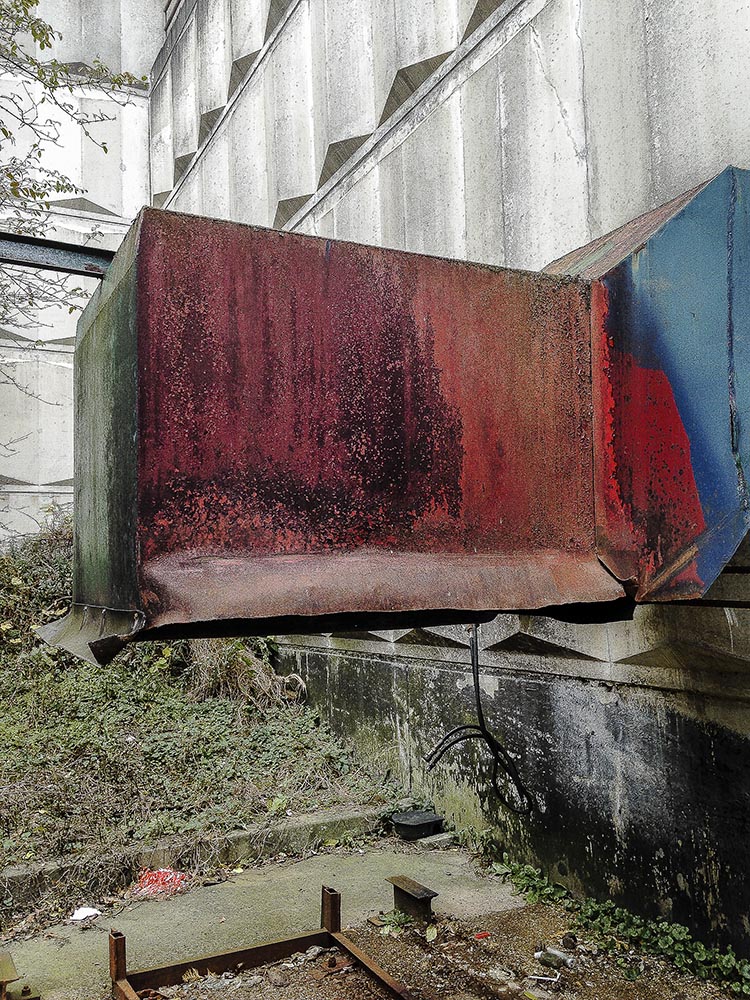
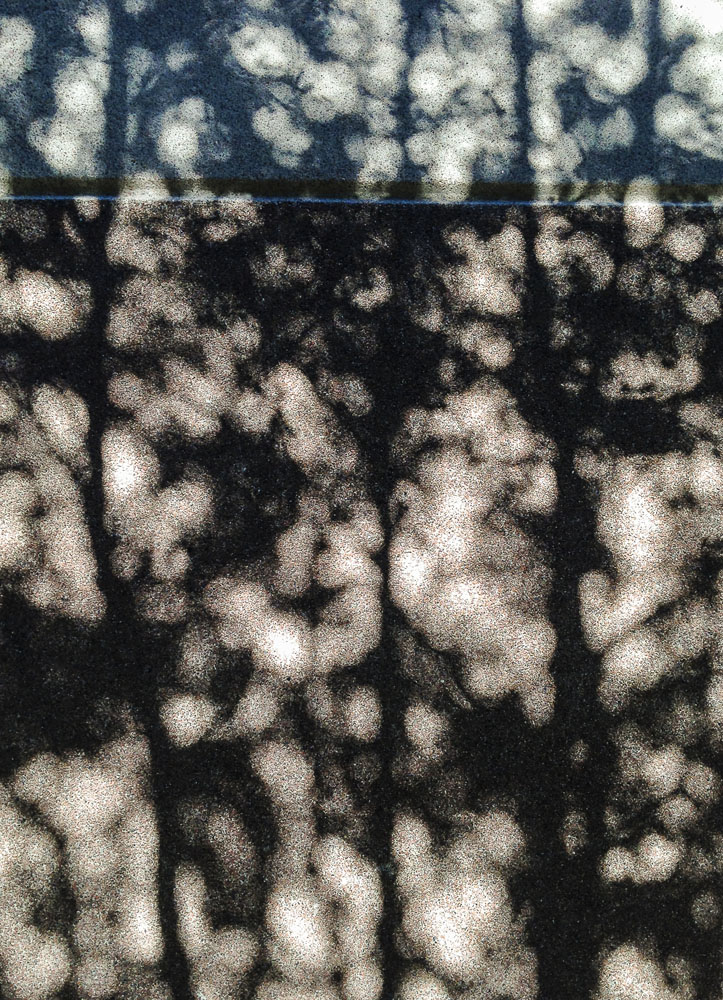
I broke down and bought an iPhone 5c last summer after the back plastic to my antiquated flip phone broke. And while this is no endorsement for Apple products, I soon discovered I was carrying a high-quality camera in my pocket.
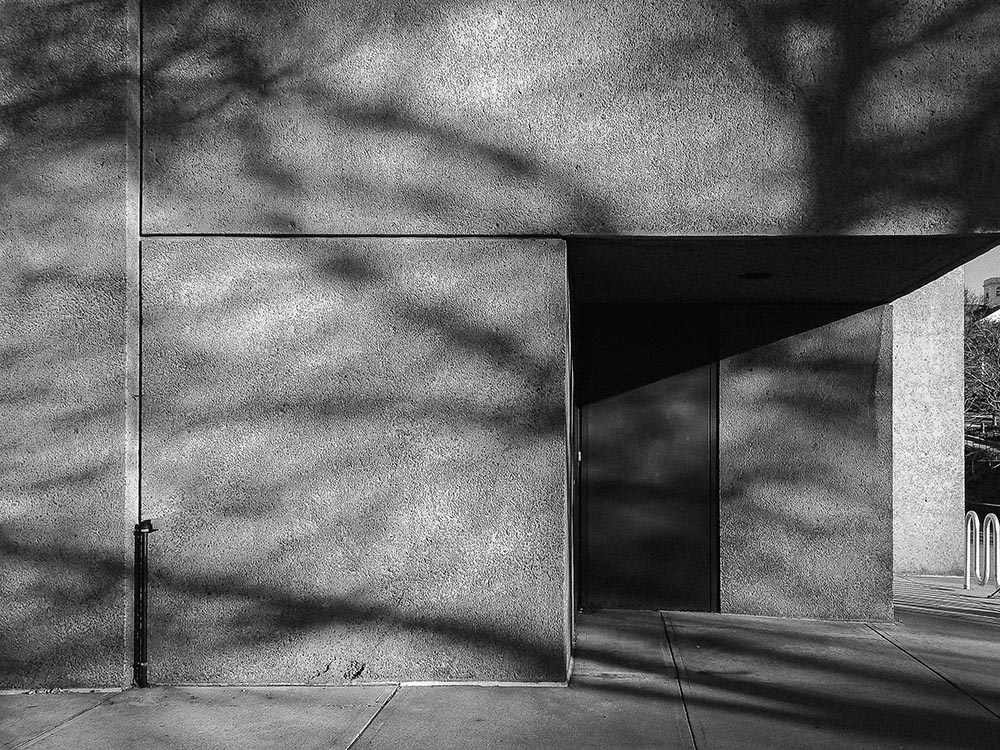
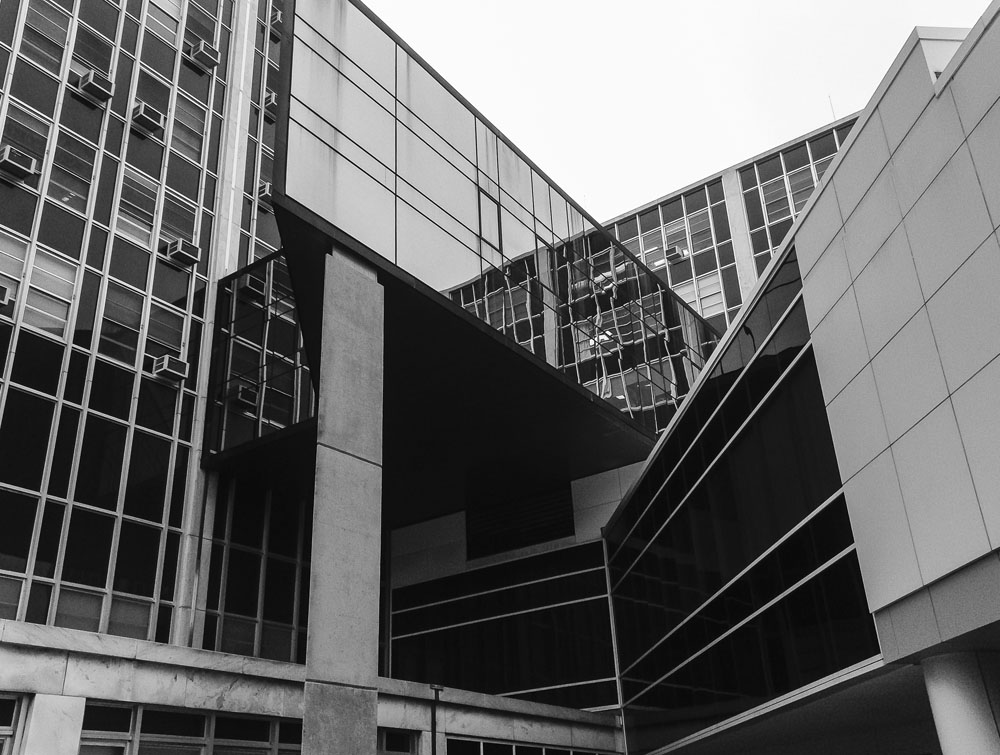
I began using the iPhone to take pictures in my city of Syracuse, in particular while walking back and forth to my job at Syracuse University. These were mundane images of parking garages, old buildings and backlit trees—objects no one else seemed to notice.
The Space Between Crouse Hospital and Golisano Children’s Hospital (Photo by Francis DiClemente)
I realized that if I did not capture the photos, the pictures would be lost, gone with the shift of the clouds or the onset of night. And it became a game for me to snatch images that would otherwise be unseen.
Buildings in Alley (Photo by Francis DiClemente)
Recording these moments allowed me to examine life more closely, to pay attention to my surroundings and to seek beauty in the everyday environment.
And I did not take any selfies. Instead, I was inspired by Humphrey Bogart’s POV in the classic film noir movie Dark Passage. My goal was to use the camera to look out, beyond myself, to explore the world around me in search of something memorable.
Dining Room Sunlight (Photo by Francis DiClemente)
Working on the project also helped me to rediscover my love of photography. It made me recall my youth when I would walk around my neighborhood in Rome, New York, taking pictures with my Pentax K1000 camera.
Institute for Human Performance (Photo by Francis DiClemente)
I also realized that in this age of technology, the best camera is the one you have with you when you need it. Here are more selections from the iPhone Ephemera series:
Crouse College (Photo by Francis DiClemente)
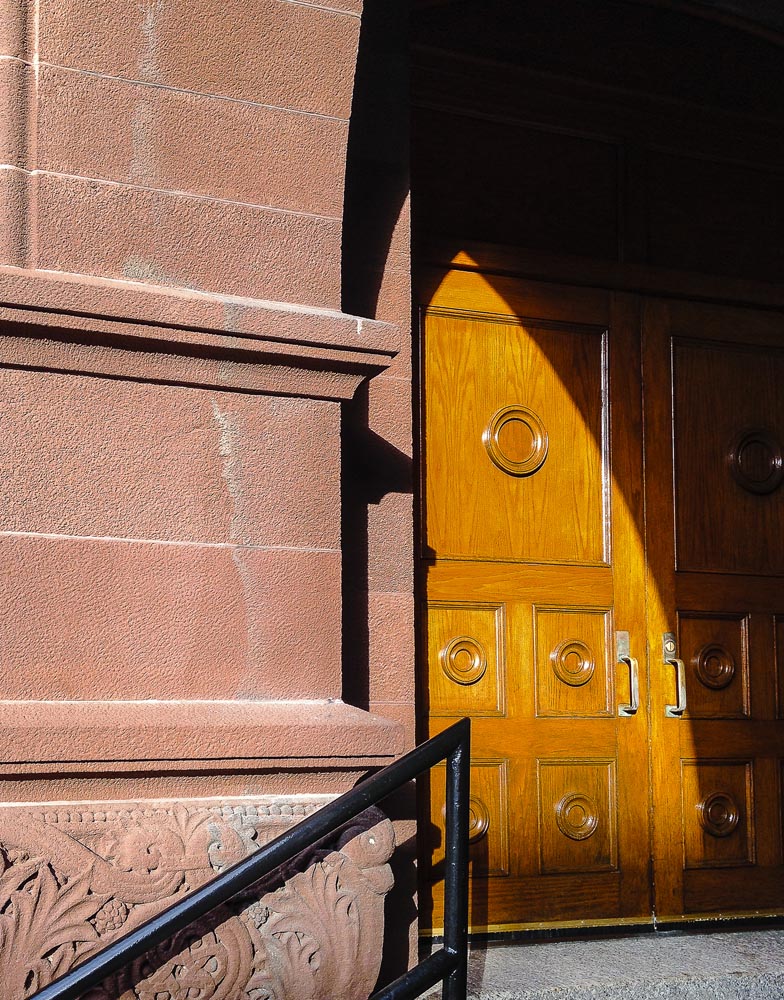
Crouse College Door (Photo by Francis DiClemente)
Hall of Languages Window (Photo by Francis DiClemente)
Hall of Languages Window Frame (Photo by Francis DiClemente)
Hall of Languages Facade (Photo by Francis DiClemente)
Church Windows (Photo by Francis DiClemente)
Apartment Stairwell and Window (Photo by Francis DiClemente)
Apartment Window with Sunlight (Photo by Francis DiClemente)
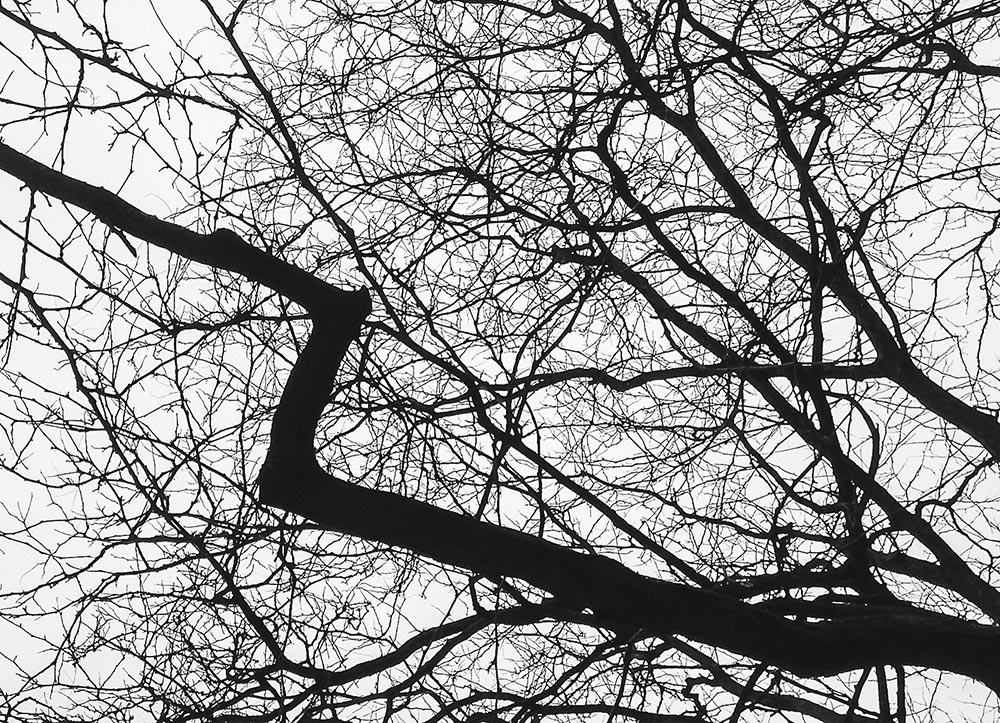
Elbow Tree Branch (Photo by Francis DiClemente)
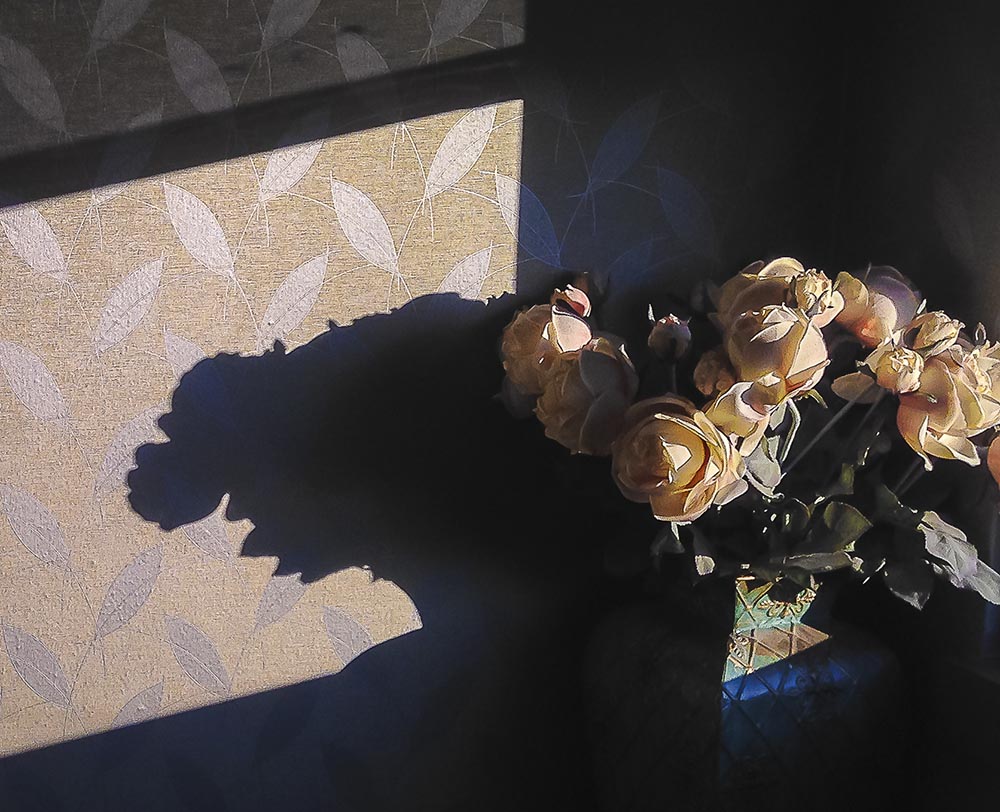
Fake Flowers in Medical Office (Photo by Francis DiClemente)
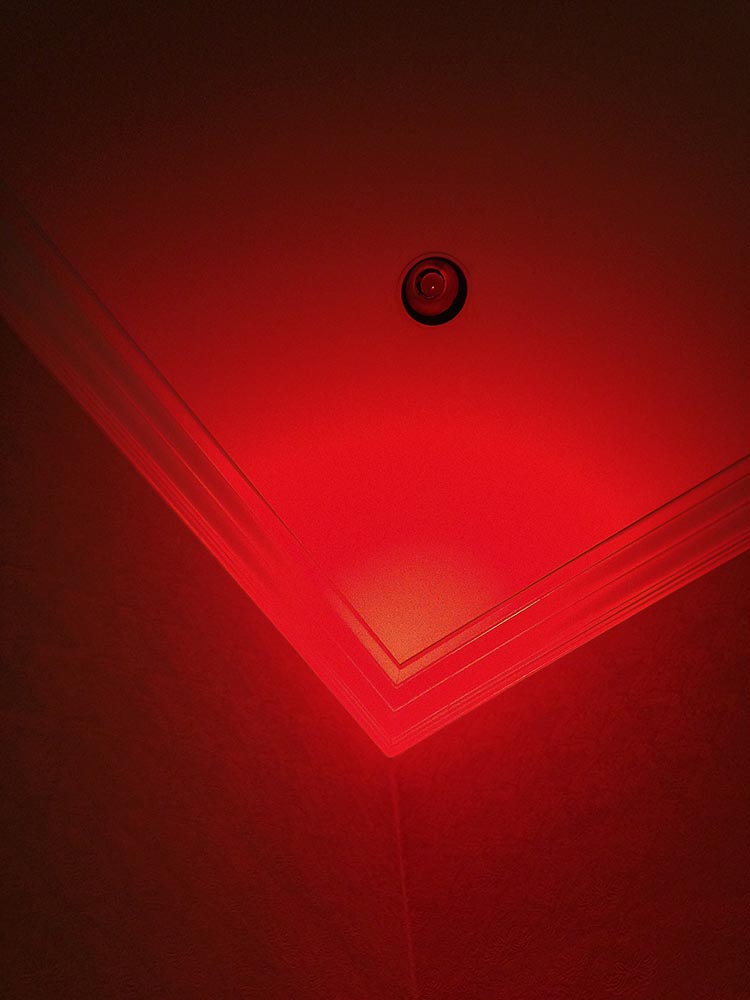
Hotel Hallway (Photo by Francis DiClemente)
Hotel Party Lights (Inspired by Rothko)
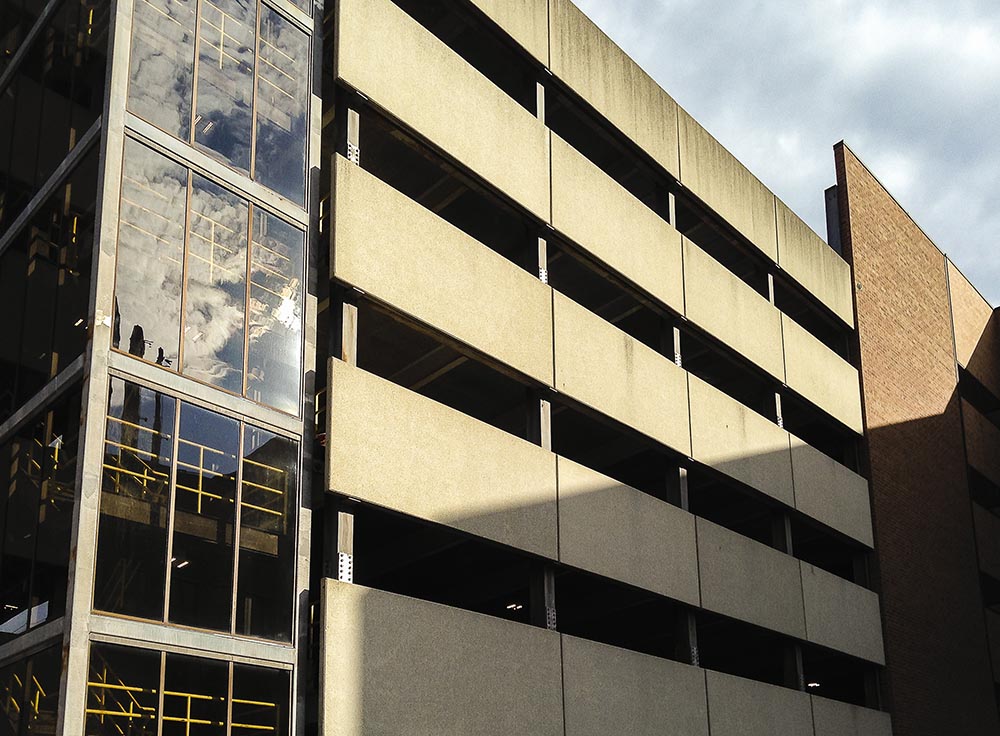
Parking Garage Sunlight (Photo by Francis DiClemente)
Behind the Nursing Home (Photo by Francis DiClemente)
Brush and Branches Behind the Nursing Home (Photo by Francis DiClemente)
Behind the Nursing Home, Looking East (Photo by Francis DiClemente)
Syracuse University Steps (Photo by Francis DiClemente)
Bird Library, Syracuse University (Photo by Francis DiClemente)
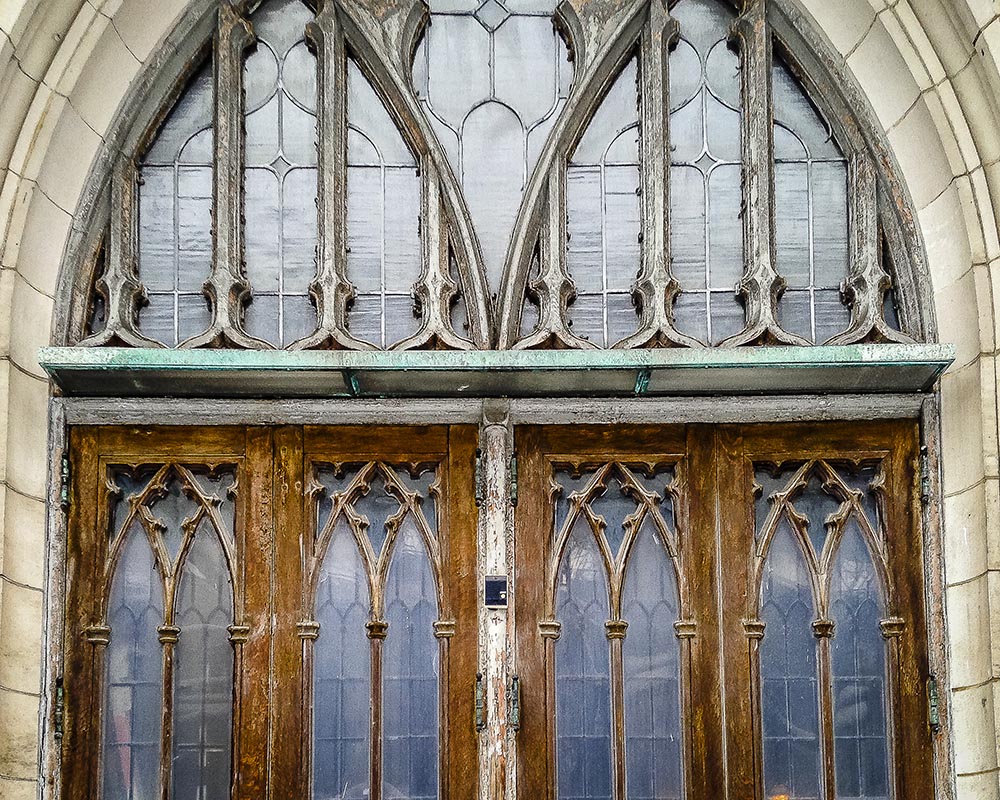
Church Doors (Photo by Francis DiClemente)
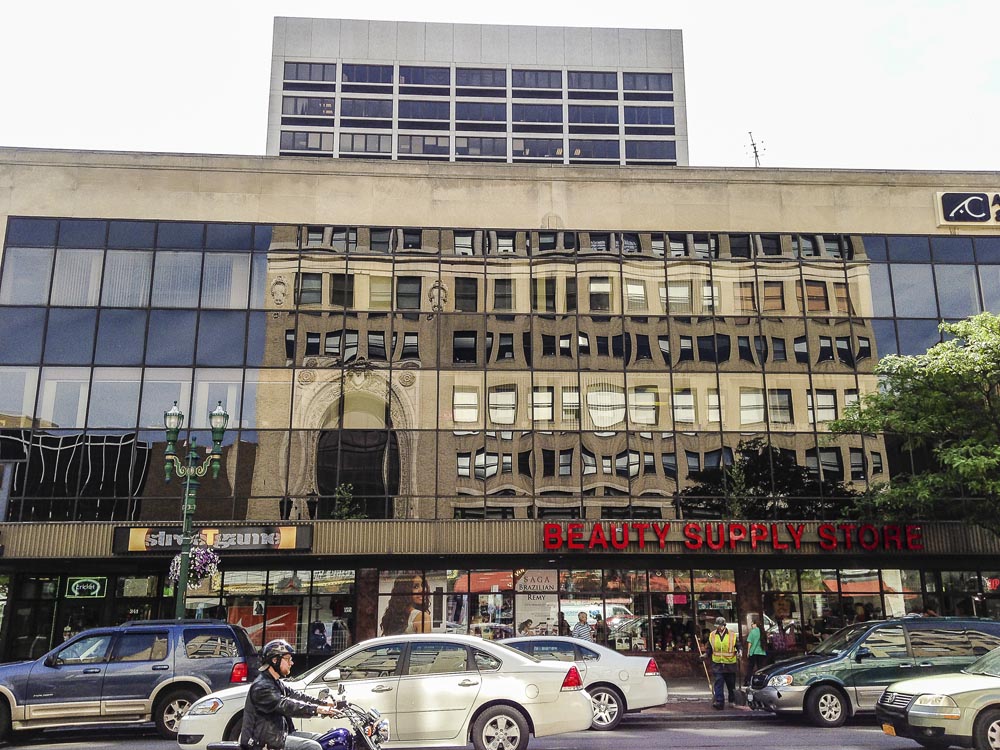
Salina Street (Photo by Francis DiClemente)
Genesee Grande Hotel (Photo by Francis DiClemente)
Carpet and Flooring Store (Photo by Francis DiClemente)
Parking Garage (Photo by Francis DiClemente)
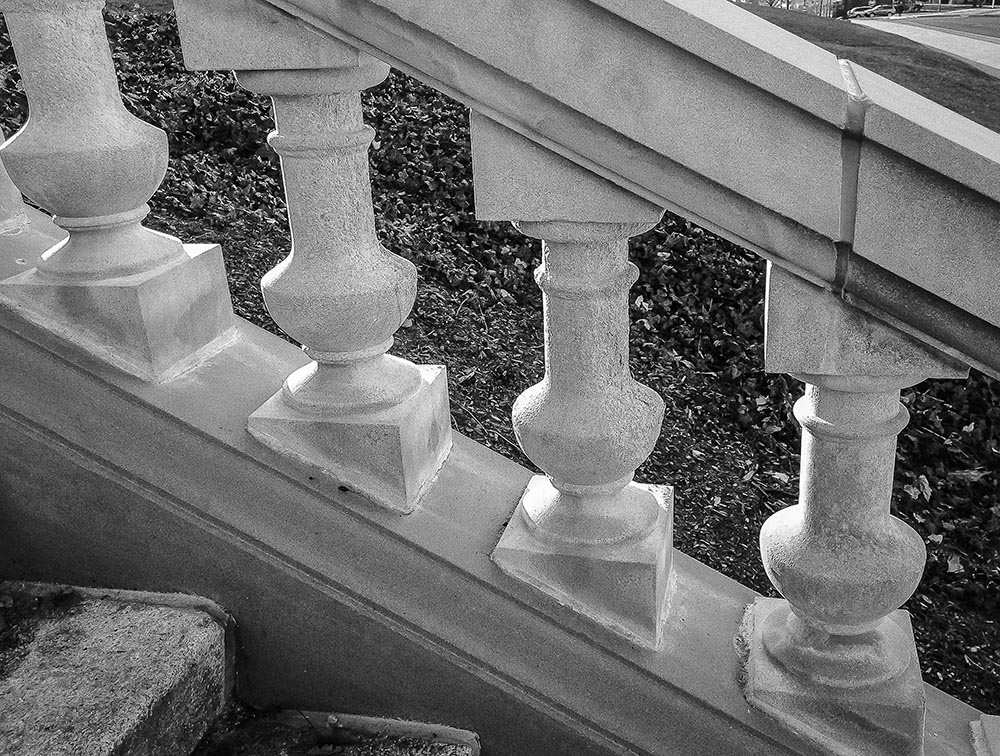
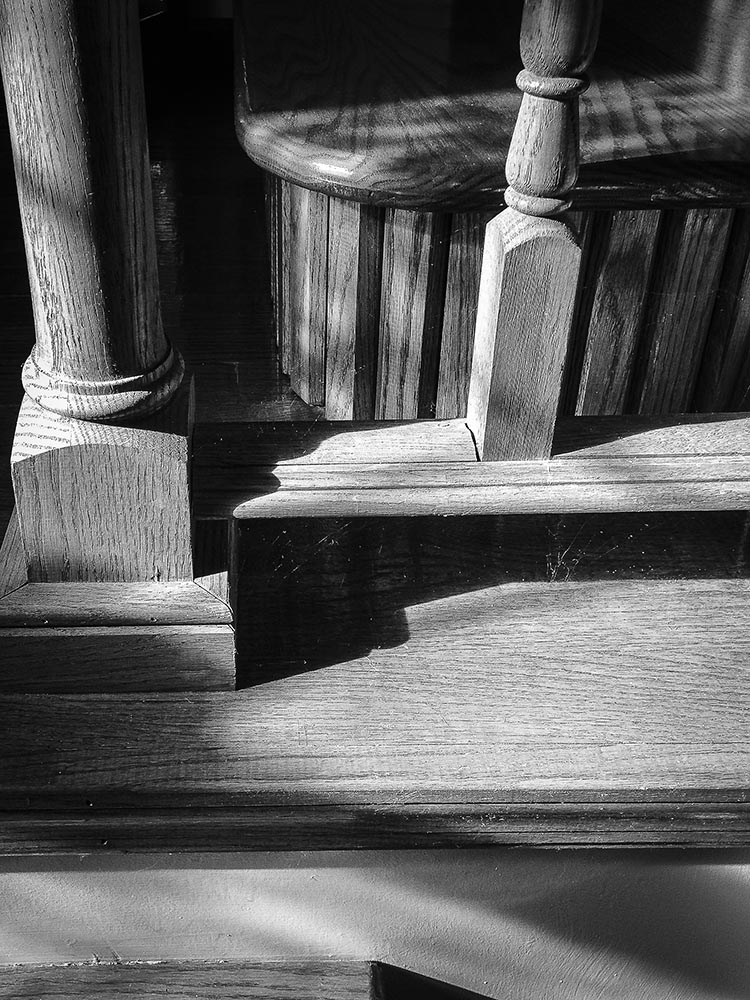
Banister Sunlight (Photo by Francis DiClemente)
Sunlight Against Newhouse School Facade (Photo by Francis DiClemente)
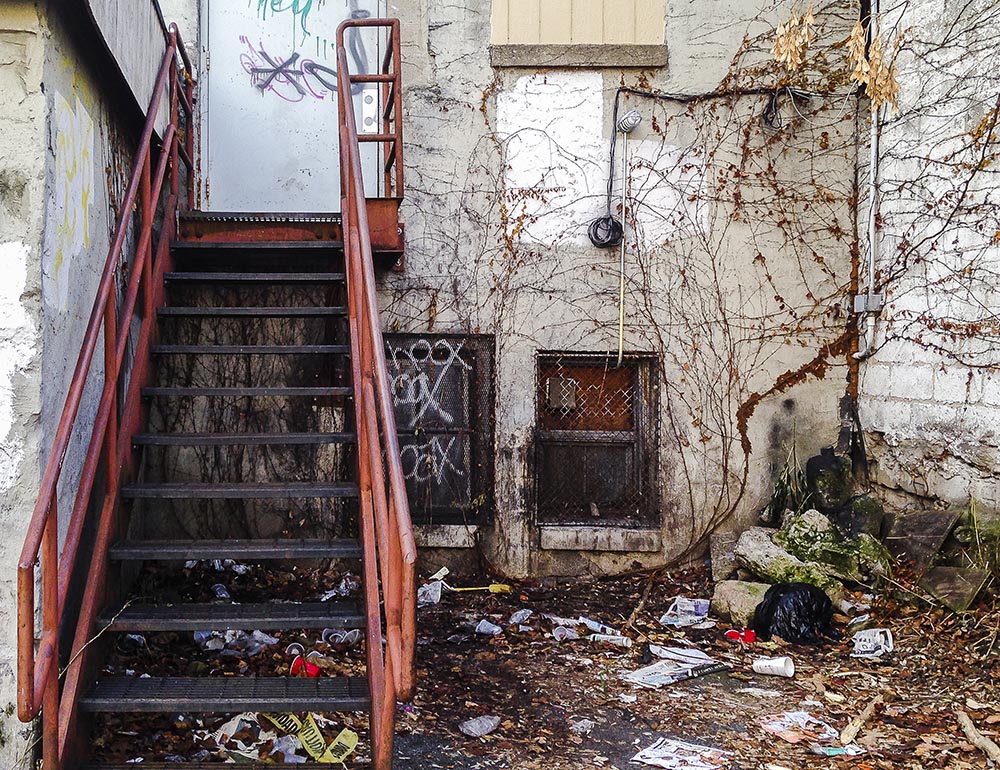
Staircase in Alley (Photo by Francis DiClemente)
Pay Phone (Photo by Francis DiClemente)
Sheraton Hotel Wall (Photo by Francis DiClemente)
Skaneateles Lake (Photo by Francis DiClemente)
Upstate University Hospital (Photo by Francis DiClemente)
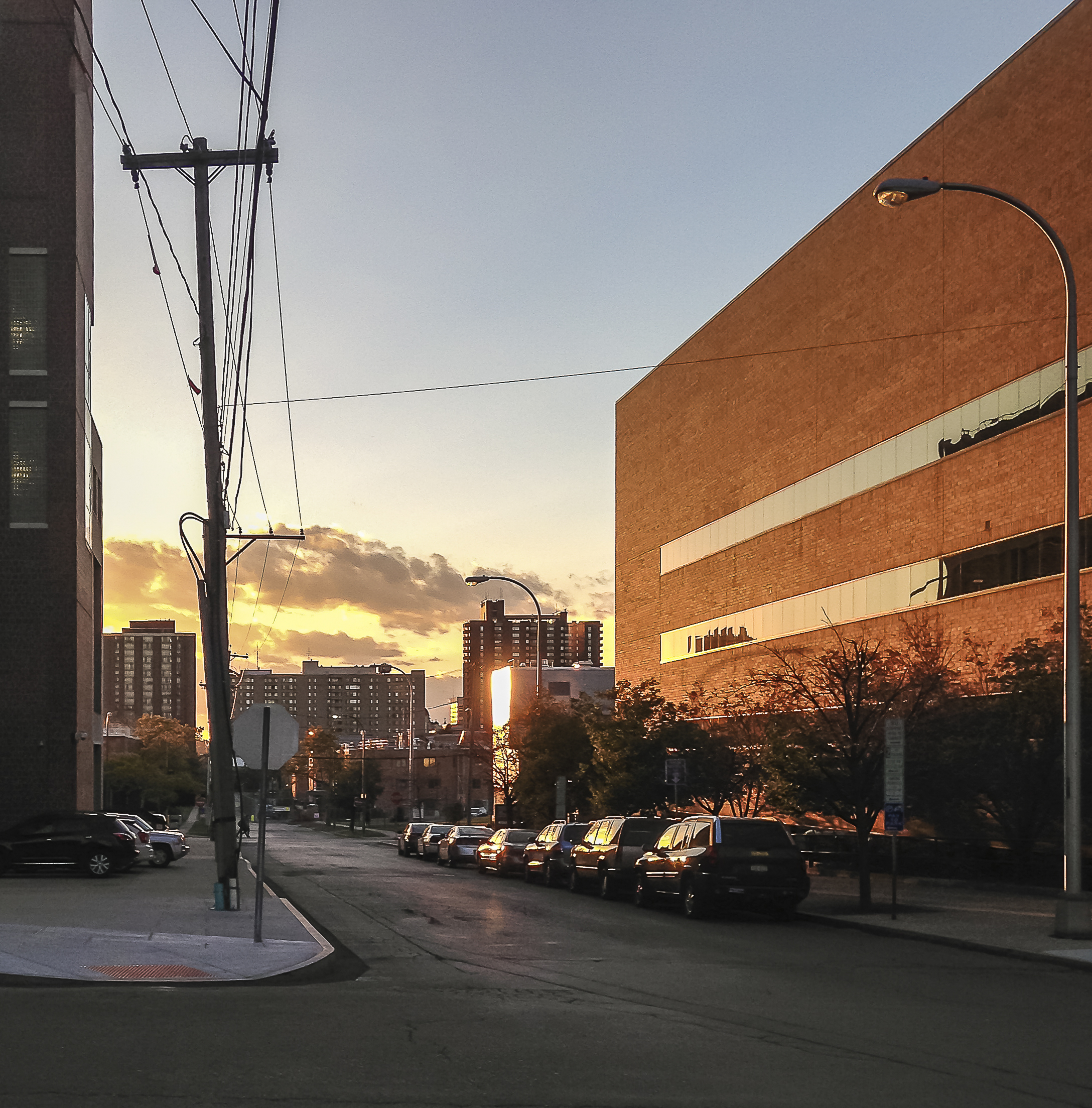
Morning on Madison Street (Photo by Francis DiClemente)
Mall Ceiling (Photo by Francis DiClemente)
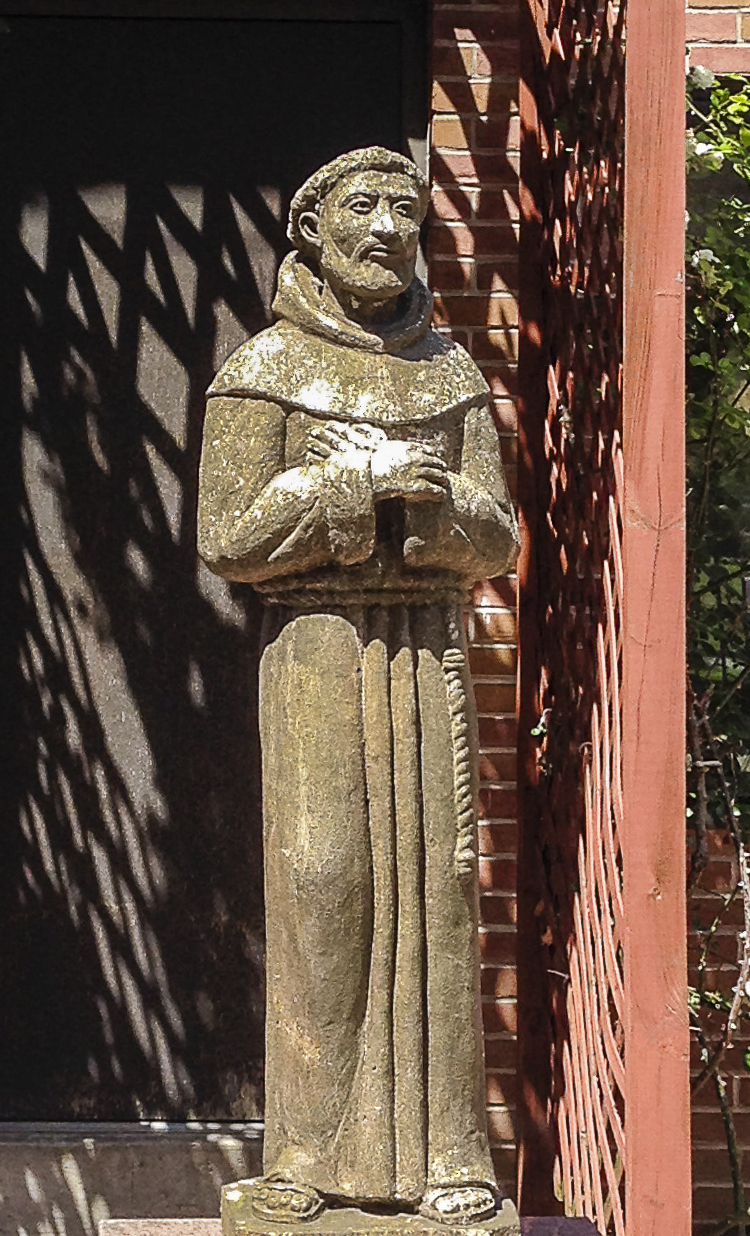
Saint Francis in Sunlight (Photo by Francis DiClemente)
I wrote this short piece a while ago, but it seems fitting for Good Friday so I am posting it now:
While attending a Saturday vigil mass at All Saints Church in Syracuse, I listen as Father Fred, a thin priest with glasses and a strong voice, recites the Words of Consecration. He retells the story of how Jesus, at his last meal, broke the bread, gave it to his disciples and said: “Take this, all of you, and eat of it. For this is my body which will be given up for you.”
Father Fred lifts the cup of wine and continues: “Take this, all of you, and drink from it, for this is the chalice of my blood, the blood of the new and eternal covenant …”
From my pew located on the left side of the church near the Fourth Station of the Cross—“Jesus Meets His Mother”—I look outside and see drops of rain splatter the mullioned window. Gray clouds hang low in the sky and the wind peels away leaves from some trees perched on a hill that slopes down to the parking lot.
The rain reminds me of the tears Mary must have shed when she saw her son standing in front of her. She must have felt helpless knowing she could do nothing to save him. She could only weep as she watched Jesus walk by on his way to Golgotha. She had to let him pass. She could not intervene or obstruct the will of God. She knew Christ’s mission had to be fulfilled.
Jesus Meets His Mother
But the hurt persisted. As a mother, she suffered the pain of watching her son carrying the heavy wooden cross on his shoulders. She saw him stripped, beaten, whipped and wearing a crown of thorns.
She shuddered when the Roman soldiers pounded the nails into his hands—the same hands she caressed when Jesus was a babe—and she must have closed her eyes and turned away when the lance pierced his side. Comforted by John, she stood idle as the soldiers taunted her son and then executed him. And then she held Jesus in her arms when they took his body down from the cross.
The Fourth Station
The mother of the Word Made Flesh endured the horror of this ordeal, and as the Blessed Virgin Mary, she did not allow hatred of the soldiers and the crowd to enter her heart. Yet as a woman, she could not hide the pain that gripped her face. Just like the rain that falls when the clouds fill with moisture, the hurt had to come out; and it was released in the tears that ran down her face—like the raindrops streaking the window beside my pew on this dark autumn afternoon.
I made a trip to the airport this morning because my wife was traveling overseas to visit her family in the Philippines. We took a cab to the airport, as my 2001 Ford Focus hatchback is loaded with my all-season tires and because, I must admit, I am petrified of driving in the snow. Even though I’m a central New York native and should be used to the snow by now, I’ve never regained a mastery of winter driving after living in Phoenix, Arizona, for eight years.
On my cab ride back to downtown Syracuse, I had the pleasure of riding with a local celebrity—Nick Marra, a.k.a. Funny Man Nick—a stand-up comic.
Nick Marra Headshot. Photo Courtesy of Nick Marra Facebook Page.
Nick told me he just got back to Syracuse after spending some time in Florida, where he performed several shows all over the state, including in Fort Myers, Sarasota and Miami. His acts included some 3 p.m. performances catering to the “early bird” senior citizen crowd. “It was great,” he said, “because I could book one show in the afternoon and do another one at night.”
As we talked while he drove, his sense of humor seemed evident.
He explained how after returning from Florida, he had to clear the snow off his cab at the garage parking lot, and there was no snow brush in his car. So he snagged a snow broom from the garage and then forgot to put it back before driving off. The broom with a long wooden handle was lying on the floor in the back seat, stretching from door to door. “Oh well, somebody at the garage will be pissed about it,” Nick said.
He also described the cold welcome a woman from San Diego received when she flew in to Syracuse yesterday from Southern California. She’s here visiting her boyfriend, who is stationed at Fort Drum. When she left San Diego the temperature was 75 degrees and sunny, and when she arrived in Watertown it was around minus 20 with wind chill.
I thought, she must really love her boyfriend if she’s willing to withstand such an extreme temperature fluctuation.
Nick said he drives the cab a few times a week and does stand-up shows on a freelance basis, traveling throughout the upstate region and also visiting Canada and other parts of the U.S. He performs regularly at the Funny Bone Comedy Club in Destiny USA.
Nick said securing bookings for comic shows has become more difficult in recent years. “In the old days you could call the club owners. Now it’s all through email and most of the time you don’t hear back from them.”
He also said a lot of the owners don’t like older comics. “They want guys who are young and slick and good looking.”
I believe Nick said he’s about fifty years old, and I mentioned that being older just means he has built a deeper repository of life lessons and stories to call upon. “Exactly,” he said. “I can talk about my family and my kids.”
As he pulled over to the side of the road on University Avenue near Starbucks, I thanked him for the ride and told him how cool I thought it was that he drives a cab in between his comedy acts. And he said, “Yeah, you got to ride with a stand-up comic. This ain’t no chicken shit cab driver.”
I laughed, opened the door and stepped out of the car. Nick turned his head, looked over the back of his seat and said, “Oh I guess I dropped you off right in the middle of a snowbank.” And then he chuckled.
He told me to look him up online and contact him if I want tickets for one of his shows. Judging by the preview I received in his cab, I surmise his act is worth a few laughs.
Nick Marra at the Funny Bone Comedy Club. Photo Courtesy of Nick Marra Facebook Page.
According the Central New York Playhouse website, Nick will be teaching a six-week, stand-up comedy class beginning March 7th. For more information, go here. For more information about Nick Marra, visit his website and Facebook page.
The universe has sent me a two-pronged message this week: 1) I am getting old, and 2) aging is taking its toll.
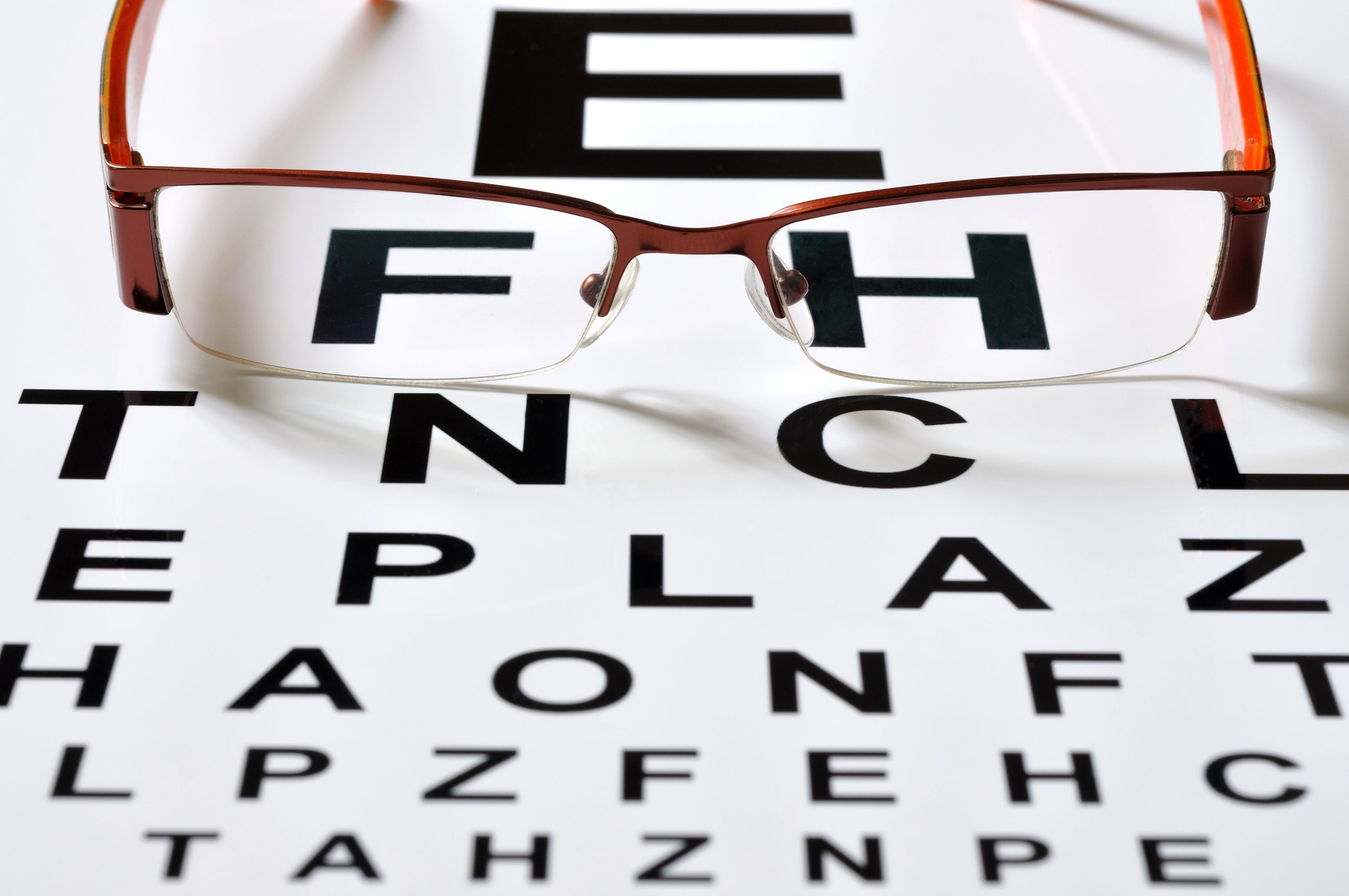
On Monday I visited the ophthalmologist for my annual checkup. The result: my first prescription for progressive lenses. I am nearsighted and I have an astigmatism. But I also need reading glasses (welcome to the mid-forties); right now I use four pairs of glasses on a daily basis—a distance and reading pair at work and a distance and reading pair at home.
I’m nervous about making the switch to the progressive lenses—afraid I’ll be driving down the road, dip my head to change the radio station, look up again and my eyes won’t be able to recover in time to spot the semi truck several yards in front of me. Will the road become a blurry mess?
But the eye doctor assured me that my eyes would adjust depending on my activities. He explained the top part of the lens is for distance and the bottom portion is for reading. He said, “Do you use a cell phone?” “Yes,” I said. “OK then, you’ll have no problem.”
I didn’t see the correlation, but I didn’t press him on the matter. Still, even after I fill the prescription at America’s Best, I intend to keep my four separated pairs as backup.
On Tuesday I went to a dental specialist for a consultation on two cracked molars, one on the upper right and one on the bottom right (#2, #31). After taking X-rays and running a series of pain sensitivity tests, the dentist offered me two options: 1) root canals on both teeth with follow-up crowns or 2) extraction. He said I still have “chewing surface” on the right, and the two teeth in question are in bad shape, meaning I could still have problems with them in the future.
I decided to go with extraction and the work is scheduled for next week. The woman at the reception desk processed the paperwork for the follow-up visit. I studied the estimate for the extraction, and the cost is no doubt cheaper than two root canals.
However, the wording next to the medical code on the bill failed to reassure me about the choice I had made. It read: “surgical removal of erupted tooth.” Erupted tooth? Yikes.
I am happy to say I do not have any other medical appointments scheduled this week. So, fingers crossed, I hope to avoid recording a hat trick of bad health news.































 Francis DiClemente