My Coffee Ritual

Originally published in the Bookends Review in August 2023.

I have an unhealthy obsession with the act of brewing coffee in my Mr. Coffee electric drip coffee machine. Why do I prefer this method to a single-serving Keurig or buying coffee at Dunkin’ Donuts or Starbucks on the way to work?

For one, nostalgia tugs at me, as I remember my deceased parents and how they taught me how to make coffee in the 1970s. When I was young, my dad worked as a salesman at the local Sears store, while my mom started her banking career on the teller line. They were low-income earners, but they never scrimped on the staple of coffee. There was always a canister of coffee and an electric drip coffee maker sitting on the Formica countertop in our kitchen (and in their separate residences after they divorced).

I remember my mother wearing a worried expression on her face every morning as she sat at the kitchen table, her fingers pressed to her forehead as she smoked Salem Light cigarettes and drank coffee from a light blue ceramic mug. She needed coffee to start the day, as if sipping the hot liquid prepared her to endure the responsibilities and financial burdens she confronted.

And while tastes vary, my parents instructed me on how to make a decent blend in the coffee pot. The rules were rigid; if you flouted them, the coffee came out too weak or too strong, and you would need to dump it in the sink and start all over again. And we couldn’t waste coffee in my house. The measurements were three scoops of coffee for every six cups of water, four scoops for eight cups of water—and, if we had company—the ratio went to five and ten or six and twelve.

As an adult, I’ve adjusted this formula to make a stronger blend, but I still relish the quotidian ritual of standing in my kitchen and preparing the coffee maker at night so it’s ready to go when I wake up in the morning.

I love measuring the water, tucking a paper filter in the filter basket, scooping out ground coffee—either Folgers or Maxwell House—smelling the aroma, noting the sound of the metal scoop digging in the plastic canister, dumping the coffee in the filter, and closing the lid.

And my Mr. Coffee coffee maker offers a no-frills, analog, tactile coffee-making experience. There’s no clock, no built-in alarm, no digital displays, no voice activation. The process requires exactness and following an ordered progression. The steps are simple: add water, add coffee, plug in, and turn on.

But this coffee-making ritual has a deeper significance, as you must wait for the coffee to brew. It’s not instantaneous, and the process reminds me of sex. There’s a buildup and a finish as the coffee maker hisses and spits and completes its cycle with a flourish of guttural sounds.

But I also draw a connection between coffee and death. Every time I scoop the coffee and drop it in the filter basket, I am reminded of my mortality. My mind reflects on burial scenes in movies, where family members toss shovelfuls of dirt on top of a coffin containing the body of a loved one. I think, “How many more pots of coffee will I make before I die? When will I take the last sip of coffee brewed in my kitchen?”

Standard

Ralph Rotella: The Sole of Syracuse

Our documentary short Ralph Rotella: The Sole of Syracuse has completed its festival run and is now available for viewing on YouTube.

Logline: Ralph Rotella plies the craft of shoe repair while offering kindness and a sense of community to his customers and the residents of Syracuse, New York.

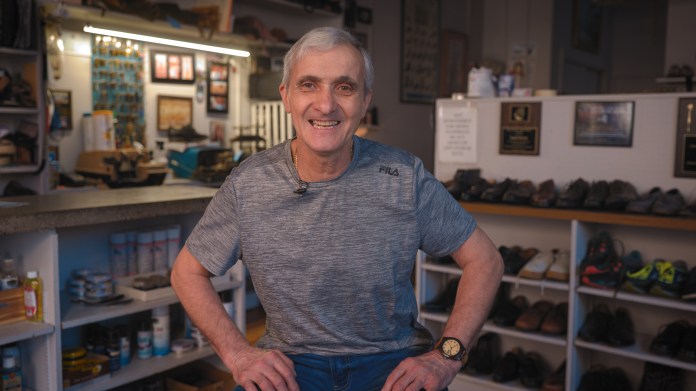
Since emigrating to the U.S. from Italy in the 1970s, Rotella has owned Discount Shoe Repair in downtown Syracuse. Each day he opens the store, fixes shoes, works with his hands using antiquated equipment, and converses with customers. In his daily interactions with people, Rotella reveals himself to be a witty, beatific figure who draws people to himself, building a sense of community with his shoe repair shop as a hive of activity. The film examines the value of work and what constitutes happiness, while also honoring an unsung hero in the Central New York community.

Photo Credit: Shane Johnson

Credits, Awards and Festivals:

Directed by Francis DiClemente and Shane Johnson
Produced by Francis DiClemente
Cinematography and Editing by Shane Johnson

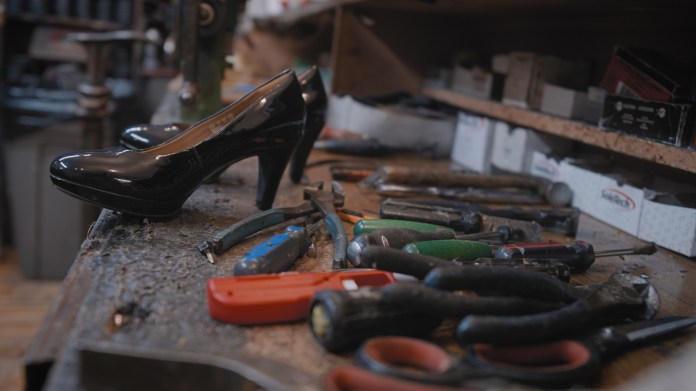
Ralph’s work bench. Photo Credit: Shane Johnson.

Awards:

Winner: Best Director, Short Films
New York Documentary Film Awards (2024)

Gold Remi Award in Film & Video Productions, sub-category Community
57th WorldFest-Houston International Film Festival (2024)

Film Festivals:

New York Documentary Film Awards
NewFilmmakers NY, Spring 2024 Screening Series
57th WorldFest-Houston International Film Festival
Culver City Film Festival
Syracuse International Film Festival

Standard

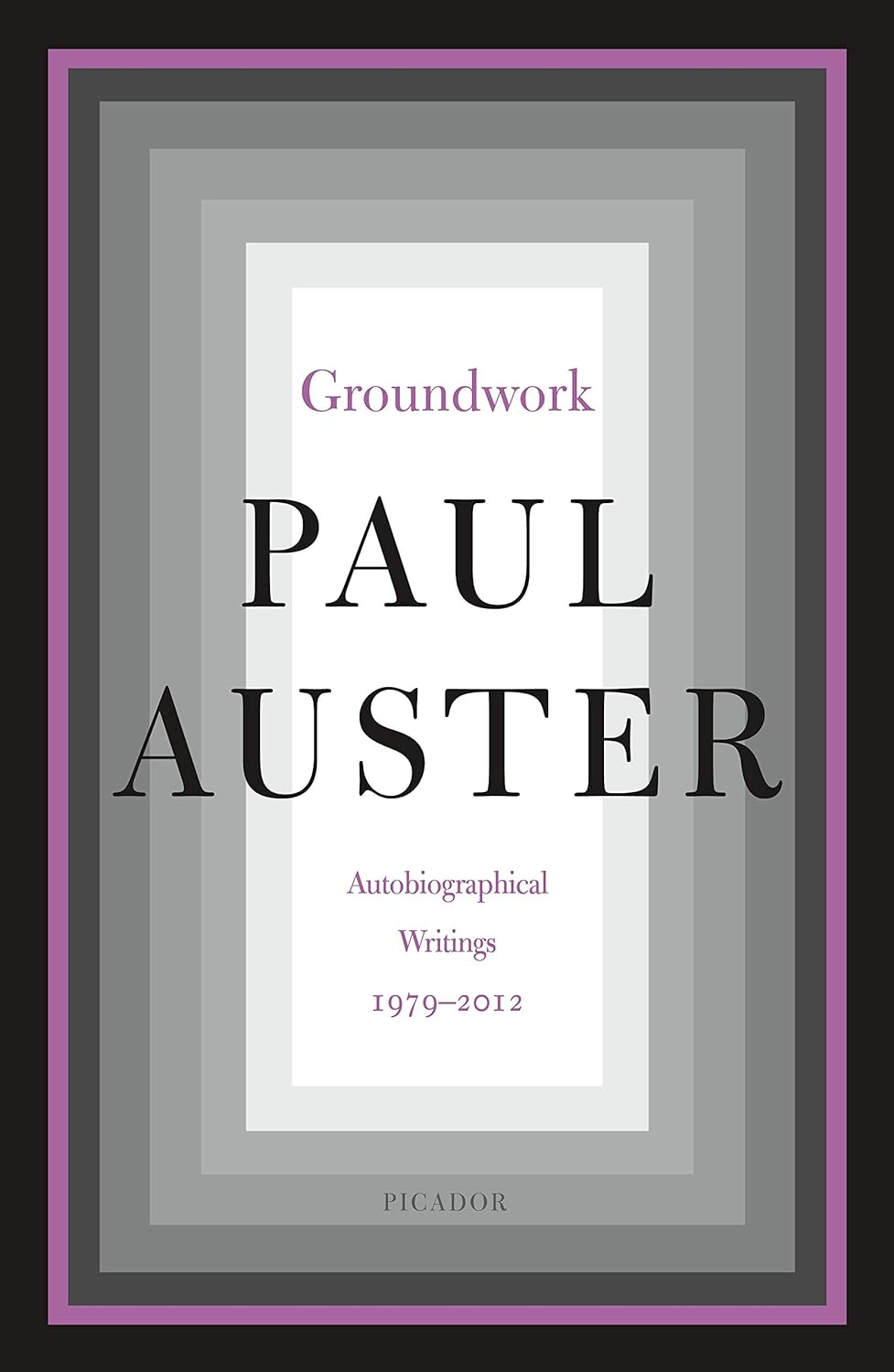
Groundwork by Paul Auster

I’m currently reading a work of collected nonfiction by the late author Paul Auster. Auster is one of my favorite writers, and his book The Invention of Solitude inspired me to work on my memoir project.

The title of the collected volume is Groundwork: Autobiographical Writings, 1979–2012, and it contains Auster’s memoir Hand to Mouth: A Chronicle of Early Failure (1996). Two great paragraphs illuminate the nature of working writers—writers employed in other professions to pay the bills and provide for their families, all while stealing time to scribble and peck away at personal writing projects (some of which may go unpublished).

The late author Paul Auster.

Auster’s words hit home for me because I’m a working writer who rises at 3:30 a.m. on weekdays to write. He inspired me by pointing out that other artists have blazed a similar path.

Excerpt from the book: 

“Becoming a writer is not a “career decision” like becoming a doctor or a policeman. You don’t choose it so much as get chosen, and once you accept the fact that you’re not fit for anything else, you have to be prepared to walk a long, hard road for the rest of your days. Unless you turn out to be a favorite of the gods (and woe to the man who banks on that), your work will never bring in enough to support you, and if you mean to have a roof over your head and not starve to death, you must resign yourself to doing other work to pay the bills. I understood all that, I was prepared for it, I had no complaints. In that respect, I was immensely lucky. I didn’t particularly want anything in the way of material goods, and the prospect of being poor didn’t frighten me. All I wanted was a chance to do the work I felt I had it in me to do.”

Groundwork by Paul Auster.

“Most writers lead double lives. They earn money at legitimate professions and carve out time for their writing as best they can: early in the morning, late at night, weekends, vacations. William Carlos Williams and Louis-Ferdinand Céline were doctors. Wallace Stevens worked for an insurance company. T.S. Eliot was a banker, then a publisher. Among my own acquaintances, the French poet Jacques Dupin is codirector of an art gallery in Paris. William Bronk, the American poet, managed his family’s coal and lumber business in upstate New York for over 40 years. Don DeLillo, Peter Carey, Salman Rushdie, and Elmore Leonard all worked for long stretches in advertising. Other writers teach. … Who can blame them? The salaries may not be big, but the work is steady and the hours good.”

Paul Auster. Groundwork: Autobiographical Writings, 1979–2012. Picador (2020).

Standard

Shoe Guy Available Online

My indie documentary short Ralph Rotella: The Sole of Syracuse, co-directed by my Syracuse University colleague Shane Johnson, has been selected as part of NewFilmmakers NY’s Spring 2024 Screening Series. Click on this link to watch the full film (until May 31).

Since emigrating to the U.S. from Italy in the 1970s, Ralph Rotella has owned Discount Shoe Repair in downtown Syracuse. Each day he opens the store, fixes shoes, works with his hands using antiquated equipment, and converses with customers.

Photo Credit: Shane Johnson

In his daily interactions with people, Rotella reveals himself to be a witty, beatific, George Bailey-type figure who draws people to himself, building a sense of community with his shoe repair shop as a hive of activity. The film examines the value of work and what constitutes happiness, while also honoring an unsung hero in the Central New York community.

Ralph’s work bench. Photo Credit: Shane Johnson.


Standard

Taking Ralph on the Road

I’m happy to announce that my indie documentary short Ralph Rotella: The Sole of Syracuse, co-directed by my Syracuse University colleague Shane Johnson, is an official selection of the 2023 Culver City Film Festival.

The film will be screened in the 2 p.m. block on Monday, Dec. 4 at Cinemark 18 and XD, 6081 Center Drive in  Los Angeles.

Standard

Ralph Rotella: The Sole of Syracuse

I’m happy to announce that my indie documentary short Ralph Rotella: The Sole of Syracuse, co-directed by my talented Syracuse University colleague Shane Johnson, will premiere at the Redhouse on Friday afternoon as an official entry of the Syracuse International Film Festival.

As many people in Central New York already know, Ralph is an amazing character with a generous heart, and it was a blast learning more about him.

After walking past his shop almost every day for the past few years, I felt compelled to go inside and talk to him. Inspired by Studs Terkel’s book Working, I wanted to do a mini doc to answer two questions: 1) Do people still get their shoes repaired in the 21st century 2) Can this man actually earn a living through shoe repair alone (taking into account the high cost of a downtown office building lease)? Or does he need an alternate income to survive?

Ralph Rotella hammering a heel. Photo Credit: Shane Johnson.

Ralph was a tough interview, and it was a challenge stringing together a narrative based on his terse sound bites, quips, and comedic digressions. And the film I thought I was making turned into something slightly different. But that’s the beauty of documentary filmmaking; if you take the time to pay attention to your subject, the story will reveal itself to you.

Photo Credit: Shane Johnson.

And through Shane’s fine cinematography—as we observed a “day in the life” of the shop, cinema verité style—we captured authentic personal moments that illustrate the bond Ralph shares with his customers on a daily basis.

This is Ralph’s work bench. It’s my favorite frame from the film. Photo Credit: Shane Johnson.

And here’s a little teaser we prepared in anticipation of the premiere.

Standard

Cake Mistake: A Short Story

I have some exciting news to share. I’m honored that I have a short story published in the latest issue of the Santa Fe Writers Project Quarterly (SFWP Quarterly). It’s called Cake Mistake and you can read it here.

Photo by Polina Tankilevitch.

Standard