Sidewalk Stories: Kindle Version

I’m excited to announce that there is a new Kindle version of my full-length poetry book Sidewalk Stories. The book is a collection of free-verse narrative and philosophical poems and was published by Kelsay Books in 2017.

Cover art by Donatas1205 (via Shutterstock).

Some of the story poems are autobiographical; other works are fictional, including some that imagine the inner life of animals. The collection explores the universal themes of gratitude, romance, self-esteem, family, illness, advancing age, and death.

Here are the blurbs from the back of the book:

What poet and songwriter Rob McKuen created during the turbulent late ’60s and ’70s in San Francisco with his book Stanyan Street and Other Sorrows, Francis DiClemente has accomplished in Sidewalk Stories. With the backdrop of the gritty streets of Syracuse, New York, DiClemente manages to create a poetic canvas and find beauty in the midst of the harsh realities of life in upstate New York.

—Joanne Storkan, screenwriter and film producer (Honest Engine Films)

Sidewalk Stories is an inspired collection of meditations and personal vignettes, vividly capturing the range of human experience. Francis DiClemente channels his inner Charles Bukowski to present an unflinching look at youth and encroaching middle age. Amidst unprepossessing urban decay, we meet a cast of characters whose stories of regret and missed opportunity are probably as much DiClemente’s as they are their own. That some of them manage to remain sanguine about the future—and their mortality—is part of DiClemente’s charm as a storyteller. These poems leap off the page and onto the sidewalks of our imagination.

—Rob Enslin, author/journalist

In Sidewalk Stories, poet Francis DiClemente invites us to be his companion on an intimate journey. We walk with him on gritty sidewalks, observe through his eyes the plight and the beauty of the beings with whom we share the world. An old woman, a blind man, a little girl twirling, even a rabbit and an overturned turtle are viewed with deep compassion. Here is a poet who doesn’t just look; he sees. And his vision is no less unflinching when he brings us with him into his own life.

But don’t worry. Though many of DiClemente’s poems are infused with a sense of loneliness, they also convey a stronger sense of courage and endurance. And watch for the irrepressible whimsy and humor as, for example, a cowboy lassos a star, and when the poet rants about the tyranny of poetry. With each poem in this collection, DiClemente will take you deep inside a thoughtful man, and then, deeper inside yourself.

—Kathleen Kramer, playwright and poet; author of the poetry collections Boiled Potato Blues and Planting Wild Grapes

And here are a few excerpts from the collection:

Stooped

An old woman hunched over,
looking down at the sidewalk,
adjusting her knit hat.
She limps forward,
shuffling along,
riddled with pain.
Her face reveals
the hurt she endures.
She receives no aid,
no intercession
from human or heaven.
I pass her on the sidewalk,
and I say a quick prayer
that her suffering wanes.
It may not do any good,
but I send the thought aloft
and hope someone is listening.
The woman crosses the street
and fades out of sight.
I then hear an inner voice say,
“You were there,
you could have helped her.”

Hard Shell

What goes through the mind of a turtle
When it’s sprawled on its back and can’t roll over?
Does it panic as its legs squirm in the air?
Does it stick out its tongue and try to scream for help?
Does it curse its maker as it writhes on the asphalt,
With the sun scorching its belly?
How long does it wait before giving up and accepting fate?

No. This turtle does not think.
It lacks the capacity to reason.
Instincts fire as it battles to survive:
“Get off your shell. Roll over. On your feet.”
It rocks from side to side as it labors to turn over.
It strains, twists, and kicks … but fails.

And no one will intervene—
There’s no Tom Sawyer kid with a hickory stick,
Skipping along and flipping the turtle over.
No semi truck rumbles down the road,
Stirring up a blast of air and setting the turtle upright.

It struggles alone, refusing to quit
As it attempts to conquer physics.
The turtle keeps working
Until the sun desiccates its flesh,
And it releases a final breath—
A low croak that goes unheard along the deserted road.
The turtle is gone and no one witnessed the fight.

Dinner in a Chinese Restaurant

February in Syracuse—
dinner at a Chinese restaurant
on a frigid Wednesday night.
Panda West on Marshall Street.
Steamed chicken with mixed vegetables
and a piping hot kettle of oolong tea.
Lights dimmed and nearby diners
conversing at low volume.
A Middle Eastern man discusses the
practice of anesthesiology
with a woman (a female colleague I presume),
who leans over the table toward the man,
eager to comprehend each word
emanating from his dark lips.

I scan the New York Times arts section
as I gobble my dinner,
then call to the waiter to box up the leftovers.
I pay the bill, leave the tip, and
depart the warmth of the restaurant,
returning to the dampness of Marshall Street.
I walk down South Crouse Avenue,
turn right on East Genesee Street,
and arrive at the door to my empty apartment.

I put the leftovers in the refrigerator,
and feel relieved that dinner is over.
I’m glad I don’t need to fix anything,
or eat another meal at my living room card table,
with a Netflix movie streaming on my laptop computer.

Tonight I was a person.
Tonight I ate dinner in a restaurant,
surrounded by human beings.
And even if I wasn’t part of their conversations,
at least I was there, out in the world,
regardless of being alone.

The Auction

If my poems were auctioned off,
what sum would they fetch?
What value would they hold
in the marketplace?
What dollar amount would anyone pay
for these words coalescing on paper,
these mad scribbles in verse form?
I can see it now:
Sotheby’s would start the bidding
and no one would make an offer.
The gavel would strike and the bidding close.
But before the auctioneer could move on
to the next item in the evening’s catalog,
I would raise my hand and ask
if I could pick up the unclaimed poems
and take them back to my room,
where they could stay free of charge.

Ode to Thomas Wolfe

A pebble, a brook, a passageway
to time flowing in reverse,
a mirrored labyrinth reflecting
memories of adolescence.
A path leading back
to the days of my youth,
from whence I came,
to where I am,
brimming with a hunger—
a gnawing restlessness
that never wanes.

Landscape

Beauty abounds.
Just look around
and you will see—
a quivering leaf,
a patch of grass,
billowing clouds,
and a slash of light
beneath the bridge.
It’s not a bad world, really—
we just need
to train our eyes
to gaze with wonder,
and marvel at the
transcendental pageantry.
It’s there before you.
But you must zoom out,
zoom out
and refocus the image.
There. Hold it.
Do you see it now?

Rise

To find peace
One must
Unravel the self,
Let it fall away,
Drop to the floor.
Unencumbered by
This anchor weight,
The man or woman
Who pursues
Spiritual freedom
Discovers the
Ability to soar.

Standard

Sidewalk Discoveries

One of the joys of walking to work is making discoveries along the way. People, nature, art, and inanimate objects capture my attention as I stride toward downtown Syracuse.

This morning, I saw a pile of clothes and some plastic trash bags strewn on the sidewalk near the intersection of South Crouse Avenue and East Genesee Street. I walked past the pile, then backed up and snapped a picture. I was filled with pity as I surveyed the situation, and I wondered what happened to the owner of the clothes—likely a female. Obviously, I don’t know the reason why the clothes were dumped on the sidewalk, but there must be a sad story behind it.

Clothes on the sidewalk. Photo by Francis DiClemente.

Later in my foot-powered commute, I found some medical notes and records on the sidewalk near Upstate Health Care Center, close to the intersection of Harrison and Townsend streets.

Being a medical records junkie, I grabbed the papers and stuffed them in my bookbag. Later when I reviewed them, I was intrigued by the doctor’s handwriting and the medical terminology listed. I hope and pray the notes refer to more than one patient, because if one patient has all of these issues, that person is in serious trouble (or could be dead by now). Words that stood out for me: hypokalemia (low potassium), neurosurgery, pancreatic cancer, cerebral aneurysms, craniotomy (opening the skull), renal cause, liver and palliative consult.

Handwritten medical notes.

Along with the handwritten notes, there were a few computer printout pages. They detailed the hospital admission of a 56-year-old man with COPD (chronic obstructive pulmonary disease) and a history of hypoxic hypercarbic respiratory failure “who continues to smoke few cigarettes a day.” The records state “the patient has been losing weight despite good appetite” and has “severe protein calorie malnutrition.”

The patient’s BMI (body mass index) was calculated at 14.4, which would make him very underweight. But the good news—he was discharged with prescriptions for oral steroids and other medications and “will continue on his routine respiratory neb (nebulizer?) treatment regimen w/ Budesonide and DuoNeb (inhaler).”

Medical records.

Both the clothes on the sidewalk and the patient’s records reminded me just how harsh, fleeting and fragile life can be. It doesn’t take much for us to have our shit tossed on the street or end up in the hospital.

I remember my sodium and potassium levels crashing in the past, sending me to the ER, so I can relate to the male patient’s distress. He was probably scared as he underwent a battery of tests and was examined by multiple doctors. I wonder if he’s resting comfortably at home, eating enough food and breathing without difficulty.

Standard

Walking Commuter Notes

MORNING

I walk to work almost every morning—following East Genesee Street toward downtown Syracuse. Before I leave my apartment building, I usually hang out with my wife Pam and son Colin while they wait for Colin’s school bus to arrive.

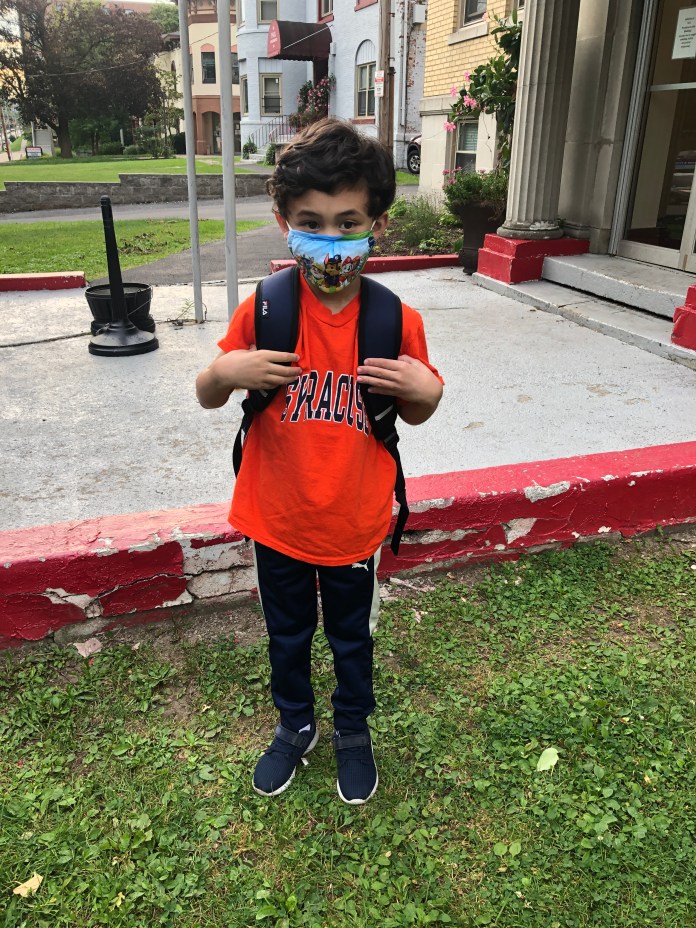
Today, underneath a gray sky spitting drizzle, Colin entertains himself by jumping up and down, flapping his hands and pulling his Paw Patrol mask down around his chin.

“Ah, put up your mask when you go on the bus and when you’re inside school,” Pam tells him. He listens and pulls up his mask. Colin is in kindergarten, and he has autism.

He’s dressed in sweatpants and a blue hooded sweat jacket. A maroon and navy blue Fila book bag—packed with the crunchy snacks he likes to eat—is slung over his shoulder.

When it’s time for me to break away, I remove my mask and plaster his face with a couple of quick kisses. Pam then says to Colin, “Ah, say goodbye to daddy.” When his eyes remain cast elsewhere, she holds his face gently and points it in my direction. She holds his hand and helps him to wave. “Come on now. Say bye-bye.”

“Bye-bye daddy,” he says with a clipped delivery.

“Good job,” Pam says.

I start walking on the sidewalk along Genesee, turning my head and waving toward my family, their figures looking tiny while standing under the green awning of the tan, brick building. I see his bus turning onto Genesee Street, and I pray that Colin will climb aboard safely, find his seat up front and remain in place while the bus accelerates.

Then a thought pops into my head. I don’t invite it, but it emerges anyway.

I think: This could be the last time I ever see my wife and son. I realize I am not invincible, that tragedy could strike at any moment and my loved ones could be taken away in an instant.

I look up to the clouds and try to shake the dark thought from my mind, turning my attention to work-related tasks I need to complete.

AFTERNOON

In the late afternoon, I leave the Nancy Cantor Warehouse in downtown Syracuse, walking in a steady rain along Washington Street. I cross State Street and then walk toward Fayette Street. I pass by a standpipe, and I continue on my way. But then I remember Fountain, the ready-made sculpture of a urinal by French artist Marcel Duchamp.

Marcel Duchamp’s 1917 sculpture Fountain.

I backtrack, pull out my iPhone and snap a few pictures—inspired by Duchamp’s iconic still life artwork.

According to Merriam-Webster, a standpipe is a “high vertical pipe or reservoir that is used to secure a uniform pressure in a water-supply system.” I’ve seen the term before, but I never knew the meaning. But I looked it up online as soon as I got home.

Syracuse Standpipe. Photo by Francis DiClemente.

And I guess that’s the beauty of a walking commute in a city—if you pay attention to your surroundings, you can discover things that other people might miss. It takes practice to heighten your senses and elevate your awareness. But as an urban explorer, if I am willing to pay close attention, it seems the universe is willing to reward me with satisfying visual stimuli. In my case, it makes the everyday extraordinary and the mundane magical (forgive the alliteration).

Here are some recent photos from my walking commute:

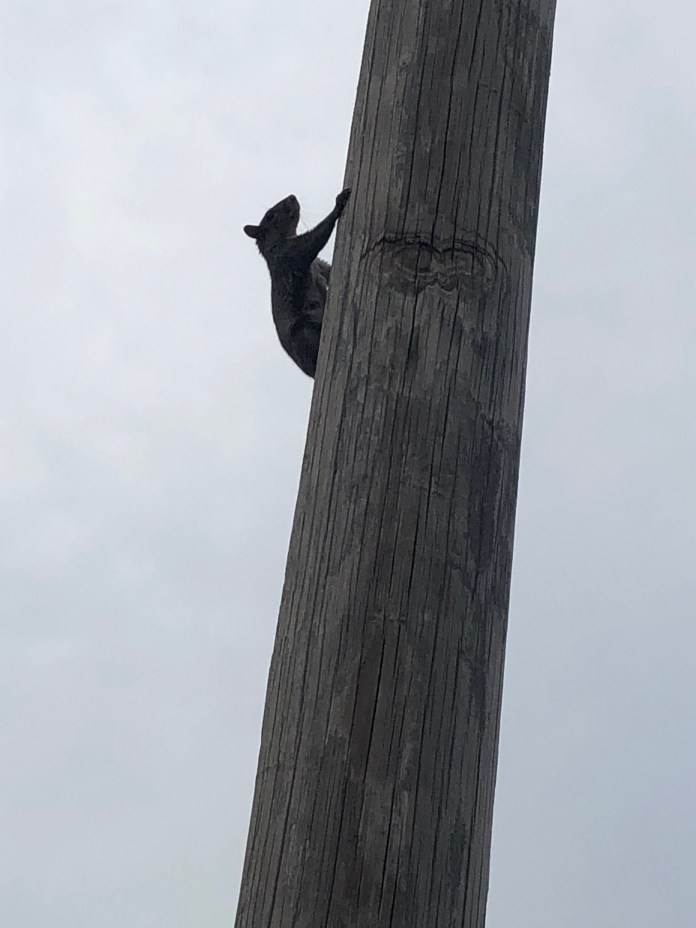
Squirrel on telephone pole. Photo by Francis DiClemente.

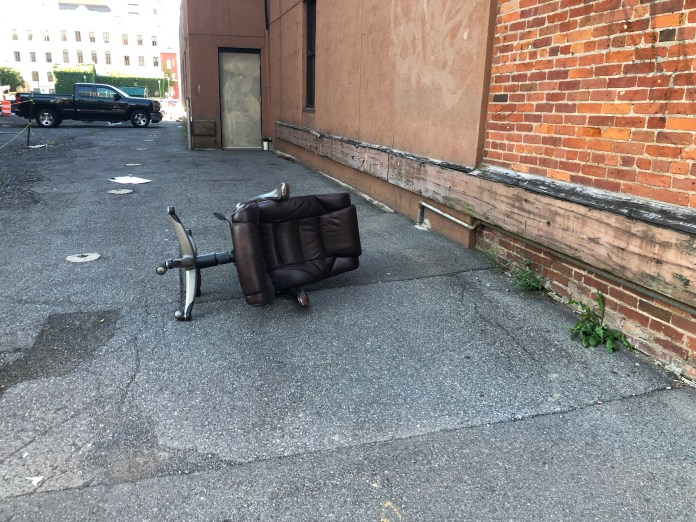
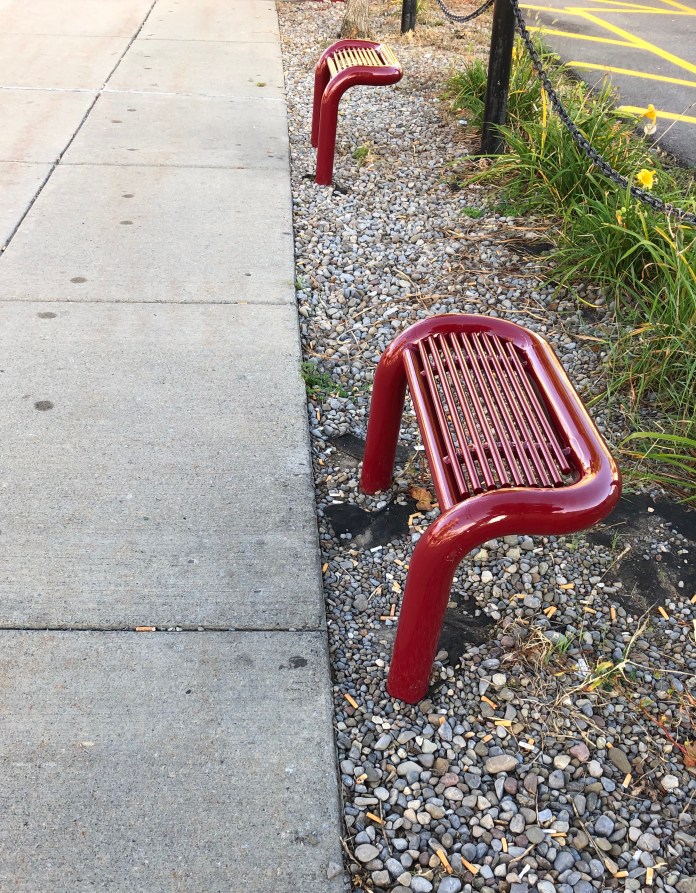
Chair tipped over. Photo by Francis DiClemente.

Fountain. Photo by Francis DiClemente.

Alley. Photo by Francis DiClemente.

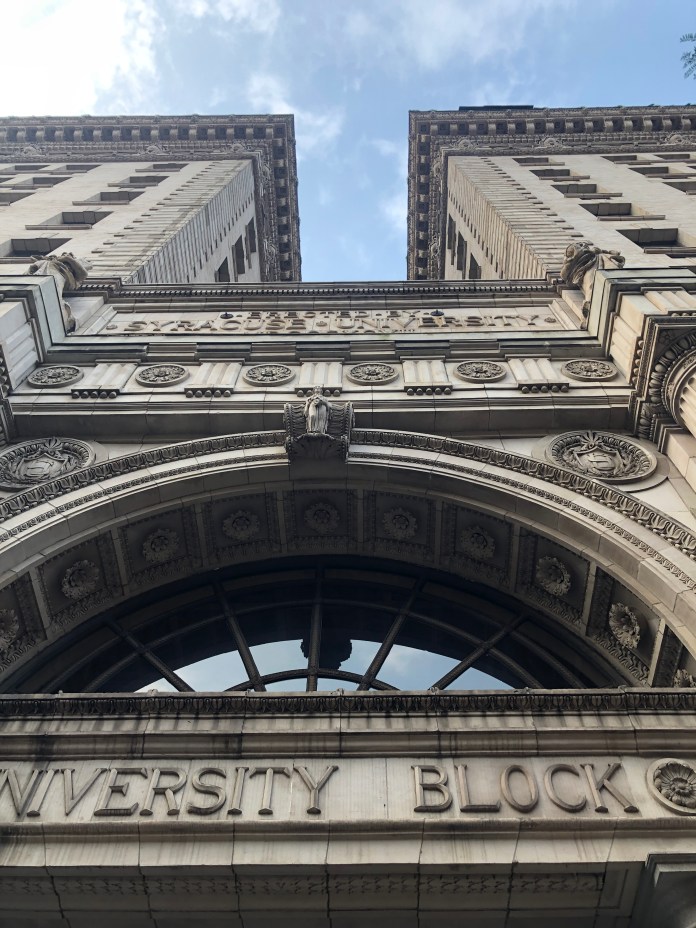
University Block Building. Photo by Francis DiClemente.

Standard

Pigeon on the Sidewalk

I saw a dead pigeon on the sidewalk while walking to work yesterday. I moved around it, heading along Fayette Street toward Salina. But I decided to turn around and come back to the scene and observe the dead bird.

Dead pigeon on the sidewalk. Photo by Francis DiClemente.

I also snapped a picture—my motivation being I wanted to capture an image of the lifeless form as a reminder to myself that my time on earth is limited, that death awaits me. We can’t escape mortality. In one way or another, we all become pigeons splayed on the sidewalk. And while it’s a sobering thought, it helps me to value the life I get to live today.

Standard

Life is an Ice Cream Truck Parked on the Street

While waiting for the CVS store to open this morning, I saw a Perry’s Ice Cream truck parked on the side of the street. The wording on the side of the truck read, “LIFE IS A BOWL OF PERRY’S ICE CREAM.”

Ice cream truck. Photo by Francis DiClemente.

The statement seemed like an invitation, or a conversation starter.

In my head I took the first two words— LIFE IS—and filled in the blanks. The result is my stream-of-consciousness list:

Life is blissful.
Life is finite.
Life is fleeting.
Life is futile.
Life is wonderful.
Life is hysterical.
Life is sorrowful.
Life is bland.
Life is fine.
Life is OK, sometimes.
Life is full of laughs.
Life is a pain in the ass.
Life is what you make it.
Life is all we’ve got.
Life is a gift we’re given.
Life is something we take for granted.

How would you fill in the blanks?

Standard

Been Away Too Long

I’ve been so tied up with work, family and long-range creative projects that I have neglected this blog for far too long. I haven’t posted anything since January—not that anyone is missing my content.

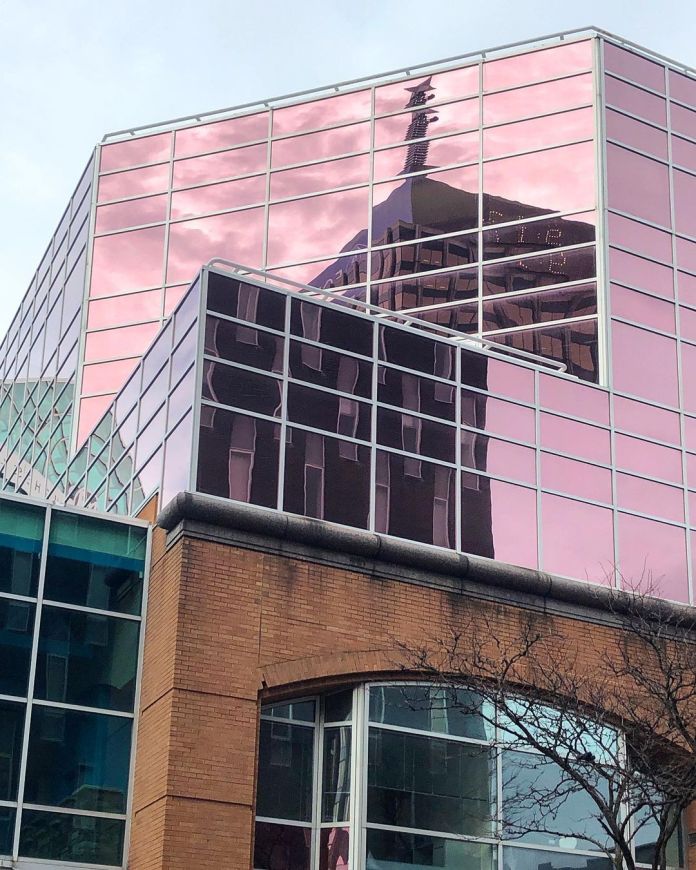
But during my Saturday morning jog/walk in downtown Syracuse, I snapped a photo and composed a short poem. To me both represent the ephemeral nature of life. If I had not stopped running on the sidewalk to take the picture or pull out my mini notebook and jot down the poem, the image and words would have been lost.

The sun would have shifted or shadows would have altered the light hitting the buildings and the words would have escaped my mind. A good reason to always carry a smartphone, a pen and a notebook. You never know when inspiration will strike.

Morning reflection. A George Costanza pinkish hue. Photo by Francis DiClemente.

Giving Up Admission

I can’t keep
it together.

I don’t have
the strength
to carry on.

Can I let go
and fall into
your arms?

Standard

Instagram Poems

I am doing a final edit on my next poetry manuscript, entitled Outward Arrangements, as I prepare for self-publishing. It’s a full-length collection of narrative, philosophical and observational poems written in free-verse style.

Several poems in one section of the book originated as the text in Instagram posts. All of them are short, and the images, scenes and words came to me as I walked in my city of Syracuse prior to the pandemic.

During the month of December, I thought it would be fun to share some of the poems and the photographs that inspired them. The first image points to a mystery I encountered while jogging one day.

Baby Stroller on Sidewalk. Photo by Francis DiClemente.

Baby Stroller on the Sidewalk

A stroller parked
on the sidewalk.

No parent present.
No wailing heard.

Just a question
Without an answer:
Where did the baby go?

Standard

Message on the Sidewalk

While walking this morning, I found this message spray-painted on the sidewalk in front of Grace Episcopal Church on Madison Street: “Get Kate out the hutchings basement.” The “hutchings” refers to The Hutchings Psychiatric Center, a mental health center in Syracuse operated by New York State.

The missive was signed by a woman (name withheld), and the statement produced a flurry of images and questions in my mind. Who is Kate and what is her condition? I pictured an exhausted woman confined in a straitjacket in the basement of the facility at 620 Madison Street. I felt empathy not only for Kate, but also for the woman who wrote the message. What did she expect to achieve by spray-painting her note on the ground? Was she so desperate that she hoped God would look down from above and intervene on behalf of Kate?

I don’t know the fate of the two women, but the discovery of the message made me more aware of people struggling with mental health issues and how these conditions can affect anyone. And this blog post is an attempt to send some positive thoughts to Kate and her friend.

Standard

Sidewalk Cutoff

While walking home along East Genesee Street in Syracuse, I encounter a man seated a bus stop located between Phoebe’s restaurant and South Crouse Avenue.

He has long, curly black hair, bronze skin and he’s dressed in shorts and a T-shirt, with a roll of flesh hanging over his waist.

He spots me as I stride toward him on the sidewalk, then flicks his fingers in a “come hither” motion. “Hey buddy, come here, can I ask you a question?”

I cut him off right away. “I don’t have any money,” I say and keep walking.

And I hear him say, the words trailing behind me, “How’d ya know what I was gonna ask you?”

And as I continue walking, I realize he’s right. I feel guilty about not giving him the chance to ask his question. In my defense, he caught me off guard and spooked me with the quick motion of his hands. But I could have stopped, stood at a distance from him and listened to what he had to say.


Standard

Bag in the Breeze

Photo by Kate Ter Haar (via Flickr).

Bag in the Breeze

Thursday morning, 9:47 a.m.
White airy clouds
painted against a pale blue sky.
Whipping sounds like
baseball cards spinning in bicycle spokes
call out to pedestrians
moving on the salt-crusted sidewalk.
A medical helicopter zips overhead.
You look up as it flies out of sight.
And with your head still raised,
you spot a plastic shopping bag
tangled on a leafless branch,
stuck at the top of a tree,
flapping in the breeze.
The bag waves its white flag
in an overture of surrender,
hinting at submission to the chill of winter,
while struggling to break loose,
straining to be released,
and waiting for a new wind to set it free.

©2017 Francis DiClemente
(Sidewalk Stories, Kelsay Books)

Standard