My son, Colin, turns ten years old today. I wasn’t planning to write about his birthday, but the significance of the occasion struck me as I warmed my coffee in the microwave this morning.
And right or wrong, every thought and emotion about Colin is filtered through the lens of his autism. He was diagnosed with Autism Spectrum Disorder in 2018. I wrote about that experience in this essay.
I realize how lucky I am to be Colin’s dad, especially since I was so late to the game of marriage and family. His presence reframes my existence. My job, my creative ambitions, and everything else in my life are secondary to being a good husband to my wife, Pam, and a good father to Colin.
Before rushing off to work, I wanted to share some previously published poems about parenthood and Colin, along with some photos of him.
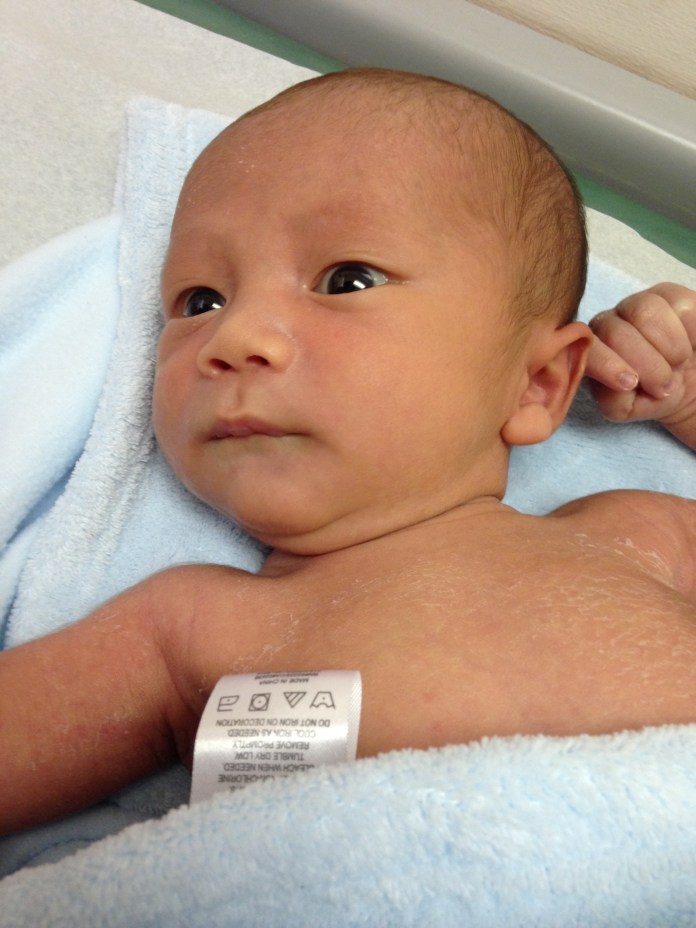
Colin Joseph DiClemente at the pediatrician’s office.
Entrance
As blood, urine and feces stain the hospital sheets,
a nurse tells a mother-to-be,
“Honey, don’t be embarrassed.
What happens in the delivery room,
stays in the delivery room.”
The mother-to-be moans and sheds tears
as the epidural wears off and the labor reaches its climax
with a medieval torture method known as “Tug of War”—
sheets wrapped around ankles, legs hoisted in the air
and pulled apart as the mother-to-be screams
and squeezes her muscles and makes the final push until …
a tiny male human, slimy and alien-looking,
pops out of the womb with a full head of downy, brown hair
and soft, pliable ears like a Teddy bear.
The mother blurts out three words:
“Baby, baby, baby.”
The doctor transfers the squirming newborn to her breast,
and the two bond with skin-to-skin contact.
Love and happiness flow.
The task is completed, the effort done.
The child has safely entered the world.
But the real hard work has just begun.
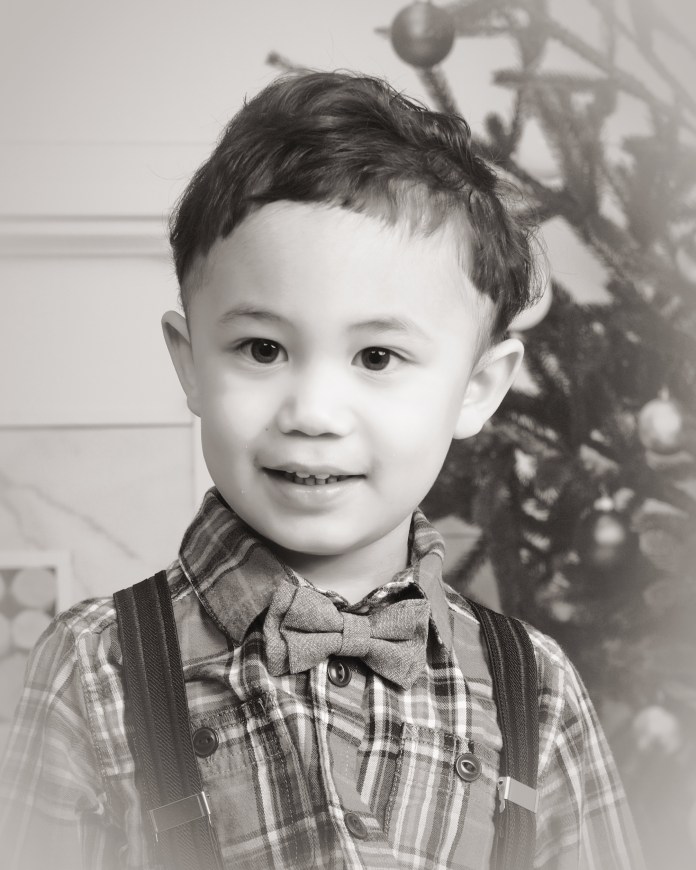
Colin Joseph DiClemente. Age 2 years, 8 months.
The Great Equalizer
The democratic nature of parenthood.
It doesn’t matter who you are—
man, woman or trans, gay or straight,
Black, white or any other shade,
tall or short, skinny or fat, rich or poor—
when your toddler is wailing
in a grocery store or shopping mall,
when the feet are stomping, the arms swinging,
the cheeks reddened and the tears rolling—
all you want to do is pick up the child
and make the crying stop.
Wealth, social standing and comely looks
mean nothing to kids; they’re not impressed
by your credentials and you can’t negotiate
with these little angels and tyrants who rule the world.
Two clichés apply here:
parenting wipes the slate clean
and levels the playing field.
All mothers and fathers desire the same thing—
the health, safety and
development of their offspring.
The goals are simple amid the frenzy
of a life marked by stress and lack of sleep.
They are: eat the chicken nuggets, drink the apple juice,
recite the alphabet, put away the toys, finish the milk,
wave bye-bye and go down easy at nap time.
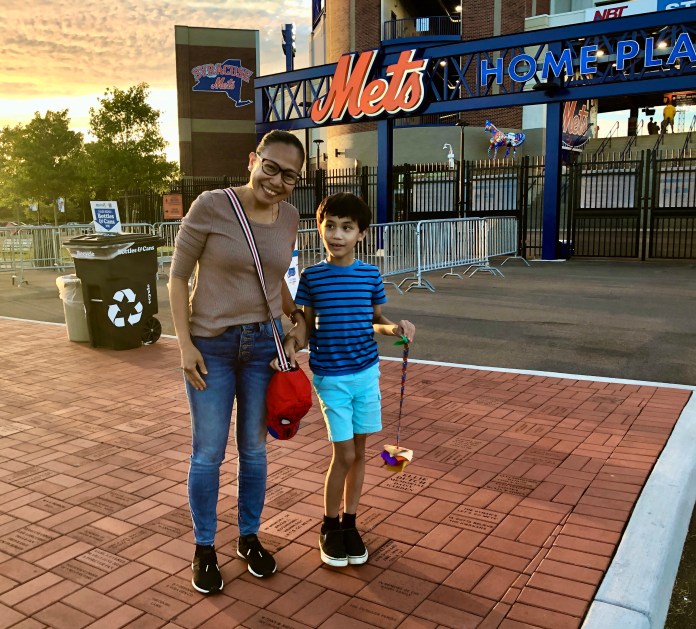
Pam and Colin outside NBT Bank Stadium.
Human Anatomy
Beneath the ribs
beats the heart
of a child,
waiting for its mother,
longing to be fed—
not just with milk and food,
but also with love.
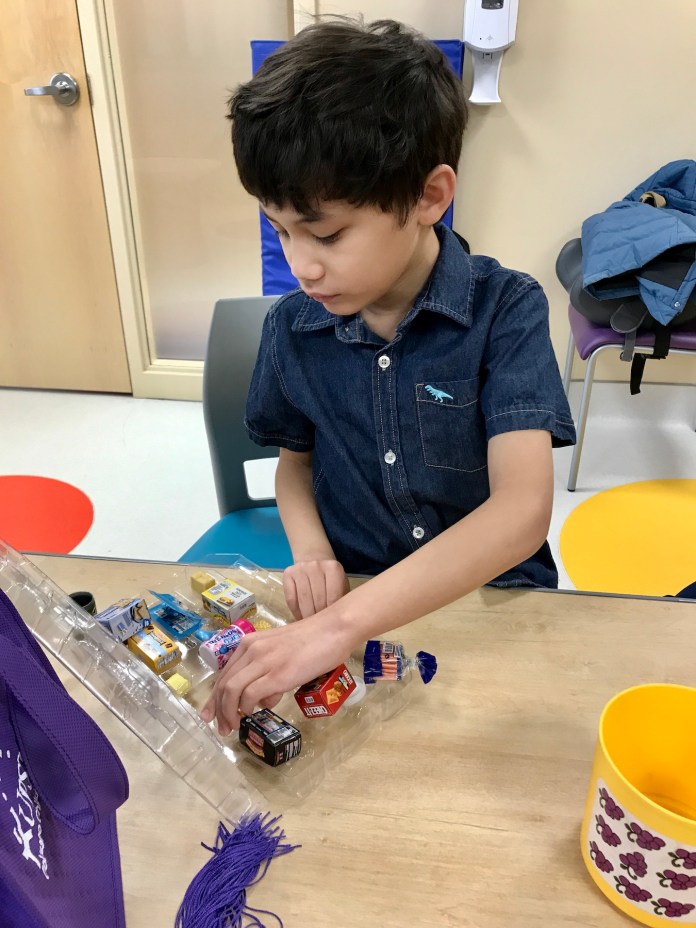
Colin playing in the feeding therapy room.
Nap Time
Late afternoon, Sunday, gray light
seeping in through parted curtains.
Mother and baby sleeping on the couch,
hair tousled, right cheek against left breast,
elbows curved at equal angles.
I am awake, drinking coffee,
watching their chests rise and fall,
and trying not to make any noise.
My whole life revealed in the space
of three sofa cushions occupied by
two human beings who need me.
Soon the boy will stir;
soon he will squirm and cry, scatter his toys
and race around the cluttered living room.
Soon we will fix dinner
and wash dishes and take out the garbage.
But now time is suspended like a Rod Serling
freeze frame in a Twilight Zone episode—
a halting of activity, a pause in my Sunday
leading to reflection and gratitude for my blessings.
Warmth, safety and responsibility
are the words that pop into my head
while I observe mother and child stretched out together.
I don’t think about what I lack
or what I hope to attain and achieve.
In this moment, I have everything I need.
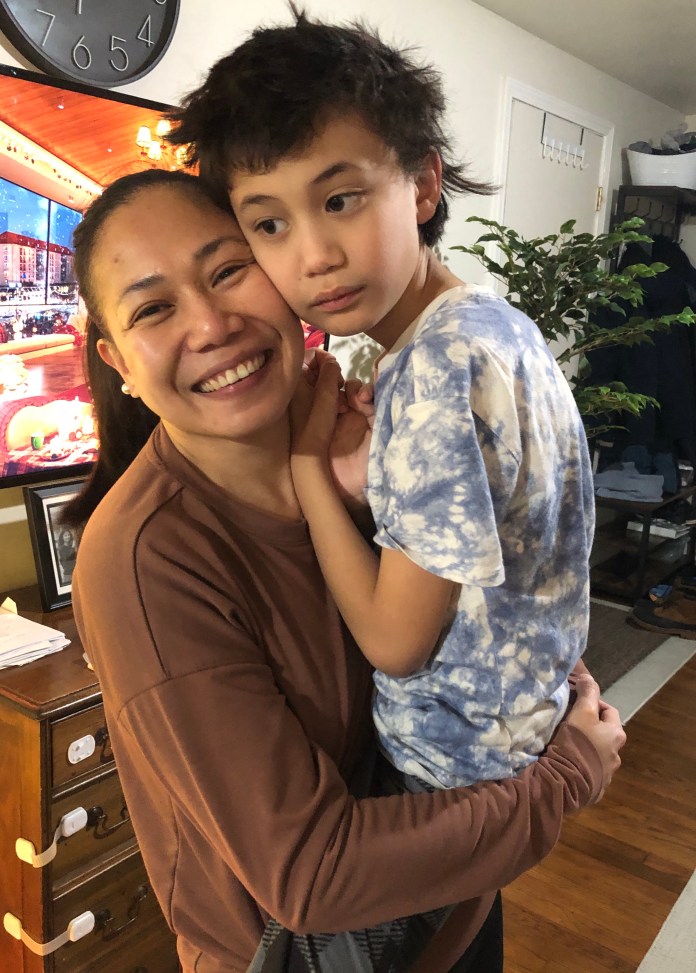
Pam and Colin.
Exam Room Revelation
“Autism Spectrum Disorder.”
The moment those words
escape the doctor’s lips,
our son’s future
appears bleaker.
The phrases
“special needs,
delayed communication
and lack of
social interaction” follow.
Sorrow for my son Colin
gushes inside me.
I feel sadness
for the challenges
he will endure,
and for his inability
to have a normal life.
In this case,
love proves impotent.
You can’t intercede
with your heart.
And compassion won’t fix
the little boy
sleeping in his bed
as I type out
this bad poem
while lamenting
the diagnosis.
But love for him
does not decrease.
Instead, it grows stronger.
I am grateful
for the blessing
of the boy he is …
and the man
I hope
he will become—
regardless of autism.
Bedtime
Eventually, I’ll fall asleep,
but until then my kid
keeps annoying me,
flicking on the bedroom light
and screaming incoherent phrases—
bits of songs that make
some sense inside his mind.
Telling him “shh” does no good,
and I can’t decipher the words he speaks,
but I do enjoy hearing the sounds they make
when they escape his mouth,
as I close my eyes and try to get some sleep.
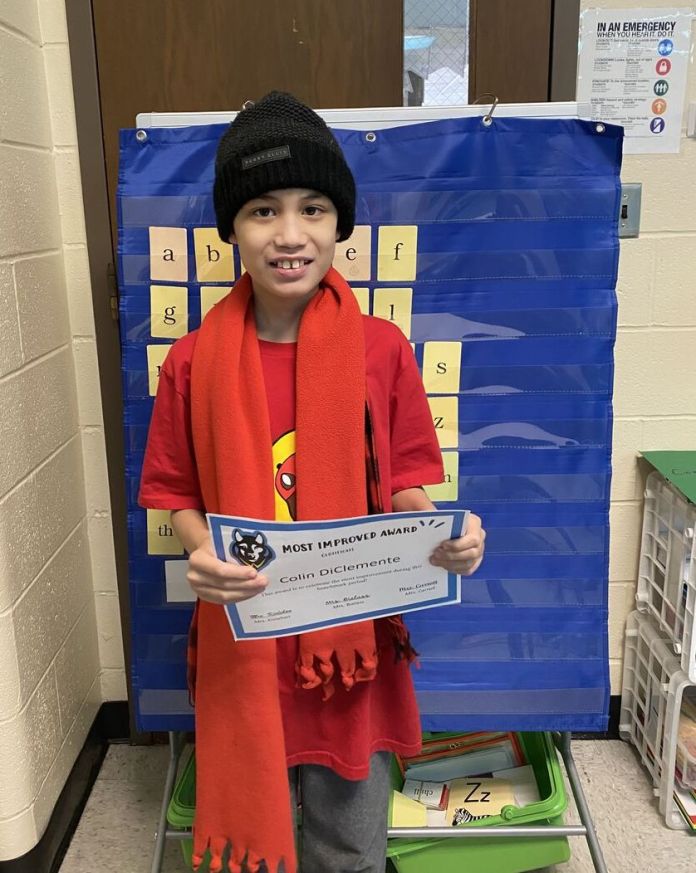
Crying at Bedtime
Nothing prepares a parent
for the tantrums of an autistic child.
There’s no well of patience to draw from.
You adapt. You divert. You distract.
You do whatever it takes to calm the child down—
until you earn that blessed moment of peace,
when his eyelids drop and he drifts off to sleep,
his small body folded in the cradle of your arms.
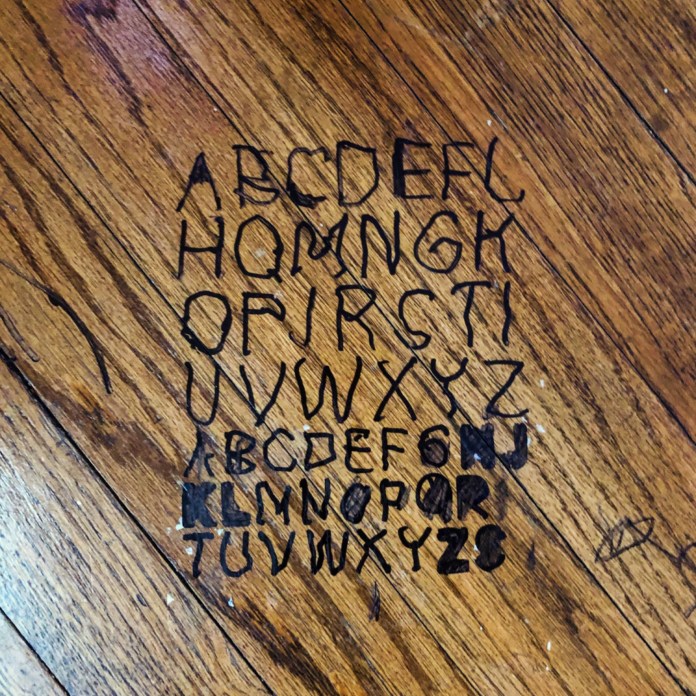
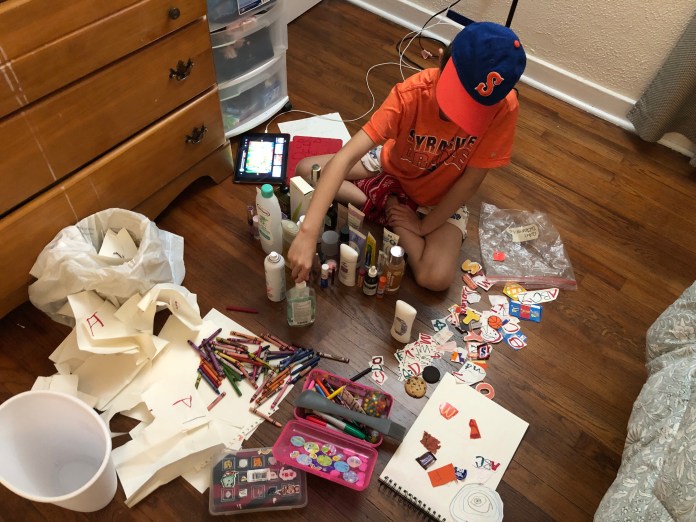
Colin drew with a Sharpie on the living room floor.
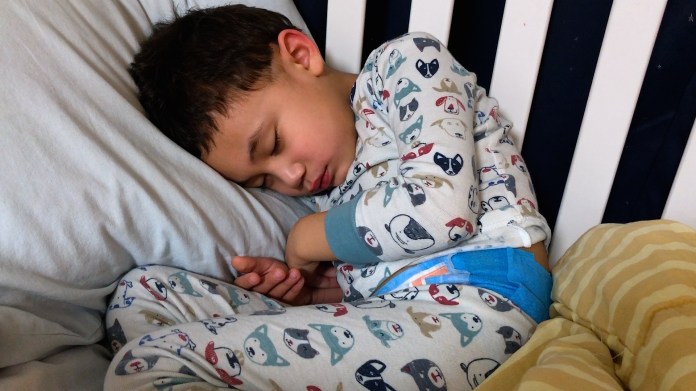
Autism Sleeps
My son sleeps,
curled under a blanket
on the couch.
His outbursts have ceased.
His cries and screams quieted.
His stimming stopped.
It’s like his autism
is in remission.
In sleep, he becomes
like any other child.
Observation After Eating Out
Pity for my son swells.
Yet I feel helpless,
Unable to intervene
To make his autism
Go away.
Our patience dwindles
As his outbursts intensify.
But love does not wane.
Instead, it grows stronger.
I have only one son.
Yes, he is different.
He is noisy and
Requires constant attention.
But I am thankful for
His presence in my life.
And who needs the quiet anyway?




 Francis DiClemente