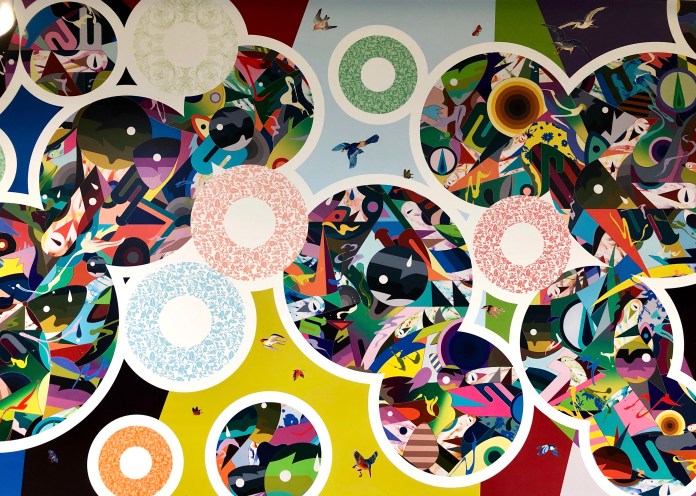
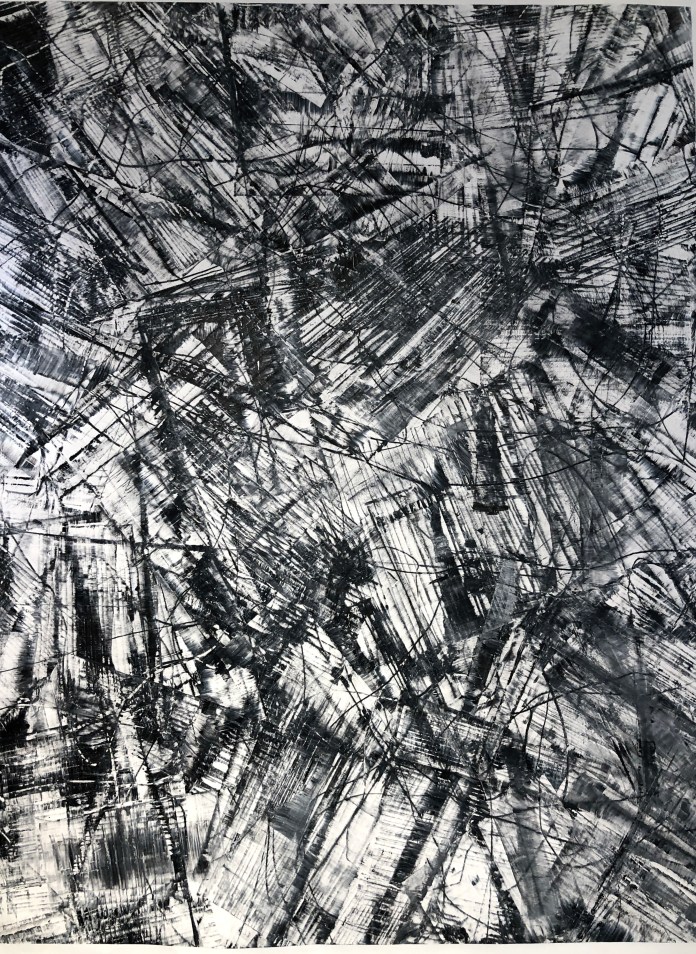
During a recent appointment at the Nappi Wellness Institute at SUNY Upstate Medical University Hospital, I saw this impressive mural by Japanese artist Tomokazu Matsuyama.
Solitude Aqua Amore, 2023 by Tomokazu Matsuyama.
I’ve written about the soothing effect of hospital art before. A few years ago, a framed print in an MRI waiting room inspired this poem, which was published in my 2021 collection, Outward Arrangements: Poems.
Waiting with Vincent
A scheduled MRI
of the brain shifts
my thoughts toward
all of the
“what if, worst-case scenarios.”
While waiting for my name
to be called,
I see a print of Irises (1889)
hanging on a wall.
From far across the room,
without my glasses,
the slanted vertical
green leaves
look like snakes
writhing in the dirt.
But the longer
I stare at the image,
the calmer I feel. Placid is the word
that comes to mind.
And I’m thankful Vincent
spends a few
moments with me
prior to my appointment
with the tube machine.
Because when sitting
in a hospital
waiting room,
artwork by Vincent
never fails to lift the spirits.
A van Gogh painting beats People magazine
or an iPhone screen
every time.
The mural is entitled Solitude Aqua Amore, 2023, and Matsuyama worked with the nonprofit organization RxART, which “pairs leading contemporary artists with pediatric hospitals to develop site-specific projects that humanize the healthcare environment and improve the patient experience.”
I think it’s a wonderful concept, and I have no doubt that colorful artwork in hospitals lifts the spirits of little patients and their parents during their tense moments (or hours) of testing, waiting, and meeting with doctors and medical staff.
The RxART website displays images of completed projects at hospitals across the country.
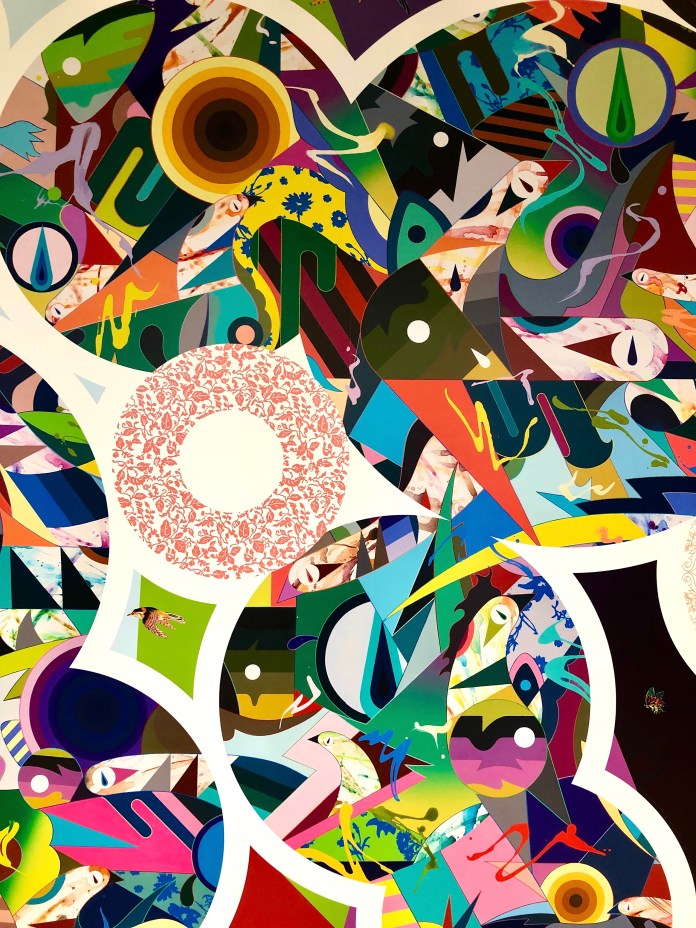
I like the close-up iPhone photo I took because it put me smack in the middle of the painting, and the detailed image made me think of a Jackson Pollock drip painting—but featuring birds.
Detail image of Solitude Aqua Amore, 2023.
Here is the wall text for Matsuyama’s piece:
Tomokazu Matsuyama Solitude Aqua Amore, 2023
Courtesy of the Artist
“Tomokazu Matsuyama is a contemporary artist who is keenly aware of the nomadic diaspora, a community of wandering people who seek to understand their place in a world of contrasting visual and cultural dialects. Tomokazu has created this bright and uplifting imagery to transform the institute’s International department. This work, inspired by “a thousand origami cranes,” encapsulates the essence of hope, peace, and the mythical attributes of good fortune. Utilizing geometric forms and organic curves, he weaves the inherent desire associated with the ‘senbazuru’ tradition into a narrative that resonates with the contemporary era. Tomokazu was born in Takayama, Gifu, Japan, and lives and works in Brooklyn, NY. RxART is grateful to Chris Salgardo, ATWATER, and Ducati for lead support of this project.”
Side note: These days, it seems whenever I read biographical text about a writer, poet, filmmaker, or artist, the bio invariably ends . . . “[Insert artist name] lives and works in Brooklyn, New York.” And that makes me wonder if poems are flying through the air and paint is flowing in the streets of Brooklyn. If I ever get to New York again, I’ll need to make my way there to explore the scene.
I had a chance to see two art exhibitions in Syracuse recently. The first is “What If I Try This?”: Helen Frankenthaler in the 20th-Century Print Ecosystem, which is on view until Dec. 9 at the Syracuse University Art Museum.
According to the museum’s website, the exhibition “explores how Helen Frankenthaler, the noted 20th-century abstract artist, collaborated with printmakers in print studios and workshops throughout her long career.”
Personally, I was more interested in Frankenthaler as an artist than in her connection to printmakers and the printmaking process. My SU marketing colleague Jay Cox wrote an excellent long-form piece about her that’s worth checking out.
I have a routine when I view art exhibitions. I like to see the work in stages. First, I go through the whole exhibition from start to finish, looking at every piece and reading all of the wall text. I’ll usually take a few photos with my phone and then step back to get a wide-angle view of the works on display in one of the big rooms. Then I pick out my favorite works and view them again, this time lingering on the pieces that move me the most.
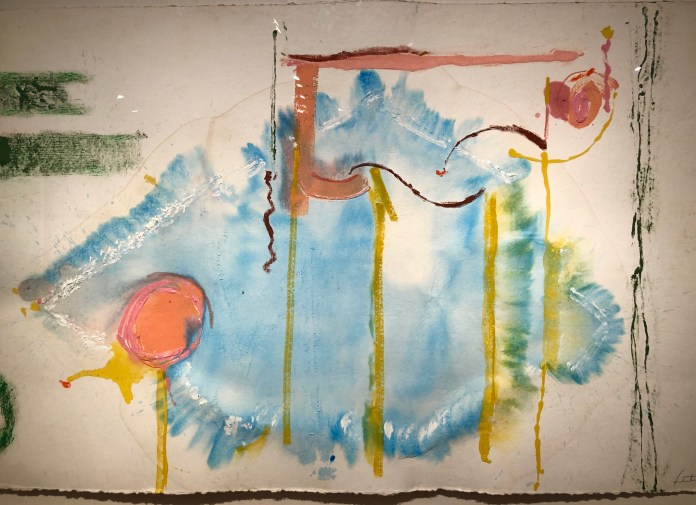
Here are some images from the Frankenthaler exhibit that caught my eye.
Monotype XI, 1991 by Helen Frankenthaler
Monoprint VII, 1987 by Helen Frankenthaler
Untitled, 1979 by Helen Frankenthaler
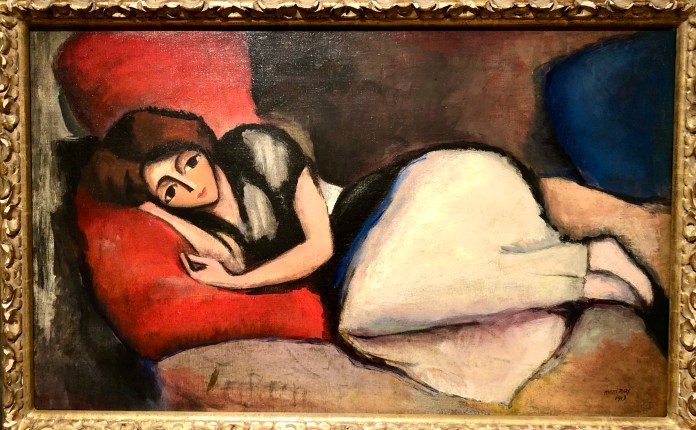
The museum also displayed many works from its permanent collection. And these works captured my attention.
[Reclining woman] by Man Ray (1913)
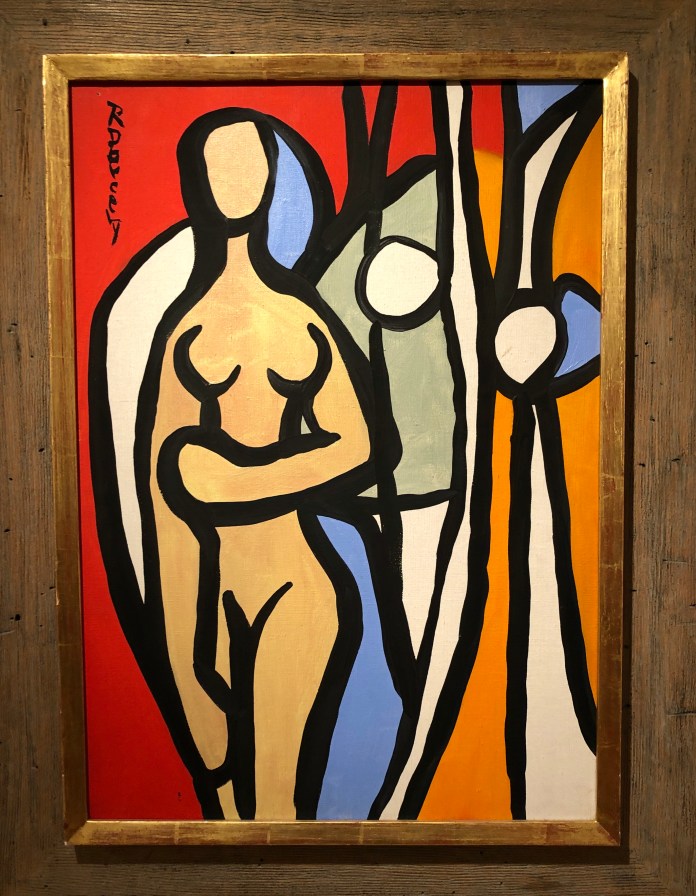
Figure Composition, 1959 by Roland Dorcely
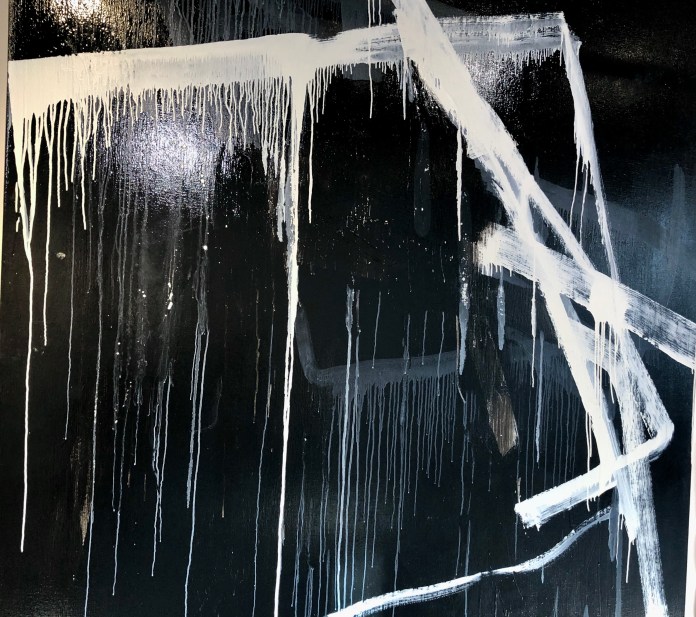
Untitled by Louisa Chase (1988)
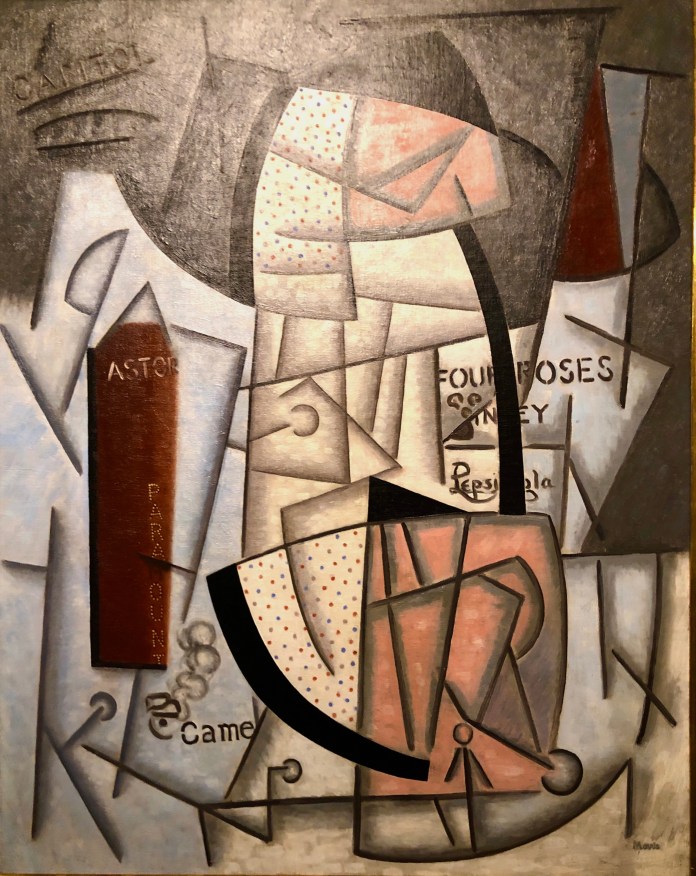
New Year’s Eve on Broadway by George L. K. Morris (1945)
Circuit of Space, 1957 by Irene Rice Pereira
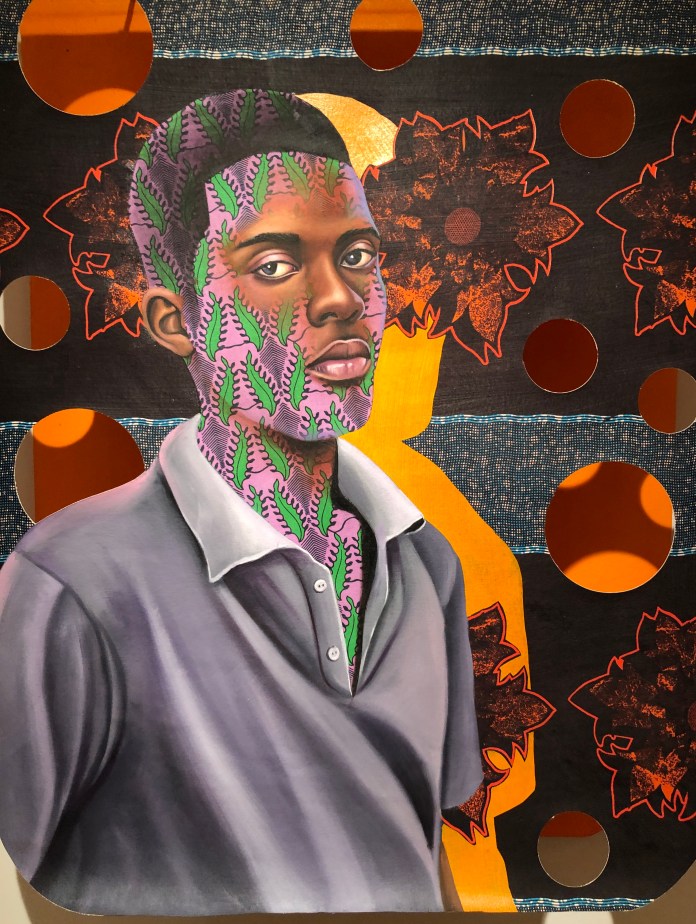
Boy with Orange Aura, 2021 by Patrick Quarm
##
The second art exhibition I attended wasLove Story: Legacy Works by Path Soong + Jeff Gordon, which is on view until early January at art haus SYR, located at 120 Walton Street. The exhibition was curated by Marianna Ranieri-Schwarzer (who is a warm and vivacious presence in the Syracuse art community).
Here is some information about the artists, from the art haus website:
“Jeff Gordon, an artist and audio producer, was a New York City-based creative who worked on projects like the Andy Warhol-themed exhibition Fifteen Minutes with his wife, conceptual artist Path Soong. The late artist was also known for creating art and music that explored audio and visual elements.”
“Path Soong was a Korean-born artist known for her large-scale, meditative abstract paintings, as well as her conceptual artworks, prints, and collaborations. Her work, which often features spare, linear gestures, evokes celestial and natural themes and is noted for its spiritual and minimalist quality.”
I attended a reception yesterday and took a few photos with my old iPhone 8:
Paths that Cross by Patti Smith with paintings by Path Soong
Untitled 11 by Path Soong
Untitled 4 (polyptych) by Path Soong
Chaos 1 by Path Soong
I encourage anyone in the CNY area to check out art haus. It’s a really cool space, and Marianna and her partner, Michael Schwarzer, who is a co-founder of art haus, are very friendly and enjoy talking about art.
I found out about them when I saw some of Michael’s artwork in a downtown window display in 2023. I really dig his style—abstract images with bold colors and big text. You can see some of his work here.
I think he created this bench piece using a pseudonym.
I had an appointment at the Upstate Cancer Center last week for a CT simulation to “map” my left hand so I can receive low-dose radiation treatment. It’s a new program offered by the radiation oncology department to treat arthritis. In my case, the radiation will target my left middle finger, which bulges like the knuckles of an NFL center after several seasons in the league. (I imagine the hands of #52 Mike Webster of the Pittsburgh Steelers.)
I arrived early for my appointment and wandered through the hallways and waiting rooms, observing the artwork hanging on the walls. I always look around when I visit hotel lobbies or medical offices so I can spot artwork. I appreciate the accessibility of this art and how it grants viewers quiet moments of reflection and meditation—which is especially beneficial for patients waiting for treatment in clinical settings. It’s there for anyone to discover; you just have to put away the iPhone and glance around.
Here are some pieces I noticed:
Sacred Completion by Alexandra DeLaCruz.
Road Home by Wendy Harris.
Magenta Meadowbrook by Wendy Harris.
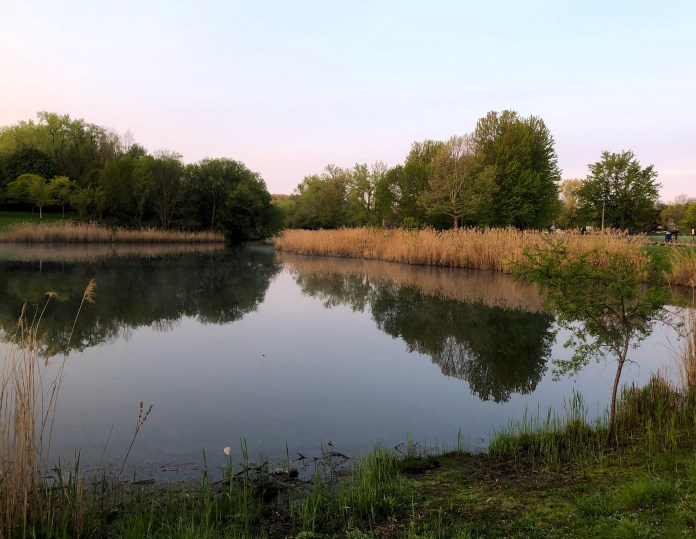
A few years ago, I took an iPhone photo of a pond near Barry Park, and I wonder if the same setting served as the inspiration for Wendy’s pastel landscape painting. Here’s my picture.
My experimental documentary short Glimpses of Existence (2021) is now available for viewing on YouTube. I consider it a companion piece to Fragments of the Living (2015).
Glimpses of Existence is a zero-budget film in the form of video collage. Using scenes captured with an old iPhone—mostly during the pandemic—it attempts to find meaning in the mundane moments of our lives, seeking the extraordinary amid the ordinary.
The central focus of the film is my son, Colin, who is autistic. He’s nine years old now, but he was about five when this was made. Despite his condition, Colin finds joy in everyday activities, and through his eyes we recognize the importance of treasuring the tiny segments of life we are granted—minutes, seconds, hours—while being reminded about the transitory nature of existence.
Produced, Directed and Edited by Francis DiClemente.
2023: Official Selection in the Festival of Arts and Cinema, London
2022: Official Selection, Life is Short Film Festival, Los Angeles
2021: Honorable Mention, Global Shorts Film Festival, Los Angeles
2021: Official Selection, NewFilmmakers NY Short Films Program, New York
2021: Semifinalist, Official Selection, Blow-Up International Arthouse Filmfest, Chicago
My younger cousin Damon DeCosty died of a heart attack in Jacksonville, Florida, on May 25. He was 53 years old. A celebration of his life is planned for July 22 (his birthday) in Jacksonville.
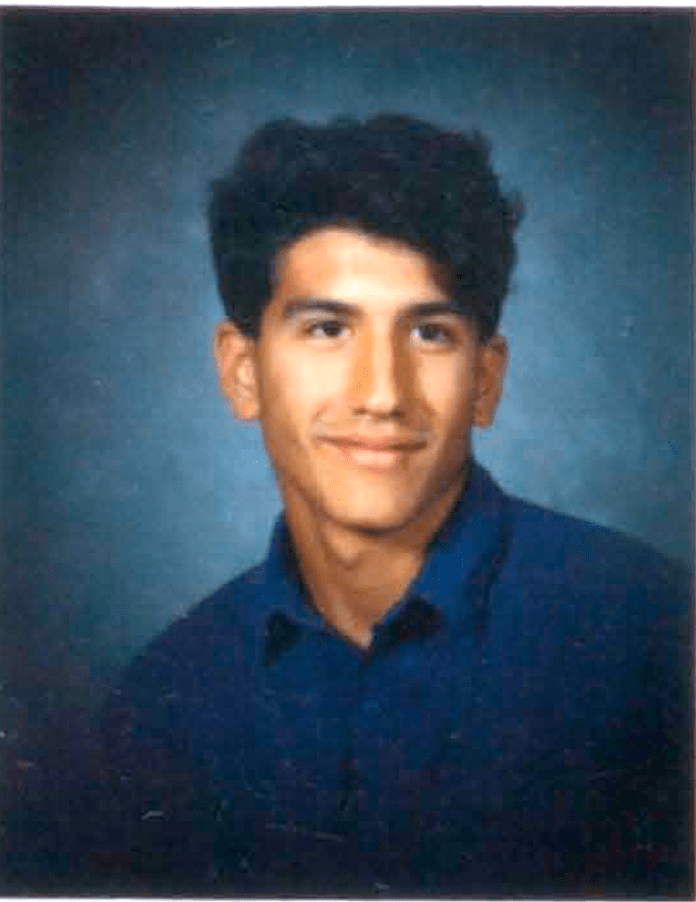
Damon’s high school yearbook photo.
Damon’s death was a huge blow to our family because his older brother, Derek DeCosty, passed away from pneumonia in January 2025.
My high school years overlapped with all three DeCosty brothers—Fiore (nicknamed “Fee”) being the oldest, followed by Derek, and then Damon, who was two years younger than me.
My cousin Fee (right), Damon (center) and I celebrate my sister Lisa’s birthday in 1980.
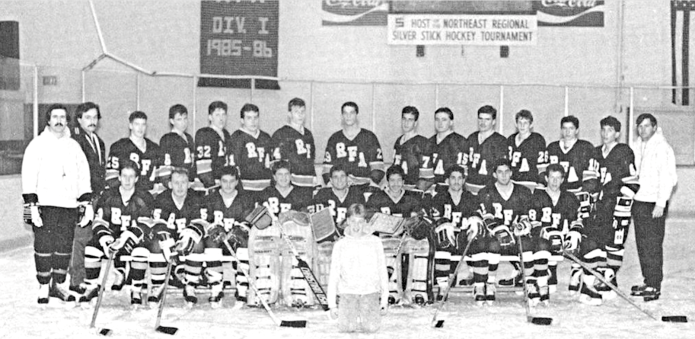
His obituary notes that he was born in Rome, New York, and was a member of the 1987-1988 undefeated Rome Free Academy hockey team, which won the state title. He played hockey and studied art at the State University of New York at Fredonia. He later worked in construction in Key West before beginning a career in agronomy at TPC Sawgrass Golf Course near Jacksonville.
The 1987-88 state champion RFA hockey team. Damon is the last player standing in the second row, next to Coach Dick Meiss.
But those facts don’t resonate with me on an emotional level. And in processing this loss and trying to write about it, no coherent narrative emerged. There’s no Hero’s Journey or three-act structure to guide you in mourning a loved one.
Instead, I recall images and voices—murky memories and episodic scenes that, when juxtaposed, add up to the human being known as Damon DeCosty and what he meant to his family and friends.
The things I remember about Damon:
His bronze skin, dark eyes, and black hair. He was of Italian American descent on his father’s side and Native American, with Caddo Nation heritage, on his mother’s side.
His artistic talent. I remember his hand moving across a sketch pad and seeing his artwork hanging in his room.
His placid, reserved, and affable personality. Although Damon possessed a James Dean coolness, he wasn’t aloof. Instead, you felt a sense of calmness in his presence, and people gravitated to him because of his kindness.
Damon with his dad, my Uncle Fiore DeCosty.
Damon had heart surgery at Crouse Hospital in Syracuse when he was about five years old in 1976. While my Uncle Fiore (Fee) and Aunt Pat stayed with Damon at the hospital, Fee and Derek spent the night at my parents’ house on Stanwix Street in Rome, near the Oneida County Courthouse on North James Street. I think it was a school night, and my mom packed my cousins’ lunches in their twin metal lunch boxes featuring Brazilian soccer legend Pelé.
When Damon recovered from surgery, he insisted on a sleepover at our house because he missed out on the fun, and I remember stretching out on the floor next to him as we slept.
I recall Damon and I spending a summer afternoon at our grandparents’ house on Crossgates Road. No one else was around, and we ran around in our bare feet on the patio, our feet turning black, and frolicked on the lawn, leaping over a sprinkler (a poor kid’s substitute for a swimming pool), our denim jean shorts getting soaked as we inhaled the scent of fresh-cut grass.
My cousins lived in a housing development on Seville Drive in north Rome. It seemed like a subdivision had been dropped in the middle of cleared farmland. Damon’s mom, my Aunt Pat, was a dietitian. And while the growing boys always had enough to eat, she didn’t buy them junk food. Their cereal choices were healthy, whole-grain products, such as Wheaties and Cheerios.
Damon (seated) and Derek with their mom, my Aunt Pat (sometime around 1980).
But on at least one occasion, while spending the weekend with my cousins, I remember my Aunt Pat went out shopping, and Derek and Fee sprang into action. They raced around the house, collecting small bills and coins, and gave the money to Damon with instructions to run across a cornfield and buy a box of sugary cereal at a nearby convenience store. Damon returned with a box of Frosted Flakes, Cocoa Pebbles, Trix, or Lucky Charms (I can’t remember the exact brand). But we all sat at the kitchen table, passing around the milk and wolfing down bowls of cereal, then discarding the box and hiding the evidence before Aunt Pat returned home.
In remembering Damon, I also find myself thinking about my late father, Francis DiClemente Sr., and reflecting on how divorce complicates family relationships, especially for children. When families fracture, the boundaries between relatives blur.
My mother and Damon’s father were siblings. Does that mean when my parents divorced, my dad stopped being an uncle to the DeCosty boys? Or after Damon’s parents divorced, did his mom (who was also my godmother) cease being my aunt?
Does divorce sever relations with non-blood relatives? Do you erase the bonds of love and family just because a couple separates? That’s a topic for a whole separate essay.
I bring this up because many years after my parents split, my dad would ask about Fee, Derek, and Damon. He really cared about them. And if they visited the Sears store in Rome where he worked, they would seek him out and say “hello.”
And it’s not politically correct, but whenever my father asked about Damon, he would say, “Hey, how’s the Little Chief doing? What’s up with the Little Chief? Tell the Little Chief I said ‘hello.’”
I must also admit that when I heard Damon had died, one of the first thoughts that popped into my head was that Fiore is now The Last of the Mohicans (also not politically correct).
Damon and I bonded over our mutual love of music. Our shared tastes included U2, The Cure, Grateful Dead, Genesis, The Replacements, R.E.M., Jane’s Addiction, The Cult, The Smiths, and many other artists.
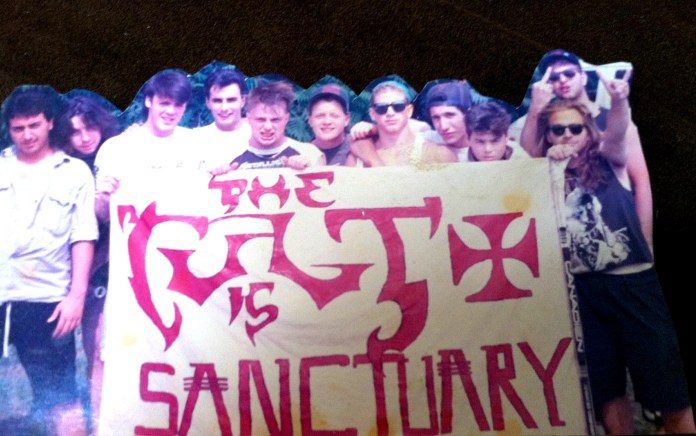
Damon and I were part of a contingent of Romans that went to the Metallica concert in Weedsport, NY on July 16, 1989. We were more eager to see the opening act, The Cult. Damon is wearing the backwards baseball cap.
Fee shared a couple of Damon’s YouTube music playlists with me. One is titled Essential Dead, and includes tracks from the Grateful Dead and other jam bands. The other is titled simply Work.
I enjoy shuffling through the Work playlist and imagining Damon mowing a fairway, adjusting a pin placement at TPC Sawgrass, doing some odd carpentry work, or putting the final touches on a large-scale oil painting. The playlist contains more than 300 tracks—over seven hours of music—and it consoles me knowing I’m listening to songs curated by Damon, tracks that held special meaning for him.
For a recent film festival, I had to submit my project through an unlisted YouTube account. Now I’d like you use that account to upload some past projects.
The first is Black Box, a 2013 experimental short film that uses the power of music and dance to explore emotions. In the strictest sense, it is a dance film; however, it serves as a conceptual video art piece as opposed to a straight performance work.
The dancer in the piece clutches a black box representing the human heart as a repository of life’s emotions. It is a metaphor for the turmoil and pain we carry inside. Through a series of movements, the character becomes free from the heavy burden of the black box, and he can leave it behind and thus arrive at a state of inner peace.
The idea for this video originated with the music, the second movement of Franz Schubert’s Death and the Maiden. I had always loved this melancholy and stirring piece and thought it could serve as the foundation for an artwork if the song was married to powerful visuals.
Once I developed the concept and treatment for Black Box, I turned to choreographer and dancer Brandon Ellis. Ellis interpreted the concept and developed and executed the dance routine.
For the production I collaborated with Michael Barletta and Courtney Rile, founders of the Syracuse, New York-based production company Daylight Blue Media.
Credits:
Choreography by Brandon Ellis
Cinematography by Michael Barletta and Courtney Rile
Edited by Courtney Rile
Produced and Directed by Francis DiClemente
Official Selection, 2014 Athens International Film and Video Festival (Athens, Ohio)
NewFilmmakers New York screening series (2013)
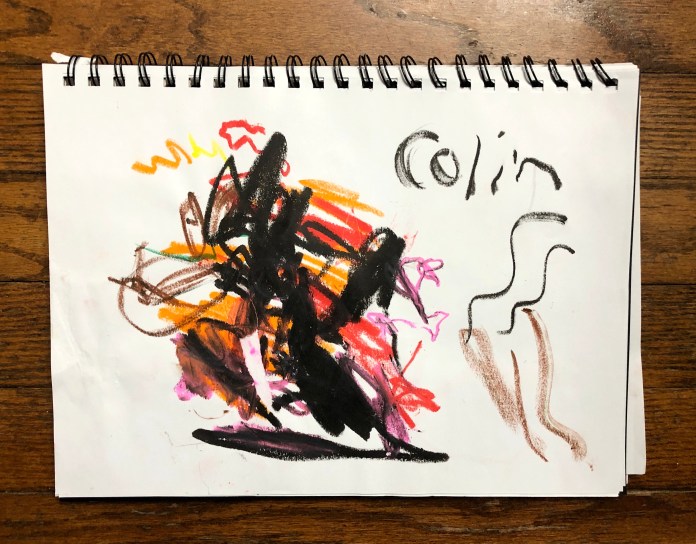
Here is an original artwork by my nine-year-old son, Colin (with minimal photo editing). It made me think that sometimes the chaos wrought by autism can render beauty. I like the use of white space and the Jackson Pollock feel.
Untitled by Colin DiClemente.
But the sundry objects and paper cutouts scattered in his bedroom and on our dining room table might indicate his preferred medium will be collage.
Dining room scene.
Often, when Colin is doing his repetitive tasks, such as lining up blocks or wooden letters of the alphabet, I’ll ask him questions, like, “What job do you want to do when you grow up?” If you could only be one, would it be a police officer, a firefighter, a doctor, a teacher, an artist, or a cook? And I’ll name a whole bunch of other occupations. But nearly every time, Colin’s answer will either be Artist or Cook (he loves mixing the batter for pancakes and muffins).
I joke with my wife, Pam, that we should encourage him to pursue a career as an accountant because earning a living will be easier than working as an artist or chef. I also tell her we should let Colin pursue his artistic endeavors so that he can 1) Explore and develop his creative expression 2) Maybe sell a few paintings one day that will pay off the mortgage and perhaps fund some experimental or documentary film projects.
I also realize that the parents of an autistic child have to let go of any desire for a neat and orderly home. It’s just not possible, at least in my experience. Pam and I try to laugh about it and embrace the futility of those moments when Colin takes up too much real estate in our house with his strewn objects or refuses to pick up his mess.
This essay was originally published in the 2014 edition of Words & Images literary magazine, a student-run publication at the University of Southern Maine.
##
I heard the woman first before I saw her or her partner inside the museum of the Onondaga Historical Association in Syracuse, New York. She said in loud voice, “Rick, where are you, hon?” The OHA had a few exhibitions running simultaneously on this Saturday in early January 2013, and so it was possible to lose sight of your friend or partner as you made your way through the different gallery spaces and inspected the various works. “Hon, come here, look at this,” she added.
Onondaga Historical Association
At the time I was examining the exhibit Manifest Destiny and The American West by artist Robert Hirsch. Hirsch presented nearly one-thousand images in a three-dimensional display—with the pictures placed inside jars and serving as a commentary on how the geographic progression across North America shaped U.S. culture.
After I finished looking at the Manifest Destiny jars, I started walking toward where the couple was standing. They were planted in front of some panels of an exhibit highlighting historic stereoscopic photographs.
Rick was probably in his sixties. He was tall, broad-shouldered and bald except for a tuft of grayish-white hair at the back of his head. He had a bushy mustache that curled downward and matched his hair color and he was wearing a tan jacket.
The woman, whom I will call Ruth, was small and also appeared to be in her sixties. She was wearing a black fur coat, tall black boots, and bronze earrings that looked like costume jewelry. She had short black hair, a birthmark on the right side of her face, and she had applied a little too much burgundy lipstick to her mouth.
But it was her dialogue that made her memorable. I am not a casting director, but I believe you could pick Ruth up and place her in a Woody Allen film and without even reviewing the script, she would fit in with no problem. In fact, I bet she would steal scenes away from Scarlett Johansson or Penélope Cruz.
I heard her tell her husband, as I assumed they were married, “See, I should have lived in the 1920s. I’d be dead now but look at all the stuff I would have remembered.”
Something else about Ruth struck me on a personal level; she reminded me a lot of my late mother. To my knowledge, my mother had never attended an art exhibit in her life and was not loquacious like this museum visitor, but the two women shared some physical features. Both were short and had short black hair.
Carmella DeCosty Ruane, 1945-2011
And just like Ruth, my mother would often smear too much of the same shade of burgundy lipstick on her mouth. My mom also had the habit of applying a little too much rouge to her cheeks. If she was getting ready to leave the house to attend the Saturday vigil mass at St. Peter’s Church in Rome, New York, where she lived, I would tell her, “Mom, you need to blot your cheeks. The rouge is caked on.” Her standard reply would be, “Oh shut up. Can’t you ever say anything nice?”
Ruth, Rick, and I were gathered inside a small gallery space where Carl Lee’s multi-channel video Last House, which documents the destruction of a house in Buffalo, was being screened.
In the piece, on what looks like a bright spring or summer day, a backhoe starts demolishing the house and three separate camera angles capture the action simultaneously. Viewers watch as the scoop of the backhoe starts eating away the roof and walls of the structure, while a man stands near the rubble and uses a power hose to spray water on the scoop and house so no sparks jump to life.
As arresting as Lee’s video was, his exhibit became trumped by a living breathing work of art—the older couple that had seized my attention. And as I stood near the back wall of the room, my focus shifted from the images on the screen in front of me to Rick and Ruth seated on a black bench nearby.
“You see that, it’s three angles of the same thing,” Rick said.
“Yes, I know,” Ruth replied. She paused and then added, “You must think I’m a real idiot.”
I almost burst out laughing because her delivery was a spot-on impersonation of my mother, using the same words my mother had said to me on numerous occasions. But I managed to suppress the laughter swelling inside of me, keeping it contained in my throat.
A short time later, Rick said to Ruth, “Hon, are tired?” Ruth rubbed her thighs and said, “A little, but I’m OK.”
“Well, it’s 2:30,” Rick said.
“No, it’s later.” She checked her watch and said, “It’s 2:40.”
“Your watch is fast,” he said.
“No, it’s not. I set it by the stove, and it’s always slow.”
They stopped chatting and watched in silence as the house was being ripped apart in the video. Then, a little while later, amid the grating sounds of the backhoe and the walls tumbling down, Rick turned his head toward Ruth and said, “Are you sure you’re not too tired?”
“No, I’m fine,” she said.
And that’s how I left them. The couple was still sitting there, watching the video when I stepped out of the exhibition space and exited the OHA.
I think what intrigued me most about the couple was their ease of interaction and level of comfort with one another. And I was thankful for having witnessed this slice of life from their apparent happy marriage, a snapshot of two older people behaving in an unguarded fashion in a public museum on an ordinary Saturday afternoon.
I did not assume they lived a perfect life without worry or conflict. But it appeared Rick and Ruth understood and accepted one other unconditionally. In spending a few moments in their presence, it seemed like neither partner had any illusions about the other person. There appeared to be no mysteries in their relationship still waiting to be uncovered. They had likely revealed all their flaws and weaknesses a long time ago, and yet, they still enjoyed spending time together and remained happily married and devoted to one another. Or at least that’s the impression they gave to outsiders.
I often get a rush of creative energy after visiting an art museum, attending a play or concert, or seeing a great film. And while I was walking home, my rumination about the couple sparked an idea. I decided they would make a compelling subject for a modern art exhibit.
So here’s my proposal:
A museum would build a large installation showcasing Rick and Ruth as one of the last surviving happy couples in America. It would be a spectacle like something 19th Century showman P.T. Barnum could have curated and promoted.
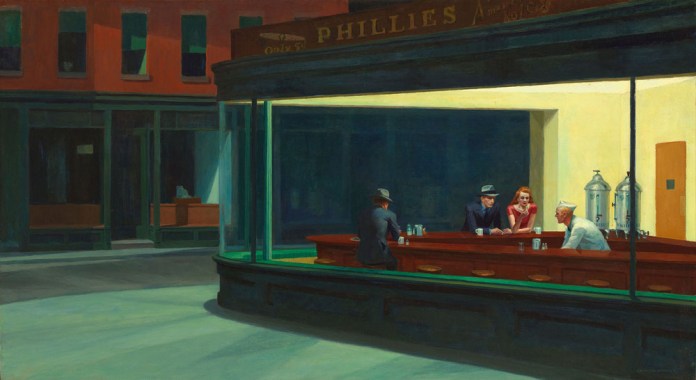
Rick and Ruth would be placed inside a large kitchen space encased in glass like the diner scene in Edward Hopper’s iconic painting Nighthawks.
Nighthawks by Edward Hopper, 1942
We would observe them sitting in their kitchen—drinking coffee, talking, cooking, and eating breakfast, lunch, or dinner, reading the newspaper, playing Scrabble, baking cookies, celebrating their birthdays, and washing and drying dishes.
The display would offer viewers an unfiltered window into the life of the couple, and the images, sounds, and conversations would document Rick and Ruth’s ease of interaction. The goal would be to reveal the secrets of this happy marriage.
As a result, the exhibit would aim to answer these central questions: What makes this couple different from others? What is the key to their bliss? And what advice or insights do they have for other couples in terms of making a relationship last?
From a technical standpoint, Rick and Ruth would need to be well-lit and microphones would need to be placed on or near them to pick up clean sound; the museum would also have to mount speakers or headphones near the display so the viewer could listen as the couple communicates.
As this idea spun wildly inside my brain, I felt a sense of joy bubbling within, and I smiled when I imagined Rick and Ruth hanging out in their hermetically sealed museum kitchen.
I could almost hear him saying something like, “You know, we’re gonna have to eat a little later because the chicken still needs to defrost before we put it in the oven.”
Ruth would then shoot Rick a dirty look, smack her lips or maybe place a hand on her hip. “Do you think so?” she would say. “God, you must think I’m a real idiot.”
Moments later, Ruth would be standing at the counter making a salad and Rick setting the table, and Ruth might turn to him and ask, “Hon, what do you feel like for dessert?”
“Oh, I don’t care,” he would say, his eyes lifting from the cutlery on the table. “Anything.”
“Well, we have that Entenmann’s crumb cake in the freezer. You want me to take it out?”
“Sure.”
“Yeah, that sounds good, doesn’t it hon?”
“You bet, Ruth. It does.”
Then, as the museum would get ready to close for the day, the lights to the kitchen display would be dimmed and Rick and Ruth would depart the exhibition space. And we wouldn’t be allowed to tag along with them when they walk outside the walls of the museum, get into their car, and head home for the night.
But I suspect not much would change between them, and I find this reassuring because I wouldn’t want to miss anything.
My cousin Derek DeCosty passed away earlier this year in Jacksonville, Florida. He had been sick around Christmas with a respiratory illness, and we texted on New Year’s Eve. He died on Jan. 3, one day before his 57th birthday. Here’s his obituary.
I’ve spent time processing this loss and bringing the memories of Derek to the surface of my mind—flipping through photo albums, seeing his face, and hearing his ebullient laughter as I recalled moments we shared.
While I felt compelled to write about him, I also dreaded it because this loss is too personal. And what could I say that would make any difference? How could my reflections ease my grief or the sorrow of my relatives? But I hope my words can honor Derek and offer a glimpse into the life of this beautiful soul.
Derek’s father, Fiore (Fee) DeCosty, and his sister Carmella, my mother, were raised in Rome, New York, along with two other siblings, my Aunt Teresa—who goes by her religious name of Sister Carmella—and my Uncle Frank. Derek’s mother, Patricia (my Aunt Pat), is a member of the Caddo Nation of Oklahoma and settled in central New York with Uncle Fee.
A Special Bond
Growing up in Rome, I spent a lot of time with Derek, his older brother, Fiore (Fee), and his younger brother, Damon.
Although I wasn’t a brother to them, I felt something stronger than a typical cousin bond. Derek and I had a special connection because we were only one grade apart in school.
Both of our nuclear families experienced divorce in the early 1980s, and I believe that shared pain also drew us closer.
And being related to the DeCosty boys had its perks.
They were athletes, part of the popular crowd, and because of them, I received party invitations I wouldn’t have gotten otherwise. Pretty girls who swooned over Derek talked to me because they knew I had a direct line to him. And as a short, chubby tenth-grader scurrying through the halls of Rome Free Academy high school for the first time during my sophomore year in 1984, no students teased or bullied me because they knew I was related to the DeCostys.
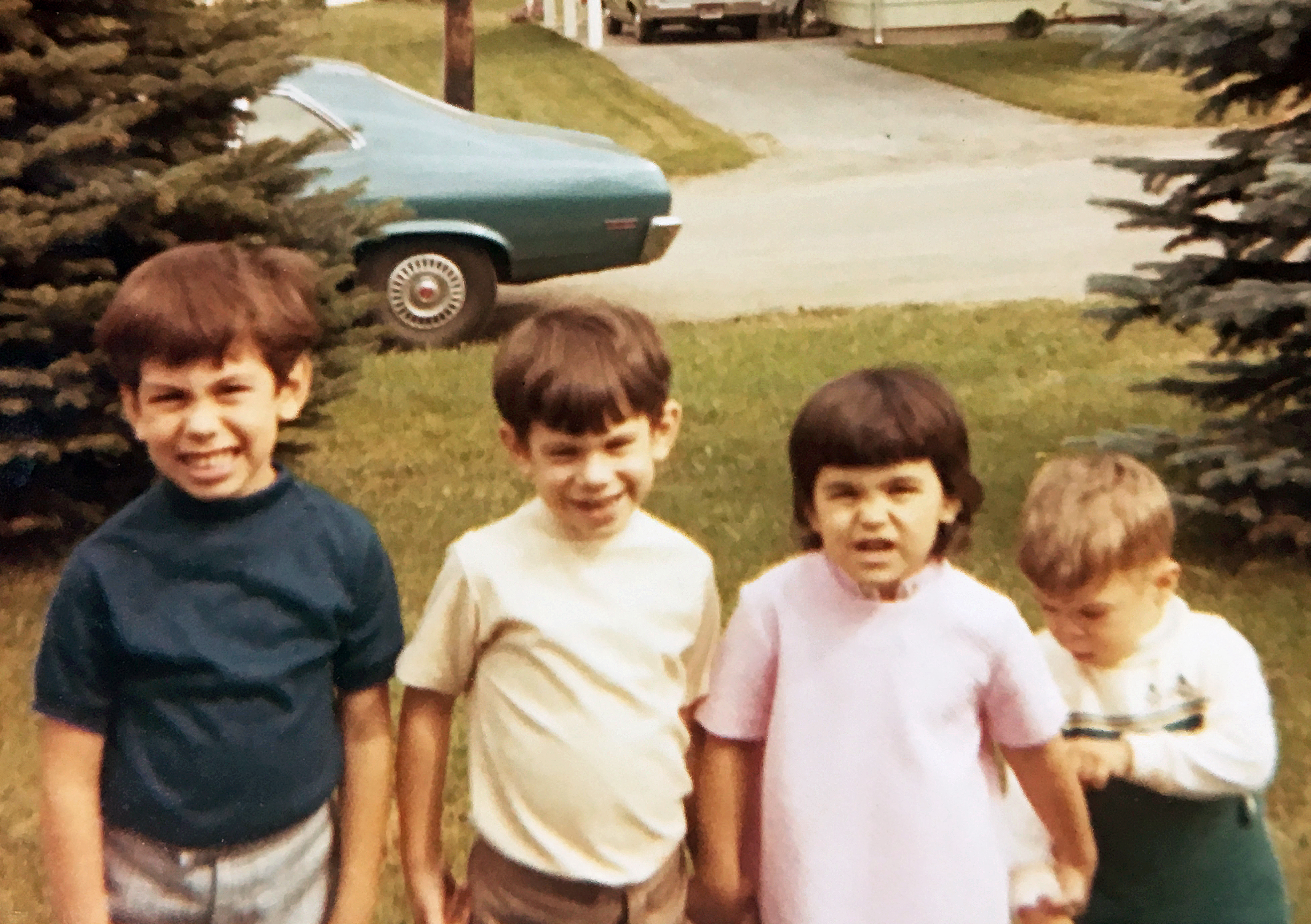
Cousins gathered at our grandmother’s house. My cousin Chris is in the front row. Second row, from left to right, is Damon, my sister, Lisa, and me; Fee and Derek are in the back row.
Weekends at the DeCosty household were a regular part of my youth. I attended their hockey games (sometimes traveling with my Uncle Fee on road trips) and stretched out on the couch in their cramped ranch house on Seville Drive in north Rome.
If I remember correctly, Damon had a bedroom on the main level, while Derek and Fee slept in the basement in two small, makeshift rooms separated by thin drywall. Three mounds of fetid and sweat-drenched hockey equipment were piled high near the washer and dryer. A boom box blasted music—with The Rolling Stones, The Who, Genesis, The Fixx, and The Police getting frequent play.
The boys practiced their wrist, snap, and slapshots by firing hockey pucks at a white cement wall, festooning the surface with pockmarks and black spots.
Although I was a rabid hockey fan, I had given up playing the sport when I was young because I couldn’t skate. Picture Bambi slipping on the ice. So when Fee, Derek, and Damon were not playing ice hockey, I tried to stir up a game of street hockey or floor hockey. Floor hockey was my favorite, especially on holidays at our Grandma Josephine’s house. We would get on our knees in the living room and use mini sticks and a rolled-up ball of athletic tape as the puck in fierce battles that left us with elbows to the face and rugburns on our knees.
One holiday, Damon, Derek, and I played a football game called “goal-line stance” in Derek’s bedroom. The memory is murky, but this is what I think happened.
With the twin bed pushed against the wall, the front of the mattress was the goal line. Derek was the ball carrier. He was getting annoyed because Damon and I were double-teaming him and standing him up, so he stuffed the football under his arm and leaped over us, Walter Payton style, his body parallel to the ground, until his shoulder slammed into the wall with a loud bang as he landed on the bed.
The collision created a large dent in the drywall, evoking our laughter. “Ah, shit,” Derek said.
My dad, who worked in home improvement (among other areas) at the local Sears store, was at the house for the holiday. I went upstairs, found him in the kitchen, and waved for him to come downstairs.
“What’s up?” he said as we descended the stairs.
“We hit the wall while playing. Can you look at it?”
When my father inspected the damage, he laughed and said, “Oh, you can’t fix that. You boys better hang a poster over it.”
And that’s what Derek and Damon did. I don’t know if my Uncle Fee ever discovered the dent.
Moments in Time
When you lose a loved one, it’s often the small, seemingly insignificant moments that trigger memories. For my deceased father, I picture him sitting in his green easy chair, reading glasses perched on his nose, making his football parlay and Lotto picks (or reviewing the losing tickets).
For my mother, who passed away in 2011, I remember the anxiety that weighed on her—like an oak beam pressing on her shoulders—as she smoked her first cigarette of the morning and drank coffee from a blue ceramic mug, her head bowed, her fingers pressed to her forehead.
For Derek, I remember him chopping ice in Josephine’s driveway and hitting one of his toes, which bled profusely (but did not require medical attention). From then on, if he walked around the house barefoot, I would ask him, “Hey, Derek, can you tell me which one of your toes had difficulty?” To which he would say, “Shut up, man.”
Other things I recall about Derek:
His deep, dark brown eyes; his mixed Italian and Native American heritage; his copper-colored skin in the middle of summer; his large ears that I loved to flick.
From left to right: Fee, Derek, my sister, Lisa, and me. When I posted this photo on Facebook, Derek wrote: “Take it down cuz!!!! Look at the size of me ears!!!!”
The way he would fly on the ice and the joy he exhibited in playing the sport he loved. His big hands, smooth and soft, as he used them to thread a pass or deke a goalie.
And with those hands, he created beautiful artwork. I can imagine him sitting at our grandma’s dining room table, his left hand making a charcoal drawing on a sketch pad.
A pencil sketch Derek made during junior high school.
His love of eating—not just food but the act of eating with family. One of his favorites was Josephine’s pasta beans (pasta fazool), made with cannellini beans and ditalini pasta. “Yeah, pasta beans,” he would say when entering the house on Thursday nights in the winter when Grandma often cooked the dish. He would dunk huge chunks of Ferlo’s Italian bread in the bowl, sopping up the juice, and say, “Ah, Grandma, this is so good. So good.”
His booming voice. He never called me Fran. Whenever I saw or talked to him on the phone, it was always, “Franny D. My man. What’s up?”
His infectious laugh. It started deep in his throat, rolling upward until it was released in waves. Hearing him laugh made you want to join in the fun.
He lit up any room he walked into with his charisma and humility. People were attracted to him because of his inherent goodness and gratitude for whatever you gave him.
And the true beauty of Derek is that he never thought he was better than anyone else. Despite being a star athlete, talented artist, and Honor Society scholar in high school, he was never arrogant or looked down on others.
Fee, Derek, and me in the summer of 1990.
The closest analogy I can make is the scene with Edie McClurg as the secretary Grace in Ferris Bueller’s Day Off, when she’s describing Ferris to Principal Ed Rooney, played by Jeffrey Jones.
Grace: “Oh, he’s very popular, Ed. The sportos, the motorheads, geeks, sluts, bloods, wastoids, dweebies, dickheads—they all adore him. They think he’s a righteous dude.”
That was Derek.
A Cherished Memory
In October 1984, I received the Catholic sacrament of Confirmation at St. John the Baptist Church in Rome.
In this sacrament of initiation, the baptized person is “sealed with the gift of the Holy Spirit. (United States Conference of Catholic Bishops).”
I made the mistake of asking Derek to be my sponsor because I didn’t understand the commitment it entailed.
I thought it meant his only responsibility would be standing up with me in church during the Mass on Confirmation day. That’s it. Instead, he needed to attend preparation workshops, retreats, and church school events over the course of several weeks. He never complained, even though he was the youngest sponsor. Practically everyone else had their mom or dad serving in that role.
We had to choose a Confirmation name after a saint or a figure from the Bible. Although I knew little about the Old Testament prophet Isaiah, I selected the name because I loved Detroit Pistons guard Isiah Thomas (whose first name is spelled differently).
Standing outside St. John’s Church in Rome on the day of my Confirmation in October 1984.
In a photo taken outside the church that day, Derek towers over me, even though he was only about a year-and-a-half older than me. At the time, a benign tumor on my pituitary gland (a craniopharyngioma) was expanding in my brain, stunting my growth and causing delayed puberty. About two months after the photo was taken, surgeons would remove the tumor in an eight-hour operation at SUNY Upstate Medical Center in Syracuse (renamed Upstate University Hospital).
And as I recovered in the surgical intensive care unit, Derek came to visit me, bringing a torn picture of the Sports Illustrated cover featuring an image of Doug Flutie from the “Hail Mary” game against the University of Miami in the Orange Bowl. Derek knew I loved Flutie and was inspired by the quarterback because of his short stature. He pinned the magazine page to my IV stand so I could see it when I looked up from my bed.
Hockey Career: From the Mohawk Valley to Crossing the Atlantic
In 1986, when he was a senior in high school, Derek led Rome Free Academy to its first New York State title in hockey as the Black Knights defeated Skaneateles in Glens Falls. (Damon was a member of the 1988 RFA team that captured the school’s second state championship.)
Derek went on to play Division 1 hockey for the Rensselaer Polytechnic Institute (RPI) Engineers. At the time, Fee was at West Point, playing for the United States Military Academy. In this contest pitting Army against RPI, Fee is chasing Derek and hooking him.
Fee and Derek competing in college hockey.
After I graduated from college and moved away from Rome, I stayed in contact with Derek while his professional hockey career flourished.
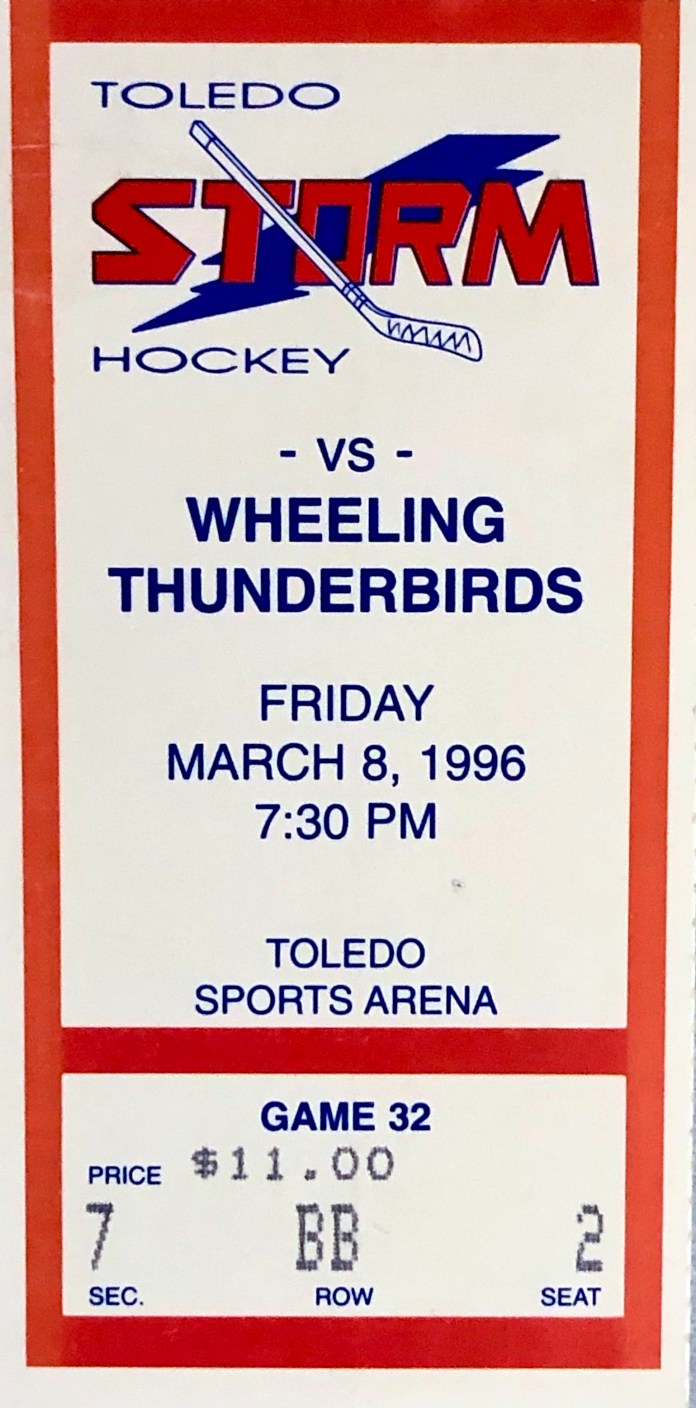
In the mid-1990s, Derek played for the Wheeling Thunderbirds (later renamed Nailers) in the East Coast Hockey League while I was living in Toledo with my sister, Lisa, and working at the news/talk radio station WSPD. Wheeling played the Toledo Storm frequently, and Derek would leave tickets for us at will-call at the Toledo Sports Arena. In exchange for the tickets, we would bring him a case of beer.
I would hang out near the Wheeling locker room and watch the players come out. And then I’d yell, “Hey, DeCosty, you suck.” His head would spin around, and then he’d laugh when he saw me.
After the game, we would grab the beer from the car and talk with Derek for a few minutes near his team bus, the diesel engine roaring and a frigid wind whipping off the Maumee River hitting us in the face.
I took this photo with my Pentax K1000 camera during Derek’s playing days with the Wheeling Thunderbirds.
One night in Toledo, Derek got injured on his first shift of the game. While Derek forechecked with his linemates in the Storm’s zone, a Toledo defenseman whipped the puck along the glass, and it smacked Derek in the face. Blood gushed from his nose, and he went right off the ice and into the locker room. We followed the ambulance as it rushed him to the emergency room. And we spent a few hours talking with Derek in the hospital while the ER doctors treated him.
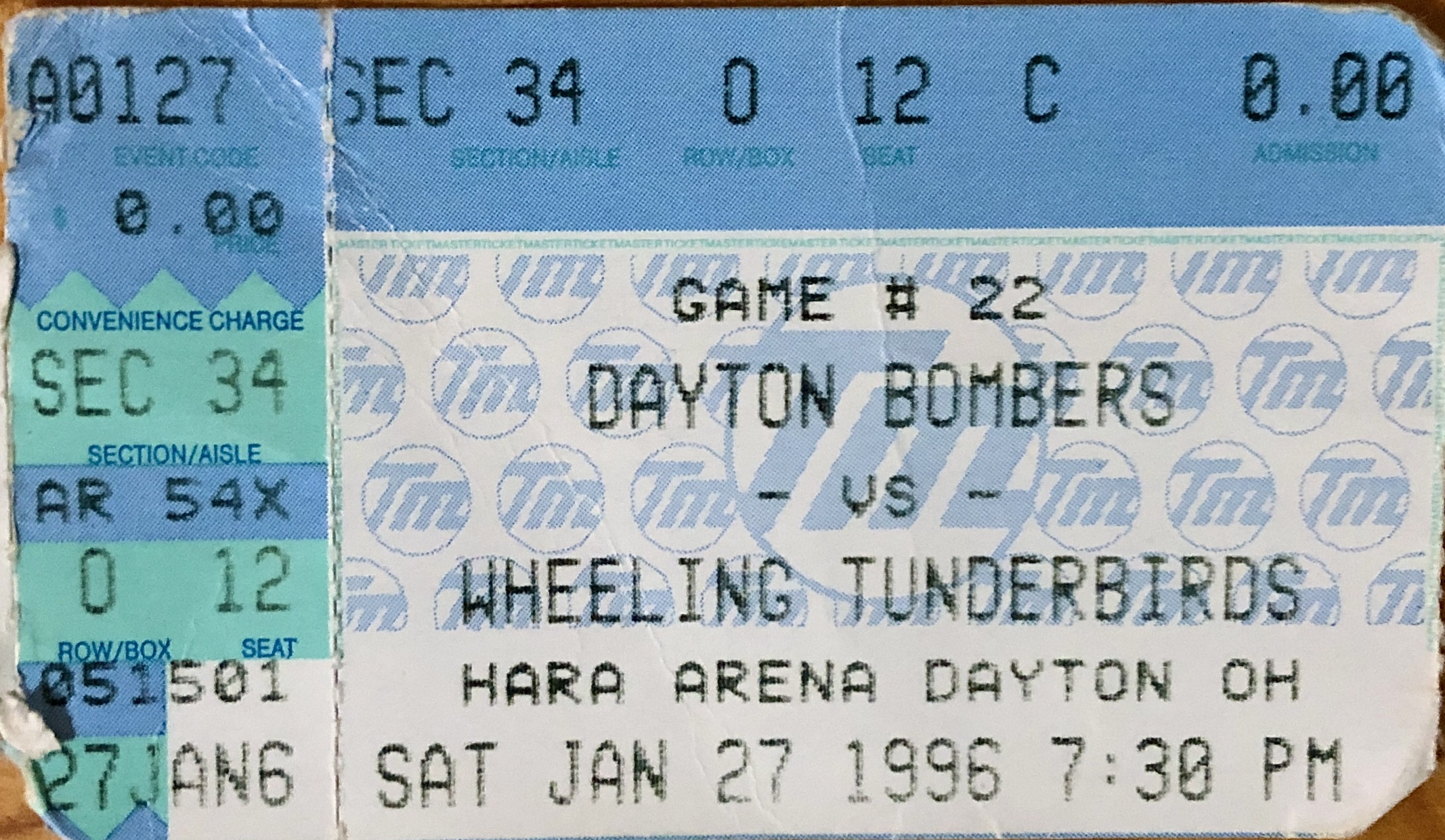
Another time, late on a windy, wintry Saturday afternoon, I found out from my uncle that Derek was playing that night in Dayton, Ohio, about two hours from Toledo. These were the days before cell phones, so I called the arena and left a message for Derek to leave me a ticket at will-call. I was like a hockey groupie.
Strong gusts rocked my Dodge Colt as I filled up at a gas station in Bowling Green, and blowing snow made visibility difficult on I-75. But I made it to the arena, watched Derek play against the Dayton Bombers, talked with him for about twenty minutes, and drove home that night, getting lost on my way out of the city and back onto I-75.
My favorite memory of Derek’s playing days is driving from Toledo to Wheeling one weekend. Derek talked to the coach, who let me ride the team bus for a short road trip from West Virginia to Johnstown, Pennsylvania.
The jocular banter by Derek’s teammates reminded me of scenes from the movie Slap Shot. One player curled up with a blanket in the back of the bus and shouted numerous times: “Hey driver, it’s getting frosty back here. Crank up that heat.”
A hockey card image from his career in Wheeling. Copyright unknown.
But what impressed me most was witnessing how much Derek’s teammates liked and respected him and how his relationship with the friendly people of Wheeling went beyond the surface-level player-fan dynamic. They adored Derek as a valued member of the community, and he returned their affection, making lasting friendships with non-players in the city.
Derek’s professional career later took him abroad as he played for teams in the United Kingdom, including the Guilford Flames and Bracknell Bees.
Relocating to Florida
Derek moved to Florida after his hockey career ended.
And I remember after his father was diagnosed with pancreatic cancer in 2010, Derek drove with Uncle Fee from New York to Jacksonville so he could get treatment at the Mayo Clinic. Derek settled in the Jacksonville area, beginning a career in agronomy at the prestigious TPC Sawgrass Golf Course in Ponte Vedra Beach, home of The Players Championship.
A year later, my wife, Pam, and I spent a few days in Jacksonville, staying with my uncle and his wife, Diane. I remember everyone sitting on the patio on a hot May day while Derek mowed the lawn and trimmed some hedges in the backyard.
Derek was tanned, and he had the most casual, easygoing manner, not complaining that he was doing yard work in the heat while the rest of us were enjoying cool drinks and bantering in the shade. A cigarette dangled from his mouth as he maneuvered around the yard, and he stopped working occasionally to take sips from a bottle of beer.
##
There’s so much more I could say about Derek, so much more I have forgotten and will likely remember later when reminiscing about him.
I took my time drafting this essay. Part of the reason for my slow pace is that I relished roaming around my past accompanied by my beloved cousin.
I feel profound sadness knowing that Derek’s warmth and kind heart are no longer active in the world—that his light, voice, and laughter are no longer accessible to his family, friends, and other people.
But I believe his artwork and the loving impact he made during his short life will endure.
A colorful painting by Derek DeCosty.
With his carefree manner, Derek reminded me a little of Jeff Bridges as the Dude in The Big Lebowski. And I hope Derek’s soul is now at peace and he’s abiding in the cosmos, embarking on celestial wanderings in the afterworld with a sense of curiosity and wonder.
##
I found out about Derek’s death via text when I was at a doctor’s appointment. After I left the medical building, while riding the bus, some words came to me in verse form. I don’t get the heartstrings reference since it’s not a musical instrument, but I guess I conjured the image of an angel playing a harp (like you’d see in old cartoons).
A Poem for Derek
Heartstrings playing in heaven.
Derek is laughing.
But the joke is on us.
He’s gone and won’t be back.
Words that come to me
After the death of my cousin.
No recognition of meaning,
But I must write them anyway—
Words perpetuating memories
To keep my cousin’s spirit alive.
I wish I could hear him laughing,
And ask him what he finds so funny.
Painting by Derek DeCosty.
First-Person Ending
I will end with a few text messages Derek sent me over the past couple of years. I’m sure he wouldn’t mind me sharing them. They reflect his love of life, sense of humor, and compassion for others. I’ve edited them for brevity and clarity.
Note: Because of his family connection to Oklahoma, Derek was a fan of the University of Oklahoma football team (hence the reference to the Sooners). And Colin refers to my son.
The first text is from the summer of 2023, when I needed another brain surgery (my sixth) to remove tumor regrowth. As I awaited my operation, Derek wrote:
June 8, 2023
My beautiful cuz, I understand that you’re going through some shit again regarding those same issues that you’ve conquered in the past and I have no doubt you will again kick ass in our true Bukowski way! I wanted you to know that I have you in my mind, heart, and when I talk to our parents looking down, I’m sure that you have the strength and heart of a buffalo! I love you Fran, don’t ever doubt that you aren’t thought about every day I wake up!
July 24, 2023
My dear cousin, I want you to know that I am thinking about you right now and praying that you are doing well after your surgery. I have you on my mind, in my heart and ask that I take any pain you feel. I love you dearly, more than you know. Stay tough.
October 5, 2024
Good morning my dear cousin!!! This is Derek, this is my new number, new carrier! Just wanted you to have it! Miss and love you all dearly! Saw a really cool tree I have to capture for you. Old crazy oak that I wish you could see! Very photogenic! Anyhow, give Pam and Colin a kiss for me and…..GO YANKS!!!!!
Photo by Derek DeCosty from his Instagram account. He wrote: “Tiny Osprey feather stuck in pro practice green this beautiful morning!”
November 30, 2024
Good afternoon my dear cousin!! Happy Thanksgiving and all that, give my very best to Colin and a big hug for Pam! Hope yall enjoyed the holiday!! Miss and love you dearly!! Crazy day of football today, love it!!! Much love, Go ’Cuse&Boomer Sooner!!
November 30, 2024 (Later)
Sorry Cuz, I had to make a Target run for my mother!
Francis, you’ve always been my Saint, there’s not many people on this earth that understand me in the gracious way you and Damon (sometimes!) get me and the hundred personalities, moods, and craziness that encapsulates all I’m about!! Anyhow, I have to start screaming at the Sooners to get their shit together!!! All my love.
December 31, 2024
My man!!!! Happy New Year to you and all the family! Anyway, straight after Xmas, I caught the flu, of the respiratory type! I’ve been down and out and only going back to work tomorrow!!! Francis, I send my very best to Pam and Colin! Give them a hug for me please! Love and miss you!
Photo by Derek DeCosty from his Instagram account. The text read: “Good morning from the driving range floor, ready for the Players. Happy days!”
I was walking along Walton Street in downtown Syracuse earlier this week and saw a large painting in a window that captured my attention.
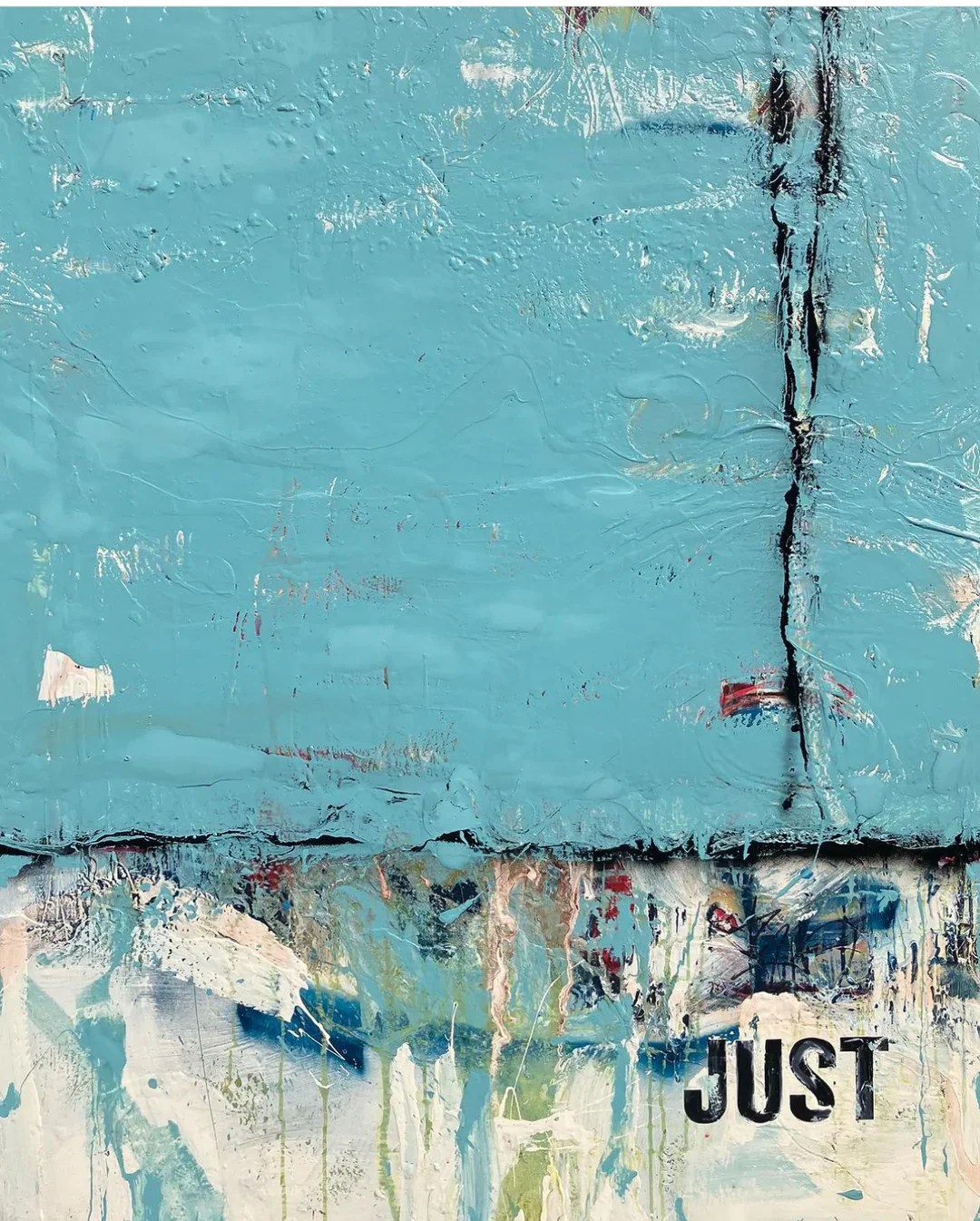
Just by Tyrone Johnson-Neuland.
The work is part of a “street gallery” curated by Midoma Gallery co-founder Marianna Ranieri-Schwarzer.
The piece is entitled Just by Tyrone Johnson-Neuland. It reminded me a little of the stock image I used for the cover of my poetry collection Sidewalk Stories (Kelsay Books, 2017).
I like the aquamarine space in the upper two-thirds of Johnson-Neuland’s painting with the running black horizontal and vertical lines.
And forgive my digression, but can anyone tell me if there is a difference between the colors Aqua, Teal and Turquoise? Or are the terms synonymous? I never know if I am using the correct color.
When I hear aqua or teal, I immediately think of the Miami Dolphins.
When I first noticed the painting in the window, the stenciled letter “Just” in the bottom right corner provoked a stream-of-consciousness fusillade of words that popped into my head.
Just by Tyrone Johnson-Neuland.
The first was “Just what?”
And, of course, “Just do it.” (Nike)
But then:
Just jump.
Just smile.
Just hug.
Just leave.
Just love.
Just care.
Just try.
Just live.
Just die.
Just f%$k off.
Just cry.
Just quit. Just keep going.
Just(ine).
I love experiencing art in the city, and in this case, the work is an open-ended conversation whereby the viewer completes the piece that Johnson-Neuland so beautifully created.



























 Francis DiClemente