This essay was published in the Spring 2024 issue of The Awakenings Review. I’m grateful to editor Robert Lundin for giving me permission to publish the essay on my blog.
##
In the pediatric surgery waiting room, my wife, Pam, and I sit on a couch, watching a television screen as Facebook CEO Mark Zuckerberg testifies before a House subcommittee about the data-sharing scandal involving Cambridge Analytica. It’s April 2018, and we’ve been here all morning since bringing our two-year-old son, Colin, to the hospital for an anesthesia-induced auditory brainstem response (ABR) test.

The audiologist steps into the room and shuffles toward us with his eyes cast downward. He’s short and balding with grayish-brown hair on the sides of his head. After he directs us to a more private area, he says in a low voice, “He’s doing fine. The test went well. It’s good news from my perspective, but maybe bad news for you. His hearing is fine, perfectly normal.”
“So what does that mean?” I say.
“It means his hearing isn’t the cause of his delayed speech.”
“I knew it. I knew it,” Pam says.
We would receive the official diagnosis of autism spectrum disorder (ASD) a few months later. And as Colin has grown, during moments when he refuses to eat, take a bath, or leave the house, or when he throws tantrums—his face bright red, his arms flapping, and his voice emitting high-pitched screams that reverberate off the walls and ceiling—I have repeated two mantras in my head: “Embrace the Futility” and its softer sibling, “Accept the Inevitable.”
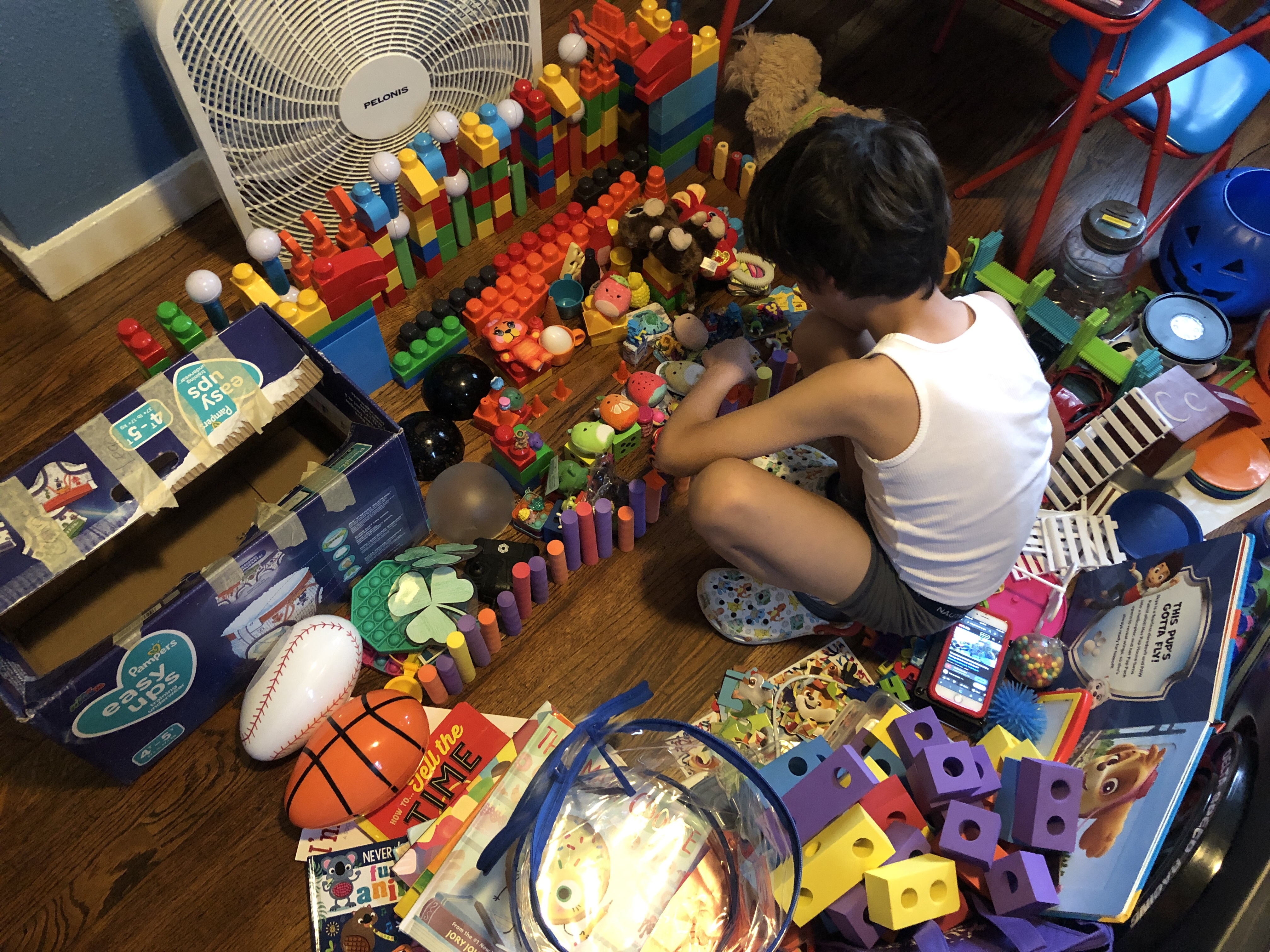
Colin’s room. He loves to line up his toys in patterns,
I use these twin sayings as coping mechanisms to brook the vagaries and hardships of life.
I take no credit for inventing the verbiage of Embrace the Futility. One of my co-workers at a broadcast news wire service in Arizona shouted the phrase several years ago when we were understaffed on the overnight shift and getting inundated with news summaries and audio files sent to us from multiple markets across the country.
Embrace the Futility sounds like a negative concept, but it is a positive and freeing principle (at least for me).
It guides my behavior with one central dictum: I am not in control. The world is a dealer at a Las Vegas blackjack table, and the house always wins. My mental approach is, “Expect the worst and be pleased when it doesn’t turn out that way.”
At an early age, our parents teach us that we will live for a short time and then die. The rules of the game are rigged. We know the score at the outset, and the contest ends in our defeat.
Embrace the Futility and Accept the Inevitable give me the freedom to let go of things I am powerless to control. As a result, I reconcile myself to an existence dictated by failure, sickness, and eventual death.
This is a personal philosophy based on my lived experience; it may not work for everyone. But Embrace the Futility and Accept the Inevitable have helped me to endure the inexorable rough patches in life.
##
I am consumed with pity for my son, knowing his autism—his diminished ability to communicate verbally—puts him out of alignment with the rest of the world. In this case, love proves impotent to effect change or prevent the hurt he will absorb as he grows.
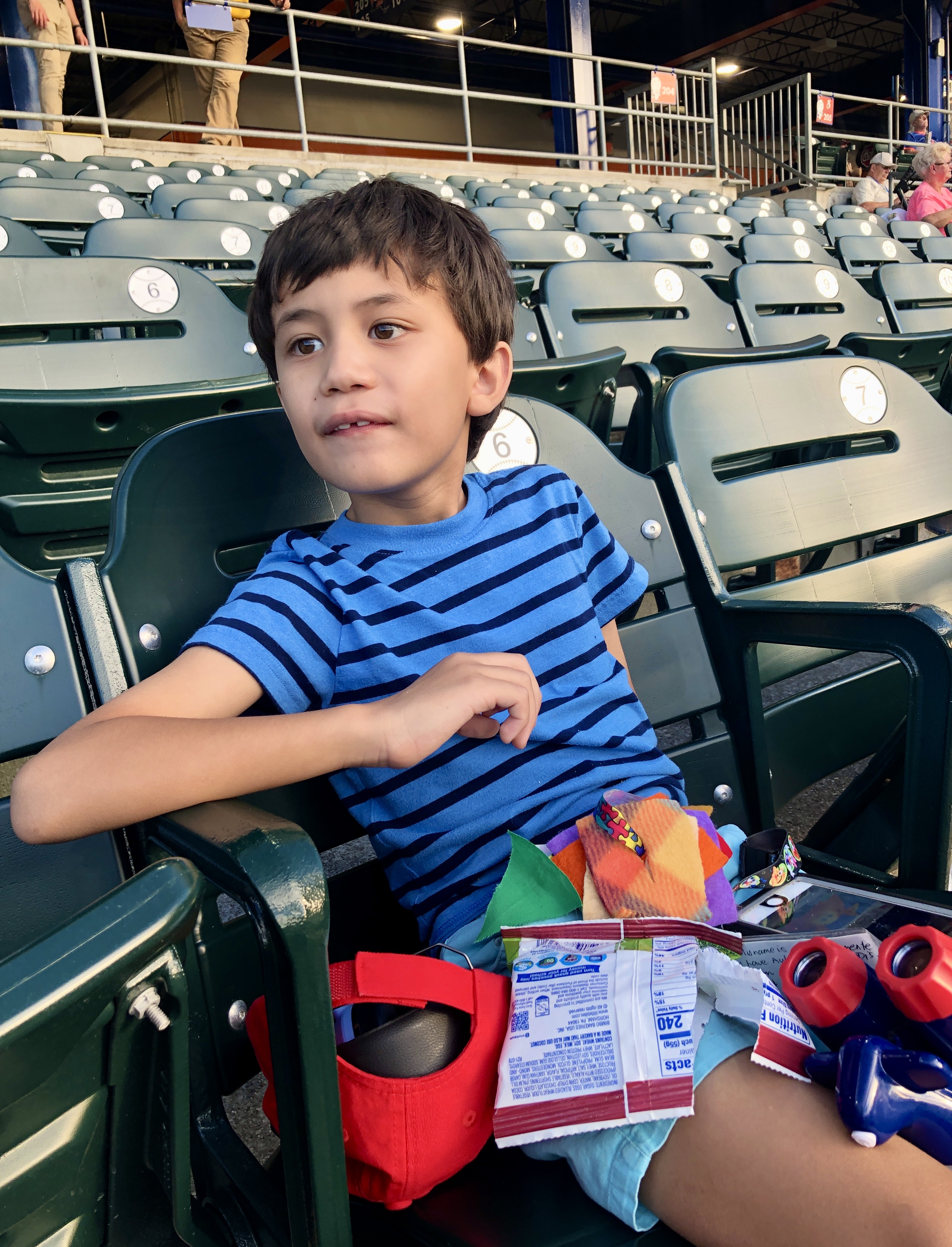
Colin sitting in the stands on the first-base line.
I understand I am professing ableism. I recognize Colin’s disability should not be viewed as a problem that needs to be fixed. But as a parent, I know his autism dictates his future, making his life more difficult. Colin may never lead an independent life. He may never enjoy what neurotypical kids experience—playing organized sports, going to college, falling in love, and working full-time.
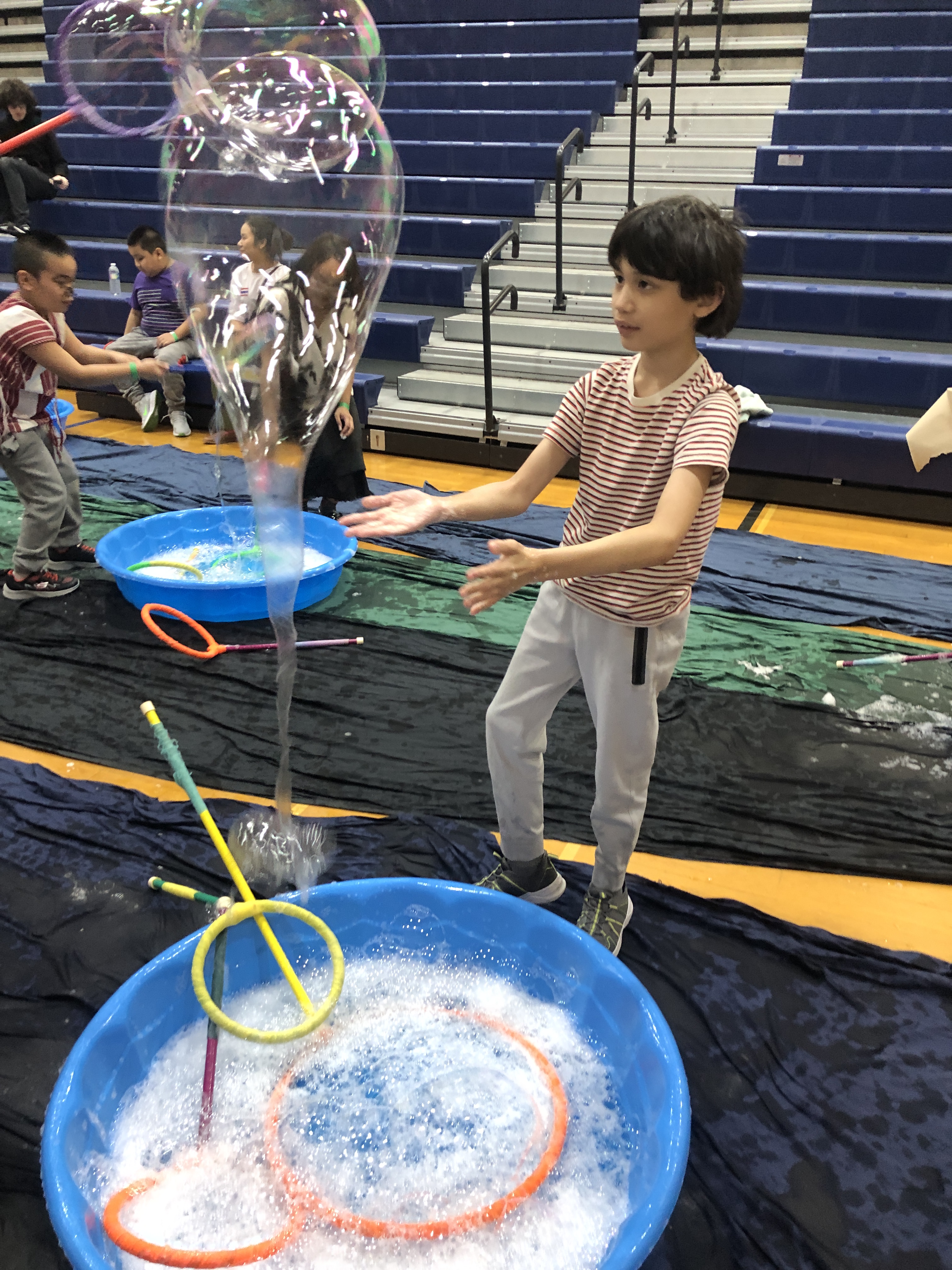
I can’t wish away his autism or intervene to make him “normal.”
I could lament the diagnosis. I could resist—to metaphorically bang my head against a cinder block wall and expect to make an opening. Instead, I acknowledge that I cannot “cure” Colin, and I accept him unconditionally. And amid the many challenges of raising an autistic child, Pam and I savor ordinary moments with Colin, relishing his squeals of laughter and his blithesome presence as he jumps around our living room.

Pam and Colin.
But Embrace the Futility and Accept the Inevitable have universal applications. Your car breaks down. You file for divorce. Bankruptcy, fraud, cancer, a broken femur, or a flooded basement—sure, bring it on.
Embrace the Futility and Accept the Inevitable can help anyone reframe the unavoidable “suckiness” of life. You don’t ignore the mess, but you admit you can’t control it. And it’s OK to let go—to reconcile yourself to what the universe throws at you.
Since age fifteen, I’ve had multiple surgeries and radiation treatments for a slow-growth, benign tumor at the base of the brain, near the pituitary gland. The latest surgical intervention came in July 2023, when a neurosurgeon and an ears, nose, and throat specialist teamed up, taking a transsphenoidal approach (through the nose) to extract tumor remnants that had affected my vision. Even as I write these words, I know the craniopharyngioma will eventually expand in my head and another date on the operating table looms in my future.
I was also diagnosed with rheumatoid arthritis in 2017. The disease has altered my digestion and lung function while leaving me with bent, aching fingers.
And while I do my share of complaining about these medical conditions, I also Embrace the Futility of my body breaking down, since the decline is inescapable.
My late father, Francis Sr., offered the best example of Accepting the Inevitable.
When he was diagnosed with lung cancer in 2007, an oncologist gave him the option of starting chemotherapy, but the doctor stressed the dismal odds of the treatment elongating my father’s life. My dad curled his bottom lip and said, “Why bother? What’s the point?”
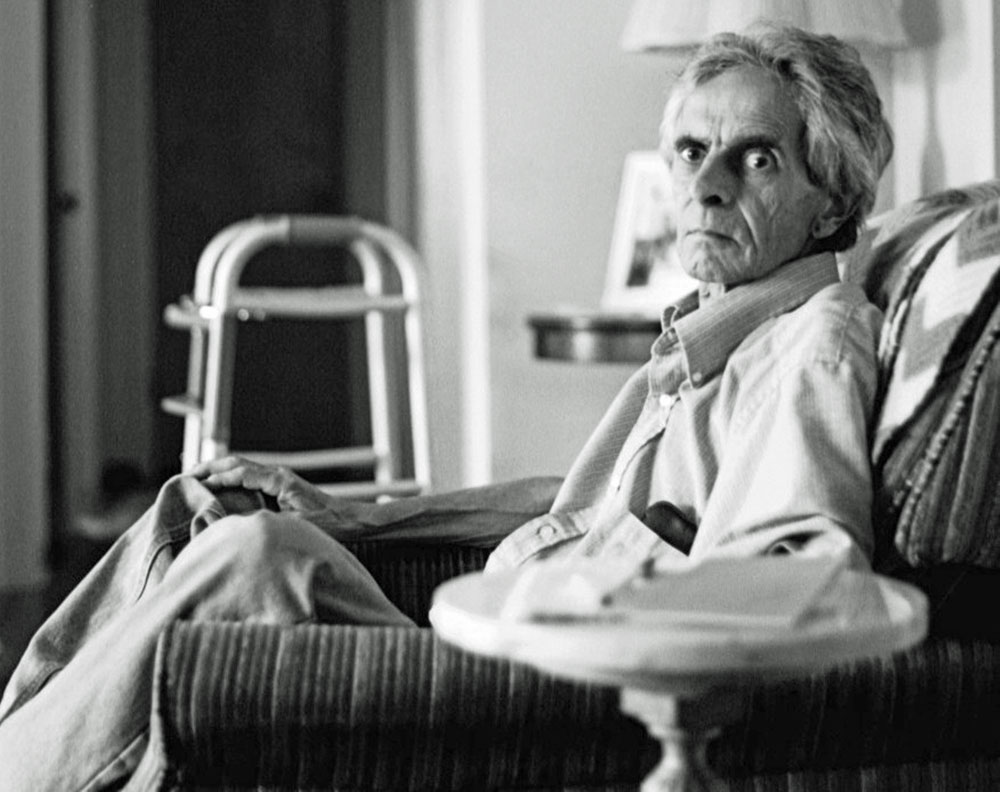
Dad, side angle. Photo by Francis DiClemente.
He rejected tubes, injections, and trips to the hospital. He endured his fate with stoicism, making the best of his last six months on earth, placing bets at OTB (Off-Track Betting), racking up credit card debt (which would be wiped out with his death), and eating sweets he had eschewed previously—Klondike bars and Little Debbie snacks—before dying at home under hospice care.
So now, when circumstances beyond my control arise, I follow my father’s model. I submit, acquiesce, and capitulate—assenting myself to a fate I cannot sway. And this allows me to move forward without resistance to the vicissitudes of life.
 Francis DiClemente
Francis, thank you for sharing your essay, “Embrace the Futility.” It moved me deeply.
You are profoundly wise. I admire you and your work and am looking forward to seeing your film about the Bocce World Series next week.
Warmly,
Kathy
Thank you so much, Kathy. I appreciate your kind words. Hope all is well with you. You can watch the doc online if you don’t want to wait until next week:
https://video.wcny.org/video/the-world-series-of-bocce-a-celebration-of-sport-family-and-community-lb8yhy/
Pingback: Happy Birthday Colin | Francis DiClemente