Metal on the Side of the Road: A Photo Essay

I just wanted to share a link to a photo essay I have published in PRIVATE, an online photography magazine. The piece is entitled Metal on the Side of the Road.

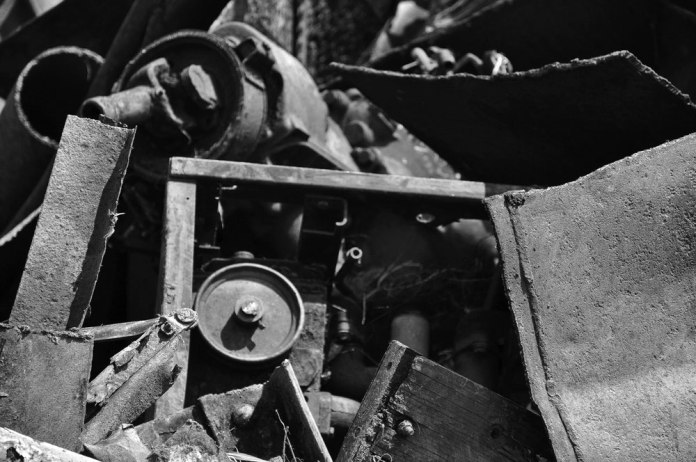
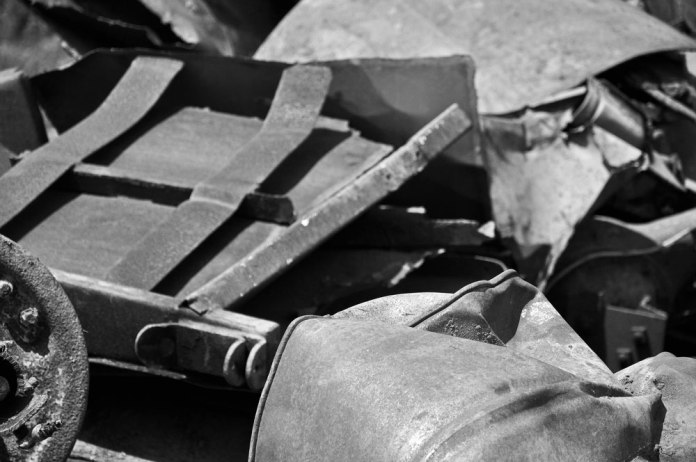
And here are two additional photos from the project that were not included in the essay.

Metal debris on the side of the road in Otsego County, New York. Photos by Francis DiClemente

Metal debris on the side of the road in Otsego County, New York. Photos by Francis DiClemente.


Standard

Remembering My Father On His Birthday

Today marks the birthday of my late father, Francis DiClemente Sr., who passed away from lung cancer at the age of 64 in August of 2007. He was a quiet man who led a solitary life.

My late father, Francis DiClemente Sr.

My late father, Francis DiClemente Sr. Photo by Francis DiClemente.

He put in 32 years at the Sears Roebuck store in Rome, New York, before the company decided to close it in the early 1990s. He rose to the ranks of a sales manager after starting his employment in his late teens, and he served in all departments: electronics, home improvement, heating and cooling, paints and even the automotive center.
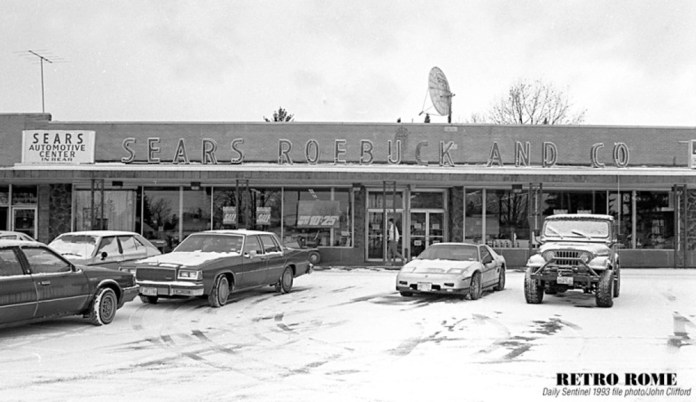
The Sears store in Rome in 1993. Photo by John Clifford/Daily Sentinel.

The Sears store in Rome in 1993. Photo by John Clifford/Daily Sentinel.

One of my childhood thrills was visiting him at the store after school, as we would descend a flight of stairs into a warehouse in the basement—filled with washers and dryers, lawnmowers, rolls of carpet and other merchandise. We would go into the break room, and he would buy me a soda from the glass vending machine—usually Nehi grape, root beer or Dr. Pepper—and then pour a cup of coffee for himself. We’d sit and talk at a little round table covered with the latest edition of the Utica Observer-Dispatch or the Rome Daily Sentinel newspaper.

Things I recall about him:

His lupine face with dark, searching eyes, bushy eyebrows and thick, black hair.

Being a devoted player of the New York Lottery. He scored some jackpots on occasion, including one that totaled more than a thousand dollars. But the scant prizes could never make up for what he spent on a daily basis.

After he died, I went through his room to clean out things, and I discovered innumerable losing lottery tickets stuffed inside one of his dresser drawers. I couldn’t understand why he would save tickets that held zero value. Was he trying to run the numbers through some elaborate mathematical system in order to calculate a winning combination, some key to unlock the mystery of how to beat the odds?

Being a habitual gambler with a penchant for playing football parlays. But his real joy came from betting the horses at the local OTB, sharing camaraderie with other men infected with the same urges, all of them standing around scribbling in the margins of the Daily Racing Form.

After the Sears store closed, he took a low-paying sales job at a carpet store. He complained about the crumbling upstate New York economy and grumbled about his bad luck, repeating the phrase, “I can never catch a break.” Even so, he endured his situation and became a valued employee at the store—one who was highly regarded for treating customers well and giving them deals whenever he could.

When he was diagnosed with cancer, the doctor told him he could try chemotherapy, but it would only give him a slim chance of living slightly longer. He decided against the treatment, noting, “What’s the point?” And so in February of 2007, he stoically accepted his fate, knowing he had only about six to nine months left to live.

Dad in his chair. It's out of focus, but I love how he looks directly at the camera. Photo by Francis DiClemente.

Dad in his chair. It’s out of focus, but I love how he looks directly at the camera. Photo by Francis DiClemente.

I had recently relocated to central New York from Arizona, and I was fortunate enough to spend a lot of time with him before he passed.

He lived with his mother, my grandmother Amelia, a stooped, red-haired woman who had coddled my father from the early days of his youth. He clung to her as the anchor of his life, which contributed to the demise of my parents’ marriage and also affected our relationship.

My late grandmother, Amelia DiClemente.

My late grandmother, Amelia DiClemente. Photo by Francis DiClemente.

I don’t fault my grandmother because I don’t think she could have helped herself when it came to trying to protect my dad. He had been born with a hole in his heart, and the life-threatening condition worsened as he grew. He was a short, frail and underweight boy who was mocked by other kids about his size, labeled as a “shrimp.”

In the late 1950s, my grandparents took my father to Minneapolis, where pioneering heart surgeon C. Walton Lillehei repaired the ventricular septal defect in a seven-and-a-half-hour operation at the University of Minnesota Heart Hospital.

Renowned heart surgeon C. Walton Lillehei. Photo credit: University of Minnesota.

Renowned heart surgeon C. Walton Lillehei. Photo credit: University of Minnesota.

And Dad was proud to have been among the first batch of patients to survive open-heart surgery in the U.S. Whenever he told the story to someone, he would lift up his shirt and show off the long scar snaking down the middle of his chest.

As the months passed in the spring and early summer of 2007, he became weaker and weaker as the cancer ate away at his body, leaving him looking like a shriveled scarecrow.

He had always eschewed desserts and when offered them, would say, “No. I hate sweets.” But as his time on earth elapsed, he went all out when it came to food—eating Klondike bars, Little Debbie snacks, Hostess cupcakes and other junk food. His philosophy was “Why not?”

Although he had Medicaid, Dad left behind a staggering amount of unpaid medical bills. But what troubles me more, what I have been unable to reconcile, is how he ran up thousands of dollars in debt in the last few months of his life, the largest chunk coming from ATM cash withdrawals using my grandmother’s credit card.

I was never able to pin down how he spent the money. He made no large purchases of electronics or home furnishings. I assumed he used the money to gamble; but in some way I wish he had supported a mistress or a family he never told us about, or that he gave away the cash to charities. Instead, I am only left with unanswerable questions. I helped him to file for bankruptcy, but in an ironic turn to the story, he died before a decision was reached in the case.
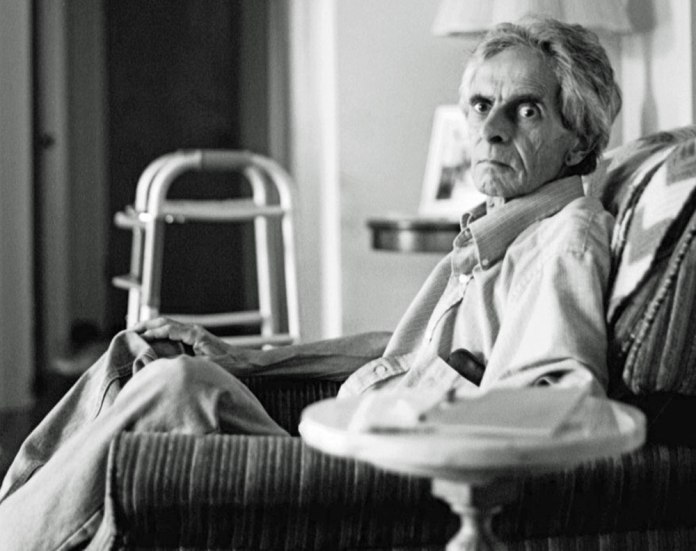
Dad, side angle.

Dad, side angle. Photo by Francis DiClemente.

I remember a funny conversation I had with him one afternoon while we sat in the living room of my grandmother’s small ranch house in north Rome. Sunlight poured through a large bay window, past the partially opened silk curtains. Outside I could see a clear sky and trees burgeoning with leaves—a bright, saturated landscape of blue and green.

I sat in a corner of the room and he sat in a forest-green recliner covered with worn upholstery.

“What’s the name of the angel of death?” he asked me.

I was surprised by the question, and I said, “I think he’s just called the angel of death.”

“No, he has another name,” he said.

And after a few seconds it came to me. “The Grim Reaper.”

“That’s right, that’s it,” he said.

“Why do you want to know?” I asked. “Did you see him in a dream or something?

“No, but I want to know his name when he comes.”

I could go on and on about my dad, but that’s the strongest memory I have of him in his waning days.

Dad in the kitchen. Photo by Francis DiClemente.

Dad in the kitchen. Photo by Francis DiClemente.

And I don’t normally use this space to write about my family, but I felt compelled to pay tribute to a man who left no significant contribution to humanity (as judged by the world’s standards)—he never earned prestigious academic honors, never published a book, never ran a company or made enough money in his lifetime to buy a retirement home in Florida.

Instead, he toiled away in obscurity and mediocrity as a working-class person. My sister and I received no inheritance, save a small insurance policy that paid out after his death. And his shy, aloof nature created a buffer with other people, a barrier to forming deep relationships (except with a few close friends).

Fabric of my Father, a collage I made comprised of objects from his life. Photo by Francis DiClemente.

Fabric of my Father, a collage I made comprised of objects from his life. Photo by Francis DiClemente.

Yet in reviewing his life, I know his kindness, work ethic and willingness to help others set an example for me that I have tried to uphold. And the debts he accrued do not cancel out those qualities.

The one word I keep coming back to is decency. My father was a good and decent man. That may not be cause for celebration in our society. But it’s enough to fill me with pride, and I hope to carry on his values as I carry on his name.
Standard

Anniversary Day

Gratitude fills me on this day, Dec. 12, as I recall an important moment from my life.

Thirty-two years ago this morning, on Dec. 12, 1984, surgeons at SUNY Upstate Medical Center in Syracuse (now named Upstate University Hospital) pried open my skull and pulled out a large tumor that had swallowed my pituitary gland, stunting my growth and delaying my maturation during my teenage years.

Upstate University Hospital (Photo by Francis DiClemente)

Upstate University Hospital (Photo by Francis DiClemente)

Although it was benign, the position of the tumor, a craniopharyngioma located near the optic nerve, meant it could have caused a loss of vision if left untreated. But the surgeons plucked out most of the tumor in a successful eight-hour operation.

The damage to the pituitary gland left me with two lifelong diseases—panhypopituitarism (a deficiency of all of the hormones the pituitary gland produces) and central diabetes insipidus (a condition caused by a lack of the hormone vasopressin, producing the symptoms of excessive urination and extreme thirst).

Still, despite the need for heavy doses of prescription drugs and constant management and monitoring of my health, more than three decades later I am happy to report my last MRI showed I am tumor free. My vision remains intact, with the exception of reaching the age where I require progressive lenses and reading glasses.

Doctors had to perform two follow-up, through-the-nose surgeries, along with a round of Gamma Knife radiosurgery, in order to achieve the positive results. And I know the slow-growth tumor could make a return appearance a few years from now.

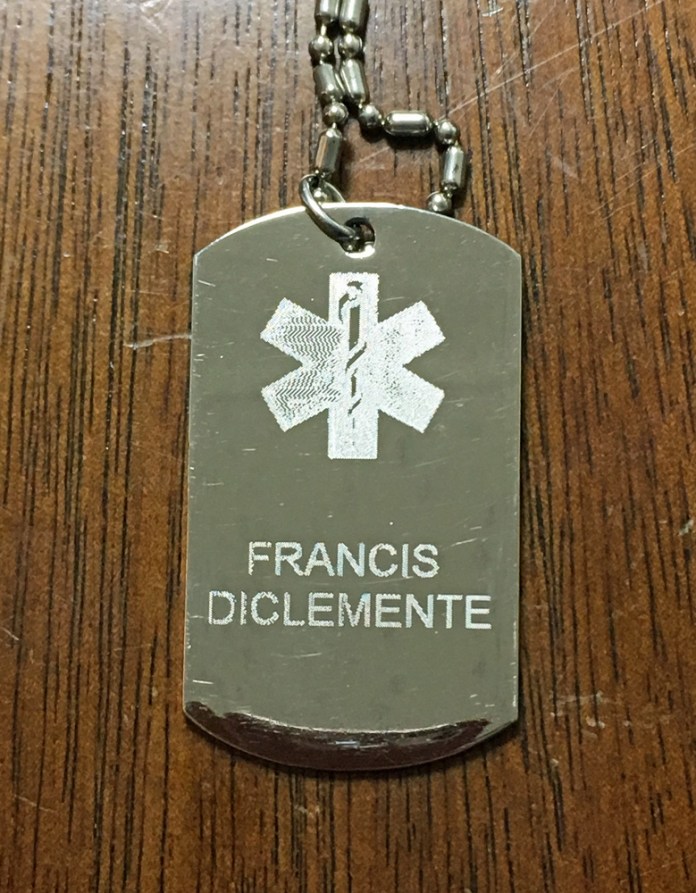
My medical ID necklace

My medical ID necklace

But for today I am free of its tentacles.

Today I am thankful for being alive, knowing things could have turned out differently. One error from a surgeon 32 years ago could have meant diminished mental capacity or motor function, or even worse, blindness. Any number of factors could have changed the outcome.

Instead I am nearly 50 now and married to a wonderful woman. And we have a beautiful young son, a nine-month-old tyrant named Colin Joe.

I believe the prayers my family hurled at heaven on Dec. 12, 1984, had something to do with helping me survive the delicate operation. On this feast day of Our Lady of Guadalupe, I can’t help thinking that the petitions my aunt, Sister Carmella DeCosty, made to the Blessed Mother that day were answered. And in this season of blessings and gratitude, I will take a moment to say my own prayer of thanksgiving.

Our Lady of Guadalupe

Our Lady of Guadalupe

Standard

Two Great Ladies of Verse

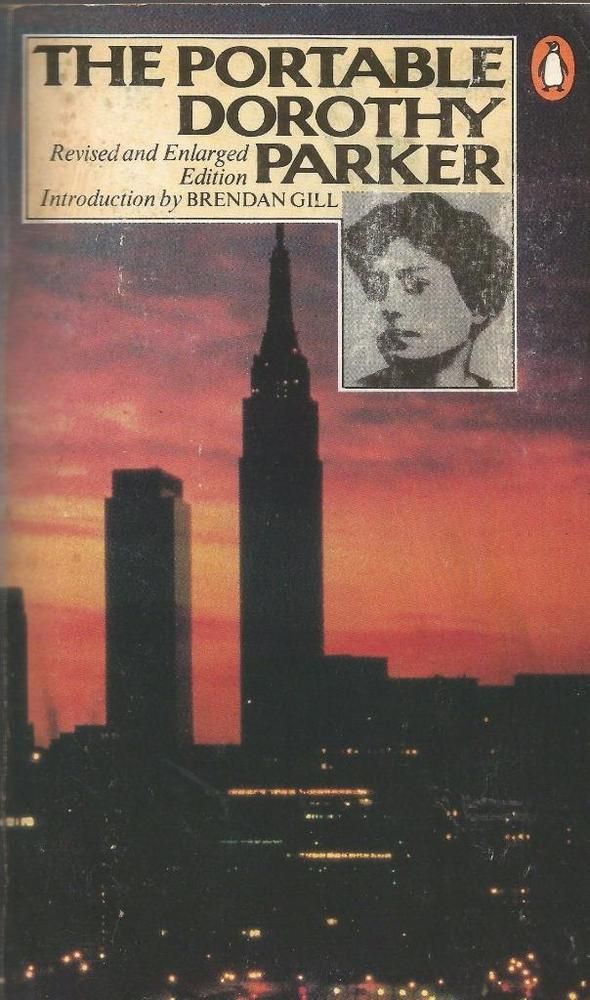
I finished reading two books recently by two female poets from the past. I had always wanted to read something by the 20th century writer Dorothy Parker, so I took out The Portable Dorothy Parker from the library. At the same time, I was reading Poems by Emily Dickinson, Three Series, Complete using the Kindle app on my iPad mini.

Parker, a member of the famed Algonquin Round Table, a group of writers who met at the Algonquin Hotel in New York City in the 1920s, was noted for her acerbic wit, cosmopolitan-themed short stories that rely on dialogue to carry the plot and poetry punctuated by both humor and pathos.

Dorothy Parker

Dorothy Parker

The Portable Dorothy Parker serves as a good introduction to the author’s work, as it contains a mix of poems, short stories, book reviews and theater criticism. The stories feel dated to the time period Parker lived, but two stories, Big Blonde and A Telephone Call, are worth checking out.

I also felt a pang of sadness when reading this line in Parker’s New York Times obituary: “Miss Parker left no survivors.” No human survivors—but she did leave behind a lot of written material to explore.

The Portable Dorothy Parker

The Portable Dorothy Parker

In both collections, Parker and Dickinson give us little gems in verse form focusing on weighty themes like life, death and love, along with observations on a myriad of other subjects.

These brief poems—gleaming verbal diamonds—carry an authentic voice and pack emotional truth, and both women knew how to play with language in such a way as to delight readers.

I picked through both volumes and selected some short poems worth sharing. They can be consumed in small bites, such as while riding public transportation or waiting in the grocery store checkout aisle.

From The Portable Dorothy Parker:

The Small Hours

No more my little song comes back;
And now of nights I lay
My head on down, to watch the black
And wait the unfailing gray.

Oh, sad are winter nights, and slow;
And sad’s a song that’s dumb;
And sad it is to lie and know
Another dawn will come.

Godspeed

Oh, seek, my love, your newer way;
I’ll not be left in sorrow.
So long as I have yesterday,
Go take your damned tomorrow!

The Thin Edge

With you, my heart is quiet here,
And all my thoughts are cool as rain.
I sit and let the shifting year
Go by before the windowpane,
And reach my hand to yours, my dear . . .
I wonder what it’s like in Spain.

Experience

Some men break your heart in two,
Some men fawn and flatter,
Some men never look at you;
And that cleans up the matter.

My Own

Then let them point my every tear,
And let them mock and moan;
Another week, another year,
And I’ll be with my own

Who slumber now by night and day
In fields of level brown;
Whose hearts within their breasts were clay
Before they laid them down.

Two-Volume Novel

The sun’s gone dim, and
The moon’s turned black;
For I loved him, and
He didn’t love back.

Rhyme Against Living

If wild my breast and sore my pride,
I bask in dreams of suicide;
If cool my heart and high my head,
I think, “How lucky are the dead!”

News Item

Men seldom make passes
At girls who wear glasses.

And lastly, the following is one of my all-time favorite poems (right up there with Paul Laurence Dunbar’s We Wear the Mask and Richard Cory by Edwin Arlington Robinson), and Parker’s piece could be considered a companion poem or a bookend to Langston Hughes’ Suicide’s Note.

Resumé

Razors pain you;
Rivers are damp;
Acids stain you;
And drugs cause cramp.
Guns aren’t lawful;
Nooses give;
Gas smells awful;
You might as well live.

Parker, Dorothy. The Portable Dorothy Parker (Revised and Enlarged Edition). New York: Penguin Books, 1976. Print.

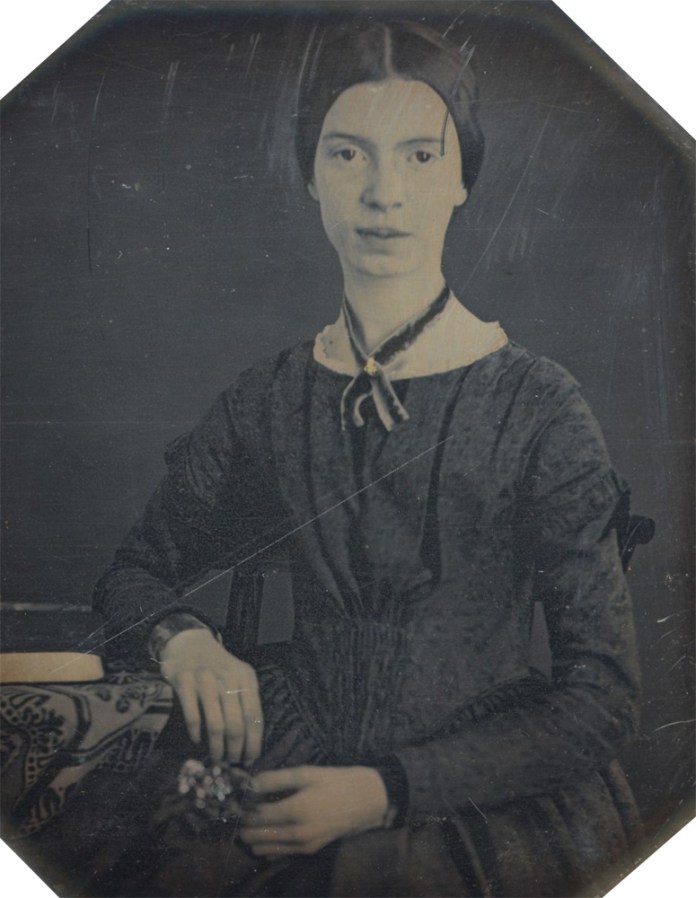
Emily Dickinson

Emily Dickinson

And here are the selections from Poems by Emily Dickinson, Three Series, Complete:

The Mystery of Pain

Pain has an element of blank;
It cannot recollect
When it began, or if there were
A day when it was not.

It has no future but itself,
Its infinite realms contain
Its past, enlightened to perceive
New periods of pain.

With a Flower

I hide myself within my flower,
That wearing on your breast,
You, unsuspecting, wear me too—
And angels know the rest.

I hide myself within my flower,
That, fading from your vase,
You, unsuspecting, feel for me
Almost a loneliness.

I’m Nobody! Who are you?

I’m nobody! Who are you?
Are you nobody, too?
Then there’s a pair of us—don’t tell!
They’d banish us, you know.

How dreary to be somebody!
How public, like a frog
To tell your name the livelong day
To an admiring bog!

Simplicity

How happy is the little stone
That rambles in the road alone,
And doesn’t care about careers,
And exigencies never fears;
Whose coat of elemental brown
A passing universe put on;
And independent as the sun,
Associates or glows alone,
Fulfilling absolute decree
In casual simplicity.

A Word

A word is dead
When it is said,
Some say.
I say it just
Begins to live
That day.

The Inevitable

While I was fearing it, it came,
But came with less of fear,
Because that fearing it so long
Had almost made it dear.
There is a fitting a dismay,
A fitting a despair.
’Tis harder knowing it is due,
Than knowing it is here.
The trying on the utmost,
The morning it is new,
Is terribler than wearing it
A whole existence through.

Lost Faith

To lose one’s faith surpasses
The loss of an estate,
Because estates can be
Replenished, — faith cannot.

Inherited with life,
Belief but once can be;
Annihilate a single clause,
And Being’s beggary.

A Book

There is no frigate like a book
To take us lands away,
Nor any coursers like a page
Of prancing poetry.
This traverse may the poorest take
Without oppress of toll;
How frugal is the chariot
That bears a human soul!

Love

Love is anterior to life,
Posterior to death,
Initial of creation, and
The exponent of breath.

Dickinson, Emily. Poems by Emily Dickinson, Three Series, Complete. Kindle Edition.


Standard