Date With a School Nurse

I just wanted to mention that one of my personal essays, Date with School Nurse, has been published by You&Me-America’s Medical Magazine, an online medical magazine. You can read the piece here. Thanks for taking a look!

And here’s the full text of the story:

I thought I was done visiting the school nurse after junior high school.

I thought I no longer needed to be excused from class and sent to the nurse’s office with a sore throat or tummy ache. And in fact no student enjoys seeing the school nurse. In addition to feeling sick, he or she is embarrassed about being separated from the rest of the class.

That’s how I felt when I had to visit the school nurse three times a week when I was a student at St. John Fisher College in Rochester, New York, in the late 1980s and early ’90s.

The campus of St. John Fisher College. Photo by St. John Fisher College

The campus of St. John Fisher College. Photo by St. John Fisher College.

I did not have an acute illness. Instead, I suffered from panhypopituitarism—a deficiency of all of the hormones the pituitary gland produces—resulting from a craniopharyngioma (a pituitary tumor) that was surgically removed during my sophomore year in high school.

As a college freshman I looked like a 14-year-old boy and, initially, some of the other students mistook me for an academic prodigy. I had to explain to them I was of normal intelligence but appeared young for my age due to my pituitary condition.

My endocrinologist in Syracuse had prescribed me synthetic human growth hormone to help me grow, and my mother had learned how to give me the HGH shots when I lived at home.

But when I went away to college, my doctor had arranged it so the school nurse could deliver the injections. He said it was important for me to continue the treatment.

The nurse, Nancy (name changed), was in her forties and had shoulder-length dark hair. She wore red lipstick and a white uniform that hugged her voluptuous figure, and she reminded me of a less glamorous version of Jane Russell.

But her kindness and professionalism stood out more than anything else.

Her small health office was located in the basement of a campus building, just around the corner from a student lounge and down the hall from the college radio station.

I would try to go there early in the morning, when few students would be hanging out in the lounge. I didn’t want anyone to see me visiting the nurse on a regular basis because I considered my condition abnormal compared to students who had the flu or some other common health issue.

Nancy would greet me warmly when I would enter her office. “Come on in,” she would say.

We would make some small talk, discussing the weather, news, sports or plans for the weekend.

If she didn’t have a patient with her I would head right to the exam room in the back of the office, toss my book bag on the floor and get ready for the shot. She would follow me into the room, pull the growth hormone out of her small brown refrigerator, mix the solution and prepare the syringe, tapping it and releasing any air bubbles.

She knew my dosage based on the endocrinologist’s instructions. She also kept a chart in my file listing the dates and dosages of my injections, marking my progress as the months went on.

I would drop my pants and underwear and lean against the exam table, my cold fingers crinkling the white paper that covered the table. She would rip open an alcohol pack, and the pungent smell would hang in the air as she spread the alcohol on my buttock.

“OK, just a little poke,” she would say as she prepared to inject the medicine. I would feel the sting of the needle breaking the skin and then being inserted into the muscle, and the pain would intensify as she pushed down on the plunger.

Then Nancy would remove the needle, rub some more alcohol on me and say, “You’re all set. I’ll see you on Wednesday (or Monday or Friday, depending on the day).” I would pull up my pants, thank her for the shot and exit the office.

Her efficiency meant the visits to the nurse’s office never took more than five minutes out of my day.

Still, I felt humiliated that I had to go there three times a week. My physical appearance distinguished me from the other kids on campus, and I saw myself as an aberration because I needed drugs to initiate puberty.
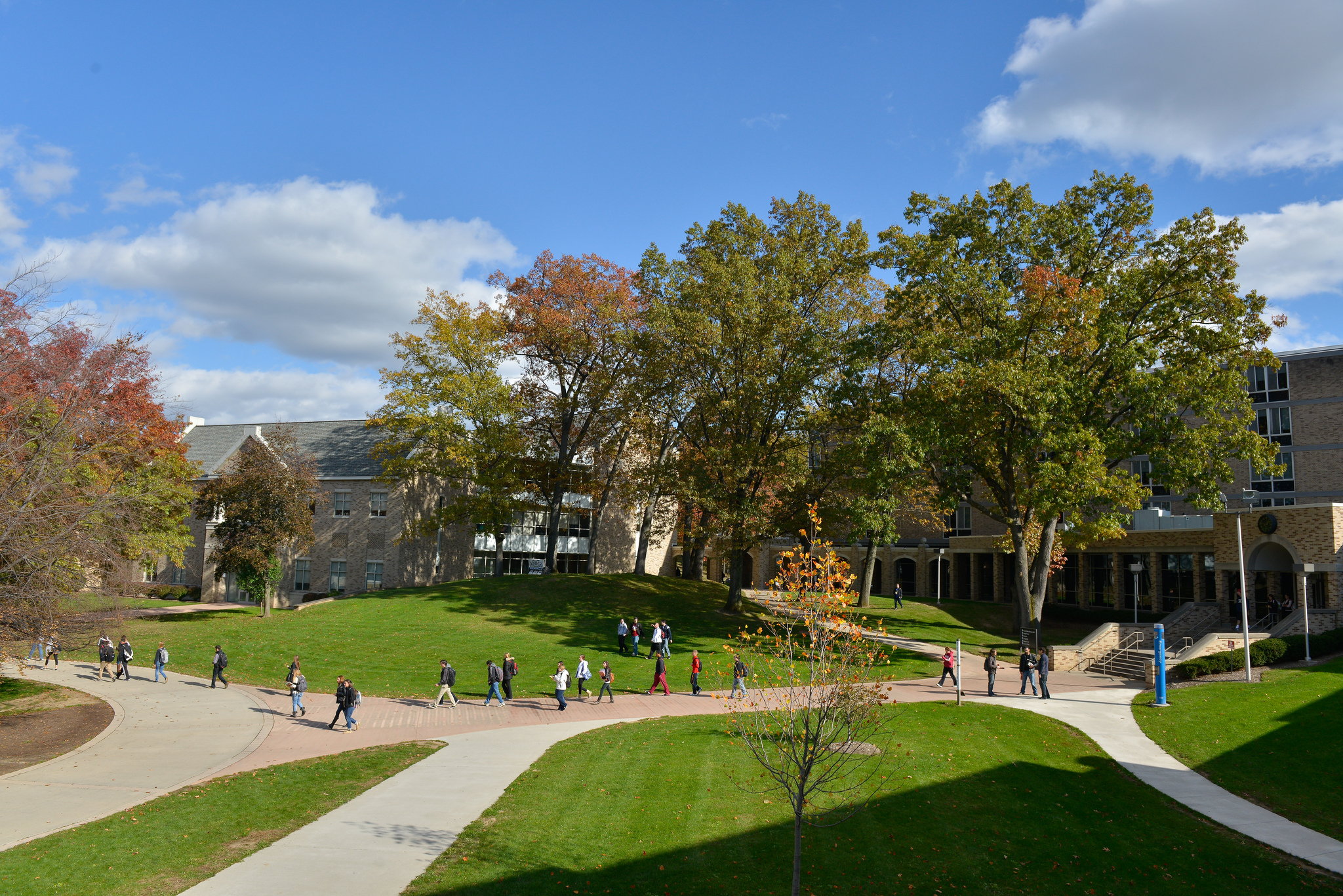
St. John Fisher College in Rochester, New York. Photo by St. John Fisher College.

St. John Fisher College in Rochester, New York. Photo by St. John Fisher College.

And I am ashamed to admit it now, but while the other students at Fisher were pairing off at parties and having sex in their dorm rooms, Nancy was the only female to see me undress during my four years at the college.

Yet what made Nancy special was that she never called attention to my condition. She treated me according to the doctor’s instructions and expressed concern for me, but she never made me feel like I was special or peculiar.

To her I was just another patient, no different than one who had the mumps, the chickenpox or a sprained knee. She completed the task of giving me the shots without making a big deal about it. And her businesslike approach made me feel more comfortable about going there. Her office became a safe space where I could get the treatment I needed for a medical condition I had no control over.

And in time my body responded to the hormones I received. I grew in height, my features matured and I developed into a man. It was a long, circuitous trek, but my biological age finally caught up to its chronological equivalent, giving me a sense of normalcy in adulthood. And I have Nancy to thank, in part, for helping me to arrive here.

Standard

Winnowing the CD Collection

I am clearing some space in my one-bedroom apartment, and I recently tackled the project of going through a large blue tote filled with about 200 CDs. All of the albums have been loaded into my iTunes library, so there’s no real reason for me to hang on to them.

Clarity, by Jimmy Eat World

Clarity by Jimmy Eat World

I separated some that I wanted to keep for sentimental reasons—like The Best of Schubert, Jimmy Eat World’s Clarity and This Desert Life by Counting Crows, which I listened to continuously (on repeat cycle) when trying to decide whether to leave Arizona nine summers ago.

This Desert Life, by Counting Crows

This Desert Life by Counting Crows

I took more than 150 CDs that I wanted to sell to The Sound Garden in Armory Square. Two male clerks divided my collection into a few large stacks and then started going through them, deciding what to buy and what to pass on.

The Sound Garden, located in Armory Square in Syracuse.

The Sound Garden, located in Armory Square in Syracuse.

I was amused as I stood there on the other side of the counter, watching as albums I loved by Bruce Springsteen, Elton John, Otis Redding, Nat King Cole, Roy Orbison, along with other CDs by Guster, The Cure, The Cult and the Rolling Stones, were all returned to me, declined and discarded. One of the clerks said the total they were willing to give me was 93 dollars and I said that was more than fair. I hadn’t expected to make that much.

I took my cash winnings and headed home; I felt like I had just finished hitting a few exactas at the track. The next day I carried a suitcase filled with the remaining CDs to the 3fifteen thrift store in Marshall Square Mall, where the woman working the counter accepted all of them as a donation. She also gave me a coupon for a free cup of coffee next door at Cafe Kubal (not a bad deal from my perspective).

It seems the pruning of my CD collection completes a chapter in my life, as I move into middle age, putting aside the things of my youth and realigning my priorities. Seeing the CDs laid out on the counter at The Sound Garden reminded me of how important my music collection was to me in my early twenties and throughout my thirties. Living alone for most of that time, the CDs were my companions and the songs they played provided another voice, another sound in otherwise lonely apartments.

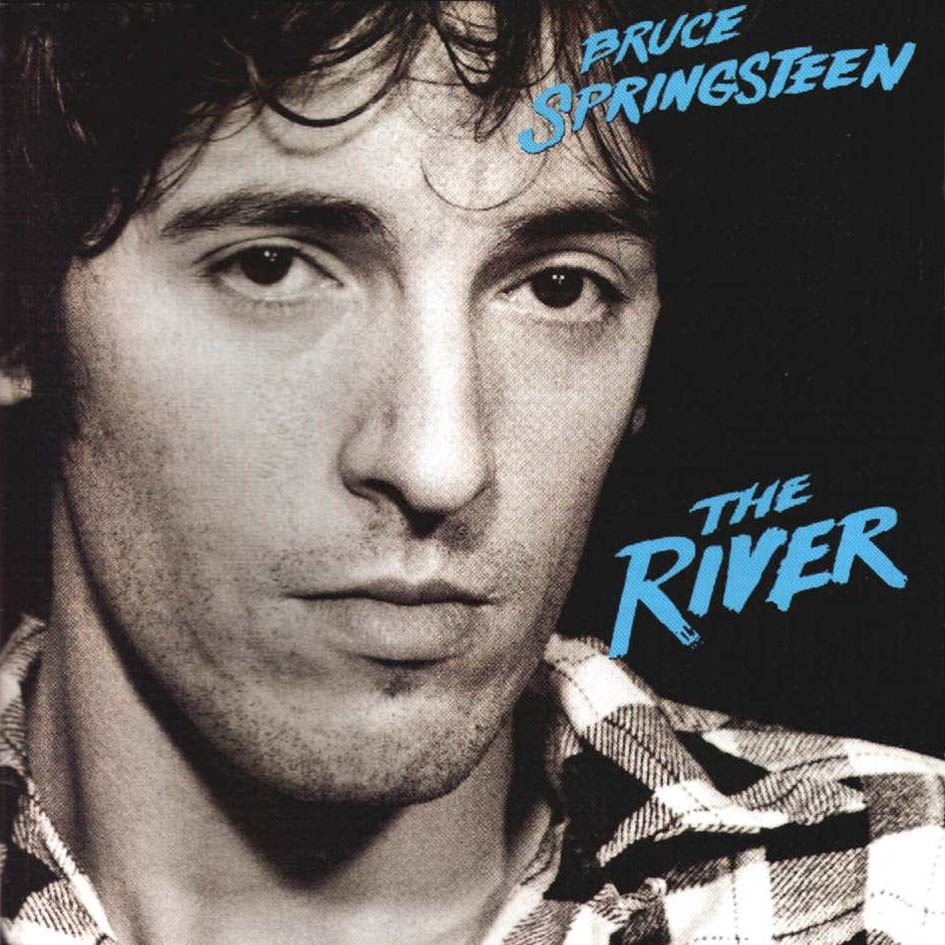
The River by Bruce Springsteen

The River by Bruce Springsteen

But as I shoved the CDs I had saved back into my walk-in closet, I thought of a line from a Bruce Springsteen song. It’s from the title track from the album The River:

“Now all them things that seemed so important
Well mister they vanished right into the air …”

And the song continues, so I’ll let “The Boss” close out this blog post:

“Now I just act like I don’t remember
Mary acts like she don’t care.

But I remember us riding in my brother’s car
Her body tan and wet down at the reservoir
At night on them banks I’d lie awake
And pull her close just to feel each breath she’d take
Now those memories come back to haunt me,
they haunt me like a curse
Is a dream a lie if it don’t come true
Or is it something worse
that sends me down to the river …”

Standard

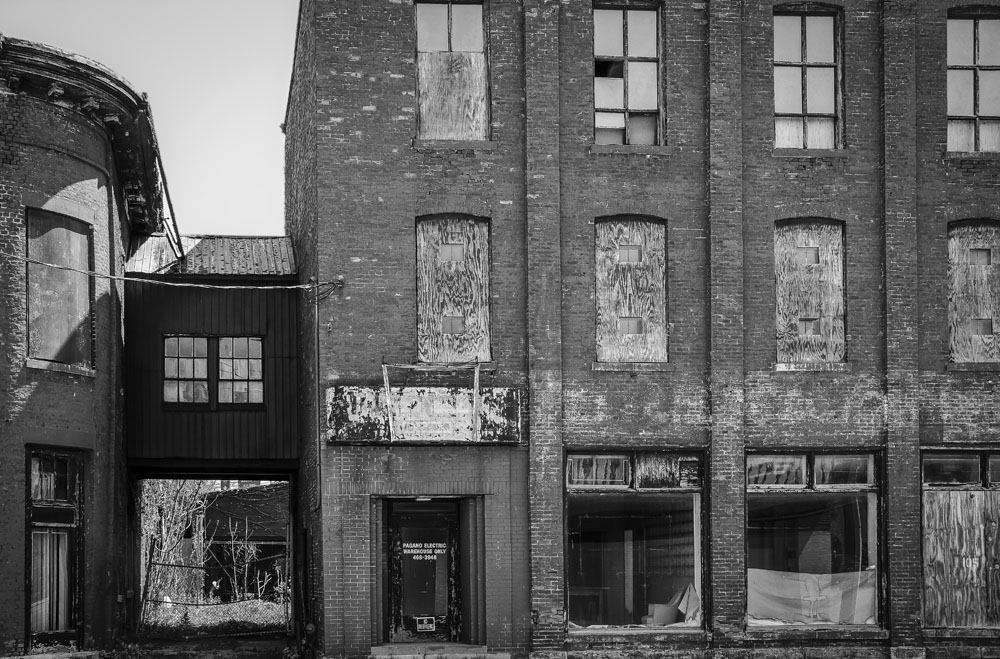
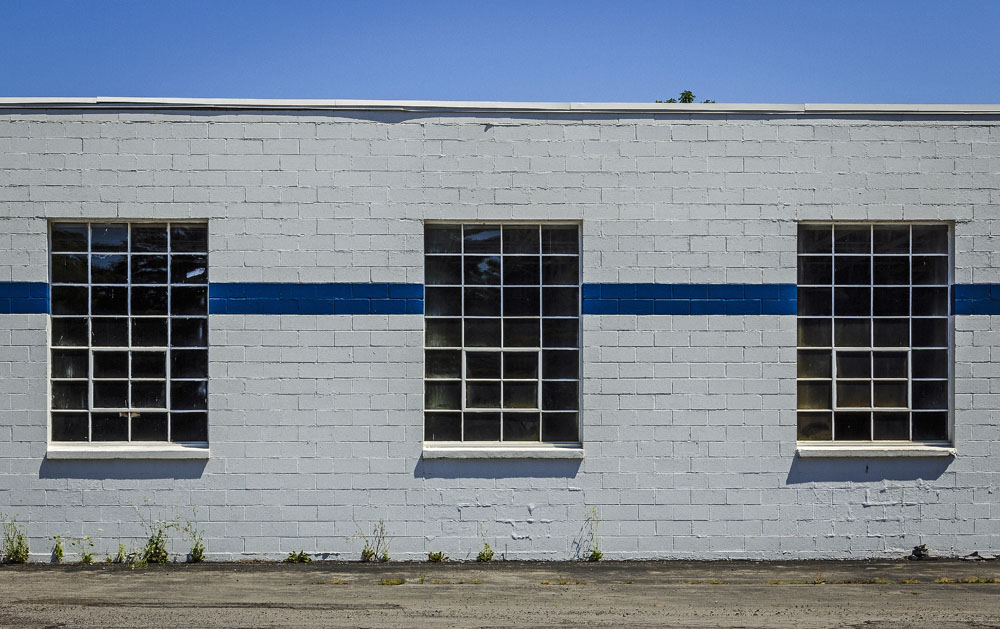
I wanted to share some images I’ve edited as part of a photography project called Structures in Decline. Over the past few years, whenever I found time, I would explore my neighborhood and the surrounding area, discovering buildings and structures in various states of disrepair or decay.

I found myself drawn to the buildings because they seemed to haunt the landscape in Syracuse and Central New York, expressing a feeling of loneliness. And although they have deteriorated and been forgotten, most of the buildings once served a purpose in the community and became part of the region’s history.

A major part of this project was capturing the demolition of the former Kennedy Square public housing project near downtown Syracuse. I photographed the site at various stages of the demolition process and was particularly drawn to the winter scenes, punctuated by shimmering piles of construction debris covered with snow.

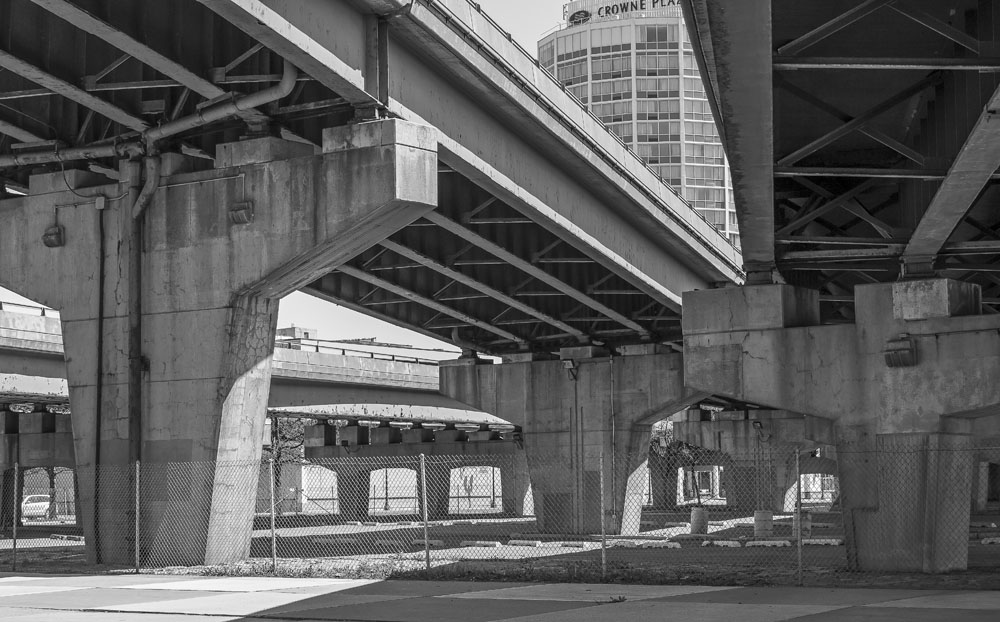
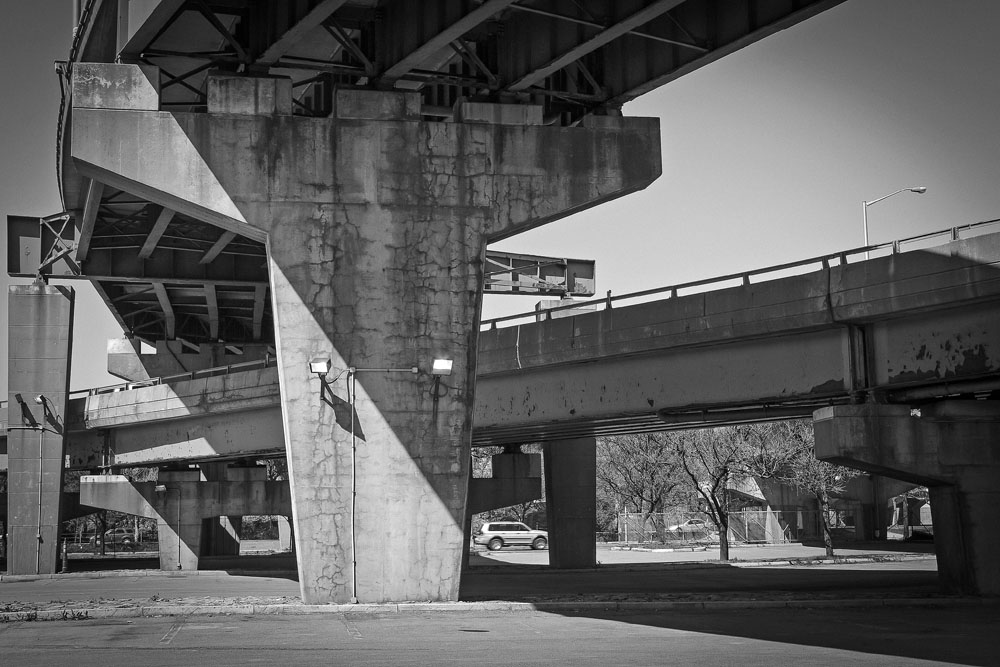
I also photographed the Interstate 81 viaduct/overpass running through downtown Syracuse. I feel I must also mention that this was my first attempt at shooting with DSLR cameras, after having made the transition from my beloved Pentax K1000 35mm camera (which still resides comfortably in my storage closet and can be pulled out when needed for a dose of photo nostalgia).

Here’s a Flickr album where you can see some of the images from the Structures in Decline project.

And I’ve added some others here.

Interstate 81 with Crowne Plaza (photo by Francis DiClemente)

Interstate 81 with Crowne Plaza (photo by Francis DiClemente)

Interstate 81 Structure. Photo by Francis DiClemente.

Interstate 81 Structure (photo by Francis DiClemente)

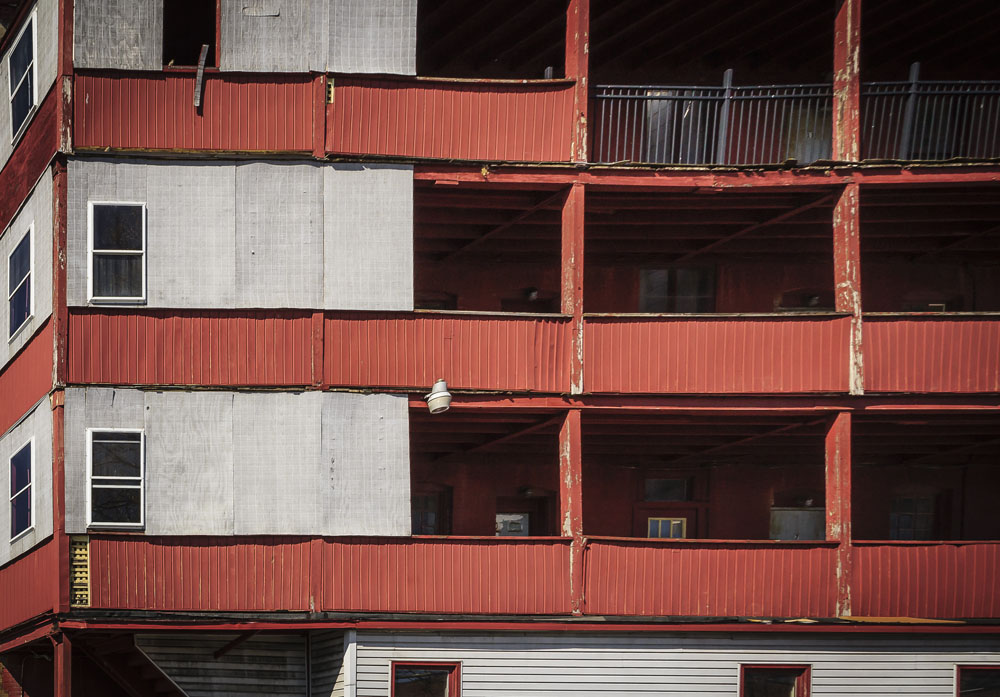
Irving Avenue Apartment Building (photo by Francis DiClemente)

Irving Avenue Apartment Building (photo by Francis DiClemente)

Townsend Street Building  (photos by Francis DiClemente)

Townsend Street Building Front (photo by Francis DiClemente)

Fayetteville Auto Garage (photo by Francis DiClemente)

Fayetteville Auto Garage (photo by Francis DiClemente)

Empty Gas Station (photo by Francis DiClemente)

Empty Gas Station (photo by Francis DiClemente)

Westcott Street House Side (photo by Francis DiClemente)

Westcott Street House: Side View (photo by Francis DiClemente)

Westcott Street House Porch (photo by Francis DiClemente)

Westcott Street House Porch (photo by Francis DiClemente)

Structures in Decline: A Photo Project

Gallery