365 Days Later

One year ago today, a neurosurgery and ENT team at Upstate University Hospital took a nasal approach to remove the remnants of a craniopharyngioma (a benign tumor on the pituitary gland). It marked my sixth brain surgery since age 15.

I have fully recovered from the surgery, resuming all activities, although I still suffer occasional bloody noses and have peripheral double vision (which is likely permanent).

Photo of me last summer, after my surgery.

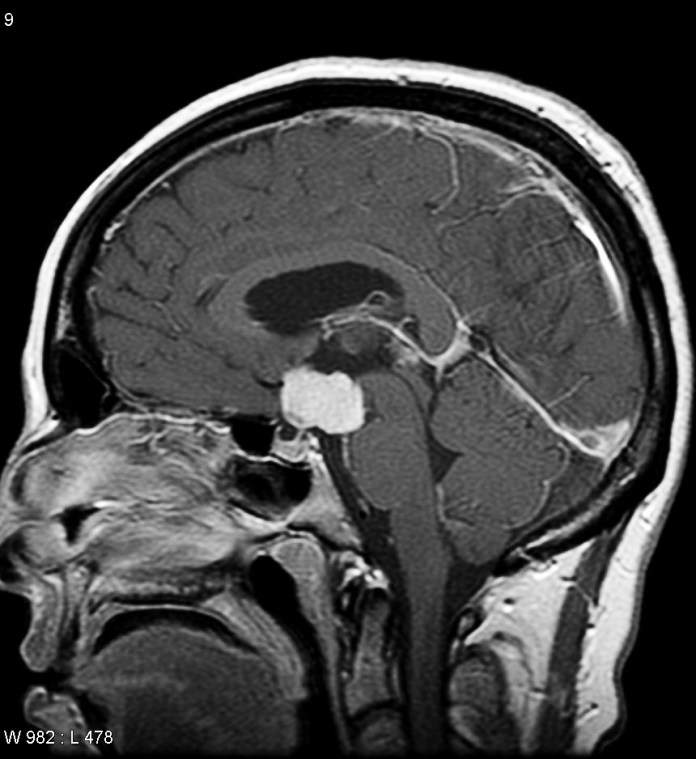
Vestiges of the tumor—what my neurosurgeon calls “membranes and scar tissue” still reside inside my head, as outlined in my latest MRI report:

FINDINGS:

“. . . In the right paramedian aspect of the surgical bed in the sellar/suprasellar region again seen is mass with heterogeneous enhancement which measures approximately 1.2 x 1.4 cm by my measurements.”

For now, the mass “remains grossly unchanged,” but the nature of craniopharyngiomas means the tumor will likely grow back to a point where another surgery or radiation will be required.

However, my medical condition is not the subject of this post. I just needed a brief introduction with a reference to the anniversary of my surgery.

Instead, I want to share some musical selections I listened to in the days and weeks following my surgery last summer. These songs aided me, providing succor while I recovered, propped up in bed, unable to sneeze or blow my nose, and moving gingerly around the house.

As I listened to the songs, I reflected on my life, swelling with gratitude for being alive and making gradual progress—supported by my wife, Pamela.

I think the tunes can provide positive affirmation for anyone facing adversity.

“I’m Still Standing” by Elton John

“Winning” by Santana

“Back in the High Life Again” by Steve Winwood

“Better Days” by Bruce Springsteen

More about Bruce later . . .

As someone who grew up in the 1980s, I am mesmerized by the concert footage available on YouTube. It is amazing to think you can see bands performing in 4K (some clips with multicam edits) hours after a show. When I was a kid, I listened to 95X in Syracuse after a concert by the Rolling Stones at the Carrier Dome so I could hear the DJ run down the setlist.

During The Cure’s 2023 North American tour, they played five original songs that I believe will be included in their forthcoming album, Songs of a Lost World. Two of my favorites from the new batch are “Alone” and “Nothing is Forever,” which I listened to repeatedly during my recovery. They put me in a dreamy headspace where I could forget about my health problems.

“Alone” by The Cure

“And Nothing is Forever” by The Cure

I also turned to the Grateful Dead for repeat listening during the late summer of 2023—often clicking on two tracks from the Dead’s famed 1977 concert at Barton Hall at Cornell University.

“Morning Dew” by the Grateful Dead

“Terrapin Station” by the Grateful Dead

And finally, there’s Bruce.

Bruce Springsteen and the E Street Band were initially scheduled to perform at the JMA Wireless Dome in Syracuse in early September 2023, but the show was canceled because of Bruce’s peptic ulcer disease. It was fortunate for me because I would have been in no condition to climb the concrete steps to the upper rafters of the Dome just a few weeks after brain surgery. But I attended the rescheduled show in April 2024, and I’ll leave you with “Backstreets” (which references summer).

“Backstreets” by Bruce Springsteen and the E Street Band

Standard

Post-Op Notes

Here’s a follow-up to my last post. It’s been less than a week since my surgery, so please excuse my scattered and fragmented thoughts.

A neurosurgery and ENT team at Upstate University Hospital removed a stubborn craniopharyngioma in a four-hour surgery earlier this week.

Upstate University Hospital (Photo by Francis DiClemente)

All test results and surgeons’ notes are posted to the MyChart patient portal, and I love the description of my surgery in ALL CAPS. It reads like poetry to me:

ENDONASAL ENDOSCOPIC TRANSSPHENOIDAL RESECTION OF TUMOR WITH NASAL SEPTAL FLAP

Before surgery, George, one of the neurosurgery residents, stepped into the pre-op room to get me to sign some consent forms. He scared the shit out of me when he ran through the complications—cerebral spinal fluid leak (CSF), bleeding, the need for a blood transfusion, stroke, and death. I thought, maybe I should just get out of bed, put on my clothes, leave the hospital, and let the tumor keep growing until it really messes up my vision.

But I overcame my fear and signed the consent forms. Then I met the anesthesia team, a nurse stuck me with a couple of IVs, and I was off to Fairyland.

I woke up in recovery feeling like only seconds had passed. The pain came in waves—going from zero to eight and centered around my forehead, above the bridge of my nose. I was given fentanyl and oxycodone, while a Foley catheter took care of my urine output.

The neuro team quizzed me: What’s your name? Do you know where you are? What year is it? At first, I said 2013, but then I added ten years to arrive at the correct year.

A parade of surgeons, residents, and interns entered my room in the hospital’s Neuroscience Intensive Care Unit, and someone told me they had encountered a CSF leak, but they patched it with cartilage from my nose. Dr. H., my primary neurosurgeon, said they scooped up most of the craniopharyngioma, but some calcium fragments adhered to structures and had to be left behind.

Craniopharyngioma example.

Lying in that hospital bed—humiliated from lack of privacy, with wires twisted around me, with my gown barely covering my naked body, tumid from the high dosage of corticosteroids—I felt like a wounded animal. After the surgical trauma, I now saw my body as simply an object—a machine that either functions or fails.

And I was now at the mercy of the fine nurses who treated me. I enjoyed my conversations with them, and most were serving as traveling nurses doing rotations at Upstate. And one side note: many of the nurses wore Hoka sneakers.

Because of my persistent headaches, I could not read, watch TV, or even look at my phone. With the wall clock ticking incessantly, I closed my eyes, prayed, and reflected on my life.

This was my sixth surgery if you count two Gamma Knife treatments. And since they didn’t get everything, I wondered, how soon will I be back? Will it be two, four, or ten years? How many surgeries will I need before death claims me?

But when I walked the floor on my second day after surgery, I passed other rooms with patients unresponsive and intubated, and deeper thoughts gave me solace. The words that kept coming to me were nothingness, fragility, and gratitude. I saw myself as a minuscule being with absolutely no control over my body or power to alter my existence. Death could come at any point. This is my fate and everyone’s fate. But I remained alive. I was still here.

And late in the afternoon, two days after surgery, I was discharged. While waiting to get a couple of prescriptions filled at the hospital pharmacy, I was wheeled to the Discharge Hospitality Center. Let me tell you, if you need to be in the hospital, that’s the place to go.

A nurse with blond hair, brown plastic-framed glasses, and wearing orange scrubs, greeted my wife Pam and me, asking us if we wanted a cup of coffee. “Sure,” we said. We enjoyed a cup of coffee and some Lorna Doone cookies while we waited, and I told the nurse that her room was a sanctuary.

Then, while waiting at the circular drive for Pam to pick me up, she asked me about my medical history. When I told her this was my sixth surgery, she expressed concern and said she was sorry I had such problems.

I said, “Yeah, but the thing is, you can’t change it, so you just deal with it. And every time I leave Upstate, I feel lucky that I can just walk and breathe.”

“Right, that’s true,” she said. “That’s a good way to look at it.”

At home, Pam told our autistic son Colin that “Daddy is sick and needs rest.” She put a note on our bedroom door—which has a lock—to remind him not to go inside. With his strong physical presence and his habit of jumping into our bed at night, we need to keep him away so he doesn’t whack me accidentally.

The post-op precautions include no nose blowing and drinking from straws. No straining or lifting more than five pounds. Sneeze with your mouth open and keep your head elevated at least thirty degrees. Pretty simple rules to follow.

I’ll keep you posted as my recovery progresses—slow healing, day by day.

Standard