My younger cousin Damon DeCosty died of a heart attack in Jacksonville, Florida, on May 25. He was 53 years old. A celebration of his life is planned for July 22 (his birthday) in Jacksonville.
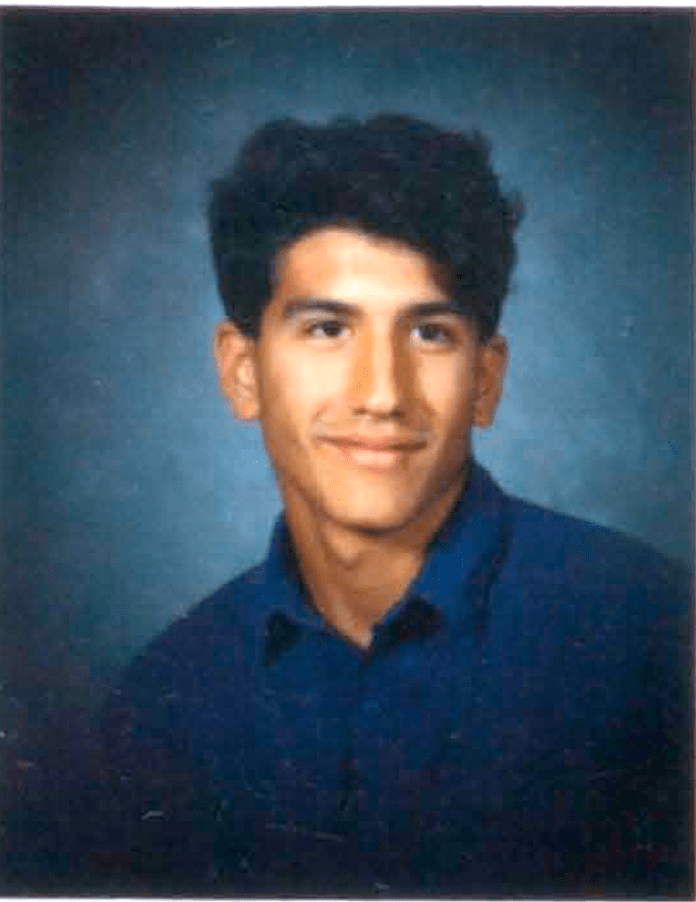
Damon’s high school yearbook photo.
Damon’s death was a huge blow to our family because his older brother, Derek DeCosty, passed away from pneumonia in January 2025.
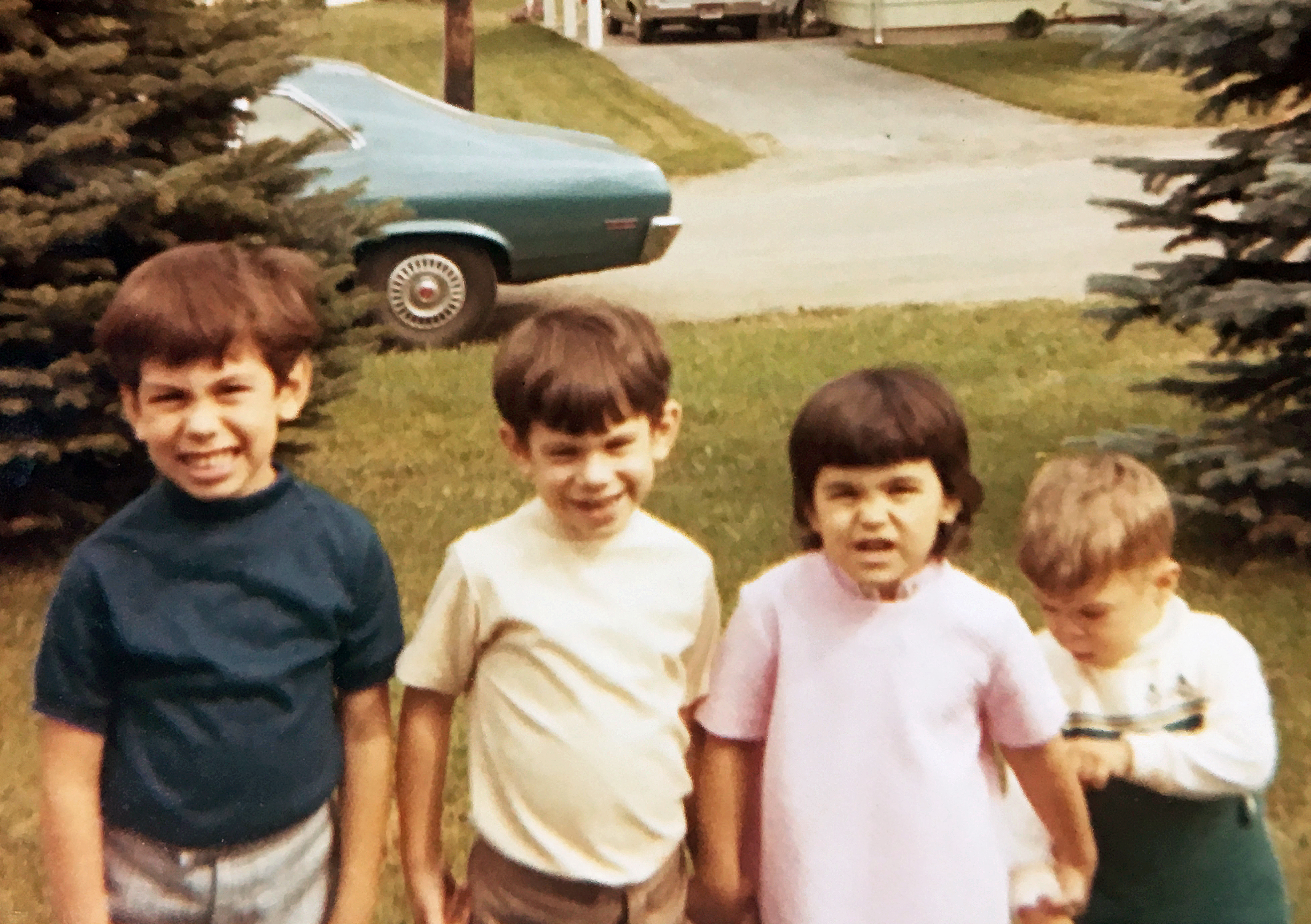
My high school years overlapped with all three DeCosty brothers—Fiore (nicknamed “Fee”) being the oldest, followed by Derek, and then Damon, who was two years younger than me.
My cousin Fee (right), Damon (center) and I celebrate my sister Lisa’s birthday in 1980.
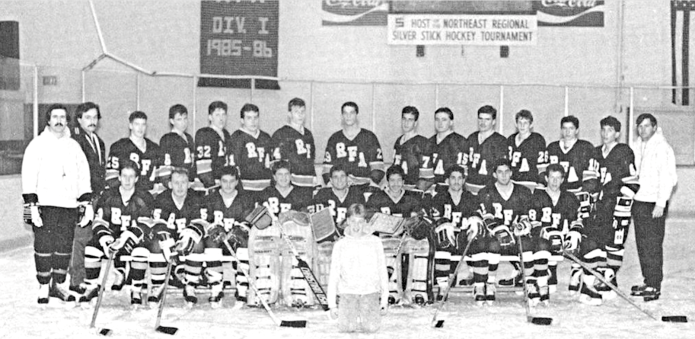
His obituary notes that he was born in Rome, New York, and was a member of the 1987-1988 undefeated Rome Free Academy hockey team, which won the state title. He played hockey and studied art at the State University of New York at Fredonia. He later worked in construction in Key West before beginning a career in agronomy at TPC Sawgrass Golf Course near Jacksonville.
The 1987-88 state champion RFA hockey team. Damon is the last player standing in the second row, next to Coach Dick Meiss.
But those facts don’t resonate with me on an emotional level. And in processing this loss and trying to write about it, no coherent narrative emerged. There’s no Hero’s Journey or three-act structure to guide you in mourning a loved one.
Instead, I recall images and voices—murky memories and episodic scenes that, when juxtaposed, add up to the human being known as Damon DeCosty and what he meant to his family and friends.
The things I remember about Damon:
His bronze skin, dark eyes, and black hair. He was of Italian American descent on his father’s side and Native American, with Caddo Nation heritage, on his mother’s side.
His artistic talent. I remember his hand moving across a sketch pad and seeing his artwork hanging in his room.
His placid, reserved, and affable personality. Although Damon possessed a James Dean coolness, he wasn’t aloof. Instead, you felt a sense of calmness in his presence, and people gravitated to him because of his kindness.
Damon with his dad, my Uncle Fiore DeCosty.
Damon had heart surgery at Crouse Hospital in Syracuse when he was about five years old in 1976. While my Uncle Fiore (Fee) and Aunt Pat stayed with Damon at the hospital, Fee and Derek spent the night at my parents’ house on Stanwix Street in Rome, near the Oneida County Courthouse on North James Street. I think it was a school night, and my mom packed my cousins’ lunches in their twin metal lunch boxes featuring Brazilian soccer legend Pelé.
When Damon recovered from surgery, he insisted on a sleepover at our house because he missed out on the fun, and I remember stretching out on the floor next to him as we slept.
I recall Damon and I spending a summer afternoon at our grandparents’ house on Crossgates Road. No one else was around, and we ran around in our bare feet on the patio, our feet turning black, and frolicked on the lawn, leaping over a sprinkler (a poor kid’s substitute for a swimming pool), our denim jean shorts getting soaked as we inhaled the scent of fresh-cut grass.
My cousins lived in a housing development on Seville Drive in north Rome. It seemed like a subdivision had been dropped in the middle of cleared farmland. Damon’s mom, my Aunt Pat, was a dietitian. And while the growing boys always had enough to eat, she didn’t buy them junk food. Their cereal choices were healthy, whole-grain products, such as Wheaties and Cheerios.
Damon (seated) and Derek with their mom, my Aunt Pat (sometime around 1980).
But on at least one occasion, while spending the weekend with my cousins, I remember my Aunt Pat went out shopping, and Derek and Fee sprang into action. They raced around the house, collecting small bills and coins, and gave the money to Damon with instructions to run across a cornfield and buy a box of sugary cereal at a nearby convenience store. Damon returned with a box of Frosted Flakes, Cocoa Pebbles, Trix, or Lucky Charms (I can’t remember the exact brand). But we all sat at the kitchen table, passing around the milk and wolfing down bowls of cereal, then discarding the box and hiding the evidence before Aunt Pat returned home.
In remembering Damon, I also find myself thinking about my late father, Francis DiClemente Sr., and reflecting on how divorce complicates family relationships, especially for children. When families fracture, the boundaries between relatives blur.
My mother and Damon’s father were siblings. Does that mean when my parents divorced, my dad stopped being an uncle to the DeCosty boys? Or after Damon’s parents divorced, did his mom (who was also my godmother) cease being my aunt?
Does divorce sever relations with non-blood relatives? Do you erase the bonds of love and family just because a couple separates? That’s a topic for a whole separate essay.
I bring this up because many years after my parents split, my dad would ask about Fee, Derek, and Damon. He really cared about them. And if they visited the Sears store in Rome where he worked, they would seek him out and say “hello.”
And it’s not politically correct, but whenever my father asked about Damon, he would say, “Hey, how’s the Little Chief doing? What’s up with the Little Chief? Tell the Little Chief I said ‘hello.’”
I must also admit that when I heard Damon had died, one of the first thoughts that popped into my head was that Fiore is now The Last of the Mohicans (also not politically correct).
Damon and I bonded over our mutual love of music. Our shared tastes included U2, The Cure, Grateful Dead, Genesis, The Replacements, R.E.M., Jane’s Addiction, The Cult, The Smiths, and many other artists.
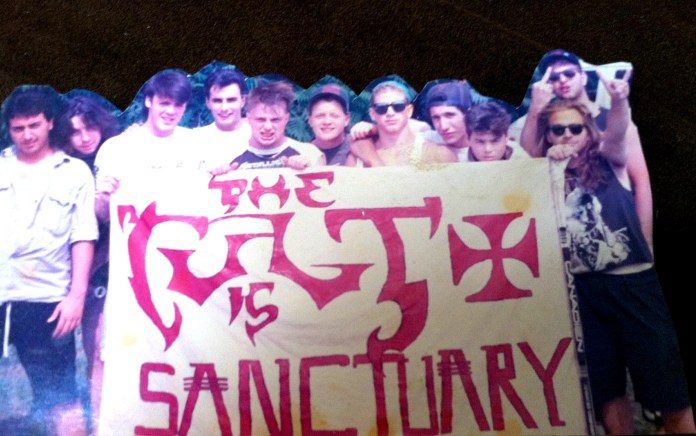
Damon and I were part of a contingent of Romans that went to the Metallica concert in Weedsport, NY on July 16, 1989. We were more eager to see the opening act, The Cult. Damon is wearing the backwards baseball cap.
Fee shared a couple of Damon’s YouTube music playlists with me. One is titled Essential Dead, and includes tracks from the Grateful Dead and other jam bands. The other is titled simply Work.
I enjoy shuffling through the Work playlist and imagining Damon mowing a fairway, adjusting a pin placement at TPC Sawgrass, doing some odd carpentry work, or putting the final touches on a large-scale oil painting. The playlist contains more than 300 tracks—over seven hours of music—and it consoles me knowing I’m listening to songs curated by Damon, tracks that held special meaning for him.
My cousin Derek DeCosty passed away earlier this year in Jacksonville, Florida. He had been sick around Christmas with a respiratory illness, and we texted on New Year’s Eve. He died on Jan. 3, one day before his 57th birthday. Here’s his obituary.
I’ve spent time processing this loss and bringing the memories of Derek to the surface of my mind—flipping through photo albums, seeing his face, and hearing his ebullient laughter as I recalled moments we shared.
While I felt compelled to write about him, I also dreaded it because this loss is too personal. And what could I say that would make any difference? How could my reflections ease my grief or the sorrow of my relatives? But I hope my words can honor Derek and offer a glimpse into the life of this beautiful soul.
Derek’s father, Fiore (Fee) DeCosty, and his sister Carmella, my mother, were raised in Rome, New York, along with two other siblings, my Aunt Teresa—who goes by her religious name of Sister Carmella—and my Uncle Frank. Derek’s mother, Patricia (my Aunt Pat), is a member of the Caddo Nation of Oklahoma and settled in central New York with Uncle Fee.
A Special Bond
Growing up in Rome, I spent a lot of time with Derek, his older brother, Fiore (Fee), and his younger brother, Damon.
Although I wasn’t a brother to them, I felt something stronger than a typical cousin bond. Derek and I had a special connection because we were only one grade apart in school.
Both of our nuclear families experienced divorce in the early 1980s, and I believe that shared pain also drew us closer.
And being related to the DeCosty boys had its perks.
They were athletes, part of the popular crowd, and because of them, I received party invitations I wouldn’t have gotten otherwise. Pretty girls who swooned over Derek talked to me because they knew I had a direct line to him. And as a short, chubby tenth-grader scurrying through the halls of Rome Free Academy high school for the first time during my sophomore year in 1984, no students teased or bullied me because they knew I was related to the DeCostys.
Cousins gathered at our grandmother’s house. My cousin Chris is in the front row. Second row, from left to right, is Damon, my sister, Lisa, and me; Fee and Derek are in the back row.
Weekends at the DeCosty household were a regular part of my youth. I attended their hockey games (sometimes traveling with my Uncle Fee on road trips) and stretched out on the couch in their cramped ranch house on Seville Drive in north Rome.
If I remember correctly, Damon had a bedroom on the main level, while Derek and Fee slept in the basement in two small, makeshift rooms separated by thin drywall. Three mounds of fetid and sweat-drenched hockey equipment were piled high near the washer and dryer. A boom box blasted music—with The Rolling Stones, The Who, Genesis, The Fixx, and The Police getting frequent play.
The boys practiced their wrist, snap, and slapshots by firing hockey pucks at a white cement wall, festooning the surface with pockmarks and black spots.
Although I was a rabid hockey fan, I had given up playing the sport when I was young because I couldn’t skate. Picture Bambi slipping on the ice. So when Fee, Derek, and Damon were not playing ice hockey, I tried to stir up a game of street hockey or floor hockey. Floor hockey was my favorite, especially on holidays at our Grandma Josephine’s house. We would get on our knees in the living room and use mini sticks and a rolled-up ball of athletic tape as the puck in fierce battles that left us with elbows to the face and rugburns on our knees.
One holiday, Damon, Derek, and I played a football game called “goal-line stance” in Derek’s bedroom. The memory is murky, but this is what I think happened.
With the twin bed pushed against the wall, the front of the mattress was the goal line. Derek was the ball carrier. He was getting annoyed because Damon and I were double-teaming him and standing him up, so he stuffed the football under his arm and leaped over us, Walter Payton style, his body parallel to the ground, until his shoulder slammed into the wall with a loud bang as he landed on the bed.
The collision created a large dent in the drywall, evoking our laughter. “Ah, shit,” Derek said.
My dad, who worked in home improvement (among other areas) at the local Sears store, was at the house for the holiday. I went upstairs, found him in the kitchen, and waved for him to come downstairs.
“What’s up?” he said as we descended the stairs.
“We hit the wall while playing. Can you look at it?”
When my father inspected the damage, he laughed and said, “Oh, you can’t fix that. You boys better hang a poster over it.”
And that’s what Derek and Damon did. I don’t know if my Uncle Fee ever discovered the dent.
Moments in Time
When you lose a loved one, it’s often the small, seemingly insignificant moments that trigger memories. For my deceased father, I picture him sitting in his green easy chair, reading glasses perched on his nose, making his football parlay and Lotto picks (or reviewing the losing tickets).
For my mother, who passed away in 2011, I remember the anxiety that weighed on her—like an oak beam pressing on her shoulders—as she smoked her first cigarette of the morning and drank coffee from a blue ceramic mug, her head bowed, her fingers pressed to her forehead.
For Derek, I remember him chopping ice in Josephine’s driveway and hitting one of his toes, which bled profusely (but did not require medical attention). From then on, if he walked around the house barefoot, I would ask him, “Hey, Derek, can you tell me which one of your toes had difficulty?” To which he would say, “Shut up, man.”
Other things I recall about Derek:
His deep, dark brown eyes; his mixed Italian and Native American heritage; his copper-colored skin in the middle of summer; his large ears that I loved to flick.
From left to right: Fee, Derek, my sister, Lisa, and me. When I posted this photo on Facebook, Derek wrote: “Take it down cuz!!!! Look at the size of me ears!!!!”
The way he would fly on the ice and the joy he exhibited in playing the sport he loved. His big hands, smooth and soft, as he used them to thread a pass or deke a goalie.
And with those hands, he created beautiful artwork. I can imagine him sitting at our grandma’s dining room table, his left hand making a charcoal drawing on a sketch pad.
A pencil sketch Derek made during junior high school.
His love of eating—not just food but the act of eating with family. One of his favorites was Josephine’s pasta beans (pasta fazool), made with cannellini beans and ditalini pasta. “Yeah, pasta beans,” he would say when entering the house on Thursday nights in the winter when Grandma often cooked the dish. He would dunk huge chunks of Ferlo’s Italian bread in the bowl, sopping up the juice, and say, “Ah, Grandma, this is so good. So good.”
His booming voice. He never called me Fran. Whenever I saw or talked to him on the phone, it was always, “Franny D. My man. What’s up?”
His infectious laugh. It started deep in his throat, rolling upward until it was released in waves. Hearing him laugh made you want to join in the fun.
He lit up any room he walked into with his charisma and humility. People were attracted to him because of his inherent goodness and gratitude for whatever you gave him.
And the true beauty of Derek is that he never thought he was better than anyone else. Despite being a star athlete, talented artist, and Honor Society scholar in high school, he was never arrogant or looked down on others.
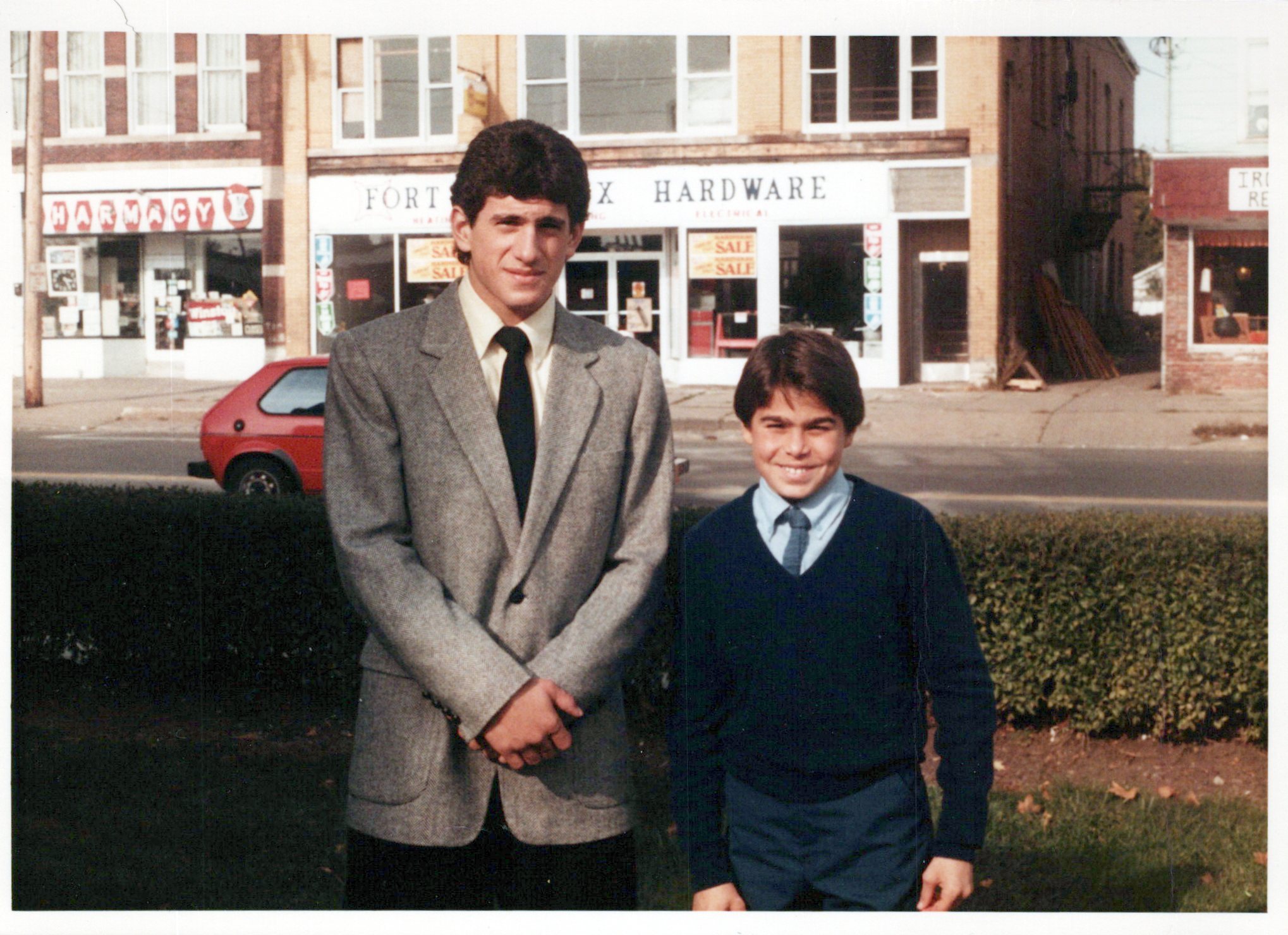
Fee, Derek, and me in the summer of 1990.
The closest analogy I can make is the scene with Edie McClurg as the secretary Grace in Ferris Bueller’s Day Off, when she’s describing Ferris to Principal Ed Rooney, played by Jeffrey Jones.
Grace: “Oh, he’s very popular, Ed. The sportos, the motorheads, geeks, sluts, bloods, wastoids, dweebies, dickheads—they all adore him. They think he’s a righteous dude.”
That was Derek.
A Cherished Memory
In October 1984, I received the Catholic sacrament of Confirmation at St. John the Baptist Church in Rome.
In this sacrament of initiation, the baptized person is “sealed with the gift of the Holy Spirit. (United States Conference of Catholic Bishops).”
I made the mistake of asking Derek to be my sponsor because I didn’t understand the commitment it entailed.
I thought it meant his only responsibility would be standing up with me in church during the Mass on Confirmation day. That’s it. Instead, he needed to attend preparation workshops, retreats, and church school events over the course of several weeks. He never complained, even though he was the youngest sponsor. Practically everyone else had their mom or dad serving in that role.
We had to choose a Confirmation name after a saint or a figure from the Bible. Although I knew little about the Old Testament prophet Isaiah, I selected the name because I loved Detroit Pistons guard Isiah Thomas (whose first name is spelled differently).
Standing outside St. John’s Church in Rome on the day of my Confirmation in October 1984.
In a photo taken outside the church that day, Derek towers over me, even though he was only about a year-and-a-half older than me. At the time, a benign tumor on my pituitary gland (a craniopharyngioma) was expanding in my brain, stunting my growth and causing delayed puberty. About two months after the photo was taken, surgeons would remove the tumor in an eight-hour operation at SUNY Upstate Medical Center in Syracuse (renamed Upstate University Hospital).
And as I recovered in the surgical intensive care unit, Derek came to visit me, bringing a torn picture of the Sports Illustrated cover featuring an image of Doug Flutie from the “Hail Mary” game against the University of Miami in the Orange Bowl. Derek knew I loved Flutie and was inspired by the quarterback because of his short stature. He pinned the magazine page to my IV stand so I could see it when I looked up from my bed.
Hockey Career: From the Mohawk Valley to Crossing the Atlantic
In 1986, when he was a senior in high school, Derek led Rome Free Academy to its first New York State title in hockey as the Black Knights defeated Skaneateles in Glens Falls. (Damon was a member of the 1988 RFA team that captured the school’s second state championship.)
Derek went on to play Division 1 hockey for the Rensselaer Polytechnic Institute (RPI) Engineers. At the time, Fee was at West Point, playing for the United States Military Academy. In this contest pitting Army against RPI, Fee is chasing Derek and hooking him.
Fee and Derek competing in college hockey.
After I graduated from college and moved away from Rome, I stayed in contact with Derek while his professional hockey career flourished.
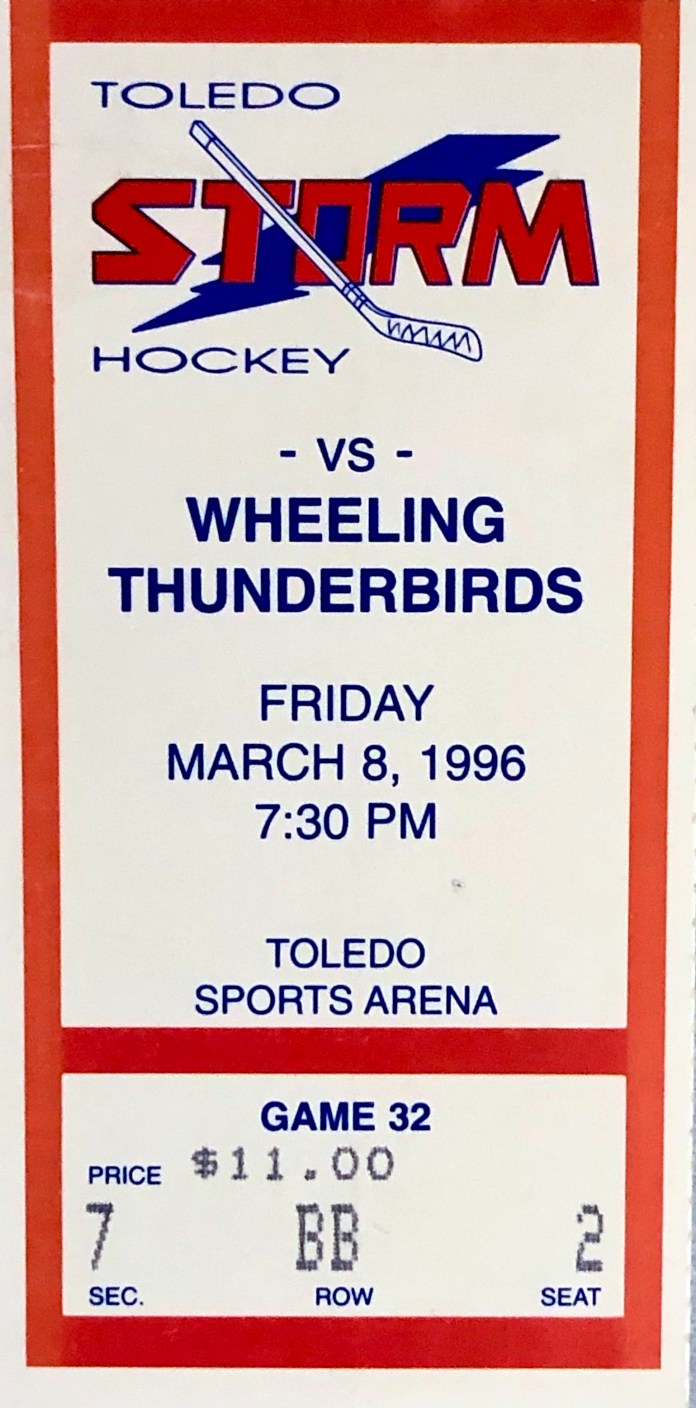
In the mid-1990s, Derek played for the Wheeling Thunderbirds (later renamed Nailers) in the East Coast Hockey League while I was living in Toledo with my sister, Lisa, and working at the news/talk radio station WSPD. Wheeling played the Toledo Storm frequently, and Derek would leave tickets for us at will-call at the Toledo Sports Arena. In exchange for the tickets, we would bring him a case of beer.
I would hang out near the Wheeling locker room and watch the players come out. And then I’d yell, “Hey, DeCosty, you suck.” His head would spin around, and then he’d laugh when he saw me.
After the game, we would grab the beer from the car and talk with Derek for a few minutes near his team bus, the diesel engine roaring and a frigid wind whipping off the Maumee River hitting us in the face.
I took this photo with my Pentax K1000 camera during Derek’s playing days with the Wheeling Thunderbirds.
One night in Toledo, Derek got injured on his first shift of the game. While Derek forechecked with his linemates in the Storm’s zone, a Toledo defenseman whipped the puck along the glass, and it smacked Derek in the face. Blood gushed from his nose, and he went right off the ice and into the locker room. We followed the ambulance as it rushed him to the emergency room. And we spent a few hours talking with Derek in the hospital while the ER doctors treated him.
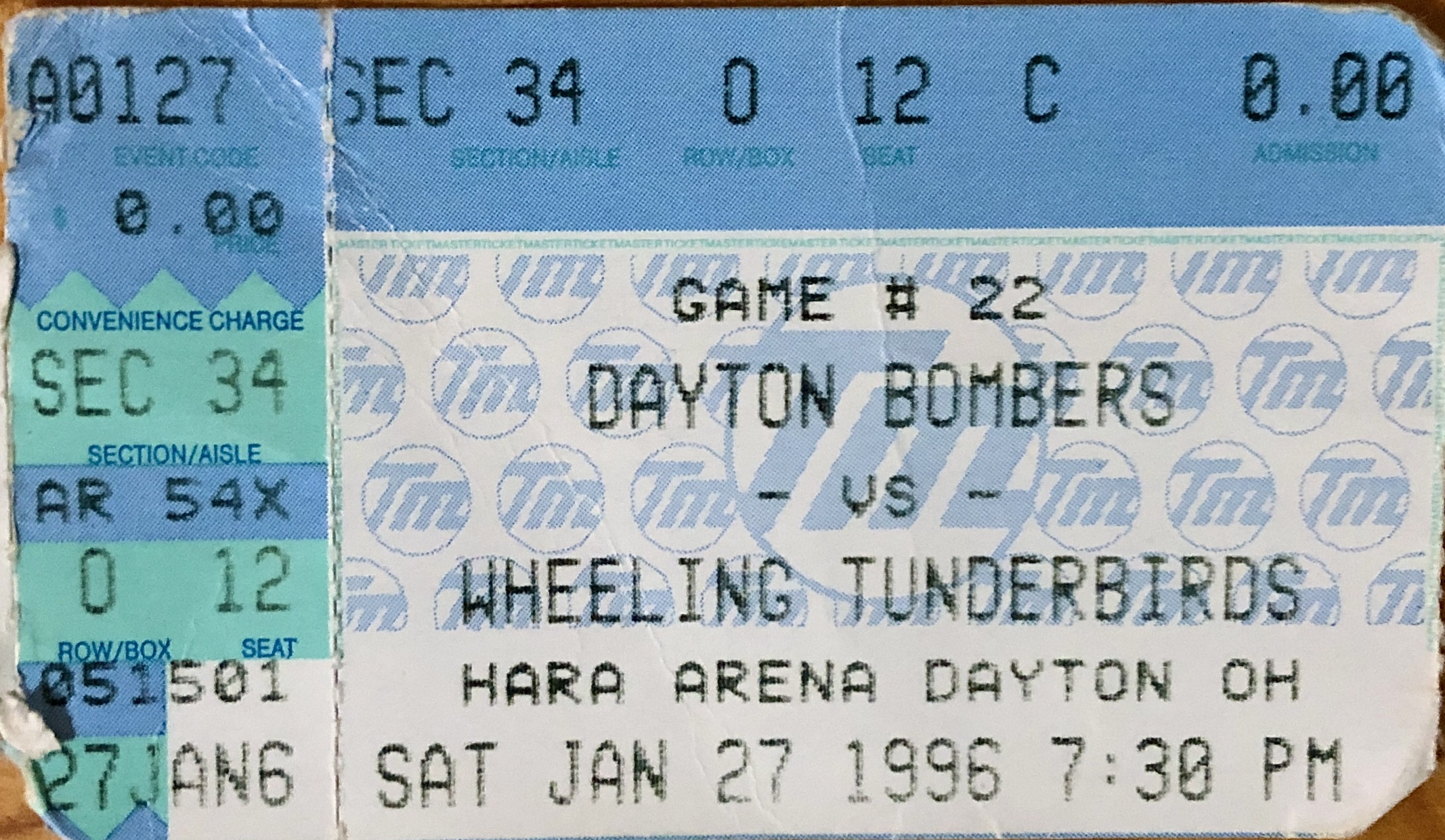
Another time, late on a windy, wintry Saturday afternoon, I found out from my uncle that Derek was playing that night in Dayton, Ohio, about two hours from Toledo. These were the days before cell phones, so I called the arena and left a message for Derek to leave me a ticket at will-call. I was like a hockey groupie.
Strong gusts rocked my Dodge Colt as I filled up at a gas station in Bowling Green, and blowing snow made visibility difficult on I-75. But I made it to the arena, watched Derek play against the Dayton Bombers, talked with him for about twenty minutes, and drove home that night, getting lost on my way out of the city and back onto I-75.
My favorite memory of Derek’s playing days is driving from Toledo to Wheeling one weekend. Derek talked to the coach, who let me ride the team bus for a short road trip from West Virginia to Johnstown, Pennsylvania.
The jocular banter by Derek’s teammates reminded me of scenes from the movie Slap Shot. One player curled up with a blanket in the back of the bus and shouted numerous times: “Hey driver, it’s getting frosty back here. Crank up that heat.”
A hockey card image from his career in Wheeling. Copyright unknown.
But what impressed me most was witnessing how much Derek’s teammates liked and respected him and how his relationship with the friendly people of Wheeling went beyond the surface-level player-fan dynamic. They adored Derek as a valued member of the community, and he returned their affection, making lasting friendships with non-players in the city.
Derek’s professional career later took him abroad as he played for teams in the United Kingdom, including the Guilford Flames and Bracknell Bees.
Relocating to Florida
Derek moved to Florida after his hockey career ended.
And I remember after his father was diagnosed with pancreatic cancer in 2010, Derek drove with Uncle Fee from New York to Jacksonville so he could get treatment at the Mayo Clinic. Derek settled in the Jacksonville area, beginning a career in agronomy at the prestigious TPC Sawgrass Golf Course in Ponte Vedra Beach, home of The Players Championship.
A year later, my wife, Pam, and I spent a few days in Jacksonville, staying with my uncle and his wife, Diane. I remember everyone sitting on the patio on a hot May day while Derek mowed the lawn and trimmed some hedges in the backyard.
Derek was tanned, and he had the most casual, easygoing manner, not complaining that he was doing yard work in the heat while the rest of us were enjoying cool drinks and bantering in the shade. A cigarette dangled from his mouth as he maneuvered around the yard, and he stopped working occasionally to take sips from a bottle of beer.
##
There’s so much more I could say about Derek, so much more I have forgotten and will likely remember later when reminiscing about him.
I took my time drafting this essay. Part of the reason for my slow pace is that I relished roaming around my past accompanied by my beloved cousin.
I feel profound sadness knowing that Derek’s warmth and kind heart are no longer active in the world—that his light, voice, and laughter are no longer accessible to his family, friends, and other people.
But I believe his artwork and the loving impact he made during his short life will endure.
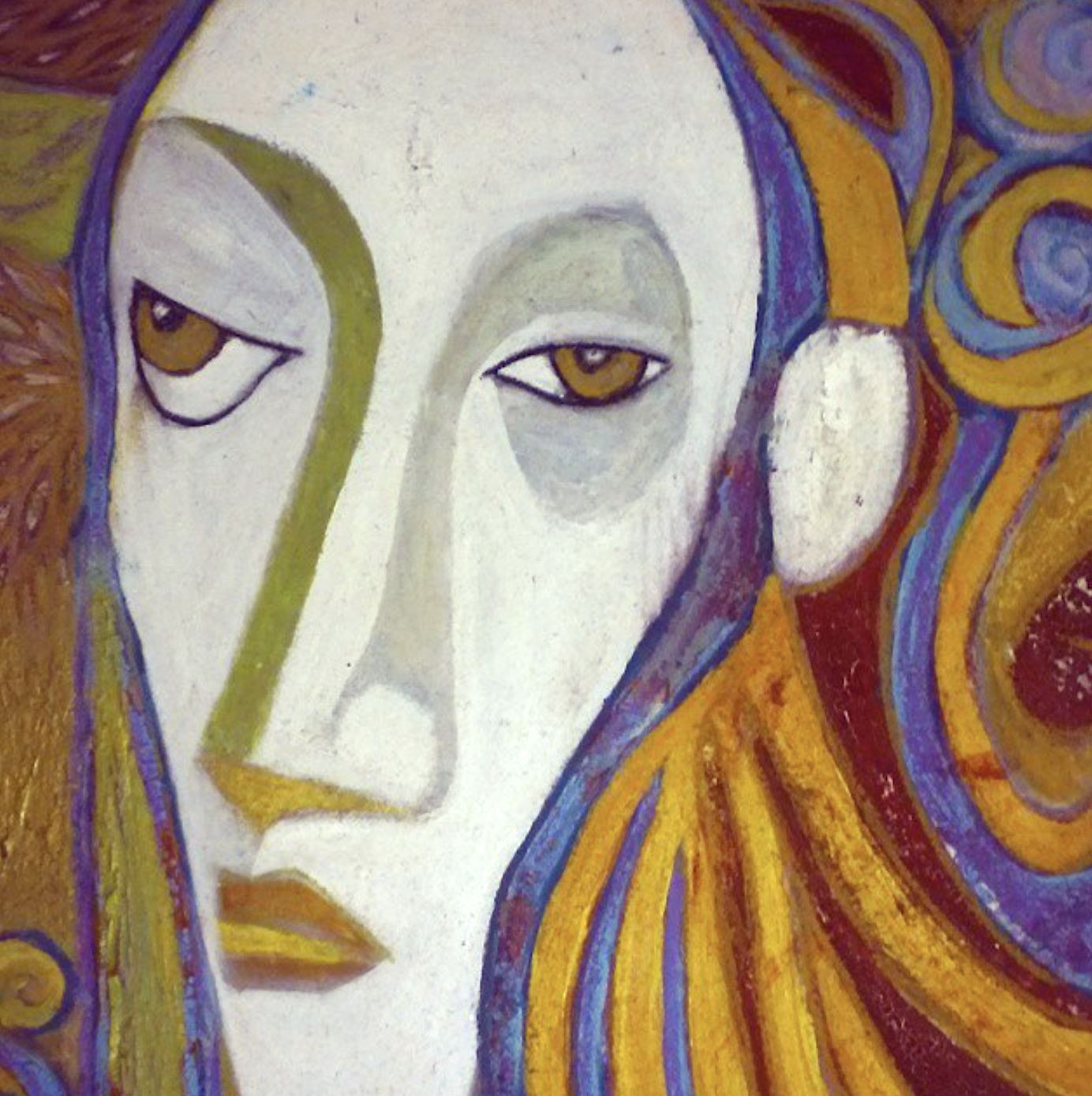
A colorful painting by Derek DeCosty.
With his carefree manner, Derek reminded me a little of Jeff Bridges as the Dude in The Big Lebowski. And I hope Derek’s soul is now at peace and he’s abiding in the cosmos, embarking on celestial wanderings in the afterworld with a sense of curiosity and wonder.
##
I found out about Derek’s death via text when I was at a doctor’s appointment. After I left the medical building, while riding the bus, some words came to me in verse form. I don’t get the heartstrings reference since it’s not a musical instrument, but I guess I conjured the image of an angel playing a harp (like you’d see in old cartoons).
A Poem for Derek
Heartstrings playing in heaven.
Derek is laughing.
But the joke is on us.
He’s gone and won’t be back.
Words that come to me
After the death of my cousin.
No recognition of meaning,
But I must write them anyway—
Words perpetuating memories
To keep my cousin’s spirit alive.
I wish I could hear him laughing,
And ask him what he finds so funny.
Painting by Derek DeCosty.
First-Person Ending
I will end with a few text messages Derek sent me over the past couple of years. I’m sure he wouldn’t mind me sharing them. They reflect his love of life, sense of humor, and compassion for others. I’ve edited them for brevity and clarity.
Note: Because of his family connection to Oklahoma, Derek was a fan of the University of Oklahoma football team (hence the reference to the Sooners). And Colin refers to my son.
The first text is from the summer of 2023, when I needed another brain surgery (my sixth) to remove tumor regrowth. As I awaited my operation, Derek wrote:
June 8, 2023
My beautiful cuz, I understand that you’re going through some shit again regarding those same issues that you’ve conquered in the past and I have no doubt you will again kick ass in our true Bukowski way! I wanted you to know that I have you in my mind, heart, and when I talk to our parents looking down, I’m sure that you have the strength and heart of a buffalo! I love you Fran, don’t ever doubt that you aren’t thought about every day I wake up!
July 24, 2023
My dear cousin, I want you to know that I am thinking about you right now and praying that you are doing well after your surgery. I have you on my mind, in my heart and ask that I take any pain you feel. I love you dearly, more than you know. Stay tough.
October 5, 2024
Good morning my dear cousin!!! This is Derek, this is my new number, new carrier! Just wanted you to have it! Miss and love you all dearly! Saw a really cool tree I have to capture for you. Old crazy oak that I wish you could see! Very photogenic! Anyhow, give Pam and Colin a kiss for me and…..GO YANKS!!!!!
Photo by Derek DeCosty from his Instagram account. He wrote: “Tiny Osprey feather stuck in pro practice green this beautiful morning!”
November 30, 2024
Good afternoon my dear cousin!! Happy Thanksgiving and all that, give my very best to Colin and a big hug for Pam! Hope yall enjoyed the holiday!! Miss and love you dearly!! Crazy day of football today, love it!!! Much love, Go ’Cuse&Boomer Sooner!!
November 30, 2024 (Later)
Sorry Cuz, I had to make a Target run for my mother!
Francis, you’ve always been my Saint, there’s not many people on this earth that understand me in the gracious way you and Damon (sometimes!) get me and the hundred personalities, moods, and craziness that encapsulates all I’m about!! Anyhow, I have to start screaming at the Sooners to get their shit together!!! All my love.
December 31, 2024
My man!!!! Happy New Year to you and all the family! Anyway, straight after Xmas, I caught the flu, of the respiratory type! I’ve been down and out and only going back to work tomorrow!!! Francis, I send my very best to Pam and Colin! Give them a hug for me please! Love and miss you!
Photo by Derek DeCosty from his Instagram account. The text read: “Good morning from the driving range floor, ready for the Players. Happy days!”
I am excited about the restoration of my old Pentax K1000 camera. A few of my younger colleagues at work are avid photographers who practice analog photography; this interest extends beyond a hobby. When I mentioned my busted Pentax K1000, one of my co-workers, Shane, offered to repair the camera, and he and another co-worker, Josh, pitched in to process my first roll and scan the negatives. I had a lot of misfires, but I was also happy a few of the images came out—somewhat in focus and exposed properly.
Alley test shot, photo by Francis DiClemente.
The Pentax K1000 has a nostalgic pull for me. I bought a used one in 1995 from a copyeditor at The Venice Gondolier newspaper, my first employer in journalism. I cut my teeth covering symphony concerts, senior fashion shows, and garden party events.
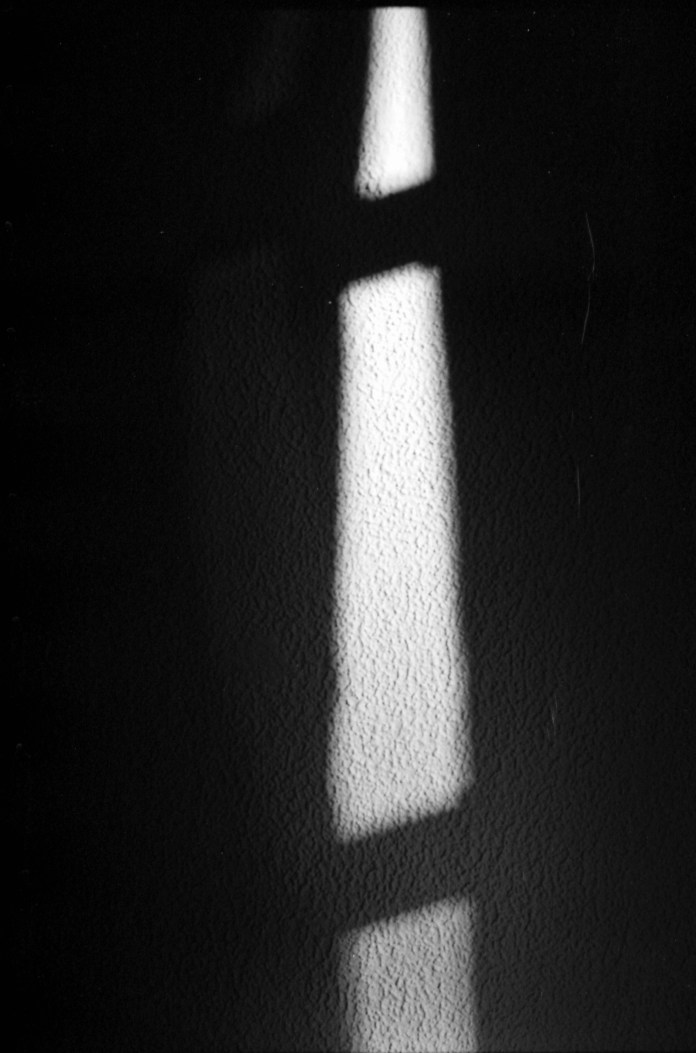
Patch of Light, test shot; photo by Francis DiClemente.
And in a moment of complete stupidity, I picked up the camera and looked through the viewfinder while driving along the Tamiami Trail near Osprey, Florida, causing me to slam into the back of a car driven by an older lady. Fortunately, she wasn’t hurt. My Chevette was transferred to the auto graveyard, but the Pentax stayed with me.
Have A Nice Day, test shot; photo by Francis DiClemente.
Now we’ll see what new pictures I can produce with my heavy-duty camera. One thing I like about analog photography—you have to make your shots count. Using an old camera also reminds me that sometimes the best photos come from pure luck or a gift from the universe.
And because this photography experiment resurrected some memories, I want to share an essay I wrote about my Pentax K1000 in 2010. It was published in a now-defunct online magazine.
Outdated Image Maker
I can’t bring myself to betray my beloved Pentax K1000. We’ve been together for 14 years, the longest relationship I’ve had in my life. I know it sounds absurd. Digital technology is here to stay, and we need to evolve in order to grow. I am also not delusional. I know my Pentax is an inanimate object. It can’t reciprocate my love. Yet I still can’t give it up, not just yet.
Sam, a veteran copyeditor at The Venice Gondolier, a small newspaper in southwestern Florida, sold it to me in 1995 for a price of 100 dollars, including the flash. I needed it for my first job in journalism, as a feature reporter and editor at the paper.
I befriended the camera right away, and it helped me to cover symphony concerts, outdoor festivals, senior citizen fashion shows, and early bird suppers. It accompanied me on my journey to the Midwest, to the gritty environs of Toledo, Ohio. It snapped pictures of barns in rural Monroe County, Michigan, battered warehouses in downtown Toledo, and oak trees stripped of their leaves in late autumn.
Toledo Warehouse; photo by Francis DiClemente
It crossed the Continental Divide when I relocated to Phoenix, Arizona. In the Valley of the Sun, I took pictures of Sonoran cacti, the McDowell and Camelback mountain ranges, and breathtaking sunrises from the roof of an office building at the Scottsdale Airpark, after my night shift as a copyeditor. But in Phoenix, my camera was especially fond of dancing light patterns created by early morning or late afternoon sunlight in my small, first-floor apartment.
Kitchen Garbage Can; photo by Francis DiClemente.
It also snapped photos on top of the Space Needle and outside the Experience Music Project when I visited Seattle.
When I relocated to upstate New York in 2006, it captured my most treasured photo—the stoic picture of my father, weeks after he was diagnosed with terminal lung and liver cancer.
My late father, Francis DiClemente Sr.
I just love the weight and girth of the camera, the rough black metal, and the feel of the spool of film as it catches the sprockets when I load it.
I am not buying film in bulk, but if I’m in a drug store or other outlet that still sells film, I find myself picking up a roll or two—a necessity like Folgers coffee, smoked turkey, and Kraft Macaroni and Cheese.
But it’s come to the point where almost all of the rolls of film I burn, particularly the black and white ones, need to be sent out for development.
I know the time will come soon when retail outlets will no longer sell or process film and manufacturers like Kodak and Fuji will stop making film altogether (if they haven’t already). But there are certain things we just can’t part with when the attachment remains so strong.
I guess that’s why I don’t want to sell my Pentax at some garage sale or on Craigslist and have it end up in someone’s attic or damp basement. As long as the K1000 works, I’ll still put it to use; and when it doesn’t, I will thank it profusely for its years of service and then clear a spot for the camera on my bookshelf, where it can retire with honor alongside the works of writers like Albert Camus, Raymond Chandler, and Thomas Wolfe.
Then I will not feel guilty about going out and buying a brand-new digital camera, which I imagine will be sleek, efficient, and devoid of shared personal history.
You could almost miss Abbott’s photographs, as her work was tucked in a back gallery space, far away from the Kiki Smith exhibit prominently on display. This raises a question, and please forgive my digression. Do multiple, concurrent exhibits in a museum lessen the impact of the art and lead to fatigue on the part of art-goers, as visitors move through several rooms? If you’re like me, you sometimes get to the point where you want to say: “Enough. I’m done. Let’s go get coffee.”
Anyway … back to Berenice Abbott.
Berenice Abbott in 1979. Photo by Hank O’Neal.
In the summer of 1954 the photographer and two companions traveled the length of U.S. Route 1, from Key West, Florida, to Fort Kent, Maine. During the trip Abbott made more than 400 8-by-10-inch photographs and more than 2,000 smaller images using her Rollieflex camera. The exhibit presents 50 images from Abbott’s journey, and in these pictures of Maine potato farmers, Florida motels, small towns and average Americans, we are given a snapshot of the nation during the post-World War II era.
Potato farmer, Aroostock County, Maine, 1954.
Two photographs stood out for me. The first was Daytona Beach, Daytona, Florida, 1954. The image shows some teens sitting on a railing in the foreground while an illuminated, soft-focus Ferris wheel or other amusement park ride spins in the background. You can almost hear the kids screaming with glee and smell the popcorn and cotton candy wafting in the air.
Daytona Beach, Daytona, Florida, 1954
The second image was No cursing, No drunks allowed—a low angle shot of a cop seated at coffee shop counter with his back to the camera. A boy in profile leans against the counter on the other side, facing the police officer. A ketchup bottle and a napkin dispenser sit on top of the white counter, and the composition draws the viewer’s eye toward the boy. The picture possesses a strong narrative quality—in line with the work of painters Edward Hopper and Norman Rockwell—and I imagined a scene where the police officer was the boy’s father and he was giving his son a lecture about the value of hard work and the importance of taking responsibility at a young age. In my story the boy worked at the diner after school.
The small size of the framed works and the intimate gallery space allowed me to get lost in the images and discover how people in the U.S. spent their leisure time in the 1950s.
##
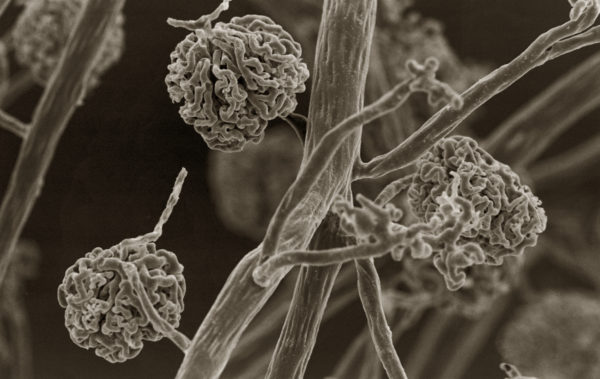
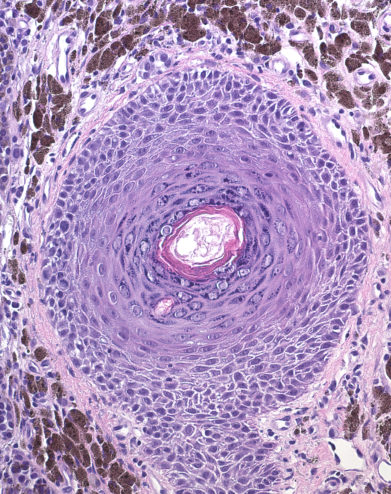
The second exhibit I checked out wasThe Hidden Beauty: Exploring the Aesthetics of Medical Science. The showcase of medical imagery, e.g. magnified shots of diseased organs, was organized by Norman Barker, a professor of pathology and art as applied medicine at the Johns Hopkins University School of Medicine, and Dr. Christine Iacobuzio-Donahue, a gastrointestinal pathologist Memorial Sloan Kettering Cancer Center. The goal of the exhibit is to “leave the viewer with an appreciation of visual beauty inherent within the medical sciences.”
Exploded skull.
Having undergone multiple brain surgeries, I have always found MRIs and CT scans of my skull and brain alluring. And in getting my blood drawn by phlebotomists, I often make a mental connection between the crimson color of my blood collecting in a plastic tube with bright red oil paint smeared on a canvas.
Kidneys.
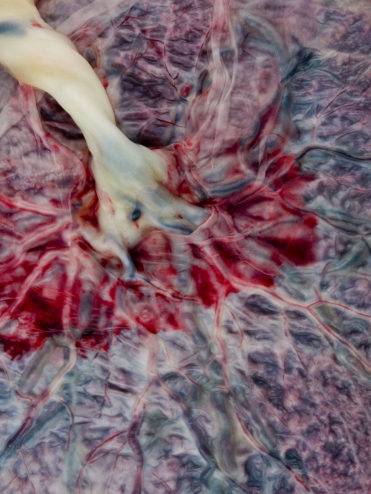
In roaming through the exhibit space, where I saw images of kidneys (which looked like balls of yarn), the netlike pattern of thinning bones in osteoporosis, a placenta, a smoker’s lung, a healthy human brain (which looked like a Pollock drip painting) and a scan of a patient with prostate cancer, I came away with a feeling of compassion for the patients—the owners of these organs and the people suffering from the diseases on display.
Placenta.
Many of the works offered bright colors and abstract patterns. But for me I was left with a strong theme of universality—the sense that all of our bodies will break down and ultimately fail us. The circumstances may be different, but the results the same. And in looking at some of the pictures, my faith tugged at me and I could not help but think that a divine master, call it God if you want, created this magnificent machine we call the human body.
It’s the height of the summer travel season, and I have been on the road often lately, traveling to New York City for video shoots.
And since my colleague Bob prefers to drive our Dodge Caravan, I am free to sit in the passenger seat and pass the time by playing the Out of State Game—one I am sure many other people play.
It goes like this: I scan the traffic in search of out of state license plates, and when I spot one I ask myself a series of questions: Could I live there? Would I be willing to pack up and move there? What would my life be like if I went there?
I guess it boils down to just four words that could determine your level of happiness: Here or There? Stay or Go?
This sense of longing to migrate somewhere else is the subject of a short poem in my new collection Sidewalk Stories.
Elsewhere
Elsewhere—a state of mind:
Reno or Raleigh,
Topeka or Tacoma,
an imaginary vacation
from my current geographic position.
Elsewhere—another place to be,
an alternate zip code.
Elsewhere—when shall I go?
To where shall I roam?
Elsewhere—I’m eager
to embark on the journey,
but the target city is unknown.
Elsewhere is calling—is beckoning,
and I’ve already left home.
In reality I don’t need road trips to ponder these thoughts. I play the Out of State Game every day while walking through the parking lot of my apartment complex, which is home to many college students who come from faraway places.
Some of the states represented include Washington, Oregon, North Carolina, Pennsylvania, New Jersey, Maryland and Indiana.
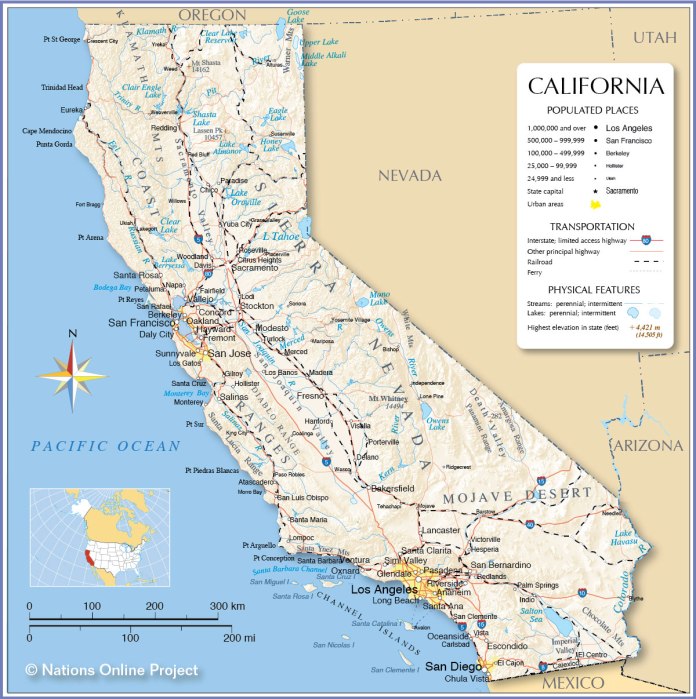
But there is one plate that always thrills me and sparks my imagination. A white metal background with reddish-orange cursive lettering. California. California. California.
When I see a California plate, I rekindle the dream of relocating to Los Angeles, trying to carve out a living in the film or entertainment business. I consider if I could survive the freeways, earthquakes, wildfires, mudslides, crime and high cost of living.
My fascination with California can be traced to my love of John Steinbeck novels and LA-based film noir movies from the 1940s, e.g. The Big Sleep and Double Indemnity.
But the allure of California also stirs memories tinctured with regret, as I think back more than 20 years, to the time after I completed my master’s degree in film and video from American University. In the summer of 1993 I returned to my hometown of Rome, New York, to finish my thesis.
Afterwards I went to work for the City of Rome in the recreation department, doing odd jobs like refereeing adult league volleyball games and teaching an after-school woodworking class. And in the spring and summer of 1994 I served as an administrative aide to the mayor. However, the funding for the temporary job ended in the fall of 1994, and I had decided that I would take about $2,500 in savings, pack up my used gray Chevette and head to Hollywood, hoping to launch my career as a production assistant or entry-level staff member.
My mother rejected that idea, and in the course of an afternoon she and my sister talked me into embarking on an alternate, “safer” plan of moving to Venice, Florida, on the Gulf Coast, where I could stay with a friend of my Aunt Theresa and pursue employment down there.
My Aunt T. is a Roman Catholic nun, and her best friend, the late Father Charlie, a Redemptorist priest, had an extra bedroom in the condo provided for him by the Diocese of Venice. My mom and sister thought that with my endocrine-related health problems, residing in a stable environment near Aunt T. would be preferable to living alone on the West Coast. I folded and scrapped the idea of going to California.
At the time the entertainment industry was burgeoning in the Orlando area, located more than two hours away from Venice, and I was hopeful I could get a job there. But full-time opportunities were scant and when my savings started to drip away, I took a low-paying feature reporter/editor position at the Venice Gondolier newspaper, swinging my career in a different direction, one toward journalism—a path that would bring me to stops in Ohio and Arizona but never to California.
So now when I see a California plate, all I can do is wonder how things could have turned out if I had mustered the courage and gambled on a life in California. Would I now be an accomplished producer, director or studio head? Or would I have ended up impoverished?
I bemoan that I didn’t take the risk when I was young, and while I am not too old to move somewhere else, it’s seems unlikely to happen. But I try to chase away the regret because it serves no purpose and has no place in the 2017 version of my life.
I must accept the decisions I made without wasting time punishing myself by reflecting on what might have been. That’s easy to say, but hard to do because I can’t stop my eyes from seeking out Golden State plates on the streets of Syracuse.



















 Francis DiClemente