About Endlessness

I recently watched About Endlessness, a 2019 film by Swedish director Roy Andersson. It falls in line with other works by Andersson, including You, the Living (2007) and A Pigeon Sat on a Branch Reflecting on Existence (2014).

The film is a series of vignettes that explore the absurdity, tragedy, and loneliness of life. They are comical and fantastical, mundane and realistic, all at the same time. Andersson probes existential themes, and although About Endlessness is a Swedish film with subtitles, it transcends country and language based its universal portrayal of humanity and the raw emotions expressed.
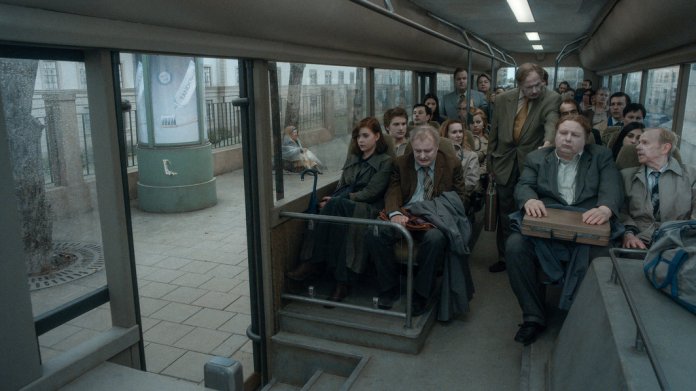
Andersson’s style consists of static scenes composed of single long takes with all action taking place within the frame—like a painting come to life. Andersson’s work exemplifies film critic André Bazin’s theory of mise-en-scène—with composition, lighting, set design, and production design being more important than editing.

And the wide-angle shots by cinematographer Gergely Pálos reminded me of the deep focus cinematography of Gregg Toland in Citizen Kane.

A subdued female narrator describes banal moments, like a woman with a stroller in a train station who loses one of the heels on her black shoes. “I saw a woman who had problems with her shoe,” the narrator explains.

This type of plotless film is not for everyone; it’s aimed for an art house audience. However, Andersson has a good sense of timing. Just when the viewer’s interest in a scene starts to wane, he cuts to something else. And with a running time of 78 minutes, the film does not drag.

A couple of vignettes really stood out for me.

In a crowded market, with fresh fish in the foreground and produce and cheese in the background, a woman with dark hair and a brown coat converses with a man. She then walks away, moving toward the fish station and eventually toward the center of the frame.

A bald man shouts to her: “I could see the two of you had a lot to talk about.” He then slaps her across the face. The other customers look on but do not intervene. He slaps her two more times and then some men step in and stop him. The bald man is wrestled to the ground, and he says to the woman: “You do know that I love you?” And she responds, “Yes, dear, I know. I know.”

Still from About Endlessness.

This realistic portrayal of spousal violence filled me with unease. Yet I couldn’t look away. Putting myself in the middle of that market, I ask myself, “How would I have reacted? Would I have tried to stop the man from hitting his wife? How many slaps would he have connected on before I came to her defense?”

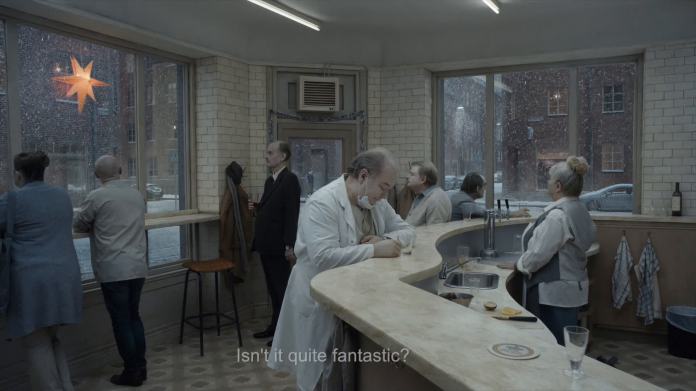
In the second scene I want to point out, Andersson depicts an urban bar/cafe during the evening hours with light snow falling outside the windows. Silent Night plays in the background, and we are unsure if the music is playing inside the bar or if Andersson is using the track as a music bed.

A dentist from an earlier scene has come in to get a drink, and he looks down at the countertop as he holds a glass. He appears melancholy, and the scene conjures an image of Edward Hopper’s painting Nighthawks.
Still from About Endlessness.

A short male customer turns to the dentist and says, “Isn’t it quite fantastic?” When the dentist does not respond, the man turns to another customer and repeats his line verbatim. This time, a thin customer in a black suit says, “What?” And the man who asked the original question responds: “Everything. Everything. Everything is fantastic.” And the man in the suit says, “Well, yes.” And the little man adds, “I think so, at least.”

I believe Andersson elevates the art form of cinema through his portrayal of humanity, his mix of humor and pathos, and his willingness to let the viewer fill in the details or complete the narratives he has set in motion.

To find out more about Andersson check out his Wikipedia page or his IMDb page.

Standard

Glimpses of Existence: A Short Film

Glimpses of Existence, an experimental/documentary short film in the form of video collage, premieres tonight at an online film screening presented by NewFilmmakers New York.

Using poetry and scenes captured with an iPhone—both before and during the pandemic—the film attempts to find meaning in the mundane moments of our lives, seeking the extraordinary amid the ordinary.

Noir Smoke. Photo by Francis DiClemente.

The central focus of the film is my son, Colin, who has been diagnosed with Autism Spectrum Disorder. Despite his condition, Colin finds joy in everyday activities, and through his eyes we recognize the importance of treasuring the tiny segments of life we are granted—minutes, seconds, hours—while being reminded about the transitory nature of existence.

Standard

Urban Location Inspiration

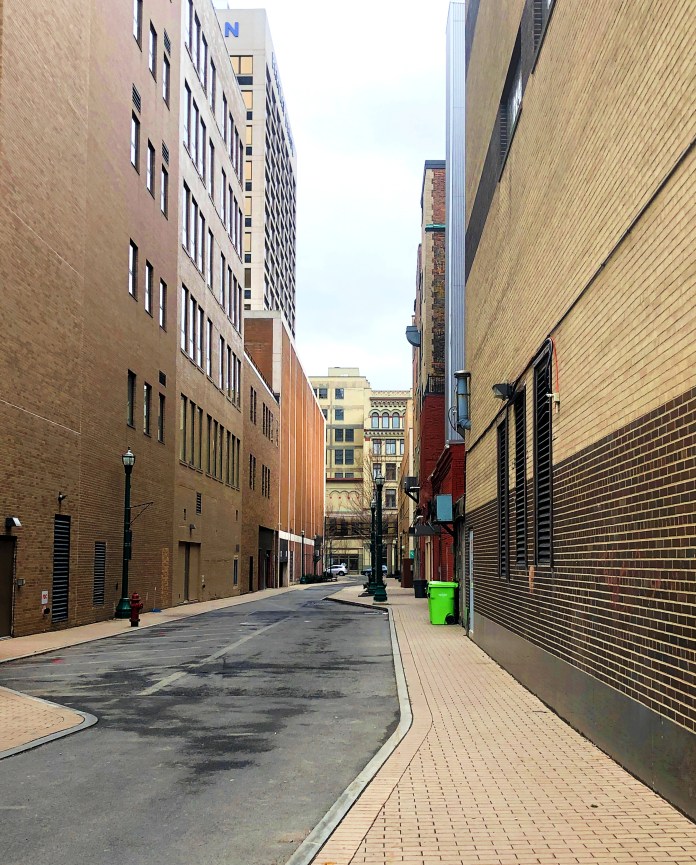
While out walking, I passed this alley, and it sparked my imagination for an entry into a screenplay scene. This won’t go anywhere, but it’s fun to play along.

Alley in downtown Syracuse. Photo by Francis DiClemente.

EXT. ALLEY – DAY

TOM COLLINS, a man in his forties, exits a building, opens the top of a garbage bin and tosses something inside. He closes the lid and sprints down the alley. Moments later, an explosion rocks the area and pieces of the green plastic bin scatter. ANGLE ON Tom’s face as he reaches the end of the alley. He looks back and three SECURITY GUARDS are in pursuit. One bearded guard cuffs his hands over his mouth.

SECURITY GUARD
You’ll never get away with this Collins. The human extension formula belongs to Dr. Reddick.

ANGLE ON Tom as he continues running.

Standard

The Real Bedford Falls Documentary on WNET

For people living in the NYC/Tri-State area, I want to pass along this note. The indie documentary short I co-produced/directed with my partner Stu Lisson—The Real Bedford Falls: It’s a Wonderful Life—airs tonight at 10:30 p.m. and again on Christmas Day on Thirteen WNET, the PBS station in New York.

Bridge Street Bridge in Seneca Falls. Aerial image by Chase Guttman.

The film explores the connections between the town of Seneca Falls, New York, and Bedford Falls, the fictional home of George Bailey in the classic movie It’s a Wonderful Life. The documentary features interviews with film critic Leonard Maltin, Karolyn Grimes (Zuzu Bailey), Jimmy Hawkins (Tommy Bailey), Syracuse University professor of popular culture Robert Thompson, film historian Jeanine Basinger and Monica Capra Hodges, granddaughter of director Frank Capra. Former NBC Today show correspondent Bob Dotson lends his mellifluous voice as narrator.

Thanks to everyone who was involved in this indie passion project. Special thanks go to The Seneca Falls It’s a Wonderful Life Museum for access to the story and most of all to Joanne Storkan, Chris Carpenter and the team at Honest Engine Films for making the project a reality. We hope to have a streaming/online viewing option in the near future.

Standard

Church Park

Instagram Poem #5

Church Park

While walking to work,
I pass a little park
located next to
Grace Episcopal Church.
It reminds me of the scenery
from the movie The Quiet Man.

And in the early morning stillness,
I half expect
John Wayne and Maureen O’Hara
to come striding toward me
along the path.

It’s yet another example
of how I have to live vicariously
through cinema,
since I am confident
my feet will never touch
Irish soil.

The Quiet Man movie image.

Standard

Documentary Screenings

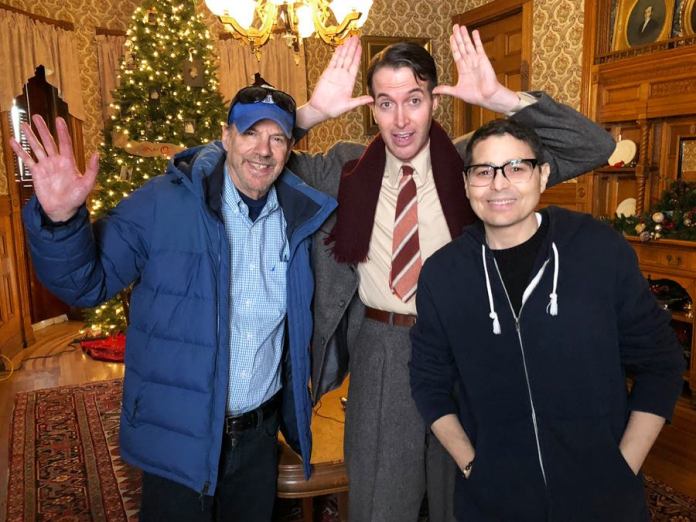
Co-producer Stu Lisson (left), actor Brian Rohan (center) and co-producer Francis DiClemente (right)

I’m excited to announce that this weekend we are screening our work-in-progress documentary The Real Bedford Falls: It’s a Wonderful Life, presented by Honest Engine Films. The first showing is at 12 p.m. on Saturday, Dec. 14 at Trinity Church in Seneca Falls as part of the It’s a Wonderful Life Festival. The second screening is at 4 p.m. on Sunday, Dec. 15 at the MOST Museum in Syracuse.

Drone image of Seneca Falls. Photo by Chase Guttman.

The film explores the connections between Seneca Falls, New York and Bedford Falls — the setting of the movie It’s a Wonderful Life. The documentary examines small town life in Seneca Falls, captures the excitement of the annual It’s a Wonderful Life Festival and celebrates the enduring themes of the Frank Capra classic. It features actors Karolyn Grimes (Zuzu Bailey) and Jimmy Hawkins (Tommy Bailey), film critic Leonard Maltin, Syracuse University professor of popular culture Robert Thompson, film historian Jeanine Basinger and Monica Capra Hodges, granddaughter of director Frank Capra. Former NBC Today show correspondent Bob Dotson serves as narrator. Here’s a short clip from the film.


Standard

Location Scouting

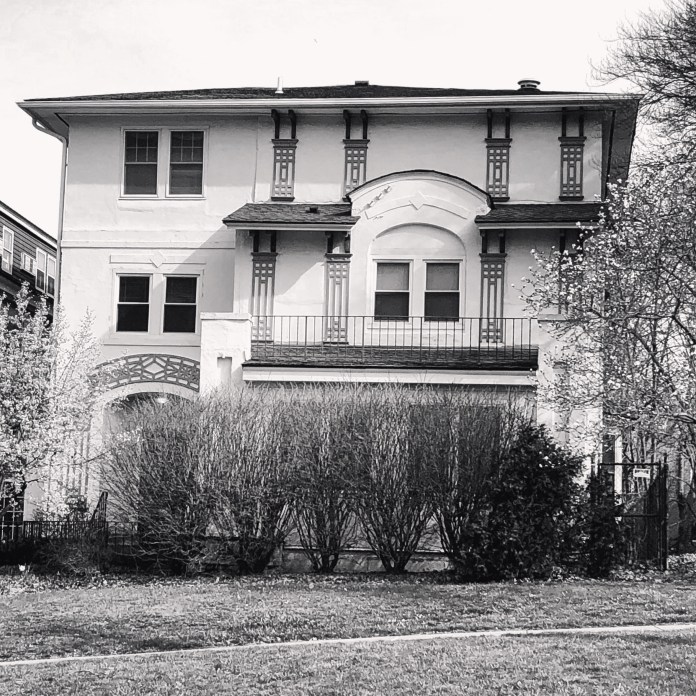
While taking a walk in my neighborhood in Syracuse yesterday, my eyes turned to a white stucco house with three levels sitting on a block of East Genesee Street.

Stucco house on East Genesee Street. Photo by Francis DiClemente.

The architecture seemed out of place for upstate New York, so I transported the structure in my mind to a sun-baked, Southern California setting.

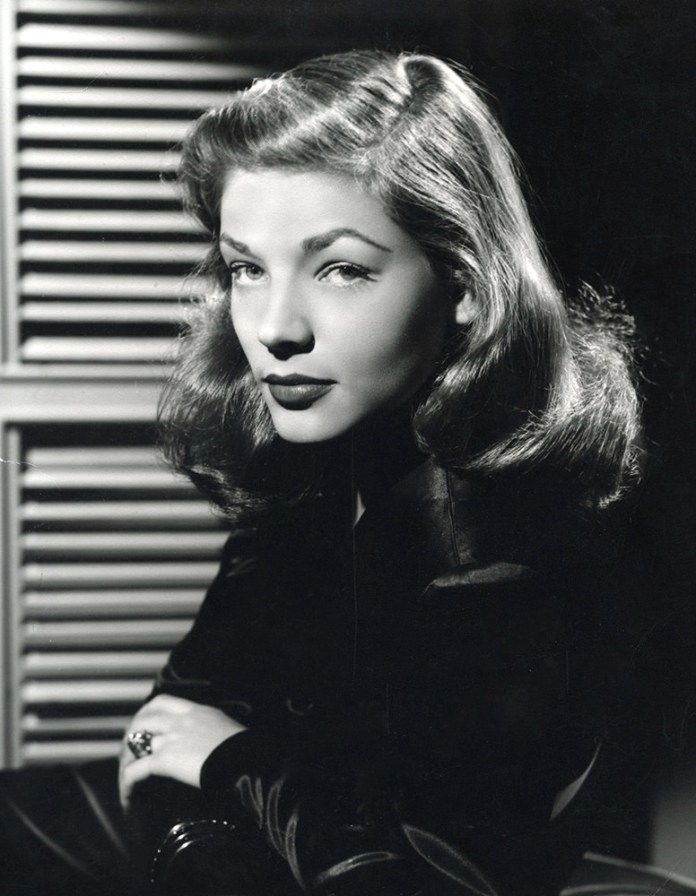
And in the LA film noir projected in my head, I imagined Lauren Bacall or Barbara Stanwyck appearing in the top floor window dressed in a negligee and smoking a cigarette.

Lauren Bacall

The femme fatale drew back the curtains, waved down to me and invited me in for a drink.

Barbara Stanwyck

I then wanted to push past the establishing shot, swing the camera inside the house and find out the rest of the story.

Standard

Do We Ever See Anyone?

Do We Ever See Anyone? is an experimental film with a very simple premise. The piece consists of a single stock footage shot of pedestrians in Manhattan. I slowed the footage down so the viewer could study the faces of the people walking on the busy street.

Standard

Black Box on Reelhouse

My experimental short film Black Box can now be viewed on the online distribution platform Reelhouse.org. I have submitted the piece to a number of film festivals, but I also wanted to have an online video presence so I could share the work. In addition to the film, the Reelhouse page offers background information about the project, production credits and still photos from the shoot. And so, here is Black Box.

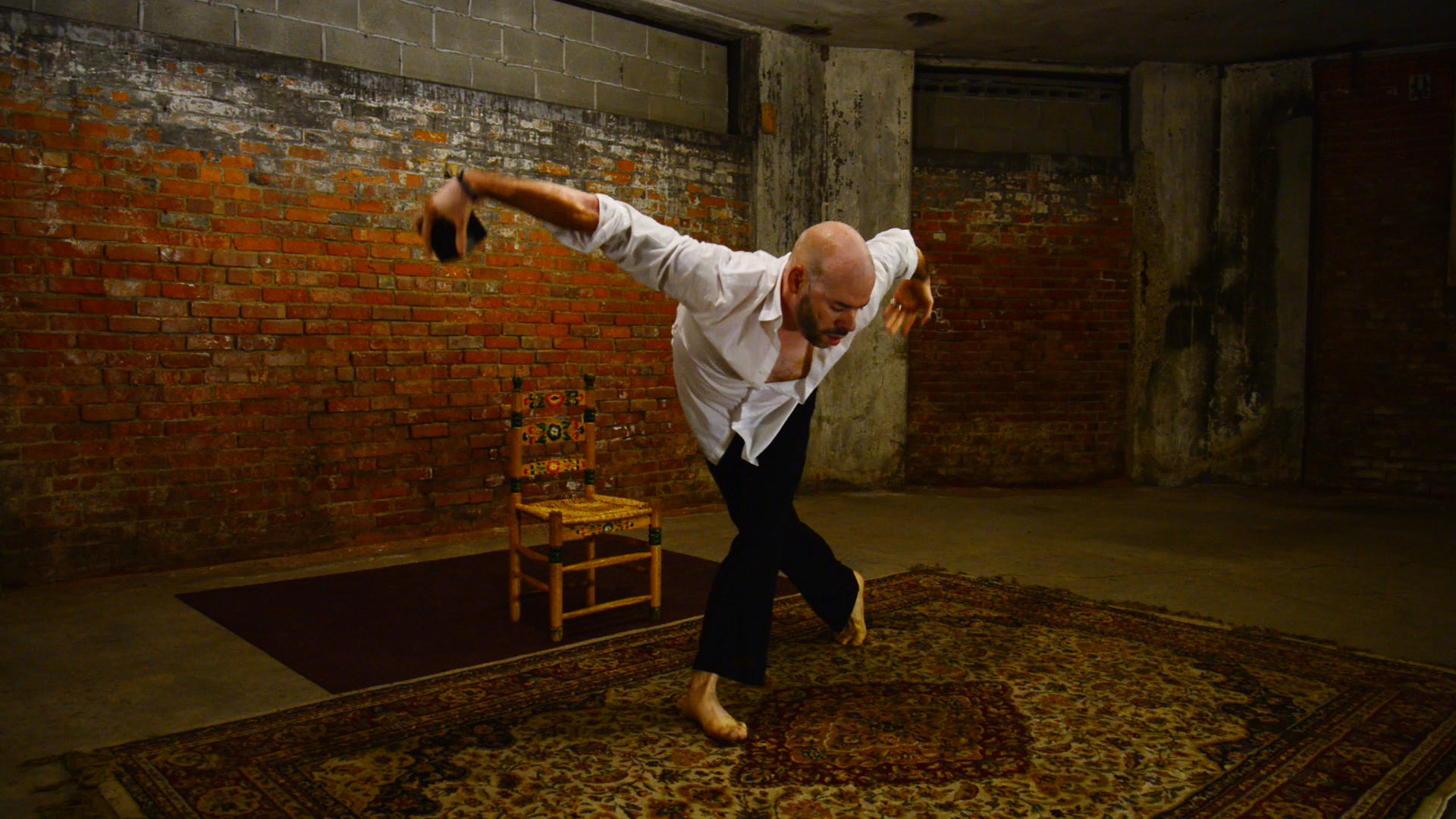
And here are some of the still photos of dancer and choreographer Brandon Ellis.

Dancer Brandon Ellis. Photo by Michael Barletta/Courtney Rile.

Dancer Brandon Ellis. Photo by Michael Barletta/Courtney Rile.

Dancer Brandon Ellis. Photo by Michael Barletta/Courtney Rile.

Dancer Brandon Ellis. Photo by Michael Barletta/Courtney Rile.

Dancer Brandon Ellis. Photo by Michael Barletta/Courtney Rile

Dancer Brandon Ellis. Photo by Michael Barletta/Courtney Rile.

Dancer Brandon Ellis. Photo By Michael Barletta/Courtney Rile.

Dancer Brandon Ellis. Photo By Michael Barletta/Courtney Rile.

Standard

Maya Deren’s Ritual in Transfigured Time

This story was published on the website of Film International magazine. Go to the link and scroll down to the bottom of the page to see the film by Maya Deren.

http://filmint.nu/?p=6028

Last summer, in the midst of the blockbuster movie season dominated by sequels, 3-D animation and superhero offerings, I stumbled upon a cinematic treat from a forgotten era. While eating my lunch at my desk one afternoon, I went to YouTube to look up some alternative music bands. After a while, an impulse made me type “Maya Deren” in the search box, and I soon entered the hypnotic world of the late choreographer, dancer and experimental filmmaker.

Several years ago I had watched Deren’s Meshes of the Afternoon and read her essay “Cinematography: The Creative Use of Reality” in Film Theory and Criticism, edited by Gerald Mast and Marshall Cohen (1974). I was exposed to filmmakers like Deren, Luis Buñuel, Fritz Lang and Sergei Eisenstein while studying for my master’s in film and video in the early 1990s. Yet one does not need to understand film theory, semiotics, psychology or feminist theory to appreciate Deren’s work. When some selections of Deren’s movies popped up on YouTube, I opted for Ritual in Transfigured Time, a short silent film from 1946.

The black and white, slow-motion images washed over me and I sat there transfixed by the surrealistic scenes. I think this may be the best way to explore Deren’s films – to know nothing about them except the title. Then the viewer enters Deren’s dream landscape and soon abandons all preconceived notions of the film medium and the carefully-constructed plots demanded by Hollywood. You surrender to the hallucination and, in doing so, you accept the idea that all art, including Deren’s work, is open for interpretation.

And while we do not get a linear storyline, character arcs, a three-act structure or a clear resolution, Ritual in Transfigured Time spurs questions in the minds of viewers. Who is this woman (Maya Deren) leaning against a doorway and playing with yarn at the outset? Is she waiting for someone? A lover? Or another version of herself? Why do the dancers at the party switch partners so frequently? Are the lead dancers in the park lovers? What do they represent? And why does it seem the female dancer is afraid of the male dancer? What has provoked this fear?

These questions then marinate in the brain and the result is a narrative that can only be completed by the audience. Everything is left up to our imaginations. We fill in the details and attempt to put the pieces of the puzzle together. Of course this means each viewer develops his or her ideas about the story. I can’t tell you the meaning of Ritual or even give you a clear plot description. There is too much ambiguity at work within the frame. I can only tell you it draws you in and you don’t want to look away.

I would like to point out a few memorable moments from Ritual, as these scenes have brought me back to YouTube for repeated viewings.

At about the 7-minute mark, we are placed in the middle of what looks like a house party attended by well-dressed guests. The men and women begin to dance, the figures moving from one person to the next. They do not dance so much as merely shuffle between partners. They exchange a few words, shake hands, latch on to shoulders and dance from side to side before turning to the next person and repeating the process. I wonder if this is a dream sequence, a party game or a meditation about the fragility of romance – the second you grasp on to it, it is gone. Affection blooms and withers and other people step in to replace our former lovers. But if this is the case, then why are so many of the “dancers” at the party smiling, their happy faces revealing no hint of despair?

Later at the party, at about the 8:20 mark, the lead actress and dancer, Rita Christiani, and the lead actor/dancer, Frank Westbrook, draw close to each other and nearly touch cheeks. The scene then cuts from the house party to a park, with the same two people holding hands. In this location, we also see women standing together and dancing. The shirtless male dancer tosses Christiani skyward, and her arms are extended in the air as she takes flight in slow motion. She remains suspended for a moment.

A short time later, we see Westrbrook in a low-angle shot against what appears to be the background of a stadium. He makes motions from side to side with his arms. His frame is taut and every muscle in his body stands out. Later he hops, spins in place and twirls in the air, his image frozen briefly. He expresses the joy of movement and he reminds me of a puppy wanting to play with its owner.

At the 11:38 mark, a wrought iron gate opens and Christiani enters a garden. We see Westbrook standing like a statue on a pedestal. She walks toward him. But now he breaks the plaster pose by looking at her. She displays fear and runs away. He remains standing momentarily and then gives chase, jumping after her. At 12:35 she disappears down a hill with Westbrook in pursuit, leaping along the way.

At the 13-minute mark we come to a courtyard and Christiani continues to run away, now passing stone archways. Westbrook follows. At 13:27 he tries to grab her; she escapes his grasp. But now it is Maya Deren fleeing, running under a wooden pier and rushing out into the sea until her legs disappear and the water swallows her.

At 13:50 we cut back to Christiani making motions with her arms, and then in a negative image, a white dancer falls against a black background. This is repeated a few times. The last image is a close-up of a female dancer’s head. The woman lifts a veil covering her face and then opens her eyes, and it’s hard to tell whether this face belongs to Christiani or Deren.

There is no doubt Ritual in Transfigured Time offers rich potential for psychological interpretation. But the more I watch it, the less I care about trying to decode its meaning. I think the combination of bodies in motion, dream-like images and underlying tension is enough to satisfy me. Answers are not necessary for me to enjoy the ride. I also realize that with the power of YouTube there are countless other experimental films waiting to be discovered on my lunch hour.

Standard