Man in the Chair

A personal essay I wrote and two corresponding photos appear in the latest issue of the Star 82 Review literary magazine. You can read the story and see the images here. I’m looking forward to reading all of the stories and seeing the fine artwork in this issue.

The text of my essay follows:

It is late in the afternoon on a fall or winter day, and I am visiting my mother and stepfather at their home in Rome, New York. They are sitting in their family room watching TV; if I had to guess, I’d say the show is Judge Judy, Criminal Minds or NCIS. My stepfather Bill, who owns his own contracting business, is reclining in his favorite chair, wearing a work-stained hoodie and sipping a cup of coffee. I walk into the room and sidle up to him. I put my hand on the bald crown of his head, which has a fringe of brownish-gray hair on the sides, and I feel the warmth emanating from his skull. Often when I do this, Bill will say, “God your hand is freezing.” But he does not say anything, and I leave my hand on top of his head and take a glance at the television screen while darkness gathers outside the windows.

A sick realization makes me shudder. I pull my hand away because I recognize in the moment that the head of this man I love could, in a matter of seconds, be crushed with a baseball bat or cracked open with an axe blade. Blood could splatter against the walls and he would slump over in the chair, inert.

And I think this not because I am homicidal or possess a desire to kill my stepfather. Quite the opposite. Fear sets in because I realize the man sitting in the chair, with a beating heart, functioning brain and sense of humor, could be gone in an instant.

He could be animated in one moment and his breath snuffed out in the next.

Most likely my stepfather will not be killed by a blow to the head or a tree crashing through the house. A heart attack, stroke or cancer will probably get him in the end. And while I already know this, I pause and allow this knowledge to sink in, so I will appreciate him better.

A year or two later my mother would lose her battle with cancer. And her death would remind me that we do not live life all at once. It’s not one big project we have to complete by a set deadline or a trip to Europe you have planned for years.

Instead we experience life in small doses, tiny beads of time on a string. And it helps to recognize them, to acknowledge you are present and alive even in the most mundane circumstances—while you are talking with co-workers in the parking lot before heading home for the day, running errands, doing laundry, baking a chocolate cake, tossing a football with friends, reading to your kids at bedtime. These are subplots that drive our stories forward. They are not exciting. They are not memorable. But they are part of our existence and we have to value them before they and we are gone.

So, after I pull my hand away from Bill’s head, I decide to sit on the couch next to my mother. She hates when people talk during a program because it distracts her, so I look at the screen even though I am not interested in the show, and I do not say a word. But during a commercial break, she mutes the sound with the remote control, and Bill and I converse about something. And I can’t remember the topic we discussed, and it doesn’t really matter.

Standard

Second Look: Hotel Art

I spent a recent weekend at the Wingate by Wyndham hotel in my hometown of Rome, N.Y. Besides the amenities of a free daily breakfast, a 24-hour fitness center and a coffee pot in my room—which I consider a necessity—I enjoyed another perk I imagine most people overlook when roaming through lobby of a hotel or grabbing a soda at the vending machine. It was the collection of artwork hanging on the walls of the lobby, in the hallways and in my room.

Hotel Art #1

I think the abstract works were acrylic paintings or mixed media pieces, and it was obvious they were all made by the same artist, although I never determined his or her name. The prints were mounted with navy blue matting and had wide silver picture frames.

I admired the simple, elegant designs and lush color schemes. Tan, orange, rust and turquoise colors dominated the surface, and what looked liked black graphite markings outlined circles, squares and other shapes filled in with acrylic paint. The textures, patterns and colors invited the viewer in, but did not overpower or call attention; the effect was a feeling of serenity.

Hotel Art #2

If I needed to rehearse a business presentation in my room I would welcome the chance to glance up at these paintings, taking a visual break from memorizing the notes, charts, graphs and sales figures. I think looking at the artwork would allow my mind to wander briefly, getting lost in the landscape of colors and patterns. Perhaps the reverie would relax me, making me feel less nervous about the presentation and even lowering my blood pressure.

Obviously hotel art does not attract attention like a Warhol or Dali exhibit at the Museum of Modern Art. And in the rush of checking in, carrying your bags to the room, swiping your key card and flipping through the HD channels on the television, you could easily miss some of the art pieces scattered throughout any Marriott, Hyatt, Crowne Plaza or Sheraton hotel in America.

That’s because hotel art is invisible, like the maid pushing a cart in the hallway or the frumpy lady clearing the breakfast dishes. But the pieces are there, just waiting for us to look at them. The paintings in my room seemed to say, “Hey we’re here anytime you want us. No pressure, though. Enjoy your stay.”

Hotel Art #3

And this recognition made me realize I have to sharpen my sense of awareness, being open to the possibility of making discoveries amid the bustle of keeping on schedule and crossing off items on the day’s itinerary.

Standard

Black Box short film premieres in NYC

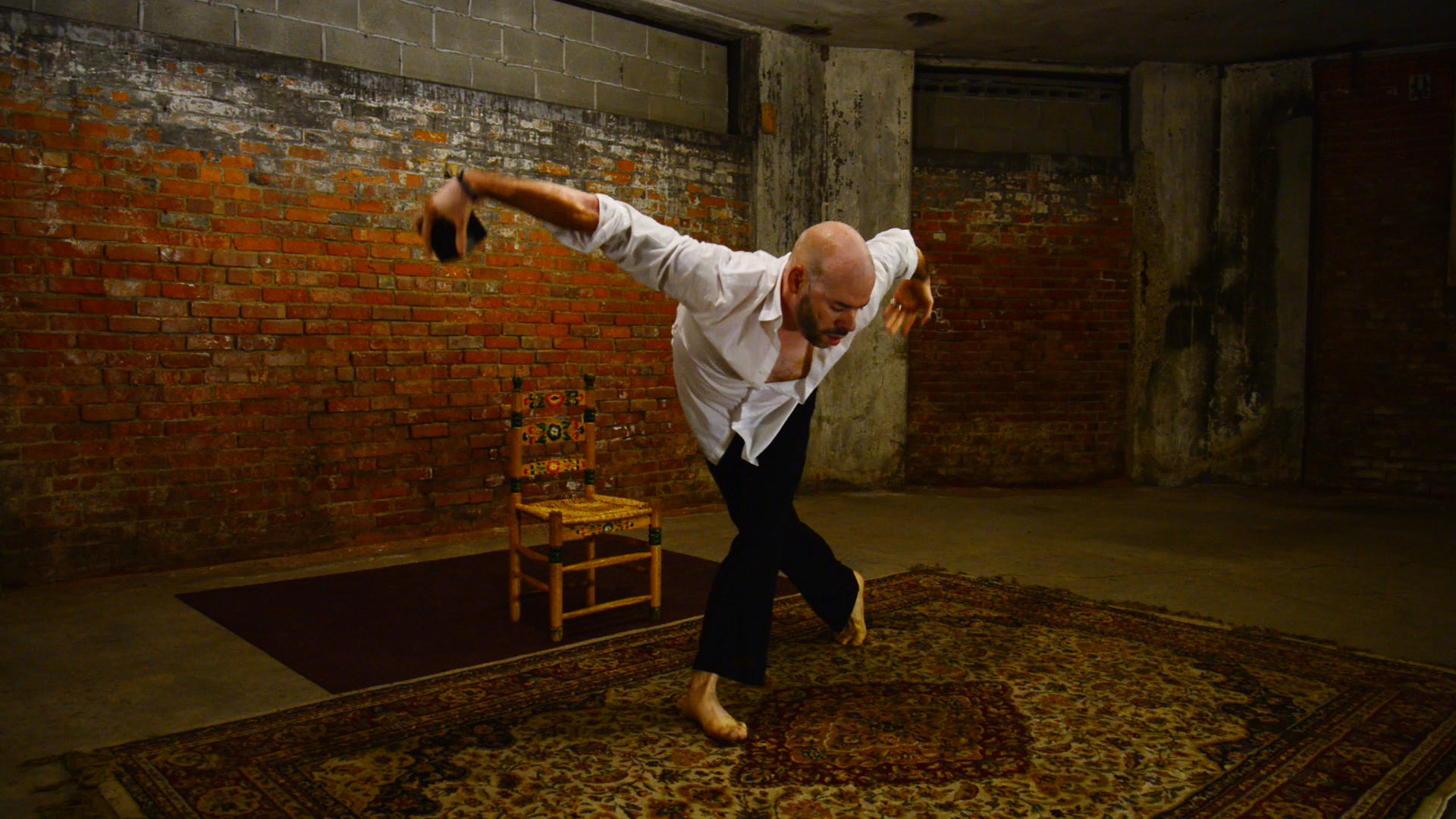
Black Box, an experimental short film I produced and directed in 2012, makes its premiere today at the NewFilmmakers New York Screening Series at the Anthology Film Archives in Manhattan. I’m happy to say the piece will finally see the light of day.

Dancer and choreographer Brandon Ellis. Photo by Michael Barletta/Courtney Rile.

The project originated with the music. A piece by Franz Schubert inspired me, sticking in my head for years and refusing to release its hold until I made something out of it.

I discovered the music of Schubert purely by accident. I was grocery shopping around the time of the Millennium at a Fry’s supermarket in Phoenix, where I used to live, and I saw a display of CDs featuring the works of famous composers. Mahler, Beethoven, Bach, Schubert and others were on sale just a few feet away from the laundry detergent aisle and an in-store Chase branch. I think the CD cost me about $5; it’s called Classical Masterpieces: The Best of Schubert by Madacy Records.

The song that enthralled me is String Quartet No. 14 in D minor (Death and the Maiden). It’s about 16 minutes long and invites the listener to indulge in its melancholy bliss. I read that Schubert was aware he was dying at the time he wrote it, so needless to say, it’s not upbeat.

I was working nights at the time and I used to put the song on the repeat cycle on my CD player and try to fall asleep while the blazing Arizona sun invaded my room in the afternoon.

But what does this music have to do with a film? I had always thought the piece could be paired with images to create a powerful work of art. But it didn’t seem suited to me for use in a narrative film scene with characters and dialogue. And it wasn’t until I watched Maya Deren’s Ritual in Transfigured Time a few years ago that I realized Schubert’s work could serve as the foundation for a conceptual video art piece that incorporates the medium of dance to express emotions.

So I came up with a concept for the film; but since I know nothing about dance I collaborated with a Syracuse-area choreographer and dancer, Brandon Ellis, who interpreted my vision and developed and executed the dance routine.

Dancer and choreographer Brandon Ellis. Photo by Michael Barletta/Courtney Rile.

Two things about the project were important to me: one was keeping the piece short and manageable, since it was a low-budget production and I was self-financing it (the edited master is about four minutes long). Secondly, I did not want the piece to be just a straight dance performance like you see on stage.

So here’s the basic premise:

The dancer in the film clutches a black box representing the human heart as a repository of life’s emotions. It is a metaphor for all of the turmoil and pain we carry with us inside. Through a series of movements, the character becomes free from the density of the black box, and he is able to leave it behind and thus arrive at a state of inner peace.

Dancer and choreographer Brandon Ellis. Photo by Michael Barletta/Courtney Rile.

For the production I collaborated with Michael Barletta and Courtney Rile, founders of the Syracuse-based production company Daylight Blue Media. Barletta and Rile served as camera operators during the shoot, and Rile also edited the film.

The project was filmed in an old industrial warehouse in Syracuse last summer and we shot the dance sequence from multiple angles to create a sense of dynamic action (or so I hope).

Dancer and choreographer Brandon Ellis. Photo by Michael Barletta/Courtney Rile.

One other note is relevant. I was concerned about using the music from the CD I owned because of rights issues, so I purchased and downloaded a royalty-free version of the same piece from Apollo Symphony Orchestra. ASO has a wide selection of classical music and it’s a great asset for filmmakers and artists looking for music for their projects. The version I bought cost about $40 and allows for multiple uses, e.g. online and DVD, etc.

Since I am submitting the project to other film festivals and art galleries, I will not post it on my blog at this time. But if you would like to see it, just send me an email at ffdhold@yahoo.com and I will send you the Vimeo link with the password.

Thanks for taking the time to read this and good luck with all of your creative endeavors.

Standard

Three more gems from Broken Lights

I finished the 1920 poetry book Broken Lights: A Book of Verse by Glenn Hughes, which I mentioned in my last post.

In spending some time with the book, I inspected the library checkout card and was amazed to discover it  was first taken out of Syracuse University Library on September 2, 1926. I find it exciting to think that more than 85 years ago someone else was flipping through the same pages and reading the same poems. The last date stamped on the card is June 7, 1932. And another stamp on the first inside page reads, “STORAGE 28 JUL ’65 J F.”

There are several beautiful poems in the collection, but three short works that appear on consecutive pages (56-58), a literary triptych if you will, struck me the most. The first two seem dark at first but both end on a positive note. They also employ an alternating rhyming pattern. Here are the three poems:

RETROSPECT

God knows what dreary stretches lie
In the vast regions of my heart—
Bleak places where all flowers die,
And birds flee from wind’s keen smart.

But this I know: though desolate
Such of my heart’s dark spaces be,
Fair fields there are, inviolate,
Glowing and warm with love of thee.

REPLY

“Life—what is life?” I asked the world,
The world did not reply;
Its bitter lip with scorn was curled,
And mocking was its eye.

But then you came, and now I stand
From the grim world apart;
For life was in the soft white hand
You laid upon my heart.

SONG OF SORROW

The songs I made for you are dead,
For the aching of my heart has drowned their melody,
It is the winter of our love,
And the rose leaves that were scattered in the summer
Lie black and scentless on forgotten paths.

Ah, desolate, desolate with nameless yearning
In my heart that was so light in other days,
And somewhere in a garden,
Where a bird is singing in the sunshine
I can see you sitting, weeping,
With your gold hair all about you,
And a beautiful, deep sorrow in your eyes.

(Hughes, Glenn. Broken Lights: A Book of Verse. Seattle: Department of Printing, University of Washington, 1920. Print.)


Standard

A Jewel in the Stacks

I went to Syracuse University’s Bird Library to pick up two novels I hope to read over the summer: Shirley Jackson’s The Haunting of Hill House and The Killing Man by Mickey Spillane. But as is often the case when I am roaming through the aisles on the fifth floor of the library, another book caught my attention. It’s a slim volume of poetry titled Broken Lights: A Book of Verse by Glenn Hughes, published in 1920. I pulled the rust-colored book off the shelf and flipped it open randomly, stopping on page 68, where I found the poem Dakota Night. As I read the poem, the words stirred my imagination, making me feel like I was standing in a knee-high field of grass surrounded by a bowl of stars.

DAKOTA NIGHT

Was ever such a night for stars
Above this silent prairie land,
Where lonely years have left their scars
In rocky buttes that darkly stand
Against the liquid film of night
So richly flecked with golden light!

There is a peace here, native, strong,
That lies upon this rolling waste
As though the gods had labored long
And, wearying, had turned to taste
The joy of dreamless sleep.  No breath
Is heard.  It is a peace like death.

Yet hark!  A murmur on the hill!
The wind among the grasses wakes;
A cricket strums and then is still.
How sweet the music that night makes!
Starlight and quiet once again
On lonely butte and barren plain.

(Hughes, Glenn. Broken Lights: A Book of Verse. Seattle: Department of Printing, University of Washington, 1920. Print.)

I found an online story about Glenn Hughes, or at least I believe it’s the same Glenn Hughes who penned Broken Lights.

And this incident proves why books on paper will always possess more allure to me than e-books. Bound volumes hold tactile power; the way they look, feel and smell invite the reader to explore the space sandwiched between the front and back covers. My literary find also makes me wonder how many other interesting books are just waiting to be discovered on the library stacks.

You can read Broken Lights online for free.

Standard

Dinner in a Chinese Restaurant

On a rainy Wednesday evening I broke the monotony of my work week. After leaving the office I went to Syracuse University’s Bird Library to edit some nonfiction story manuscripts and write longhand in my journal.

Photo by Steve Sartori

Photo by Steve Sartori

I drank a cup of coffee as I worked and after I finished writing, I perused some large format art books stacked on the shelves nearby. I opened a book containing Raphael’s drawings and then leafed through a heavy volume featuring artwork by Caravaggio. Huge color plates demonstrated Caravaggio’s mastery of light and shadow, and the powerful images depicting Christ’s life, crucifixion and entombment stirred my soul.

After leaving the library I decided I would go to Panda West restaurant on Marshall Street for takeout Chinese.

Photo by DreamDays

Photo by DreamDays

I hadn’t eaten Chinese food in a long time and decided I would treat myself. While standing near the front counter I looked through the paper menu trying to decide what to order, and when the woman up front finished talking to a customer, who was paying his bill, she turned to me and said, “OK, you know what you want?”

And I decided in the moment to eat in rather than get takeout. “Table for one,” I said to her.

“Sit anywhere,” she said.

I sat down at a table for two in a corner of the restaurant with my back to a window facing Marshall Street. A young, thin Chinese waiter came over with rice chips and a stainless steel kettle of tea. I have always loved the taste of house tea in Chinese restaurants (oolong I think), especially when it’s served piping hot.

Photo by syrguide

Photo by syrguide

The man handed me a menu, but I said, “I’m ready to order. I’ll have steamed chicken with mixed vegetables.” He said, “Sauce on the side?” And I said, “No sauce, just plain.”

“Just plain,” he repeated and nodded his head. He left to put the order in and I took off my coat, opened my duffel bag and pulled out the arts section of the New York Times.

I then listened to a stocky Middle Eastern or Indian man talking to a woman at a table in front of me. I think they both work in the medical field and I heard him mention the practice of anesthesiology. The woman leaned over the table toward the man, straining to comprehend each word emanating from his dark lips.

I relaxed amid the dim surroundings of the restaurant and half-listened to other diners talking in low voices. About ten people were scattered throughout the large dining room at that time—a few older couples, a group of Asian college students and some female students.

I scanned a few articles in the Times and refilled my small white porcelain tea cup several times, and then the food arrived at my table. It seemed like it took about 7 to 10 minutes to cook. The chicken and vegetables were presented in a round bamboo serving dish and the waiter placed a small bowl of white rice on the table. I was hungry and I ate quickly.

When the waiter came around again I asked him to box up the leftovers. I paid my bill and the waiter returned with my leftovers, a fortune cookie and a few pineapple chunks on a small plate with toothpicks sticking out of them. I don’t recall my fortune and the pineapple tasted like the Dole canned variety, but I appreciated the after-dinner offering.

I left my tip at the table, put on my coat, hat and gloves, slung the book bag over my shoulder and darted out into the damp night. I walked along Marshall Street, turned right on South Crouse Avenue and made my way to the bottom of the hill toward Genesee Street.

Dining out midweek was a rarity for me. I think the last time I had sat down to a meal in a restaurant before going to Panda West was when I ordered a short stack of pancakes at Cosmos on Marshall Street on a Sunday morning after mass at the Alibrandi Catholic Center near campus.

And the beauty of this mundane Wednesday night meal at Panda West was made clear to me when I stepped into my one-bedroom apartment. After putting the leftovers in the refrigerator, I realized I would not have to fix anything for dinner or eat another meal at my small card table in the living room, accompanied by fictional guests in the form of movie characters beamed out at me on my laptop via a Netflix streaming video.

I experienced contentment by eating dinner like a normal person, at a restaurant, surrounded by other human beings engaged in conversation. And even if I wasn’t part of the discussions, at least I was there, out in the world, regardless of being alone.

Standard

Twitter Observations

I feel like this is a Saturday afternoon confession before the vigil mass at my local church. My name is Francis and I am now on Twitter. My handle is @FranDiClem.

I signed up recently because I work in the communications/media industry and I need to keep up to date with new technology and communication methods. Being that I’m well into my fourth decade of existence, I guess I’m a little concerned about becoming a professional dinosaur. So I want to learn as much as I can about practices that apply to my fields of endeavor.

I am still learning the lexicon of Twitter and the process for tweeting and retweeting. I understand the concept of hashtags but I haven’t started one yet.

RT, DM, @, # . . . are these 21st century hieroglyphics?

As a general observation of Twitter, I must admit that when I log into my account I feel like I am bombarded with the digital equivalent of thousands of Kerouac-esque, stream-of-consciousness manuscripts—all being sent to me at the same time. The sheer quantity of news items is overwhelming as the buckshot of information continues to fly across the computer screen.

And I wonder if I am better served by spending 20 minutes reading one long-form story from the New York TimesThe New YorkerThe Atlantic, etc. or reading snippets of articles from ten different sources. Does Twitter really make us more informed?

For me it seems I can get a better grasp of what’s going on in the world, quickly, in a few keystrokes, by going to the landing page for Google or Yahoo! News.

I realize the social element of Twitter attracts people, and I am exploring this benefit of the site. I have enjoyed making connections with people I have never met as well as reestablishing ties with former colleagues who still work in the news business.

I guess the key to Twitter is just having fun with it, not taking it too seriously and just using it to stay informed and engaged. I also recognize that it offers great potential as a distribution outlet for those who create content.

So I will be keeping an open mind as I observe how other people—namely the experts or thought leaders in the Twitter space—write incisive messages, make connections and generate followers.

But I wouldn’t suggest following me anytime soon. I still need to pass the intro. course.

Standard

Margot Berwin: Scent of Darkness

Author Margot Berwin’s new novel Scent of Darkness examines the power of scent and how it alters a young woman’s life. The book takes readers on a journey “deep into the bayous of Louisiana, to a world filled with fortune-tellers, soothsayers and potent elixirs.”

Here is a portion of the book’s synopsis from the website of publisher Pantheon/Knopf Doubleday:

“Evangeline grows up understanding the extraordinary effects of fragrance. Her grandmother Louise is a gifted aromata, a master of scent-making and perfume. When Eva is eighteen, Louise leaves her the ultimate gift—a scent created just for her. The small perfume vial is accompanied by a note in Louise’s slanted script: “Do not remove the stopper, Evangeline, unless you want everything in your life to change.”

From the moment Eva places a drop—the essence of fire, leather, rose, and jasmine—on her neck, men dance closer to her, women bury their noses deep into her hair, even the cats outside her bedroom cry to be near her. After a lifetime spent blending into the background, Eva is suddenly the object of intense desire to everyone around her. Strangers follow her down the street; a young boy appears at her door asking for a favor; and two men, one kind and good, the other dark and seductive, fall deeply, madly in love with her. As her greatest gift becomes an unbearable curse, Eva must uncover the secret of her scent and the message her grandmother, the woman who loved her most, wanted to tell her.”

Courtesy Pantheon/Knopf Doubleday

Courtesy Pantheon/Knopf Doubleday

Berwin’s best-selling debut novel, Hot House Flower and the Nine Plants of Desire, was published in 2009 by Pantheon and was translated into 20 languages and optioned by SONY Pictures. Berwin earned her MFA from the New School in 2005 and her stories have appeared on Nerve.com and in the New York Press. She lives in New York City and you can follow her on Twitter @MargotBerwin.

After returning from a recent book tour, she was kind enough to answer a few questions about Scent of Darkness and her writing process. So I will turn it over to her …

How did the idea for Scent of Darkness originate?

Scent of Darkness is about sexual obsession, shaving and of course perfume.

When I was a kid I used to mix perfumes in the bathroom like a little four-foot chemist. Much to my mother’s dismay I’d pull the stopper out of her Chanel #5 and pour in a little of my dad’s Aqua Velva just for good measure.

As a writer I’m also a huge reader. At some point I became obsessed with books on scent and scent making such as The Perfect Scent by Chandler Burr and Perfume by Suskind. I found myself learning all I could about the major perfume houses in the south of France—Guerlain, Hermes, Chanel, Creed, Houbigant, Givenchy and many more. It got to the point where I was spending all of my free time in the perfume section of Sephora or Bergdorf Goodman spraying and waving little white strips of paper in the air.

Eventually I started to make my own scents. I hit upon a combination of essential oils in a base of sunflower oil and people in restaurants and bars would come up to me and ask me what I was wearing!

I briefly thought about marketing the scent (well, actually still thinking about it) but instead I combined my love of perfume with my love of writing and turned them into a novel.

What do you hope readers will find appealing about the book?

I hope people will be intrigued enough to learn more about how perfume is constructed.

There are flowers and plants and fruits in perfumes but there are also much darker things inside of those beautiful little bottles—very dirty elements called animalics. They include ambergris, which is made from whale sperm. Not sperm whales, but whale sperm. Civet, which comes from the anal gland of the civet cat. Castoreum from the beaver. And of course musk, which comes from the anus of the musk deer.

These glands, which we remove from the animal to make perfumes, contain the sprays that animals use to mark their territory. And we use them for exactly the same reason. Just remember the next time you hug someone and you get a bit of perfume on their neck you are literally using the anal gland of an animal to mark your territory.

Then there is sado/masochistic element of the relationship between Evangeline and Michael vs. the less passionate but more sustainable relationship between her and Gabriel. I think the age old question of being in love with two men at the same time, one of whom is good and the other, evil, will resonate with readers.

Can you talk about the joys and challenges of navigating a story with elements of magical realism? It must have been a lot of fun writing the character of Evangeline and following her on her journey.

I’m not sure I love the term magical realism. I don’t know why people in our culture are so skeptical and/or cynical about the more magical aspects of life—certainly they exist and are all around us so while my work has had the magical realism term put upon it, to me what I write is actually very realistic!

I love the work of Haruki Murakami. He’s been my favorite writer over the last several years and he is a master at this style of writing. He seamlessly combines odd elements that can appear magical with the rest of mundane existence. I’ve read everything he’s written over and over again to see how it’s done. The Wind-Up Bird Chronicle is a great example of this style.

Can you take us through your process a bit, from the initial kernel of an idea for a novel to a completed first draft? For example do you do extensive plot outlining or do you dive right in and figure out the story as you go along?

To be honest, I’m not totally sure how to answer this question. I try not to over think how a novel happens for fear that I will chase it away. For me so much of the planning of a book takes place subconsciously—and then all of a sudden I’m writing again. I never know exactly when the time to write a new book is going to arrive. And then, suddenly, I just know. I can’t explain that.

I usually sit down and write an entire first draft, quickly, without editing myself too much along the way. This can take a few months. I like to write late at night into the morning. I drink wine listen to music and sometimes read for inspiration. I take long, leisurely hours when no one else is awake and write and write till I can’t anymore. Then I wait a month or so and look at the draft again and begin honing and editing.

After four books, two of which have been published, it’s still a very mysterious process. I never know when it’s going to arrive or what will come out of it. I do use outlines, but they’re in my head. I won’t commit them to paper because it would make me feel less free in my writing. Maybe I should try it. Maybe it would make the process simpler. Maybe next time.

What were the challenges in bringing the book to life?

Writing in NYC is a big challenge for me. There’s something going on, every single second, on every block and every street corner. Couples kissing, people fighting, crying, and laughing. Ambulances screaming down the street, little kids running, trains roaring, homeless people asking for money, and food vendors hawking. It never stops, which is great for getting ideas, but bad for writing because it’s really hard to find a quiet space to think.

So while I love my city, I leave it often—pretty much whenever I’ve got an idea for a book.

With Scent of Darkness, the place I went came easily.

I was at freelancing, writing websites for an ad agency, bitching about how I couldn’t find a quiet place to write when a co-worker of mine offered me his apartment in the French Quarter. He basically handed me the keys for very little money and a month later I was living in New Orleans. I fell immediately and completely in love with the place and I thought, hmmm, how can I get this book to take place here so I can have an excuse to stay and write. So there’s a character in medical school in NYC and I thought well I’m the writer, I’ll just get him accepted to Tulane instead of Columbia. And that’s exactly what I did and I set the second half of the book in the French Quarter.

Since the blogging community is filled with writers can you offer any advice to emerging writers, whether they are fiction writers, journalists etc.?

A lot of creative writing teachers will tell you to write what you know. I say write what you don’t know. Or rather, write about what you’re interested in. The whole fun of writing, for me anyway, is learning. I would hate to spend my time writing about things and people that I already totally understand. Seems like a waste of time. Challenge your mind and write about something that is new to yourself. If it’s eye opening and mind expanding to you, it will probably feel the same to your readers. If it’s boring to you, it will definitely be boring to them.

What if anything do you enjoy about the process of promoting a book, including using social media and making author appearances.

Funny you should ask since I got home from my book tour just a week ago.

I have to say that this tour was much easier than the one for my first book. I was super-nervous all the time back then. I hated public speaking and I felt sick every time I stepped up to the mic.

This time was totally different. I loved it and I didn’t want it to end—that was one of the best things about getting published—it forced me to get over my fear of being in the spotlight. Plus they sent me down south in the middle of the winter … not a bad gig.

Scent of Darkness has been reviewed by a lot of bloggers—and it’s always really strange to read what people have to say about the book. Two separate reviewers have described my book as being about broken children. I’m pretty sure I wrote a book about perfume so I guess one person’s perfume is another’s broken child.

That said I really enjoy being a guest blogger—so thanks so much for having me!!
Standard

Ticket to Ride

Since I have been busy with video projects at work, I haven’t had a chance to post anything lately. But I have a short story published in Issue 8 of the Penduline Press, a Portland-based literary and art magazine. You can read Ticket to Ride and check out the many fine stories, poems, interviews and works of art in the latest issue of the magazine.

Standard

Spring Anyone?

The anticipation of spring is overwhelming here in upstate New York. March ushers in a sense of hope as winter relents and spring creeps toward us. We’re not there yet. We still have more cold gray days ahead, with temperatures barely climbing out of the thirties. More snow will fall and the wind will continue to chafe exposed earlobes, noses and cheeks.

But you can sense spring is almost here. We’ll be setting our clocks ahead this weekend as Daylight Saving Time resumes.

March brings with it Friday fish fry specials that are welcomed by Lenten observers, St. Patrick’s Day celebrations and the apogee of the college basketball season. After the conference tournaments wind down, fans will be dissecting the NCAA tourney pairings and filling out their brackets. The NHL season is moving along and the playoffs will be upon us soon.

This is my favorite time of year, because it’s a season of possibility, where the full glory of spring and summer lies ahead, just waiting to be plucked like a ripe peach. Now we can allow ourselves to imagine barbecues, pool parties, softball games, weekend getaways, outdoor concerts and fireworks on the Fourth of July.

Trees in full glory. Photo by Francis DiClemente.

Trees in full glory. Photo by Francis DiClemente.

I am reminded of The Twilight Zone episode Walking Distance (1959) where a business executive returns to his hometown and finds it unchanged. He is overcome by a feeling of nostalgia when he encounters his boyhood self during a summer marked by merry-go-rounds, cotton candy and band concerts, and he tries to instruct his younger self to savor his childhood while he still has the chance.

The man, Martin Sloan, says to the boy: “I only wanted to tell you that this is a wonderful time for you.”

So in this northern corner of the world, as Mother Nature gets ready to release a measure of heat, we can prepare to store our boots, coats, gloves, hats, sweaters and scarves for another year. We can get to ready to strike the terms black ice, lake effect, wind chill and Nor’easter from our vocabulary, at least for another nine months. It’s about time to step outside, stretch our limbs and live again.

Baseball’s Opening Day and the Big Feast at Vinci’s House

Meanwhile, spring training continues in Florida and Arizona—another sign that winter will be ending soon—and the first pitch of Major League Baseball’s regular season is less than a month away.

Bill Vinci, my best friend from my hometown of Rome, N.Y., holds an annual party on the first full day of the MLB season. Regardless of the weather, regardless of where he happens to be employed at the time—and he’s rotated through several jobs over the past decade—he invites friends over to his house to watch the opening day games.

The party host, Bill Vinci. Photo courtesy of Bill Vinci.

The party host, Bill Vinci. Photo courtesy of Bill Vinci.

It’s an all-day party with a group of friends debating their fantasy teams. Unfortunately, I haven’t had a chance to attend one of these parties because I’ve always had to work or I’ve lived elsewhere in the U.S.

But I find the concept appealing because of the allure of playing hooky from work to watch baseball; and it’s also entertaining to see the players shivering on the basepaths and in the dugouts and outfield grass during early April games in cities like Chicago, Detroit, Cincinnati and Boston.

Vinci tells me the party consists of watching baseball from the first at-bat to the “final pitch on the West Coast.” And his celebration has real roots in the Rome area, stretching back to Vinci’s high school days, starting around 1985.

“I would skip school and have my friends come over and watch baseball and eat in my parents’ basement,” he says. He adds, “As the years go by the attendees have decreased due to work, kids, etc., but that hasn’t stopped me from putting on the greatest opening day party in Rome.”

Bill Vinci swinging away. Photo courtesy of Bill Vinci.

Bill Vinci swinging away. Photo courtesy of Bill Vinci.

And the action on the diamond is enhanced by the menu for the occasion; the spread of food includes “dogs, burgers, sausage, hot and sweet peppers and sausage bread, along with chips and dip.”

So that’s what I’ve been missing all these years.

But Vinci, who serves as director of marketing for the Utica Brewers baseball club of the Perfect Game Collegiate Baseball League (PGCBL), says the “reason I host opening day is the love and passion of the game of baseball. It’s in my blood and to have friends and family enjoy it with me makes it all worth it.”

He adds, “as long as I’m on this earth, you can always count on one thing—opening day of baseball at Vinci’s house.”

To that I say batter up.

Getting reading for the season. Photo by Francis DiClemente.

Getting ready for the season. Photo by Francis DiClemente.


Standard