MORNING
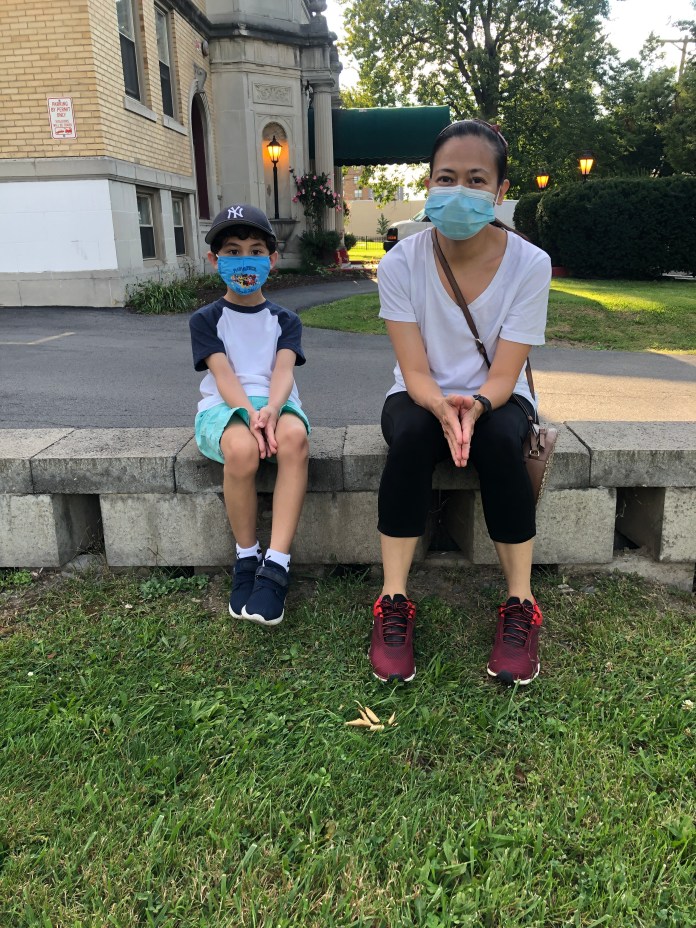
I walk to work almost every morning—following East Genesee Street toward downtown Syracuse. Before I leave my apartment building, I usually hang out with my wife Pam and son Colin while they wait for Colin’s school bus to arrive.
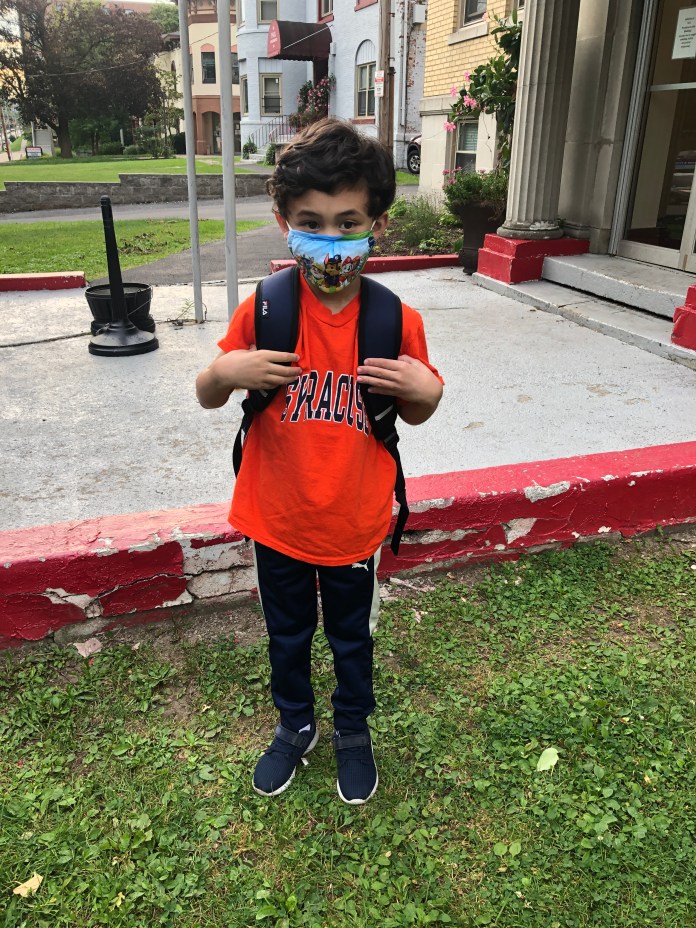
Today, underneath a gray sky spitting drizzle, Colin entertains himself by jumping up and down, flapping his hands and pulling his Paw Patrol mask down around his chin.
“Ah, put up your mask when you go on the bus and when you’re inside school,” Pam tells him. He listens and pulls up his mask. Colin is in kindergarten, and he has autism.
He’s dressed in sweatpants and a blue hooded sweat jacket. A maroon and navy blue Fila book bag—packed with the crunchy snacks he likes to eat—is slung over his shoulder.
When it’s time for me to break away, I remove my mask and plaster his face with a couple of quick kisses. Pam then says to Colin, “Ah, say goodbye to daddy.” When his eyes remain cast elsewhere, she holds his face gently and points it in my direction. She holds his hand and helps him to wave. “Come on now. Say bye-bye.”
“Bye-bye daddy,” he says with a clipped delivery.
“Good job,” Pam says.
I start walking on the sidewalk along Genesee, turning my head and waving toward my family, their figures looking tiny while standing under the green awning of the tan, brick building. I see his bus turning onto Genesee Street, and I pray that Colin will climb aboard safely, find his seat up front and remain in place while the bus accelerates.
Then a thought pops into my head. I don’t invite it, but it emerges anyway.
I think: This could be the last time I ever see my wife and son. I realize I am not invincible, that tragedy could strike at any moment and my loved ones could be taken away in an instant.
I look up to the clouds and try to shake the dark thought from my mind, turning my attention to work-related tasks I need to complete.
AFTERNOON
In the late afternoon, I leave the Nancy Cantor Warehouse in downtown Syracuse, walking in a steady rain along Washington Street. I cross State Street and then walk toward Fayette Street. I pass by a standpipe, and I continue on my way. But then I remember Fountain, the ready-made sculpture of a urinal by French artist Marcel Duchamp.

Marcel Duchamp’s 1917 sculpture Fountain.
I backtrack, pull out my iPhone and snap a few pictures—inspired by Duchamp’s iconic still life artwork.
According to Merriam-Webster, a standpipe is a “high vertical pipe or reservoir that is used to secure a uniform pressure in a water-supply system.” I’ve seen the term before, but I never knew the meaning. But I looked it up online as soon as I got home.

Syracuse Standpipe. Photo by Francis DiClemente.
And I guess that’s the beauty of a walking commute in a city—if you pay attention to your surroundings, you can discover things that other people might miss. It takes practice to heighten your senses and elevate your awareness. But as an urban explorer, if I am willing to pay close attention, it seems the universe is willing to reward me with satisfying visual stimuli. In my case, it makes the everyday extraordinary and the mundane magical (forgive the alliteration).
Here are some recent photos from my walking commute:
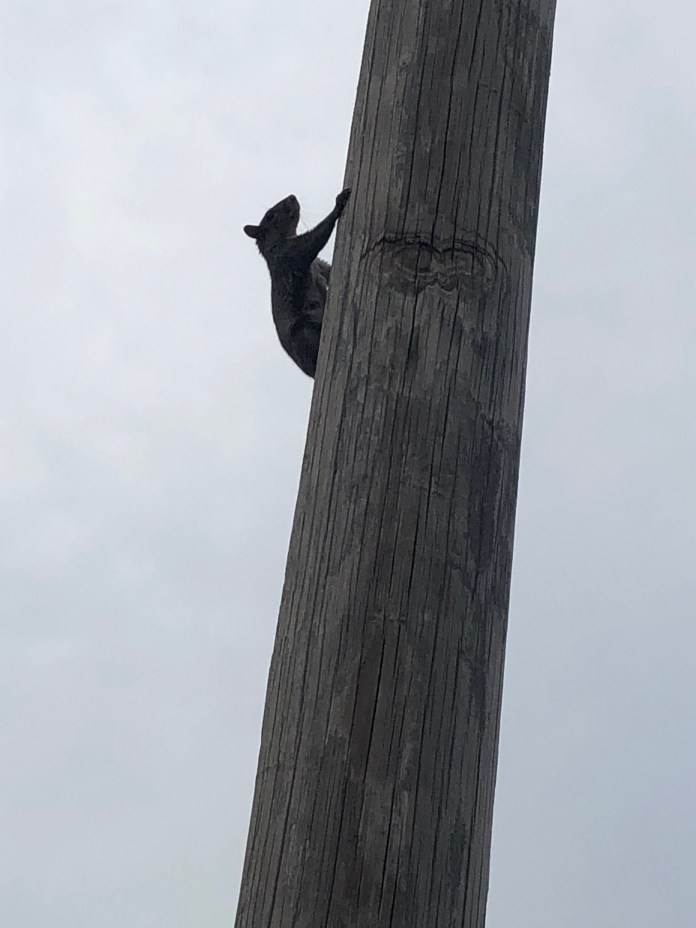
Squirrel on telephone pole. Photo by Francis DiClemente.
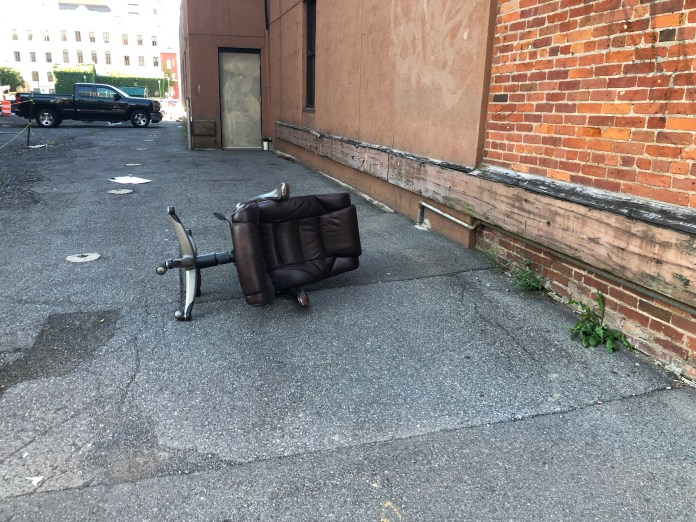
Chair tipped over. Photo by Francis DiClemente.

Fountain. Photo by Francis DiClemente.

Alley. Photo by Francis DiClemente.
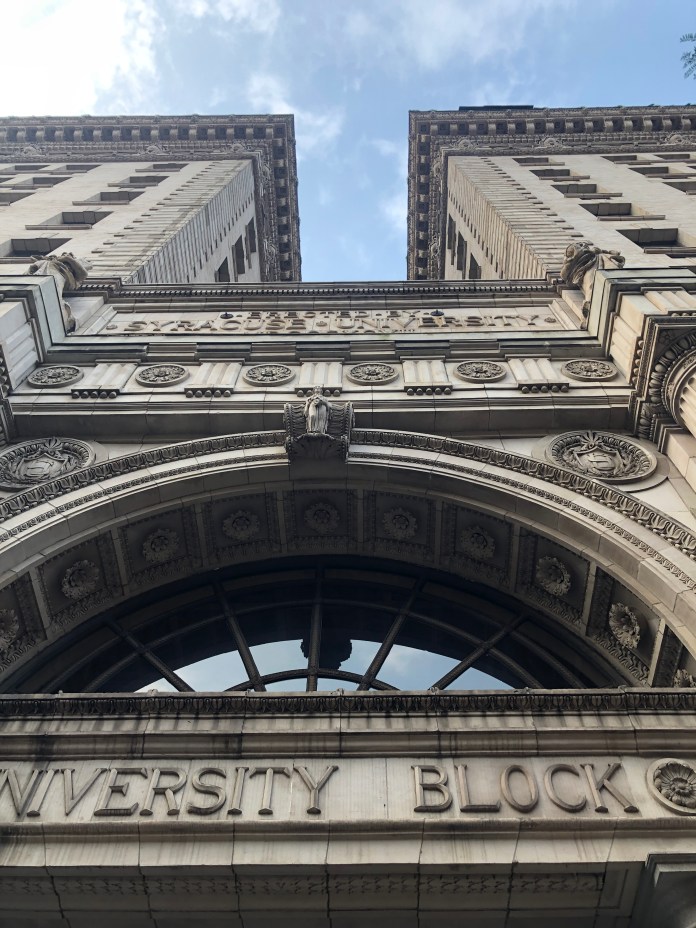
University Block Building. Photo by Francis DiClemente.

 Francis DiClemente